



Another large-scale distribution effort: a food bank that distributed 100,000 donation bags across 60 pantries.
Similar reusable bag programs have been applied to university move-in programs. See our guide on university move-in bag program.
A regional grocery chain with 40 stores in the midwestern United States spent 2025 rebuilding the way it buys checkout bags. The trigger was the same squeeze most retailers feel: paper bag fees, tightening state bag bans, and a bag budget that grew every quarter. By the end of the year, the chain had cut annual bag spend by 32% with a reusable tote program supplied as a complete package from a Chinese factory.
This case study walks through the program the way the buyer experienced it: the starting numbers, the tote specification, the cost model, and the rollout sequence. The figures come from the chain’s own accounting and the factory’s commercial proposal. They are presented with the assumptions visible, so you can rebuild the model for your own store count and basket size.
Why the Chain Rebuilt Its Bag Program
The chain operated in three states, and by early 2025 two of them had active bag laws. Plastic film bags were restricted at checkout, and paper bags carried fees. The stores absorbed most of that cost because the category manager refused to pass a bag fee to customers. The result was a quiet, growing line item that procurement had never benchmarked.
A quick audit exposed the scale of the problem. The 40 stores distributed 2.2 million single-use bags a year, mostly recycled-paper grocery sacks with the chain logo printed in one color. Blended cost per bag, including the fee pass-through and print, ran 9 cents. That put annual bag spend at $198,000 with no offsetting revenue and no loyalty value attached to the bag itself.
The buyer’s brief to the sourcing team was specific: find a bag customers keep, one that carries the brand into homes, and one that cuts the $198,000 line item by at least 25% in year one. The team benchmarked two options, a free-issue tote and a paid tote program. It modeled both against the existing paper bag cost before contacting any factory. The inputs were the chain’s POS checkout data and the sustainability practice guides published by the Food Industry Association, the grocery sector’s main trade body.
The Starting Point: 2.2 Million Bags a Year
Baseline numbers matter more than the final result, because they decide which program design wins. The chain tracked bags used per transaction at 0.55, meaning roughly one bag for every two transactions. Average transaction size ran $41, and weekly traffic across the chain sat at 1.1 million customers. Paper bags cost 9 cents each landed at the store.
The team also measured a softer cost: bag-related customer complaints. Store managers logged complaints about tearing handles and bags that soaked through on wet produce. The chain replaced roughly 3% of paper bags on the spot, an unrecorded expense that the sourcing team added into the baseline as a 0.3-cent per-bag allowance.
| Metric | Before | After | Change |
|---|---|---|---|
| Single-use bags per year | 2,200,000 | 1,420,000 | -35% |
| Bag spend | $198,000 | $134,600 | -32% |
| Totes sold per year | 0 | 12,000 | +12,000 |
| Customer bag complaints | baseline | -60% | improved |
The numbers told a clear story: the chain was paying for a disposable product that generated complaints and zero brand carry. The sourcing team set a target of 12,000 totes sold per year, which sounded small until they modeled it. At a 500-use cycle per tote, 12,000 totes replace up to 6 million bag uses, more than enough to absorb the chain’s total annual bag volume.
The Tote Spec and the Sample Process
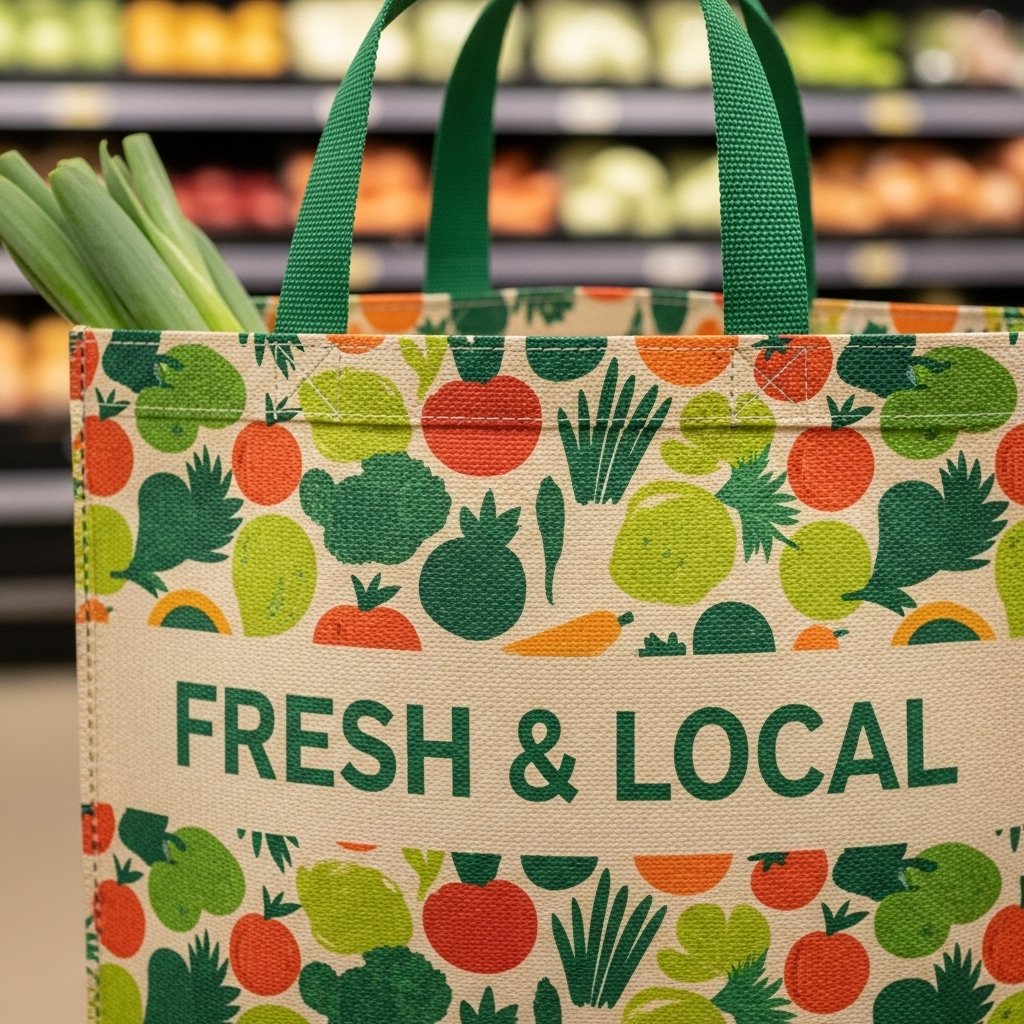
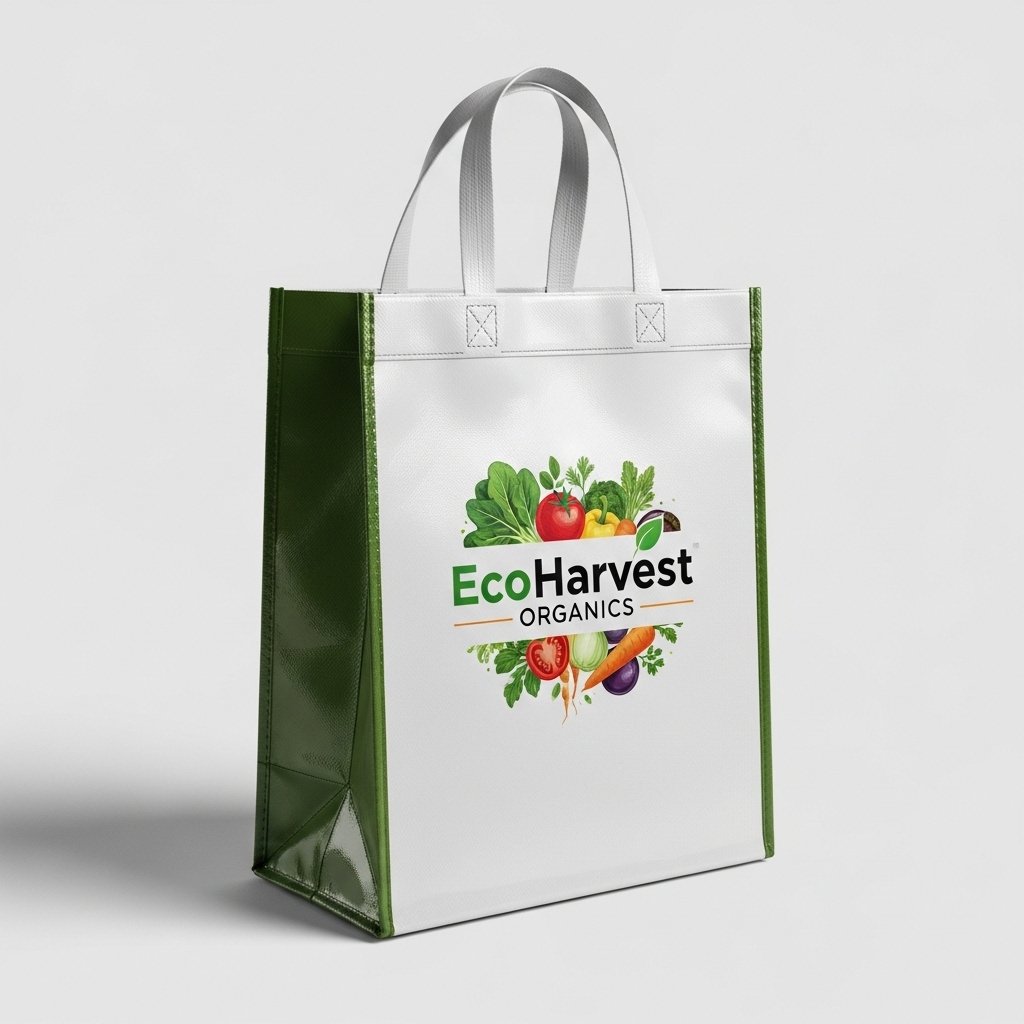
The spec was written before the factory was chosen, which is the difference between a program and a bargain. The chain specified a laminated PP woven tote at 24 x 16 x 8 inches with a 14-inch handle drop. Fabric weight was set at 90 GSM with a flat bottom for self-standing at the register. Lamination was non-negotiable: the chain’s own testing showed unlaminated woven bags failed faster on wet produce loads.
Durability followed the industry benchmark the chain found in its research: the reusable tote bags vs cardboard, a 500-cycle cost analysis. That study put the realistic use cycle of a well-made PP woven tote at 500 trips. The factory proposal matched that figure with seam reinforcement and cross-stitched handles, and the pre-production sample survived a 25 kg load test with no stitch tear-out.
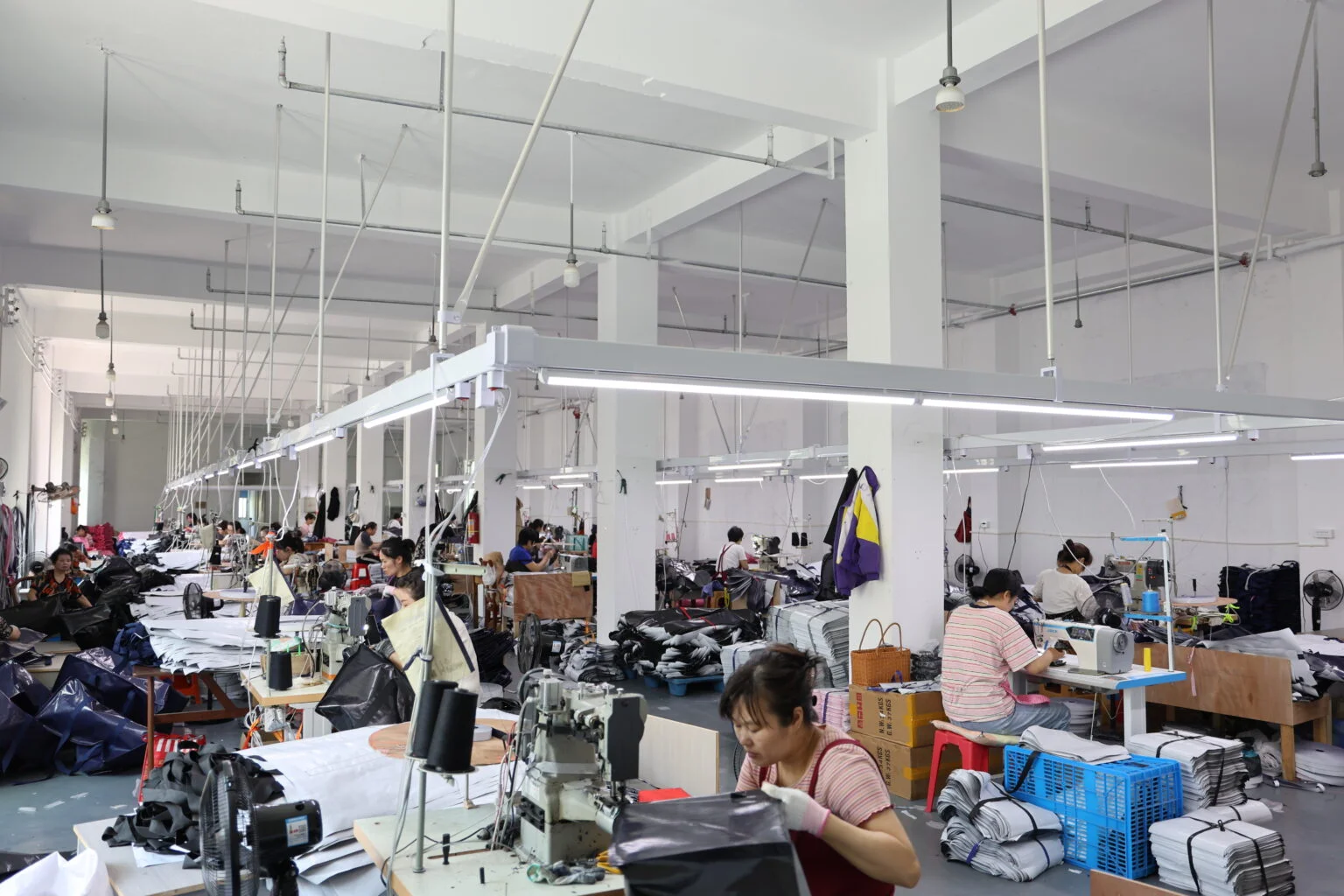
Branding was one-color screen print in the chain’s signature green on both sides, applied at the factory. The buyer ran a wash-and-rub test on the sample before approval: 30 wash cycles and 100 rub cycles with no ink flake. The sample process took 3 weeks from artwork to approval, and the factory locked the print standard into the mass production QC sheet so the production run matched the sample.
The Cost Model Behind the 32% Cut
The tote cost $1.35 landed at the chain’s distribution center under DDP delivery, including ocean freight, duties, and the domestic leg. The chain priced it at $1.99 at the register. That price felt fair to customers, and it left the chain subsidizing 30 cents per tote after covering its own cost and card fees. The subsidy became the program’s only real cost line.
On the savings side, single-use bag volume fell from 2.2 million to 1.42 million bags per year. That 35% drop came from checkout behavior: tote owners skip a bag on most trips, and cashiers were trained to ask once and only once. At 9 cents per paper bag, the volume reduction saved $70,200. Against the $3,600 annual tote subsidy, the net saving ran $66,600, or 32% of the old $198,000 baseline.
| Line Item | Calculation | Annual Value |
|---|---|---|
| Paper bag spend after | 1.42M x $0.09 | $127,800 |
| Tote inventory subsidy | 12,000 x $0.30 | $3,600 |
| Program administration | signage, training | $3,200 |
| Total new spend | sum of lines | $134,600 |
| Saving vs $198,000 | $198,000 – $134,600 | 32% |
Two assumptions deserve scrutiny before you copy the model. First, the 9-cent paper bag cost includes a fee environment; chains in no-fee states should model a lower baseline and a smaller absolute saving. Second, the 12,000-tote sales figure depends on checkout training and display placement, which the chain treated as a program cost, not a given.
Rollout, Logistics, and the Results
The chain rolled out across 8 stores per month over 12 weeks. The first batch of 4,000 totes arrived as a 20ft container shipment under DDP. Flat-packed totes loaded 8,000 units per container, which meant one container covered two rollout waves. Inventory sat at the DC and flowed to stores on the existing grocery replenishment schedule, so no new logistics lane was created.
Store-level data after six months showed the model holding. Tote sell-through ran 78% of the 12,000-unit annual plan, slightly ahead of forecast, and 61% of tote buyers returned with the tote at least once a week. Bag complaints fell 60%, because the tote replaced the paper bag on the trips where tears happened. The chain’s social mentions of the branded tote also spiked in the first month after launch.
The program also survived the test that kills many retail bag initiatives: seasonality. Summer produce season, the heaviest bag-use period, ran with no stockouts because the reorder point was set at 60% of the annual plan instead of a flat monthly number. That one planning decision kept the program visible during the exact weeks customers were most likely to buy a tote.
Lessons That Transfer to Any Retail Chain
The 32% number came from five decisions that any retailer can copy. First, model the baseline before talking to factories, including the hidden replacement cost. Second, write the tote spec around use cycle, not price per unit. Third, put QC at the factory: handle stitch strength and print rub tests on the pre-production sample, then lock them into mass production checks.
Fourth, use DDP delivery to keep the landed cost predictable. The chain knew the tote cost $1.35 at the DC before it committed to the $1.99 price. The DDP vs FOB comparison had already been run on the bag category. Fifth, train checkout staff with a single script and measure the bag-per-transaction ratio weekly; that ratio is the leading indicator of program success.
The one thing the chain would not repeat is the 12-week rollout. With 20,000 totes in the first container, it could have launched all 40 stores in two weeks and captured more of the summer window. The phased approach reduced risk, but it also deferred $8,000 of savings. For a chain with clear store-level data, a full launch beats a cautious one.
Build your own reusable bag program
TIIOCTI supplies laminated PP woven tote bags with a 500-use cycle, BSCI-certified production, GRS recycled material options, and DDP delivery. Free samples ship in days.
Frequently Asked Questions
How did the grocery chain cut bag spend 32%?
It shifted customers to a paid reusable tote program, cut single-use bag volume 35%, and reduced annual bag spend from $198,000 to $134,600 across 40 stores.
What tote specification made the program work?
A laminated PP woven tote at 24 x 16 x 8 inches, 90 GSM fabric, 14-inch handle drop, 500-use cycle, one-color screen print, at $1.35 landed cost.
How many totes does a retail chain need?
One tote with a 500-use cycle replaces up to 500 single-use bags. A 40-store chain sold 12,000 totes per year and covered its entire bag volume.
Does a reusable tote program require new logistics?
No. Totes ship flat-packed at 8,000 units per container and flow through the existing distribution center and store replenishment schedule.
What kills reusable bag programs?
Stockouts in peak season, weak checkout training, and prints that flake after a few washes. All three are preventable with reorder points, scripts, and factory QC.
Conclusion
This grocery chain turned a $198,000 cost line into a $134,600 cost line with a program customers actually wanted to buy. The reusable tote did not just save money; it carried the brand into 12,000 homes a year and cut bag complaints by 60%. The math held because the spec, the QC, and the landed cost were locked before the first tote shipped.
- Benchmark your baseline bag cost, including hidden replacement and complaints.
- Spec the tote around a 500-use cycle with lamination and reinforced handles.
- Use DDP delivery to fix landed cost before you set the register price.
- Measure bags per transaction weekly from day one.
TIIOCTI works with grocery chains, distributors, and retail brands on custom reusable tote programs, from free samples to DDP delivery. Send your store count and bag volume and get a program model like the one above, with your numbers.
Similar standardization benefits apply to moving operations, as shown in our military mover case study with 45% time savings.
The recycled material cost behind reusable tote programs is analyzed in our recycled PP market trends guide.
The tote bags in this case study used 600D Oxford fabric. See our Oxford fabric denier guide for the full 300D vs 600D vs 900D comparison.
Retail and hospitality reusable programs follow the same cost model: a hotel laundry tote case study cut bag spend 79 percent.


0 Comments