



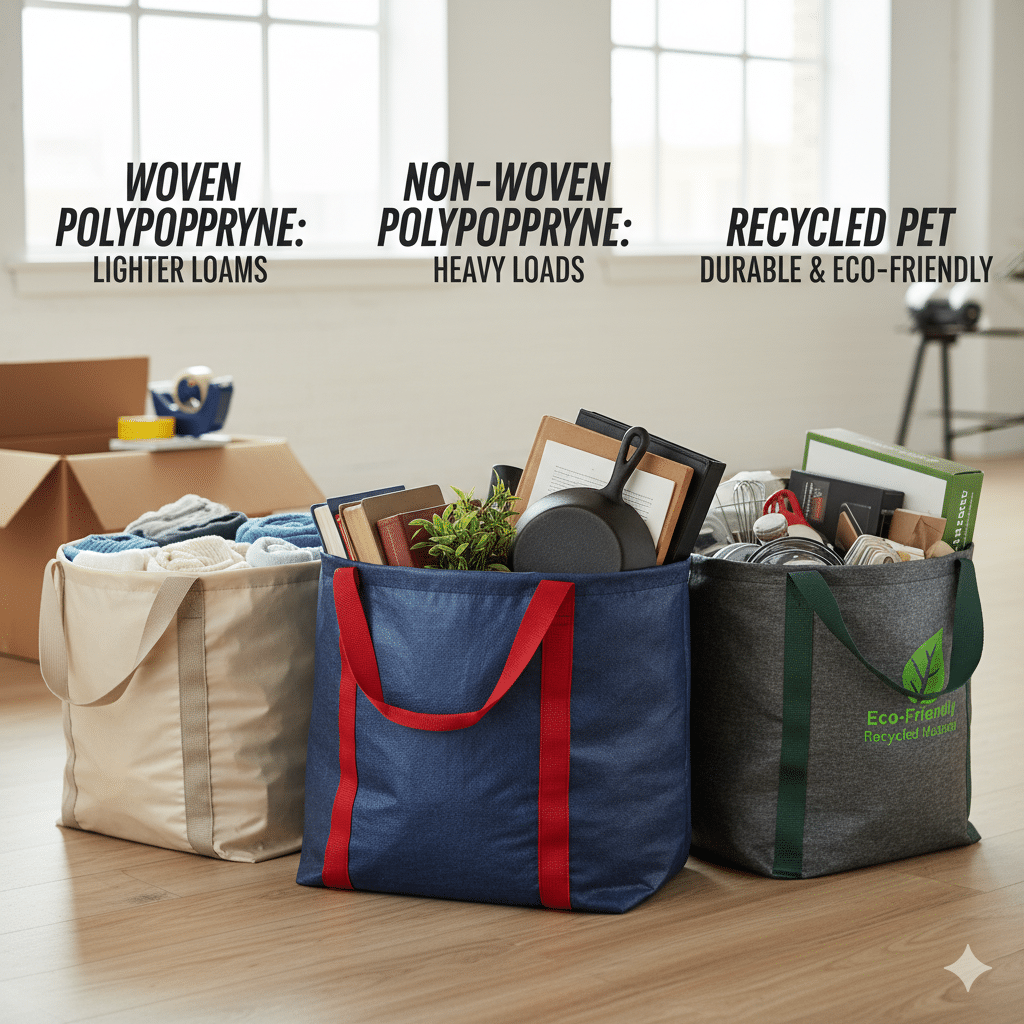
Struggling to find a reliable supplier for bulk custom moving bags? Here’s what you must know to avoid costly mistakes.
Before ordering custom moving bags in bulk, you should evaluate materials, size, design, MOQ, certifications, and quality control standards1.
These insights will help you avoid supply chain headaches and ensure your bags match both your needs and brand image.
Understand the Different Materials Used in Moving Bags?
Many buyers get overwhelmed by the wide range of materials available for moving bags. The wrong material can cause durability issues or compliance failures.
RPET, polypropylene, and PEVA2 are common materials in moving bags, each offering different durability, eco-friendliness, and cost advantages.
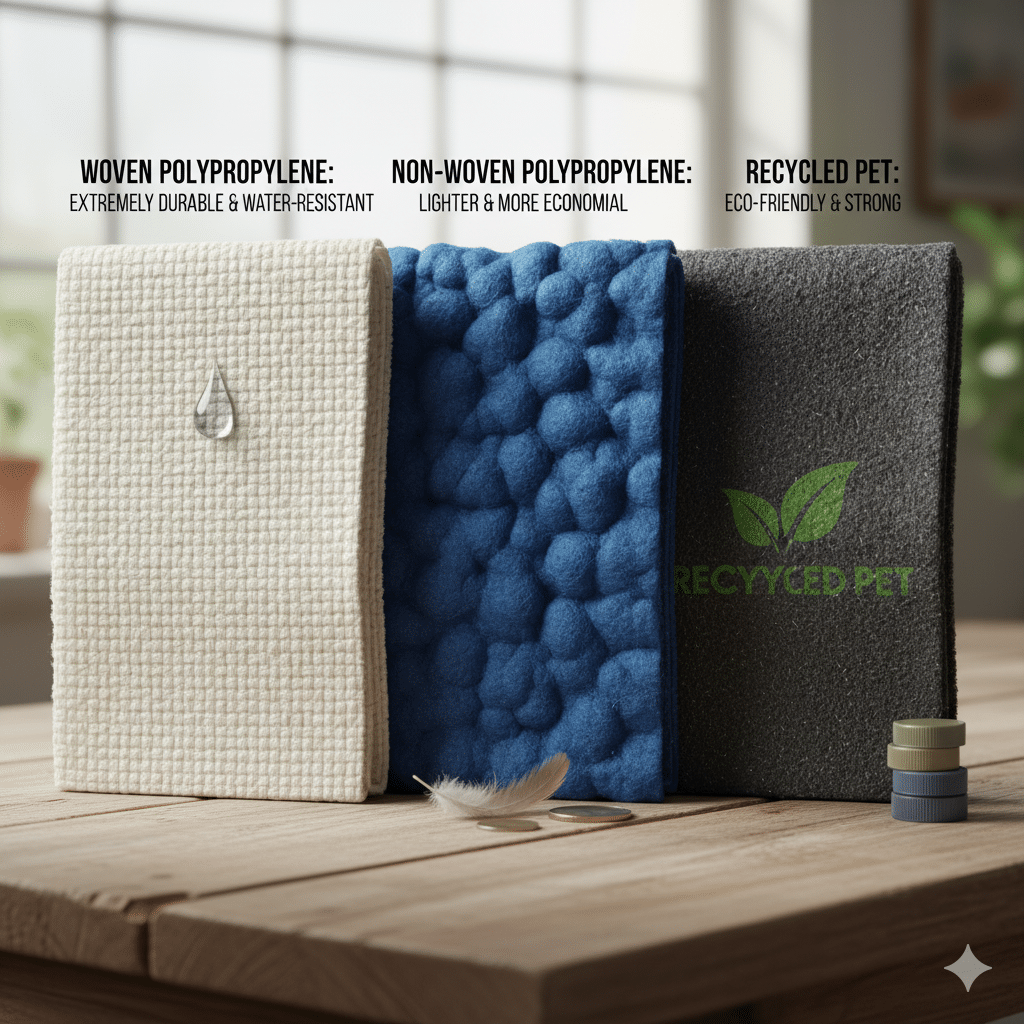
Choosing Between Durability and Sustainability
When sourcing custom moving bags for my North American and European clients, material selection always comes up first. Each market has its own environmental requirements and consumer preferences.
For example, clients from Germany and the Netherlands prioritize GRS-certified RPET materials3 due to strict sustainability regulations. In contrast, U.S. buyers often favor high-durability polypropylene due to the weight and frequency of use.
Here’s a comparison:
| Matériau | Durabilité | Respectueux de l'environnement | Niveau de coût | Imperméable | Suitable For |
|---|---|---|---|---|---|
| RPET (Recycled PET) | Moyen | Haut | Moyen | Oui | Eco-conscious retail, Europe |
| Polypropylène tissé | Haut | Moyen | Faible | Oui | General household moving, USA |
| Non-woven PP | Moyen | Moyen | Faible | Non | Promotions, giveaways |
| PEVA | Faible | Haut | Haut | Oui | Cosmetic packaging, Japan, Korea |
Conseil: Always request a full material spec sheet and test reports. Some suppliers may claim “eco-friendly” without backing it up with GRS or REACH certification4.
For durability, ask for a tensile strength test or drop test report5, especially if you expect your bags to carry over 30kg.
Check the Bag Size, Capacity, and Weight Limit?
Not checking size and capacity early can lead to a mismatch between your expectations and what the factory delivers.
Bag dimensions, volume capacity, and weight-bearing ability directly impact functionality—always confirm with physical samples or technical drawings.
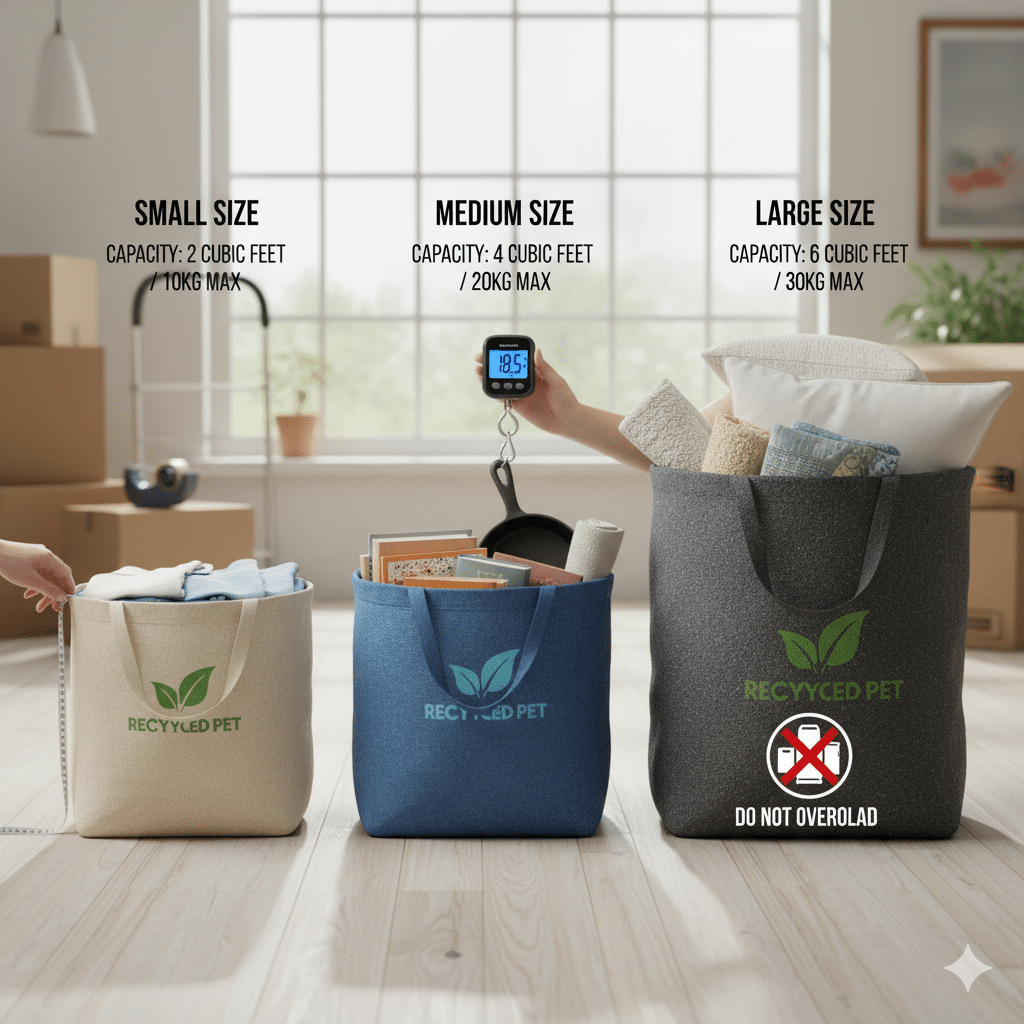
A Practical Guide to Sizing for Bulk Orders
One of my clients in Canada placed a bulk order for a standard 70L bag, thinking it would comfortably store bulky winter coats. It turned out too small. After a redesign, we upgraded it to 100L with double-stitched handles.
Different markets demand different sizes based on end usage. If your bags are intended for moving appliances, 70L isn’t enough. For storing clothes or blankets, 50–70L might be just right.
| Type de sac | Dimensions (cm) | Volume | Weight Limit | Utilisation courante |
|---|---|---|---|---|
| Hand Carry | 40 x 30 x 25 | 30L | 10 kg | Makeup kits, small giveaways |
| Mid-Range Storage | 60 x 40 x 30 | 70L | 25 kg | Clothes, kitchenware |
| Extra Large Moving | 80 x 50 x 40 | 100L | 40 kg | Warehouse, large electronics |
Pro Tip: Always request a prototype before production. And clarify if the supplier measures from inside or outside—this affects net usable volume.
Weight limits should be tested with a third-party load test6. A good supplier will offer free test reports or assist you with third-party inspections like SGS or BV.
Customize Your Design and Branding Smartly?
Many buyers rush into printing logos without considering how design and placement affect aesthetics and brand perception.
Customization options include color, logo printing, zipper style, and handle design. Align branding elements with your product’s usage and market.

Balancing Branding, Functionality, and Cost
I remember one case where a client printed a full-color image across the bag. It looked great—but peeled after two months. The supplier had used low-quality ink not meant for PP material.
This is why I always guide buyers through a branding checklist:
| Custom Option | Available Choices | Application Notes | Cost Impact |
|---|---|---|---|
| Logo | Screen printing, heat transfer, embroidery | Choose based on fabric type | Low-Medium |
| Couleur | PMS match or in-stock color swatches | In-stock colors reduce lead time | Faible |
| Conception de la poignée | Cross-stitched, padded, adjustable | More comfort for heavy-duty uses | Moyen |
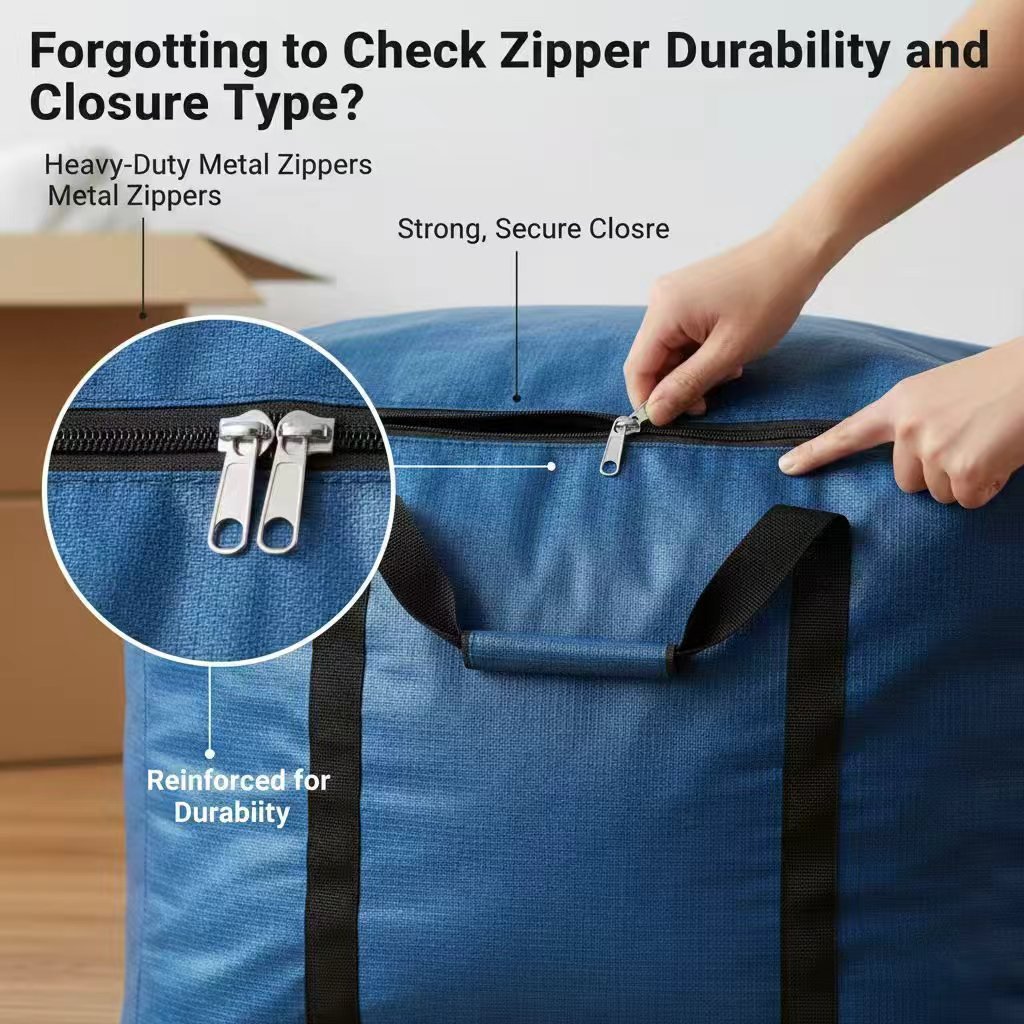
| Zipper/Closure | Nylon, metal, Velcro, double-head | Metal zippers last longer | Medium-High |
| Side Panel/Window | Mesh, transparent PEVA, printed area | For packaging display or ventilation | Moyen |
Avoid printing logos too close to the edges, especially on seams or folds, as distortion is common during stitching.
Meilleures pratiques: Request a pre-production sample (PPS) with full branding. Use high-resolution files and clearly mark logo position and size on a tech pack.
Know the Minimum Order Quantity and Lead Time?
Delays and unmet MOQs often disrupt client timelines, especially during peak seasons.
Every factory has different MOQs and lead times. Always confirm production capacity and buffer timelines during your planning.
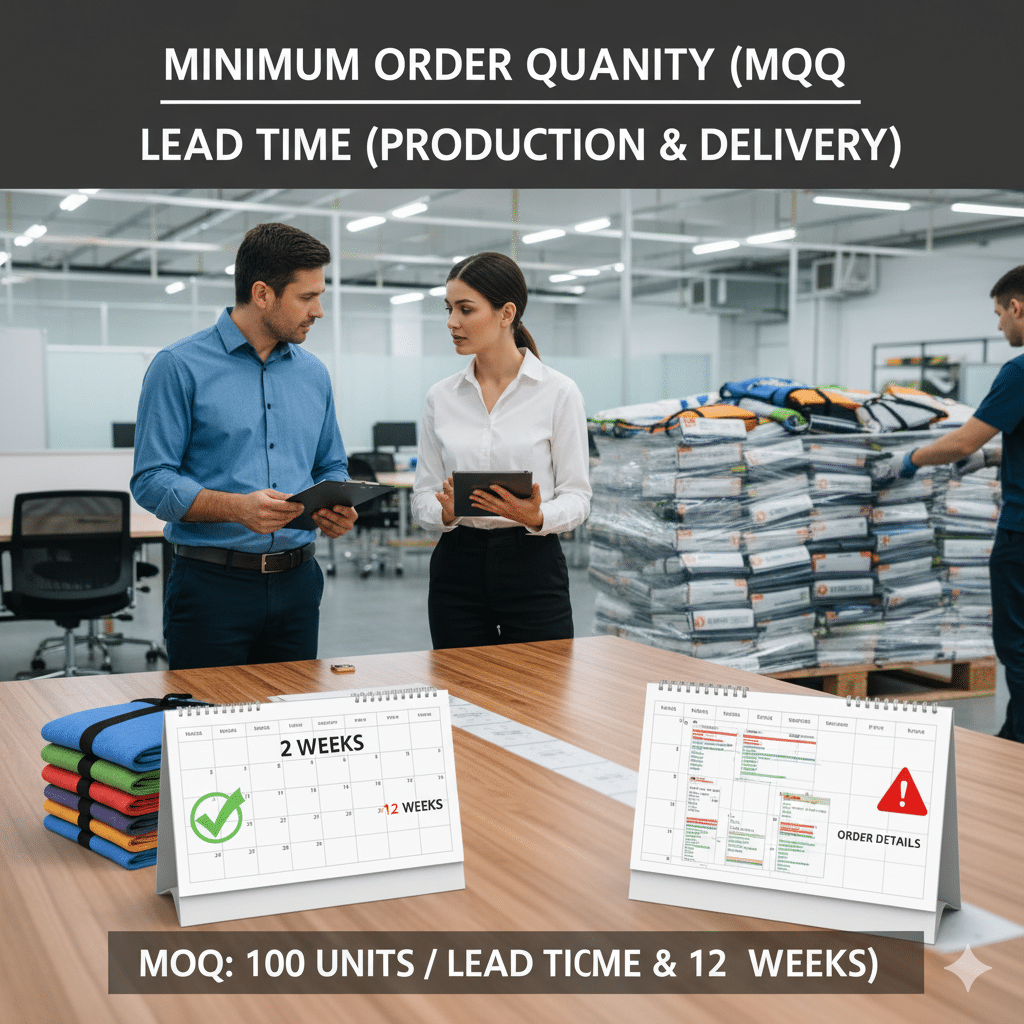
Avoid Lead Time Surprises and Hidden Charges
A client from Singapore needed 3,000 custom bags in 20 days for a promotional event. Unfortunately, the factory’s capacity was fully booked. We had to involve a second factory, which cost 15% more.
This is why planning ahead matters.
| Type de sac | MOQ | Normal Lead Time | Peak Season Lead Time |
|---|---|---|---|
| Basic Storage Bag | 1,000 pcs | 25 days | 35–40 days |
| Branded RPET Bags | 2 000 pièces | 30–35 days | 40–50 days |
| Complex Structure Bags | 3,000+ pcs | 40–50 days | 55–60 days |
Tips:
- For complex customizations (e.g., full-color printing, special fabric), ask for the lead time before placing the PO.
- Confirm sample production time and approval process. Samples often take 7–10 extra days.
And always ask if the factory uses sub-contracting. Some do so secretly during peak season, which may impact quality and delivery.
Confirm Certifications and Quality Assurance?
Failing to check certifications or inspection standards can lead to compliance failures or product returns in strict markets.
Look for certifications like GRS, BSCI, or REACH depending on your market. Ask for quality control steps and testing protocols.
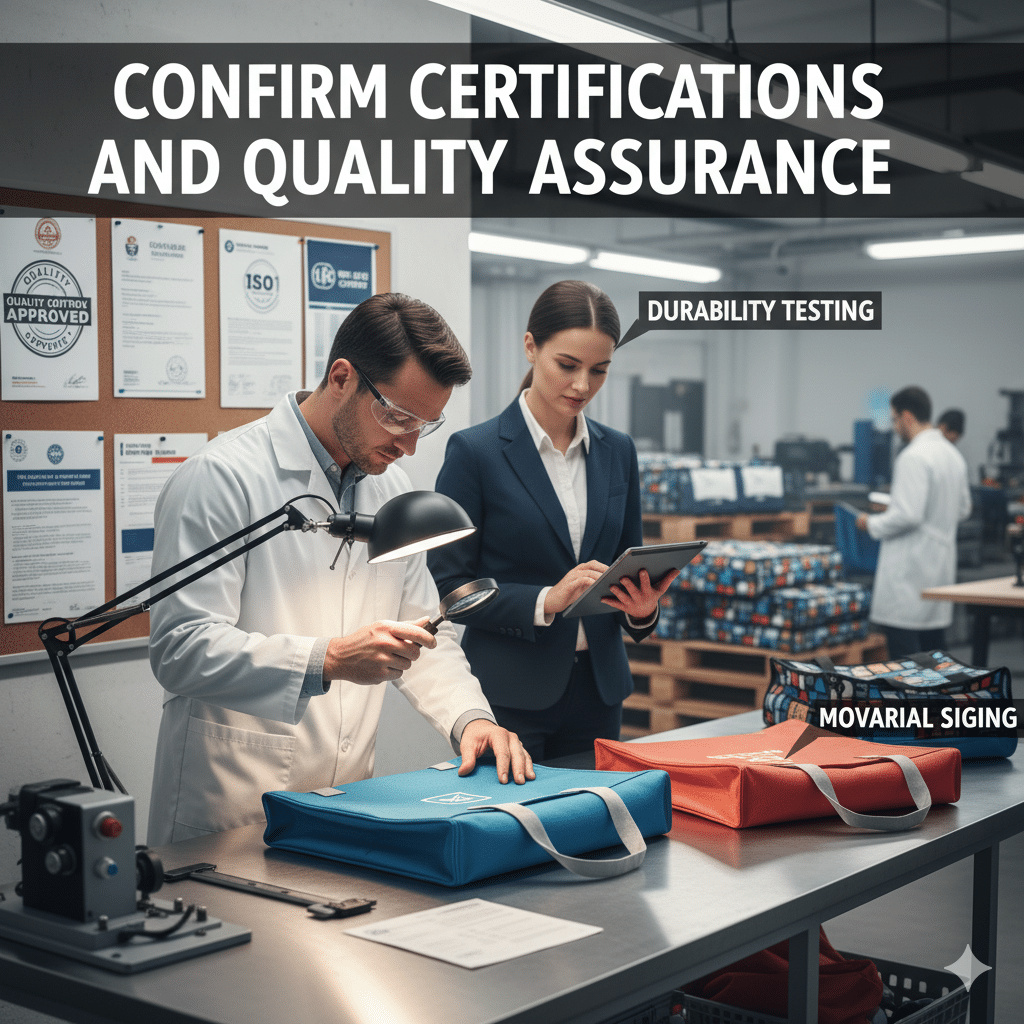
How to Verify Quality Without Being On-Site
One buyer from France faced a full return of 5,000 units because the bags used non-compliant glue. It didn’t meet REACH standards. That’s when we started making certification review mandatory for all European orders.
| Facteur de qualité | Detail | Pourquoi c'est important |
|---|---|---|
| Certification | BSCI (social), GRS (recycled), REACH (EU) | Compliance and market entry |
| Raw Material Check | Material ID and testing reports | Avoid fakes or misleading claims |
| In-Line QC | Stitching, print, zipper inspections | Reduces mass production defects |
| Final Inspection | Weight test, barcode scan, carton drop | Ensures product readiness for export |
| Third-Party Partner | SGS, TUV, BV | Neutral reports improve buyer trust |
Meilleures pratiques: Add a quality checklist into your PO. Request actual certificates and confirm validity with the issuing authority.
Also, define what counts as a "defect" and agree on compensation terms before production.
Conclusion
Understanding materials, sizing, customization, MOQ, and certifications1 is key to sourcing high-quality custom moving bags in bulk.
-
Know what key factors affect order success when sourcing bulk custom bags. ↩ ↩
-
Compare material options and choose the right one for durability and sustainability. ↩
-
Learn why GRS certification matters for European buyers and eco-compliance. ↩
-
Understand why GRS and REACH validate eco-friendly and safe materials. ↩
-
Ensure your bags meet required strength using standardized test reports. ↩
-
Boost buyer trust with neutral third-party load and durability tests. ↩

0 commentaires