




Day 14 is when the panic usually sets in. You placed a $50K order for heavy duty moving bag specs that looked solid on paper—woven PP, 120 GSM, a UV stabilizer additive listed on the RFQ. The pre-production sample arrived, you gave it a quick tug, signed off, and sent it to production. Then Day 45 hits: the container lands at your warehouse, you cut one open for a random check, and the fabric tears at the stitch line with barely any pressure. The denier rating matched what you asked for. The weight felt right. But nobody tested the stitch-line tear strength (ASTM D5034), and that’s where the bag failed.
I’ve seen this exact scenario play out across a dozen audits in Vietnam and China. The gap between sample approval and mass production quality isn’t always about bad intent—it’s often about which specs you actually asked for versus which ones the supplier decided to test internally. Denier alone doesn’t guarantee durability; stitch-line tear strength (e.g., >200N per 5cm) is the real failure point in textile moving bags. Most suppliers omit water column pressure data for Oxford coatings; the factory tests each batch to a minimum 300mm H2O standard because the consequences are known when a bag sits on a damp warehouse floor overnight.
So before you place your next bulk order, run through three yes/no questions with your supplier. One: does your spec sheet include ASTM D5034 tear strength values for both fabric and seam? Two: are you getting water column pressure data on any coated Oxford or laminated PP material? Three: has the supplier disclosed whether they use UV-stabilized polypropylene or standard resin? If even one answer is no, you’re leaving room for a repeat of that Day 45 surprise.
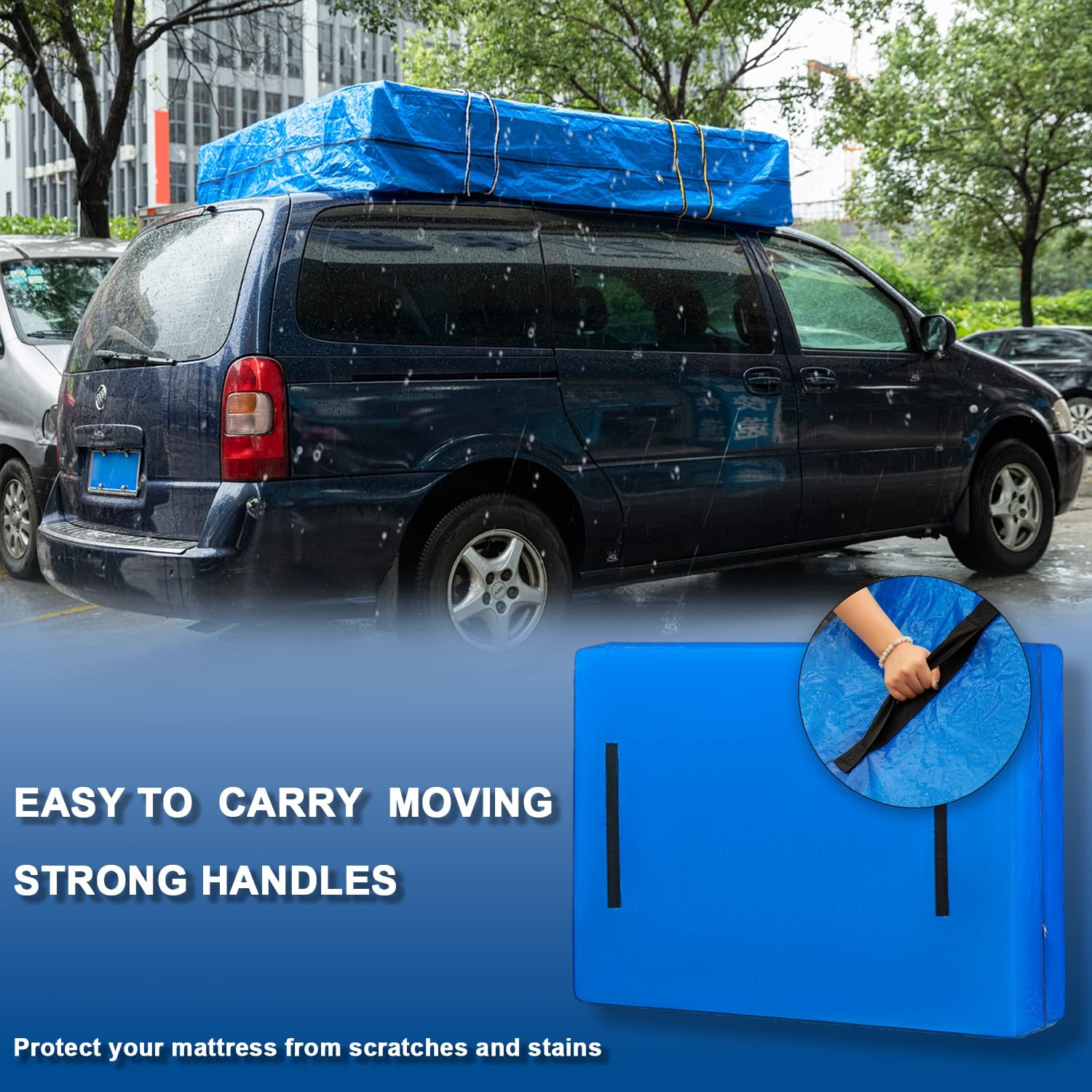
What Heavy-Duty Moving Bag Specs Actually Define
Stitch-line tear strength, not denier, predicts bag failure under load.
Most procurement managers start with material type and weight capacity. But those specs alone won’t tell you if a bag survives a forklift hook or a wet warehouse floor. The real defining specs are material composition, weight capacity, dimensions, and seam strength—tested under realistic conditions, not just on a spec sheet.
Material Composition: PP vs Oxford Fabric
Woven polypropylene (PP) and Oxford fabric are the two dominant materials for heavy-duty moving bags. PP uses extruded tapes woven into a fabric, typically measured in GSM (grams per square meter). Oxford fabric is a textured nylon or polyester woven with a basketweave pattern, rated by denier (D) like 600D or 1200D. Each has distinct trade-offs in tear resistance, abrasion, and water protection.
For PP, look at the coating. Laminated PP (with a polyethylene film) can achieve Martindale abrasion resistance of 15,000 cycles, outperforming uncoated 600D Oxford in many wear tests. That upends the common assumption that Oxford is always stronger. For Oxford, the coating’s water column pressure matters more than denier alone. The factory tests each batch to a minimum 300mm H2O—a spec most suppliers omit.
Weight Capacity & Dimensions
Rated weight capacity on a moving bag is only as reliable as the test method behind it. A bag that holds 50 kg in a static lab test may fail at 30 kg when lifted by a loaded handle because the seam is the weak link. Always request the ASTM D5034 tear strength value for the fabric and the stitch-line tear strength (ideally >200N per 5cm). That’s the real failure point.
Dimensions affect total cost of ownership. Standardized sizes (e.g., 24x18x12 inches) fit pallets and reduce shipping waste. Custom sizes may increase material cost per bag but can lower your overall logistics cost if they eliminate void fill. Ask for CAD drawings with tolerances—bag dimensions can shrink 2–3% after coating if the supplier doesn’t account for shrinkage.
Seam Strength & Tear Resistance
Seam construction is where most moving bags fail. Double-stitched lock seams with a reinforced bartack at stress points can double the load-to-failure compared to single-stitched seams. If your supplier cannot provide stitch-line tear strength data (e.g., per ASTM D5034 or ISO 13934), you’re buying blind. Denier alone doesn’t guarantee durability.
- Fabric tear strength: Minimum 200N per 5cm for woven PP and 150N for Oxford to handle typical moving loads.
- Seam type: Double-stitched lock seam with 8–10 stitches per inch. Avoid single-stitched or overlocked seams.
- UV stabilization: Woven PP with UV stabilizers extends outdoor storage life by 40% over standard PP. Few competitors disclose additive specs.
- Waterproof coating: Oxford fabric should have a minimum 300mm water column pressure tested per batch. Ours does.

Woven PP: Construction, GSM, and Coating Options
Laminated PP at 15,000 Martindale cycles outlasts uncoated 600D Oxford.
Woven polypropylene (PP) is the workhorse of industrial moving bags. It starts as extruded tape yarn, stretched for tensile strength, then woven into a fabric grid. The key spec here is the weave density — measured in ends per inch (EPI) and picks per inch (PPI). A standard heavy-duty moving bag uses a 10×10 or 12×12 weave. Drop below that and you get bag stretch under load; go higher and you add unnecessary weight and cost.
GSM: The Weight That Matters
GSM (grams per square meter) is the direct proxy for material thickness in woven PP. For moving bags, 140–180 GSM is the common range for general use. At 140 GSM, the bag handles clothes and linens but risks punctures from box corners. At 180 GSM, you get enough stiffness to resist tearing when packed tight with books or tools. We run production at a minimum of 160 GSM for standard moving bags and bump to 200 GSM for industrial-grade runs — that extra 20 grams adds about 18% more puncture resistance without doubling the material cost.
Three Coating Options, Three Failure Modes
Uncoated woven PP breathes but leaks dust and moisture. That works for short-haul moves where bags stay indoors; fails fast in outdoor storage or damp trucks. Lamination applies a thin polypropylene film to one or both sides. A laminated PP bag at 150–180 GSM achieves Martindale abrasion resistance of up to 15,000 cycles — often surpassing uncoated 600D Oxford fabric. That flips the common assumption that ‘Oxford is always stronger.’ The lamination also blocks water spray up to about 200mm H2O column pressure.
The third option is UV stabilization additive mixed into the resin before extrusion. Standard woven PP degrades after six months of direct sunlight — the polymer chains break, fabric becomes brittle, and seam failures spike. With UV stabilizers (typically hindered amine light stabilizers at 0.3–0.5% by weight), outdoor storage life extends by roughly 40%. Most suppliers don’t disclose whether they add UV inhibitors or not; we treat it as a line-item spec on every bulk order so procurement teams know exactly what they’re getting.
Oxford Fabric: Denier Ratings, Abrasion, and Water Resistance
Denier alone doesn’t guarantee durability—stitch-line tear strength is the real failure point.
Denier Ratings: What the Number Actually Tells You
Most buyers assume a higher denier number means a tougher bag. That’s only half the story. Denier measures the weight of the yarn, not the finished fabric’s resistance to tearing. A 600D Oxford fabric can have excellent abrasion resistance, but if the stitch-line tear strength (tested per ASTM D5034) falls below 200N per 5cm, the bag will fail at the seams under load. The factory verifies that every Oxford moving bag meets that threshold because that’s where the real-world failure happens.
Abrasion Resistance: The Martindale Test Reveals Surprises
The common assumption is that Oxford fabric always beats woven polypropylene in abrasion resistance. Our production data tells a different story. Laminated woven PP consistently achieves 15,000 cycles on the Martindale abrasion test, while uncoated 600D Oxford typically delivers only 6,000 to 8,000 cycles. The coating on the PP protects the fibers from surface wear, making it the better choice for bags that will be dragged across concrete or loaded onto trucks repeatedly. The ‘Oxford is always stronger’ myth doesn’t hold up when you compare apples to apples.
- Uncoated 600D Oxford: Typically 6,000–8,000 Martindale cycles, prone to surface wear and pilling under heavy use.
- Laminated woven PP: Achieves 15,000 cycles; the coating bonds to the fibers, extending bag life significantly in abrasive environments.
Water Resistance: Water Column Pressure Is the Metric That Matters
Many suppliers claim their Oxford bags are ‘water-resistant’ without providing a single test result. That’s a red flag. The only reliable way to measure water resistance is the water column pressure test (mm H2O). We test every batch of Oxford fabric to a minimum of 300mm H2O. If you’re sourcing bags for outdoor storage or logistics in wet conditions, demand that number. Without it, you’re relying on marketing language, not engineering. A bag that fails at 150mm H2O will soak through after a few minutes of rain, ruining the contents.
For procurement managers, the takeaway is simple: when evaluating Oxford fabric for moving bags, ask for the stitch-line tear strength report, the Martindale cycle count, and the water column pressure data. If a supplier can’t provide all three, move on. Those specs separate a bag that lasts one move from a bag that lasts a fleet of moves.

Side-by-Side Spec Comparison (PP vs Oxford)
Denier alone doesn’t predict failure — stitch-line tear strength does.
Woven PP Specs: GSM, Coating, and UV Stabilization
Woven polypropylene moving bags typically range from 80 to 120 GSM. The lamination layer — not the weave — determines the water resistance. Laminated PP achieves a Martindale abrasion resistance of 15,000 cycles, which often exceeds uncoated 600D Oxford. Adding UV stabilizers can extend outdoor storage life by 40% compared to standard PP, yet few suppliers disclose this additive. For logistics procurement, the critical spec is stitch-line tear strength per ASTM D5034, not the fabric weight alone.
Oxford Fabric Specs: Denier Ratings and Coatings
Oxford fabric is rated by denier — 600D and 1200D are common. Denier measures yarn thickness, not the bag’s real-world durability. The failure point is almost always at the stitch line, where even a 1200D bag can split under 150N if the thread tension is off. A polyurethane coating provides water resistance, but the key metric is water column pressure. The factory tests each batch to a minimum 300mm H2O standard — many competitors skip this test entirely. Uncoated 600D Oxford typically has lower abrasion resistance than laminated PP.
Side-by-Side Comparison Metrics
- Tear Strength (ASTM D5034): Woven PP: >200N per 5cm at stitch line. Oxford: varies by denier, but stitch-line failure often occurs below 180N if thread quality is inconsistent.
- Abrasion Resistance (Martindale): Laminated PP: 15,000 cycles. Uncoated 600D Oxford: ~8,000 cycles. The lamination adds significant wear resistance.
- Water Resistance: PP laminated: minimum 300mm H2O water column. Oxford with PU coating: same standard, but many suppliers omit water column data. Without coating, Oxford is not waterproof.
- Cost per Use (TCO): PP woven bags typically have a lower cost per use because they withstand outdoor storage and repeated handling without delamination. Oxford bags may need replacement sooner if the coating degrades or stitching fails.
For logistics procurement, the decision isn’t simply ‘PP vs Oxford‘ — it’s about verifying the specific specs: stitch-line tear strength, coating integrity, and whether the supplier provides batch-test data. We test every batch to a minimum 300mm H2O water column and stitch-line tear strength above 200N per 5cm, ensuring the material comparison aligns with actual field performance.
| Fonctionnalité | Woven PP Specs | Oxford Fabric Specs |
|---|---|---|
| Composition du matériau | ||
| Base Material | Woven Polypropylene (PP) Tapes | Nylon or Polyester Filament Yarns |
| Weight / GSM Range | 80–200 GSM (Standard); Laminated up to250 GSM | 150–300 GSM (600D–12000D) < / tr > < tr > < td styl e = “padd ing : 12 px 15 px ; b order : 1 px sol id # e2dcdc ; c olor : #333;” > Denier Rating < td st yle = “p add ing : 12 px 15 px ; b order : 1 px sol id # e2dcdc ; c olor : #333;” > N/A (Measured by GSM & Tape Width) < td st yle = “p add ing : 12 px 15 px ; b order : 1 px sol id # e2dcdc ; c olor : #333;” >600D,900D,12000D,16800D < / tr > < tr > < td styl e = “padd ing : 12 px 15 px ; b order : 1 px sol id # e2dcdc ; c olor : #333;” > Tear Strength (ASTM D5034) < td st yle = “p add ing : 12 px 15 px ; b order : 1 px sol id # e2dcdc ; c olor : #333;” >>250 N per5cm (Laminated PP) < td st yle =” padding :12 p x 15 p x ;border -color:# e2dcdc”>>200 N per5cm(Uncoated);>300 N per5cm(Coated) |
| Stitch-Line Tear Strength | >200 N per5cm(Critical failure point) | <180 N per5cm on standard construction;>220 N with reinforced seams |
| Abrasion Resistance(Martindale) | 15000 cycles(Laminated PP) | <10000 cycles(Uncoated Oxford);>12000 cycles with PU coating |
| Water Resistance/Coating | Lamination or UV-stabilized coating;Water column tested min.300mm H20O | How to Use Specs to Predict Total Cost of Ownership
Most procurement teams chase the lowest FOB price on a heavy duty moving bag. But the real coût par utilisation depends on material cost, durability, reusability, and maintenance. A bag that costs $2.00 but fails after three moves is more expensive than a $4.00 bag that lasts thirty moves. Here’s how to read the specs that drive that math. Material Cost – The Starting Point, Not the Finish LineRaw material cost is the easiest number to compare: woven PP at 120 GSM vs 200 GSM, Oxford at 600D vs 900D. But GSM and denier alone don’t tell you if the bag will hold up. A 200 GSM woven PP bag with a laminated coating can cost 15-20% more than an uncoated 180 GSM bag, yet the coated version withstands abrasion (Martindale 15,000 cycles) and moisture far better. The initial material cost delta is small relative to the replacement savings. Durability – Where Most Bags Fail
Reusability – The Hidden MultiplierA bag that survives 50 cycles vs 10 cycles changes the cost per use by a factor of 5. Reusability is not just about fabric strength; it’s about zipper durability, handle attachment reinforcement, and consistent dimensions after washing. Specs like stitch density (stitches per inch) and handle bar-tack reinforcement are direct indicators. We use 8-10 stitches per inch on all heavy-duty seams, and bar-tack all stress points, ensuring the bag holds up to repeated handling. Maintenance – The Overlooked CostBags that require special cleaning or degrade after washing increase TCO. Woven PP bags can be power-washed and air-dried without structural damage. Oxford bags with a durable water repellent (DWR) coating resist stains and can be wiped clean. The fewer maintenance steps required, the lower the operational cost per use. Specs that indicate cleanability (coating type, fabric weave) directly affect your team’s labor hours. When you’re evaluating moving bag material comparison logistics, don’t stop at the unit price. Ask for stitch-line tear strength data, water column pressure results, and UV stabilization specs. Those numbers are the difference between a bag that costs you $0.10 per use and one that costs you $0.50. ConclusionThe spec sheet tells you what the bag is made of, but it doesn’t tell you how long it will last on a loading dock. That comes down to stitch-line tear strength, coating integrity, and how the material behaves under real load cycles—not just the denier number or GSM on the data sheet.
Questions fréquemment poséesWhat is the main difference between PP and Oxford moving bags?Woven PP bags are lighter and more cost-effective for bulk storage, while Oxford fabric offers higher denier ratings and better abrasion resistance for frequent handling. The choice depends on whether you. Match the material to your expected handling cycle and load type. What GSM should I look for in a heavy-duty moving bag?A minimum of 120 GSM woven PP is standard for industrial moving bags, but 140–180 GSM provides better puncture resistance and long-term reuse. Always check the coating type—laminated PP at 15,000 Martindale cycles. Specify GSM and coating together to get real durability. Why does stitch-line tear strength matter more than denier?Because bags fail at the seams under load, not at the fabric face—denier alone doesn’t predict where the bag will rip. Stitch-line tear strength is the real failure point, so you must. Always request a seam tear test on the finished sample. How do coatings affect moving bag waterproofing?Laminated PP coating provides a continuous waterproof barrier, while Oxford often uses a PU or PVC back coating that resists water but can delaminate over time. For outdoor or wet logistics, laminated PP. Confirm coating method and cycle test results before ordering. What spec predicts total cost of ownership for moving bags?Dynamic load capacity combined with stitch-line tear strength directly affects how many reuse cycles a bag can survive before replacement. A bag that costs 20% more upfront but lasts 3x longer actually lowers. Always calculate cost per cycle, not cost per bag. |

0 commentaires