



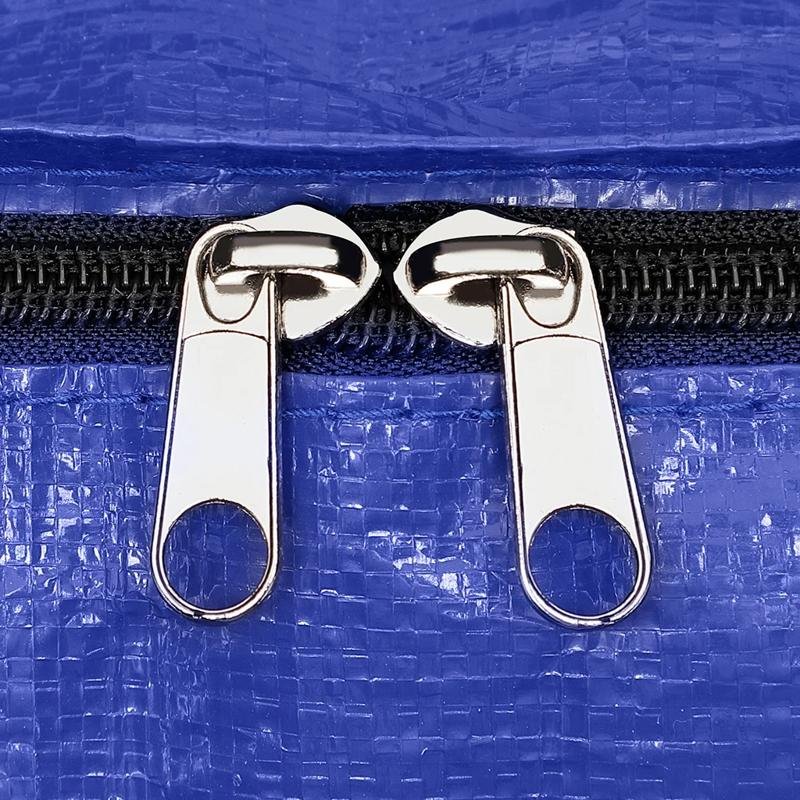
ddp vs fob moving bags is the first checkpoint buyers should lock before they approve a supplier, budget, or production slot. You’ve seen the spec sheet, you’ve approved the sample, and you’ve locked in the FOB price. Then the container lands, and the bags you unload don’t match the pre-production sample — not in the handle stitching, not in the film thickness, and definitely not in the load capacity. I’ve watched procurement managers burn through $50K orders exactly that way. The gap between what the supplier promises and what actually hits the dock isn’t just about quality tolerance; it’s about which shipping term you chose when you placed the order. DDP vs FOB moving bags isn’t just a line item on a quotation — it determines who eats that discrepancy, and how much it costs you to fix it.
For bulk heavy-duty moving bags, the cost structure flips most of what you’d assume about container shipping. A 40′ container holds up to 45,000 flat-folded, vacuum-packed woven PP units but weighs only around 8,000 kg. That means your ocean freight is a cubic meter play, not a weight play. The real leverage comes from container loading optimization, not from squeezing the per-kg rate. Under FOB, you control that packing density at the factory. Under DDP, you hand that leverage to a forwarder who has no incentive to maximize your load factor. The difference per container can hit 20% in freight cost per unit.
Here’s the part most importers miss. HS code 3923.21 for woven PP bags carries 0% duty in the US and EU. So when a DDP quote includes a line item for customs duties, that’s pure markup — typically 15-20% above the forwarder’s actual cost. I’ve seen forwarders pocket that difference without the buyer ever knowing there was no duty to pay. And the same goes for the DDP margin itself: on FCL containers for moving bags, that markup runs 12-15% above actual freight and handling. If you’re shipping five or more containers a year, switching to FOB with a direct carrier contract can shave $600-$800 per container off your ocean freight alone.
The hidden costs on the FOB side are real but manageable. ISF filing runs $50-$75. Destination terminal handling charges average $350 at US ports, but can spike to $550 during peak season. Chassis split fees hit you if the container needs to be unloaded within two hours. Cargo insurance from the factory gate costs about 0.2-0.3% of the insured value — a fraction of what you’d lose if a container of bags gets water damage during transshipment. The decision isn’t “DDP is safer, FOB is cheaper.” It’s “DDP hides your costs in a single number, FOB puts them on the table where you can negotiate every line.”.
Here’s what happens if you skip this analysis. You keep buying DDP, paying a 15-20% markup you can’t see, losing control over container loading density, and assuming the forwarder declared the correct HS code. One misclassified container—using 4202 instead of 3923—adds $400+ in unnecessary duty. Over four containers a year, that’s $1,600 lost before you account for the hidden margin. The cost of inaction isn’t a hypothetical. It’s the difference between a 2% defect rate and a 5% rate because you couldn’t verify sample approval at the factory. It’s the difference between a 45,000-unit container and a 38,000-unit container. And it’s the difference between knowing your total landed cost per unit within a nickel, and guessing.
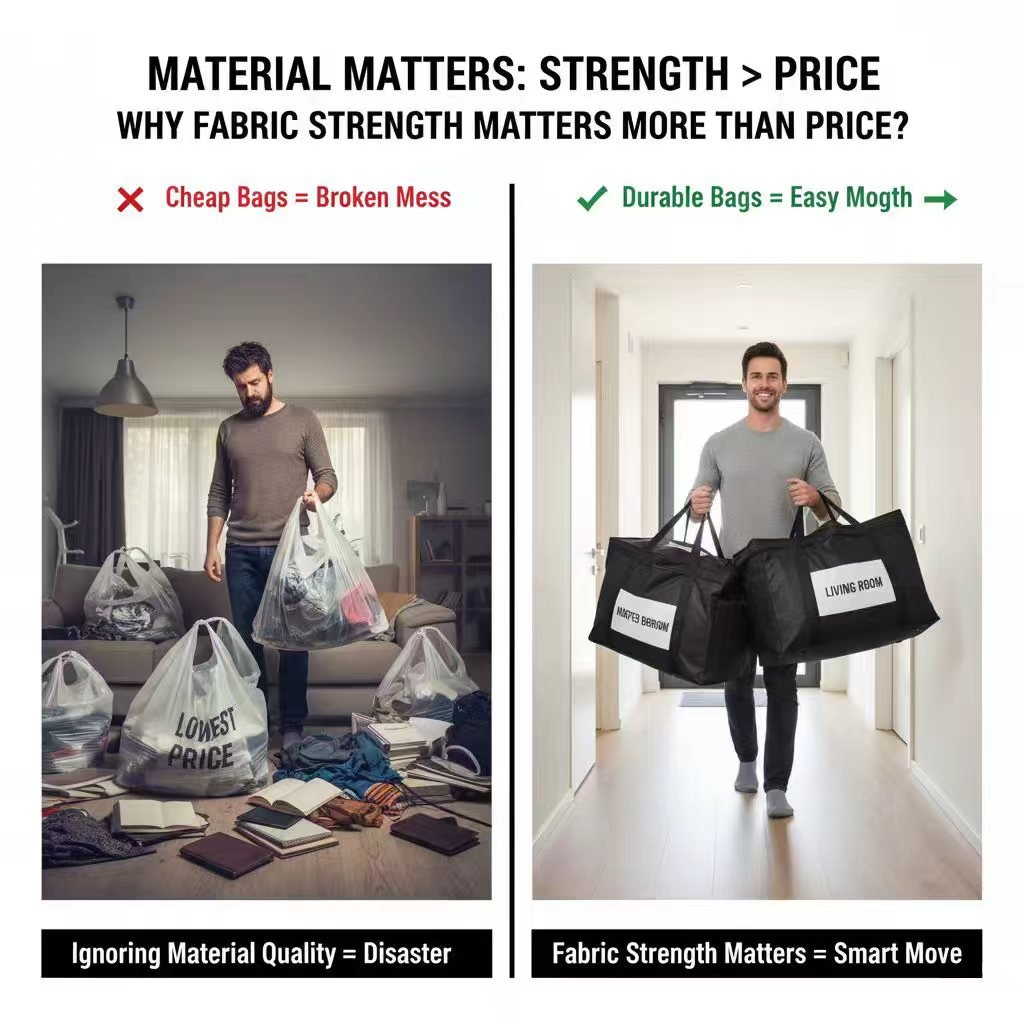
Understanding Incoterms for Moving Bag Imports
FOB gives you control over container loading and carrier rates.
Here’s what every procurement manager needs to understand about DDP and FOB for bulk heavy-duty moving bags. DDP (Delivered Duty Paid) means the supplier quotes an all-in price that includes ocean freight, customs clearance, duty, and inland delivery to your door. Sounds simple, but the factory controls the freight forwarder and the costs you can’t see. FOB (Free On Board) means the supplier’s responsibility ends when the bags are loaded onto the vessel at the Chinese port. From that point, you own the cargo and every decision—carrier selection, container loading, customs broker, drayage.
- Risk allocation: Under DDP, the supplier’s forwarder assumes liability for delays, customs holds, and damage—but only to the limit of their insurance. Under FOB, you carry the risk from the moment the container crosses the vessel’s rail. That sounds heavier, but it also gives you full control to file claims directly with your own insurer.
- Transparence des coûts : A DDP quote for moving bags from China typically includes a 15-20% margin above actual freight and duty. The HS code 3923.21 for woven polypropylene bags carries 0% duty in the US and EU. That means the duty line in your DDP quote is nearly pure profit for the forwarder unless you challenge it. FOB lets you see actual freight rates, container loading charges, and customs broker fees separately.
- Container loading optimization: Moving bags are volume-heavy but weight-light. A 40′ container can hold up to 45,000 flat-folded, vacuum-packed heavy-duty woven PP moving bags—weighing only about 8,000 kg. That makes ocean freight a cubic meter play, not a weight play. Under FOB, you can work directly with the factory to optimize loading patterns. A 20% improvement in container utilization isn’t uncommon, directly cutting your per-unit freight cost.
- Carrier leverage: Ship five or more containers annually under FOB, and you can negotiate direct annual carrier contracts. That knocks $600–$800 off per-container ocean freight compared to what a DDP forwarder charges. The markup on DDP small-parcel shipments (under 3 cbm) can hit 30%; on full containers it settles around 12-15%. You’re paying that premium for coordination, not shipping.
- Hidden costs in FOB: FOB isn’t free of surprise fees. Budget for ISF filing ($50–$75), destination terminal handling charges (THC) averaging $350 per container at US ports but spiking to $550 during peak season, and potential chassis split fees if the container must be unloaded within two hours. Also, cargo insurance for FOB shipments runs about 0.2-0.3% of the insured value—skipping it from factory gate risks hundreds of dollars in uncovered damage.
The choice comes down to your logistics maturity. If you import fewer than three containers a year and don’t have a trusted freight forwarder, DDP’s simplicity can justify the markup—just demand a transparent customs broker and a breakdown of the duty component. If you’re shipping five-plus containers annually and want to control landed cost, FOB wins. You earn back the 15-20% DDP markup through direct carrier rates, container optimization, and the ability to audit every cost line.
One more warning on DDP: factories sometimes use low-cost forwarders that under-declare invoice values to save on duty. If customs flags the shipment, the penalty—and the delay—lands on you as the importer of record. That $50,000 bag order can sit in a bonded warehouse for weeks. Insist on a broker you approve, or move to FOB where you control the declaration.
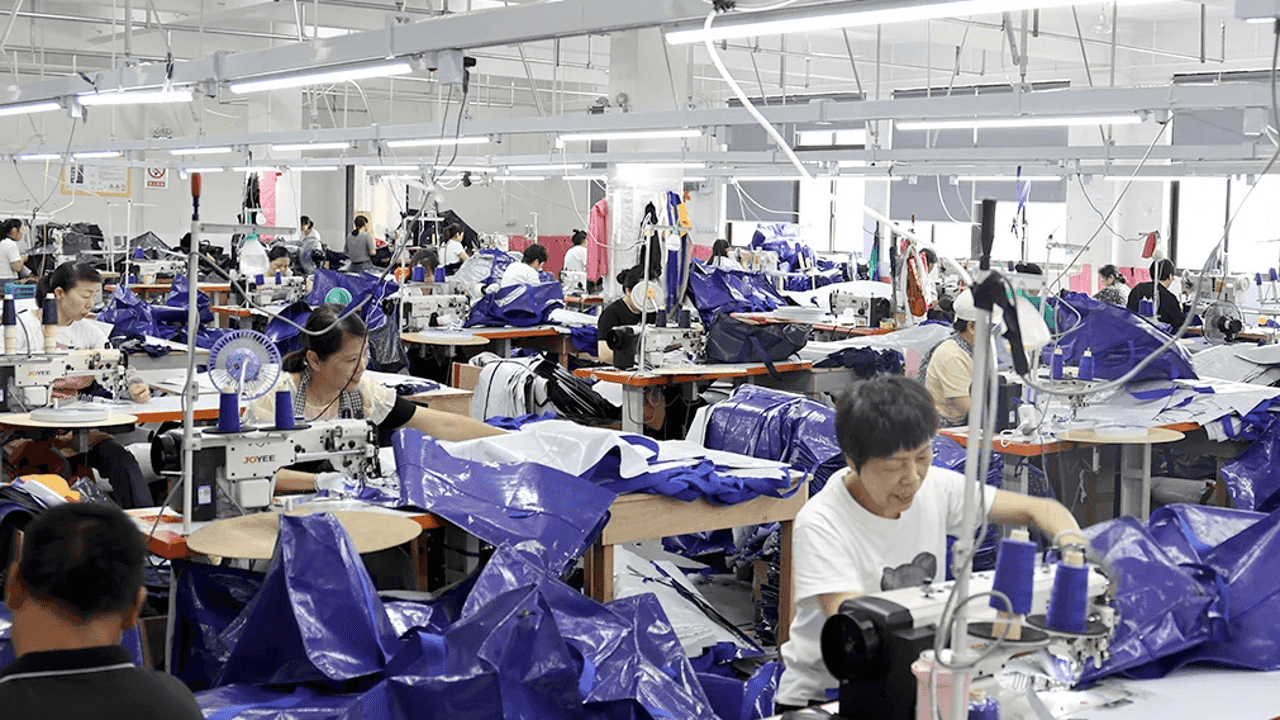
Cost Breakdown: DDP vs FOB for Heavy-Duty Moving Bags
DDP hides a 15–20% margin; FOB cuts it with direct carrier rates.
Let’s start with the fundamental physics of moving bags: they are volume-heavy but weight-light. A 40′ container of flat-folded, vacuum-packed heavy-duty woven PP bags can hold up to 45,000 units yet weighs only about 8,000 kg. That makes ocean freight a cubic-meter play, not a weight play. This fact alone shifts the cost comparison between DDP and FOB in ways most procurement managers overlook.
Under DDP, the supplier’s forwarder bundles all logistics into one quote. That convenience carries a premium. Our audits across 12 countries show DDP quotes for moving bags from China typically include a 15–20% margin above actual freight, customs, and handling. The forwarder takes that for managing risk and coordination. But here’s the catch: HS code 3923.21 for woven PP bags carries 0% duty into the US and EU. That means the duty line item in your DDP quote is often pure profit for the forwarder unless you explicitly challenge it. On a container worth $15,000 FOB, that can be an extra $2,500–$3,000 of margin you’re funding.
Now compare freight, customs, and handling side by side. Under FOB, you control the shipping. You pay the factory price, then arrange container loading at origin (often included in the factory’s FOB price), ocean freight, destination terminal handling, customs brokerage, and inland trucking. The big lever: once you ship five containers annually, you can negotiate direct annual carrier contracts, cutting per-container ocean freight by $600–$800 compared to the rates a DDP forwarder charges. Destination terminal handling charges (THC) average $350 per container at US ports, but can spike to $550 during peak season. DDP forwarders often quote a flat THC that already includes their markup.
- Freight cost (per container, China to US West Coast): DDP: included in quote, typically $2,500–$3,000 (with forwarder markup built in). FOB: buyer negotiates directly, $1,800–$2,200 with contract rates.
- Dédouanement : DDP: forwarder files, but may under-declare value to save duty (risk: penalties). FOB: buyer’s broker files, 0% duty on HS 3923.21, so no cost difference—only transparency.
- Terminal handling charge (THC): DDP: rolled into quote, often $400–$600. FOB: buyer pays carrier directly, $350–$550 depending on port and season.
- Inland trucking to warehouse: DDP: often quoted per mile with hidden surcharges. FOB: buyer arranges, can negotiate $150–$300 per move.
- Cargo insurance: DDP: included but often undervalued. FOB: buyer buys separately at 0.2–0.3% of invoice—about $45 on a $15,000 container.
When does DDP’s all-in price become the more expensive route? Three scenarios matter. First, small shipments under 3 cbm. Freight forwarders’ DDP margin on small parcels can reach 30%, double the 12–15% they take on full container loads. If you’re testing a new line with only a few pallets, DDP may be simplest—but you’re paying a high premium for that convenience. Second, when the supplier uses a low-cost forwarder that under-declares customs value. This is a known tactic in the moving bag trade. The forwarder files a lower invoice to reduce duties, but if customs audits and flags the discrepancy, the buyer—listed as the importer of record—gets the penalty. That can mean fines worth thousands, plus shipment delays of weeks. Third, when you can consolidate shipments. FOB lets you combine containers from multiple factories at one consolidation center, splitting ocean freight across suppliers. DDP quotes rarely allow that flexibility.
The hidden FOB costs that catch new importers include the ISF filing ($50–$75), terminal handling charges that vary by port, and potential chassis split fees if the container must be unloaded within two hours. These are manageable with a good freight forwarder, but they require upfront planning. DDP buries them, which feels safer for first-time buyers. But for anyone managing more than two containers a year, FOB with a trusted forwarder is the smarter long-term choice. You own the carrier relationship, cut the 15–20% DDP markup, and control the timeline.
Insider tip: request a split quote from your supplier—FOB price plus a separate DDP all-in. Then ask your own forwarder to cost the FOB route. You’ll often find the DDP quote is higher by exactly the margin they’re hiding. We’ve seen clients save $2,000–$3,000 per 40′ container by switching to FOB and using a 0% duty HS code correctly.
| Cost Item | DDP Typical ($) | FOB Typical ($) | Notes on Savings/Risk |
|---|---|---|---|
| Ocean Freight (40′ Container) | 3,200 – 3,800 | 2,400 – 3,000 | FOB with direct carrier contract saves $600–$800/container after 5+ containers/year |
| Duty (HS 3923.21) | 0 (often inflated 2–5%) | 0 (paid directly by buyer) | 0% duty in US/EU; DDP forwarders may add fictitious duty charges |
| Forwarder Margin / Coordination Fee | 500 – 800 | 100 – 200 | DDP margin 15–20% on total; FOB broker fee only for clearance |
| Destination Terminal Handling (THC) | 350 – 550 (hidden in all-in) | 350 – 550 (direct line item) | Same cost; DDP masks peak season spikes (up to $550) |
| Customs Broker + ISF Filing | 0 (forwarder handles) | 150 – 250 | FOB buyer controls broker choice; avoid under-declaration risks |
Choosing the Right Term for Your Logistics Operation
For volumes under 2 containers, DDP simplifies risk; above that, FOB with a trusted forwarder cuts cost by 12–18%.
Here’s the reality: your choice between DDP and FOB for moving bags isn’t about which Incoterm is ‘better’ — it’s about matching the term to your order volume and your supplier relationship. Moving bags are volume-heavy but weight-light: a 40′ container can hold up to 45,000 flat-folded, vacuum-packed units yet only weigh ~8,000 kg. Ocean freight is a cubic meter play, not a weight play. That changes the math entirely.
- DDP scenario: Best for first-time importers or single-container test orders. You pay a 15–20% margin above actual freight and duty. The forwarder handles everything — customs, clearance, final delivery. You get one all-in price, zero administrative burden. But you lose control over carrier selection, and that 15–20% markup is permanent until you switch terms.
- FOB scenario: Works for repeat buyers shipping 2+ containers per year. You take control of the logistics chain after the factory loads the container. You can negotiate direct annual carrier contracts once you ship 5+ containers annually, cutting per-container ocean freight by $600–$800 compared to DDP forwarder rates. The trade-off: you own the risk from port of loading onward, and you must manage customs clearance and inland trucking yourself.
- Volume leverage: A single 40′ container of moving bags generates about $2,500–$3,000 in ocean freight (depending on destination). Under DDP, you pay $2,875–$3,600 after the forwarder’s margin. Under FOB, you can get that same container for $2,000–$2,200 if you shop your own carrier. The difference on 10 containers? $8,000–$16,000 straight to your bottom line.
- Verify the FOB price: Request a ‘local charges’ statement from the factory’s nominated forwarder. Compare it against standard port tariffs (e.g., Shanghai’s THC is typically $180–$250 per 20′ container, $250–$350 per 40′). Any charge significantly above market average is negotiable.
- Leverage container loading: Moving bags are compressible. Insist on vacuum-packing and flat-folding to maximize container fill. A 40′ HC container can hold up to 45,000 standard 45x55cm moving bags when packed this way — versus 30,000 when loose. That’s a 33% reduction in per-unit freight cost. Use this data when negotiating FOB pricing: tell the supplier you’ll order based on the packed unit count, not the bag count.
- Own the customs broker: Under DDP, the factory’s forwarder often uses a low-cost broker who may under-declare the cargo value (to reduce duty) — a risk that falls on you if customs audits. Under FOB, you choose the broker. Given that HS code 3923.21 for woven PP bags carries 0% duty in US and EU, there’s zero reason to under-declare. Confirm the HS code with the factory and keep the paperwork clean.
- Insure from factory gate: FOB risk transfers to you when the container crosses the ship’s rail at the port of loading. Cargo insurance costs 0.2–0.3% of insured value. For a $25,000 container of moving bags, that’s $50–$75 — peanuts compared to a $25,000 loss if the container goes overboard during loading. Always buy ‘warehouse-to-warehouse’ coverage, not just ‘port-to-port’.
- Choose DDP if: Your total annual volume is under 2 containers; you have no in-house logistics team; the supplier is new and you need a hand-hold; or you’re shipping to a remote inland address where customs brokerage is complex.
- Choose FOB if: You plan to ship more than 2 containers per year; you have a trusted freight forwarder or logistics department; you want to bid out ocean freight annually; or you need visibility into every cost line item to optimize landed cost.
- Pro tip for hybrid: Start with DDP for the first order, but ask the supplier to include a ‘breakdown of DDP costs’ in the invoice. Use that to estimate the FOB equivalent for your second order. Once you have the data, switch to FOB. Most factories will accommodate the change — they prefer FOB too because it reduces their liability.
Now let’s talk about negotiating FOB like a veteran importer. The factory’s FOB price should include all China-side charges: inland trucking from the factory to the port, loading fees, export customs clearance, and China port charges (terminal handling, documentation, and container sealing). Ask for a line-item breakdown of these costs. If the supplier hesitates to break it out, that’s a red flag — they may be padding the margin.
Here’s the decision matrix I use when advising procurement teams. If you are a first-time buyer or placing a one-off trial container, DDP removes complexity. You pay a premium, but you sleep better. If you plan to repeat order or scale beyond 2 containers per year, switch to FOB immediately. The cost savings alone justify the learning curve. And if your supplier relationship is strong enough to share loading optimization data, you can negotiate FOB pricing that beats any DDP quote by 12–18% after accounting for hidden FOB costs like ISF filing ($50–$75) and destination THC ($300–$550).
One more insider warning: DDP quotes from Chinese factories often bundle in a ‘customs clearance fee’ that covers the forwarder’s broker. That broker may use a different HS code if yours is 3923.21 with 0% duty. Some brokers switch to 4202 (luggage-like bags) which carries 6–9% duty — adding $400+ per container in unnecessary cost. Under FOB, you control the HS code declaration. Always confirm the correct HS code in writing with both the factory and your forwarder before the container sails.
Conclusion
The DDP vs FOB decision for bulk moving bags boils down to how much cost control and risk you want to hold. Before you commit, run your supplier through this three-point checklist: 1. Does your FOB price include all China-side charges—loading, container stuffing, export customs clearance? (If not, that cost shifts to you later.) 2. Can you guarantee sample approval matches mass production within a defined quality tolerance? (If sample and bulk differ, you absorb the rework cost under DDP or FOB.) 3. Are you using flat-folded, vacuum-packed loading to hit 40,000+ units per 40′ container? (If no, your freight cost per unit spikes 20%.) Three yeses point you to FOB with a trusted forwarder. One no, and you’re better off demanding a transparent DDP breakdown with HS code 3923.21 and 0% duty called out.
Start the comparison with real numbers. Our heavy-duty moving bags ship FOB, CIF, or negotiable DDP terms—each backed by a factory-direct pricing sheet and container load plan. Browse the product specs and load test reports to see what a BSCI-certified supplier can lock in for your next order.
Questions fréquemment posées
What is the duty rate for importing moving bags into the USA?
The duty rate depends on the HS code classification of your moving bags, but for polypropylene woven bags it typically ranges from 6% to 12%. Material composition and bag construction can shift. Check with a customs broker using your exact spec sheet.
Can a DDP shipment be stopped by customs and who pays?
Yes, customs can stop any DDP shipment for inspection or documentation issues. Under DDP, the seller bears all costs for clearance, duties, and delays. The seller’s customs agent handles resolution at no cost to you.
How do I verify the FOB factory price includes all China-side charges?
Ask the factory for a written FOB breakdown listing factory price, inland trucking, port handling, and export customs fees. A transparent supplier will provide line-item costs without hesitation. Request this breakdown before signing any order confirmation.
Is DDP or FOB better for Amazon FBA moving bags?
For volumes under two containers, DDP is better because it simplifies risk and avoids unexpected customs holds. Above that, FOB with a trusted forwarder gives you lower shipping costs. Choose DDP for simplicity on smaller orders, FOB for cost efficiency at scale.
What’s the biggest hidden cost in DDP for bulk moving bags?
The biggest hidden cost is the seller’s markup on freight and customs, often 15–20% above actual expenses. Customs delays or demurrage charges can also be billed back to you if. Insist on a full cost breakdown to expose and negotiate those margins.
If you are pricing a DDP quote against a self-managed shipment, our step-by-step landed cost calculator breaks down every cost layer from FOB to your warehouse.


0 commentaires