



A 60 gsm nonwoven event bag and a 340 gsm canvas tote are both “fabric bags,” yet one carries a notebook and the other hauls firewood. Bag fabric GSM, grams per square meter, is the single number that best predicts weight capacity, stiffness, print quality and unit cost, and this guide explains what the ranges mean for each material family and how to verify the number a factory quotes.
GSM works as a common currency across substrates only when you also know the material, so every range below is family-specific.
What GSM measures and how the test works
GSM is grammage, mass per unit area, defined in the reference on grammage, and for wovens it sits alongside thread density and yarn denier, the fiber-mass unit explained in the overview of denier, as one of three numbers that fully describe a fabric. The verification test is simple enough to run during a factory audit: cut a specimen with a circular GSM cutter of 100 square centimeters, weigh it on a 0.01 gram balance, multiply by 100, and you have grams per square meter. Three specimens from different fabric positions should agree within 5 percent; wider scatter means uneven extrusion or coating, not measurement error. Laminated fabrics complicate the reading because the film adds 15 to 40 grams independent of the base weave, so always specify base-fabric GSM plus lamination GSM separately in the spec sheet.
The working ranges by material family
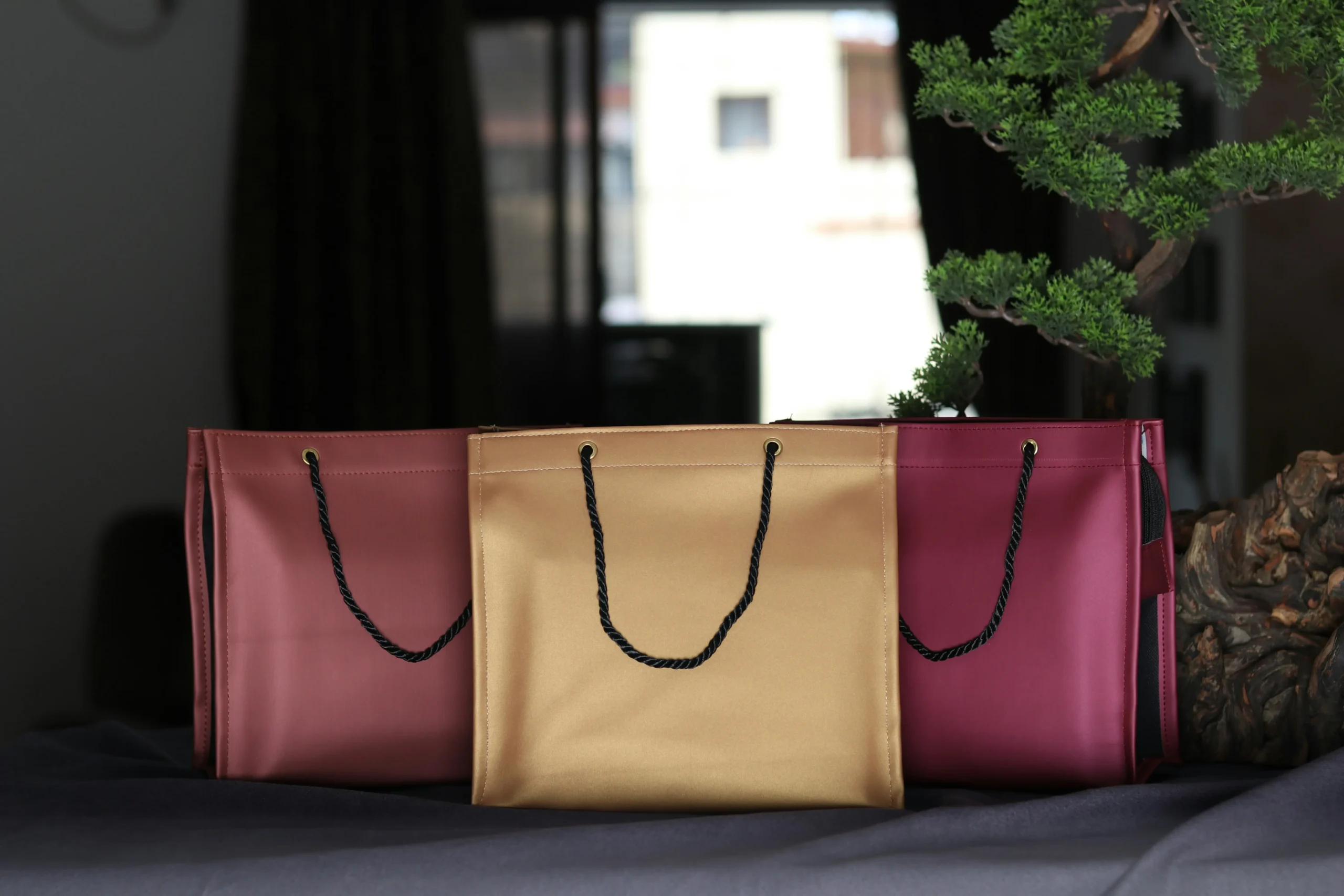
Nonwoven polypropylene for promotional bags runs 60 to 120 gsm, with 80 gsm the de facto event standard and 100 gsm the threshold where a bag survives more than a handful of reuses. Woven polypropylene, used for bulk, feed-style and heavy laminated shopper bags, runs 60 to 200 gsm, most commonly 90 to 160, and gains tear strength faster per gram than nonwoven because the yarn structure carries load in both directions. Cotton canvas for premium totes runs 240 to 400 gsm, conventionally quoted in ounces, with 8 oz around 270 gsm, 10 oz around 340 and 12 oz around 407; the conversion is 1 ounce per square yard equals 33.906 gsm. Jute and burlap run 300 to 450 gsm with visible slubs, and recycled PET felt for gift packaging sits near 180 to 250. Family-by-family construction differences are compared in our woven versus non-woven polypropylene guide.

What each GSM step buys you, and what it costs
Weight buys three things: load capacity, structure and print surface. Moving a nonwoven from 60 to 80 gsm roughly doubles realistic reuse cycles, from a one-event bag to something that survives 8 to 15 uses; moving to 100 gsm adds enough stiffness that a printed logo stops wrinkling across the panel. In wovens, each 10 gsm step on a laminated shopper adds approximately 0.8 to 1.5 kg of safe carry capacity up to the handle-seam limit, which is why our pp woven program quotes 90, 120 and 160 gsm tiers with tested load figures attached. Cost moves nearly linearly: fabric is priced by weight, so a 20 percent GSM increase raises material cost 15 to 20 percent and finished-bag cost 8 to 15 percent after sewing and overhead. The curve has a flat spot worth knowing, between 100 and 120 gsm for nonwovens and 120 to 160 for wovens, where durability gains per cent peak before diminishing returns set in.
Matching GSM to the job the bag has to do
Specification starts from the use case, not the fabric catalog. A trade-show handout that lives one afternoon needs 60 to 80 gsm nonwoven and nothing more; the economics of event programs are covered in our trade-show reusable bag program case study. A grocery program targeting 50-plus reuses under 8 kg loads should sit at 120 gsm woven PP minimum or 340 gsm cotton. Corporate and campus programs split the difference at 80 to 100 gsm nonwoven or 240 gsm canvas, where brand feel matters more than load ceiling. Handle comfort also tracks GSM, because heavier fabric spreads load across a wider strap; the ergonomic dimension is measured in our tote handle length and comfort guide. Write the GSM into the purchase order alongside the material family, never as a bare number.

Catching inflated GSM claims before production
Overstated GSM is one of the two most common bag quotes deceptions, the other being recycled-content percentages, and it is cheap to catch. Ask for the fabric mill’s own weight certificate for the production batch, not a generic data sheet; cut and weigh three specimens at the pre-production sample stage; and specify a tolerance, minus 5 percent maximum, in the contract with re-inspection rights. Coated fabrics deserve a written breakdown of base weight versus coating weight, because a “150 gsm laminated woven” can hide a 100 gsm base under a heavy film and fail load tests the label implies it passes. Buyers consolidating materials for multiple programs can find the full substrate list, including certified organic cotton and recycled PET options, on our materials page and the organic cotton program page.
Frequently asked questions
What GSM is best for reusable shopping bags?
120 gsm woven polypropylene minimum for grocery programs targeting 50-plus reuses at 8 kg loads, or 340 gsm, 10 oz, cotton canvas where premium feel outweighs cost.
How do I convert canvas ounces to GSM?
Multiply ounces per square yard by 33.906: 8 oz is about 271 gsm, 10 oz about 339, and 12 oz about 407.
Why does my 100 gsm bag feel lighter than a friend’s 100 gsm bag?
Lamination adds 15 to 40 grams that some quotes include and others exclude; ask for base-fabric GSM and coating GSM separately to compare like with like.
Does higher GSM always mean a stronger bag?
Up to a point: gains peak between 100 and 120 gsm for nonwovens and 120 to 160 for wovens, after which handle and seam construction, not panel weight, set the failure load.
Material choice between jute and canvas moves cost, load and print quality; our jute versus canvas tote comparison compares both fibers honestly.
Load specs decide whether a moving program survives relocation season; our woven PP moving bag load specs guide lists the 15 to 50 kg classes honestly.
Odor claims fail at customs and retail gates; our textile bag formaldehyde testing guide maps formaldehyde limits and test methods for textile bags.


0 commentaires