



Wholesale Custom Tote Bags: 2026 MOQ, FOB Price, and Margin Tips is the first checkpoint buyers should lock before they approve a supplier, budget, or production slot. A distributor running wholesale custom tote bags through their warehouse knows the FOB number on a quote sheet doesn’t tell the whole story. You see $1.75 per unit on 10 oz canvas and think a 40-point margin is locked in. Then palletization charges, a peak-season freight surcharge, and a 25% duty on the China-origin shipment hit the invoice. That tidy margin shrinks by 5–8 points before the carton even reaches your dock. Most sourcing guides skip this part. They recite MOQ minimums and pretend FOB equals cost. You know better, or you’ve paid for the lesson.
The gap between factory-gate price and true landed cost is where distributor profit lives or dies. Factory-direct sourcing from a mill that produces both heavy-duty moving bags and retail-grade totes strips out 15–25% of middleman markup right away. But the bigger lever most distribution owners overlook sits inside their SKU mix. Combining a run of blank 10 oz canvases with a smaller lot of printed RPET totes in the same container doesn’t just consolidate freight — it pushes the whole order past a volume tier that drops per-unit material cost from $2.70 toward $1.75. Do that twice a year, and the math on a 5,000-unit reorder is worth a conversation free of academic throat-clearing.
Understanding Wholesale Custom Tote Bag Dynamics in 2026
Factory-direct cuts 15-25% off per-unit cost versus US middlemen.
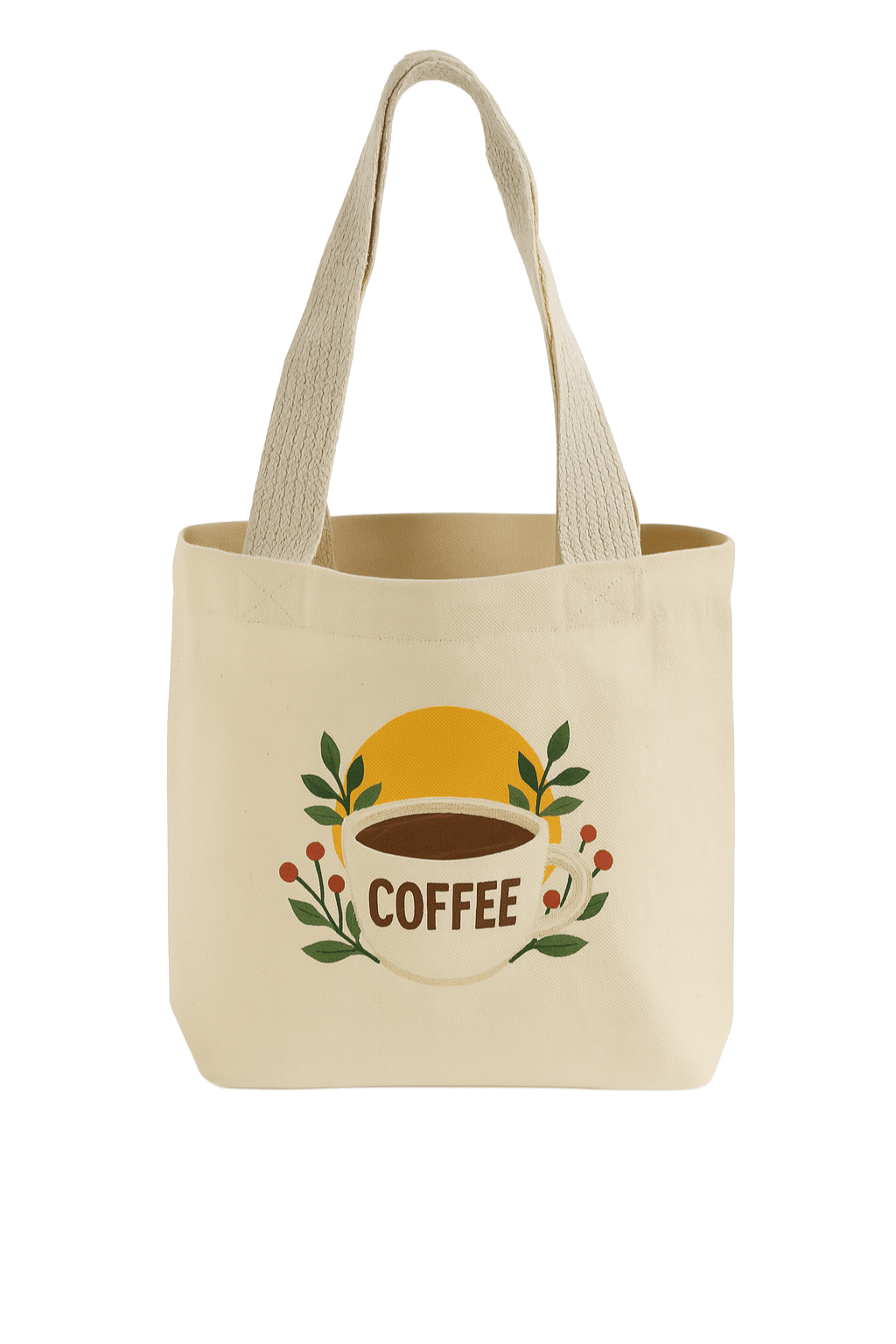
Buying custom tote bags through a US-based supplier adds a 15-25% markup that buys nothing but a domestic phone number. A factory-direct relationship lets you pay the real FOB price and control the specification sheet yourself. You’re not limited to the middleman’s catalog; you dictate fabric weight, handle reinforcement, and print registration directly with the line that makes the bag.
- Price transparency: See the actual material, labor, and overhead breakdown instead of a blended wholesale price. The $2.70 per-unit canvas cost at 500 units drops to $1.75 at 1,000 units because you’re buying at the mill rate, not a reseller’s floor.
- Batch consistency: Middlemen switch factories to chase spot pricing. A direct partnership with one factory locks in raw material sourcing, stitch patterns, and dye lots across reorders.
- Inventory control: Combine standard and custom SKUs into one container to reach volume tiers. This tactic cuts unit costs without forcing you to warehouse dead stock of a single design.
- Print setup economics: Screen setup fees run $30-$60 per color, amortized over the run. At 200 units, setup adds $0.15-$0.30 per bag per color. At 1,000 units, that drops to $0.03-$0.06. High-volume runs make multi-color prints commercially negligible.
- Duty arbitrage: Import duty on cotton bags from Turkey sits at 6.3-6.7% under HTS 6305.33. The same bag from a Chinese mill faces 25%+ duties. The country-of-origin decision alone can swing your landed cost by 15-18 percentage points before freight even enters the equation.
- Freight per unit: Ocean freight for 5,000 units from Turkey to US East Coast runs $0.15-$0.30 per bag. Air freight burns that entire margin advantage. Plan 8-10 weeks lead time and ship sea freight to protect gross margin.
The real margin killer isn’t the FOB price; it’s the 5-8% in hidden costs that show up after the quote. Fumigation certificates, palletization, and peak-season surcharges get buried in a middleman’s all-in number. Buying factory-direct forces those line items onto the invoice where you can negotiate or mitigate them.
Material is the dominant cost driver. A 10 oz cotton canvas bag has a raw fabric cost roughly 55-65% of the FOB unit price. Moving from 5 oz non-woven polypropylene to 12 oz canvas triples the base material cost but also extends the bag’s service life from a handful of uses to hundreds of cycles. For industrial distributors supplying moving companies, that durability justifies a higher resale price and reduces return rates.
MOQ Reality and Tactical Negotiation
The real MOQ game is not hitting a magic number—it’s structuring your order so the factory’s production efficiency aligns with your margin.
Most distributors walk into a sourcing conversation fixated on a single MOQ figure. That’s a mistake. In 2026, the relevant number is the volume tier at which your per-unit material and labor cost makes your target margin viable. Factory-direct quotes for 10-ounce natural canvas tote bags typically show a steep per-unit drop between 500 and 1,000 units: you move from roughly $2.70 down to $1.75 FOB. That’s a 35% cost reduction, not because the factory is doing you a favor, but because cutting, printing, and assembly setups become significantly more efficient at the 1,000-unit batch.
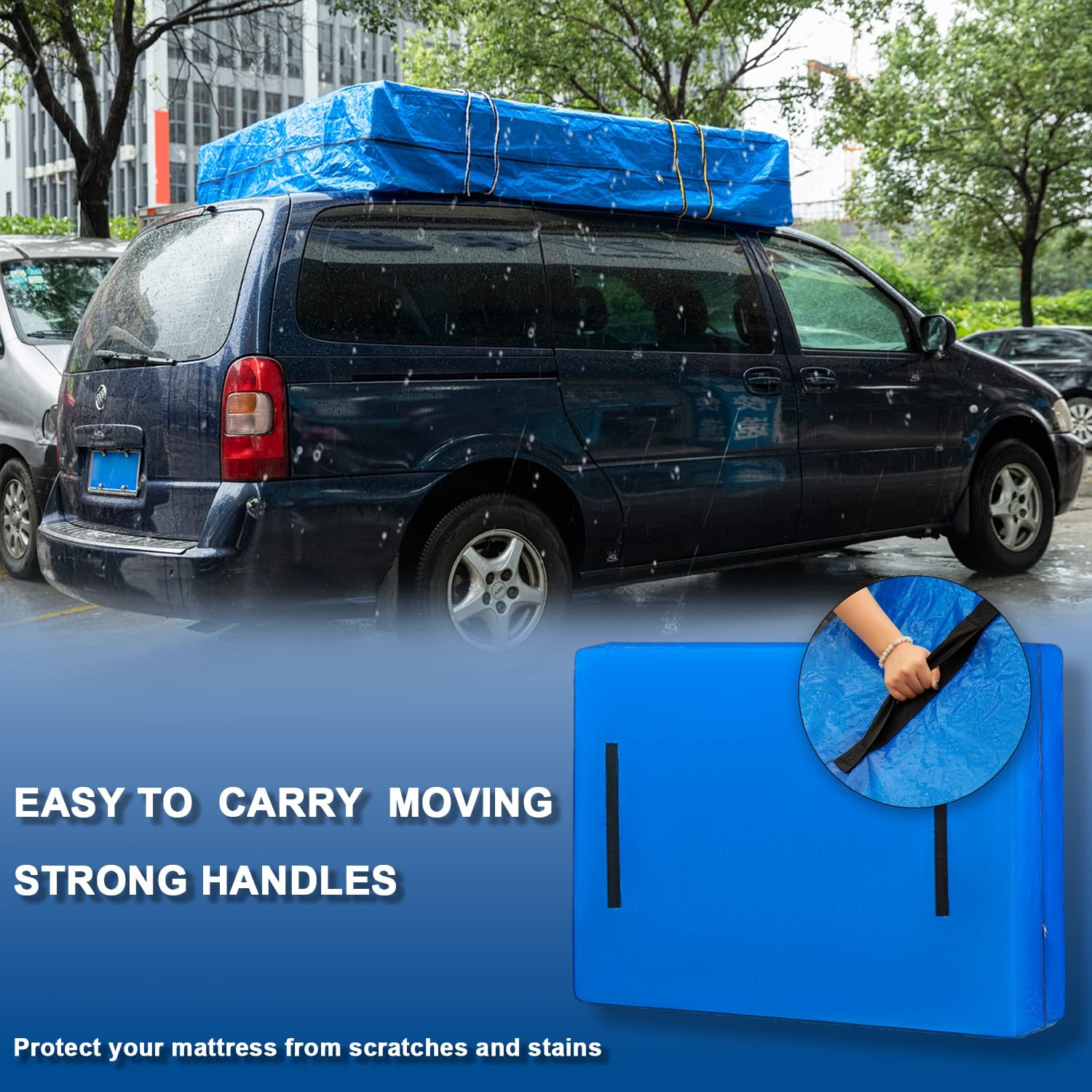
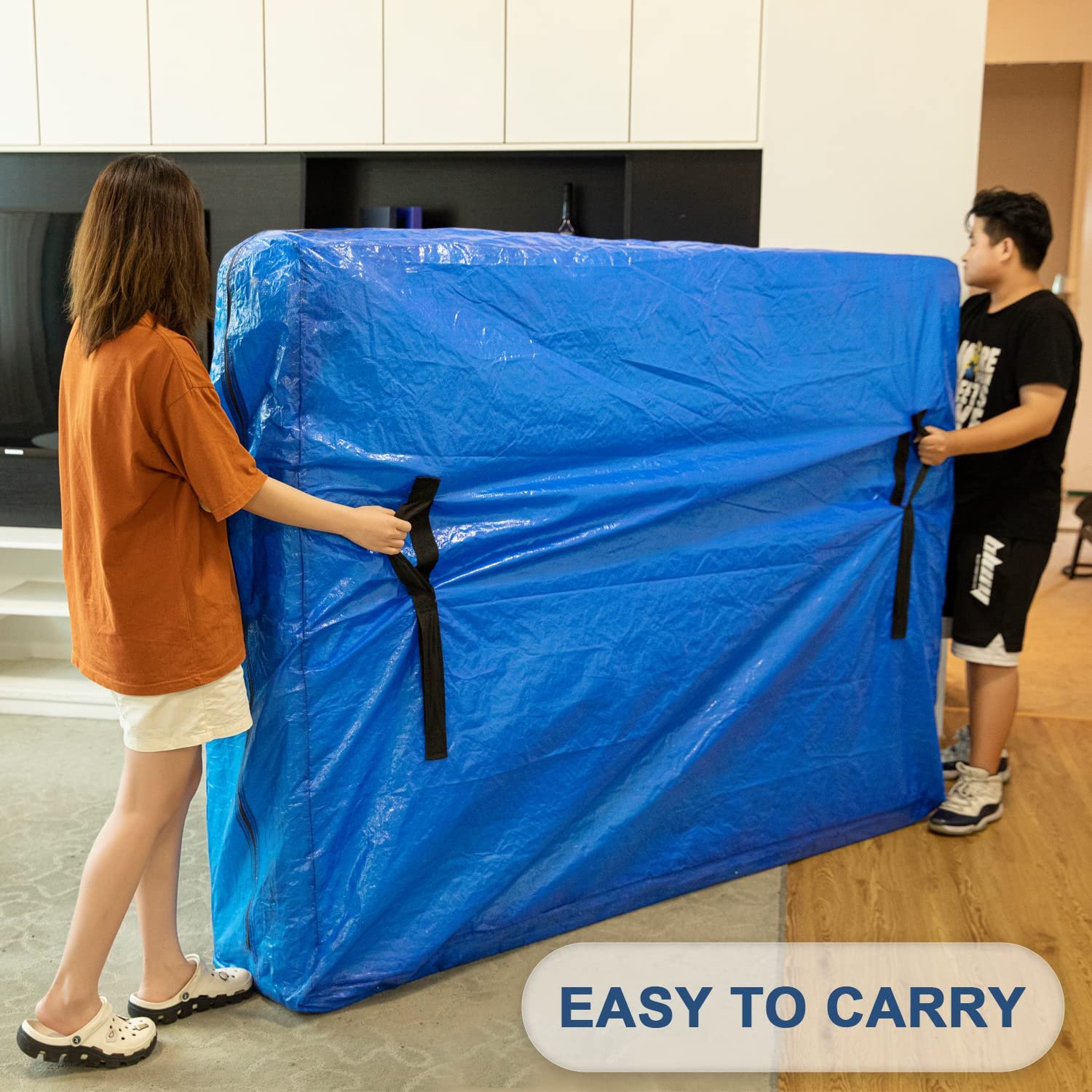
Material choice dictates baseline MOQ before any negotiation starts. Laminated non-woven polypropylene and lightweight 5-ounce cotton often carry a flat 200-unit minimum because they run on faster, automated lines. In contrast, heavy-duty 12-ounce canvas, RPET blends, or custom-woven designs with reinforced handles frequently land at 500 to 1,000 units. If you need a true industrial-grade moving bag—double-stitched seams, wrap-around handles, 50-kilo load rating—expect factories to push back on anything below 500 units unless you’re combining SKUs.
- 5-6 oz standard cotton (swag/promo): MOQ 200-300 units. Setup cost is low because printing plates are small, and fabric waste is minimal.
- 10-12 oz natural canvas (retail/everyday): MOQ 500 units typical; drops to 1,000 for the best per-unit price. The difference between 500 and 1,000 units is where 30-40% of the margin lives.
- RPET/recycled polyester (eco-compliance): MOQ 500-1,000 units. Raw material sourcing often forces a higher floor; some mills won’t run less than a full roll, which translates to roughly 800 bags.
- Heavy-duty woven/reinforced moving bags: MOQ 1,000+ units standard. The extra stitching stations and handle reinforcement points make short runs economically irrational for most factories unless you pay a substantial surcharge.
The fastest way to lower an MOQ without sacrificing quality is SKU combination—a tactic fewer than 20% of distributors actively negotiate. If you need 300 printed retail totes and 700 blank heavy-duty moving bags, you’re not two separate orders; you’re one 1,000-unit production run hitting a higher volume tier. The factory amortizes setup across the batch, and you get the lower per-unit price for all bag types in the container. The only condition: bags must share core construction specs (fabric base, seam type, handle attachment method) so they flow through the same production line.
Print complexity is your second lever. A single-color screen print adds roughly $0.30 to $0.60 per bag once setup fees ($30–$60 per screen) are amortized. If you’re testing a new market, order the bags blank and use a local heat-transfer operation for the first 200 units. Your landed cost per bag might rise by $0.80, but you avoid locking up $5,000 in inventory you can’t move. Once demand is proven, you shift to factory-applied print and the per-unit cost collapses.
Factory relationship incentives are the margin-protection tactic most sourcing guides ignore. Negotiate a free sample quota of 20–30 units per SKU before you sign the purchase order. This isn’t a drawer of freebies—it’s your sales team’s sample line without the $500–$2,000 annual drain on your marketing budget. Pair that with a co-op marketing agreement: a reliable factory will credit 2–3% of your order value toward trade-show samples or catalog photography if you commit to a 12-month supply agreement. Over three container orders, that’s $3,000–$5,000 in hard savings that directly widens your gross margin.
One final test for negotiation: always ask for a caliper verification photo of the fabric thickness next to a standard GSM swatch. When a factory quotes an MOQ 50% below market with the same spec, they’re cutting material weight or stitch density. A quick photo—taken on the production floor—will reveal whether you’re getting 10-ounce canvas or a 7-ounce substitute. This single request separates the suppliers who understand distributor-grade durability requirements from those who don’t.
FOB Price Construction and Hidden Costs
Ignore the FOB number your supplier slides across the table—the true margin stealer is what happens between factory gate and your warehouse.
A quote of $1.75 per unit for 10oz canvas at 1,000 pieces looks clean. But that per-unit FOB price is a composite of three levers: raw material, direct labor, and print setup amortization. When you scale from 500 to 1,000 units, material cost drops because fabric mills offer better rates on full rolls—moving from $2.70 to $1.75 is not a discount; it’s the elimination of waste and underutilization. Labor per piece falls as the line reaches steady cadence. The sticking point most distributors ignore is the screen setup fee: $30–$60 per color. At 500 units, a three-color print adds $0.18–$0.36 per bag. At 5,000 units, it shrinks to under $0.04. You are not paying for ink; you are paying for machine time.
- Matériau : 10oz cotton canvas runs $1.75–$2.70 per unit at 1,000 pieces FOB. Lower weights like 6oz drop the base, but side seams and handle stress points demand reinforcement that eats the savings if not engineered properly.
- Labor: Stitching and gusset construction account for roughly 22–28% of ex-factory cost. Simple open-top totes with reinforced cross-stitch handles require less time than zippered moving bags with webbing, directly affecting per-unit output on a fixed line.
- Imprimer : Screen charges amortize fast. A single-color logo on 2,000 units can stay under $0.08 per bag. Multi-color, HD, or full-panel prints push past $1.50. Ask for a separate line item for screens; if it’s bundled into the unit price, you lose visibility on volume breaks.
- Palletization & Fumigation: ISPM 15 stamped pallets avoid customs holds. If your supplier loads on raw wood, expect $200–$400 in fumigation fees at destination and 2–5 days of demurrage.
- Duty Rate Delta: Turkey: approximately 6.5%. China: 25%+. For a $1.75 FOB bag, the duty gap is $0.32 per unit. Multiply by volume and the location of origin becomes a six-figure decision line.
- Warehouse Absorption: Receiving, pallet breakdown, and put-away add $0.04–$0.08 per unit in a standard 3PL. If you receive in palletized cartons that match your pick-pack setup, you avoid rework labor that kills margin on fast-moving SKUs.
Do not mistake the FOB number for your cost of goods sold. The true landed cost adds 5–8% above FOB just from palletization, fumigation certificates, and seasonal freight surcharges that carriers apply outside the base rate. A container from Turkey might show $0.15 per bag ocean freight at 5,000 units, but that assumes your forwarder runs a clean consolidated load without detention at port. Spot rates in Q3 can flip that to $0.30 overnight. If your supplier quotes FOB without confirming whether pallets are heat-treated to ISPM 15 and whether fumigation is included, you are budgeting a fantasy. The invoice at the port will correct it.
Duties compound the margin squeeze. Cotton totes from Turkey land at 6.3–6.7% under HTS 6305.33. The same bag from China faces 25% or more. A distributor importing 10,000 units of 10oz canvas at $1.75 FOB from China adds $0.44 per unit in duty alone before the container is released. That is $4,375 in unplanned cost, enough to wipe out the profit on the first 2,000 bags sold. The sourcing map matters more than the unit price. Check the country of origin’s trade status with your destination market before comparing two identical FOB offers.
Distributors who track margin per SKU often stop at the purchase order. They miss that a factory willing to grant free sample quotas—saving $500–$2,000 annually—reduces marketing overhead, which directly improves net margin on the entire category. Combine that with co-op fund negotiation and you shift from buying bags to buying a partnership where the factory carries part of your sales cost. That is the difference between a 22% margin that looks good on a spreadsheet and a 19% margin that actually clears the bank after all the unlisted charges settle.
| Cost Stage | Facteur de coût | Unit Cost Range | Key Variable | Margin Erosion Risk |
|---|---|---|---|---|
| FOB Base | 10 oz Canvas Fabric | $1.75 – $2.70/unit | Volume tier (500→1,000 cuts 35%) | Low if optimized |
| FOB Base | Cut & Sew Labor | $0.30 – $0.50/unit | Stitch complexity, region | Minimal |
| FOB Base | Screen Printing (1-color) | $30–$60 setup + $0.10/unit | Amortized over run length | Moderate if over‑spec’d |
| Post-FOB Hidden | Palletization & Fumigation | $0.05 – $0.12/unit | ISPM 15 wood compliance | 2–3% swing |
| Post-FOB Hidden | Ocean Freight (Asia→US) | $0.15 – $0.30/unit | Peak season, fuel surcharges | 5–8% landed cost adder |
| Post-FOB Hidden | Customs Duty (China origin) | 25%+ of FOB value | HTS 6305.33, trade policy | Crippling if unplanned |
| Post-FOB Hidden | Customs Duty (Turkey origin) | 6.3% – 6.7% of FOB | FTA eligibility, documentation | Manageable |
| Post-FOB Hidden | Port Handling & Last-Mile | $0.10 – $0.20/unit | Drayage, warehouse receiving | Often overlooked |

Margin Protection and Profit Maximization
Most distributors lose 5-8% margin to invisible landed costs before a single bag sells.
Setting a resale price that actually holds after freight, duties, and warehousing means starting with your fully landed cost, not the FOB quote. Factory-direct sourcing removes the US middleman layer—typically a 15-25% markup on canvas tote bags—but that advantage evaporates if you price off the FOB figure alone. For a 10 oz canvas tote with a per-unit FOB of $1.75 at 1,000 units, palletization, fumigation, and peak season surcharges can add 5-8% before the container leaves the port. Add ocean freight at $0.15-$0.30 per bag and the relevant import duty—6.3% from Turkey under HTS 6305.33 or over 25% from China—and your true unit cost lands somewhere between $2.30 and $2.80. Price below a 40% gross margin on that number and a single supply chain disruption wipes out the quarter.
Distributors who scale volume tiers with SKU consolidation lock in better unit economics without tying up cash in dead stock. The difference between 500 units and 1,000 units on a standard 10 oz canvas tote can shift the per-unit cost from $2.70 down to $1.75. If your catalog includes heavy-duty moving bags alongside retail tote bags, run both through the same shipment to meet a combined MOQ threshold; factories that accept mixed-SKU container loads let you capture the volume break while maintaining catalog variety. This tactic directly protects inventory turnover rate—a KPI that matters more to your P&L than a few pennies saved on a single SKU.
Screen print setup fees—typically $30-$60 per color—get amortized aggressively at scale. At 250 units, a two-color print adds roughly $0.48 per bag just in setup cost before ink; at 1,000 units that drops to $0.12. Your customer-facing price needs to reflect the real cost of design complexity at their order volume, or you’ll subsidize small custom runs on your own margin. Build tiered print surcharges into your distributor price sheet and train sales reps to upsell volume where it improves mutual profitability.
- Margin-wrecking over-specification: Ordering 12 oz canvas for a promotional swag bag that only needs to survive a conference floor destroys gross margin by 20-30% compared to a 6 oz cotton alternative. Match fabric weight to end use with a GSM confirmation from the factory—never guess.
- Ignoring blank bag + local print economics: When a customer wants 100 bags with a logo, forcing a full custom factory run kills margin. Order blank wholesale tote bags at a higher combined volume, then screen print locally. This avoids MOQ surcharges and reduces per-unit print cost on small batches.
- Leaving free sample quota unclaimed: Distributors who negotiate a quarterly free sample allocation can save $500-$2,000 annually in marketing support. Samples close B2B deals faster than spec sheets, yet most buyers never ask. If a supplier refuses sample support at annual $50K+ spend, factor that into your vendor scorecard.
- Seasonal freight blindness: Peak shipping season before Q4 can swing ocean freight rates 30-40%. Lock a container rate for 90 days from your forwarder and build a 3-5% buffer into your landed cost model for mid-contract spot rate spikes. Your Q3 quote should not match your Q1 quote.
- No co-op marketing agreement: A manufacturer confident in their quality will fund a portion of your product catalog or trade show booth. If you’re moving 10,000+ bags annually and haven’t asked for co-op dollars, you’re leaving 2-4% of your effective margin on the table.
Conclusion
Factory-direct sourcing cuts the middleman markup by 15-25%, and scaling from 500 to 1,000 units drops the per-unit canvas cost to $1.75. But the real margin lives in the numbers most distributors ignore—palletization fees, fumigation certificates, and the 25%+ duty wall from China versus 6.3% from Turkey. The 5-8% swing between FOB and true landed cost is where a profitable quarter turns into a breakeven one.
Run your own numbers against the transparent pricing tables on the sourcing page. Compare material weight, quantity tiers, and print method costs side by side. When you find a tier that matches your catalog volume, request a custom quote to lock those figures before the next seasonal surcharge hits.
Questions fréquemment posées
What is the typical MOQ for wholesale custom tote bags?
Overseas factories normally require 200-1,000 units for full custom, but you can shrink that to 50 pieces by ordering blank bags and adding logos locally. Full custom features like woven labels. Confirm MOQ after nailing down print method and blank stock availability.
How much do custom tote bags cost in bulk?
For 1,000 units of 10oz canvas, expect $1.75-$2.70 per unit FOB, plus printing ($0.30-$2.50) and ocean freight ($0.15-$0.75 per unit). Complex prints can push landed cost above $5.00, so ask for a. Request a line-by-line landed cost breakdown with your HS code.
Can I order custom tote bags without a logo?
Yes, blank wholesale tote bags are widely available, and you can add branding later through a local screenprinter to bypass high MOQ thresholds. This may reduce dye lot risks, but verify blank. Coordinate with a local decorator before placing your blank order.
What is the difference between FOB and landed cost?
FOB covers the bag cost at the factory gate, while landed cost adds international freight, insurance, customs duties, and drayage to your warehouse. FOB alone can mask up to a 25% margin. Get a full landed cost projection before signing a P.O.
How do I choose the right fabric for wholesale tote bags?
Match fabric to end use: 5-6 oz cotton for lightweight swag, 10-12 oz canvas for durable retail bags, and RPET for eco-positioned brands. Always confirm finished weight as GSM, not greige, to avoid under-spec delivery. Request pre-production swatches and weight verification reports.
From center-front to handle tags, our logo placement guide maps cost and visibility for every zone.

0 commentaires