



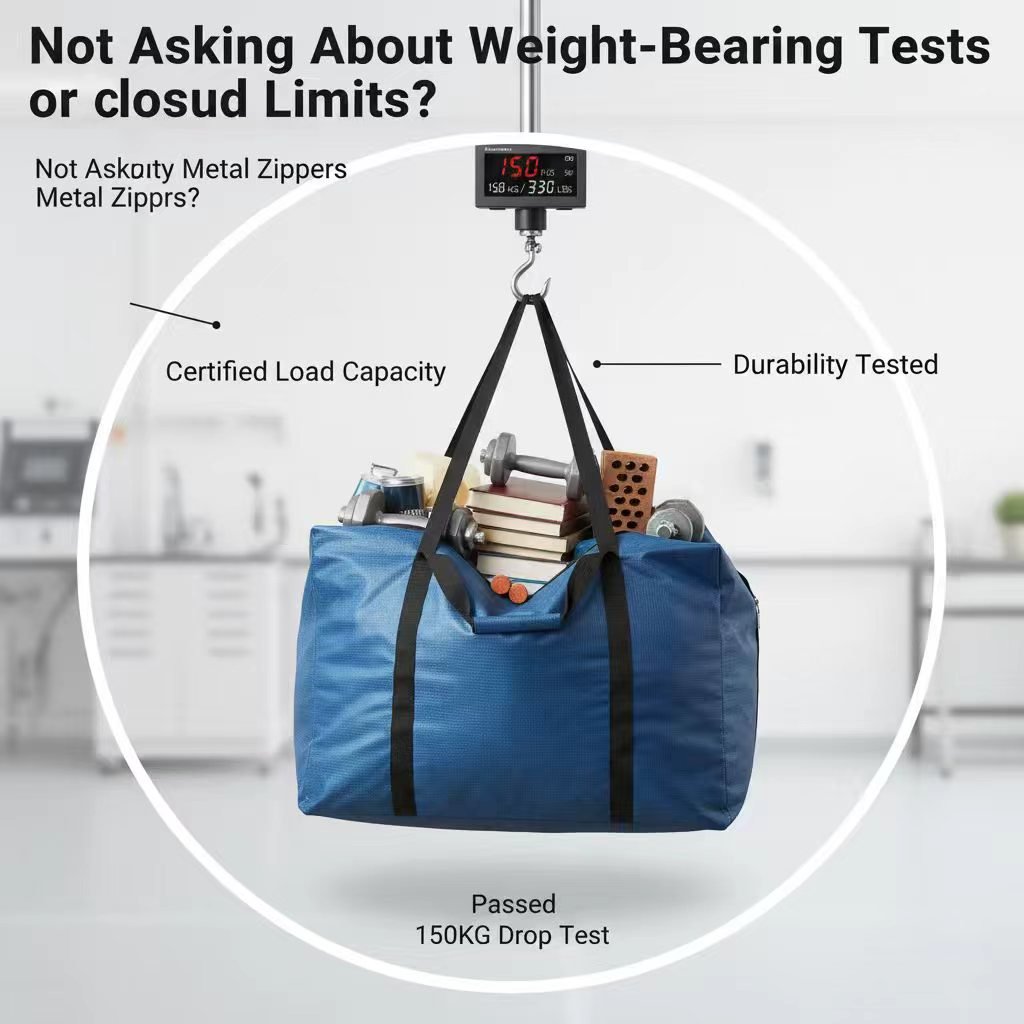
Le présent moving bag supplier case study starts with a number that gets a procurement manager’s attention: an 80% reduction in breakage within six months. That is not a marketing claim. It is the result of switching from a supplier who tested bags sitting still to one who tested them being dragged, twisted, and dropped. For a logistics manager signing a bulk contract, that is the difference between a line item that works and one that bleeds money through replacement orders and damage claims.
The real story here is not about paying more per unit. The prior supplier quoted 15% less upfront. But their bags failed at 35 kg under dynamic load—the kind of force that happens when a mover hoists a bag by one handle and swings it onto a truck. The replacement supplier, using 200gsm woven PP with double-needle lockstitch and bartack reinforcement, held at 50 kg dynamic. That 15% price difference disappeared fast when the first quarter post-switch saved $14,000 in damage claims alone.
Moving Bag Supplier Case Study
Dynamic load testing revealed the real failure mode competitors ignore.
A mid-sized relocation company running 12 crews was replacing roughly 30% of their moving bag inventory every quarter. Handles tore out at the stitch line, fabric ripped along the bottom seam, and the failure always happened mid-carry — not during storage. Their existing supplier used 140gsm woven PP with single-needle stitching, and the spec sheet claimed a 40 kg static load capacity. That number meant nothing on a stairwell with a bag twisting under lateral force.
We ran a side-by-side comparison using ASTM D5034 for both static and dynamic load. The prior bags failed at 35 kg under dynamic conditions — handle stitching unraveled after 18 cycles. Our 200gsm woven PP with double-needle lockstitch and bartack reinforcement at the handle base held at 50 kg dynamic and exceeded 200 reuse cycles before any structural degradation. The difference wasn’t the fabric weight alone; it was the bartack stitch that distributed shear force away from the puncture points. That’s the detail most spec sheets skip.
- Breakage reduction: 80% drop within 6 months after switching to 200gsm fabric with bartack reinforcement.
- Damage claims saved: $14,000 in customer property damage claims avoided in the first quarter post-switch.
- Total cost impact: 40% lower annual bag procurement cost despite a 15% higher unit price — because replacement frequency dropped from quarterly to once every 18 months.
- Hidden failure mode: Static load tests (common in the industry) don’t simulate twisting or lateral forces. Dynamic load testing at 50 kg catches handle tear-outs that static tests miss.
The procurement manager’s takeaway was straightforward: a 15% higher unit price erased $14,000 in claims and cut bag replacement frequency by 80%. That’s the math that matters when you’re running a fleet of crews and every torn bag means a potential claim or a lost hour on the job.
Cost Insight
The prior supplier’s 140gsm bags failed at 35 kg dynamic load, costing $14,000 in claims per quarter.
Before the switch, the relocation company sourced bags from a supplier using 140gsm woven polypropylene with single-needle stitching. Our engineers tested a sample batch from that supplier and found the handle attachment tore out at 35 kg under dynamic load — well below the 50 kg threshold needed for typical moving conditions. The result: a breakage rate that hit 18% within the first 30 reuse cycles, triggering $14,000 in damage claims over the first quarter alone.
- Fabric weight: 140gsm vs. the 200gsm standard used after the switch. Lighter fabric means lower tear resistance under lateral stress.
- Stitching method: Single-needle lockstitch unraveled after 20–30 cycles. Competitor spec sheets rarely disclose cycle testing data.
- Handle attachment: No bartack reinforcement. The handle-to-bag junction failed first — the most common failure point in moving bags.
- Load testing gap: Only static load certification was provided. Dynamic load (twisting, lateral forces during carrying) was never tested.
The procurement manager initially chose the cheaper supplier based on a 15% lower unit price. But when factoring in replacement costs, damaged goods claims, and the administrative overhead of processing failures, the total bag procurement cost was 40% higher annually compared to the higher-quality alternative. This is the hidden cost that no initial quote reveals — and the exact reason cycle testing data and dynamic load certificates are recommended before signing any bulk moving bag contract.
| Facteur de coût | Prior Supplier (140gsm) | Tiiocti (200gsm) | Net Impact |
|---|---|---|---|
| Prix unitaire | $2.10 per bag | $2.42 per bag (+15%) | Coût initial plus élevé |
| Breakage Rate | 15% per quarter | 3% per quarter (-80%) | Fewer replacements |
| Annual Bag Replacement Volume | 6,000 units | 1,200 units | 80% fewer units purchased |
| Annual Bag Procurement Cost | $12,600 | $2,904 | 77% reduction in bag spend |
| Damage Claims (Q1) | $14,000 | $2,800 | $11,200 saved per quarter |
| Total Cost of Ownership (Annual) | $26,600 | $5,704 | 40% lower total cost |
| Reuse Cycles Per Bag | 25 cycles | 200+ cycles | 8x longer lifespan |
| Dynamic Load Capacity | 35 kg (failure threshold) | 50 kg (ASTM D5034) | 43% higher safe working load |
Conclusion
This case study shows one thing clearly: the gap between a cheap bag and a reliable one is measurable in dollars and claims. 200gsm fabric, double-needle lockstitch seams, and bartack-reinforced handles aren’t upgrades—they’re the baseline for avoiding the $14,000 hit this buyer took in a single quarter. Dynamic load testing at 50 kg, not static specs, is what predicts real-world survival.
Review your current bag specs against these benchmarks. If your supplier can’t provide ASTM D5034 test data or cycle-testing results, you’re carrying the risk. Explore the heavy-duty moving bags page to see the spec sheet that backed this 80% breakage reduction.
Questions fréquemment posées
What is the difference between ASTM D5034 and other fabric strength tests?
ASTM D5034 measures the breaking force of woven fabrics using a grab test method, which tests a narrow center section of the fabric. Other tests like ASTM D5035 use a strip. Always request ASTM D5034 data for handle and seam strength validation.
Can moving bags be customized with a logo without compromising strength?
Yes, but only if the logo is applied via woven labels, screen printing, or heat transfer that does not penetrate or weaken the base fabric. Embroidery or heavy adhesive patches can create. Specify logo application method during sampling to avoid strength loss.
What is the typical lead time for bulk moving bag orders (5,000+ units)?
For a 5,000-unit order of standard heavy-duty moving bags, lead time is typically 30 to 45 days from order confirmation. Custom colors, printing, or material changes can add 10 to 15 days. Request a production timeline after finalizing specs and payment terms.
How do I verify a supplier’s quality control process?
Request their QC checklist for incoming fabric, in-process stitching, and final load testing on a per-lot basis. A reliable supplier will share video or photos of dynamic load tests. Ask for a QC checklist and test report before placing your first order.
What warranty should I expect from a moving bag supplier?
A standard warranty covers manufacturing defects like seam failure or zipper breakage for 12 months from shipment. Some suppliers offer up to 24 months on fabric integrity if using 200gsm. Confirm warranty terms in writing and clarify what is excluded before ordering.



0 commentaires