



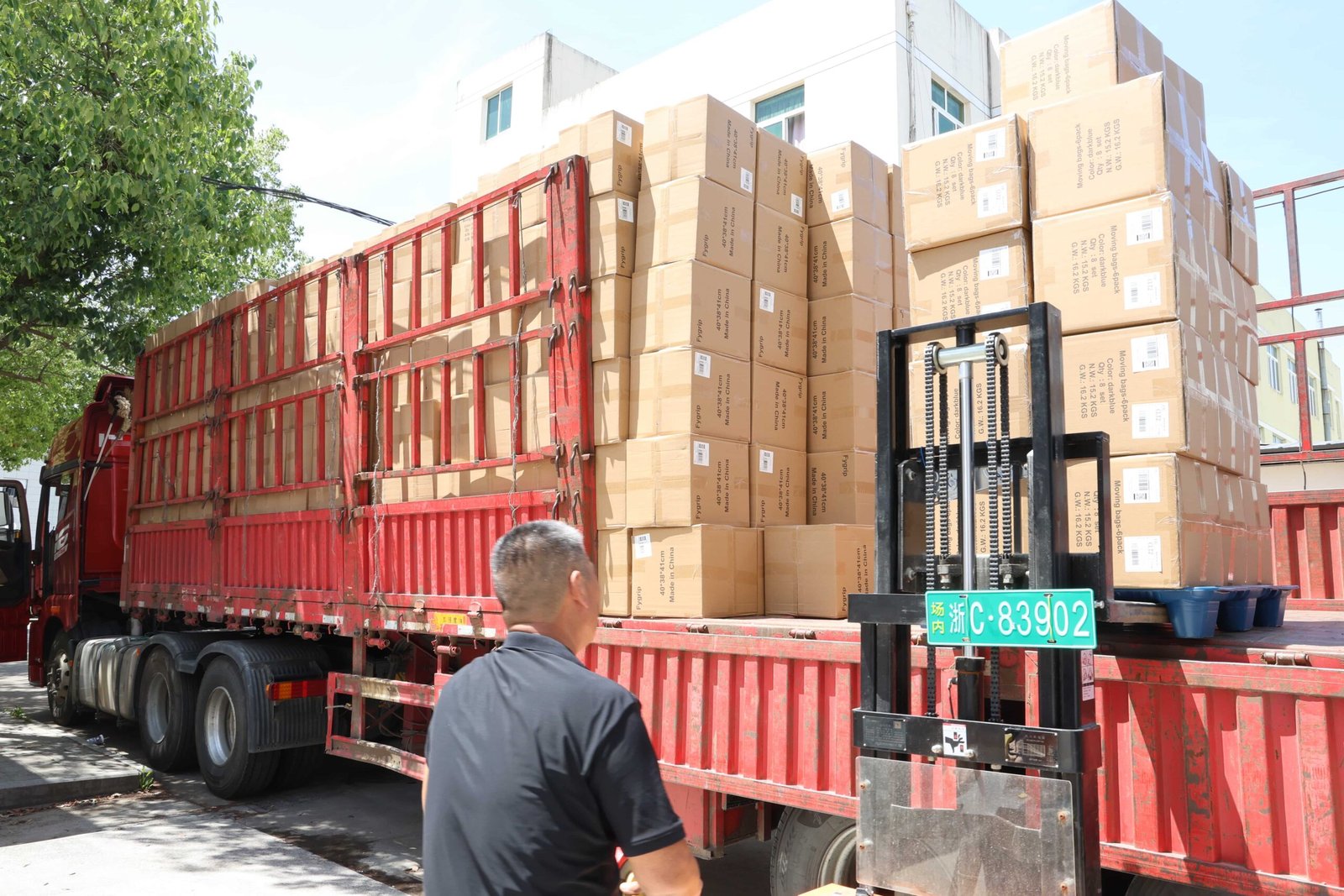
Section 301 tariffs sit on top of your textile bag price like an extra layer of freight. A woven PP tote that costs $0.80 at the factory can carry a duty bill that changes the landed cost by more than a third, depending on the tariff list, the HTS code, and the year the rules changed. The 2025-2026 period rewrote several of those rules, and importers who still price from 2024 numbers are quoting their customers wrong.
This guide covers what the 301 tariffs actually do, which lists cover textile bags, what the 2025 review and the 2026 actions changed, and how to verify the rate on your exact product before you sign an order.
What Section 301 Actually Covers
Section 301 of the Trade Act of 1974 lets the U.S. Trade Representative investigate foreign government practices that burden American commerce and, after a finding, impose tariffs or other measures. The USTR maintains the full list of Section 301 investigations on its official site. The China technology transfer investigation, opened in 2017, produced the tariff lists that most bag importers pay on today.
The mechanism matters because the tariffs are product-specific, not a flat rate on everything. Your neighbor importing the same 40ft container of bags from Vietnam pays a different total than you do from China, because the 301 tariffs apply to Chinese-origin goods only. The origin of the fabric, the sewing location, and the final assembly all factor into the origin determination your customs broker files.
Textile bags sit inside this system twice. The bags themselves carry a duty rate under the Harmonized Tariff Schedule, mostly Chapter 42 for bags with textile outer surfaces or Chapter 63 for other made-up textile articles, and the additional duty stacks on top of that base rate. Our guide to bag HS codes explains how to classify moving bags, and the export HS code guide covers the factory side of the same classification.
The Four Tariff Lists and Their Rates
The USTR organized the China tariffs into four actions, and its tariff actions page names them by dollar value. List 1 covered $34 billion of goods at 25 percent, List 2 covered $16 billion at 25 percent, and List 3 covered $200 billion at 25 percent. List 4 covered the remaining $300 billion, split into List 4A, which started at 15 percent and dropped to 7.5 percent under the 2020 Phase One agreement, and List 4B, which was proposed but never implemented.
| List | Valeur | Rate |
|---|---|---|
| List 1 | $34 billion | 25% |
| List 2 | $16 billion | 25% |
| List 3 | $200 billion | 25% |
| List 4A | $120 billion | 7.5% |
| List 4B | $180 billion | Not implemented |
Most textile moving bags and shopping bags fall under List 3 coverage at 25 percent, while some textile article codes fall under List 4A at 7.5 percent. The exact assignment depends on the 10-digit HTS code, which is why a broker who checks the code against the USTR list, not a rate table from memory, is worth the fee.
What the 2025 Review Changed for Bags
The statutory four-year review of the China tariffs concluded in 2025 and raised rates on strategic sectors. Electric vehicles went from 25 percent to 100 percent, EV batteries from 7.5 percent to 25 percent, semiconductors from 25 percent to 50 percent, and solar cells from 25 percent to 50 percent. Steel and aluminum products moved to 25 percent, and several medical goods such as syringes and gloves saw large increases. These changes phased in from May 2025 through 2026, with some semiconductor and battery lines stepping up later than others.
For textile bags, the review did not raise the base 301 rate, but the separate tariff actions of 2025 changed the total stack. The May 2025 Geneva agreement cut the combined “fentanyl” and “reciprocal” tariffs on Chinese goods from roughly 145 percent to 30 percent, and a later adjustment raised the fentanyl component, leaving most Chinese imports at a 40 percent total before the 301 rates and regular duty are added. Bag importers who watched only the additional-duty rate missed the bigger swing in the IEEPA tariffs that sit on top of it.
The practical effect on a $0.80 woven tote is large. At a 25 percent additional-duty rate plus the 40 percent IEEPA stack plus the base duty, the added cost per bag approaches the factory price itself. That is why the 2025-2026 changes reshaped sourcing decisions, and why recycled material cost trends and tariff costs move together in bag pricing conversations.
The 2026 Rule Changes Importers Need to Track
Two official processes define the 2026 picture. First, the USTR opened a new Section 301 investigation into China’s implementation of the Phase One agreement, initiated in October 2025 and listed on the USTR investigations page. Second, in 2026 the USTR launched a consultation on lowering duties for roughly $30 billion of non-sensitive Chinese goods, with textiles and apparel among the categories under review, and separately proposed an additional 12.5 percent duty on certain goods from China and Hong Kong under a new action.
The consultation matters for bags because it is the first real chance in years for textile importers to see the 301 rates move down. Trade press coverage in mid-2026 reported that textile and apparel lines could shed part of their additional duties if the consultation concludes as proposed, with changes expected to take effect later in the year. Until USTR publishes a final notice, the conservative assumption is that the current rates stay in force.
The proposed 12.5 percent duty is separate and targeted. It tracks the Phase One investigation rather than the older technology transfer case, so it may apply to a narrower product set. Importers should ask their broker quarterly whether their exact HTS lines appear in either process, because a product that moves from one list to another changes the duty line by line.
How to Check the Rate on Your Exact Bag
The only reliable way to know your rate is to check three sources against each other. The USTR tariff actions page shows which list your HTS chapter falls under. The current HTS, published by the U.S. International Trade Commission, shows the base duty rate for the exact 10-digit code. And CBP’s basic import and export guide explains how the entry process applies the duties and which documentation CBP expects at filing.
The 10-digit code decides everything. A cotton canvas tote under one code can carry a different total than a woven PP bag under another, and a bag with a laminated coating can shift to a different line entirely. Do not let the factory assign the code on the commercial invoice; have your broker confirm it before production, because the invoice code becomes the entry code.
The same three-source check applies to every new product line, not just the first order, because codes can shift when the HTS updates each January. For orders already in transit, the entry date fixes the rate. CBP applies the tariff in effect on the date of entry, so a container that sails in June and clears in July can face different rates from one that clears in June. Ask your broker for the entry-date rate in writing for every container of bags during the 2026 transition period.
Exclusions and What Still Qualifies
Exclusions remove the additional duty for specific products for a set period. The COVID-era exclusion program ended, but the USTR kept separate processes: reinstated exclusions from earlier lists, a machinery exclusion process, and product-specific exclusions granted during the review. Each exclusion is tied to a specific 10-digit code and a specific description, so a bag with a different handle material or closure may not qualify.
The exclusion process takes months and requires evidence that the product is not available from a non-China source without significant cost or delay. For textile bags, most exclusion requests fail on the availability test because Vietnam, Cambodia, and India can produce comparable woven bags. That does not mean the process is useless; importers of specialized constructions, such as bags with certified recycled content or specific fire-retardant treatments, have a stronger case than commodity tote buyers.
Track exclusions the way you track lead times. Ask your broker to flag any exclusion that covers your codes, and re-check at each quarterly renewal cycle. A 7.5 percent or 25 percent swing on a container of 100,000 bags moves the landed cost by thousands of dollars, which is exactly the scale the landed cost calculator exists to capture.
The exclusion database search on the USTR site lists every product-specific exclusion still in force, sorted by HTS code, so a ten-minute search each quarter covers most bag codes before they expire.
Practical Steps for Your Next Bag Order
Run a tariff check before you request quotes. Send your broker the planned HTS codes and the country of origin, and ask for the total duty stack, not just the additional-duty rate. Build that number into your comparison of factories, because a quote from a China factory and a quote from a Vietnam factory are not comparable until duty is added to both.
Plan for the 2026 transition in your purchase order language. Add a clause that the factory must confirm the HTS classification in writing before production, and that the order can be adjusted if USTR publishes a rate change before the entry date. For orders that qualify for the $30 billion consultation reduction, ask your broker to file for any retroactive refund window the final notice provides.
Review the product range against the tariff structure once a year. Bags that moved under the textile bag product range in 2025 may sit on a different list in 2026, and a small spec change, such as switching a cotton handle to a woven PP handle, can move a product out of a higher duty line entirely. That review, done in August before peak-season orders, costs one meeting and can save the difference between a profitable container and a break-even one.
Questions fréquemment posées
What Section 301 rate applies to textile bags from China?
Most textile bags fall under List 3 at 25 percent or List 4A at 7.5 percent, depending on the 10-digit HTS code. The additional duty stacks on top of the base duty and the separate IEEPA tariffs, so the total rate is higher than any single number on the list.
Did the 2025 tariff review raise rates on bags?
The review raised rates on electric vehicles, batteries, semiconductors, solar cells, steel, and medical goods, but it did not raise the base 301 rate for textile bags. The bigger change for bags came from the separate 2025 tariff actions that reset the total tariff stack on Chinese goods.
Are Section 301 tariffs on textile bags being reduced in 2026?
USTR opened a 2026 consultation on lowering duties for roughly $30 billion of non-sensitive Chinese goods, textiles among them, and separately proposed a 12.5 percent duty on certain China and Hong Kong goods. Until USTR publishes final notices, current rates remain in force.
Can I get a Section 301 exclusion for my bags?
Exclusions exist, but most textile bag requests fail the availability test because comparable bags are available from Vietnam, Cambodia, and India. Specialized constructions with certified recycled content or specific treatments have a stronger case.
Who determines the tariff rate on my bag order?
Your customs broker determines the rate by matching the 10-digit HTS code against the USTR list, the current HTS, and CBP entry rules. The factory’s code on the commercial invoice should be confirmed by the broker before production, because the invoice code becomes the entry code.
À lire également : Seam Strength Testing for Bags: ASTM D1683 and Passing Thresholds.
How EPR schemes reach bag imports is explained in our EPR packaging rules for bags.




0 commentaires