




Le contrôle qualité (CQ) de l’impression sur sacs fourre-tout personnalisés est le premier point de contrôle que les acheteurs doivent vérifier avant de valider un fournisseur, un budget ou un créneau de production. Accepteriez-vous une commande de $50K si l’échantillon de pré-production semblait parfait, mais que la production en série présentait un écart de deux nuances par rapport à votre Pantone ? Je pose cette question chaque fois qu’un acheteur d’une nouvelle marque de distribution vient me voir après un tirage raté. La plupart des fournisseurs vous diront qu’ils respectent les nuances Pantone. La discussion la plus délicate porte sur le contrôle qualité de l’impression sur sacs fourre-tout personnalisés et sur le moment où la tolérance de qualité est réellement dépassée — entre la validation de l’échantillon et le dernier sac sorti de la chaîne de production.
Après avoir géré des audits de fournisseurs dans 12 pays, j’ai pu constater ce fossé de mes propres yeux. Une fiche technique peut promettre des prix FOB et des livraisons dans les délais, mais elle ne vous dit jamais si le repérage d’impression va dériver au bout de trois heures de travail. C’est pourquoi j’explique en détail à mes clients ce qui se passe sur une atelier de production qui applique une limite de variation chromatique de 2 Delta E, et pas seulement ce qui est stipulé dans le contrat.

Contrôle des matières premières
Le problème de décalage des couleurs ne commence pas à l'imprimerie, mais dès le rouleau de tissu.
La plupart des acheteurs du secteur de la vente au détail ne se rendent compte d'un écart de teinte que bien après la production, lorsqu'ils déballent le sac fini sous l'éclairage de la boutique. C'est le tissu de base — et non l'encre — qui vous trahit. Un rouleau de polypropylène non tissé dont la teinte varie ne serait-ce que de 5% dans indice de blancheur transformera votre code Pantone validé en un risque. Nous intervenons avant même qu’un seul écran n’entre en contact avec le support.
Chaque lot de tissu entrant est analysé à l'aide d'un spectrophotomètre étalonné. La mesure obtenue est comparée à l'échantillon de référence archivé et aux spécifications Pantone prévues pour la collection de cette saison spécifique. Nous ne nous contentons pas d’une correspondance visuelle ; la tolérance est fixée à 2 Delta E. Cela signifie que si votre marque « Coral » est imprimée sur un support qui jaunit légèrement, le laboratoire d’encres procède à un ajustement en prépresse plutôt que de compter sur l’imprimeur pour le repérer.
- Vérification GSM : Nous ne faisons pas confiance aux étiquettes des usines. Chaque rouleau est pesé sur une balance numérique, et le grammage réel au mètre carré est comparé aux spécifications. Un non-tissé de 80 g/m² qui n’en pèse en réalité que 72 g/m² laissera l’encre traverser le papier et donnera une impression de fragilité au client — exactement le genre de déception tactile qui déclenche un avis une étoile.
- Lien vers la tension du fil : Le grammage du tissu a une incidence directe sur la couture après impression. Un non-tissé léger de 70 g/m² nécessite une tension de fil inférieure à celle d’une toile de 140 g/m² ; nous ajustons les réglages de la machine à coudre en fonction du grammage de chaque lot afin d’éviter toute déformation du logo. Sans cela, le motif imprimé se plisse autour des lignes de couture, ce qui nuit à l’esthétique soignée du déballage.
- Archives des rouleaux : Un échantillon de 15 x 15 cm provenant de chaque lot accepté est scellé et conservé pendant 36 mois aux côtés du modèle d'impression approuvé. Si, en 2027, le lot #3021 doit correspondre à celui expédié au deuxième trimestre 2026, la référence physique peut être retrouvée.
La valeur de la marque s'érode à chaque nuance incohérente. La prochaine fois que vous donnerez des instructions pour une nouvelle référence, demandez le rapport spectrophotométrique réel issu du contrôle des tissus à leur réception — et pas seulement la photo du produit fini. Si votre fournisseur n'est pas en mesure de vous le fournir, le risque en aval est déjà inhérent au rouleau.
| Fonctionnalité | Spécifications | Avantage |
|---|---|---|
| Uniformité de la couleur du tissu | Mesure au spectrophotomètre par rapport à un Pantone homologué ; Delta E ≤ 2,0 | Élimine la dérive de la teinte de base qui fausse les tons de l'impression finale, garantissant ainsi la cohérence de l'identité visuelle de la marque |
| Vérification du GSM (grammage) | Échantillon découpé à l'aide d'une balance numérique par rouleau ; tolérance ±3% (par exemple, non-tissé de 80 g/m² ±2,4 g/m²) | Assure une répartition uniforme de l'encre et empêche les traces de travers et les plis fantômes |
| Identifiant de la composition du matériau | Contrôle interne de la teneur en fibres ; confirmation de la présence de non-tissé en PP, de toile de coton, etc., conformément au bon de commande | Assure une adhérence optimale du film d'encre et un toucher homogène, de sorte que le support se comporte de manière identique d'un tirage à l'autre |
| Intégrité de la surface du substrat | Contrôle visuel et tactile visant à détecter les irrégularités, les trous d'épingle, les taches et les plis ; tolérance zéro pour les défauts visibles | Permet d'obtenir un support d'impression impeccable, tout en réduisant les taux de rebut en cours de production et en préservant le rendement net |

Réglage de la presse d'imprimerie
La plupart des problèmes de couleur ne proviennent pas de l'encre, mais d'une variation de la tension de l'écran que personne n'a mesurée.
Dans les entrepôts, un responsable de marque ouvre un carton trois mois après la fin de la production et constate que le bleu marine emblématique de la marque tire vers le violet. Le contrôle du tissu avait été validé. Le lot d’encre était conforme. L’erreur s’est produite au moment où l’opérateur de presse a omis de vérifier la tension, estimant que la dernière commande ‘ avait l’air correcte ’. Lorsque la tension de l’écran varie, ne serait-ce que de quelques newtons par centimètre, la déformation de la maille change, l’épaisseur du dépôt d’encre devient irrégulière sur toute la course de la racle, et la couleur subit des variations qu’un spectrophotomètre de laboratoire ne pourra pas corriger par la suite.
À notre étage, réglage de la presse d'imprimerie est considérée comme l'étape décisive entre la validation prépresse et le lancement de la production en série. Trois paramètres sont verrouillés avant le passage de la première pièce de production : la tension de l'écran, mesurée en cinq points par cadre ; l'alignement de la plaque ou de l'écran par rapport aux repères d'enregistrement du support ; et la formulation de l'encre, calibrée en fonction des données spectrales de l'échantillon de référence.
- Tension de l'écran : Nous utilisons des toiles neuves tendues à une tension cible comprise entre 24 et 28 N/cm, vérifiée à l'aide d'un tensiomètre numérique au centre et aux quatre coins de chaque écran. Les écrans retendus dont les valeurs s’écartent de plus de ±2 N/cm sont rejetés. La raison est d’ordre pratique : un sac imprimé avec une tension de 22 N/cm à gauche et de 26 N/cm à droite présentera une bande fantôme visible au centre, même si la couleur de l’encre se situe dans une fourchette de 1,5 Delta E sur un échantillon.
- Alignement des plaques : La précision de l'enregistrement est vérifiée par rapport à des repères de guidage découpés au laser sur le support du substrat. Pour les impressions multicolores, nous mettons en place un gabarit d’alignement au point zéro et réalisons une bande d’essai de 10 pièces. Si une impression présente un écart latéral supérieur à 0,3 mm, l’écran ou le cliché est immédiatement repositionné. C’est ce qui fait la différence entre un logo net et un logo qui semble présenter une ombre permanente.
- Étalonnage des couleurs : Notre laboratoire d’encres mélange les valeurs CMJN pour obtenir la nuance Pantone validée par le client, puis un tirage de référence est analysé à l’aide d’un spectrophotomètre. L’écart cible est ≤ 2 Delta E par rapport à l’échantillon maître archivé. Nous recoupons trois mesures : après le mélange des encres, après 50 tirages et au 500e tirage. Si l’une des mesures dépasse 2 Delta E, la presse s’arrête pour un réajustement de l’encrage. Ce seuil n’est pas un simple argument marketing ; il s’agit d’une limite stricte.
Ce qui distingue une commande renouvelée fiable d’un cauchemar lié à un rappel, c’est la manière dont les données de configuration sont conservées. Nous archivons chaque échantillon d’impression de référence approuvé ainsi que la fiche de configuration de la presse correspondante (mesures de tension, angle de teinte, valeurs de densité, vitesse de la presse) pendant 36 mois. Lorsqu’une marque passe une nouvelle commande six saisons plus tard, les conditions d’impression d’origine sont reproduites à l’identique, et non réinterprétées. Ces archives servent également de référence à nos tableaux de bord des défauts en temps réel : si les taux de rebut dépassent 1,51 TP3T sur un travail en cours, la ligne s’arrête et l’opérateur doit vérifier les paramètres de configuration par rapport à la fiche d’origine avant de redémarrer. On ne voit pas cela dans un atelier d’impression de masse.
Pour un responsable merchandising d’une marque de grande distribution, la question cruciale n’est jamais ‘ pouvez-vous imprimer les couleurs Pantone ? ’, mais ‘ le lot de 2 000 unités qui arrivera à Los Angeles ressemblera-t-il exactement à l’échantillon de pré-production que j’ai validé en juin ? ’. La réponse dépend entièrement de la manière dont le protocole de réglage de la presse traite la tension de l’écran, l’alignement des plaques et l’étalonnage : s’agit-il de critères objectifs et mesurables, ou relèvent-ils de l’intuition de l’opérateur ? Si l’un de ces éléments est négligé, le coût de la réimpression, ajouté à l’atteinte à l’image de marque due à une présentation incohérente en magasin, dépassera la valeur totale de la commande.
Contrôle qualité en cours de fabrication
Un pic de défaut de type 1,5% entraîne l'arrêt immédiat de la ligne — ce n'est pas une recommandation, mais une règle stricte.
L'alignement de l'impression est vérifié toutes les 100 pièces en scannant une cible en réticule imprimée à côté de votre logo. Même un décalage de 0,4 mm déplace les contours, ce qui donne un aspect flou à une typographie normalement nette. Les opérateurs comparent la production en direct à l’échantillon de référence approuvé sous un grossissement de 10x. Si le tableau de bord en temps réel enregistre plus de trois défauts de repérage sur 200 unités consécutives — atteignant ainsi le seuil de rejet de 1,51 TP3T —, le chef de ligne arrête la presse et vérifie à nouveau la tension de l’écran et l’alignement de la plaque avant de reprendre la production.
- Contrôle de purge : Chaque fichier de conception que nous recevons fait l'objet d'un contrôle préalable visant à garantir un fond perdu d'au moins 3 mm au-delà de la ligne de découpe. Lors de la production, le premier exemplaire imprimé est posé à plat sur un gabarit de découpe afin de vérifier qu'aucune bande blanche n'apparaîtra après la découpe à l'emporte-pièce. Les sacs qui perdent ne serait-ce qu'un filet de couleur de fond au niveau du bord sont considérés comme des rebuts.
- Analyse des images fantômes : Les images fantômes — ces contours secondaires à peine visibles — indiquent généralement que l'écran s'est soulevé en cours de tirage ou que le support a bougé. Nous inspectons les aplats imprimés et les empattements fins à l'aide d'un microscope portable. Tout flou persistant sur trois feuilles consécutives entraîne un arrêt immédiat de la presse afin de vérifier la distance hors contact et la tension d'alimentation du support.

Traitement après impression
C'est lors d'une manutention précipitée après l'impression que la marque subit le plus de dommages.
L'encre a été appliquée sur le tissu. Les couleurs de votre marque s'affichent correctement sous le spectrophotomètre — avec un écart inférieur à 2 Delta E par rapport à la Pantone norme. Mais si vous vous éloignez maintenant, vous risquez d'expédier des sacs qui laissent des traces, collent les uns aux autres ou déforment le logo lors de la fixation des poignées. La zone post-impression n'est pas une étape de séchage passif ; il s'agit d'un contrôle qualité actif qui garantit l'intégrité visuelle de l'ensemble du lot.
- Temps de durcissement : Nous réglons la température et les cycles de maintien en fonction du type de tissu : polypropylène non tissé nécessite un séchage plus lent et plus long que la toile afin d’éviter que le rétrécissement des fibres ne déplace le repérage de l’encre. Pour Tolérance de repérage d'impression pour sacs fourre-tout à usage intensif, le calendrier des conférences de presse ne représente que la moitié de l'histoire. Le véritable test, c'est un test de frottement 15 minutes et 60 minutes après le durcissement : si la couleur déteint sur le chiffon blanc, le lot est signalé et les paramètres de durcissement sont réajustés. Cela permet d'éviter directement l'apparition de fissures ou l'écaillage du logo, qui sont à l'origine d'avis négatifs.
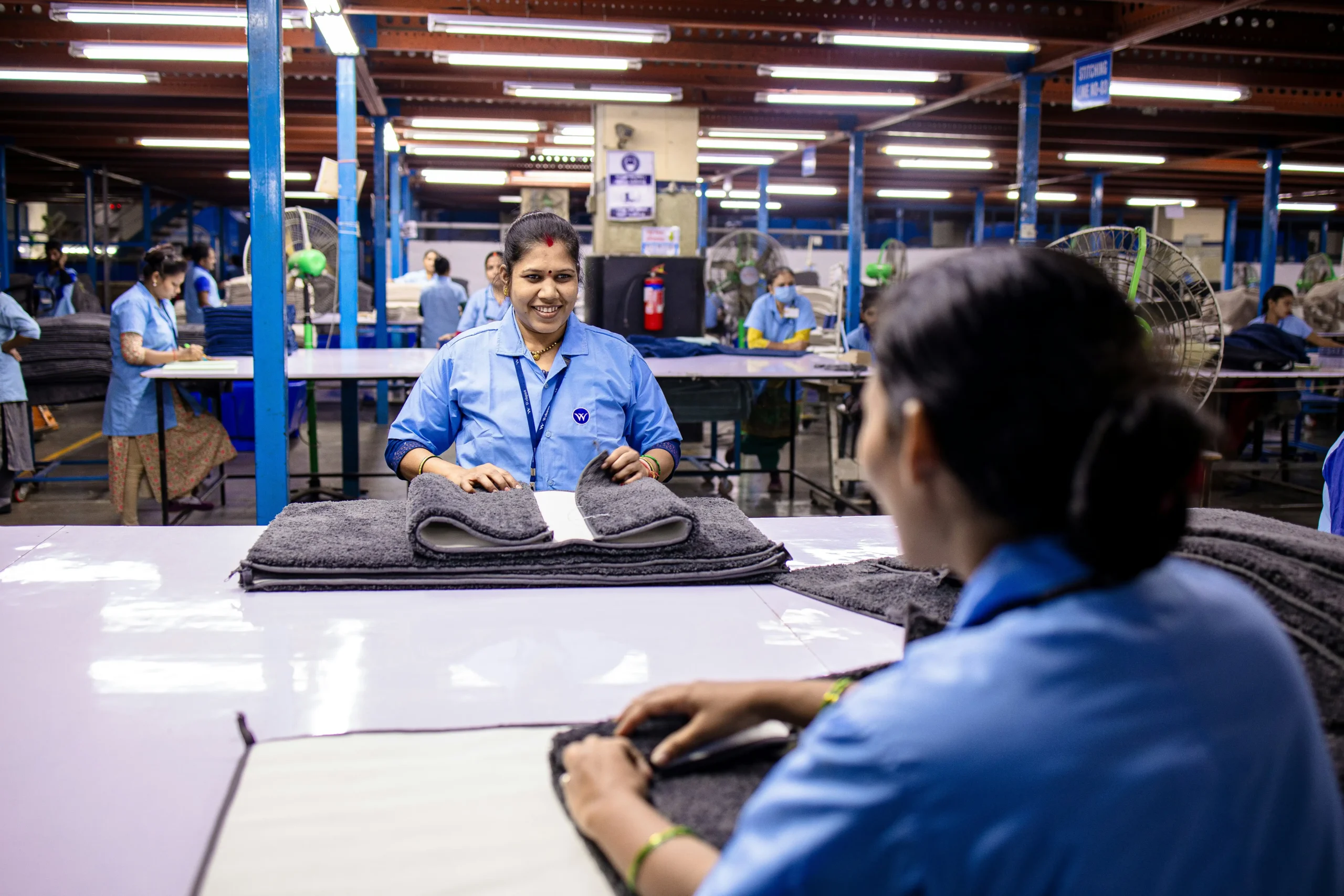
- Prévention des rides : La mémoire du tissu nuit considérablement à la qualité. Nous empilons à plat les panneaux imprimés immédiatement après le séchage, sans jamais les plier ni les imbriquer jusqu’à ce qu’ils atteignent la température ambiante. La hauteur d’empilage est limitée à 50 pièces afin d’éliminer les plis de compression sur la face imprimée. La tension du fil de la machine à coudre est ajustée en fonction du grammage (GSM) du tissu : les non-tissés plus légers nécessitent une tension supérieure plus faible, sinon la résistance de l’aiguille provoquera des plis sur le logo. Si le tableau de bord des défauts en temps réel indique que les rejets liés aux plis dépassent le seuil de 1,51 TP3T, la ligne s’arrête pour permettre une analyse des causes profondes avant qu’un seul sac défectueux ne soit muni d’une poignée.
- Fixation de la poignée : C'est à cette étape que de nombreux fournisseurs tordent ou déforment involontairement le panneau imprimé. Avant la couture, les opérateurs alignent l'impression pré-durcie avec le point d'arrêt Modèle. Nous utilisons un schéma de piquage séquentiel — la barre centrale d’abord, puis les bords extérieurs — afin d’éviter que le tissu ne glisse sous l’aiguille et que le logo ne se décale. La tension du fil est adaptée au grammage (GSM) du tissu, ce qui empêche l’apparition d’un ‘ halo de plis ’ qui encadrerait un logo déformé. Chaque lot est soumis à des tests de traction des points d'arrêt par rapport à la charge nominale, et toute distorsion d'impression détectée à ce stade déclenche immédiatement un échantillonnage AQL pour l'ensemble du lot, sans attendre l'audit final.
Audit final
Un test de renfort omis, c'est un rappel de marque qui ne demande qu'à arriver.
Avant que chaque carton ne soit scellé, l'équipe de contrôle final prélève un échantillon statistique selon la norme AQL 2,5, niveau II. Pour un lot de 5 000 unités, cela correspond à 200 sacs sélectionnés au hasard. Chaque sac passe par trois points de contrôle : la vérification du repérage d'impression par rapport à l'échantillon de référence (avec une tolérance de couleur de 2 Delta E), l'intégrité de la fixation des poignées et la précision dimensionnelle.
- Échantillonnage AQL : Défauts majeurs — décalage d’impression supérieur à 1 mm, points manqués, variation de couleur supérieure à 2 Delta E — plafonnés à 0,65% AQL. Si l’échantillon présente un taux de rebut supérieur à 1,5%, l’ensemble de la ligne est immédiatement arrêté pour une analyse des causes profondes. Aucune exception n’est tolérée. Ce blocage systématique a permis d’intercepter deux expéditions qui auraient failli être défectueuses rien que cette année.
- Essai de résistance des renforts : Nous suspendons un poids de 15 kg à la poignée et maintenons la position pendant 10 secondes. Aucune déchirure, aucun glissement des coutures. Pour les toiles très résistantes, nous portons la charge à 25 kg. Ce n’est pas facultatif : c’est ce qui fait la différence entre un sac qui résiste à 50 courses et un sac qui cède dès la première utilisation par un client.
- Contrôle dimensionnel : Une tolérance de ±3 mm par rapport aux spécifications approuvées peut fausser la façon dont un logo est positionné ou dont le sac se plie sur un rayonnage de magasin. Nous mesurons la hauteur, la largeur, la profondeur du soufflet et la longueur des anses sur 20% de l'échantillon contrôlé. Si le sac ne correspond pas au plan de présentation du client, il est rejeté.
Chez nous, les livraisons « zéro défaut » ne sont pas un simple slogan : elles constituent le résultat mesurable d’une sélection rigoureuse visant à éliminer les articles défectueux avant même qu’ils ne quittent l’atelier. L’échantillon de référence et le rapport d’audit final sont conservés dans nos archives pendant 36 mois ; ainsi, lorsque vous passerez une nouvelle commande la saison suivante, la norme de référence sera déjà établie.

Emballage et documentation
L'étape de pliage et d'étiquetage peut soit préserver la qualité d'impression, soit compromettre tout un tirage.
Au moment où les sacs arrivent à la ligne d’emballage, nous avons déjà passé l’audit AQL final. Mais c’est sur ces derniers mètres dans l’usine que j’ai vu de bons produits être gâchés. Un pli réalisé à la hâte laisse un pli permanent sur un logo fraîchement moulé. Une étiquette SKU mal imprimée signifie que l’entrepôt marque la palette comme rejetée avant même que quiconque ait vérifié l’impression. Chez TIIOCTI, l’emballage n’est pas une étape secondaire ; c’est un contrôle qualité documenté.
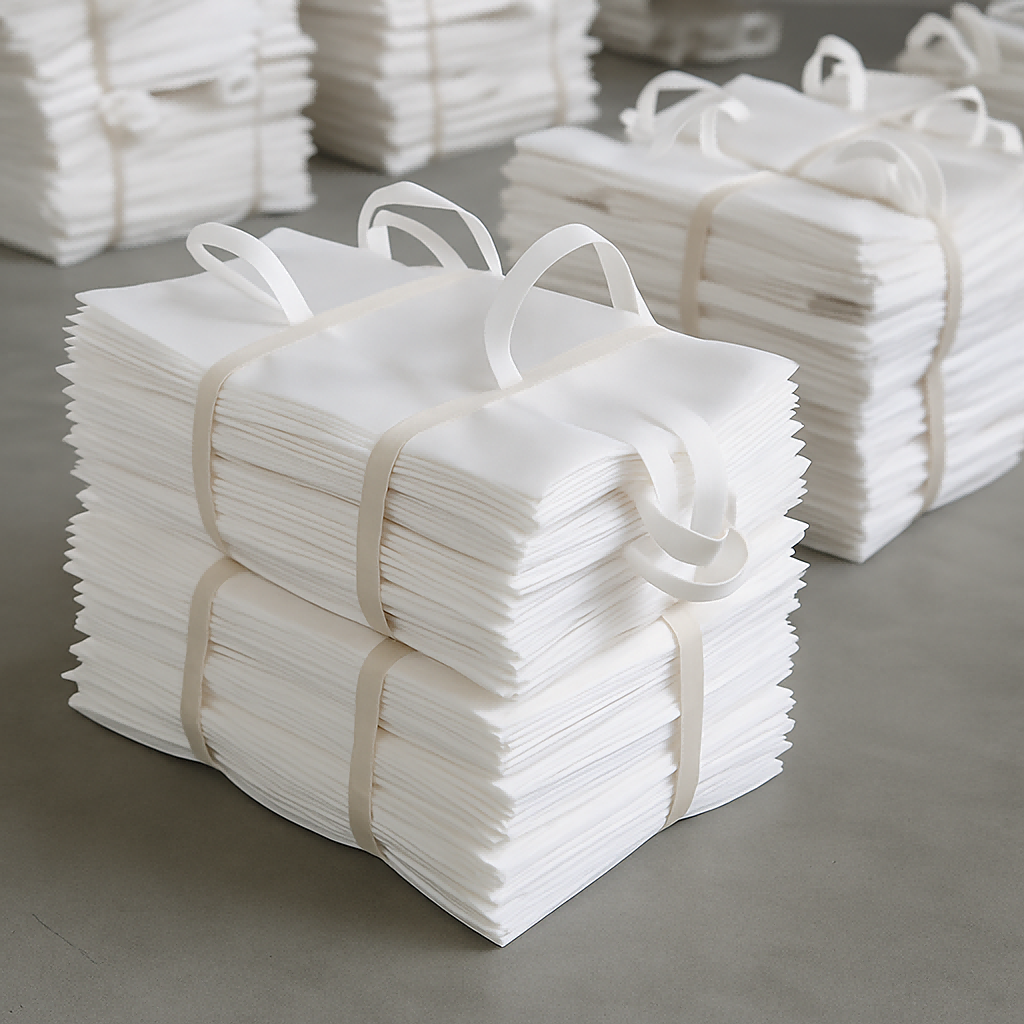
Nous emballons chaque sac sur mesure à plat, en intercalant du papier de soie lorsque les imprimés se trouvent sur des faces opposées. Cela permet d'éviter le transfert d'encre pendant le transport et d'éliminer les plis marqués qui rendent présentation en magasin avoir l'air bon marché. Pour les commandes importantes de toiles, nous utilisons des inserts de carton renforcés qui maintiennent les sacs en position verticale afin que les imprimés latéraux ne frottent pas contre les parois en carton ondulé. Cette mesure suffit à elle seule à éliminer la majorité des réclamations pour éraflures survenues pendant le transport, par rapport aux méthodes de pliage en vrac.
L'étiquetage des références (SKU) respecte scrupuleusement vos codes d'inventaire. Nous imprimons des étiquettes par transfert thermique résistantes à l'humidité et aux frottements, et nous vérifions les codes-barres à l'aide d'un scanner portable relié aux lignes de votre bon de commande. Si une seule étiquette présente une anomalie (mauvaise variante de taille, mauvais code couleur), le carton entier est retiré pour être retravaillé. Aucune exception. Votre centre de distribution ne devrait jamais avoir à trier manuellement nos envois.
Le rapport vidéo avant expédition est, à mes yeux, la dernière étape décisive. Avant que le moindre ruban adhésif ne soit appliqué sur le carton principal, notre équipe de contrôle qualité réalise une vidéo de 3 minutes montrant le contenu du carton ouvert, des gros plans sur les étiquettes et la pile dans son ensemble. Cette vidéo vous est envoyée via WeTransfer avant le départ du camion. Elle constitue une preuve tangible de ce que nous avons expédié et de la manière dont le colis a été emballé, ce qui vous donne un moyen de pression indéniable si un transporteur venait à endommager le chargement.
- Normes relatives aux meubles en kit : Pliés sans marques de pli, intercalés lorsque les impressions sont face à face. Pas plus de 25 sachets par carton afin d'éviter tout dommage dû à la compression.
- Audit des étiquettes SKU : Chaque étiquette de carton a été scannée et recoupée avec les données des lignes de commande. Vérification 100%, et non pas des contrôles ponctuels.
- Reportage vidéo : Vidéo non montée du contenu final des cartons, filmée et horodatée dans les deux heures suivant le chargement du conteneur.
Conclusion
J’ai vu une commande de $50 000 être refusée au port parce que le lot de teinture présentait un écart de trois nuances par rapport à l’échantillon approuvé. Le coût du non-respect d’une tolérance de qualité de 2 Delta E ne se fait pas sentir à l’usine — il se fait sentir six semaines plus tard, lorsque votre lancement est compromis et qu’un concurrent s’empare de votre espace de rayon. Chaque étape de ce service, du calibrage de la tension de l’écran à l’arrêt pour un taux de défauts de 1,51 TP3T, contribue à instaurer une marge de sécurité pour un produit qui porte votre réputation.
Avant votre prochain bon de commande, demandez à votre fournisseur l'échantillon d'impression de référence archivé et assurez-vous qu'il le conserve pendant au moins 36 mois. Si votre processus de validation des échantillons n'est pas lié à un contrôle de prix FOB incluant un audit AQL, vous laissez la porte ouverte à des écarts qu'une fiche technique seule ne permettra pas de détecter.
Questions fréquemment posées
Quelle est la tolérance admissible en matière de variation de couleur pour les sacs fourre-tout personnalisés ?
Nous contrôlons les écarts de couleur pour qu'ils ne dépassent pas ΔE ≤ 2,0 sous un éclairage D65. Les écarts plus importants sont presque toujours dus à une teinte de base du tissu non vérifiée, et non à une erreur d'impression. Veillez à toujours définir la tolérance de couleur dans la fiche AQL avant de lancer la production en série.
Comment éviter que les logos ne se fissurent ou ne s'écaillent ?
Les logos se fissurent ou se décollent lorsque l'encre reste à la surface sans avoir été correctement durcie. Utilisez un promoteur d'adhérence sur les nylons enduits et procédez à la durcissement sous chaleur contrôlée. Vérifiez l'adhérence à l'aide d'un test au quadrillage sur la première pièce de production.
Pouvez-vous reproduire exactement une couleur Pantone spécifique ?
Il n’est pas possible d’obtenir une correspondance Pantone exacte sur le tissu ; la norme prévoit une correspondance visuellement acceptable avec un ΔE ≤ 2,0. La couleur de fond et la texture du tissu modifiant la perception, nous nous basons sur une mesure Lab. Veillez à toujours valider un échantillon de laboratoire avant la production.
Que se passe-t-il si le repérage d'impression est décalé ?
Si le repérage d'impression est décalé, la chaîne de production s'arrête immédiatement dès que le taux de défauts dépasse 1,51 TP3T. Les panneaux présentant un décalage de repérage sont mis en quarantaine, et la position de l'écran ou de la plaque est recalibrée avant le redémarrage. Définissez clairement la tolérance de repérage dans la fiche technique.
Comment vous assurez-vous que la résistance des poignées est adaptée au matériau du sac ?
Nous garantissons la résistance des poignées en renforçant les points de fixation à l'aide de points d'arrêt et en les soumettant à une traction équivalente au double de la charge nominale du sac. Les poignées sont cousues avec du fil enduit et soumises à des tests de résistance statique et dynamique. La résistance à la traction des poignées est vérifiée lors de chaque contrôle au moyen d'un essai de force.
Logo placement affects both look and print QC: review the seven Options de placement du logo sur les sacs fourre-tout before approving artwork.


0 commentaires