



A bag shipment clears EU customs on paperwork, not on the quality of the goods. The bags themselves almost never cause a hold; the missing EORI number, the wrong commodity code or an origin document that arrived after the vessel does. This checklist walks through the eight documents that decide whether your container rolls out of the port in three days or sits for three weeks.
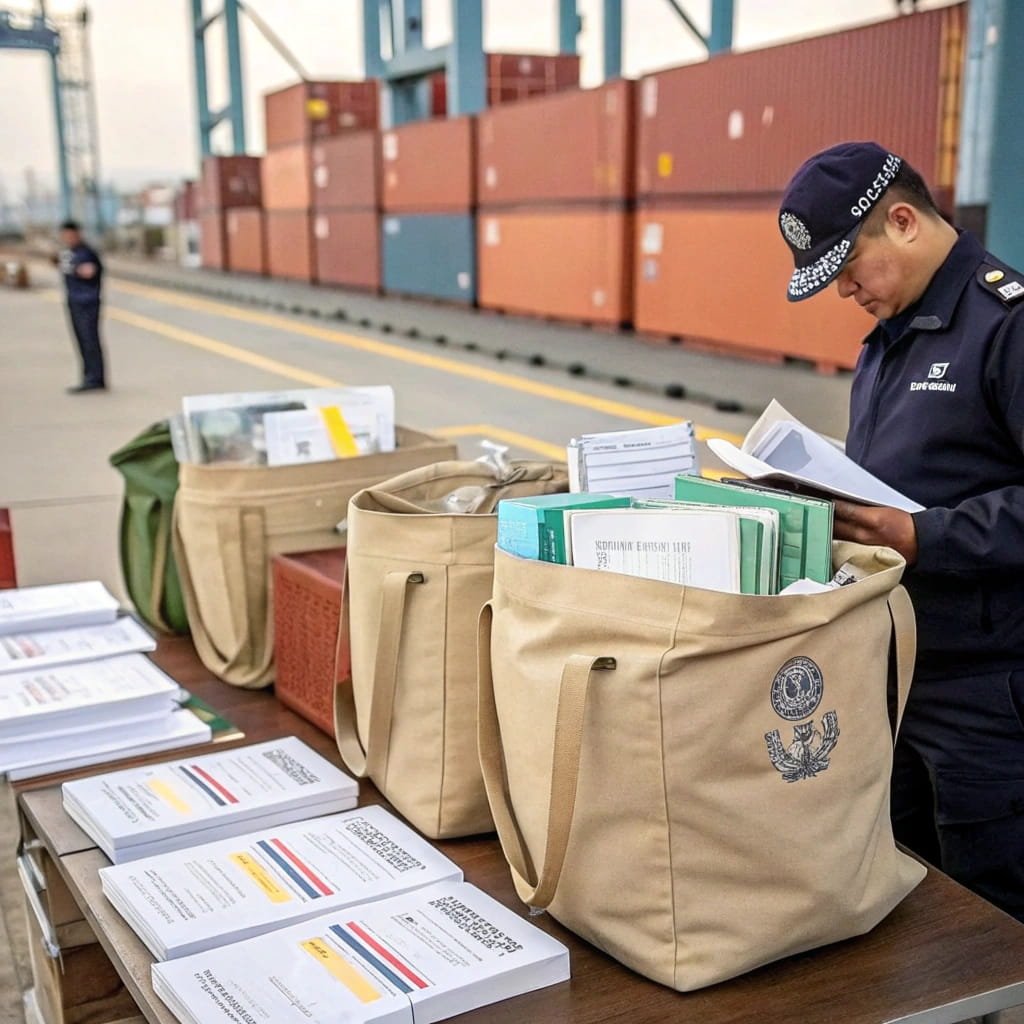
The Eight Documents, in the Order They Are Checked
The customs entry for a bag shipment is built from a document chain, and each link gets verified against the one before it. The commercial invoice comes first: it names the seller and buyer, the goods description that must match the physical bags, the quantities, the unit and total values, the Incoterm and the currency. The packing list follows, breaking the shipment into cartons with weights and dimensions, because the customs officer compares the packing list against the physical pallet count.
The EORI number comes third. Every EU importer holds an Economic Operators Registration and Identification number, issued by the member state’s customs authority, and the entry is rejected without one. The European Commission explains the EORI registration on its EORI page. The number travels on the invoice and the declaration, and a mismatch between the two is one of the fastest ways to stall an entry.
Fourth is the customs declaration itself, filed under the Union Customs Code, which the European Commission summarises on its Union Customs Code page. Fifth is the commodity code: bags fall under several headings depending on material, from the 4202 heading family for handbags and travel bags to the 6305 and 6307 families for textile sacks and made-up textile articles. The eight-digit code decides the duty rate, and the six-digit core follows the harmonized system maintained by the World Customs Organization.
Origin Proof and the Duty Difference
Sixth on the list is the origin document. A bag made in China and shipped to the EU pays the standard third-country duty rate; the same bag with valid preferential origin documentation can qualify for reduced or zero duty under a trade agreement. The claim must be supported by a statement on origin from the exporter, and the importer carries the liability if the claim fails verification, so the origin wording on the invoice must match the manufacturing reality.
Seventh is the transport document: the bill of lading for sea freight or the CMR note for road transport, which links the goods to the declaration. Eighth, and increasingly checked, is the sustainability documentation. A shipment declared as recycled bags should carry the recycled content certificates that support the claim, because EU customs and market surveillance authorities scrutinise green claims, and an unverifiable recycled label draws the same document request as a suspicious value.

The Errors That Stall Clearance
Four errors repeat across bag shipments. The goods description on the invoice says “bags” while the commodity code describes something else, and the officer sends a request for information that costs days. The declared value sits far below the market range for the quantity, triggering a valuation enquiry. The origin claim appears on the invoice but the supporting statement is missing. And the EORI on the invoice belongs to a different legal entity than the one filing the declaration. Each of these is fixable in hours if the documents are in one place, and each costs a week when they are not.
The fix is a document pack assembled before the vessel sails: invoice, packing list, EORI confirmation, commodity codes with duty rates, origin statement, transport document and sustainability certificates, all in one PDF per shipment. Importers who assemble this pack at the purchase order stage, not at the port, are the ones whose clearance emails never escalate.
For the bag materials and construction options behind your EU shipments, see the materials guide.
Frequently Asked Questions
What is an EORI number and do bag importers need one?
An EORI number is the Economic Operators Registration and Identification number every EU importer needs before filing a customs declaration. The entry is rejected without it, and the number must match the legal entity on the invoice.
Which commodity code applies to textile bags?
Bags fall under several headings by material: the 4202 family covers handbags and travel bags, while textile sacks and made-up textile articles fall under 6305 and 6307. The eight-digit code decides the duty rate.
Can bag shipments claim reduced EU duty?
Yes, with valid preferential origin documentation under a trade agreement. The exporter provides a statement on origin, and the importer carries the liability if the claim fails verification.
Why do recycled bag shipments get extra document checks?
Market surveillance authorities scrutinise green claims. A shipment declared as recycled bags should carry the recycled content certificates that support the claim, or the label itself triggers the document request.
The full rate table by material is in our US bag import duty guide.
How EPR schemes reach bag imports is explained in our EPR packaging rules for bags.




0 Comments