



The zipper is the component buyers test first and specify last. On a moving bag dragged across a loading dock, a shopping tote opened two hundred times a month, or a cooler bag holding its seal in a delivery van, the zipper is the failure point that customers remember and the warranty claim that costs the brand. Three zipper families dominate bag manufacturing, coil, Vislon and metal, and each has a duty it wins. This guide compares them for bag programs and explains the durability questions buyers should ask before the zipper is sewn in.
Our bag lines run all three zipper families, and the component choice interacts with the load and handle decisions documented in our handle types guide. Independent durability testing of components is arranged through laboratories across the TIC Council membership when programs need third-party evidence.
Coil zippers: flexibility and value
Coil zippers use a continuous nylon or polyester spiral sewn onto tape, which gives them three practical advantages for bags. They flex around curves, so curved seams and rounded bag tops take coils cleanly. They self-lubricate and resist jamming on grit, the failure mode that kills metal zippers on job sites. And they are the lightest and cheapest family, which matters on price-sensitive retail programs. The weaknesses are abrasion and UV: coil teeth wear faster under repeated sliding with grit in the track, and nylon degrades in sunlight over long outdoor exposure. Coil is the right answer for everyday totes, drawstring bags and interior pockets, where cycles are moderate and weight matters.
Vislon and metal: the heavy-duty families
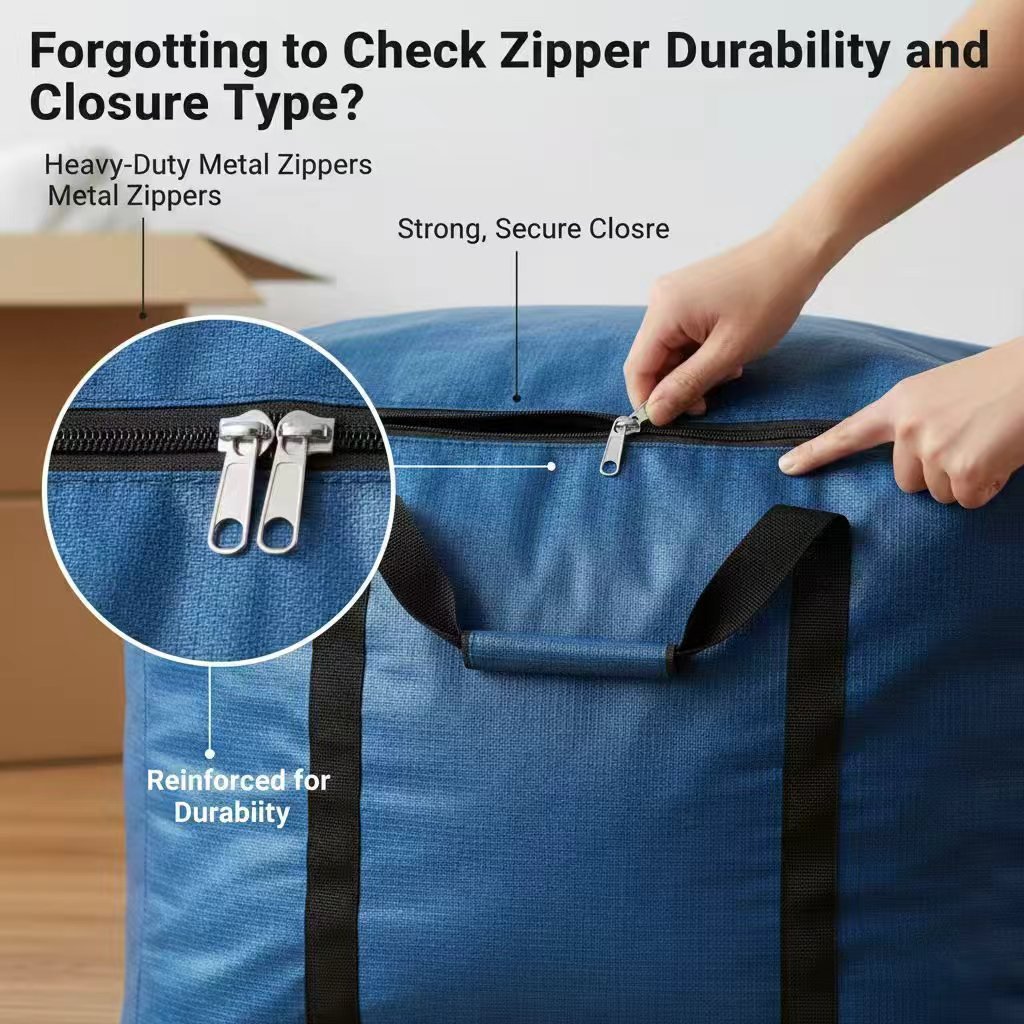
Vislon zippers, molded plastic teeth on tape, are the heavy-duty plastic answer: larger teeth resist grit better than coils, they do not corrode, and the molded element survives the sled-drag abuse that moving bags and equipment bags take. Metal zippers, brass, aluminum or steel teeth, remain the premium choice where the zipper is part of the aesthetic, on denim-style totes, canvas work bags and fashion-adjacent products, and they resist abrasion extremely well. Their costs are weight, cost per unit and corrosion: brass and steel corrode in salt and wet environments unless coated, which rules them out for marine and washdown duty, where Vislon wins on chemistry alone.
| Zipper family | Wins on | Fails on | Typical duty |
|---|---|---|---|
| Coil (nylon/polyester) | Flex, cost, jam resistance | Abrasion, UV exposure | Totes, drawstring, pockets |
| Vislon (molded) | Grit tolerance, no corrosion | Bulk, cost above coil | Moving bags, equipment bags |
| Metal (brass/aluminum) | Abrasion, premium look | Corrosion, weight, cost | Canvas, fashion, workwear |
Slider quality: the hidden half of the zipper
The teeth get the blame, but the slider is the component that actually fails first on most bags. Slider bodies crack under plier abuse, pull tabs tear off, and worn slider bodies stop locking, so the bag opens under load. Specification should name the slider body material (zinc alloy or die-cast for duty), the pull test standard, and the auto-lock function on load-carrying applications, because a non-locking slider on a moving bag lets the contents escape when the bag is lifted by the ends. These component-level fields belong beside the seam and fabric specs in the tech pack, per the specification discipline in our stitch density and SPI guide.

Our quotations name zipper family, slider material and lock type per bag program, with samples built in the specified components so the zipper the buyer tests is the zipper that ships. Program inquiries reach the export desk with low MOQs, free samples and quotes inside days.
Video: bags in production with hardware fitted
The clip shows bags moving through our sewing floor with hardware fitted. Zipper choice is a manufacturing decision made at this bench, and it is the decision customers feel every day of the bag’s life.
Frequently asked questions
Which zipper family survives a moving bag program?
Vislon, molded plastic teeth tolerate grit and dock abuse without corroding. Coil works on light-duty variants, and metal reads premium but adds weight and corrosion risk in wet duty.
Why do bag zippers fail before the fabric wears out?
Usually the slider, not the teeth: cracked slider bodies and torn pull tabs fail first, which is why slider material and lock function belong in the specification.
Are metal zippers worth the premium on retail totes?
On fashion and canvas programs where the zipper is part of the aesthetic, yes. On utility programs they add weight and corrosion risk without adding perceived value.
What zipper tests should an order specify?
Reciprocating sliding cycles, slider lock strength and pull tab tear, run on the specified zipper family, with third-party lab reports when the program needs independent evidence.




0 comentarios