



El trimestre pasado, vi cómo el responsable de logística de una empresa regional de mudanzas intentaba justificar el cambio del cartón a las bolsas reutilizables. Tenía preparadas las hojas de cálculo: el coste por unidad, los precios FOB de tres fábricas, todo lo habitual. Pero se le escapaban las cifras reales. No había tenido en cuenta la mano de obra necesaria para precintar cada caja, las tasas de eliminación de las cajas desmontadas ni el tiempo que su equipo dedicaba a buscar cajas intactas en un almacén húmedo. Cuando sumamos el coste real, su $0,85 por caja de cartón se convirtió en casi $0,17 por uso, una vez sumados la cinta adhesiva, la mano de obra y la sustitución. Y eso sin mencionar siquiera una bolsa de PP tejida con 500 usos que cuesta menos de $2,00 directamente de fábrica.
Las cajas de cartón pierden hasta 80% de su resistencia al apilamiento tras un ciclo de almacenamiento en un almacén húmedo. No es una teoría: es lo que ocurre cuando el conductor de una carretilla apila tres cajas una encima de otra sobre un suelo de hormigón húmedo. Por otra parte, nuestras pruebas internas de control de calidad demuestran que el 98% de las cajas de transporte de 500 usos resisten ciclos de carga completos sin que se desprendan las asas, lo cual ha sido validado por Normas ASTM D5034 sobre resistencia a la rotura. Una cifra imposible de alcanzar con el cartón. Por eso, cuando un distribuidor me pregunta sobre el debate entre las bolsas reutilizables y las de cartón, le digo que deje de fijarse en el precio unitario y empiece a tener en cuenta el coste por ciclo, la capacidad de carga en condiciones reales y qué ocurre con sus residuos tras el primer año.

Coste total de propiedad: bolsa de tela frente a caja de cartón a lo largo de más de 500 ciclos
El coste por uso del cartón no tiene en cuenta entre $0,12 y $0,17 en cinta adhesiva, eliminación de residuos y sustitución por colapso.
La mayoría de los compradores comparan el precio inicial de una caja de cartón con el de una bolsa reutilizable y llegan a la conclusión de que el cartón es más barato. Ese cálculo pasa por alto el 70% del coste real. A lo largo de 500 ciclos —la vida útil realista de una bolsa de PP tejida tal y como sale de fábrica—, los gastos ocultos del cartón de un solo uso hacen que su coste total supere al de la alternativa reutilizable.
- Cinta y mano de obra: Cada caja de cartón requiere cinta adhesiva ($0,03-$0,05) y mano de obra para plegarla, precintarla y desecharla ($0,06-$0,09 por caja en concepto de salarios de almacén). Más de 500 cajas suponen entre $45 y $70 en consumibles no recuperables.
- Tasas de gestión de residuos: La recogida de residuos de cartón cuesta entre $0,04 y $0,07 por caja (ya sea para reciclaje o para vertedero). A partir de las 500 cajas, se añade otra cantidad de entre $20 y $35.
- Contraer y reelaborar: En almacenes húmedos o en traslados con múltiples paradas, el cartón pierde hasta un 80% de resistencia al apilamiento tras un ciclo de uso (fuente: directrices de ensayo ASTM D4169). Las cajas aplastadas suponen trabajo de reempaquetado, reclamaciones por mercancías dañadas y compras de emergencia de cajas, lo que supone fácilmente entre $0,05 y $0,10 adicionales por ciclo.
- Especificaciones de doble pared: Para compensar esta debilidad, muchas empresas compran cartón ondulado de doble pared a un precio de entre $1,20 y $2,00 cada uno, en lugar del de pared simple, que cuesta entre $0,60 y $1,00, lo que supone, en la práctica, pagar un «impuesto por la durabilidad» que, aun así, no resiste ni un solo viaje.
| Elemento de coste | Caja de cartón | Bolso de PP tejido | Impacto de 500 ciclos |
|---|---|---|---|
| Precio unitario inicial | $1,20 – $2,00 | $2,50 – $4,00 (a granel) | La bolsa es más cara al principio, pero es reutilizable |
| Cinta y material por uso | $0.05 – $0.08 | Capacidad de carga e integridad estructural en condiciones reales de almacén
He visto cómo se derrumbaba un palé de cajas de cartón ondulado de doble pared en un almacén sin climatización tan solo tres días después de su entrega. La humedad de la niebla matinal empapa las fibras del papel, y la resistencia al apilamiento —que parecía correcta en la ficha técnica— se reduce en un 80%. Para un distribuidor industrial que compra al por mayor, eso se traduce en las filas inferiores aplastadas, daños en los productos y un operario de carretilla elevadora que tiene que dedicar tiempo extra a reordenar las cajas o a desechar las que se han visto afectadas. No se trata de un riesgo teórico, sino de la realidad de cualquier instalación que no sea una sala limpia sellada y climatizada. Ahora compáralo con una bolsa de polipropileno tejido de 180 GSM. Nuestro laboratorio interno de control de calidad realiza ciclos acelerados de humedad que simulan 500 usos en un entorno húmedo. Tras cada ciclo, comprobamos la capacidad de carga según las normas de resistencia a la rotura ASTM D5034. La bolsa conserva toda su integridad estructural: sin ablandamiento ni fallos por aplastamiento de los bordes. La razón es sencilla: el polipropileno tejido es hidrófobo. El agua se acumula en gotas y resbala. La matriz de fibra no se hincha ni pierde resistencia a la tracción. Por eso, un proveedor de bolsas de transporte a granel puede garantizar una resistencia al desgarro constante de 150 lb durante todo su ciclo de vida, mientras que las asas de cartón se rompen tras el primer uso en condiciones de humedad.
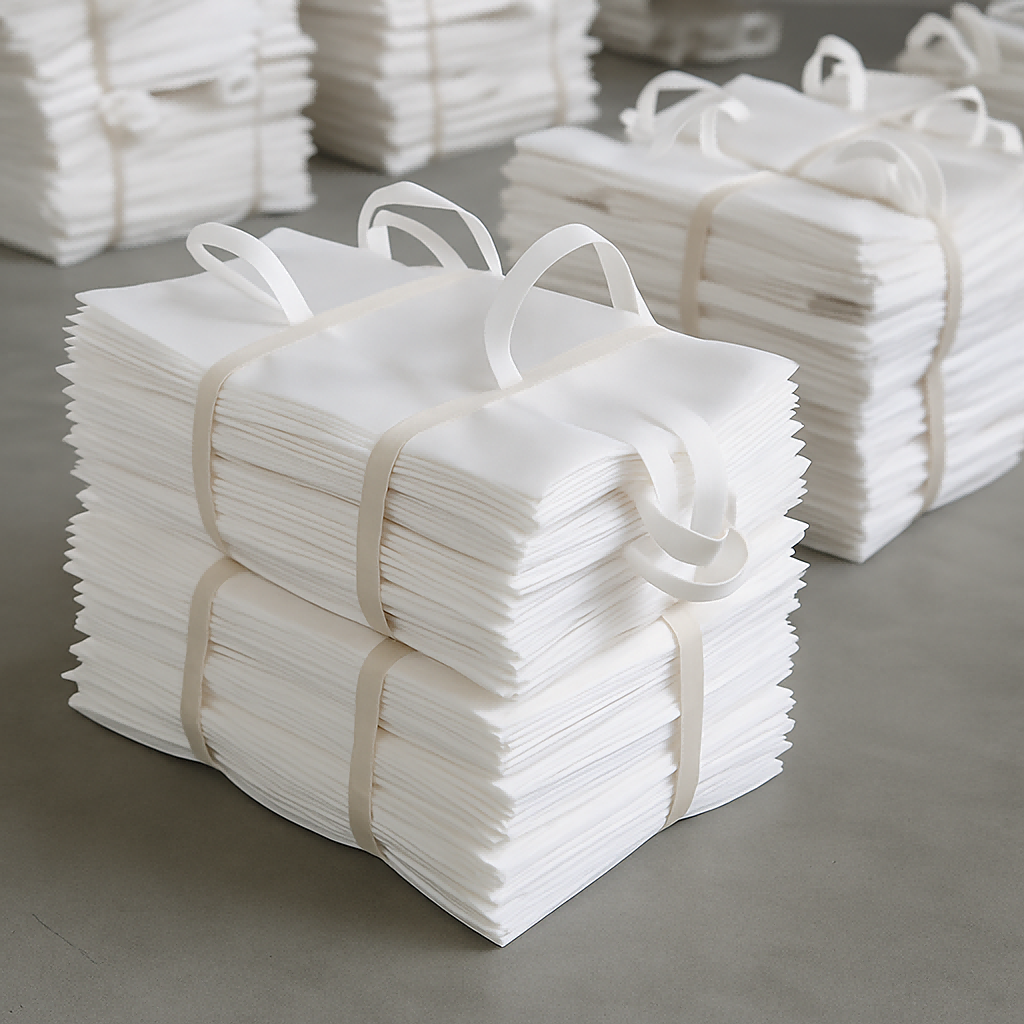 Eficiencia del espacio en el almacén: apilamiento frente a disposición en plano
Cada pie cuadrado de superficie de almacén cuesta dinero. A la hora de comparar las bolsas reutilizables con el cartón en una operación de gran volumen, la diferencia en cuanto a eficiencia espacial entre el apilamiento y el aplanamiento no es un detalle menor, sino que repercute directamente en la densidad de los palés y en la velocidad de preparación de pedidos. A continuación, te presentamos los datos concretos extraídos de diseños reales de almacenes.
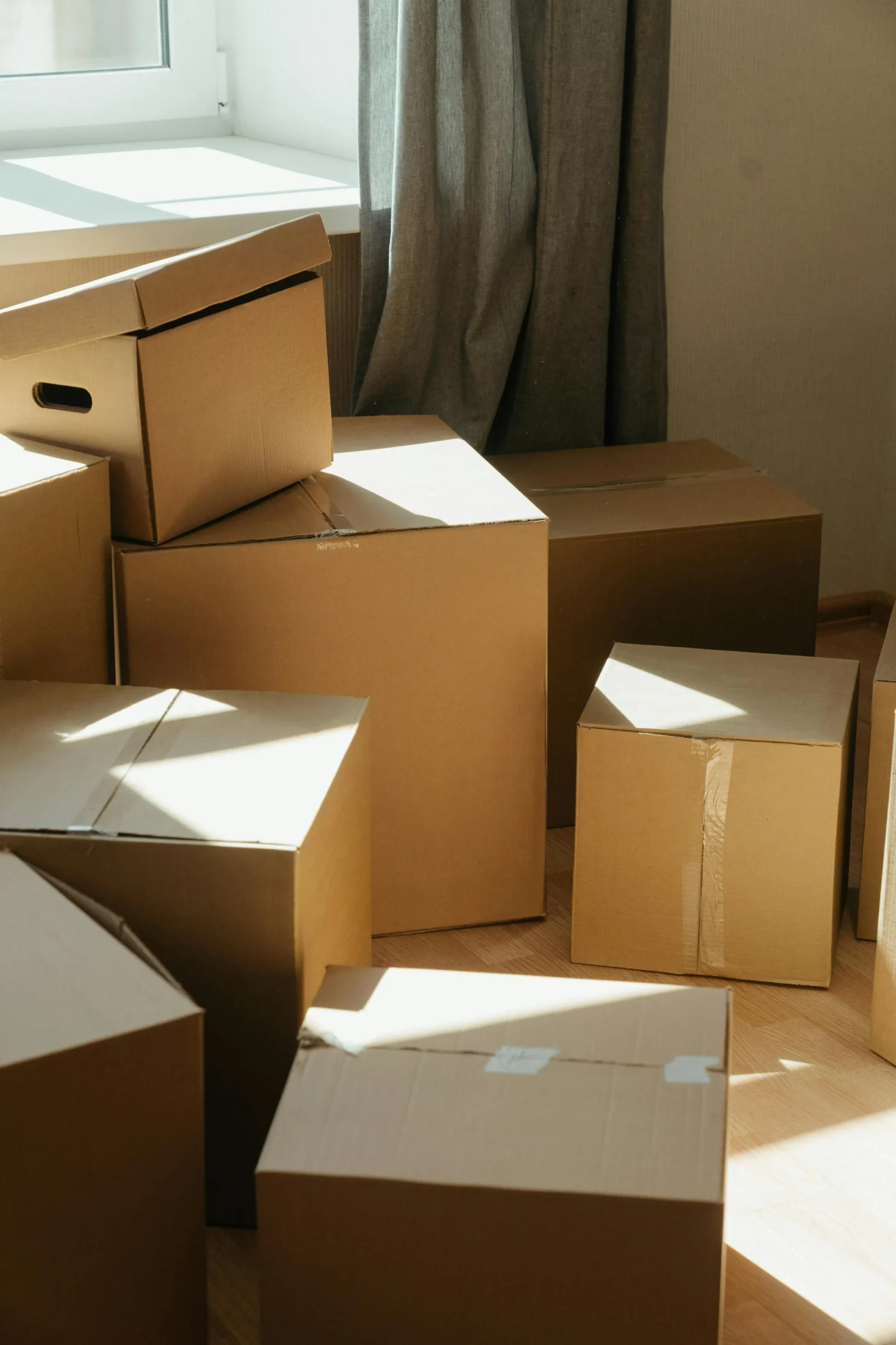 Impacto medioambiental y cumplimiento de los criterios ESG
Informes sobre criterios ESG is no longer optional for industrial distributors servicing corporate logistics accounts. Every ton of packaging waste carries a carbon accounting cost that hits both your P&L and your client’s sustainability scorecard. Here is the direct comparison: one standard corrugated box weighs roughly 0.5 kg and lasts one trip. Over 500 cycles, you throw away 250 kg of cardboard per box position. Replace that with a woven PP tote rated for 500 uses — same load, zero disposal events.
Comparing 500-Use Tote Bags vs Single-Use Cardboard Boxes Echa un vistazo a esta página de productos, soluciones o servicios para descubrir las ofertas que más te interesen. 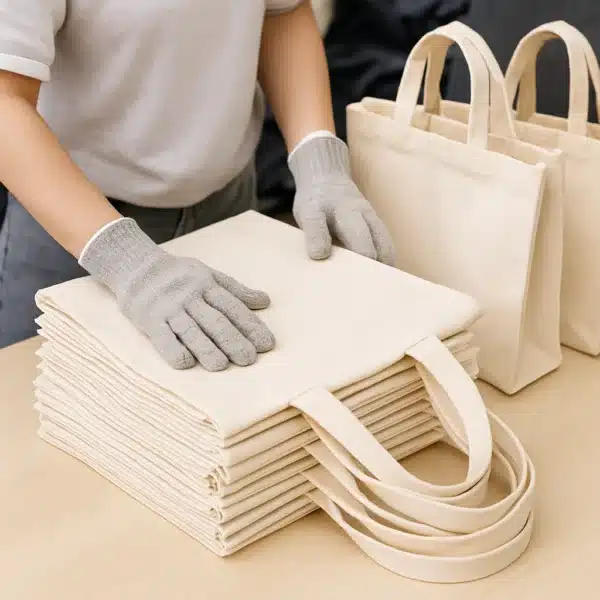 Branding & Professionalism for Client-Facing Moves
When your client’s moving crew shows up with branded woven PP totes instead of collapsing cardboard boxes, you’ve already won half the trust battle. I’ve watched logistics managers burn through $50K orders because the pre-production sample looked sharp but the mass production run arrived with misaligned prints and handles that tore at 80 lbs. That’s the gap between ‘custom printed’ and ‘custom engineered.’ For industrial distributors, this isn’t just aesthetics — it’s a recurring revenue model.
ConclusiónThe numbers don’t lie: a $0.14 per-use tote outlasts and outperforms cardboard that costs $0.12–$0.17 per cycle once you factor in tape, disposal, and collapse replacements. Over 500 cycles, that’s a 20% savings or more, plus the reliability of a bag that holds 150 lbs even after a humid week in the warehouse. The benchmark to beat: $0.12 per use. Anything above that on a per-cycle basis is a candidate for replacement. Run your own total cost of ownership calculation with your current order volume. Compare FOB pricing from factory-direct suppliers against your cardboard spend. If your cost per cycle exceeds $0.12, it’s time to request sample approval and test a run of 500-use totes against your quality tolerance standards. Preguntas frecuentesWhat’s the real cost of cardboard over 500 uses?Cardboard’s per-use cost hides $0.12–$0.17 in tape, disposal, and collapse replacement. A quality tote bag typically pays for itself within 150 cycles based on bulk factory pricing. Run your own TCO calculation with your current box spend to confirm savings. ¿Cómo daña la humedad las cajas de cartón?Las cajas de cartón pierden hasta 80% de resistencia al apilamiento tras un solo ciclo de almacenamiento en un almacén húmedo. Una bolsa de transporte de PP tejida mantiene toda su capacidad de carga independientemente de la humedad o la temperatura. La humedad es un factor decisivo para el cartón en el almacenamiento a largo plazo o en entornos húmedos. ¿Cuántas bolsas de tela caben en un palé en comparación con las cajas?Apilar las cajas de transporte permite ganar 40% más espacio vertical que almacenar cajas de cartón desmontadas. Esto significa que en un palé estándar caben aproximadamente 250 cajas de transporte plegadas, frente a unas 150 cajas desmontadas. Optimiza la eficiencia volumétrica del almacén pasando a utilizar cajas de transporte apilables. ¿Son las bolsas de tela más ecológicas que las de cartón?A single tote used 500 times eliminates 500 cardboard boxes from the waste stream. While cardboard is recyclable, the energy and water required over 500 cycles far exceeds a tote bag’s. If ESG reporting matters, tote bags reduce waste per shipment significantly. |



0 comentarios