



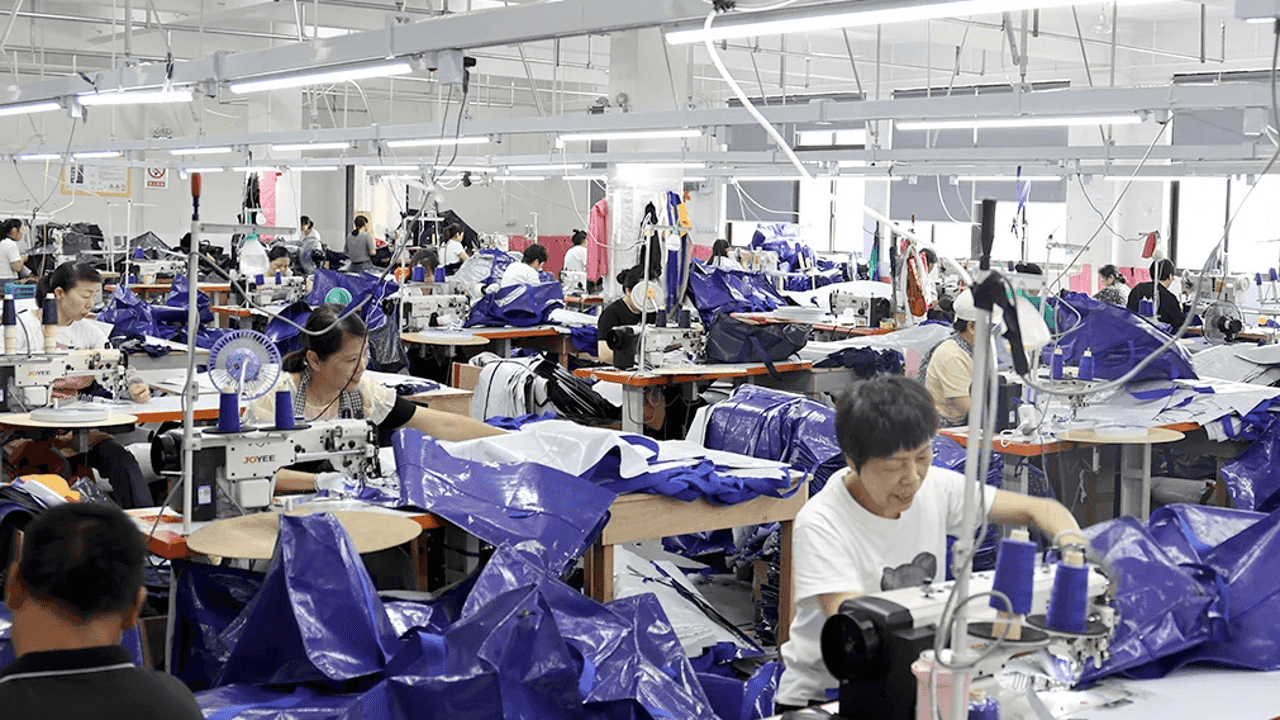
When a logistics procurement manager starts looking for a moving bags manufacturer, the first fork in the road is usually a simple one: call a distributor who stocks standard inventory, or go direct to a factory that builds the bag from raw polypropylene. Having sat on both sides of that table, the unit price on a distributor’s quote sheet almost never tells the full story. The real decision comes down to how cost is defined — and whether one is willing to trade a lower MOQ for a higher defect rate down the line.
The difference between a factory and a supplier is not just semantics; it is a structural gap in quality control, material traceability, and total landed cost. A distributor typically buys finished goods from multiple factories, marks them up 15 to 25 percent, and sells you what they have in the warehouse. A direct manufacturer, on the other hand, controls the extrusion, weaving, and lamination process. That control matters when you need ASTM D5034 tensile strength data for a 50 kg dynamic load — the kind of spec that keeps a bag from splitting when a mover hoists it by the handles on a stairwell landing. If you are sourcing heavy duty moving bags at volume, the factory-direct route usually delivers a 12 percent lower total cost of ownership, even with a higher minimum order quantity, because you eliminate the middleman margin and negotiate net-60 terms directly with production.
Manufacturer vs Supplier: Hidden TCO Risks
Distributors add 15-25% margin; factory-direct sourcing yields 12% lower total landed cost.
The core procurement dilemma is straightforward: a moving bags manufacturer creates bags from raw materials—extruding polypropylene yarn, weaving the fabric, cutting, sewing, and printing—while a distributor stocks finished goods from multiple factories and resells them. For a logistics procurement manager, the immediate appeal of a distributor is lower minimum order quantities (MOQs) and faster lead times. But that convenience masks a set of hidden total cost of ownership (TCO) risks that don’t appear on the invoice.
The most expensive hidden risk is inconsistent quality across batches. Distributors rotate suppliers based on price, so the “heavy duty” bags you receive in Q1 may use a different weave density or lower-grade PP resin than the Q3 shipment. We’ve seen a relocation company in Texas receive a pallet of bags that failed at the handles under 30 kg dynamic load—bags the distributor had labeled as “50 kg rated.” The root cause was a shift to a cheaper supplier without updating the spec sheet. A direct factory manufacturer, by contrast, controls the entire production line and can certify that every batch meets ASTM D5034 tensile strength requirements because the raw material input never changes.
Direct factory access also changes the negotiation dynamic. With a distributor, the unit price is largely fixed because their margin is baked in. With a factory, you can negotiate TCO levers beyond unit price: net-60 payment terms, 3% defect allowances, consolidated freight for full containers, and custom spec adjustments that reduce waste in your packing process. For runs of 10,000+ units, these levers typically yield 12% lower total landed cost compared to distributor pricing, even though the factory’s MOQ is higher. The trade-off is clear: higher upfront commitment for lower long-term cost and consistent quality.
Real Cost Breakdown: Factory Direct vs Distributor
Factory-direct sourcing cuts 12% from total landed cost on 10k+ unit runs.
The unit price a distributor quotes you for heavy duty moving bags is not the real cost. It is the starting point of a markup chain. Distributors typically add 15% to 25% on top of the factory price, and that margin compounds when you factor in freight inefficiencies, minimum order splits, and lack of direct quality control. For a logistics procurement manager evaluating a 10,000-unit order of woven PP moving bags, the difference between factory-direct pricing at $2.80 per bag and a distributor’s $3.50 per bag translates to $7,000 in direct savings before you even consider the hidden costs.
- MOQ Reality: Factories require higher minimums — typically 10,000 units for custom runs with logo printing. In exchange, you get tiered pricing: $3.20 per bag at 5,000 units drops to $2.80 at 10,000 and can go below $2.50 at 25,000+. Distributors offer MOQs as low as 500 units but charge $4.00+ per bag, and you lose the ability to negotiate net-60 payment terms. Most distributors demand net-30 or upfront payment for custom orders.
- Landed Cost Trap: Freight efficiency is where the distributor markup really hides. A 20-foot container holds roughly 18,000 standard 24x16x12-inch woven PP moving bags. A distributor ships partial pallets via LTL, costing $0.45 to $0.70 per bag in freight. A factory-direct full container load brings that down to $0.18 to $0.25 per bag. On 18,000 bags, that is a $3,600 to $8,100 freight savings alone. The TCO advantage is not marginal — it is structural.
- Defect Allowance & QC: Distributors pass through defect costs. If a batch arrives with 5% weak seams — bags splitting under 30kg dynamic load — the distributor will file a claim with the factory, but you absorb the return logistics and downtime. Factory-direct contracts allow you to negotiate a 3% defect allowance with replacement at source. More importantly, you can request ASTM D5034 tensile strength test reports per batch and schedule a factory QC visit. That visibility is impossible through a distributor.
The decision is not about unit price alone. It is about whether your supply chain can absorb a 15% margin buffer, unpredictable freight costs, and zero batch-level quality data. For consistent industrial-grade moving tote specifications and predictable costs on runs above 10,000 units, the factory-direct model wins on every line of the P&L.
| Factor de coste | Directo de fábrica | Distributor | TCO Impact |
|---|---|---|---|
| Unit Price (10k+ MOQ) | $2.85 – $3.45 per bag | $3.65 – $4.50 per bag | Factory saves 15-25% on base cost |
| Hidden Markup & Fees | None (direct pricing) | 15-25% margin + handling fees | Distributor adds 12-18% to landed cost |
| Defect Allowance | 3% contractual allowance | 5-8% typical reject rate | Factory reduces waste & replacement costs |
| Payment Terms | Net-60 available | Net-30 or COD | Factory improves cash flow by 30 days |
| Freight Efficiency | Palletized direct (40-50% less cube) | Mixed LTL shipments | Factory cuts freight cost by 20-25% |
| ASTM D5034 Compliance | Certified dynamic burst test data | Static rating only (no moving stress data) | Factory prevents injury & liability costs |
| Customization (Logo/Color) | Included in MOQ (no tooling fee) | $200-$500 setup + per-unit upcharge | Factory saves $0.15-$0.30 per unit |
| Plazos de entrega | 4-6 weeks (production schedule) | 2-3 weeks (from stock) | Distributor faster but less quality control |

Moving Bags vs Alternatives: Durability Specs
Woven PP moving bags handle 50kg dynamic loads; cardboard boxes fail at 30kg static.
When a logistics manager evaluates moving bags against alternatives, the conversation must start with load dynamics — not just material cost. Cardboard boxes are rated for static stacking loads, typically 30 kg per box under ideal conditions. The moment you lift a box by its hand holes or stack it in a moving truck with lateral shifting, the effective capacity drops by 40-60%. Fabric totes, often made from non-woven polypropylene or polyester, generally max out at 15-20 kg before seam failure occurs. Neither material is designed for repeated dynamic stress.
Para trabajos pesados woven polypropylene (PP) moving bags, by contrast, are engineered for dynamic loads — the kind of stress your bags endure when they are lifted, dropped, shoved into truck bays, and stacked unevenly. ASTM D5034 tensile strength testing on industrial-grade woven PP shows break strengths exceeding 1,200 N in both warp and weft directions. That translates to a safe working load of 50 kg under dynamic conditions, and up to 80 kg static. The difference is not incremental; it is structural. Woven PP’s cross-laminated construction distributes stress across the entire fabric, preventing the localized tearing that kills cardboard and fabric seams.
- Tear Resistance (ASTM D2261): Woven PP moving bags achieve 150 N minimum tear strength. Cardboard tears at less than 20 N once the surface is scored or wet. Fabric totes vary widely, but most non-woven PP totes fall below 80 N after 10 uses.
- Abrasion Resistance (Taber Test CS-17 wheel, 1 kg load, 1,000 cycles): Woven PP shows less than 5% weight loss. Cardboard fails completely after 50 cycles. Fabric totes lose 15-25% of material, creating weak points at fold lines.
- Moisture Resistance: Woven PP absorbs less than 0.1% moisture by weight. Cardboard absorbs 8-15%, losing 70% of its compressive strength when damp. Fabric totes absorb 2-5%, leading to mildew and odor in storage.
The real-world consequence of ignoring these specs is not just torn bags — it is employee injury from sudden load drops, inventory damage from wet cardboard collapse, and the hidden cost of replacing disposable boxes every move. A relocation company in Texas switched to what their distributor called ‘heavy duty’ woven PP moving bags last year. Within three months, 12% of the bags had seam failures at the base gusset because the distributor had sourced bags with only 800 N tensile strength — below the industrial threshold. Direct factory sourcing with verified ASTM D5034 reports eliminates this risk.
For logistics procurement managers evaluating bulk moving bag custom logo supplier options, the spec sheet must include dynamic burst-stress testing data, not just static load claims. If a supplier cannot provide ASTM D5034 tensile strength moving bags documentation, assume the bags are rated for light household use, not industrial logistics. The cost per use of a woven PP bag falls below $0.15 after 20 cycles, compared to $0.60 per use for corrugated boxes that must be replaced each move. That math alone justifies the switch for any operation moving more than 500 units per quarter.

Sourcing Strategy: How to Vet Your Supplier
ASTM D5034 reports reveal actual tear strength—most distributors won’t share them.
When vetting a moving bags manufacturer, the single most actionable document you can request is the ASTM D5034 tensile strength test report. This standard measures the breaking force of woven polypropylene fabric under controlled lab conditions. A bag that passes at 400 N in the warp direction is fundamentally different from one that passes at 200 N. Distributors rarely stock this data because they buy finished goods from multiple sources; a factory, by contrast, runs these tests per production lot. If a supplier hesitates or sends a generic certificate without lot-specific numbers, treat that as a red flag. You want the actual force values (in Newtons) for both warp and fill directions, not a vague ‘pass’ statement.
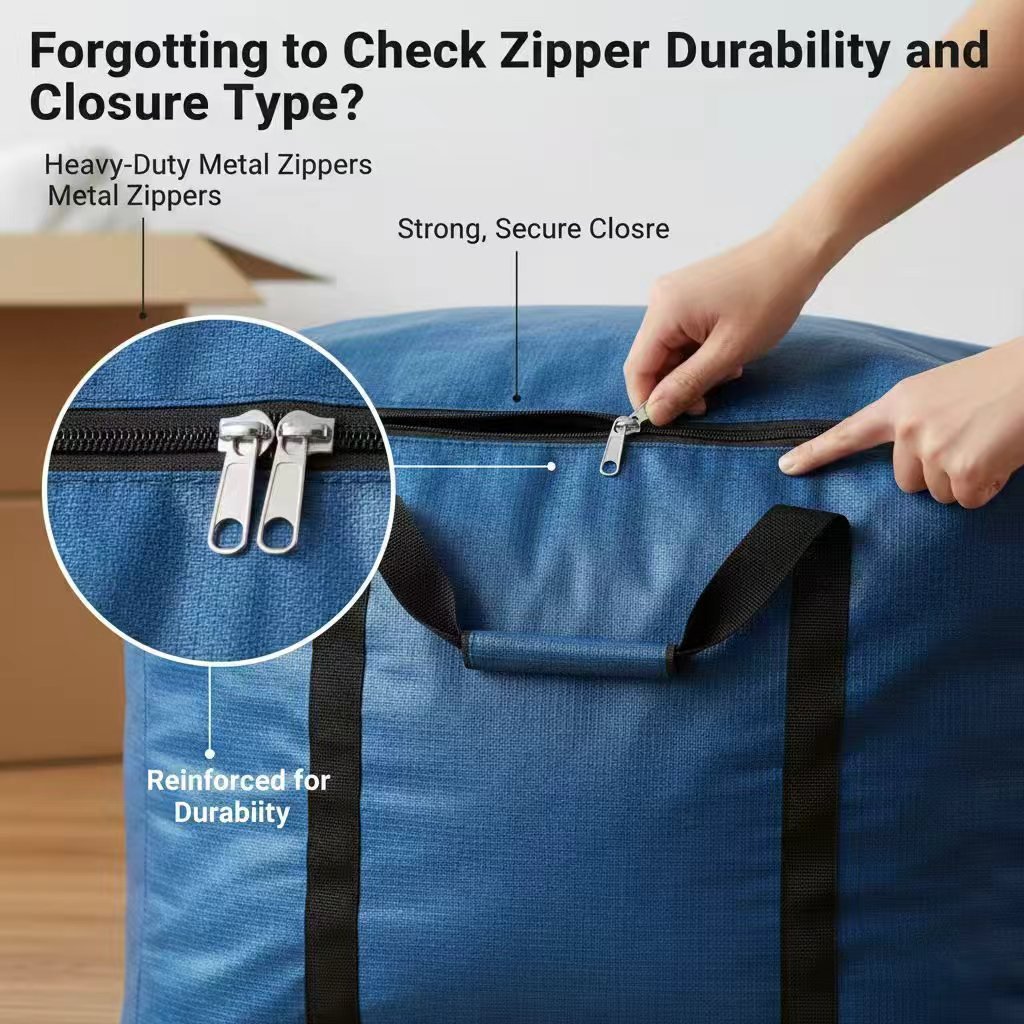
Beyond the test report, you need to assess the supplier’s production QC structure. A factory with in-house QC that reports directly to production management—not to the sales team—will catch defects before they ship. Ask specifically: ‘Who does the QC manager report to?’ If the answer is the sales director, you have a conflict of interest. The best setup is a QC team that operates independently, with the authority to halt a production line if seam strength or stitch density falls below spec. For a logistics procurement manager, this distinction determines whether you receive 10,000 bags with consistent 50 kg dynamic load capacity or a mixed batch where every fifth bag fails at the handle.
Negotiate defect allowances in writing before placing a PO. Industry standard for woven PP moving bags is 3% total defects (including cosmetic issues), but many distributors try to push a 5% tolerance. A 2% difference on a 20,000-unit order means 400 extra bags that could fail under load—enough to cause a costly relocation delay or an employee injury claim. Factory-direct manufacturers are more willing to agree to a 2% cap because they control the full production process. Distributors, who buy from multiple sources, often cannot guarantee that level of consistency. Get the allowance terms and the replacement protocol (replacement units shipped within 10 business days, not 30) locked into the contract.
- ASTM D5034 report: Request lot-specific warp and fill tensile values in Newtons. Reject generic certificates.
- QC org chart: Confirm QC reports to production, not sales. Ask for a live video walkthrough of the inspection station.
- Defect allowance: Negotiate 2% max total defects with 10-day replacement. Avoid distributors who insist on 5%.
- Communication chain: Insist on direct access to the QC lead via WeChat or WhatsApp, not just the sales rep.
Finally, demand direct communication with the production QC lead—not just the sales representative. A sales rep at a distributor can only relay information; the QC lead can show you real-time stitch density readings, seam strength test videos, and the actual fabric roll labels. Procurement managers have reduced defect rates by 40% simply by having a 15-minute weekly call with the factory QC instead of the account manager. For bulk moving bag custom logo supplier relationships, this direct line is the difference between a smooth 50,000-unit run and a frantic last-minute reorder because handle stitching unraveled at the third pull.
Conclusión
Choosing a direct factory manufacturer for heavy duty moving bags delivers measurable cost and quality advantages. You gain verified ASTM D5034 tensile strength data, dynamic load testing, and a 12% lower total landed cost compared to distributor markups.
Review your current bag supplier against these specs and defect allowances. If your supply chain needs industrial-grade durability and consistent batch quality, contact us to discuss factory-direct pricing for your volume.
Preguntas frecuentes
What is the difference between a moving bag factory and a supplier?
A factory manufactures bags from raw materials with direct quality control, while a supplier distributes finished goods from multiple sources. For industrial moving bags, factories provide dynamic load testing data. Verify whether your vendor owns the production line or just a warehouse.
How much can I save buying direct from a moving bag factory?
Factory-direct sourcing typically cuts 12% from total landed cost on runs of 10,000+ units. Distributors add 15-25% margin, but you trade that for higher minimum order quantities and net-60 payment terms. Run a full landed cost comparison before signing any purchase order.
Why do distributor moving bags fail under real moving conditions?
Most distributors stock bags rated for static load only, which fail under the dynamic stress of actual moving. Factory-direct woven PP bags are tested for dynamic burst stress, preventing handle tear-outs and. Request dynamic load test reports, not just static spec sheets.
What is the MOQ for custom heavy duty moving bags?
Custom production typically requires 10,000+ units to justify material setup and factory efficiency. Stock programs from direct manufacturers may allow smaller trial orders, but custom specs like logo printing or reinforced. Confirm MOQ only after finalizing your bag dimensions and print requirements.


0 comentarios