


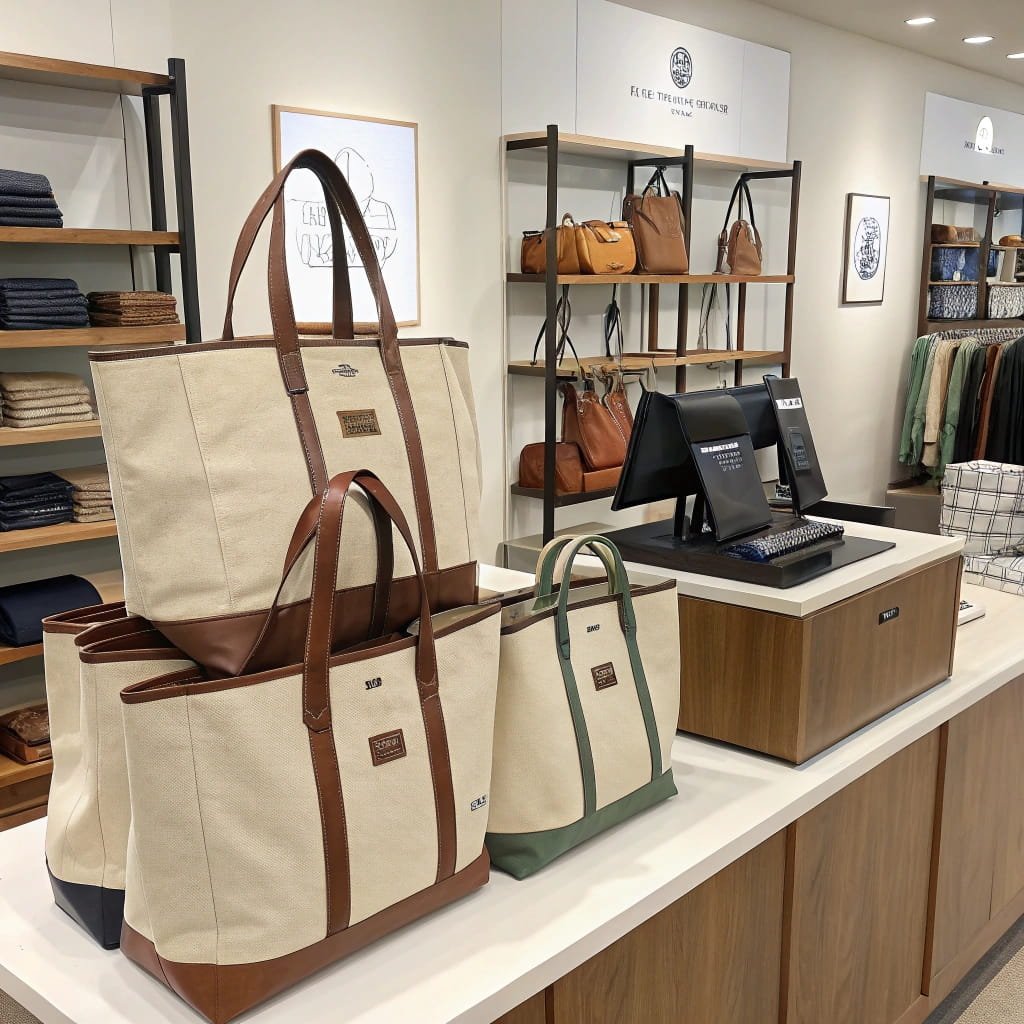
custom retail tote bags moq is the first checkpoint buyers should lock before they approve a supplier, budget, or production slot. Color accuracy sinks more retail tote programs than any other single factor. 70% of B2B buyers flag inconsistent print color as the top quality complaint, and roughly 30% of artwork rejection cycles trace back to a CMYK file sent where a Pantone reference was expected. The fix costs nothing except 24 hours. A digital proof rendered against the actual print profile catches the mismatch before a single screen gets burned—Tiiocti’s factory sends one within a day to eliminate 90% of those color errors outright. That same proof cycle also clarifies bleed requirements, handle-seam positioning, and whether the logo knocks out cleanly on a 6 oz cotton surface versus a coated non-woven. For a merchandiser watching landed cost per unit, those 24 hours are the cheapest insurance a brand can buy.

Understanding MOQ in Custom Tote Bag Manufacturing
MOQ isn’t a sales tactic—it’s a math equation driven by plate setup cost, fabric dye-lot minimums, and stitch-line reprogramming.
Every supplier you talk to will quote a different MOQ for the same 14″x16″ cotton tote. That’s not inconsistency. That’s three cost levers doing the talking: raw material procurement, print method setup, and factory line changeover time. Understand which lever is binding your order, and you can negotiate around it with precision instead of pleading.
Fabric is the first gatekeeper. Cotton canvas and Oxford cloth come off dye-lots—batches of fabric dyed together to ensure color uniformity across every bag in your run. A dye-lot minimum at most textile mills is 100–300 linear meters. If your 50-unit order consumes only 40 meters, the factory still buys the full lot and either prices that waste into your per-unit cost or rejects the order outright. Non-woven polypropylene bypasses this constraint because the material is extruded and cut on-demand, not dipped in dye vats. That’s why non-woven totes carry sub-100 MOQs while 6 oz cotton canvas typically starts at 200–500 units.
Print method determines the second cost wall. Screen printing requires a physical plate per color—setup cost runs $35–75 per color regardless of order size. Spread across 1,000 bags, that’s negligible. Spread across 50 bags, it adds $0.70–$1.50 per bag before ink touches fabric. DTG (direct-to-garment) eliminates plate costs entirely, charging a flat ~$2.50 per bag for full-color prints with zero setup. The break-even point sits at 50–100 units. Below that line, DTG wins on unit economics. Above it, screen printing’s amortized setup crushes DTG’s per-print premium—and delivers better wash-fastness on cotton.
The third lever most buyers never see: stitch-line programming. Industrial sewing stations run programmed stitch patterns. Switching from a standard 14″x16″ tote with box-stitched handles to a custom 16″x18″ with reinforced cross-stitching requires a line supervisor to stop production, reprogram the automated guide, and run a test piece. That 20–30 minute changeover on a line producing 800 bags per shift represents lost throughput. Small runs that demand custom dimensions pay for that stoppage. Standard-dimension orders slide into existing programs and carry zero reprogramming surcharge.
- Non-Woven PP (80–100 GSM): MOQ typically 50–100 units. No dye-lot constraint. Single-color screen print common. Full-color DTG viable at any quantity. Per-unit at 100 pcs: $0.60–$1.20. Best for event giveaways, grocery chains, and high-volume disposable campaigns.
- Woven PP (120–160 GSM): MOQ 200–500 units. Coated woven fabric requires lamination runs that hit minimum throughput thresholds. Laminated surface limits print to screen methods—DTG doesn’t bond well to poly coatings. Per-unit at 500 pcs: $0.80–$1.80. Dominant in supermarket reusable bag programs.
- Oxford Cloth (210D–600D): MOQ 300–500 units. Nylon/Poly Oxford shares dye-lot logic with cotton. Heavier denier fabrics (600D+) command higher MOQs because mills run fewer production campaigns for heavy-gauge Oxford. Per-unit at 500 pcs: $1.50–$3.00. Requires screen printing—DTG ink adhesion on Oxford’s coated surface tests poorly after 10+ wash cycles.
- Cotton Canvas (6–12 oz): MOQ 200–500 units for standard 6 oz; 300–800 for 10–12 oz heavyweight. 6 oz cotton tote (14″x16″) runs $1.00–$2.50 at 500+ pcs but jumps to $4.50–$6.00 at 50 pcs. The raw material isn’t 4x more expensive—you’re paying for the dye-lot floor, not the fabric. Natural cotton takes screen printing and DTG equally well, giving volume flexibility no synthetic option matches.
One tactical note on overruns: standard factory overrun allowance is 2–3% of your order quantity, produced to cover QC rejections. On a 500-unit cotton tote order, that’s 10–15 extra bags. Quality-focused suppliers will ship these to you at no charge. Retail merchandisers who track this can convert overruns into free stock for pop-up events, influencer mailers, or store-team samples—effectively lowering landed cost per usable unit below the invoice number.
Artwork Setup for Flawless Prints
Pantone mismatch causes 30% of all artwork rejections — a single digital proof within 24 hours prevents 90% of them.
Every production delay traces back to one of four file mistakes. RGB artwork submitted when the press requires CMYK. A logo built at 72 dpi stretched across a 14×16-inch tote. Zero bleed on a design that needs to print edge-to-edge. Or a brand color specified in Pantone but converted to CMYK by the designer’s software without anyone checking the shift. These are not beginner errors. Seasoned merchandisers make them because different suppliers enforce different rules and nobody sends a checklist that explains why each spec matters.
The spec that wins the argument every time: vector files. An .AI, .EPS, or .PDF with fonts outlined and colors mapped to Pantone Solid Coated values. Vector artwork scales from a chest emblem to a full-back print without pixelation. Raster files (.PSD, .TIFF, high-res .PNG) work if the submitted resolution hits 300 dpi at actual print size — not 300 dpi at a 2-inch thumbnail blown up 600%. Verify this by opening your file at 100% zoom at the target dimensions. If it looks soft on your screen, it will look soft on fabric.
- Formato de archivo: Vector (.AI, .EPS, .PDF with outlined fonts) for screen printing. Raster accepted for DTG only if 300 dpi at actual print dimensions. JPEG submissions are rejected on sight — compression artifacts ruin edge sharpness on fabric.
- Modo de color: Pantone Solid Coated for screen printing. CMYK values shift between RIP software and ink mixing; two suppliers printing the same CMYK build will produce visibly different results. If your brand guide specifies CMYK only, expect to approve a physical swatch before production starts.
- Bleed: 3mm minimum on all sides for edge-to-edge prints. Designs that stop at the cut line produce white slivers on finished bags when the cutting die shifts even half a millimeter. For tote bags with gussets, add 5mm bleed on side panels to account for fold tolerance.
- Digital Mockup: Free, delivered within 24 hours of compliant artwork. Confirms placement, scale, bleed, and font rendering. Not a color reference. Revisions at this stage cost zero dollars and zero production days.
- Pantone Swatch Card: Optional but recommended for critical brand colors. Factory overprints your Pantone callout onto the actual fabric and couriers a physical swatch. Eliminates the lighting-condition variable before committing to full sample production.
- Pre-Production Sample: One fully finished bag with final inks, fabric, stitching, and label. Typical turnaround: 5–7 days plus courier. Approving this sample authorizes the full production run. Skipping this step because of a tight deadline is the single most expensive shortcut in custom tote manufacturing.
The Pantone versus CMYK conversation kills more timelines than any other factor. A designer builds the brand palette in Adobe Illustrator using CMYK sliders, picks a blue that looks rich on a backlit monitor, and exports the file. The factory receives it, matches to the closest Pantone chip under D65 lighting, and the result reads two shades darker and noticeably warmer. The merchandiser rejects the sample. Two weeks evaporate. The fix costs nothing at the front end: request the factory’s specific Pantone fan-deck version (Formula Guide Solid Coated, not Color Bridge) and name your colors by code — PMS 286 C, not ‘Navy Blue.’.
Proofing starts with a digital mockup, not a physical sample. A competent factory sends a layered PDF showing ink separations, color callouts, placement coordinates, and simulated fabric texture within 24 hours of receiving compliant artwork. This mockup is not a color-accurate proof — it is a layout and specification checkpoint. Confirm the logo sits 2 inches from the bottom hem, not 2.5. Verify the tagline typeface did not default-substitute when fonts were missing. Approve the bleed zone indicators. These errors cost nothing to fix at the mockup stage and require a new screen or plate once production begins.
The pre-production sample is the physical truth. One bag, printed on the actual fabric with the actual inks, stitched with the actual thread color. This sample answers the question digital mockups cannot: how does the ink sit on the fabric weave? Cotton absorbs ink and dulls saturation; a coated non-woven holds it on the surface with more pop. The same Pantone 186 C red printed on 6 oz natural cotton and 80 GSM laminated non-woven will look like two different colors. Only a physical sample reveals this. Approve colors under the lighting conditions your customer will experience — retail floor lighting, not an office fluorescent tube.
Reducing print colors is the fastest way to cut both setup charges and rejection risk. A 5-color screen-printed design carries five setup fees at $35–75 per screen and five opportunities for registration error, ink inconsistency, or Pantone mismatch. Moving to a 2-color design slashes print cost by 40–50% and removes three potential failure points. For sub-100 unit orders, DTG printing sidesteps this entirely — full-color, no screen fees, roughly $2.50 per bag. The trade-off: DTG lacks the opacity and durability of plastisol screen ink on dark fabrics. Ask whether your bag will face repeated use and washing or serve a single event. Print durability requirements dictate the method.
How to Negotiate MOQ Flexibility
MOQ is a negotiation built on three cost levers—plates, fabric lots, and stitch programming—that most buyers never question.
The 500-unit minimum a supplier quotes rarely reflects an immovable technical constraint. It reflects the batch economics of screen setup ($35–75 per color), fabric dye-lot minimums at the mill, and sewing line changeover time. Isolate which lever drives the number, and you can counter with a structure that reduces it.
Split shipments are the most underused MOQ workaround in the tote bag category. A factory running 600 units for a different client on the same fabric lot can often piggyback your 150-unit order without resetting the dye bath or reprogramming stitch patterns. The trade-off is timing: your portion ships when that larger batch finishes, not on an independent schedule. For seasonal retail rollouts with soft launch dates, this trade-off costs nothing and halves your per-unit price versus a standalone small run.
- Split shipment trigger: Ask the factory what other orders share your fabric type and print method this quarter. If a compatible batch exists, request a partial allocation. The per-unit price stays near the bulk rate, and the factory preserves line efficiency.
- Overrun conversion: The industry-standard 2–3% overrun allowance—bags produced beyond your exact order to cover QC rejects—typically becomes free stock. For a 1,000-unit order, that’s 20–30 extra bags. Retail brands can deploy these at pop-up events, influencer mailers, or store-opening giveaways at zero additional landed cost.
- Small-batch bridge: DTG printing at roughly $2.50 per bag carries no screen setup fee. For sub-100 unit test runs, DTG full-color output validates your market before committing to screen printing, which breaks even at 50–100 units and wins on unit economics beyond that threshold.
Overruns deserve a dedicated line in your purchase agreement, not a passive acceptance of ‘whatever arrives.’ Specify that overrun stock carries the same unit price as the base order, and confirm the ceiling—most factories cap at 3%. A 1,000-bag order yielding 1,030 bags drops your effective per-unit cost by nearly 3%. For a cotton tote priced at $2.25 at 500+ units, that’s meaningful margin recovery on what is essentially free inventory.
Small-batch testing separates suppliers who want long-term partnerships from those chasing one-off POs. A factory that accepts a 50-unit DTG run with Pantone-matched proofs delivered within 24 hours signals production discipline. The same factory that resists pre-production samples—or charges full setup fees on a test batch—is likely to be the one generating the 30% of artwork rejection cycles caused by color mismatch. Use the test run as a procurement filter, not just a quality check.

First-Time Custom Tote Buyer Checklist
A 24-hour digital proof catches 90% of Pantone mismatches before production starts.
Retail buyers lose margin on first tote orders to three things: color mismatches, unmanaged overruns, and setup costs they didn’t negotiate. The checklist below is built from real order logs, not generic sourcing advice. Each item stops a failure mode that appears in B2B quality reports.
- Contract Pantone codes, not hex values: Specify the exact Pantone code (e.g., PMS 2935 C) in the purchase order. 70% of B2B buyers report inconsistent print color as the top defect. A free digital proof within 24 hours eliminates 90% of these mis-calibrations before screens are cut.
- Demand a muestra de preproducción from the actual dye lot: Insist on a physical sample pulled from the fabric lot designated for your order. Measure the GSM and compare it to the spec. A 5 oz delivery on a 6 oz order degrades retail feel and cheapens brand perception at the counter.
- Negotiate overrun terms and usage rights: 2–3% overrun is standard. Suppliers quoting 10% without explaining how excess stock is handled are billing you for scrap. Convert the allowance into free PR mailers or pop-up event inventory.
- Calculate per-unit cost by print technology: DTG runs about $2.50 per bag with zero setup for full-color work. Screen printing breaks even at 50–100 units. For 1- to 2-color designs above 100 pieces, screen printing slashes cost; a 5-color design costs 40–50% more than a 2-color layout.
- Model the landed cost, not the FOB price: A $1.00 FOB cotton tote can reach $1.60 after sea freight and duties. Average lead time is 20–30 days plus ocean transit. Request DDP quotes to see the true per-unit budget hitting your shelf.
- Submit CMYK artwork with bleed and a spot-color layer: 30% of artwork rejection cycles trace back to RGB files or missing bleeds. Supply 300 dpi files with 5 mm bleed and a separate Pantone reference layer. This prevents the CMYK interpretation drift that stalls timelines.
Conclusión
Artwork accuracy isn’t a nice-to-have. It’s the difference between a retail-quality brand asset and a rejected shipment. When you factor in screen setup costs amortized across volume, fabric lot dyeing minimums, and the break-even point where DTG yields to screen printing, you stop seeing MOQ as a fixed barrier and start seeing it as a set of adjustable levers. Get the proofing cadence right—free digital proof within 24 hours, referenced to a physical Pantone chip—and you eliminate the color mismatch that triggers 30% of artwork rejection cycles.
Before you lock in a purchase order, run your campaign quantities against the material GSM, print method, and shipping route. Compare real production images, MOQ ranges by fabric, and print method specs on the custom retail tote collection page to finalize your tech pack with confidence.
Preguntas frecuentes
What is the most cost-effective way to order custom printed tote bags wholesale?
Bulk screen printing with a single-color design is the cheapest per-unit route. Multiple colors add extra screens and setup costs, raising your price. Lock in your final artwork early to avoid rush surcharges.
How does minimum order quantity affect custom tote bag pricing?
Higher MOQs spread fixed plate and screen setup costs over more units, sharply lowering your bag price. Dropping below the factory’s standard run usually triggers a surcharge or higher unit rate. Ask the factory for the MOQ tier where unit price flattens.
Does adding more print colors always increase cost?
Yes, each added color requires an extra screen, more setup labor, and additional ink, driving up both one-time and per-unit costs. Stick to one or two spot colors to keep your budget predictable. One color keeps production fast and your quote lean.
Is screen printing or DTG cheaper for bulk custom tote bag orders?
Screen printing is far cheaper for bulk because its high initial setup cost is amortized over thousands of units. DTG becomes economical only on tiny runs or extremely complex. For orders above a few hundred pieces, screen print wins on unit cost.
Does tote bag size affect printing cost?
Yes, larger bags need bigger screens and more ink coverage, modestly increasing setup and consumable costs. If your print area stays the same, the size impact is minor. Confirm if the factory charges by print area or by screen frame size.



0 comentarios