



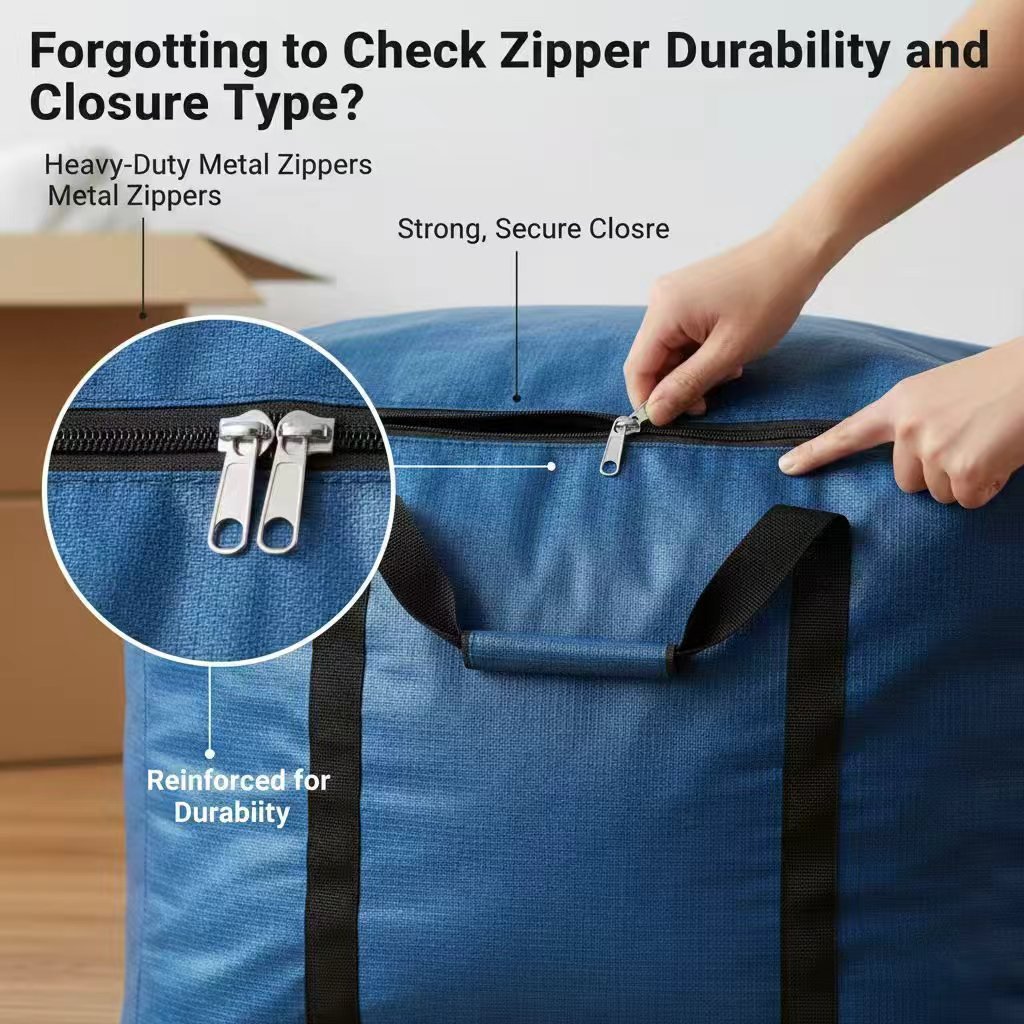
bulk bag export costs is the first checkpoint buyers should lock before they approve a supplier, budget, or production slot. Every sourcing guide tells you to lock down sample approval before mass production. But I’ve seen that advice cost a buyer $50,000 because the pre-production sample looked perfect while the production run had a different weave density that shifted the Precio FOB calculations by enough to wipe out his margin. The real risk isn’t sample approval—it’s the hidden fees buried in your bulk bag export costs that don’t show up until the container lands.
After auditing suppliers across a dozen countries, I’ve learned that most procurement managers focus on unit price and quality tolerance, but ignore the container optimization game. A foldable moving bag can cut your container volume by up to 40% versus rigid bins, directly slashing per-unit ocean freight. That’s a cost lever no sample approval can fix. The trick is asking your supplier for an all-in, door-to-port DDU breakdown—that’s where the real landed cost lives, not in the FOB quote.
True Bulk Bag Export Cost Components
FOB quotes hide up to 40% of your landed cost.
Most procurement managers compare FOB prices and assume that’s the total. It’s not. FOB covers only the cost to load the container at the factory’s port. Everything after that — customs clearance, terminal handling, destination delivery — lands on your P&L. DDP shipping from a factory with an in-house logistics team can eliminate five common surprise fees: customs brokerage, terminal handling, bonded warehouse, delivery appointment, and residential surcharge. That’s easily $1,200–$2,500 per container you won’t see on an FOB quote.
- Customs brokerage fees: $150–$400 per filing, often double-charged if documents are incomplete.
- Terminal handling charges: $200–$600 per container for unloading and staging at destination port.
- Bonded warehouse storage: Runs $50–$150 per day if customs delays your release.
- Delivery appointment window: Miss the slot? $100–$300 rescheduling fee plus waiting time.
- Residential delivery surcharge: Trucking to a home or small business adds $75–$200 per stop.
- 1. What is your defect allowance?: Industry standard 2–5% can turn into hidden costs if substandard bags arrive and need rework. Get it in writing.
- 2. Are collapsed dimensions and packing plan provided?: Without this, you can’t verify per-unit freight savings.
- 3. Which Incoterm do you recommend and why?: If they push FOB without explaining DDP benefits, they may not manage logistics.
- 4. What fees are excluded from your quote?: Chassis rental, port security, broker fees — ask for a full exclusion list.
- 5. Can you share a recent shipment’s cost breakdown?: A transparent supplier will share a redacted invoice.
- 6. What is your lead time and how often do you miss it?: Consistent delays kill your replenishment cycle.
- 7. Do you provide photos or video of the inspección previa al envío?: Ask for caliper verification and stitch testing.
The single biggest freight saver in bulk moving bags is the design itself. Foldable heavy-duty moving bags collapse flat, reducing container volume by up to 40% compared to rigid bins or stackable totes. That means you can fit 12,000 bags in a 40-foot container instead of 8,000. Per-unit ocean freight drops by a third. Ask your supplier for the collapsed dimensions and a packing plan before you sign — that’s how you calculate true moving bag container optimization for a 40ft container.
Factory-direct pricing removes the distributor’s 15–25% markup, but it doesn’t remove all fees. Suppliers often quote ex-works or FOB, leaving port security fees and chassis rental off the invoice. A chassis rental for container pickup can cost $250–$400. Port security fees run $50–$150 per container. Ask for an all-in, door-to-port DDU breakdown. That single request reveals the true landed cost and forces the supplier to disclose every line item.
| Componente | Typical Impact | Hidden Risk | Mitigation Strategy |
|---|---|---|---|
| FOB (Free on Board) Port Charges | 10–15% of landed cost | Excludes destination fees, chassis rental, and port security | Request door-to-port DDU breakdown to reveal true total |
| Ocean Freight (Per Container) | $3,000–$6,000 per 40ft HC | Rigid containers waste up to 40% volume, inflating per‑unit cost | Use foldable heavy‑duty moving bags to maximize container utilization |
| Destination Terminal Handling & Customs | $500–$1,200 per shipment | Bonded warehouse, delivery appointment, and residential surcharges often unquoted | Choose DDP from a factory with in‑house logistics to eliminate 5 common surprise fees |
| Defect Allowance (2–5% of order value) | Up to $0.15 per bag rework cost | Substandard bags at port force re‑manufacturing or disposal | Negotiate explicit defect allowance in contract and request pre‑shipment third‑party inspection |
| Factory‑Direct Markup vs Middleman | Savings of 20–35% via direct factory | Factory quotes may omit packaging, palletizing, or export documentation fees | Ask for an all‑in, line‑item quote covering packaging, loading, and documentation |
Conclusión
The real cost of a bulk bag shipment isn’t on the FOB quote. It’s in the demurrage charges, the terminal handling fees, and the defect allowance you didn’t negotiate. Add the volume wasted by rigid containers, and the factory-direct price advantage starts to vanish. Understanding these five hidden fees lets you negotiate a true landed cost — not just a per-unit price.
Here’s a benchmark you can use in your next supplier call: a foldable heavy-duty moving bag should reduce container volume by at least 30% compared to rigid alternatives. If your supplier can’t demonstrate this level of optimization — or won’t provide a door-to-port DDU breakdown — you’re likely overpaying. Review your current supplier’s quote against this standard, or explore designs that meet it on the product page .
Preguntas frecuentes
¿Qué gastos ocultos pasan por alto los importadores en los envíos de sacos a granel?
Los gastos que más se suelen pasar por alto son las demoras, las tasas de manipulación en terminal y la bonificación por defectos no negociada. Las cotizaciones FOB pueden ocultar hasta un 40% de tu coste total en destino. Solicita siempre una cotización DDP completa para poder comparar.
¿Es el DDP mejor que el FOB para las importaciones de sacos a granel?
El DDP ofrece una mayor transparencia en los costes, ya que el proveedor se encarga de toda la logística y los trámites aduaneros. Sin embargo, las cotizaciones DDP suelen incluir una prima de riesgo que puede ser entre un 5 y un 10% superior al FOB más el flete. Compara el DDP y el coste estimado del FOB a destino para tomar una decisión.
¿Cómo contribuye el diseño de las bolsas plegables a reducir el transporte de contenedores?
El diseño plegable puede reducir el volumen de carga de los contenedores hasta en un 30%, ya que las bolsas plegadas ocupan el espacio de los contenedores de forma mucho más eficiente que las cajas rígidas. Se trata de un factor clave para los compradores de exportaciones a granel que prestan atención a los costes relacionados con el volumen de transporte. Solicita una muestra plegable para comprobar el ahorro de espacio.
¿Qué debo preguntarle a un proveedor de sacos a granel para evitar comisiones?
Infórmate sobre las políticas de demora, la tolerancia de defectos y si el presupuesto es FOB o DDP. Solicita también un informe de inspección previo al envío para detectar posibles problemas de tejido o de manipulación antes de la carga. Añade estas preguntas a tu lista de verificación para la evaluación de proveedores.
How much can factory-direct pricing save on bulk bags?
Factory-direct pricing can eliminate 15–30% middleman markup, but you still pay for logistics and customs. Savings are largest on full container loads with standard specs. Request factory-direct pricing for MOQ over 1,000 units.


0 comentarios