



Aprendí por las malas que un Lista de comprobación para la auditoría de una fábrica de bolsas No es un mero trámite burocrático. Hace seis años, llegó a un almacén de Róterdam un pedido de $50 000 bolsas de transporte de alta resistencia. La muestra de preproducción había superado todos los controles visuales: costura doble limpia, tensión uniforme en las asas y gramaje (GSM) conforme a las especificaciones. ¿Y la tirada de producción en serie que llegó tres meses después? Las asas se rompieron a los 32 kg, cuando la muestra había soportado 55 kg sin deshilacharse. La ficha técnica y el contenedor contaban dos historias completamente diferentes. Esa diferencia entre lo que se aprueba en la fase de muestra y lo que sale de la línea de producción a las 14:30 h de un jueves es precisamente donde desaparece tu margen.
Las cuestiones relacionadas con la capacidad también deben incluirse en la auditoría; la Guía de verificación de la capacidad enumera las diez preguntas.
La mayoría de los responsables de compras logísticas con los que trabajo no se ven perjudicados por defectos evidentes. Lo que les perjudica es la deriva en las tolerancias de calidad: pequeños atajos incrementales que se acumulan a lo largo de 10 000 unidades. Una tensión del hilo que se desliza de 3,5 a 2,8 en el indicador. Un rollo de tejido de un proveedor secundario que se cuela en el lote tres porque a la fábrica principal le faltaba material. El propio control de calidad de la fábrica puede detectar 40% de estos cambios. El resto acaba en tu muelle de descarga. Por eso, una lista de comprobación adecuada para el control de calidad de las bolsas de transporte tiene que ir más allá de echar un vistazo al certificado ISO 9001 y asentir ante la pared de la sala de muestras. Tienes que ver la planta de costura a mitad del turno, cuando el supervisor no está guiando la visita. Hay que seleccionar tres sacos al azar de la última tirada de producción que no se haya preparado expresamente para su visita. Hay que solicitar una prueba de rotura en directo y en el acto, no un informe de laboratorio de hace seis meses.
En la última década he visitado 14 fábricas repartidas por Wenzhou, Gujarat y Ciudad Ho Chi Minh para auditar a proveedores que ofrecen precios FOB para productos de alta resistencia tejido de PP y tejido Oxford bolsas. Hay algunos patrones que se repiten una y otra vez. En el almacén de materias primas se aprende más en diez minutos que en la sala de reuniones en dos horas. Los registros de calibración de las máquinas de coser revelan si el mantenimiento es reactivo o preventivo. Y la disposición de la fábrica a simular una carga dinámica de 50 kg a lo largo de 50 ciclos completos —no solo una prueba de tracción estática— distingue a los proveedores que entienden la durabilidad necesaria para la logística de aquellos que solo han fabricado bolsas para el comercio minorista. Si vas a anotar un único punto de referencia de este artículo, que sea ese: 50 kg, 50 ciclos. Mencionalo en tu próxima llamada a un proveedor y observa cómo responde. Su vacilación lo dice todo.
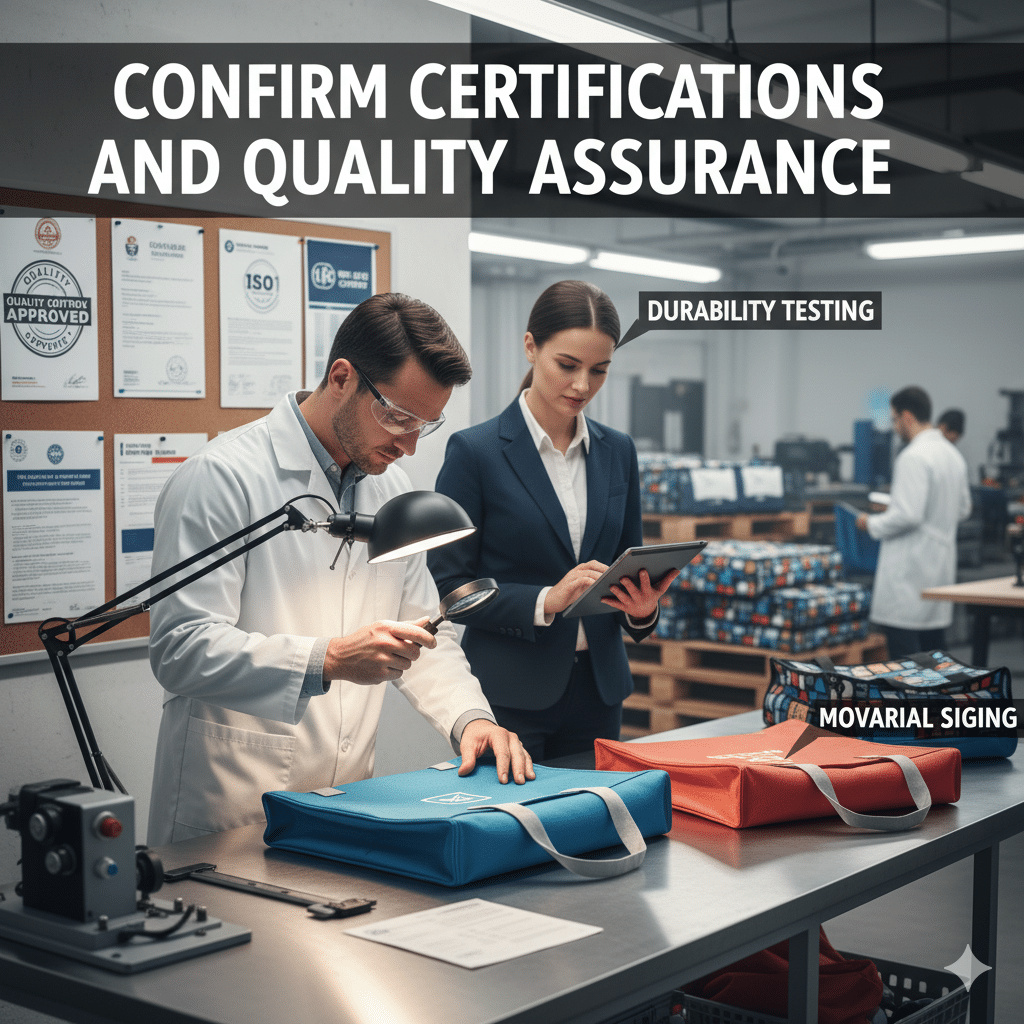
Por qué una auditoría de fábrica es fundamental para la adquisición de bolsas de alta resistencia
Si te fías de un informe de laboratorio, te estás creyendo una puesta en escena.
Un responsable de compras de logística con el que trabajé autorizó un pedido de 50 000 unidades de bolsas de transporte de alta resistencia. La muestra de preproducción soportó una carga estática de 40 kg sin que se rompiera ninguna costura. Seis semanas más tarde, llegó el contenedor y, de la primera paleta, 12 bolsas fallaron a los 22 kg. ¿La causa principal? Una tensión irregular del hilo en toda la línea de costura, un detalle que ningún certificado ASTM D5034 exigía que la fábrica revelara. Ese único descuido convirtió un envío de $50 000 en una pesadilla en materia de garantía.
La mayoría de las guías de abastecimiento te aconsejan revisar los informes de pruebas y las certificaciones ISO 9001 antes de realizar un pedido. Ese consejo no solo es incompleto, sino que además es peligroso. Una fábrica puede superar una auditoría documental y, aun así, suministrar productos de mala calidad, ya que los certificados solo demuestran que una muestra controlada superó una única prueba en un único día. Lo que hay que comprobar es si la integridad del material, la calidad de las costuras y la durabilidad frente a los ciclos de carga se mantienen durante la producción real, cuando los márgenes son ajustados y nadie está vigilando.
- La trazabilidad de los materiales es más importante que la certificación: Incorporar recortes de polipropileno reciclado al tejido nuevo es una medida habitual para reducir costes. Una prueba de combustión en directo en la propia fábrica —el PP se derrite como la cera de una vela en lugar de producir un humo negro y acre— permite detectar al instante los lotes contaminados. Sin eso, estarías comprando bolsas que podrían romperse tras tres traslados.
- Irregularidad en la tensión de la puntada: Una fábrica que declare cumplir con la norma ASTM D5034 puede seguir utilizando 20 máquinas de coser, cuatro de las cuales no cumplan con las especificaciones. Los medidores de tensión portátiles, que se utilizan a mitad del turno en estaciones aleatorias, revelan si la uniformidad de la puntada doble cumple con tus tolerancias de calidad antes de que comience la producción en serie.
- Pruebas de carga estáticas frente a dinámicas: Las fábricas certificadas para la fabricación de bolsas de venta al por menor rara vez cuentan con un equipo de ensayo de ciclos dinámicos. Insiste en presenciar cómo se levanta y se deja caer una carga de 50 kg 50 veces —y no un simple ensayo de tracción estático— para simular cómo un transportista tira de las asas en una escalera. Si no pueden demostrarlo, sus bolsas no han sido validadas para la logística en condiciones reales.
Si te saltas la auditoría de fábrica, estás aceptando las condiciones de precio FOB sin saber si la mercancía saldrá alguna vez del almacén en perfecto estado. Una inspección física —especialmente en la planta de costura a mitad del turno, cuando los operarios están bajo presión— pone de manifiesto los cuellos de botella en el rendimiento y los atajos en el material que la mera aprobación de muestras nunca revelará. En la adquisición de sacos para cargas pesadas, un certificado demuestra que has planteado las preguntas adecuadas. Una auditoría in situ demuestra que has obtenido las respuestas correctas.

Preparación previa a la auditoría: documentos, muestras y comunicación
Hay documentos que revelan la realidad de las fábricas antes de subir al avión: pide datos sin procesar, no resúmenes edulcorados.
Una vez acudí a una reunión con un proveedor con un certificado ASTM D5034 que parecía perfecto, solo para descubrir que el informe de laboratorio tenía tres años de antigüedad y que, desde entonces, la fábrica había cambiado dos veces de proveedor de poliéster. Un informe de ensayo solo tiene valor si está vinculado al lote de material que realmente vas a recibir.
- Ensayo de tracción de tejidos según la norma ASTM D5034: Solicita el informe más reciente, comprueba que se utilice una velocidad de tracción de 300 mm/min y verifica la fecha. Si el informe tiene más de 12 meses de antigüedad o no hace referencia al tejido Oxford 600D o al PP tejido que has especificado, considéralo caducado.
- ISO 9001:Certificación de 2015: No te conformes con el certificado que cuelga de la pared. Pide el calendario de auditorías internas de los dos últimos trimestres. Una fábrica que no pueda mostrar registros de medidas correctivas para los defectos de costura o el deshilachado del material está llevando a cabo un programa de cumplimiento sobre el papel, no un sistema de calidad.
- Correlación con laboratorios externos: Si es posible, compara su máquina de ensayo de tracción interna con la de un laboratorio acreditado por la ILAC. Es habitual que las máquinas de ensayo universales chinas antiguas presenten una deriva en la calibración de la tracción de entre 5 y 81 TP3T; una fábrica que nunca realice comprobaciones cruzadas suministrará asas poco resistentes.
- Ámbito de aplicación de los materiales: Exige una prueba de combustión en directo para comparar la mezcla de polipropileno y poliéster. Si la fábrica no saca la materia prima del almacén en tu presencia, da por hecho que están ocultando material triturado.
- Ámbito de costura: Trae un medidor de tensión portátil. Recorre la línea a mitad del turno y mide la tensión del hilo en al menos cinco máquinas elegidas al azar. Si la tensión varía más de 20% entre estaciones, el lote no superará la prueba de carga dinámica.
- Ámbito de capacidad: No preguntes por la producción máxima diaria; pregunta por la producción diaria sostenida durante los últimos 90 días. Compara ese dato con el volumen de tu pedido y el margen de tiempo. Una fábrica que afirme producir 50 000 bolsas al día, pero que en su mejor mes solo envíe 20 000, te está mintiendo a tu costa.
- Ámbito de cumplimiento: Incluir capacidad de simulación de cargas pesadas: la fábrica debe demostrar que una bolsa de 50 kg puede someterse a 50 ciclos sin que la costura se alargue más de 3 mm. Muchos proveedores orientados al comercio minorista simplemente no disponen de las plantillas necesarias; sin ellas, se está poniendo en riesgo la integridad de las asas.
- La ficha técnica debe incluir el tipo de puntada y el SPI: No permitas que pongan ‘doble pespunte’. Especifica con exactitud: pespunte de cierre según la norma ISO 4915 n.º 301, con una densidad de entre 8 y 10 puntadas por pulgada en todos los puntos de fijación de las asas. Las especificaciones imprecisas dan pie a que se recorte en la densidad de las puntadas.
- Trazabilidad de los materiales en la etiqueta de la muestra: La muestra debe llegar acompañada de un certificado de la muestra de tejido en el que se indiquen el gramaje exacto (GSM) y la composición. Conserva esa muestra; durante la comprobación in situ, compárala con los rollos a granel para detectar posibles desviaciones en el material durante la producción.
- Acuerdo previo sobre las tolerancias de calidad: Acuerda una tolerancia para el papel antes de que se envíen las muestras: por cada 1.000 bolsas, la desviación en la longitud de las asas cosidas no debe superar los 2% y no debe haber hilos sueltos de más de 5 mm. Inclúyelo en la orden de compra; no te limites a una promesa verbal.
La desviación del alcance durante una auditoría de fábrica es un verdadero lastre para el presupuesto. Antes de visitar una planta de fabricación de bolsas de transporte para cargas pesadas, defino con exactitud lo que vamos a comprobar: el cumplimiento del gramaje (GSM) del tejido (no solo lo que indica la etiqueta), la tensión de la costura de doble aguja en todas las costuras que soportan carga, la capacidad diaria real (no solo el recuento de máquinas) y la documentación sobre cumplimiento social. Sin un alcance bien definido, te pasarás cuatro horas discutiendo sobre los colores Pantone y te perderás la cinta transportadora que se avería todos los martes.
Las muestras de preproducción no son una cortesía, sino tu contrato en formato físico. Exijo que se entreguen tres muestras de PP idénticas que se ajusten a la misma ficha técnica que utilizaremos para la producción, con el desglose de precios FOB, el nombre de la fábrica de tejidos y el número de lote del color. Si el proceso de aprobación de las muestras tarda más de dos semanas, la coordinación entre las muestras y la producción de la fábrica es deficiente.

Lista de comprobación para la inspección in situ: materiales y línea de producción
Recorre la planta a las 14:00, no a las 9:00; es entonces cuando se aprecia el rendimiento real.
Una ficha técnica puede afirmar lo que sea. La planta de producción es la que dice la verdad. En una auditoría de fábrica de bolsas de transporte para uso intensivo, empiezo por el almacén de materias primas, luego paso al cosido, a la impresión y, por último, a la capacidad de producción. En cada etapa hay comprobaciones específicas que permiten distinguir a los proveedores capaces de gestionar un pedido de 10 000 unidades de aquellos que te dejarán tirado antes de llegar al tercer contenedor.
- Almacén de materias primas: Verify fabric GSM with a portable scale. A 180 GSM Oxford fabric that feels thin under thumb is often 160 GSM or less—cut a 10cm x 10cm swatch and weigh it. For recycled content claims, demand batch-specific mill certificates; if the factory can’t produce them, ask for a live burn test. Real polypropylene melts and smells like paraffin; excessive black smoke or hard residue means fillers or regrind from rejected batches.
- Stitching Floor: Check seam strength at the needle—not from a lab report but with a hand-held tension meter on a freshly sewn seam. A factory quoting ASTM D5034 compliance can still run inconsistent thread tension. Look at the double-stitch protocol: the two rows should be parallel, 3-5mm apart, with no skipped stitches. If the sewing line uses needles past the 8-hour change mark, you’ll see visible burrs on the point under a loupe; burred needles tear the fabric core and cause handle failures under dynamic load.
- Printing & Labeling: Color matching isn’t a monitor check—it’s a spectrophotometer reading against your approved physical swatch. For a heavy duty moving bag, the logo must survive a loaded fold test: print a panel, fill the bag to 70% of its rated load, then cycle it through 50 lifts. If the ink cracks or the label delaminates before 50 cycles, reject the batch. Most low-cost printers skip the adhesion promoter step on polypropylene—ask to see the primer station in action.
- Capacity & Machinery: Ignore quoted ‘maximum daily output.’ Audit actual throughput by counting finished bags during the floor walk and multiplying by shift hours. A factory with one automatic cutting line and no backup compressor is one motor failure away from missing your ship date. Check if the facility has a dedicated heavy-load testing jig—not just a static pull rig—capable of running a 50 kg load through 50 lift-and-drop cycles. Facilities that only make retail bags often lack this; their quality tolerance collapses under logistics-level stress.
During a supplier verification visit for a moving bag order, I once spotted reclaimed material pellets hidden behind new stock in the warehouse. The burn test exposed it in 30 seconds. That order would have started splitting at the bottom seams three months into warehouse rotation. The audit checklist isn’t about ticking boxes—it’s about seeing what the spec sheet omits.
| Area | Punto de control | Standard | Audit Method | Red Flags |
|---|---|---|---|---|
| Raw Material Warehouse | Fabric Weight & Composition | GSM tolerance ±5% (e.g., 200 gsm Oxford); 100% virgin PP verified by burn test | On-site GSM cutter & scale, live burn test with melt/drip observation, lot traceability records | Rolls without mill certificates, regrind odor, GSM deviates >5%, refusal to demonstrate burn test |
| Recycled Content / Sustainability Claims | GRS 4.0 or equivalent chain-of-custody for recycled fibers; documented input percentage | Review transaction certificates, verify physical separation of recycled vs. virgin stock | Pre-consumer scrap passed as post-consumer, mixed bales without labeling, no mass-balance records | |
| Stitching Floor | Seam Construction & Stitch Protocol | Double lockstitch with 8–10 SPI; reinforced bar-tacks at handle attachments (≥3 cm width) | Hand-held tension meter on 5 random machines, stitch gauge, pull-test on in-line samples | Single-needle chainstitch on load-bearing seams, skipped stitches, missing back-tacks |
| Needle & Thread Calibration | Needle size #18–#21 for 600D+ fabrics; bonded nylon thread (≥210 denier); needle change log every 8 hours | Inspect needle logbooks, check needle eyes for burrs, review thread tension settings at mid-shift | Mixed thread brands on one line, bent needles in use, no schedule for preventive needle replacement | |
| Printing & Labeling | Color Accuracy & Logo Durability | Pantone delta E ≤2.0; logo withstands 50-cycle dynamic load of 50 kg without peeling or cracking | Spectrophotometer reading on 3 production samples, visual inspection after loaded drop-test | Ink rub-off in dry state, visible color shift across batches, water-based ink on outdoor-use bags |
| Capacity & Machinery | Daily Output & Bottleneck Visibility | Published daily capacity of ≥5,000 units per shift; automated cutting/hemming lines with ≥1 backup motor per cell | Audit at mid-shift (2–4 PM), count actual pieces/hour at bottleneck station, review last 4-week production logs | Staged morning demonstrations, no redundant power supply, single cutter serving all lines |
| Heavy-Load Testing Rig Availability | Dynamic cycle tester capable of 50 kg load for 50+ cycles; records force-deflection curves | Request live demonstration with a filled bag; verify machine calibration certificate | Static pull test only, no in-house rig (relying on third-party), max load capacity <50 kg |

Quality Control & Testing Protocols to Witness
No live 50 kg cycle test?
I’ve seen too many logistics buyers accept a test report without ever watching the actual test. Certificates are easy to print. The real question is whether the factory can replicate claimed strength on a random bag from the line, not a pre-conditioned sample. Demand to witness burst and tear resistance on their own equipment, and bring a hand-held tension meter to spot-check thread consistency. If they hesitate, you have your answer.
- Live Burst Test: Ask to see a Mullen Burst Tester (ASTM D3786) on woven PP fabric. Record the reading. For 200–250 GSM Oxford fabric used in heavy-duty moving bags, typical burst should exceed 900 kPa. Any bag that pops below 700 kPa under live conditions indicates recycled filler or inconsistent yarn quality.
- Resistencia al desgarro: Demand an Elmendorf Tear Test (ASTM D1424) on a seam sample, not just raw fabric. The handle attachment point is where 80% of field failures occur. A reading below 25 N for woven PP or 30 N for laminated Oxford means the handle will tear out under a 30 kg load after repeated lifting.
- Dynamic Load Cycle: This is non-negotiable. Most factories only do static pull tests. Insist on a custom jig that lifts and drops a 50 kg bag 50 times. Watch for stitch elongation or handle detachment after cycle 30. If they don’t have this jig, they’ve never validated a bag for moving-duty use.
- Thread Tension Spot Check: Walk the stitching floor with a hand-held tension meter. Check the needle thread tension on three random lockstitch machines. A variance over 15% between stations means the factory is not calibrating thread tension daily. This is the hidden cause of inconsistent seam strength, even if the fabric passes the lab.
- Sampling Protocol: Select at least 20 bags per batch from different cartons, not top-layer boxes. Cut open sealed cartons yourself. Factory staff will try to guide you to ‘audit samples’ — politely refuse and pick blind.
- Defect Log Review: Request the defect tracking system records for the last 90 days. Look for raw scrap rates above 2% in cutting and stitching rejects above 1.5%. If data is only on paper with no trend analysis, their ‘quality system’ is theater.
- Corrective Action Records: Ask to see one Closed CAPA (Corrective and Preventive Action) report from the last month. It should trace a real defect (e.g., handle stitching skipped on 15 bags in Batch #2026-112), show root cause analysis, and document verified rework. No such record means defects are buried, not fixed.
- Red Flag Inventory: Check the quarantine area. If rejected material sits without identification or is being re-ground near the raw material bins, material substitution is active. Insist on a burn test of random fabric scraps to confirm polypropylene content and exclude recycled contamination.
Batch consistency separates a supplier who cares from one who ships whatever the line produces. Ask to pull random samples from the finished goods inventory of the last three production runs — not the same batch, not the same day. Measure fabric GSM with a portable cutter and scale on the spot. Check stitch count per inch with a simple pick glass. If the GSM varies more than 10 g/m² between batches, or the SPI drops below 7 in any sample, the factory’s internal QC cannot hold a tolerance. This is how you catch material dilution before it reaches your container.


Post-Audit Evaluation: Scoring the Factory
A passing audit isn’t a green light—it’s raw material for a negotiation.
I stood in a warehouse in Rotterdam two years ago, staring at 12,000 heavy-duty moving bags that were supposed to ship to a logistics client in Frankfurt the next morning. The pre-production sample had passed with flying colors. The mass production run? The GSM of the Oxford fabric was 15% lighter than the approved sample, and the stitching tension was so loose you could pull the double-lockstitch apart with your thumbs. That was a $50,000 lesson in why the post-audit evaluation matters more than the on-site walkthrough itself. The real work starts when you leave the factory floor and sit down with the scorecard.
You walk a factory for three hours and you see machines, fabric rolls, and busy operators. But what you actually observed was a snapshot curated for your visit. The post-audit evaluation is where you separate the performance from the theater. You need to map what you saw against a red-flag checklist that has nothing to do with the nice lunch the factory owner bought you.
- Material Substitution Risk: Check the raw material warehouse inventory tags against the incoming inspection records. I often find rolls of 600D Oxford fabric sitting next to unbranded 420D stock. Ask for full batch traceability from yarn source to finished roll. If the factory hesitates, push for a live burn test on a random swatch from the cutting table—pure polypropylene burns differently than recycled filler blends, and a factory recycling rejected batch material into new production will flinch at this request.
- Untrained or Rotated Inspectors: Look at the corrective action log from the past six months. If the same three inspectors signed off on every batch and there are zero defect entries, someone is pencil-whipping the forms. A healthy QC system has variance. Probe whether the inline inspectors are dedicated to the bag line or rotated from the garment department this morning. A brand-new inspector who cannot tell 10 stitches per inch from 8 stitches per inch is a latent liability.
- Rushed Production Timelines: During the audit, the floor manager likely quoted you a daily output of 5,000 units. But ask to see the last three production daily reports and compare the figures from mid-shift, not the morning setup shift. Many stitching floors hide the real bottleneck in the afternoon when operators fatigue and needle calibration drifts. If the factory tries to compress a 25-day run into 18 days to meet your deadline, the double-stitch is the first thing that gets sacrificed.
- Warranty Duration: If the audit revealed minor GSM variance or inconsistent seam strength, lock in an 18-month warranty instead of the standard 12-month window. The added margin protection typically costs the factory nothing upfront but anchors them to their quality claims.
- Quality Tolerance on Replacement Rate: Negotiate a 2% defect allowance cap within the warranty period, with a penalty of 110% replacement cost above that threshold. This converts a vague quality promise into a measurable financial obligation. Factories that push back hard on any replacement cap are often the ones that know their internal reinspection rate is already above 5%.
- FOB Pricing Adjustment Clauses: Use adverse audit findings—such as a lack of heavy-load testing jigs that simulate a 50 kg load over 50 cycles—to anchor a discount or a deferred payment schedule. A factory that only demonstrates a static pull test instead of a dynamic fatigue test has not proven real-world durability. You should not pay full FOB pricing for unproven load capacity. Tie the final 10% payment to passing a third-party fatigue test on the first production batch.
One item that does not appear on standard audit templates is thread tension consistency. A factory flashing a valid ASTM D5034 certificate can still churn out bags that fail after 15 cycles under a 50 kg load because the sewing machine tension drifted during the shift. When I audit a sewing floor, I bring a hand-held tension meter and spot-check three machines halfway through the shift. A reading that varies by more than 15% from the morning calibration tells me the QC team is sleeping, and your bag handle stitch failure test results are about to get expensive.
This brings us to the cost-quality balance. You are not scoring a factory to pass or fail them like a driver’s exam. You are collecting leverage to negotiate commercial terms that protect your margin. If the lab shows a burst strength of 280 PSI against your contracted 300 PSI, do not immediately kill the order—pivot the conversation to an extended warranty. A factory that is confident in their process will extend the standard 6-month warranty on stitch and fabric to 12 months. A factory that hesitates knows something about their material sourcing they are not telling you.
The factories that earn my long-term business are not the ones with spotless checklists. They are the ones who openly shared a corrective action record from six months ago and walked me through exactly how they re-engineered the needle calibration schedule to fix a recurring stitch skip problem. That level of transparency is rare, and it is worth more than a flawless ASTM report.
Here is the decision framework I use before signing off on any supplier. Open your notebook and ask the factory manager these three questions before you walk out the door: 1. ‘Show me the material batch certificate for the roll sitting on cutting table four, and match it to the spec sheet you sent last month.’ 2. ‘Will you go on record that your standard needle replacement frequency is every 4 hours of run time, and can I observe the next change?’ 3. ‘If we run a 50-cycle fatigue test on the first 100 bags off the line and 5% fail, do we stop production for root cause analysis, or do you adjust the tension and keep shipping?’ If the answers are evasive, you have your score. If the answers are specific, uncomfortable, and measured, you have a partner.
2026 Supplier Verification Checklist (Downloadable PDF)
If a factory can’t demo a 50‑kg cyclic load test on their own jig, walk—no matter the price.
You already know the pain: a pre‑production sample that looks perfect, then a container of 15,000 units where seams split the first month. That $50K order you fought to get approved? Written off. This checklist isn’t generic—it’s the same one I’ve used after audits in 12 countries, calibrated for heavy‑duty moving bags where stitching, fabric, and handles must survive real abuse.
- 1. Material Traceability & Burn Test: Don’t just accept mill certs. Insist on a live burn test of raw fabric—polypropylene (PP) burns with a waxy drip and faint petroleum odor; polyester melts into a hard bead. If the supplier mixes regrind or rejected batch material, the flame behavior changes. Document batch traceability from the extruder through the weaving/coating stage.
- 2. Pre‑Production Sample Lock‑Down: Agree that the signed‑off PP sample is the Golden Standard. No mass production until the factory replicates it within ±5% color tolerance (check with portable spectrophotometer) and identical stitching pattern. Any deviation triggers a new sample round—at their cost. Clarify FOB pricing implications: does sample approval include tooling amortization or not?
- 3. Stitching Floor Audit at 2:00 PM: Morning demos are staged. Walk the stitching floor mid‑afternoon. Watch actual throughput, not the speed‑up for visitors. Check thread tension with a handheld meter; ASTM D5034‑compliant factories can still have tension drift that creates 30% weaker seams. Look for double‑lockstitch protocol on handles and stress points—single stitching there is a red flag.
- 4. Heavy‑Load Cyclic Testing Jig (Not Just Static Pull): Many factories certify retail bags but lack a jig for moving‑bag abuse. Demand to see a jig that simulates 50 kg loaded inside the bag and cycles it through lifting, carrying, and dropping—50 full cycles. Measure elongation and seam integrity after cycles. A static pull test alone guarantees nothing in real‑world logistics.
- 5. Batch Consistency Sampling: Pull 3 random bags from the last 3 finished production runs (different days, different shifts). Measure fabric GSM, stitch density (minimum 10 stitches per 5 cm for heavy‑duty), and handle pull strength. If GSM varies by more than 5% between samples, their material control is broken.
- 6. Print & Logo Durability Under Load: A logo that cracks when the bag is stretched to capacity is a brand fail. Request a filled‑bag flex test: stuff the bag to rated capacity, then manually twist and squeeze the printed area 20 times. If ink adhesion fails, the print process isn’t suitable for moving bags. Also verify Pantone match before bulk.
- 7. Quality Tolerance & AQL Agreement: Define acceptance quality limits before the order. For heavy‑duty moving bags, I set AQL 2.5 for major defects (stitch skips, open seams) and AQL 0 for critical (handle detachment). Anything stricter without a documented QC system is theatre.
- 8. Capacity Verification & Backup Equipment: Ask for the production schedule of the three preceding weeks. Verify daily output isn’t exceeding machine uptime capacity. A factory without at least one backup stitching line is a single point of failure for your 3,000‑unit order with hard deadline.
- 9. Defect Tracking & Corrective Action Records: Audit their reject log—not just a sanitized summary. Look at how recurring handle‑stitch failures were handled. If there’s no root‑cause analysis or the answer is ‘we changed the thread,’ that factory doesn’t prevent problems—it ships them.
- 10. Final Commercial Guardrails: Confirm sample approval is linked to payment milestones. Ensure your contract states that any post‑approval material substitution voids the batch without recourse—and that your inspector can hold shipment at FOB port until corrective action is verified.
Conclusión
A proper factory audit verifies raw material integrity, stitching consistency, and true capacity—but experienced buyers know that the inspection report alone does not protect a deal. The last 10% is locking your audit data into the purchase contract: define your FOB pricing terms up front to eliminate freight surprises, detail the exact sample approval that production must match, and set a write-in quality tolerance that reflects what your customers will actually accept.
Download the full 2026 Supplier Verification Checklist and check every line against your current supplier’s FOB quote, their sample approval records, and the quality tolerance they are willing to guarantee. Align those documents and you catch the gap between promise and delivery before a container ever leaves the dock.
Preguntas frecuentes
¿Qué debo comprobar antes de visitar una fábrica de bolsos?
Verify raw test reports and certifications like ASTM D5034 and ISO 9001 first. That data, not shiny marketing sheets, uncovers the factory’s real quality baseline. Confirm the test reports are dated within the last 6 months.
¿Cómo puedo detectar problemas de calidad de los materiales durante una auditoría?
Comprueba en el almacén de materias primas el gramaje (GSM) del tejido y el contenido reciclado, comparándolos con tu hoja de especificaciones; cualquier discrepancia en este aspecto pone en riesgo todo el pedido. Solicita una muestra de los rollos que llegan y compara las etiquetas in situ.
What’s the best way to evaluate stitching strength on-site?
Witness live seam strength testing using a tensile tester, or pull-test seams manually. If they are using uncalibrated needles or single stitches where double-stitch was spec’d, that’s a red flag. Confirm needle change logs to verify calibration frequency.
What’s the biggest red flag in a heavy-duty bag factory audit?
Las sustituciones de materiales en el almacén son la señal de alarma más grave. Si el gramaje (GSM) del tejido recibido es inferior al de la muestra de preproducción aprobada, todo el lote de producción queda comprometido. Comprueba los registros de recepción de materias primas de las tres últimas series de producción.

0 comentarios