




Struggling with delayed shipments or inconsistent quality? You’re not alone—finding a dependable non-woven bag supplier is harder than it looks.
To find a reliable non-woven bag supplier, focus on quality control, certifications, communication, flexibility, and verified customer feedback1.
This guide covers every critical factor to help you choose a supplier that aligns with your goals—keep reading to avoid costly mistakes.
What Makes a Non-Woven Bag Supplier Truly Reliable?
Choosing the wrong supplier can mean low quality, missed deadlines, or even reputation damage.
A reliable non-woven bag supplier demonstrates consistency in delivery, transparency in communication, and proof of past client success2.

Key Traits of a Reliable Supplier
| Criteria | Description |
|---|---|
| Consistent Delivery | Ships orders on time with minimal variance |
| Transparent Processes | Shares production timelines, certifications, and cost breakdowns |
| Proven Track Record | Offers case studies or references from past clients |
| Responsiveness | Replies promptly and clearly to all inquiries |
| Scalability | Can handle growing order volumes without delays |
Look beyond the surface. Ask them about their production capacity, peak season handling, and quality audit history3. These details expose their real reliability.
Certifications That Prove Your Supplier Meets Global Standards?
Without verified certifications, your supplier’s quality claims are just words.
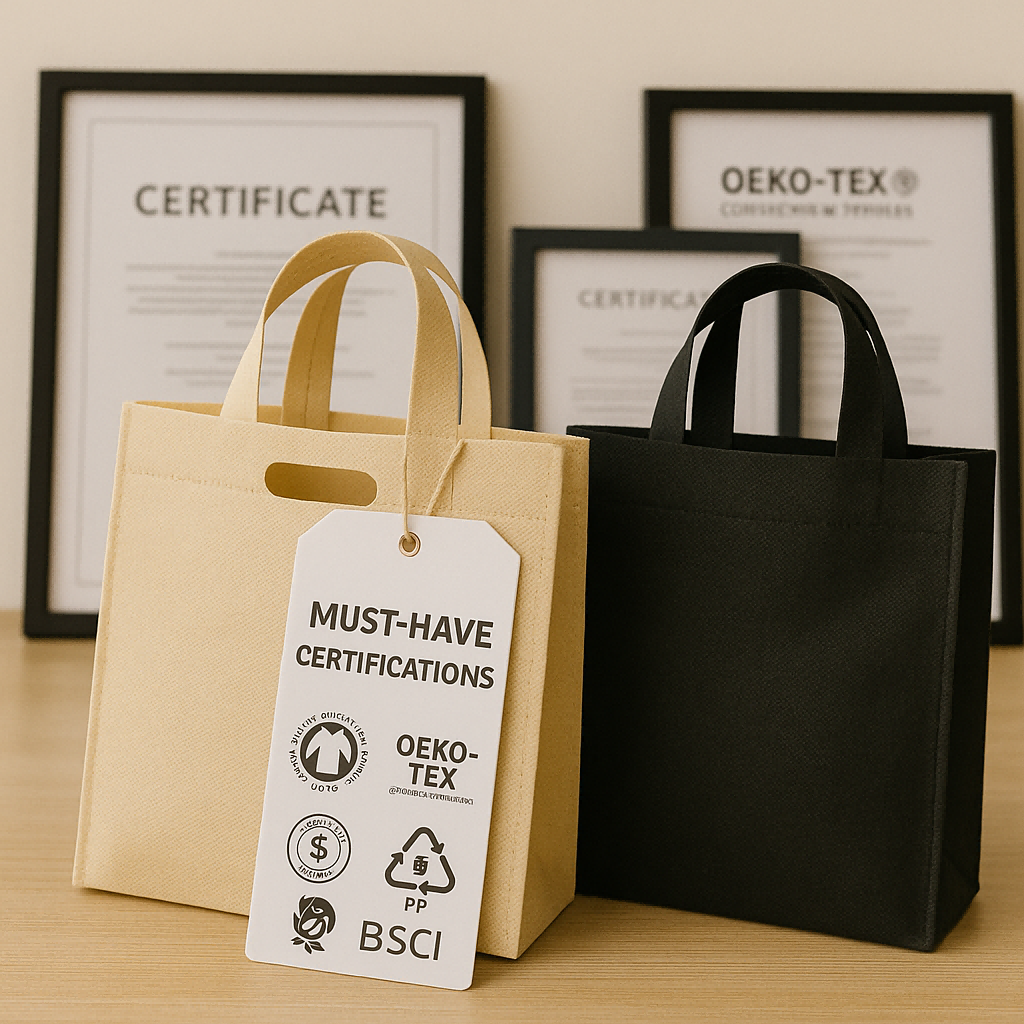
Key certifications like BSCI, GRS, and ISO4 show your supplier meets international labor, safety, and sustainability standards.
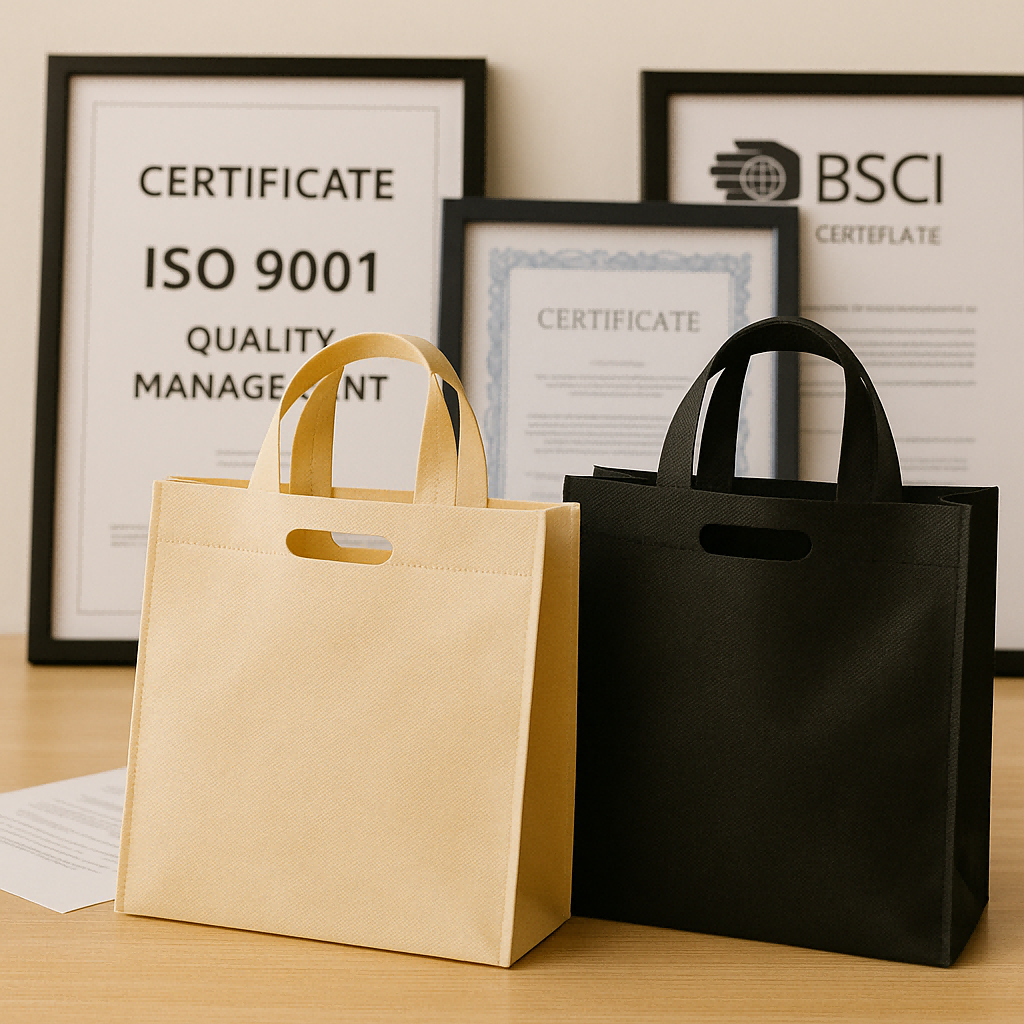
Must-Have Certifications
| Certification | Purpose | Why It Matters |
|---|---|---|
| BSCI | Ethical labor practices | Ensures fair treatment of workers |
| GRS | Recycled content verification | Confirms eco-friendly materials |
| ISO 9001 | Quality management system | Indicates consistent quality processes |
| REACH | Chemical safety regulation | Protects against toxic substances |
Always ask for up-to-date certificates. Better yet, request third-party validation. Don’t risk non-compliance with international regulations5.
Should You Choose a Domestic or International Supplier?
It’s tempting to go local for convenience, but is that always the best choice?
Domestic suppliers offer easier communication; international ones usually provide better pricing and wider customization options6.
Weighing the Pros and Cons
| Factor | Domestic Supplier | International Supplier |
|---|---|---|
| Communication | Easier time zones, fewer delays | May face language barriers or time lags |
| Cost | Typically higher | Often lower due to labor/material costs |
| Custom Options | More limited | Greater flexibility in materials/styles |
| Lead Time | Faster | Longer due to shipping & customs |
| Compliance | Easier to verify | Needs more documentation checks |
Your choice depends on your priorities: speed vs. cost, convenience vs. customization.
How to Request Samples Without Wasting Time or Money?
You want to test quality, but not get stuck in endless back-and-forths or surprise fees.
Requesting samples should be a streamlined, low-risk process with clear expectations on cost, time, and return policies.

Best Practices for Sample Requests
| Step | Tip |
|---|---|
| Initial Inquiry | Be specific: size, material, logo needs |
| Cost Clarity | Ask upfront if samples are free or need payment |
| Timeline Agreement | Confirm how fast they can ship samples |
| Sample Policy Review | Can you deduct sample costs from bulk orders later? |
| Feedback Loop | Provide feedback and ask for adjustments if needed |
This phase reveals their service level. If it’s messy now, bulk orders might be worse.
Quality Control Practices That Protect Your Brand?
One bad batch can ruin customer trust—quality must be consistent.
Effective suppliers conduct in-house inspections and offer third-party testing7 to ensure product consistency.

Core Quality Control Methods
| Practice | Purpose |
|---|---|
| Incoming Material Checks | Ensures raw materials meet specifications |
| In-Process QC | Spot checks during production to catch defects |
| Final Inspection | Confirms product quality before shipment |
| Third-Party Audits | Independent reviews for higher trust |
Don’t hesitate to ask for video proof, checklists, or past QC reports. Serious suppliers will gladly share.
Why Communication Speed Can Make or Break a Deal?
Slow replies mean lost time, missed opportunities, or worse—missed shipping windows.
Suppliers who respond within 24 hours with clear answers are ideal for long-term business.

How to Evaluate Communication
| Factor | Good Sign | Red Flag |
|---|---|---|
| Response Time | Replies within 12–24 hours | Takes days or needs constant reminders |
| Clarity | Direct answers with supporting info | Vague replies or avoids specifics |
| Initiative | Offers helpful suggestions | Only reacts when asked |
| Follow-Through | Keeps promises on samples or info | Frequently delays or forgets |
Fast communication builds trust and keeps your timelines on track.
MOQ & Custom Options: What Flexibility Can You Expect?
Not every business can commit to 10,000 units from day one.
Reliable suppliers offer low minimum order quantities and a wide range of customizable features8 like color, logo, and material.

Customization and MOQ Expectations
| Feature | Typical Range |
|---|---|
| MOQ for standard bags | 500–1000 units |
| Logo customization | Screen printing, heat transfer, etc |
| Material options | PP, RPET, laminated non-woven |
| Size adjustments | Fully customizable upon request |
| Packaging options | Bulk, individual, barcode labeling |
Ask early about what’s flexible. Good suppliers help you start small and grow big.
Lead Times & Shipping: What’s Reasonable and What’s Risky?
Shipping delays can wreck your launch or event schedule.
Reasonable lead times range from 15 to 35 days, depending on customization and order size.
What to Expect for Lead Times
| Order Type | Lead Time |
|---|---|
| Simple repeat orders | 15–20 days |
| Customized bulk orders | 25–35 days |
| Peak season delays | Add 5–10 days |
Clarify who handles shipping—factory or freight forwarder—and always build in a buffer.
Getting the Best Price Without Sacrificing Quality?
Everyone wants low cost, but not at the expense of durability or aesthetics.
Negotiate transparently, compare multiple quotes, and consider long-term value—not just upfront cost.
Pricing Strategy
| Tip | Why It Works |
|---|---|
| Ask for volume discounts | Save more with bigger orders |
| Offer long-term potential | Suppliers may lower price for repeat deals |
| Compare apples to apples | Ensure same specs when comparing multiple quotes |
| Ask for breakdown | Know how much goes to material, labor, shipping |
Sometimes, slightly higher prices mean better QC and faster service—worth the investment.
Real Customer Reviews That Reveal the Truth?
Reviews cut through the marketing fluff and show what working with a supplier is really like.
Look for third-party reviews, case studies, and feedback9 from trade platforms like Alibaba or Global Sources.

Review Sources and What to Look For
| Source | What to Check |
|---|---|
| Alibaba ratings | Star ratings, review count, verified tags |
| Google or LinkedIn | Business pages and testimonials |
| Trade show feedback | Ask peers or visit booths for insights |
| Case studies | Concrete examples of successful orders |
If reviews are vague or overly positive, dig deeper. Ask for references directly.
Conclusion
Finding the right supplier means balancing price, quality, trust, and flexibility for long-term success.
-
Understand five key criteria for evaluating a supplier and reducing risk. ↩
-
Learn why case studies and client references validate a supplier’s credibility. ↩
-
Know why quality audit history is a window into operational reliability. ↩
-
Find out what international certifications prove a supplier’s compliance. ↩
-
Avoid regulatory trouble by verifying certification authenticity. ↩
-
Compare international suppliers’ cost and flexibility advantages. ↩
-
Discover how inspections and audits ensure consistent product quality. ↩
-
Explore flexible MOQ and customization options for growing brands. ↩
-
Identify trusted sources of real customer feedback for supplier evaluation. ↩




0 Comments