



Most corporate event planners don’t think about custom corporate tote bags until six weeks before the conference and the quote from the first supplier lands at triple the budget. The panic is real. A branded tote sounds simple—a bag with a logo—but the gap between a $1.50 non-woven sack that rips before lunch and a reinforced canvas piece that attendees carry for months is where reputations get built or broken. Miss the deadline and you’re standing at an empty booth. Get the print alignment wrong and your logo looks like a counterfeit. These are not hypothetical scenarios. They happen every trade show season to people who made decisions based on a single line-item cost instead of how the bag actually performs under event conditions.
The math on this is sharper than most buyers expect. A promotional bag generates 5,700 impressions on average—42% more than typical promotional products, according to ASI data. A bag that costs $2.50 and gets reused 50 times delivers a cost-per-impression below five cents. Disposable swag runs north of twenty cents per impression and ends up in a landfill bin outside the convention center. Event budgets don’t reward cheap upfront pricing. They reward reuse. That shift—from unit cost to impression cost—changes which production partners you call and what questions you ask them first. Ask about cross-stitching on the handles, not just the fabric weight. Ask for a pre-production photo within three days of artwork approval. Ask what happens when 3% of the order shows up with a crooked print. The suppliers who answer these questions clearly are the ones who protect your brand when the pallet arrives at the loading dock.
Defining Event Tote Bag Requirements
Most event bag failures happen in the first 3 hours.
Before you pick a material or approve a Pantone, map the actual usage scenario. A 3-day trade show attendee collects 12-18 lbs of brochures, promotional USBs, and water bottles. A corporate gala guest carries a program, a gift box, and a phone. These are different engineering problems. The trade show bag needs a 30+ lb load rating and reinforced handles. The gala bag needs interior finish and shape retention. Ordering the wrong spec means watching your branded swag split open on the expo floor — and that image sticks longer than any logo.
Post-event reuse is where the ROI math actually works. ASI data shows promotional bags generate 5,700 impressions on average — 42% more than typical promo products. But that number only materializes if the bag survives the event in usable condition. A $2.50 custom tote that gets tossed after one conference is a $2.50 cost with maybe 50 impressions. The same bag reused 50+ times drops below $0.05 per impression. Disposable swag sits around $0.20+. The reuse rate is the entire game, and it starts with functional decisions made before production.
Load capacity is the #1 failure point in high-traffic events. Standard single-stitch handles tear out when attendees overload bags with catalogs and exhibit samples. Internal factory testing shows reinforced cross-stitching on handles and seams reduces in-event bag failure by 70%. That difference determines whether your brand walks out the door on someone’s shoulder or ends up in a convention center trash can by lunch.
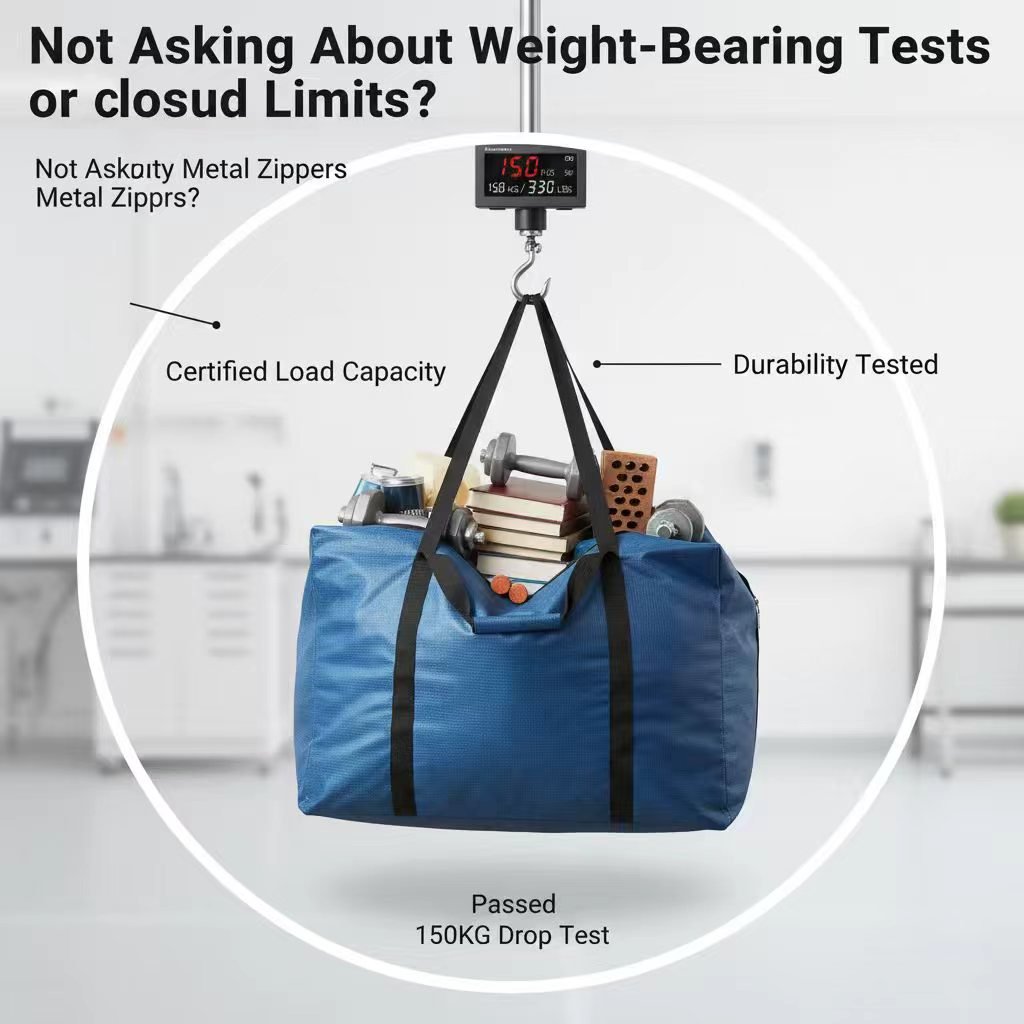
- Load Capacity: Spec minimum 20 lbs for light events, 35+ lbs for trade shows and conferences where printed materials pile up. Ask suppliers for stitch type and handle attachment method — not just fabric weight. A 12-oz canvas with single-stitch handles fails faster than 8-oz non-woven with reinforced cross-stitching.
- Internal Pockets: An interior slip pocket for phones and business cards changes the bag from a commodity tote into something attendees actually organize their day with. Bags with dedicated pockets get kept. Bags without them become disposable wrapping. The added production cost is typically $0.15-$0.30 per unit — negligible against the reuse rate improvement.
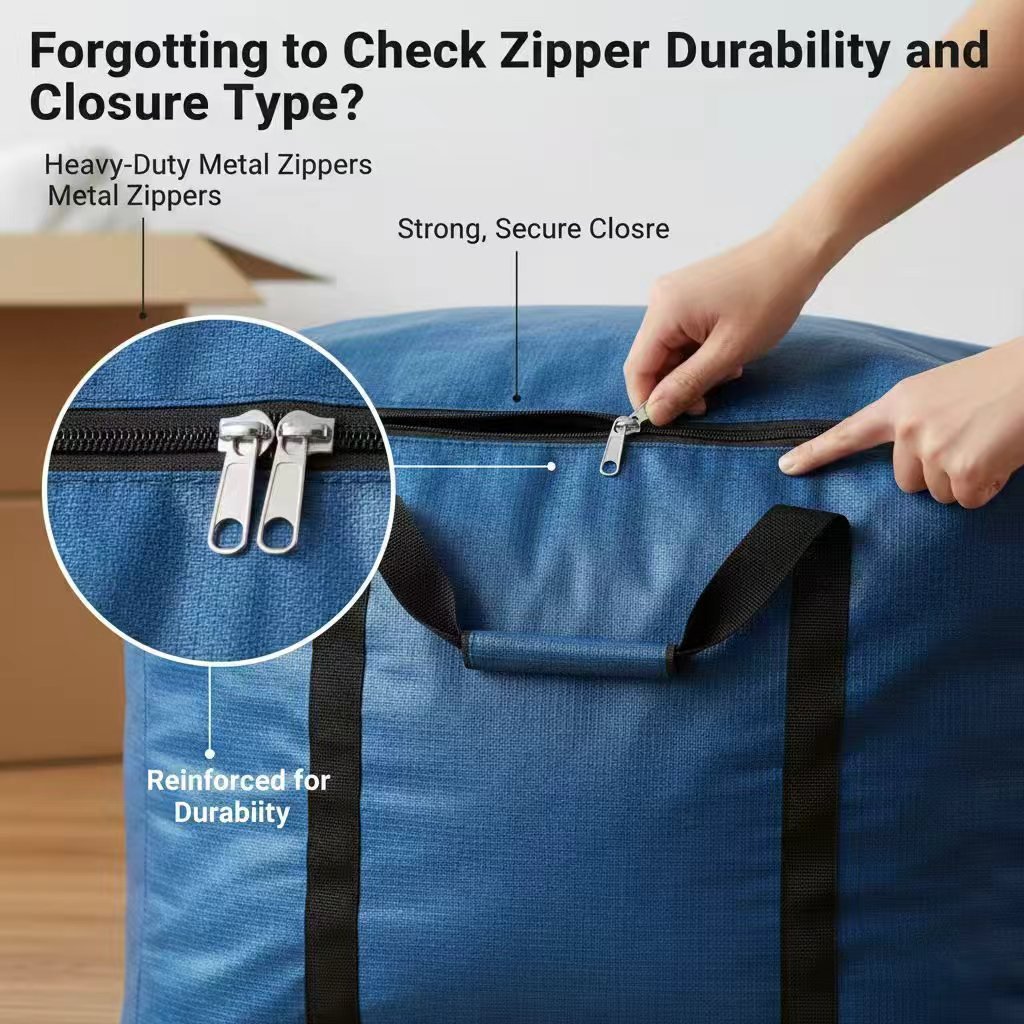
- Closure Type: Open-top totes work for rapid item access at expos but spill in transit. Zipper closures protect contents during post-event travel but add $0.40-$0.80 per unit. Snap closures split the difference. Match the closure to the exit behavior: if attendees are flying home, zippered bags get packed. If they’re walking a local show floor, open-top wins on convenience.
Every functional choice — load rating, pocket configuration, closure — is a multiplier on your cost-per-impression. A bag that fails functionally produces negative brand exposure. A bag that works well enough to become someone’s grocery tote for 18 months delivers 5,000+ unpaid impressions. Event planners who treat tote bags as a commodity line item miss this entirely. The ones who spec function first get 10x the return on the same unit cost.
Customization That Elevates Brand Perception
A $2.50 tote reused 50 times costs under $0.05 per impression.
Material selection is not an aesthetic exercise. It is a risk-management decision. The fabric you choose determines whether the bag survives a three-day conference stuffed with catalogs, or whether a strap tears in the exhibition hall lobby with your logo visible on the broken remains. Every event planner who has sourced branded swag has a story about the year the tote bags failed. The goal is making sure that story is not yours.
For high-volume general sessions, the best tote bag material for corporate events is often non-woven polypropylene (80–120 gsm). It hits the price point that works when you need 3,000 units under a fixed per-head budget. But the reuse rate sits below 5%. Most attendees treat it as disposable. If your brand impression ends when the bag hits the hotel trash can, the cost-per-impression equation collapses. Compare that to a 10oz cotton tote with reinforced cross-stitching at the handle attachment points. Internal factory testing shows that reinforced cross-stitching reduces in-event bag failure by 70% compared to standard single-stitch construction. A bag that survives the event gets taken home. A bag taken home gets reused 50+ times. A $2.50 bag reused 50 times delivers a cost-per-impression below $0.05—against disposable swag averaging $0.20 per impression.
- Non-Woven PP (80–120 gsm): Lowest unit cost. Suitable for single-day, high-attendance events. Reuse rate under 5%. Prints adequately with screen printing but can appear budget-oriented.
- Cotton (5–10 oz): Soft hand feel, excellent print absorption. Moderate baseline durability—specify cross-stitching at handles to prevent seam failure under 20+ lb loads. Reuse rate above 50%.
- Canvas (10–16 oz): Maximum durability. Premium tactile perception signals brand quality at VIP events and executive summits. Higher unit cost ($3–$6) but multi-year reuse cycle justifies ROI. Reuse rate 70%+.
- Recycled rPET: Sustainability narrative aligns with ESG-conscious corporate events. Comparable durability to mid-weight non-woven. Verify recycled content certification to avoid greenwashing accusations.
Branded tote bag printing quality issues consistently rank as the top complaint in post-event supplier reviews. The most common failure mode: a logo that prints 3mm off-registration on 500 bags because no one reviewed a physical pre-production sample. The artwork proof looks perfect on screen. The first production batch lands with your tagline clipped at the edge. A factory-direct process that delivers pre-production sample photos within 3 days of artwork approval eliminates this risk. Production QC data confirms that this single checkpoint reduces print alignment errors by up to 90%. You do not need to be a print expert. You need a supplier who sends you a photo of the actual printed bag before the full run starts.
Color matching demands Pantone codes, not color names. One person’s ‘navy’ is another person’s royal blue. Screen printing on non-woven bags absorbs ink differently than dye-sublimation on polyester. Expect a shade variance of 1–2 tones on porous materials. Cotton and canvas hold truer color with direct-to-garment or transfer methods. Insist on a printed sample photographed under neutral lighting against your supplied color standard. The industry-standard defect allowance of 3% should explicitly cover minor color drift claims. Factory-direct B2B agreements that include free replacement on verified defects make this protection enforceable, not theoretical.
Design complexity drives production method and cost. A single-color logo screen printed on a natural cotton tote bag costs less per unit than a full-color photographic design requiring dye-sublimation. Gradient fades, fine typography below 6pt, and tight registration between overlapping colors all increase the defect rate during production. If your brand guidelines permit a simplified event variant, you gain faster turnaround and lower per-unit cost. If the primary PMS color and exact logo proportion are non-negotiable, budget for the print method that delivers that fidelity and build a pre-production sample step into your timeline.
Cost Optimization for Event Budgets
Most event budgets bleed out in three invisible cuts: setup charges, freight surprises, and quality overruns.
The minimum order quantity (MOQ) for custom corporate tote bags isn’t a fixed number—it’s a bargaining chip tied to printing method and factory setup. Screen printing, the most durable and cost-efficient for large runs, typically demands a higher MOQ because each color requires a separate screen costing $40–$80 to produce. If you’re sourcing for a 2,000-attendee conference, a 500- or 1,000-unit MOQ works in your favor: amortize the setup and watch the per-unit price drop below $2.50. But for a 75-person executive retreat or a VIP gifting suite, a high MOQ leaves you with a storage problem or wasted budget. Digital printing and heat transfer open the door to small-batch runs as low as 50 units, though the unit cost edges up. The trade-off still makes sense when you calculate real brand ROI: a $3.00 bag reused 50 times delivers a cost-per-impression under $0.06, outperforming nearly every disposable swag item on the trade show floor.
Hidden fees are where supplier quotes collapse. A $1.85 per-bag offer looks attractive until the invoice lands with a $90 screen setup per color, a $180 plate charge, and a freight bill that wasn’t discussed until the pallet was shrink-wrapped. The three line items that consistently blow up corporate event budgets are screen or plate setup costs, inland and international shipping surcharges, and overrun billing. Overruns—extra bags produced beyond the ordered quantity—are industry standard, often 5-10%, but some suppliers invoice you for the excess instead of absorbing it. A factory-direct agreement with a transparent 3% defect allowance and free replacement clause removes the guesswork. Request a door-to-door quote that includes freight, duties, and drayage, and pin down the overrun policy before you issue a deposit.
- Freight & Drayage: Ocean freight consolidations can add $0.15–$0.30 per bag when shipping from factory to a US trade show venue. Last-minute air freight triples that. Always request a DDP (Delivered Duty Paid) estimate to the event address.
- Overrun Billing: Industry practice allows a 5–10% production overrun. Unscrupulous suppliers invoice you for the full overrun quantity. Negotiate a ‘no-charge for overruns within 5%’ clause, backed by a 3% defect allowance with free replacement.
- Color Matching & Pantone Charges: Matching a specific brand Pantone often triggers an extra fee, sometimes $50–$100 per color. Confirm whether the quote includes one Pantone match as standard. Avoiding this step entirely can result in a logo that looks navy on-screen but prints as faded royal blue.
| Cost Factor | Common Pitfall | Optimized Approach | Budget Impact | Key Metric |
|---|---|---|---|---|
| Minimum Order Quantity (MOQ) | Suppliers demand 500+ units, forcing small-batch events to over-order and waste budget on unused inventory. | Factory-direct partners like Tii Octi offer flexible MOQs as low as 100 units for VIP or niche events without per-unit price penalties. | Eliminates excess stock costs; savings of 20-40% on smaller, targeted swag runs. | MOQ flexibility down to 100 units vs. industry typical 500+ |
| Setup & Plate Fees | Screen setup charges ($50–$150 per color) and plate fees inflate small orders, often hidden until final invoice. | Negotiate all-inclusive factory-direct pricing where first-color setup is waived for repeat or bundled orders. | Zero setup costs on first order can reduce total project budget by 10-15%. | $0 setup fee on first order with B2B agreement |
| Print Alignment & Reprints | Misaligned logos lead to unusable swag, requiring costly rush reprints (avg. $500+) and risking missed event deadlines. | Require pre-production sample photos within 3 days of artwork approval; factory-direct QC delivers 90% fewer alignment errors. | Prevents emergency reprint expenses, saving $500–$2,000 per batch. | 90% reduction in print alignment errors |
| Defect Overrun Allowance | Suppliers charge for a 5–10% overrun, forcing you to pay for defective bags or risk shortage on event day. | Adopt industry-standard B2B clause: 3% defect allowance with free replacements from factory-direct stock. | Only pay for 97% usable bags, eliminating last-minute buffer purchases. | 3% defect allowance with free replacement guarantee |
| Long-Term Brand ROI | Choosing the cheapest bag ($0.80) that tears after one use delivers a cost-per-impression over $0.20 and damages brand image. | Invest in a $2.50 tote with reinforced cross-stitching; used 50+ times, it yields a CPI below $0.05 and 5,700+ impressions. | Reduces lifetime swag cost by 75% while boosting durable brand exposure. | CPI <$0.05 vs. $0.20+ disposable swag (ASI 2023) |
Sourcing and Production Timeline Management
Most event swag disasters start with a rushed approval, not a bad factory.
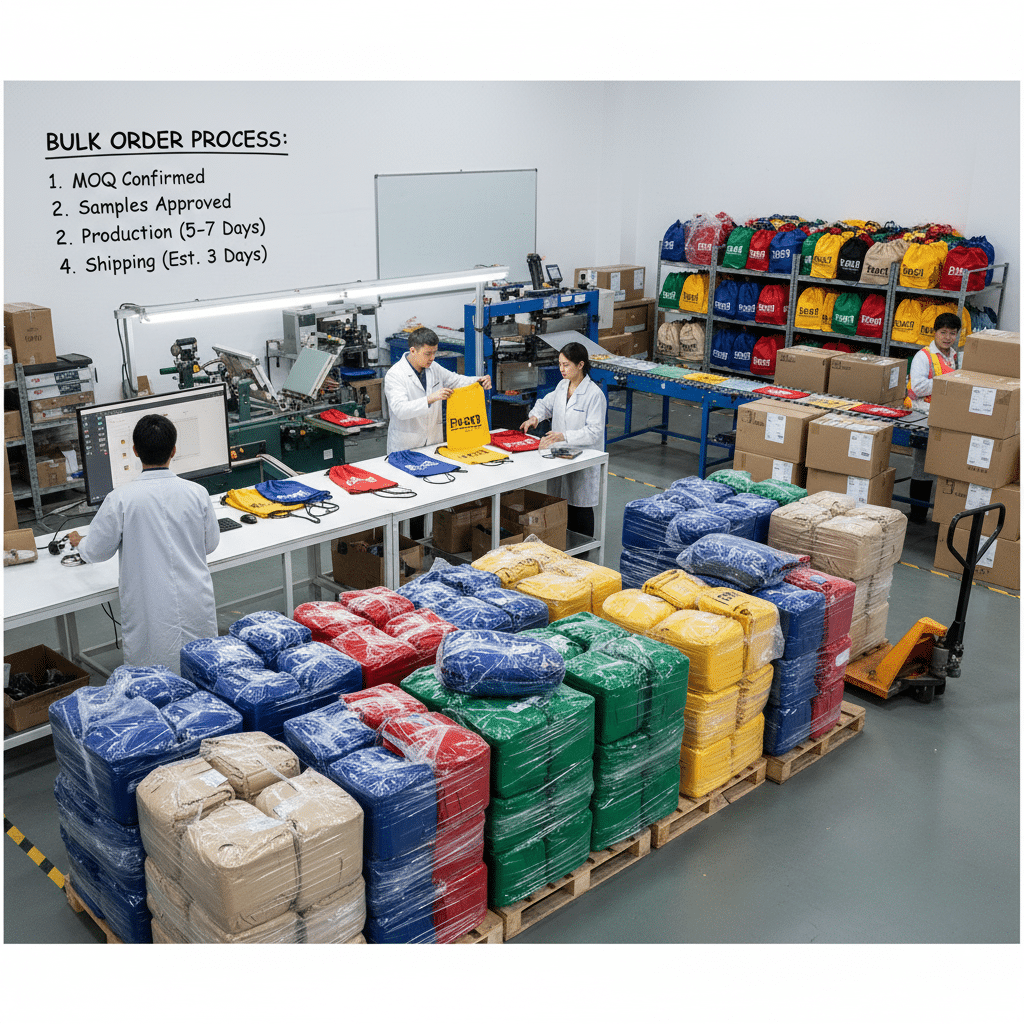
Standard lead times for custom tote bags run 3 to 5 weeks from artwork approval to delivery. The bottleneck is almost never production speed—it is the back-and-forth on artwork, material swatches, and the terror of approving 5,000 units from a single digital mockup. Bypassing the pre-production sample is the single most expensive shortcut an event planner can take.
- Pre-Production Photo Approval: Within 3 days of artwork sign-off, the factory should send real product photos showing ink placement, thread color against fabric, and handle attachment points. Internal QC data shows this step alone cuts print alignment errors by up to 90%. Suppliers who resist sending photos before bulk production are hiding something—usually registration slop on multi-color prints.
- Physical Sample vs. Digital Proof: A Pantone-matched PDF looks perfect on a backlit screen. On 12-oz cotton canvas, the same red reads 2 to 3 shades darker. Request a physical strike-off if the event’s color palette is brand-critical. The $40 to $80 this costs is trivial next to the cost of 3,000 bags in the wrong shade showing up at a trade show booth.
- Approval Gate Timing: Budget 5 to 7 days for sample review and internal stakeholder sign-off. Compressing this to 24 hours because marketing is behind schedule is how logos end up 4 millimeters off-center. No factory QC team can save you from a rushed approval decision made at 11 PM on a Friday.
- Defect Buffer Built Into Contract: B2B factory-direct agreements should include a 3% defect allowance with free replacement shipping. For a 2,000-unit order, that means 60 spare units land on-site without surprise invoicing. This is not a favor—it is an industry-standard clause that competent suppliers include by default. If a supplier acts like this is a concession, find another supplier.
- Last-Mile Timing Reality: Domestic ground shipping adds 3 to 5 business days to the timeline. International air freight cuts ocean transit from 25 days to 5 but costs 4 to 6 times more. If the event is in 18 days and the bags just left port in Shenzhen, you are already late. Factor customs clearance into any overseas production timeline—CBP holds are not rare and they are nobody’s emergency but yours.
- Emergency Backup Print Partner: Identify a domestic screen printer who can run emergency overprints on blank stock before placing the order. Keeping 100 blank totes from a prior run on-site buys 48 hours of reaction time if the primary shipment arrives with quality defects. This costs under $300 to maintain and has saved more than one event director from an empty swag table.
Rush production windows exist—2-week turns are possible on non-woven polypropylene bags with single-color screen printing. The tradeoffs compound fast. Multi-color prints, canvas materials, and custom zipper additions will not accelerate. A factory that promises 10-day canvas production with 4-color process print is either lying or planning to ship you someone else’s overrun with your logo hastily stamped on top.
Supplier Vetting Checklist
Most defects surface not in samples, but in the final 5% of a bulk production run.
A supplier vetting checklist is worthless if it focuses only on the sample approval stage. The real test of a factory is how it behaves when orders exceed 5,000 units and production pressure peaks. Three non-negotiable elements separate professional B2B tote bag suppliers from promotional merchandise middlemen: documented quality assurance reporting, a clear defect liability clause, and verifiable client references from events similar to yours. Skip any one of these and you are gambling with your brand’s reputation on event day.
- Batch-Level QC Reports: Require a documented inspection report for each production batch before shipment. This should include stitch tension testing on handle attachment points, print adhesion cross-hatch test results, and dimensional tolerance checks. If a factory cannot produce these, they are not running a professional QC loop — they are visually inspecting bags and hoping for the best.
- Inline Defect Tracking: Ask whether the supplier uses AQL (Acceptable Quality Level) sampling or 100% end-of-line inspection. For custom corporate tote bags ordered in volumes above 2,000 units, AQL 2.5 Level II is the minimum acceptable standard for major defects like misaligned prints or broken stitching. Anything less rigorous means you are absorbing the factory’s inefficiency.
- Replacement Logistics: Confirm whether defective replacements ship air freight at supplier cost or get bundled into your next sea freight order. If your event is in three weeks, a bundled sea freight replacement is useless. Negotiate air freight replacement for any defect rate exceeding the agreed allowance on time-sensitive orders.
- Consequential Damages: Most suppliers cap liability at product replacement cost. Understand this before signing. If 500 failed bags cause a branding disaster at a client-facing event, no factory will compensate for lost business. The only protection is upstream prevention through rigorous pre-production approvals.
The handle and seam attachment points are where corporate tote bags fail during high-traffic events. Standard single-stitch construction creates a predictable break point when attendees stuff bags with heavy brochures, water bottles, and product samples. Internal factory testing shows that reinforced cross-stitching on these critical junctions reduces in-event bag failure by 70% compared to single-stitch products. When vetting a supplier, request close-up photos of seam construction from a recent production run — not a prepared sample, but a random pull from inventory.
Defect policies are where most supplier relationships collapse. The industry-standard defect allowance for factory-direct custom tote bag orders is 3%, with free replacement of defective units in the subsequent order or via credit memo. A supplier that refuses to document this in the purchase agreement is signaling they expect a higher failure rate and intend to make it your problem. For large conference orders — say 10,000 bags for a multi-day trade show — a 3% allowance means 300 units. Without a replacement clause, you are either short on event day or scrambling to source unbranded fallback bags at retail markup.
Client references become genuinely useful when you ask one specific question: what went wrong on their order, and how did the supplier handle it? Every production run has anomalies. A reference who claims everything was perfect is either lying or too disconnected from the order to be useful. Ask for contact details of buyers who placed orders of similar volume, material type, and complexity within the last twelve months. Ask about color matching accuracy, on-time delivery against the promised date, and whether the defect count fell within or exceeded the agreed allowance.
Watch for suppliers who only share references from small-batch, low-complexity orders when you are quoting a large, multi-color conference run. A factory that reliably delivers 500 single-color cotton totes for a local nonprofit may crumble under 8,000 units with four-color process printing and a fixed event deadline. Match the reference’s order profile to your own. If the supplier cannot produce a relevant reference, proceed only if you have buffer time and budget for a full pre-production sample approval cycle with photo documentation within three working days of artwork sign-off — a process that alone cuts print alignment errors by up to 90% based on production QC tracking data.
Conclusion
The sourcing framework for event swag hinges on three measurable outcomes: cost-per-impression, in-event failure rate, and post-event reuse. Specifying reinforced cross-stitching cuts handle failures by 70%, pre-production photo approval within 3 days eliminates most alignment errors, and a 3% defect replacement clause protects the shipment you receive. Master those three controls, and a $2.50 bag delivers 5,700+ impressions at under five cents each.
Factory-direct ordering strips out distributor markup and gives you direct access to production timelines. Browse material options, MOQ ranges, and current lead times before your next event’s deadline narrows the available production window.
Frequently Asked Questions
What is the best material for a high-end corporate event?
14 oz cotton canvas is the standard for premium corporate events. Its weight and texture signal luxury, and it holds crisp screen prints far better than flimsy non-woven. Always request a material swatch kit to feel the difference before finalizing.
Can I get custom tote bags in under 2 weeks?
Yes, but only by screening blank stock totes domestically—not by running a fully custom cut-and-sew overseas order. Even then, shipping ground takes 3–5 business days, leaving you one shot. Lock in exact blank inventory and artwork sign-off day one of the project.
What’s the MOQ for small-batch corporate tote promotions?
Expect a MOQ between 100 and 250 units for a small promotional run. Digital print-on-demand can drop the floor to 25 units, but your per-piece price will be much higher. Ask for a tiered pricing table to see the true unit-cost breakpoints.
How do I avoid color mismatches on my logo?
Supply the factory with a solid Pantone Coated reference—never send only a CMYK printout or JPEG mockup. Colors shift across fabric substrates, so a physical strike-off on your exact. Sign off on a physical sample, not a digital proof, before production starts.
What defect rate is normal, and how should the supplier handle it?
A 2-3% defect rate is common for sewn tote bags; you should negotiate an AQL 2.5 standard upfront. The supplier must offer a credit or replace defective pieces. Lock defect tolerance and remedy terms into the purchase order, not just an email.

0 Comments