



Custom Printed Retail Tote Bags: MOQ & Artwork Setup 2026 is the first checkpoint buyers should lock before they approve a supplier, budget, or production slot. A retail brand merchandiser staring at a custom retail tote bags MOQ quote sheet learns fast that the printed minimum isn’t a fixed wall—it’s a stack of three factory knobs: screen setup cost, fabric dye-lot size, and stitch-programming downtime. Turn one knob and a 500-piece floor drops to 300 without touching unit price. Most sourcing guides wave at “low MOQ” like it’s a marketing promise. On the floor, MOQ flexibility lives in the 45 minutes it takes to burn a screen and the 200-meter minimum a dye house demands for a consistent pantone bath.
That operational reality is what separates a campaign that launches under budget from one that burns half its margin on excess stock. The same logic runs through artwork setup, where a 30% rejection rate on first proofs comes almost entirely from one mistake: supplying CMYK values when the press pulls Pantone inks. Catching that error costs nothing with a free digital proof. Missing it costs 20–30 days in rework and a bag run that lands three shades off-brand. The numbers backing these claims aren’t generic—they come from production logs, not marketing decks.

Understanding MOQ in Custom Tote Bag Manufacturing
MOQ is driven by plate costs and fabric lot minimums—change the material or print method and the minimum changes with it.
The MOQ a factory quotes you is not a random barrier. It is the minimum number of units that covers the fixed setup costs and makes the production run viable. In custom tote bag manufacturing, three levers determine this number: the raw material’s mill minimums, the printing plate or screen setup charges, and the stitching line programming. If you understand those levers, you can negotiate MOQ without begging for a favor.
Materials dictate the base MOQ. Cotton and canvas tote bags often start at 500 units because the fabric is typically cut from full mill rolls dyed to a specific Pantone shade. A special dye lot for 50 bags would leave 80% of the fabric wasted. Non-woven polypropylene and standard Oxford polyester do not require custom dyeing; their MOQ can drop to 100–200 units since the base material is purchased off-the-shelf and only the cutting and stitching need programming.
Printing technique is the single biggest MOQ lever. Screen printing requires a setup charge of $35–75 per color, and factories amortize that cost across the order volume. A 5-color design on a 100-bag order gives you $175–375 in setup alone, inflating the per-unit price beyond reason. Direct-to-garment (DTG) printing carries virtually zero setup cost and runs around $2.50 per bag for full-color, making it the default choice for sub–100 unit campaigns. The structural break-even between screen printing and DTG sits at 50–100 units; beyond that volume, screen printing wins on unit economics. For retail brand merchandisers testing a new design, DTG avoids the sunk cost of screens you might never reuse.
- Screen setup amortization: $35–75 per color fixed cost. On a 500-unit run, a 2-color design adds $0.14–0.30 to each bag. On a 50-unit run, that same design adds $1.40–3.00 per bag, eroding margin fast.
- Fabric lot dyeing minimums: Custom-dyed cotton often requires a mill minimum of 100–200 kg per color, which translates to roughly 500–800 standard 6 oz totes. Factories without in-house dyeing must pass this minimum on to you.
- Stitching line programming: Changing bag dimensions or handle length requires reprogramming the automatic stitching line and testing the first few pieces. The cost is fixed regardless of whether you order 100 or 10,000 units. That’s why custom sizes push MOQ higher, while a factory’s stock size keeps it low.
- Non-woven polypropylene: MOQ 50–100. Lowest per-unit cost. No dye lot minimum. Best for high-volume promotional toss-outs or retail carrier bags.
- Woven PP: MOQ 200–300. Loom setup required. Higher tensile strength. Suitable for structured retail bags that need to hold shape.
- Oxford polyester: MOQ 200–500. Coating and lining options add complexity. Common for brand cosmetic bags and travel pouches where aesthetic feel matters.
- Cotton canvas (6 oz, 14″x16″): MOQ 500+ for custom-dyed fabric; 300 for stock-color with logo. Unit price at 500 pcs: $1.00–2.50. At 50 pcs: $4.50–6.00. The price curve steepens sharply below 300 units.
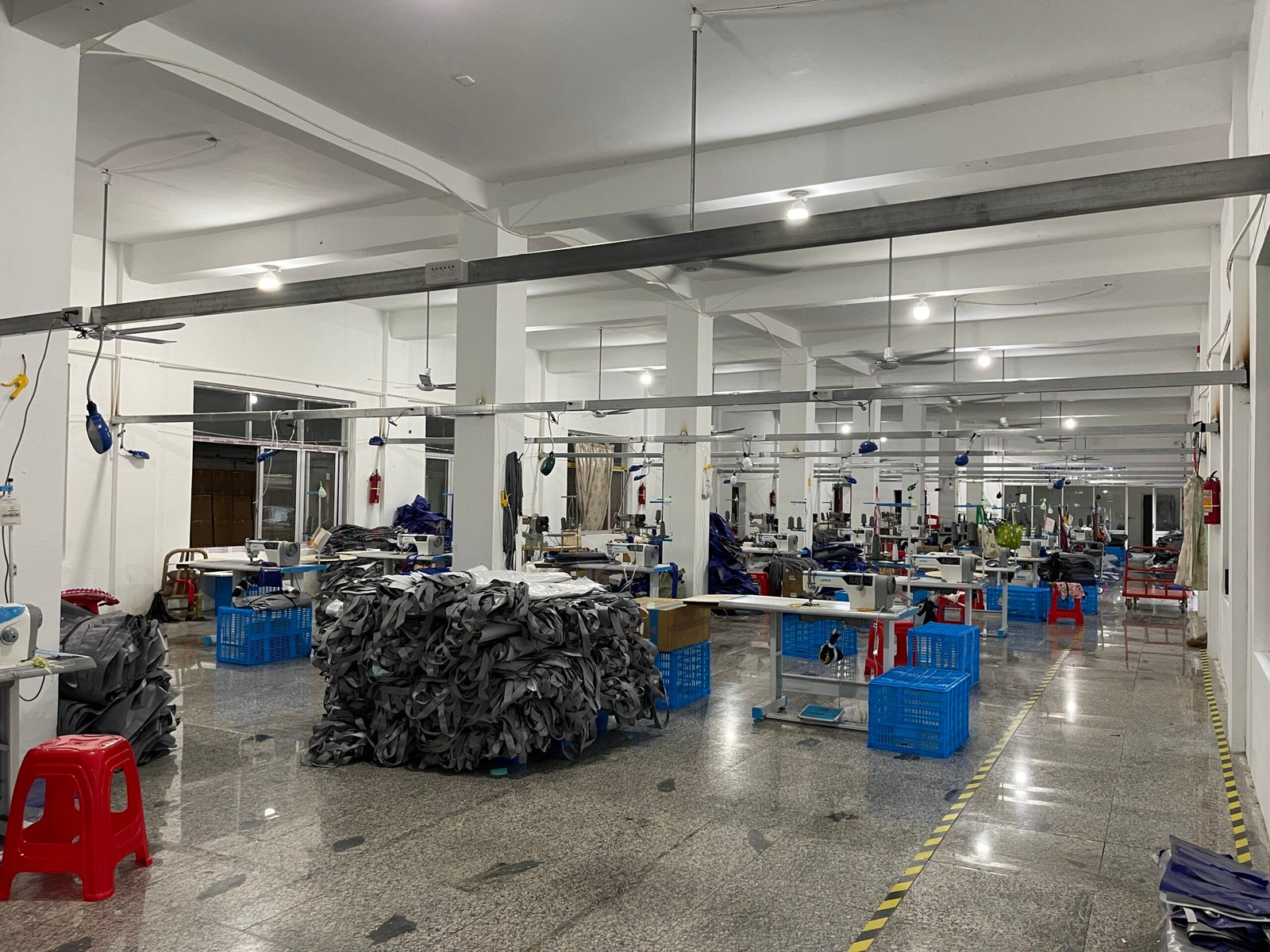
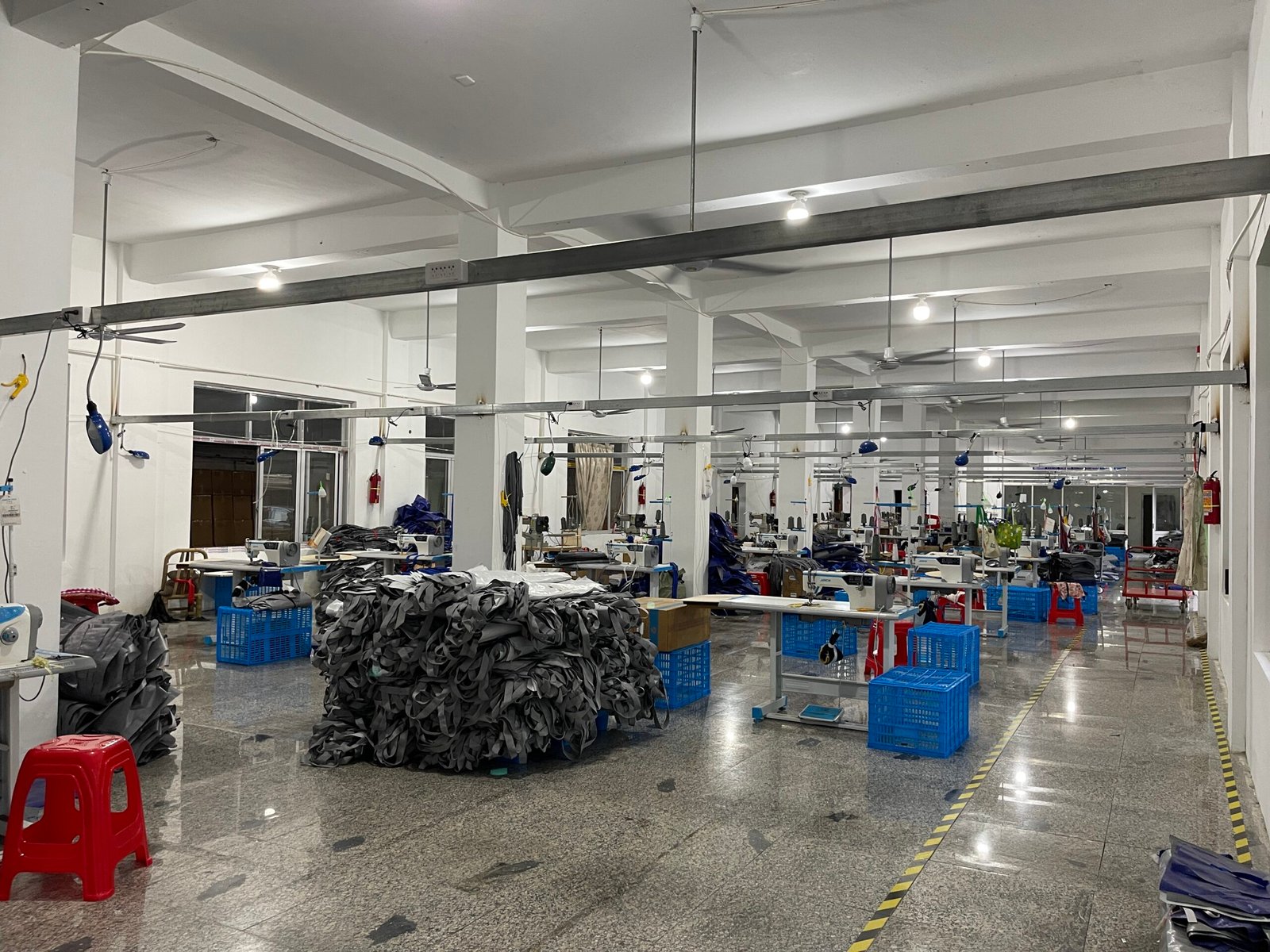
Factory workflow also imposes a floor. A production line typically runs 200–300 bags per hour for simple tote styles. Setting up the line for a 50-bag order costs more in labor minutes than the order is worth. Many factories will accept a low MOQ only if they can combine your order with another client’s production, which introduces scheduling risk. A direct question to ask: ‘Will my order run on a dedicated line or a shared line?’ Dedicated lines give you faster turnaround but typically require 300+ units.
Now examine the MOQ ranges by material. Non-woven polypropylene bags, the kind often used for grocery and promotional totes, carry the lowest barrier. MOQ starts at 100 units with screen printing, and 50 units for DTG. The material is cheap and no custom dyeing is needed. Woven PP bags, heavier and more structured, tend to start at 200–300 units because the weaving loom setup is more involved. Oxford polyester bags, used for retail and travel applications, sit around 200–500 units depending on coating and lining requirements. Cotton canvas totes, the premium retail choice, start at 500 units for custom-dyed fabric and 300 units if you accept a factory stock color with only logo printing.
A common trap is assuming low MOQ always means higher per-unit cost. That’s true for screen-printed cotton, but false for DTG-printed synthetics. If your campaign demands exactly 80 premium retail bags for an influencer mailer, ordering 500 to get a lower unit price is a false economy—you’ll spend more on total invoice and storage. Align the print method and material to the exact campaign volume. That’s how you turn MOQ from a threat into a procurement tool.
Artwork Setup for Flawless Prints
Bad files cause 30% of print rejections—stop the bleed before it starts.
In custom tote production, artwork delays aren’t just an inconvenience—they directly inflate your landed cost per unit. When a retail brand’s file hits the prepress department wrong, the clock resets: screens get re-burned, fabric lot dyeing pauses, and sea freight windows slip. Pantone mismatch alone triggers 30% of artwork rejection cycles across the industry. Yet most of this waste is preventable before a single screen is coated, if you lock in the right spec from the first upload.
- File Format: Send vector artwork as .ai, .eps, or .pdf with all fonts converted to outlines. Raster files (.psd, .tiff, .png) must be at least 300 DPI at 100% print size. Flattened layered files prevent missing font errors.
- Color Space: For screen printing, supply Pantone Solid Coated (Pantone C) references—not CMYK builds. Screen setup costs $35–75 per color and are amortized across the order volume; converting a CMYK design to Pantone mid-production adds $120–200 in re-work and trims your margin.
- Bleed: Extend all artwork elements 3 mm (0.125 in) beyond the trim line. Tote seams and gusset edges shift during stitching; without bleed, a mere 2 mm shift leaves a white unprinted hairline that gets flagged during QA and can stall an entire container.
- Resolution: Raster images at less than 300 DPI appear fuzzy on cotton canvas or non-woven fabric. The weave pattern amplifies pixelation—200 DPI artwork on a 6 oz cotton tote degrades into soft-edged logos that fail retail display standards.
A digital proofing protocol is the single highest-leverage checkpoint to protect brand equity. Within 24 hours of artwork submission, a factory-direct supplier should return a layered PDF showing exact Pantone callouts, print position relative to seams, and a simulated fabric texture preview. Industry tracking shows that when a free digital proof is supplied within 24 hours, 90% of color-related rejections disappear before the pre-production sample stage. Without this step, you’re effectively approving a CMYK-on-screen representation that bears little resemblance to ink forced through mesh onto woven cotton.
Pre-production samples are the final physical gate—not the first proof. By the time a sample lands on your desk, the only variable left should be bulk consistency, not color direction. Buyers who skip the digital proof and jump straight to sampling convert a $0 digital checkpoint into a $150+ physical revision cycle. For orders under 500 units, that single sample re-do can erase the entire screen-printing cost advantage over DTG. Demand a digital proof within 24 hours, confirm Pantone references in writing, and then authorize the physical sample. That sequence turns artwork setup from a hidden cost sink into a margin protection asset.
How to Negotiate MOQ Flexibility
MOQ flexibility hides in print setup, dye lots, and stitch programming—not in the order form.
Most factories quote a flat minimum because they’ve amortized screen setup fees ($35–75 per color) and fabric lot dyeing costs into a batch size. That batch size isn’t arbitrary. Printing plates need a certain number of impressions to justify cleaning and press time. Dyeing a specific Pantone fabric roll requires a full dye bath; running a half-bath creates waste. Stitch programming for a new handle attachment pattern eats into sewing line efficiency until the crew completes at least 100–150 units. When a merchandiser understands these three cost pockets, they can propose adjustments that shrink the MOQ without killing the factory’s margin.
The first lever is small-batch testing. DTG (direct-to-garment) printing carries zero setup cost and prints full color at around $2.50 per bag for sub-100 orders. This lets you validate a design in 25–50 units, then switch to screen printing for the main campaign once the artwork is proven. The screen-printing break-even sits between 50 and 100 units; beyond that, the per-unit cost drops below DTG. Ask your supplier to run a 50-piece DTG test with the same cotton tote (6 oz, 14″x16″) you’d use at scale. The per-unit will be higher—$4.50–$6.00 vs. $1.00–$2.50 at 500+—but you’ll have real samples to approve color and quality before committing to a full production run.
- Split Shipments: Negotiate the MOQ as total annual volume rather than single lot. If the supplier requires 500 units minimum, propose 250 now and 250 in three months, same PO number, same price tiers. This works when fabric and print are identical; the factory avoids new setup costs and you manage warehouse cash flow.
- Overrun Allowance (2–3%): Screen printing and cut-sew lines typically generate 2–3% extra units to cover inevitable spoilage. Instead of treating this as waste, convert it to free promotional stock. Specify in the contract that overruns up to 3% will be delivered at no extra charge and may be used for pop-up events, influencer mailers, or staff gifts. This transforms a production byproduct into brand equity.
- Fabric & Method Alignment: If you’re ordering non-woven totes, the MOQ floor is naturally lower because non-woven substrate comes by the roll and requires no dye lot matching. Combine non-woven with DTG and you can often run 30–50 bags without a surcharge. For cotton canvas, accept a pre-dyed stock color instead of a custom Pantone fabric shade to eliminate the dye lot minimum entirely. The print plate still needs amortization, but a 1-color screen print costs only about $35–75 setup, which a supplier will waive if you approve a digital proof within 24 hours.
- Pre-Production Sample Leverage: Insist on a pre-production sample (PPS) made from the exact materials and production line settings—not a digital mockup. Paying for this sample ($50–100) demonstrates commitment. A factory that sees you’ve invested in a physical sample is more willing to flex the MOQ because the risk of a rushed, unconfirmed order is lower for them.
Suppliers in Turkey and China alike quote lead times of 20–30 days plus sea freight. Use that window to run a 25-unit DTG test now. The data you gather—color match under retail lighting, handle tear strength after repeated use, customer feedback—becomes your internal ammunition to negotiate a full screen-printed order with the confidence that the design will hold. The MOQ conversation shifts from ‘I need a lower number’ to ‘I’ve verified the design, here’s the volume I’m committing, waive the setup fee on the first 500 and I’ll sign today.’ That’s how veteran buyers cut landed cost per unit without sacrificing brand equity.
First-Time Custom Tote Buyer Checklist
Landing at the right MOQ and print spec on your first order prevents 90% of hidden-cost surprises.
Most first-timer missteps don’t come from design taste—they come from ignoring factory workflow constraints. The checklist below translates those constraints into a 7-step verification sequence. Run every supplier through it before approving artwork.
- 1. Lock Pantone, ignore CMYK: 70% of B2B buyers flag inconsistent print color as the top complaint. A supplier who accepts CMYK-only files is gambling with your brand equity. Demand a Pantone-to-fabric calibration and a free digital proof within 24 hours. This single step eliminates roughly 90% of artwork rejection cycles.
- 2. Split your MOQ into plate cost vs. piece cost: Screen setup runs $35–75 per color and amortizes across volume. Accept a 2-color design instead of 5 and slash print cost by 40–50%. Pair that DTG break-even data (50–100 units) with your actual quantity—don’t pay for plates a small campaign will never absorb.
- 3. Waste nothing: overrun clause in writing: Overrun allowance is typically 2–3%. Treat it as free promotional stock for pop-ups or PR mailers instead of letting the factory quietly ship and bill it. Get the surplus terms in the proforma invoice before the run begins.
- 4. Test fabric hand-feel with a pre-production sample: A 6 oz cotton tote at 500+ pieces lands at $1.00–$2.50, but the same spec at 50 pieces jumps to $4.50–$6.00. Request a pre-production sample even if it costs $30–50. Compare it against the approved reference swatch under the same light you use for in-store displays.
- 5. File requirements: bleed, vectors, and 300 DPI: Supply AI or PDF vector files with 1/8-inch bleed, 300 DPI at print size, and fonts outlined. Non-vector artwork creates registration drift on porous cotton—the result looks blurred, not distressed. Standard bag sizes (14″x16″, 15″x15″) print cleanest when art stays inside a 2-inch margin from edges.
- 6. Ask for the production calendar, not just lead time: The average lead time from factory to FOB is 20–30 days for cotton totes, but fabric dye-lot scheduling can steal an extra week. Request a production calendar showing dye, cut, print, and stitch windows—not a single 25-day promise.
- 7. Validate DDP cost structure before committing volume: Suppliers offering DDP shipping bundle customs duty, VAT, and last-mile delivery. Insist on a line-item breakdown: product ex-works, sea freight, destination duty, and delivery. Without it, the landed cost per unit you’re tracking against your KPI is fiction.
Stack these checks against any supplier quote. If a factory can’t produce Pantone references, a line-item DDP breakdown, and a proof within a day, your brand equity is about to become someone else’s learning curve.
Conclusion
Understanding what actually drives minimum order quantities—screen setup charges, fabric lot dyeing, and stitch programming—gives you leverage to negotiate smaller runs without inflating unit cost. When you lock artwork to a specific Pantone code and request a digital proof within 24 hours, you prevent the color mismatches that account for 30% of all print rejection cycles. A 2–3% overrun becomes free stock for pop-up events or PR mailers, turning a production byproduct into a brand asset.
Compare material weights, print methods, and minimum order thresholds before you commit to a production run. The current custom tote collection breaks down GSM, handle styles, and fabric options so you can match a bag to your campaign volume and sustainability targets without guesswork.
Frequently Asked Questions
What is the most cost-effective way to order custom printed tote bags wholesale?
Align your order with the factory’s standard material and screen-printing production runs. This avoids dye-lot and plate-setup surcharges that spike costs on non-standard specs. Negotiate around the factory’s existing schedule, not your ideal timeline.
How does minimum order quantity affect custom tote bag pricing?
Higher MOQ spreads fixed plate and fabric-dye charges across more units, so per-bag cost drops sharply at key breakpoints. Below the natural MOQ, you pay a heavy premium to cover. Ask for the factory’s volume-break table before you commit to a number.
Does adding more print colors always increase cost?
With screen printing, yes—each extra color adds a separate screen and setup step, raising per-unit cost. Digital-print methods flatten color costs, but digital is usually uneconomical in bulk. Match your color count to the print method’s cost curve.
Is screen printing or DTG cheaper for bulk custom tote bag orders?
Screen printing is cheaper in bulk. Its fixed plate cost gets absorbed over volume, while DTG carries higher per-print ink and cycle-time costs that blow out beyond short runs. For runs over 500 units, screen printing wins on unit economics.
Does tote bag size affect printing cost?
Only if your print area scales with the bag. A larger tote with the same logo size prints at similar cost; oversize prints may require larger screens and more ink. Lock your print dimensions before assuming bag size drives the quote.
Related reading: Black Friday and Cyber Monday: Ordering Custom Bags Before the Q4 Rush

0 Comments