



Tote bag sizes look arbitrary until you map them to checkout lanes: a grocery tote needs to swallow a standard 38 x 34 cm paper sack, a trade-show bag only has to hold brochures and a water bottle, and a campus welcome bag lives or dies by laptop fit.
This guide lists the standard tote bag sizes and shopping bag sizes by retail use case, with capacity math, gusset depth and print-area margins buyers need before approving a cutting sheet.
All dimensions are width x height, measured flat, seam to seam, with handles excluded.

The four standard sizes and where each one wins
The industry works from four anchors. Small, roughly 25 x 30 cm, carries brochures, small catalogs and event giveaways, and prints economically because two panels fit a standard 140 cm fabric width with room for handles. Medium, 33 x 38 cm, is the bookstore and pharmacy standard sized to a standard US letter folder plus padding. Large, 38 x 42 cm, is the grocery workhorse; its face is sized to a 38 x 34 cm paper grocery sack with a 2 cm ease, which is why it works at self-checkout without repacking. Extra large, 46 x 51 cm and up, serves laundry, trade gear and moving programs where volume beats carry comfort. The general ancestry of the tote as a carry-all is sketched in the reference on the tote bag, and the duck-cloth tradition behind premium versions is described under canvas.
Gusset depth: the dimension buyers forget
Flat totes store flat but carry like an envelope. A side gusset of 8 to 10 cm turns a flat grocery tote into a box-bottom bag that stands open on a checkout belt, and a bottom gusset alone, 10 to 15 cm, works for apparel programs where the bag is filled once and carried by handles. Gusset depth trades against stacking: every 2 cm of side gusset adds roughly 4 liters of volume to a 38 x 42 cm body but makes the bag harder to fold into a counter dispenser. Programs that pair bags with boxes should read our shopping bag collection, where gusset options are listed per style, because matching the gusset to the packaged product, not to the shelf, is what keeps units per pallet predictable at 55 to 65 bags per standard carton for gusseted 38 x 42 cm nonwovens.
Capacity math and weight planning
Volume estimates keep program planning honest. A flat 25 x 30 cm bag holds about 5 liters; a gusseted 33 x 38 x 10 cm bag reaches 12 to 13 liters; the gusseted grocery standard 38 x 42 x 10 cm lands at 15 to 16 liters; and a 46 x 51 x 12 cm extra-large reaches 27 liters. Weight is the other axis: a filled grocery tote routinely hits 8 kg, which pushes fabric to 120 gsm woven polypropylene or heavier, and the size-to-load ratios behind that threshold are tabulated in our bag fabric GSM guide. Handle length completes the ergonomics: 30 cm handle drop fits hand-carry under a counter, 55 to 60 cm fits shoulder carry, and the comfort trade-offs are measured in our handle length guide. Size, fabric weight and handle length chosen together, not separately, define whether a bag survives its target reuse count.

Print area margins on each size
Print areas run smaller than panel size, and artwork approved at panel dimensions will be shrunk at prepress. Working print areas, leaving 2 cm per side for seams and stress: 21 x 26 cm on the small 25 x 30 body, 29 x 34 on the 33 x 38, 34 x 38 on the grocery standard, and 42 x 47 on the extra-large. Logos placed within the upper third of the print area stay visible when the bag is carried full, which matters for retail co-op programs where the bag is the advertising. Bleed artwork needs an additional 3 mm per edge and should avoid gusset folds by at least 1 cm unless the fold is part of the design. Color reproduction boundaries, from spot limitations on nonwovens to four-process limits on laminated wovens, are covered in our guide to Pantone versus CMYK versus RGB bag color specs.
Regional conventions worth knowing
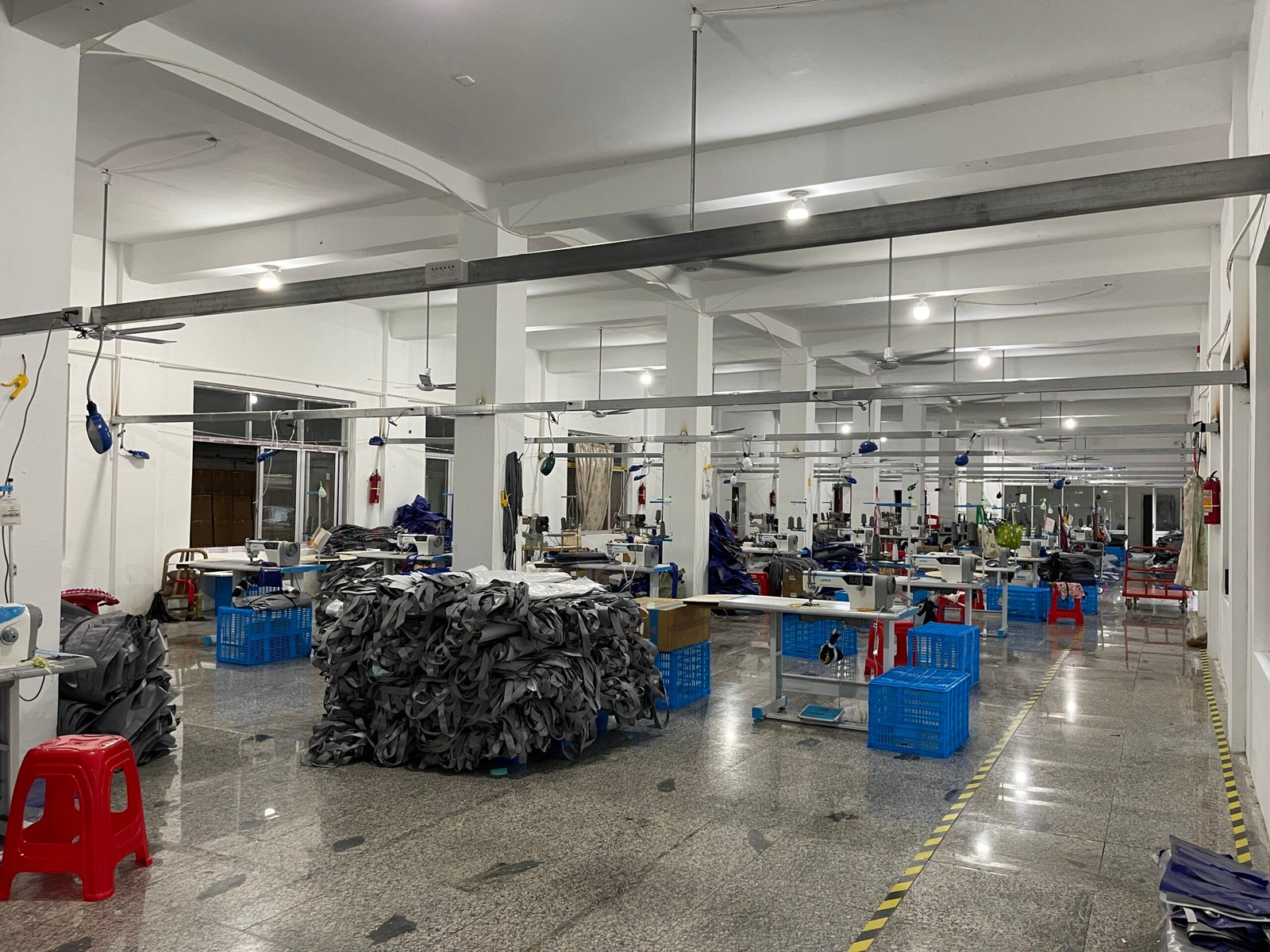
US programs default to inch-derived dimensions, so a “14.5 x 15.5 inch” tote is the same cutting as the 38 x 42 cm grocery standard, and suppliers quoting both should show identical tolerances, plus or minus 1 cm. European programs quote metric first and often pair the grocery size with longer 60 cm handle drops for bicycle carry. Japanese market bags skew smaller and stiffer, reflecting counter-space constraints. Sewing tolerance, not the conversion, is where quotes drift: a factory holding plus or minus 1.5 cm on every dimension ships bags that fit dispensers from one supplier and jam them from another. The production-side consequences of tolerance drift, including how automated cutting changes seam consistency, are explained in our comparison of automated versus manual sewing in bag factories, and the brand-layer decision it feeds is covered in private label versus white label bags.
Frequently asked questions
What is the standard size for a reusable grocery tote?
38 x 42 cm with a 8 to 10 cm gusset, about 15 to 16 liters; the face is sized to a standard 38 x 34 cm paper grocery sack with packing ease.
How much bigger is an extra-large tote?
46 x 51 cm with a 12 cm gusset reaches roughly 27 liters, about 70 percent more volume than the grocery standard.
What handle drop works for shoulder carry?
55 to 60 cm drop fits most adults over the shoulder; 30 cm suits hand carry under a counter, and the choice changes panel stress.
Do US and European suppliers use different standard sizes?
Same cutting sheets, different labels: 14.5 x 15.5 inches equals 38 x 42 cm; watch sewing tolerance of plus or minus 1 to 1.5 cm rather than the conversion.
Foam thickness sets hold time more than any other single spec; our insulated bag foam thickness guide maps 2 to 8 mm walls to real hours.
The unboxing layer decides retention on subscription programs; our subscription box tote design guide covers sizing, print, and mailer fit.
A seasonal bag line is planned on a calendar, not on a demand spike; our retail bag design calendar walks the lead-time math from shelf date backwards.
Related: how a gusseted versus flat base changes tote capacity and nesting

0 Comments