




REACH (Registration, Evaluation, Authorization and Restriction of Chemicals) is the European Union’s chemical regulation framework, established under Regulation EC No 1907/2006. For bag importers selling woven PP totes, drawstring bags, or moving bags in the EU, REACH compliance is not optional. There is no import volume exemption threshold for small batches. Every bag placed on the EU market must meet substance restrictions, and importers must prove compliance with test reports.
The SVHC (Substances of Very High Concern) candidate list contains over 240 substances as of 2025 and grows twice a year when ECHA (European Chemicals Agency) updates it around June and December. For bag importers, the challenge is not just testing for the current list but maintaining compliance as new substances are added. This guide maps the testing requirements, compliance workflow, and documentation chain that EU-bound bag shipments require.
The same document discipline applies to recycled claims; see GRS chain of custody verification.
REACH SVHC list exceeds 240 substances in 2025, updated twice yearly. Importers must test for substances above 0.1 percent weight-by-weight and notify ECHA when annual import volume exceeds 1 ton. No small-batch exemption exists.

What REACH Regulates for Bag Importers
REACH applies two layers of chemical control to bag products. The SVHC candidate list identifies substances that may have serious effects on human health or the environment. If a product contains an SVHC above 0.1 percent weight-by-weight (w/w), the importer must notify ECHA when the annual import volume of that substance exceeds 1 ton. Additionally, the importer must provide sufficient information to recipients (distributors, retailers, consumers) to allow safe use of the product. The European Commission’s chemicals and REACH overview describes how the regulation protects health and the environment.
The second layer is Annex XVII, which lists substances subject to absolute bans or strict concentration limits. For textile bags, Annex XVII restrictions cover azo dyes (which can release carcinogenic aromatic amines), nickel (used in metal hardware and grommets), phthalates (used as plasticizers in PVC coatings), and PFAS (used in water-repellent treatments). These are not notification thresholds; they are hard limits that make non-compliant products illegal to sell.
For woven PP bags, the highest-risk areas are ink and pigment formulations, metal hardware components, and any surface coatings or laminations. Pure woven PP without coatings or metal components carries lower risk, but printing inks containing restricted plasticizers or heavy-metal pigments can trigger non-compliance.

The SVHC Testing Workflow for Bags
REACH compliance testing follows a sequential workflow. Skipping steps or testing in the wrong order wastes money and produces incomplete results. The standard process for a bag product moves through eight stages, from product identification to market access.
| Stage | Action | Output |
|---|---|---|
| 1. Product ID | Identify all materials and components | Bill of materials |
| 2. Screening | BOM analysis against SVHC list | Risk assessment |
| 3. SVHC testing | Lab test for flagged substances | Test report |
| 4. Annex XVII | Test for banned substances | Test report |
| 5. Assessment | Evaluate results against limits | Compliance status |
| 6. DoC | Issue Declaration of Conformity | DoC document |
| 7. SCIP | Submit to SCIP database | SCIP notification |
| 8. Market access | Maintain records for compliance | Full documentation |
Each stage produces a specific document that forms part of the compliance record. EU customs and market surveillance authorities can request these documents at any point after a product enters the market. Importers who cannot produce test reports and declarations of conformity face product withdrawal, fines, and potential import bans.
Key Restricted Substances in Textile Bags
The Annex XVII restrictions most relevant to textile bag importers target four substance categories. Each carries specific test methods and concentration limits that accredited laboratories can verify.
Azo dyes, used in textile colorants, can cleave to release 24 specific aromatic amines classified as carcinogenic. The limit is 30 mg per kilogram for any listed amine. For bags with dyed or printed fabrics, azo dye testing is mandatory. The risk concentrates in dark-colored fabrics (black, navy, red) where dye concentration is highest.
Nickel release from metal components, including grommets, zipper pulls, and D-rings, is restricted to 0.5 micrograms per square centimeter per week for prolonged skin contact. For shopping tote bags with metal hardware that contacts hands during use, nickel testing is essential. Stainless steel hardware typically passes; nickel-plated components frequently fail.
Phthalates, particularly DEHP, DBP, and BBP, are restricted to 0.1 percent (1,000 mg per kilogram) in plasticized components. PVC-coated woven PP bags and laminated finishes carry phthalate risk. Pure woven PP without PVC lamination is generally phthalate-free. PFAS, used in water-repellent coatings, faces increasing restriction under both REACH and the PPWR.

Testing Costs and Sample Requirements
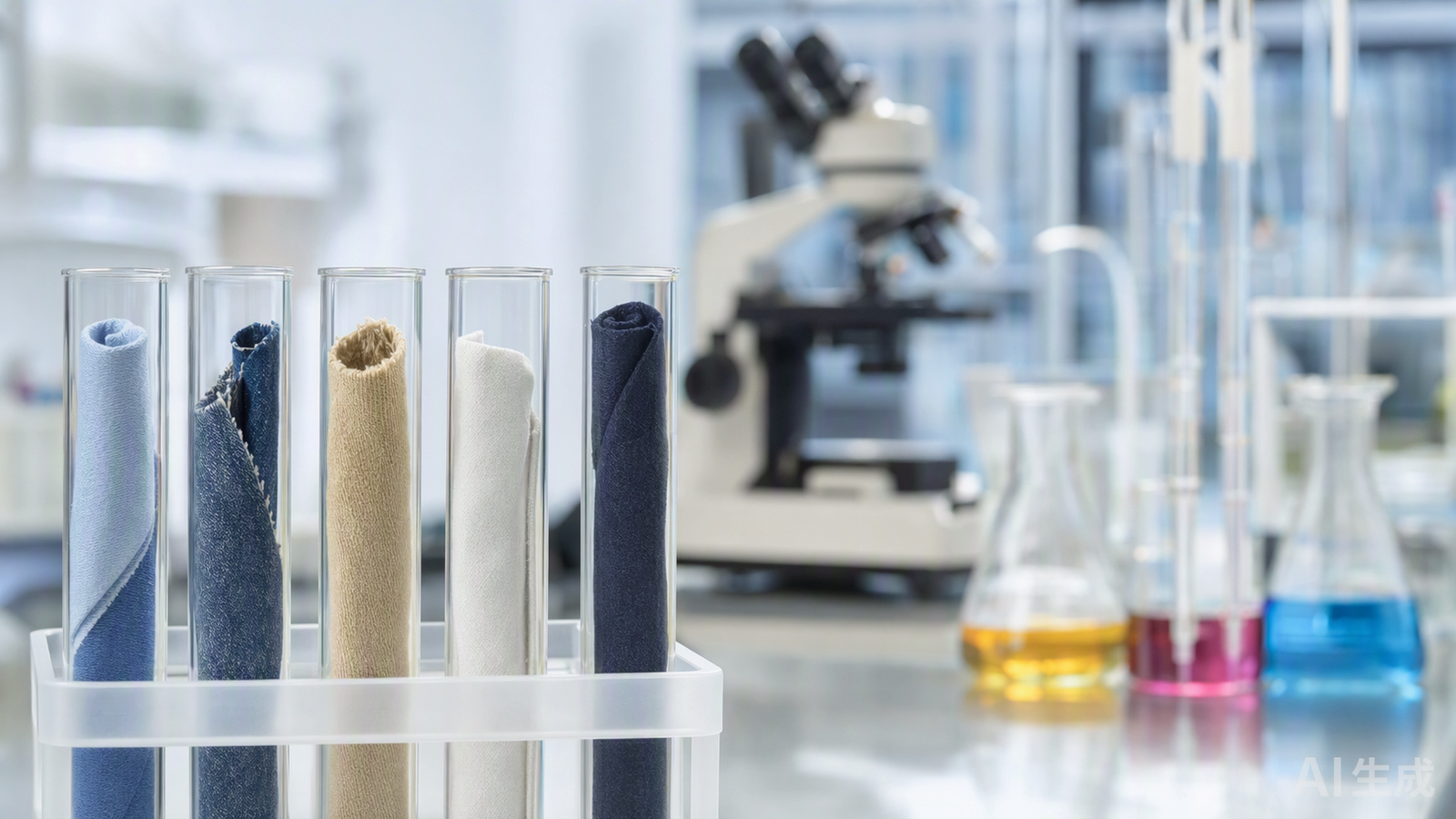
Laboratory testing for REACH compliance requires physical samples of each material component in the bag. Standard solid samples need 30 to 50 grams per material for accurate analysis. A bag with three materials (main fabric, webbing, and ink) requires three separate test samples. Metal hardware components require additional samples for nickel release testing.
Testing costs vary by scope. A full SVHC screen for the candidate list runs 300 to 800 dollars per material component, depending on the lab and the number of substances tested. Annex XVII testing for azo dyes, nickel, and phthalates adds 200 to 500 dollars per component. A complete REACH compliance test package for a single bag specification with three materials typically costs 1,500 to 3,500 dollars.
For importers running multiple bag specifications, batch testing can reduce per-spec costs. Laboratories offer package pricing when multiple specs are tested simultaneously. However, each distinct material formulation requires its own test. A bag in three colors with the same fabric base but different ink formulations needs separate ink testing per color.
Need REACH-compliant bags for EU markets?
Factory with BSCI certification, heavy-metal-free inks, and test report documentation. GRS recycled materials available.
SCIP Database Notification Requirements
The SCIP (Substances of Concern In articles as such or in complex objects) database is ECHA’s central notification system for SVHC in articles. Importers must submit SCIP notifications for products containing SVHC above 0.1 percent w/w when the annual import volume exceeds 1 ton per substance. The notification includes the substance identity, concentration range, and safe use information.
For bag importers, the SCIP obligation applies per substance, not per product. If your bag contains two different SVHC substances above the threshold, you file two notifications. The tonnage threshold is per substance per year, aggregated across all your imports containing that substance. This means importers with multiple bag lines using the same ink formulation must aggregate the total volume of that ink across all products to determine if the 1-ton threshold is met.
SCIP notifications are one-time submissions per product-substance combination. If the formulation changes or a new SVHC is added to the candidate list, a new notification or an update is required. ECHA updates the SVHC list normally twice a year, around June and December. Importers must review their product portfolio after each update and test for any newly listed substances present in their materials.
Maintaining Compliance as SVHC List Grows
The SVHC candidate list is not static. ECHA adds substances twice a year, and the list has grown from 15 substances in 2008 to over 240 in 2025. Each addition means importers must re-evaluate their products for the new substance. If a newly listed substance is present above 0.1 percent w/w, the importer has six months to notify ECHA.
The practical strategy is to work with your factory to maintain a current Bill of Materials (BOM) for each bag specification. The BOM should list every material, ink, coating, and hardware component with its chemical composition. When ECHA publishes a new SVHC update, compare the new substances against your BOM. If a match exists, order targeted testing for that substance on the affected component.
Factories with existing BSCI certification and QC processes are better positioned to provide accurate BOMs. Smaller factories without chemical management systems may not know what is in their inks or coatings, making compliance verification impossible without full testing on every order.
Documentation Chain for EU Customs
When your bags enter the EU, customs authorities may request REACH compliance documentation. The documentation chain includes the Declaration of Conformity, laboratory test reports, SCIP notification confirmations, and the bill of materials. Missing any of these documents can result in customs holding the shipment.
The DoC (Declaration of Conformity) is a self-issued document stating that the product complies with REACH requirements. It references the test reports that support the declaration. The test reports must come from accredited laboratories (typically ISO 17025 accredited) and must identify the product, the substances tested, the results, and the pass or fail status.
For woven PP moving bags without coatings, laminations, or metal hardware, the documentation burden is lighter. Pure PP fabric, polyester thread, and PP webbing carry low SVHC risk. However, printing inks still require testing. Request ink safety data sheets from your factory and verify that the ink formulation does not contain restricted plasticizers or heavy-metal pigments.
Conclusion
REACH compliance for EU-bound bags is a documentation-driven process. Test every material component, maintain a current bill of materials, and file SCIP notifications when SVHC thresholds are exceeded. The list grows twice a year, so compliance is a continuous obligation, not a one-time certification.
- SVHC threshold: 0.1 percent weight-by-weight triggers notification when annual import exceeds 1 ton per substance.
- Annex XVII bans: Azo dyes (30 mg/kg), nickel (0.5 mcg/cm2/week), phthalates (0.1 percent), PFAS in coatings.
- Testing cost: 1,500 to 3,500 dollars per bag specification with three material components.
- SVHC list: Over 240 substances as of 2025, updated by ECHA twice yearly around June and December.
- Documentation: DoC, test reports, SCIP notifications, and BOM required for customs clearance.
Choose factories that provide ink safety data sheets, maintain chemical management systems, and can produce test reports on request. The cost of pre-shipment testing is a fraction of the cost of a customs hold, product recall, or market withdrawal. Budget for annual re-testing as the SVHC list evolves, and treat compliance documentation as an asset that accelerates every future EU shipment.
Frequently Asked Questions
What is the SVHC threshold for REACH notification?
The SVHC notification threshold is 0.1 percent weight-by-weight (w/w) in any article component. Importers must notify ECHA via the SCIP database when the annual import volume of that substance exceeds 1 ton. There is no small-batch exemption; all volumes are subject to the threshold calculation.
How many substances are on the SVHC candidate list?
The SVHC candidate list contains over 240 substances as of 2025. ECHA updates the list normally twice a year, around June and December. Each update may add new substances, requiring importers to re-evaluate their products for compliance with the expanded list.
Which restricted substances affect textile bags?
The main Annex XVII restricted substances for textile bags are azo dyes (limit 30 mg per kilogram of aromatic amines), nickel (0.5 micrograms per square centimeter per week for metal hardware), phthalates (0.1 percent in plasticized components), and PFAS in water-repellent coatings.
How much does REACH testing cost for bags?
A full REACH compliance test package for a single bag specification with three material components typically costs 1,500 to 3,500 dollars. SVHC screening runs 300 to 800 dollars per component, and Annex XVII testing for azo dyes, nickel, and phthalates adds 200 to 500 dollars per component.
Do pure woven PP bags need REACH testing?
Pure woven PP without coatings or metal hardware carries lower SVHC risk but still requires testing for printing inks. Ink formulations can contain restricted plasticizers or heavy-metal pigments. Request ink safety data sheets from your factory and test ink samples for azo dyes and phthalates even on uncoated PP fabric.
Recycled material compliance intersects with REACH testing. See our recycled PP cost trends analysis for GRS certification pricing impact.
Tech pack BOM specifications should include material compliance data. See our bag tech pack guide for BOM structure that supports REACH testing.
EU buyers have REACH; US buyers have CPSIA for children’s bags: our CPSIA testing guide covers lead, phthalates, and the CPC.
EU buyers ask for REACH; US retail programs should check California Prop 65 compliance for printed totes alongside the same test reports.
Related: material-safety certifications to request alongside REACH testing


0 Comments