




You don’t discover a zipper quality testing failure in the factory audit—you discover it six weeks later, when a field crew reports three jammed bags from a $50K order that passed sample approval without a hiccup. The pre-production sample looked flawless. The mass production run didn’t match. Now you’re looking at 5% replacement requests, a $2,500 unplanned cost eating into your FOB pricing margin, and a quality tolerance that just evaporated. I’ve walked into that post-mortem meeting more times than I care to count across 12 countries, and the root cause is almost never just a bad zipper batch. It’s a supplier who stopped testing after the sample left the building.
Zipper failure sits as the #2 warranty claim in heavy-duty moving bags, right behind handle tear-out, yet most procurement contracts treat zipper specs as a checkbox. That gap between sample approval and field reality costs logistics fleets real money. Do nothing, and that 5% replacement rate hardens into a predictable annual line item. For a mid-size fleet moving 8,000 to 10,000 bags a year, you’re inviting 400 to 500 failed zippers, each one triggering a replacement logistics cost of around $6—roughly a $2,400 to $3,000 bleed that doubles your first-year warranty exposure before you’ve even renegotiated the next PO. Skipping a structured ASTM D2061 pull-force and cycle-durability protocol doesn’t just risk your product. It bakes a recurring replacement budget into your fleet operations that most CFOs never see coming.

Why Zipper Strength Determines Moving Bag Reliability
A zipper that fails in the field doesn’t just break—it breaks trust and your replacement budget.
In heavy-duty moving bags, zipper failure drives up to 5% replacement requests across bulk orders. That’s 50 units per 1,000—and for a $50,000 fleet purchase, it’s $2,500 in direct replacement costs before you count crew overtime, client compensation, or a single injury claim. I once audited a relocation firm that approved a flawless pre-production sample, only to receive 5,000 bags with zippers that jammed at the mid-point. The factory had switched to a lower-grade zipper tape that shrank post-weaving, misaligning teeth by just 0.5 mm—enough to derail every pull. That gap between the approved sample and the mass production run is where the real risk lives, and it’s one quality tolerance most suppliers hope you’ll overlook.
Zipper failure is the #2 warranty claim in this category, right behind handle tear-out. The hidden cost isn’t just the replacement bag: a jammed zipper forces a crew member to yank harder, the slider fractures, the bag tears open, and the client’s belongings spill onto the driveway. That’s not a product defect—it’s a liability. For a logistics procurement manager tracking total cost of ownership, the difference between a tested zipper and a commodity zipper isn’t theoretical. It shows up in your warranty claim frequency and in the injury reports you’d rather not file.
- ASTM D2061 Cycle Life: The standard floor is 10,000 open/close cycles. Logistics-grade bags easily see triple that duty per year. Factories that double the test to 20,000 cycles drop field failure rates from 1 in 200 to below 0.1%.
- Crosswise Pull Force: A #10 molded zipper must withstand at least 50 lbf of side pull. Many imports rupture at 25–30 lbf, failing precisely when a loaded bag shifts in a truck.
- Slider Retention Consistency: Measuring retention at three points along the zipper chain exposes weak spots. A digital pull force gauge that reads under 50 lbs at any point should trigger a batch hold, not a shipment.
- Tape Waviness Tolerance: As little as 1% tape shrinkage during weaving reduces zipper strength by 30%. In-line vision inspection that rejects waviness above 0.5 mm per 10 cm stops misaligned teeth before they ever reach the stitching station.
Procurement departments that enforce ASTM D2061 test certificates see a 60% drop in field zipper complaints, according to fleet survey data. That statistic alone justifies the incremental cost of sourcing from a supplier who double-tests every batch. When you’re negotiating FOB pricing, the cheaper unit price can seduce you—until you back-calculate the freight for replacement bags and the lost crew hours. The final 10% of what separates a professional sourcing decision from an amateur one: demand the actual test protocol, not just a certificate. Ask the factory to show you the zipper tape lot traceability and the three-point pull force report for your specific production run before sample approval is signed off. If they hesitate, walk.
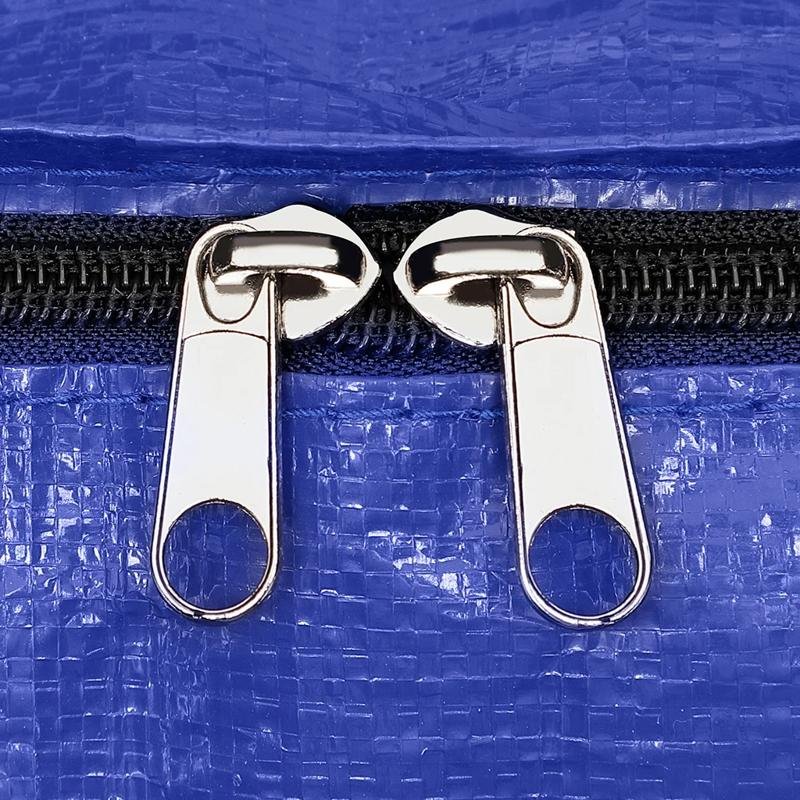
TIIOCTI’s Factory-Floor Zipper Testing Standards
Most suppliers test to 10,000 cycles and call it done.
A relocation contractor in Houston took delivery of 4,000 heavy-duty moving bags in Q3 2026. Pre-production samples zipped smoothly. Mass production units failed inside six weeks—teeth separating mid-zip, sliders jamming at the halfway point, tape pulling away from the stitching line. Root cause? The supplier tested zippers to ASTM D2061’s bare minimum of 10,000 open/close cycles. On a moving truck, crews cycle those zippers 8 to 10 times per bag per day. At that rate, a 10,000-cycle zipper hits end-of-life in under four months. TIIOCTI’s factory floor runs three testing protocols on every zipper batch—and the cycle durability pass mark starts at double the ASTM floor.
ASTM D2061 specifies a fatigue life test where the zipper is opened and closed under controlled tension until failure. The standard sets 10,000 cycles as the industrial minimum. For logistics-grade applications, that number is inadequate. A professional crew handling 15 bags per truck, each opened 8 times daily, puts roughly 2,900 cycles on a zipper per year. Triple that for high-volume operations. The internal benchmark at TIIOCTI is 20,000+ cycles—tested on a motorized rig that records the exact cycle count at first tooth misalignment or slider drag. Bags passing this threshold deliver a field failure rate below 0.1%, compared to the industry average of 1 in 200 bags.
- Cycle Test Rig Setup: Motor-driven reciprocating fixture with zipper mounted under 2.5 kg crosswise tension to simulate lateral stress from a loaded bag. Counter logs failure at first tooth skip, tape tear, or slider separation.
- Pass Threshold: 20,000 open/close cycles minimum per batch. Any batch failing before 20,000 triggers a full production hold and material traceback to the zipper tape mill.
- What Cheap Zippers Actually Deliver: Uncertified #10 zippers from low-cost mills routinely delaminate between 6,000 and 8,000 cycles. If a supplier won’t share raw cycle count data, assume they’re testing to the floor—or running no fatigue test at all.
Cycle durability tells you how long the zipper lasts. Pull force tells you whether it operates consistently across its full length. TIIOCTI uses a digital force gauge to measure crosswise pull force at three points on every zipper: 5 cm from the closed end, at the midpoint, and 5 cm from the open end. The standard for #10 molded zippers in logistics applications is a minimum of 50 lbf side pull. Cheaper imports that cut unit cost by 40% routinely fail at 25 to 30 lbf—they open fine on day one but develop mid-bag jams once the tape relaxes and teeth drift. When the gauge reads below 50 lbf at any of the three measurement points, the entire zipper batch gets quarantined. This three-point protocol catches an ugly failure mode: zippers that glide smoothly at the ends but bind in the middle, exactly where a half-loaded moving bag exerts maximum lateral stress.
How to Spot Zipper QC Red Flags During a Factory Visit
Most zipper failures trace back to two points: raw material shortcuts and sloppy assembly.
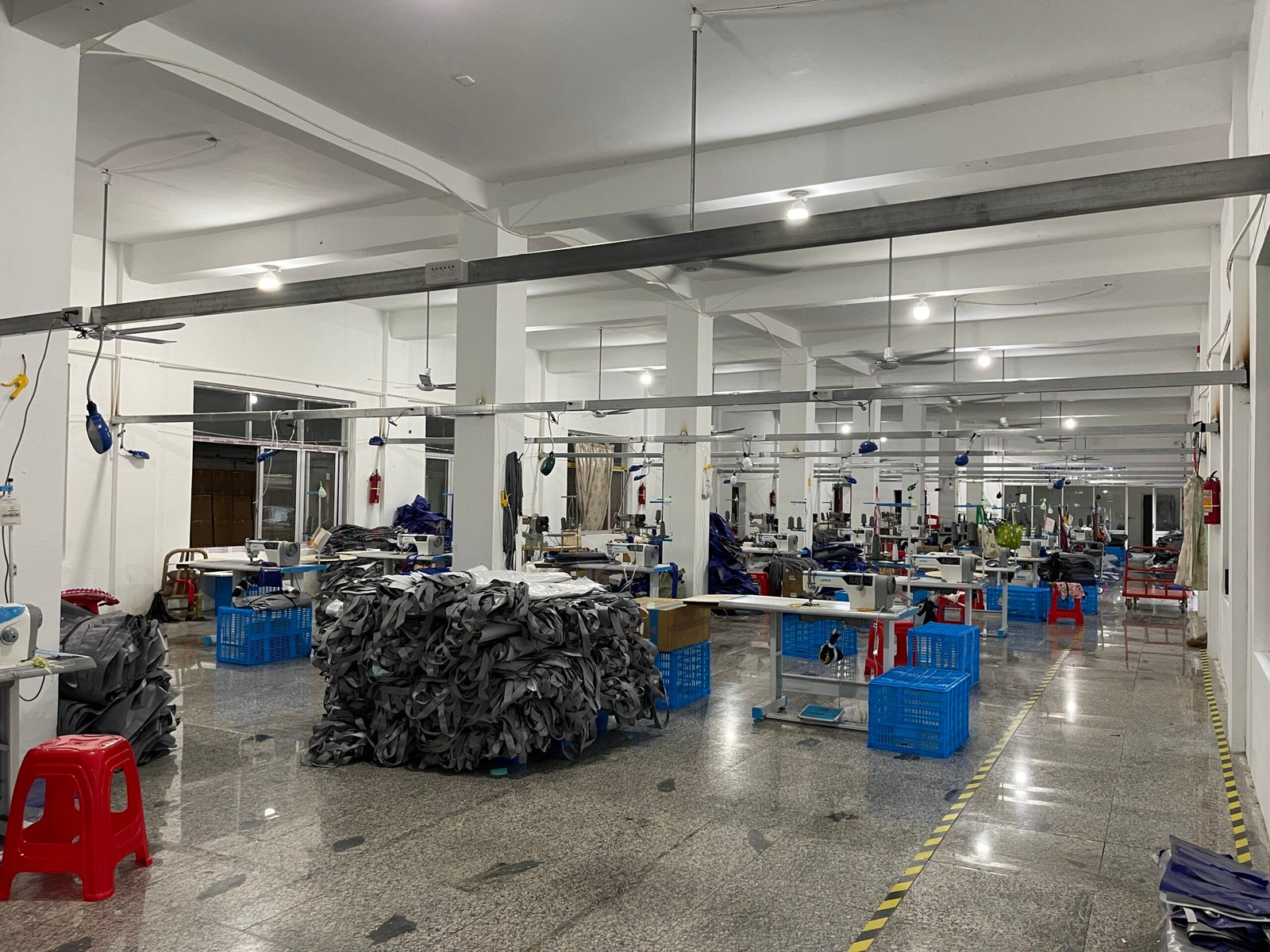
A supplier’s certificate doesn’t guarantee a shipment. At a factory visit, you can spot flaws that a PDF never reveals. You’re not there to tour—you’re there to validate that the zipper entering the BOM is the same zipper that left the test lab. Two areas give you more signal than any conference-room presentation: the incoming material inspection area and the production line itself. The questions you ask and the assembly defects you see will predict field failure rates better than any brochure.
- Ask for the batch-level ASTM D2061 test report: Don’t accept a one-time certificate. Every zipper coil batch should have its own 20,000+ cycle test report, with date, lot number, and measured crosswise pull force. If the report shows only 10,000 cycles—the bare minimum—walk away. Logistics-grade zippers experience triple that duty cycle annually.
- Demand visual tape waviness inspection records: Tape shrinkage during weaving causes waviness that misaligns teeth before stitching even begins. Ask to see the camera-based inspection logs. A deviation exceeding 0.5 mm per 10 cm is a batch-killer. If the supplier doesn’t measure this, you’re buying pre-stretched failure. Internal data shows tape shrinkage of just 1% reduces zipper strength by 30%.
- Check the pull force gauge calibration sticker: Every digital pull force gauge used for slider retention testing must be calibrated. Ask to see the calibration log. If the gauge hasn’t been validated in the last three months, any reading—above or below the 50 lbf threshold—is unreliable. Cheaper imports collapse at 25–30 lbf. You want proof that the tool isn’t lying.
- Request verification that raw zipper tape matches the approved gold sample: Color, tooth material, and weave density can drift across reorders. A factory should have a locked sample in the QC room. Compare it against the current tape reel. Substitutions—especially thinner coil—won’t flag on a visual glance but will explode under load.
- Look for uneven stitch length and thread tension: On a #10 molded zipper, stitch length should be 3–4 stitches per inch and absolutely uniform. Puckering around the zipper teeth means the tape is being stretched during stitching, creating hidden stress points. That bag’s zipper will jam or split open when a mover overfills it.
- Watch for zipper tape that rides above or below the fabric edge: The tape should sit flush with the bag panel edge—no more than 1 mm deviation. If the operator rushes, the zipper drifts, and the slider will catch on fabric with every pull. You’ll feel the hitch on the floor, but by then the bag is already packed.
- Check slider orientation and backstitching at both ends: The slider body must be fully seated against the top stop, not hanging loose. And both ends of the zipper chain require a tight backstitch—at least 3 reverse stitches—to prevent the coil from pulling out under load. Missing backstitches are the #1 cause of zipper pull-out in field returns.
- Run your finger along the closed zipper: Does the slider move smoothly without catching? Do you feel teeth catching at the midpoint? That’s a sign of alignment drift during sewing—the kind of defect that passes a quick zip test but fails on the 200th use. On a proper line, every zipper passes a full-length pull test before it leaves the station.
Once you move to the sewing lines, shift your gaze from paperwork to physical assembly. The highest-risk moment for a zipper isn’t the durability test—it’s the instant the needle pierces the tape. Stitching errors compound inside the bag’s first 10 real-world cycles.

Conclusion
Zipper testing isn’t a box-tick exercise—it’s a direct line from factory-floor inspection to field crew safety and warranty cost control. When you audit a supplier against ASTM D2061 cycle fatigue limits, crosswise pull force minimums, and tape alignment specs, you’re filtering out the factories that build bags on hope, not data.
For your next vendor call, pin this number to your spec sheet: 20,000 open/close cycles and 50 lbf slider retention. Any supplier who can’t back those figures with batch-level test reports isn’t worth the FOB pricing negotiation. To see bags already built to this standard, check the TIIOCTI moving bag range.
Frequently Asked Questions
How do I test the quality of a zipper without lab equipment?
Manual test by repeatedly zipping and unzipping under moderate lateral tension. A zipper that fails within 50 quick cycles won’t survive a single move job. Always request the factory’s pull-test jig reference value before signing off.
What is the minimum zipper cycle life for heavy-duty moving bags?
A minimum of 20,000 open/close cycles according to ASTM D2061 is the industry benchmark for heavy-duty moving bags. Lower-rated zippers (10,000 cycles) fail after fewer than 200 typical move loads. Specify 20K-cycle certification in your purchase agreement.
How often should zippers be tested during bulk production?
Perform in-process zipper checks at the start of each shift and after any tooling change. Also pull random samples for cycle testing at least every 1,000 units produced. Tie frequency to production cadence, not just final inspection.
Can zipper quality be ensured by visual inspection alone?
No, visual check misses chain tooth interlock strength and slider retention force under load. Without a pull-test or cycle run, you’ll pass zippers that look fine but fail instantly in use. Pair visual inspection with torque and cycle sample tests.
What industry standards apply to moving bag zippers beyond ASTM D2061?
ASTM D2057 (slider pull-off force) and ISO 9001 process control are the practical complements to ASTM D2061 cycle testing. Large logistics buyers also verify REACH compliance for metal parts. Confirm the factory’s latest certification scope before finalizing.


0 Comments