
Built from a legacy canvas bag article and the current product spec data for cotton canvas shells, handle construction, printing methods and final QC.
A buyer in Rotterdam converted a 38 by 16.5 in tote into inches and sent the sheet back with the handle length changed. The centimetre figure had been right; the inch figure, rounded down, moved the drop point below the shoulder. That single conversion exposed how much of a canvas bag order lives or dies on one line of a spreadsheet.
The same sheet carried a sustainability claim in the header. Nothing further down supported it. Between that header and the carton label sits a stack of lines that decide whether the claim survives contact with a customer, a retailer's compliance team, or a second season of use. Read line by line, a spec sheet is the only place where an eco claim can be made true or left hollow.
The First Line a Buyer Reads: Shell Fabric and Weight
The shell line usually reads something like "cotton canvas, natural or dyed, 10oz+." Each part of that sentence does separate work. Cotton canvas is the base material, natural or dyed describes the finish, and the weight figure sets how the bag behaves in the hand.
Weight earns its place because it predicts durability better than almost any other number on the sheet. A bag built from 10oz+ fabric with double stitching and reinforced handles holds up to weekly grocery runs. A lighter shell can look identical in a photo and soften within a month. Writing the weight as a minimum, not a target, stops a mill from substituting a lighter roll when stock runs short.
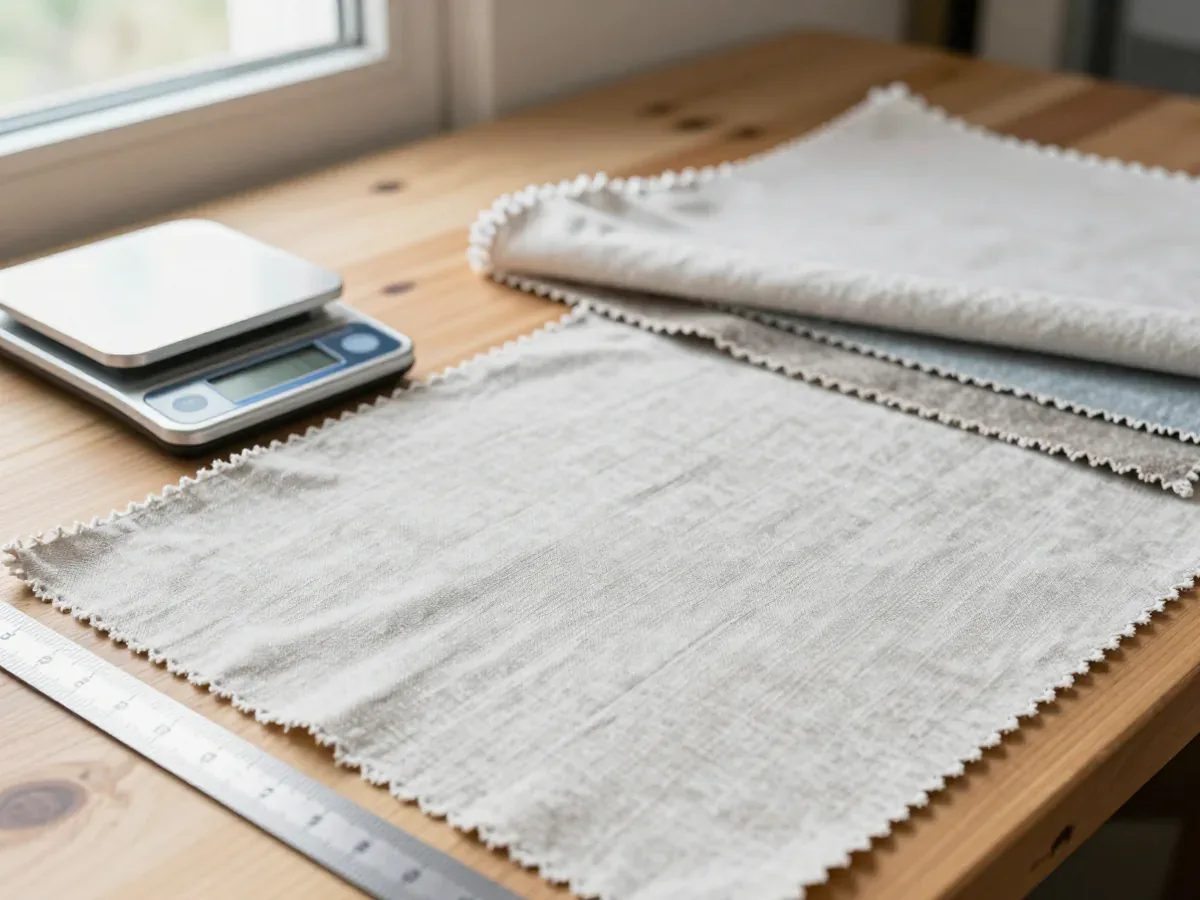
Verification starts before bulk. Ask for a fabric swatch with the weight stated on the accompanying spec, then compare the bulk hand-feel against that swatch at inspection. A small kitchen scale and a known panel size will confirm the grams per square metre without lab equipment. If the sheet says 12oz and the swatch weighs closer to 9oz, the eco claim has already lost its footing.
Colour and Dye: What the Line Says and What It Hides
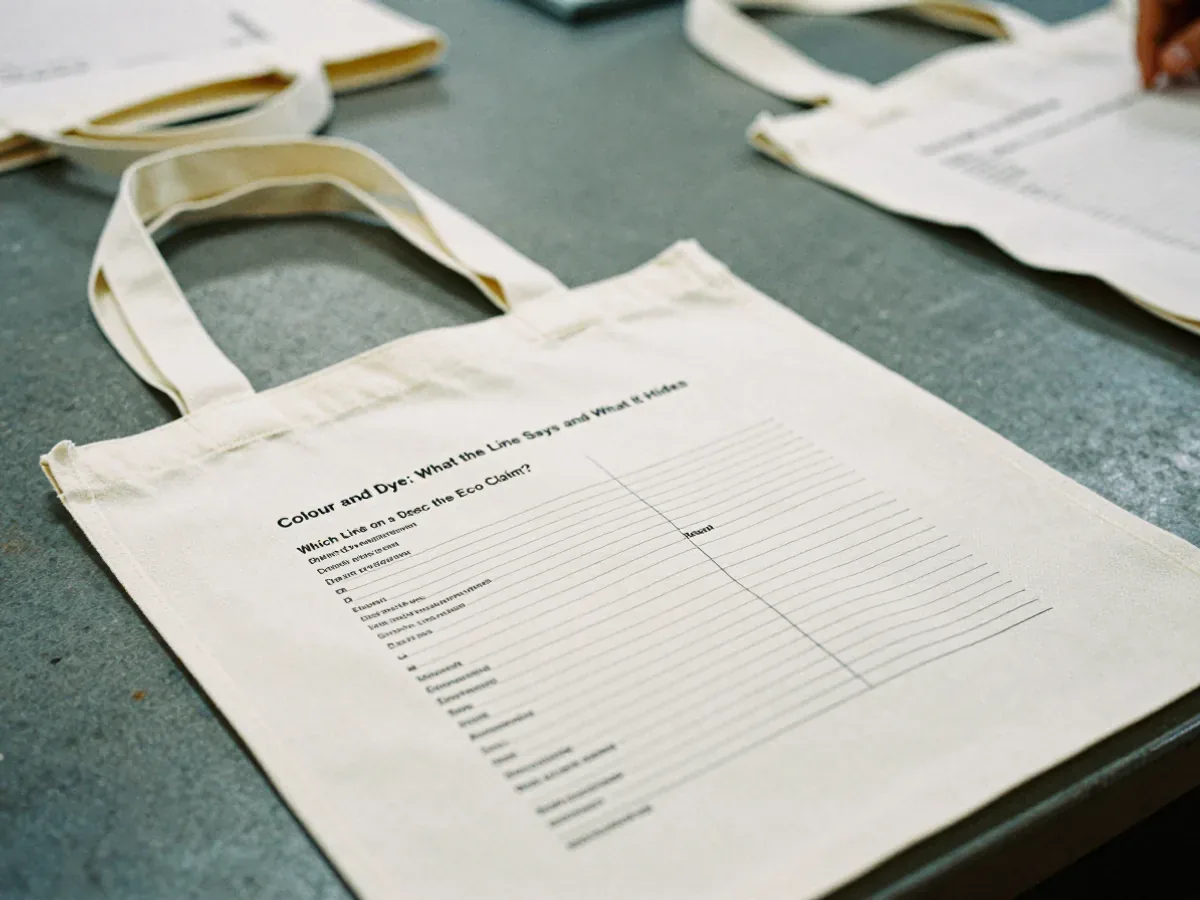
Most sheets reduce colour to a Pantone number and the word "dyed." That is enough to match a brand palette and not enough to say anything about how the colour got there. Dye chemistry sits behind the eco claim, and the sheet is where a buyer can ask for it.
A useful colour line names the reference, the substrate, and the dye route. "Natural" means undyed greige cotton, which carries the strongest environmental story and the least colour consistency. "Dyed" covers a wide field, and some dye houses use inputs that undercut the fabric's green credentials. Asking which dye class is used, and whether the supplier can document it, turns a vague line into a checkable one.
At inspection, colour is checked against the approved lab dip under daylight, not factory fluorescents. Two panels from different rolls should match each other as closely as they match the dip. Shade variation across a run is the visible symptom of a dye line that was never pinned down on paper.
The Handle Line: Woven Tape, Webbing or Rope
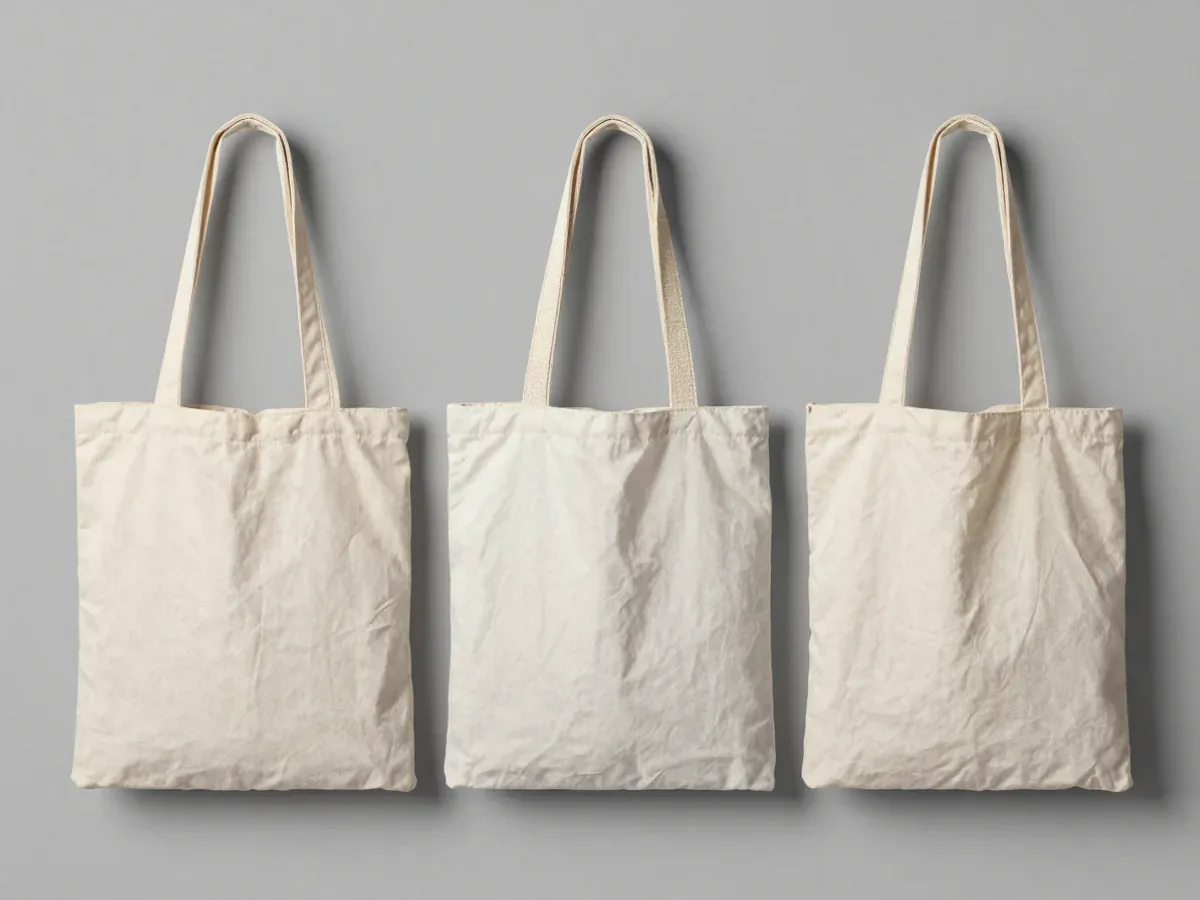
The handle line is short and carries more user experience than any other row. Woven tape, webbing and rope are the three common options, and each changes how the bag carries, how it wears, and how it reads on a shelf.
Woven tape gives a flat, tidy strap that suits printed branding and sits comfortably on the shoulder. Webbing is denser and handles heavier loads without stretching. Rope, usually cotton, gives a softer, more natural look that fits an eco positioning but needs a secure knot or stitched termination. The sheet should name the material, the width, and the length, because a 0.8 in difference in drop changes who can carry the bag.
Verification is physical. Load the sample with the weight the end user will realistically carry, then hang it for an hour and watch the attachment points. A handle that stretches or twists under load will fail in the customer's hands, not in the factory. The handle line is also where unit confusion bites hardest, as the Rotterdam buyer found.
Reinforcement: Where Cross-Stitching Belongs on the Sheet
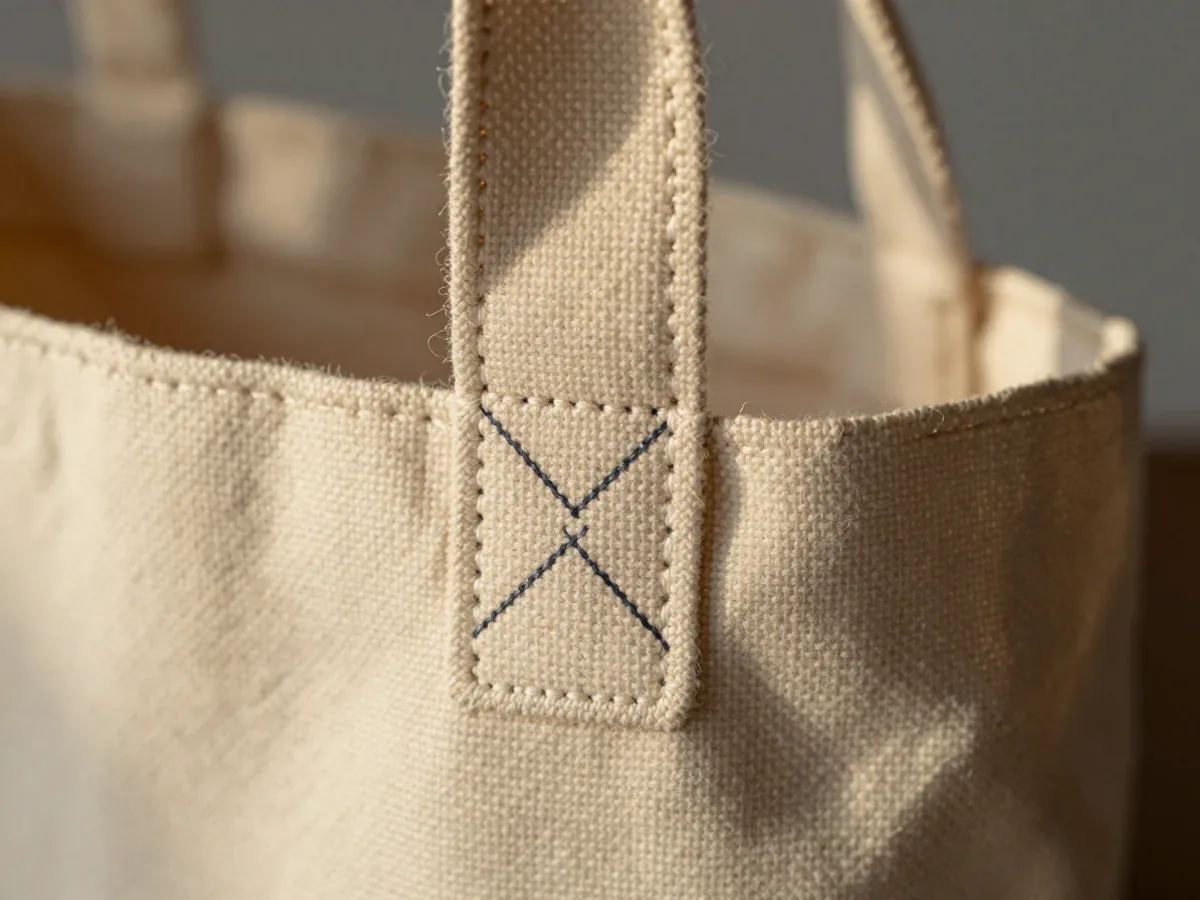
Reinforcement rarely appears on a spec sheet at all, which is why bags fail at the handle join. The join takes the entire load of the bag every time it is lifted, and a single row of stitching concentrates that load on a few threads.
The sheet should state that the handle join is reinforced with extra stitching and that the handle is attached with cross-stitching rather than a single row. Those two clauses cost almost nothing to write and change the bag's working life. They also give the inspector something concrete to count.
On the floor, reinforcement is checked by turning the bag inside out at the attachment and counting stitch rows. Cross-stitching should form a visible box or X pattern with no loose thread ends. A join that looks neat from outside but shows one straight row inside has skipped the line the sheet asked for.
Print Method and Proof: Screen Print or Heat Transfer
The print line names the method and the artwork reference, and both halves matter. Screen print and heat transfer behave differently on canvas, and the sheet should commit to one before the order is placed.
Screen print lays ink through a mesh and suits bold, solid logos on a textured surface. Heat transfer applies a carrier film and handles finer detail and gradients, with a different hand-feel on the fabric. Naming the method prevents a factory from switching to whichever line is free that week. The sheet should also require that printing is proofed before the run and that a sample is made to the same spec as bulk.
Proofing is the checkpoint that protects the brand impression. A physical proof on the actual shell fabric shows how ink sits on the weave, which a digital mockup cannot. At final inspection, the bulk print is compared against the approved sample for position, colour and edge sharpness, and any drift is caught before cartons close.
The Care Label Line Nobody Writes
The care label is the shortest line on the sheet and the one most often left blank. A care label is what keeps a canvas bag in use, because it tells the owner how to wash and dry without shrinking the shell or fading the print.
Left to the factory, the label becomes whatever is in stock, sometimes with instructions that contradict the fabric. Written into the sheet, it names the fibre content, the wash temperature, the drying method and the language or market requirements. That line is also where the eco claim becomes practical: a bag that survives fifty washes supports the reuse story, and a bag that shrinks after three does not.
Verification is a wash trial on a production sample, following the label's own instructions. If the label says cold wash and the bag still shrinks, the label is wrong or the fabric is. Either way the sheet needed the line.
Final QC and Packing: Four Checkpoints on Paper
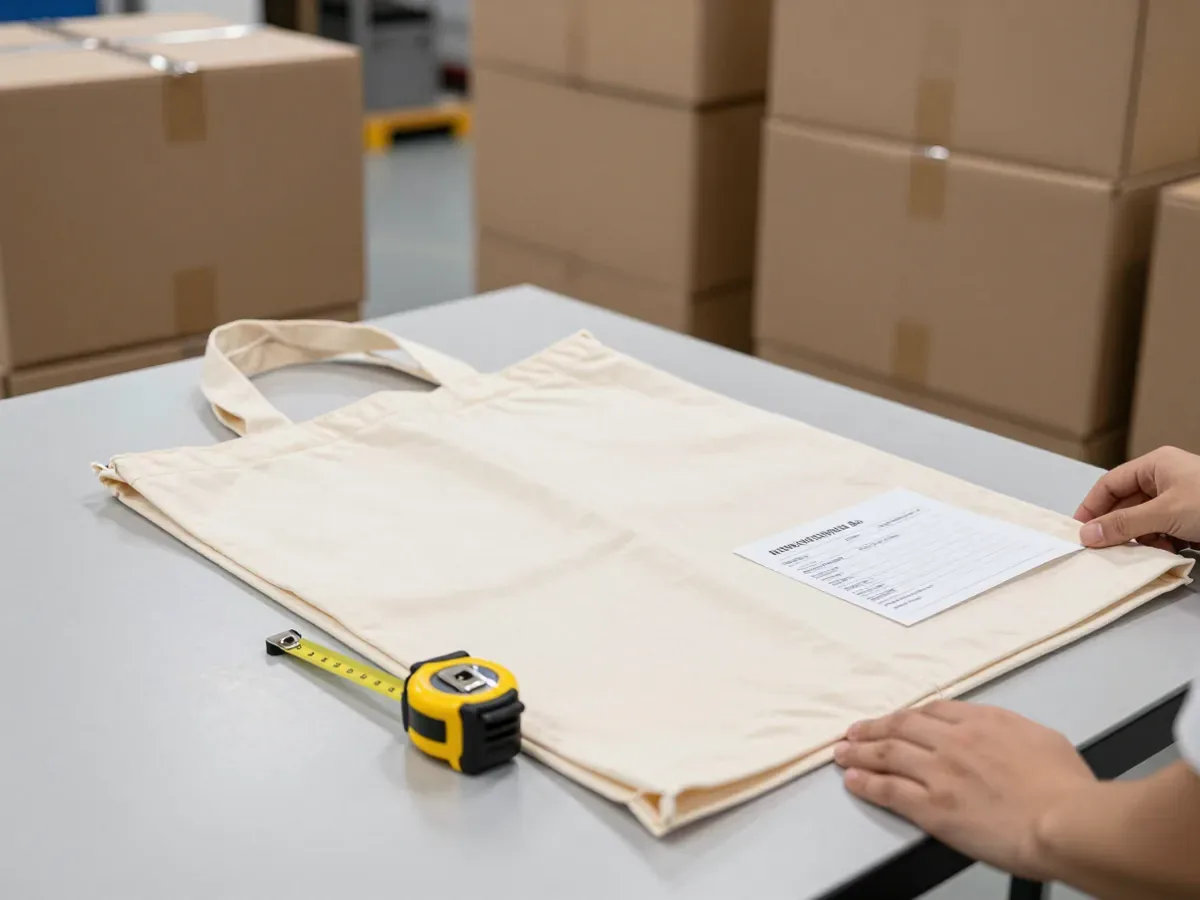
Quality control belongs on the spec sheet as a sequence, not a promise. Each order runs through four checkpoints, and each one catches a different class of defect before the next stage adds cost.
The first checkpoint covers incoming fabric against the swatch and weight. The second covers cutting and the handle join, where reinforcement is counted. The third covers print against the approved proof. The fourth is the final QC check every bag passes before packing, where measurements, stitching, label and cleanliness are confirmed together.
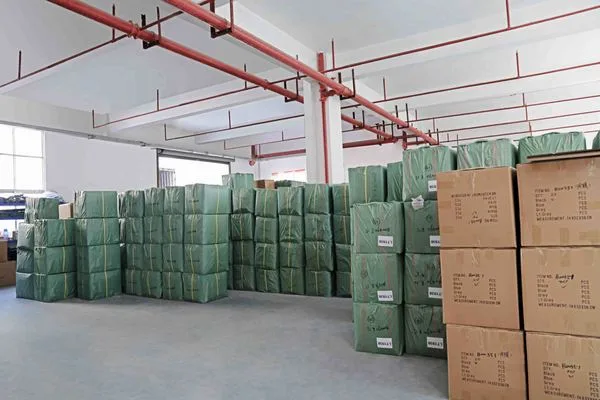
Packing is the last line and the one that protects everything above it. The sheet should state the polybag, the carton count, the size and weight markings, and the barcode position. Cartons stacked ready for shipment are only as good as the label on the outside, and a mislabelled carton undoes a clean inspection in a single warehouse scan.
The Line Most Likely to Be Copied Wrong
The line most likely to be copied wrong is not the fabric or the print. It is the measurement block, and it fails because of units. A 38 by 16.5 in bag is simple until someone converts it to inches, rounds the handle drop, and the bag no longer fits the shoulder it was designed for.
The fix is to write every dimension in one unit, state the unit in the header, and add the converted figure only as a reference marked "not for production." Handle length and drop should be measured from the same anchor point every time, and the sheet should say which anchor. When the bulk arrives, the inspector measures the same points with the same tape and compares against the sheet, not against memory.
That single line decides more than the eco claim's wording. A bag that fits, carries and lasts is the only version of sustainability a customer can feel, and the sheet is where that outcome is either written down or left to chance.
FAQ
Does a heavier canvas weight always mean a better bag?
No. Weight predicts durability, but the handle join, the stitching and the reinforcement decide whether the bag survives daily use. A heavy shell with a weak attachment still fails.
Can the same spec sheet be used for both screen print and heat transfer?
The sheet can carry both methods, but it should commit to one per order. Each method needs its own proof on the actual shell fabric, and the bulk is checked against that proof.
Should the care label be written into the purchase order or left to the factory?
Write it in. Fibre content, wash temperature, drying method and market language belong on the sheet, and a wash trial on a production sample confirms the label matches the bag.
How do I check that the bulk matches the approved sample?
Compare at the final QC checkpoint using the same measurements, the same light and the same reference points. Print, colour, handle drop and the handle join are checked side by side with the signed sample.