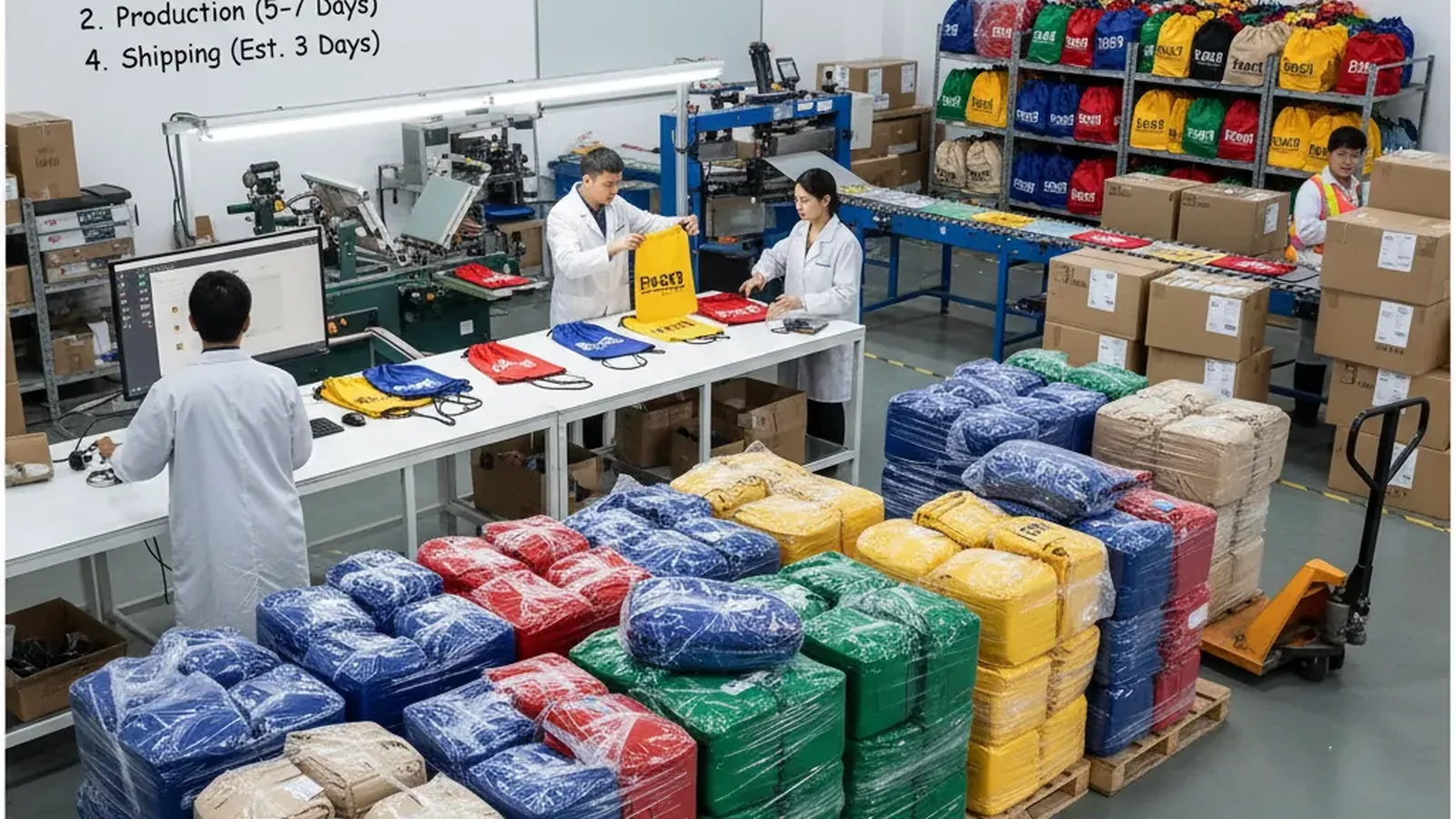
Based on the archived TIIOCTI article on bulk cotton drawstring bags and the product spec notes on shell fabrics, printing methods and four-point QC.
A sourcing manager in Rotterdam printed two quotations and laid them side by side on the meeting table. One was for a 10x12 inch cotton canvas drawstring bag at a stated fabric weight; the other was for the same size in thin polyester, priced far lower per unit. The dimensions looked identical in centimetres, but when she converted them to inches, the handle drop and the channel allowance no longer matched what she had pictured. The two quotes described two different products, not two prices for one product.
That moment is where most bulk drawstring bag decisions actually get made, and it is rarely made well. A buyer comparing a cotton canvas bag against a thin polyester, non-woven, or low-weight muslin alternative is choosing between two different jobs the bag will do. Put both options on one table, score them on the same four dimensions, and the choice usually stops being a negotiation about price.
Two Quotes on the Table, Two Different Bags
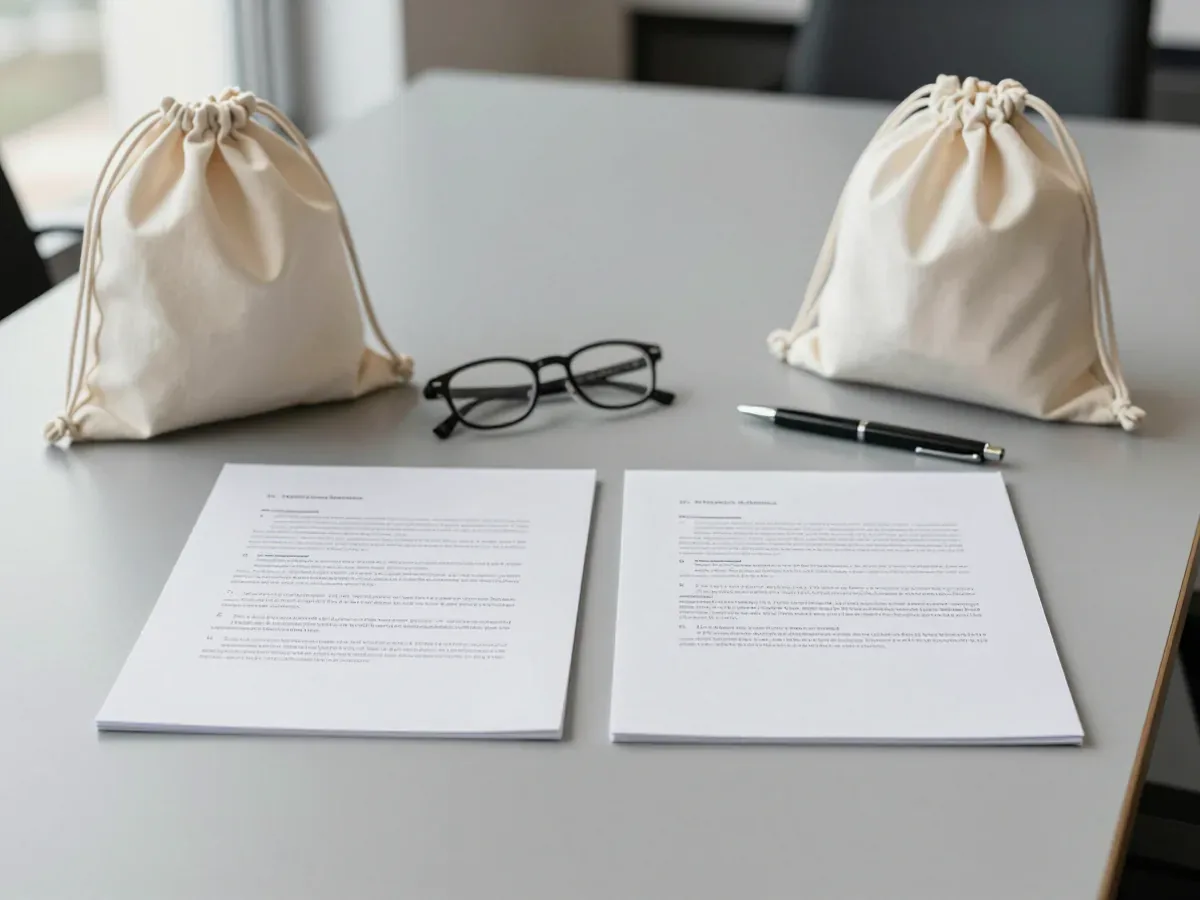
The first quote describes a shell of cotton canvas, supplied natural or dyed, with a cord channel sewn at the top and a print or label on the face. The second describes a bag built from thin polyester, non-woven polypropylene, or low-weight muslin, the three materials that dominate the budget end of the category. Both are drawstring bags. Both can carry a logo. Beyond that, they diverge quickly.
The gap is not only in the fabric itself. It sits in how much shell goes into each bag, how the cord is finished, what thread holds the seams, and how many trips the bag survives before it looks tired. A buyer who compares only the unit price is comparing the first line of two very different cost sheets.
A useful discipline is to treat the two quotes as two candidate standards rather than two vendors. One standard is built for a bag that gets used and kept. The other is built for a bag that gets handed out and, in most cases, discarded within the week. Neither is wrong. They answer different briefs.
Fabric: What Canvas Holds That Thin Polyester Does Not
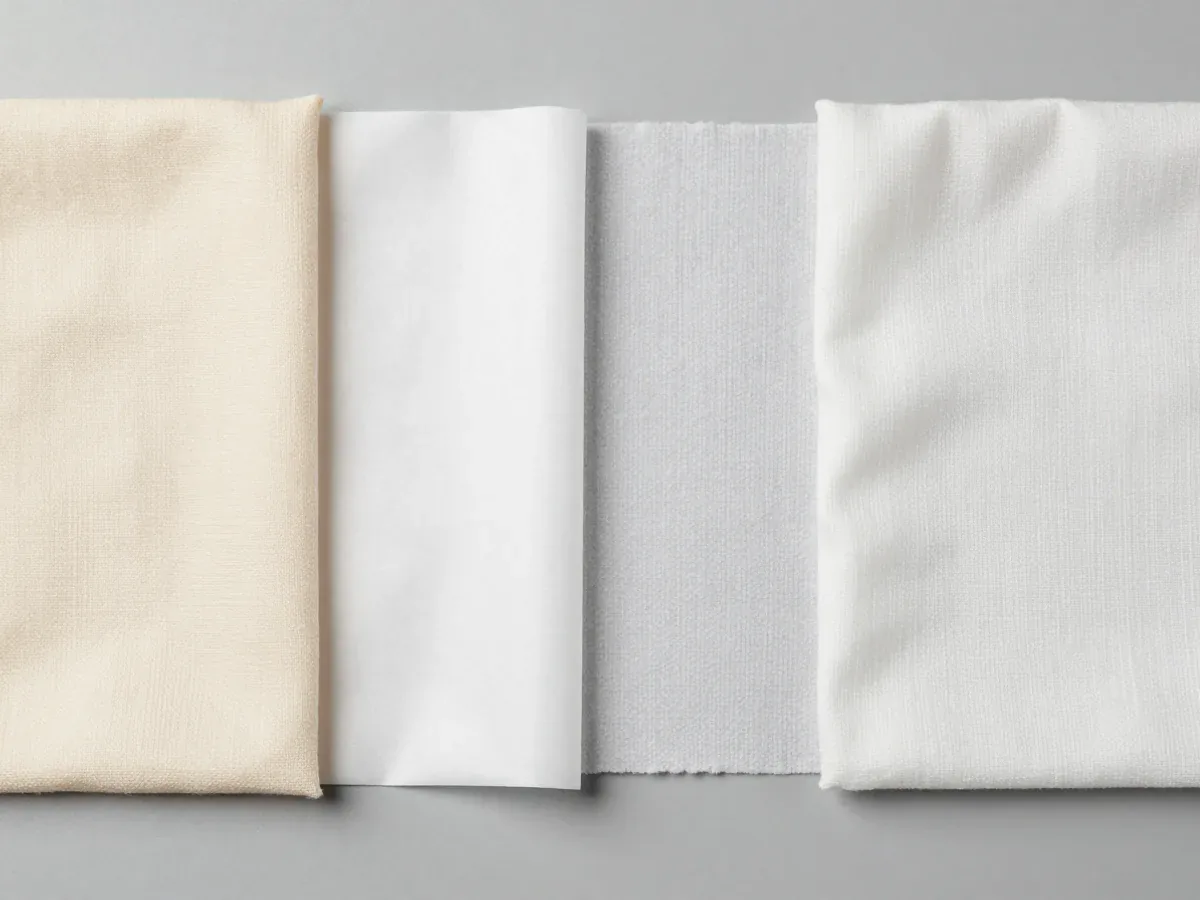
Canvas earns its place in this category through a balance of strength, print quality, and a material story that reads as reusable. It takes screen print, heat transfer, and woven or embroidered labels well, which matters when the logo is the point of the order. The same shell also holds shape after handling, so a bag that sits on a counter or hangs from a chair still looks like a bag.
Thin polyester and non-woven polypropylene behave differently. They are light, they fold flat, and they cost less per unit. They also crease, shine under certain lighting, and show print differently because the surface is less absorbent and less stable under the squeegee. Low-weight muslin sits between the two: a cotton hand feel, but a shell thin enough that the bag reads as a pouch rather than a tote.
The practical question is not which fabric is better in the abstract. It is whether the bag has to survive handling, weather, and repeat use, or whether it has one job on one day. Canvas answers the first brief. The cheaper shells answer the second, provided the buyer accepts the shorter life as part of the design.
Size and Fabric Yield: Reading 10x12 and 14x18 in Inches
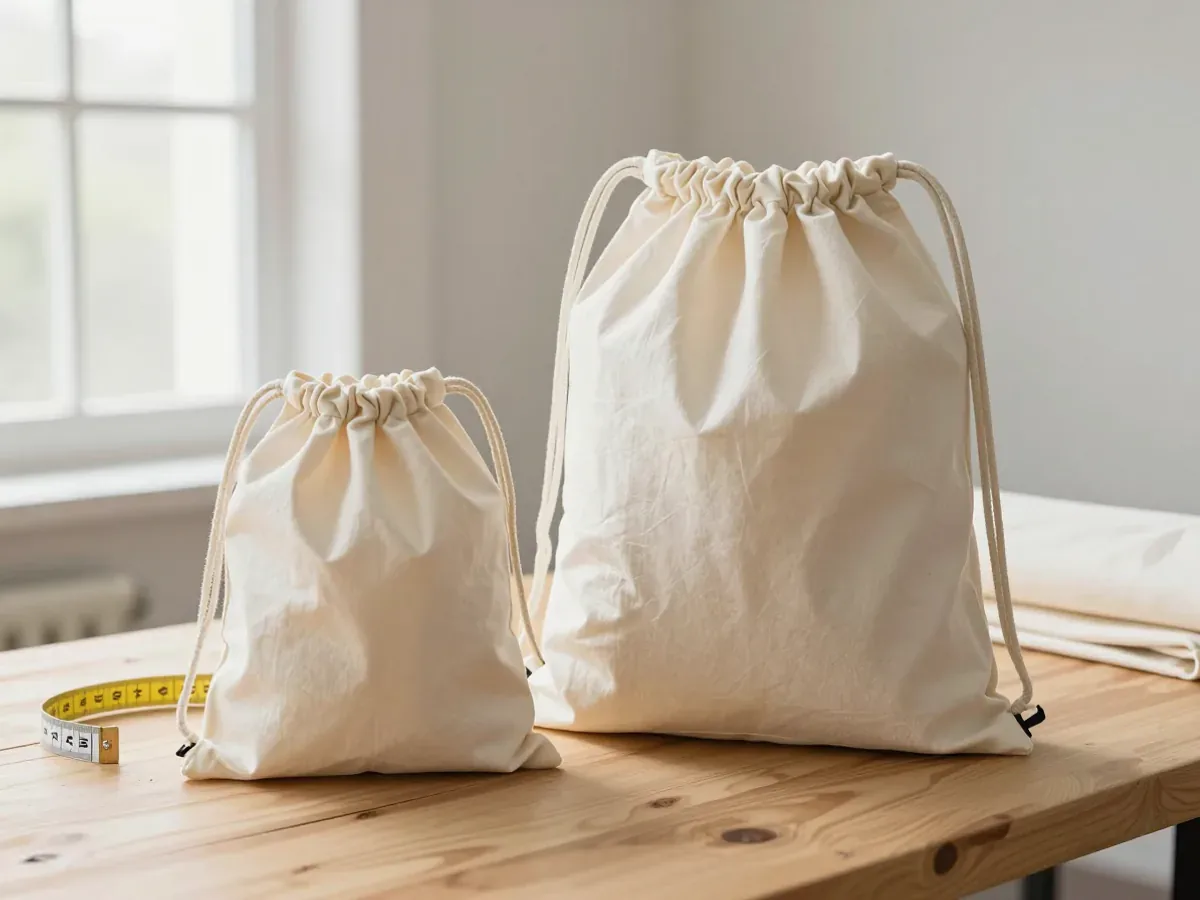
Size drives fabric consumption, and fabric consumption drives the real cost per bag. A medium 10x12 inch drawstring bag takes roughly 0.5 meters, about 20 inches, of fabric per bag once the channel and seam allowances are counted. Scale that to a bulk order and the difference between a generous cut and a tight one becomes a line item.
The 14x18 inch format is the versatile standard for everyday and promotional use, large enough for a hoodie, a pair of shoes, or a conference load of samples. It also consumes noticeably more shell per unit than the 10x12. A buyer who approves 14x18 for a giveaway where 10x12 would have done has quietly raised the fabric bill on every piece.
Unit confusion makes this worse. A specification written in centimetres and read in inches can shift the handle drop and the channel depth without anyone noticing until the first sample arrives. Convert once, write both figures on the purchase order, and confirm the finished measurement rather than the cut measurement. Fabric quantities should be planned from the intended bag dimensions and the order volume, not from a round number that felt right in the meeting.
Cord and Thread: The Parts Buyers Forget to Compare
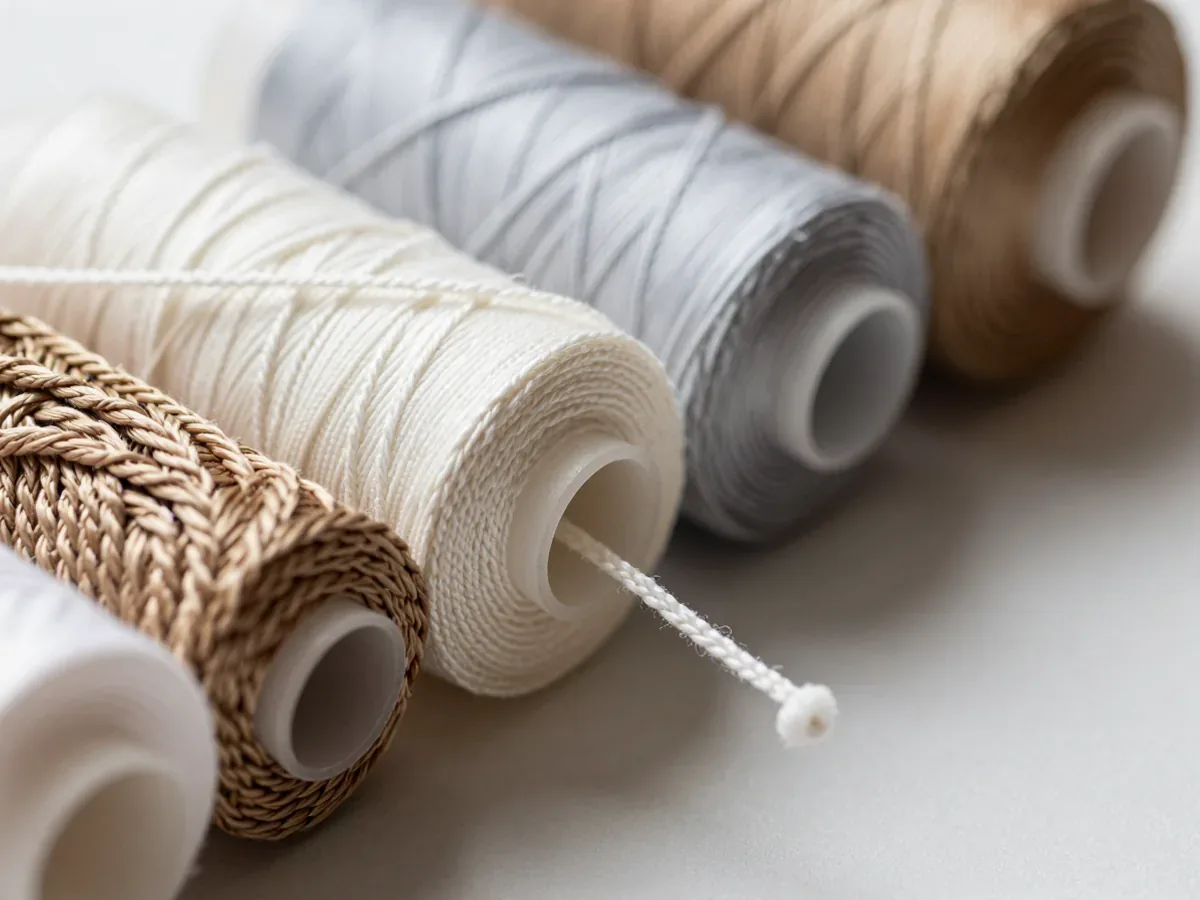
The cord is where cheap bags announce themselves. Drawstrings are commonly made from cotton cords, twisted ropes, nylon, polyester, twill tape, or braided cord, and the choice changes both how the bag closes and how it feels in the hand. A cord that frays at the cut end or stretches under load turns a reusable bag into a nuisance on the second use.
Thread follows the same logic. For most cotton drawstring bags, a thread weight between 30 and 40 is the working range, with thicker thread holding up better under repeated use and washing. Thin thread breaks, and a broken seam on a cotton canvas bag is more visible and more disappointing than on a bag nobody expected to keep.
Custom cords can lift the appeal and the function of the bag at the same time, and they are worth specifying when the bag is meant to be kept. On the budget side, the cord is usually the first component downgraded, which is consistent with a bag designed for a single outing. Comparing quotes without comparing cord type and thread weight leaves the most failure-prone parts of the bag unexamined.
One-Time Giveaway or Repeat-Use Bag: Who Each Option Suits
Cotton canvas suits orders where the bag is part of the product experience: retail packaging that travels home with the purchase, conference bags that get carried for a season, promotional pieces meant to sit in a cupboard and be reached for again. It also suits brands whose message depends on a natural material, since canvas carries that story without a caption.
The cheaper shells suit short-term use and one-time promotions, where the bag's job ends when the event does. Thin polyester, non-woven, and low-weight muslin are reasonable choices for a race pack, a sample drop, or a mailer insert, as long as the buyer has priced in the shorter life and does not expect the bag to represent the brand six months later.
Heavy-duty nylon belongs in the durability conversation alongside canvas, particularly where water resistance matters more than a natural hand feel. The honest framing is that canvas and heavy nylon are the durable end of the range, and the thin shells are the disposable end. An order that mixes expectations across that line is an order heading for complaints.
The Decision Table a Buyer Can Take to a Meeting
Four dimensions decide most of these orders, and they can be scored in a single sitting.
| Dimension | Cotton canvas | Thin polyester, non-woven, low-weight muslin |
|---|---|---|
| Fabric and print | Strong shell, stable surface, good for screen print, heat transfer, woven or embroidered labels | Light shell, less stable print surface, best for simple one-colour marks |
| Size and yield | Higher fabric use per bag, especially at 14x18; plan from finished dimensions | Lower fabric use per bag; cheaper at the same nominal size |
| Cord and thread | Worth specifying cotton cord or braided cord and 30 to 40 thread for repeat use | Usually the first components downgraded; expect basic cord and lighter thread |
| Use and life | Built for repeat use, retail packaging, and brand-facing promotions | Built for short-term use and one-time events |
The table does not produce a winner. It produces a fit. A buyer whose brief includes repeat use, a visible logo, and a material story will read the canvas column and recognise the order. A buyer whose brief is a single event with a fixed date will read the other column and stop paying for durability the event does not need.
What to Check on the First Carton of Either Option
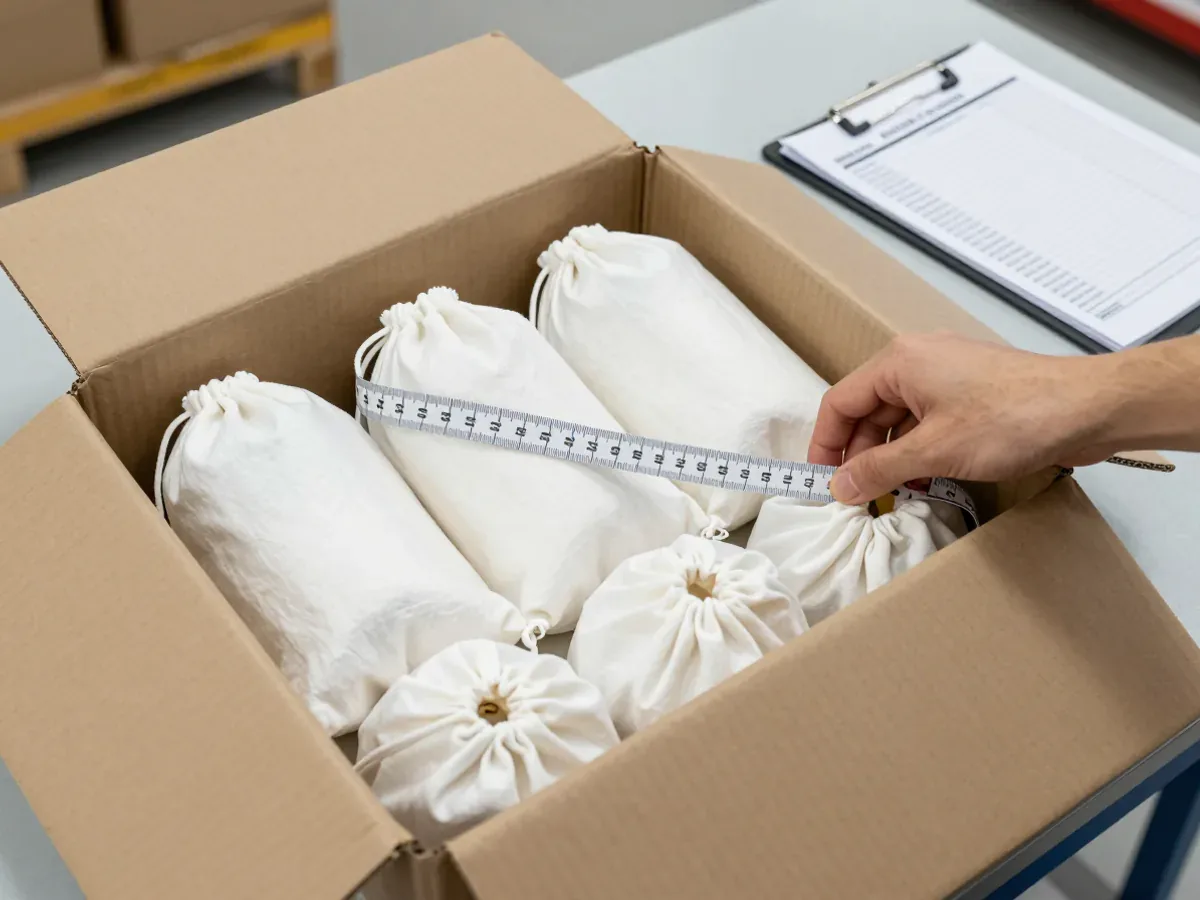
Whichever column the order lands in, the first carton is where the specification gets tested. Four checks cover most of the risk: incoming material, seams and zip, the finished bag, and the final count. On a drawstring bag, the seam and channel check matters most, because that is where a downgraded thread or a rushed channel shows up first.
Open several bags from the carton and pull the cord through its full travel. Look at the cut ends, the channel depth, and whether the cord returns smoothly. Measure a finished bag against the purchase order in both centimetres and inches, and confirm the print position against the approved artwork. Then count the carton against the packing list before it goes any further.
Two more details are worth writing into the specification rather than leaving to the sample. A clear label pocket on the face lets a card identify the contents without opening the bag, which is useful for retail and event use. On any bag with webbing, confirm whether the webbing runs the full length of the body or stops at the handles, because the two constructions behave very differently under load.
FAQ
Is cotton canvas always more expensive than a thin polyester drawstring bag?
At the same nominal size, canvas usually costs more per unit because the shell is heavier and takes more fabric per bag. The comparison shifts when the cheaper bag has to be replaced within the campaign, since the canvas bag is doing the work of several disposable ones.
How much fabric does a 10x12 inch drawstring bag need?
Roughly 0.5 meters, about 20 inches, per bag once the channel and seam allowances are included. Confirm the figure against the actual pattern, because channel depth and seam allowance change the yield.
Can I mix canvas and cheaper fabric in one bulk order?
Yes. A shell range that includes canvas, polyester, non-woven, and muslin can come off the same line, so a split order is practical. Keep the two specifications separate on the purchase order so the cord and thread do not get averaged across both.
What cord and thread should I specify for a repeat-use bag?
Cotton cord, twisted rope, or braided cord for the drawstring, and thread in the 30 to 40 weight range. Thicker thread holds up better under repeated use and washing, and the cord ends should be finished so they do not fray.