Based on legacy rPP market notes and TIIOCTI production records covering recycled woven bag construction and batch checks.
Two material quotes land on the same desk on a Tuesday morning. One is for standard recycled polypropylene; the other carries a GRS certificate and a higher number. The buyer has to decide which one goes into the spec for a woven PP moving bag program, and the gap between them is not just money.
The choice between GRS certified recycled PP and non certified rPP is a decision about what the order needs to prove, not only what it needs to cost. Both routes use recycled content. Both can be woven into the same bag construction. What separates them is documentation, compliance exposure, supply behaviour and the paperwork that follows the shipment.
What the GRS premium is actually paying for

The Global Recycled Standard is the certification framework that verifies recycled content claims in textile and plastic products. A certificate is not a material property. It is a chain of custody that says the recycled content in the bag can be traced and audited.
That traceability carries a cost. Certification bodies charge annual fees and audit costs to the recycling facility, and those costs pass through to the material buyer. GRS also requires chain of custody documentation at each transfer, which adds administrative work to every step between the recycler and the finished bag.
The certified supply pool is smaller than the general rPP market, and scarcity does its own work on price. A GRS premium of roughly 8 to 15 percent over non certified material is a reasonable planning figure, though the actual number moves with the virgin market at the time of purchase. GRS certified recycled PP can be cheaper or more expensive than standard rPP depending on where virgin PP sits that month.
So the premium buys three things: audit fees, chain of custody paperwork, and access to a narrower pool of material. None of those are visible in the finished bag. All of them matter when a retail customer asks for proof.
Where the two routes diverge on compliance risk
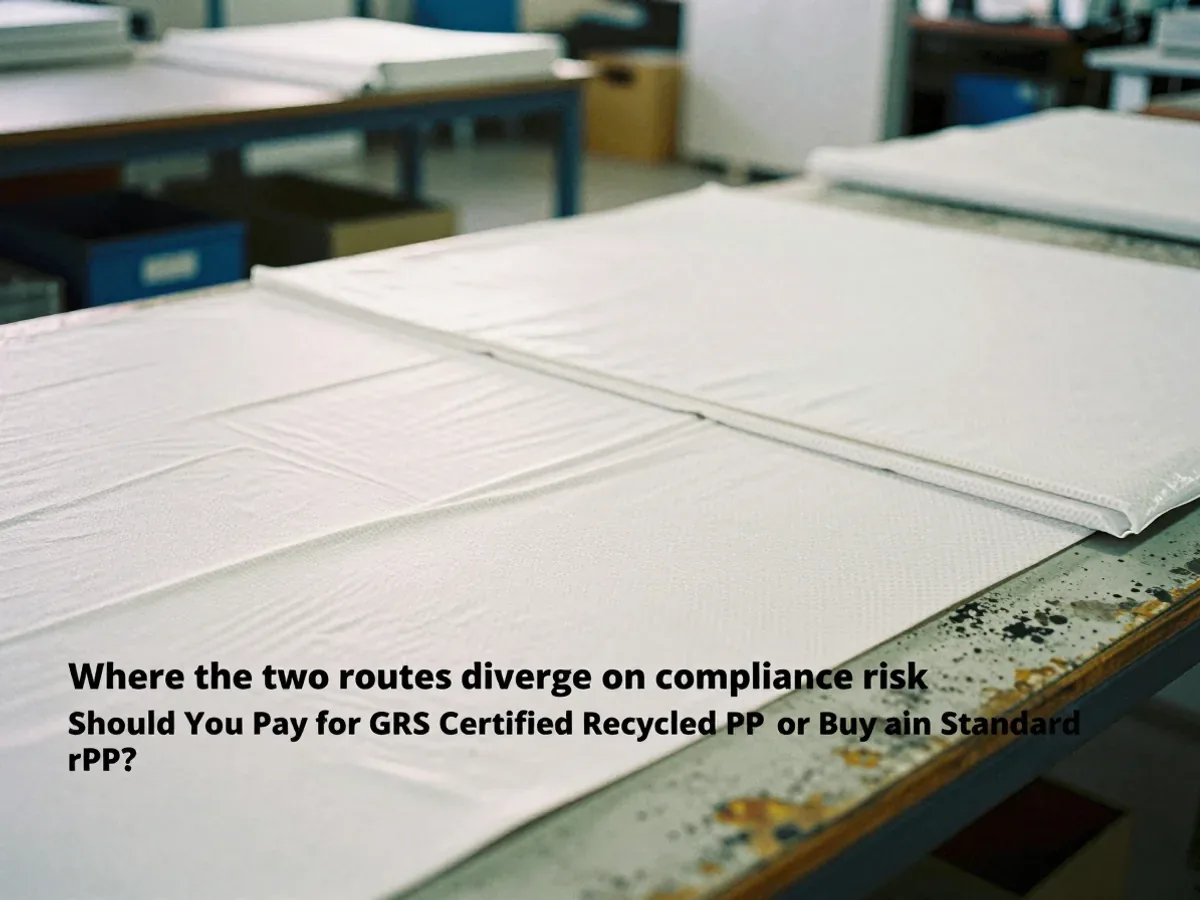
Standard rPP carries a recycled content claim that rests on the supplier's word and whatever internal records the recycler keeps. For a domestic sale with no recycled content mandate, that is often enough. The bag is still made from recycled bottles on the same construction as a standard bag, and the buyer gets the environmental story without the audit trail.
The risk appears when the claim has to survive scrutiny. Extended producer responsibility schemes in Europe and selected US states are expanding mandatory recycled content targets. Brands and retailers facing those rules increasingly specify minimum recycled content in their bag and packaging orders. When a compliance officer asks for evidence, a supplier declaration may not close the file.
GRS changes the shape of that risk rather than removing it. The certificate gives the buyer a third party verification path, but only if the chain of custody holds from pellet to finished bag. A GRS certificate on the material means little if the factory cannot show the transfer documents for that specific order.
For buyers shipping into the EU, the compliance premium may be unavoidable. Germany's recycled PP price sits at the top of the regional range, reflecting the strictest regulatory environment, and buyers sourcing bags made with European recycled material pay for that framework. The question is whether the destination market requires the proof or merely rewards it.
Supply stability when automotive buyers pull feedstock
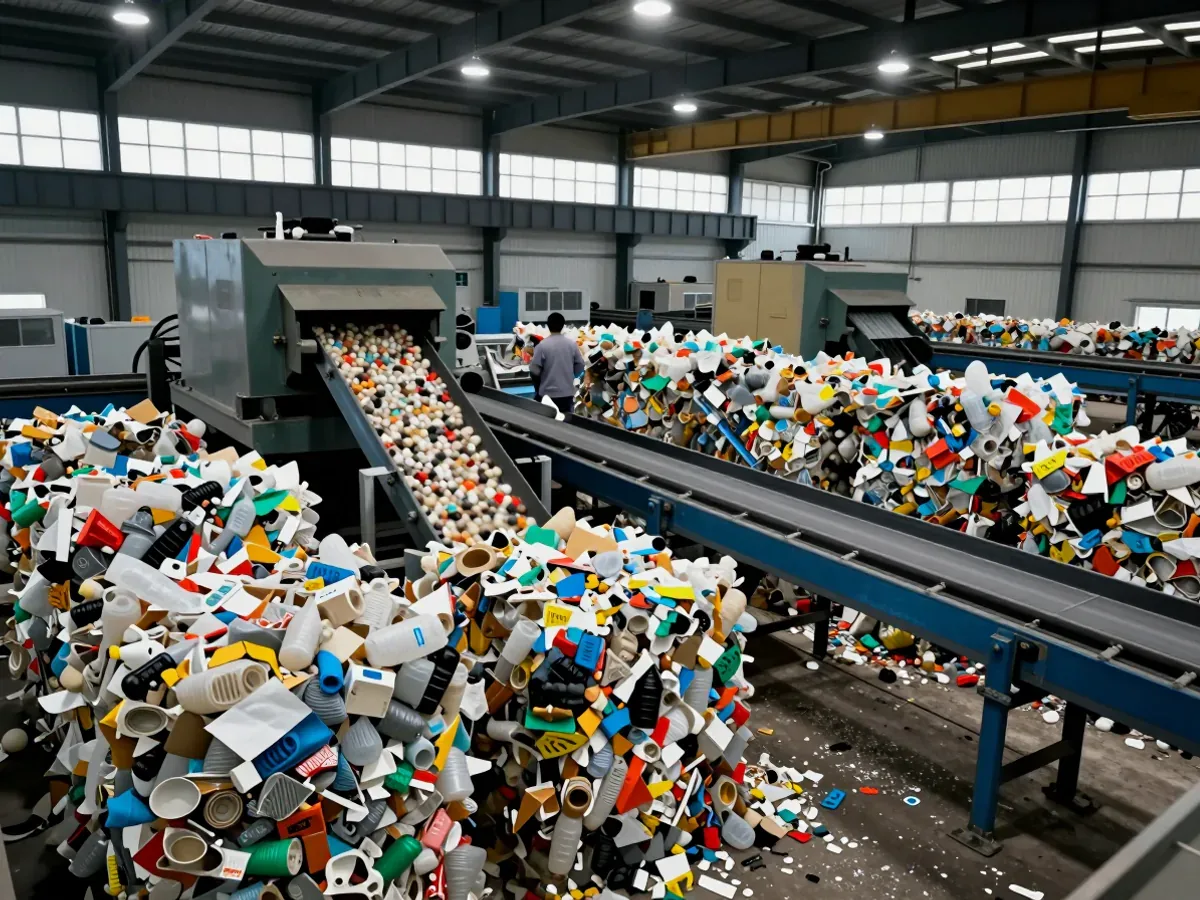
Recycled PP supply has three stages: collection of post consumer and post industrial waste, sorting and cleaning, and reprocessing into pellet or flake. Each stage has bottlenecks, and the certified route adds a fourth constraint because only audited material counts.
Automotive component manufacturing is a major demand driver. Original equipment manufacturers specify recycled PP in bumpers, interior trim panels and under hood components to meet lightweighting and recycled content targets. When automotive production volumes rise, they pull recycled PP feedstock away from packaging and textile applications, tightening supply for bag manufacturers.
That squeeze hits the certified pool harder. The GRS certified supply is concentrated among a smaller number of qualified recyclers, so a feedstock pull from automotive buyers can leave bag factories waiting on material that was available a quarter earlier. New processing capacity is coming online, including facilities in Bulgaria and Belgium, but those additions also consume available feedstock and can tighten supply for smaller recyclers without long term collection contracts.
Standard rPP has more suppliers and more substitution options. A bag factory can switch between recyclers with less friction because the only requirement is that the material meets the physical spec. The trade off is that the buyer loses the audit trail with every switch.
The paperwork load on each route

On the standard route, the document set is thin. The buyer receives a material declaration, perhaps a test report on the resin, and the factory's own quality records. Incoming fabric, webbing, zips and thread are checked against the approved spec before a run, and every batch is pulled to test seam strength and bar tack. Those are production records, not certification records.
The GRS route adds a document layer that follows the material, not just the bag. Chain of custody records track the certified material through each transfer. The factory's certificate scope has to cover the specific product. Transaction certificates connect the shipment to the certified input.
That paperwork has a cost beyond the material premium. Someone has to maintain it, and errors surface at the worst moment, usually when the buyer's compliance team reviews the file before a retail launch. A missing transfer document can hold a container longer than a price negotiation.
The production checks do not change between the two routes. Dimensions, handles, logo and stitch density are still checked by hand, and every order still runs four quality control checkpoints. The difference is the file that sits behind the bag.
Which buyer belongs on which route

The standard rPP route fits buyers whose recycled content claim is a marketing story rather than a regulatory obligation. A promotional tote for a domestic event, a give away bag for a trade show, a retail program in a market without recycled content mandates. These orders benefit from the lower material cost and the simpler document set, and the compliance exposure is manageable.
The GRS route fits buyers shipping into markets with active or incoming recycled content rules, or buyers whose retail customers audit supplier claims. European EPR schemes and the EU PPWR regulation add compliance pressure that will tighten GRS certified supply further, and buyers who need to meet those requirements are better served by building the certified route into the spec now rather than retrofitting it later.
A third group sits in between: buyers who want the GRS option available but do not need it on every order. For them the practical move is to qualify a GRS certified material source alongside the standard source, then decide per program based on the destination market and the customer's documentation requirements.
A side by side decision table
| Decision factor | Standard rPP | GRS certified rPP |
|---|---|---|
| Material cost | Lower base price | Premium of roughly 8 to 15 percent over non certified |
| Compliance evidence | Supplier declaration and internal records | Third party certificate plus chain of custody |
| Supply pool | Broader, more substitution options | Narrower, concentrated among audited recyclers |
| Feedstock exposure | Automotive pull affects price but supply is flexible | Automotive pull can tighten certified supply faster |
| Paperwork per order | Material declaration and production records | Chain of custody, transaction certificates, scope check |
| Best fit | Domestic programs, promotional bags, markets without mandates | EU and regulated markets, audited retail programs |
| Production quality | Same construction and QC checkpoints | Same construction and QC checkpoints |
The table makes one thing clear. The production side is identical. The decision lives entirely in cost, compliance and documentation, and those three pull in different directions depending on where the bag is sold.
What to write into the spec before the next run
The spec sheet is where this decision becomes real. A line that says recycled PP without naming the certification route leaves the factory to choose, and the factory will choose what is available and affordable that month.
Write the route explicitly. If the order needs GRS, the spec should name GRS certified recycled PP, state the minimum recycled content percentage, and require chain of custody documents with the shipment. If the order does not need GRS, say standard rPP and accept that the claim rests on supplier records.
Add the document list to the purchase order, not just the material line. Ask for the certificate scope, the transaction certificate and the transfer records before production starts, not after the container is sealed. A document gap found at booking is a delay; the same gap found at the retail compliance review is a cancelled order.
Finally, decide the substitution rule in advance. If GRS material is unavailable at the scheduled run, can the factory ship standard rPP with a price adjustment, or does the order wait? Buyers who answer that question in the spec avoid the argument that otherwise arrives with the first supply squeeze.
FAQ
Is GRS certified recycled PP always more expensive than standard rPP?
No. The certified pool is smaller and carries audit and documentation costs, which usually produces a premium of roughly 8 to 15 percent. But GRS certified material can be cheaper or more expensive than standard rPP depending on where the virgin PP market sits at the time of purchase.
Can a bag factory switch from non GRS to GRS recycled PP mid order?
A switch mid order breaks the chain of custody for the certified portion of the run. The cleaner path is to qualify the GRS source before the order starts and keep the two material streams separate, so the certified bags carry a complete document trail from the first unit.
What documents should come with a GRS recycled bag shipment?
Expect the factory's GRS certificate with a scope covering the product, transaction certificates linking the shipment to certified input, and chain of custody records for the material. The production records for seam strength, bar tack and finished bag checks should travel with the same file.