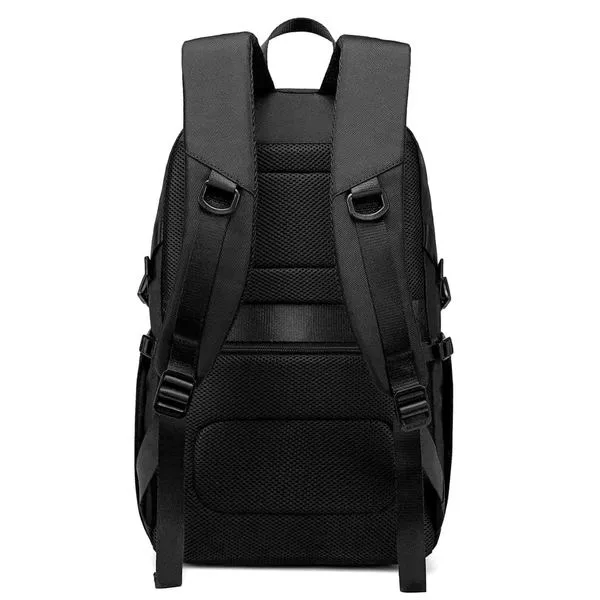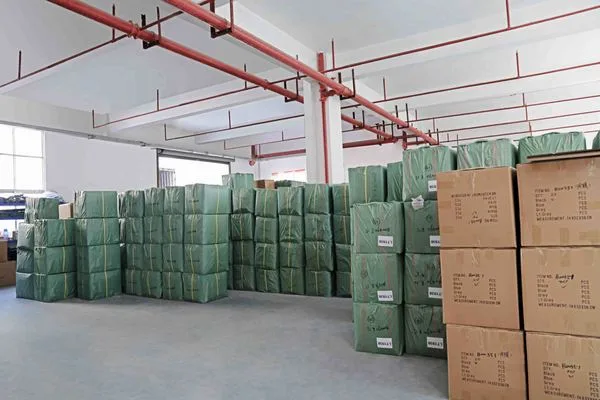
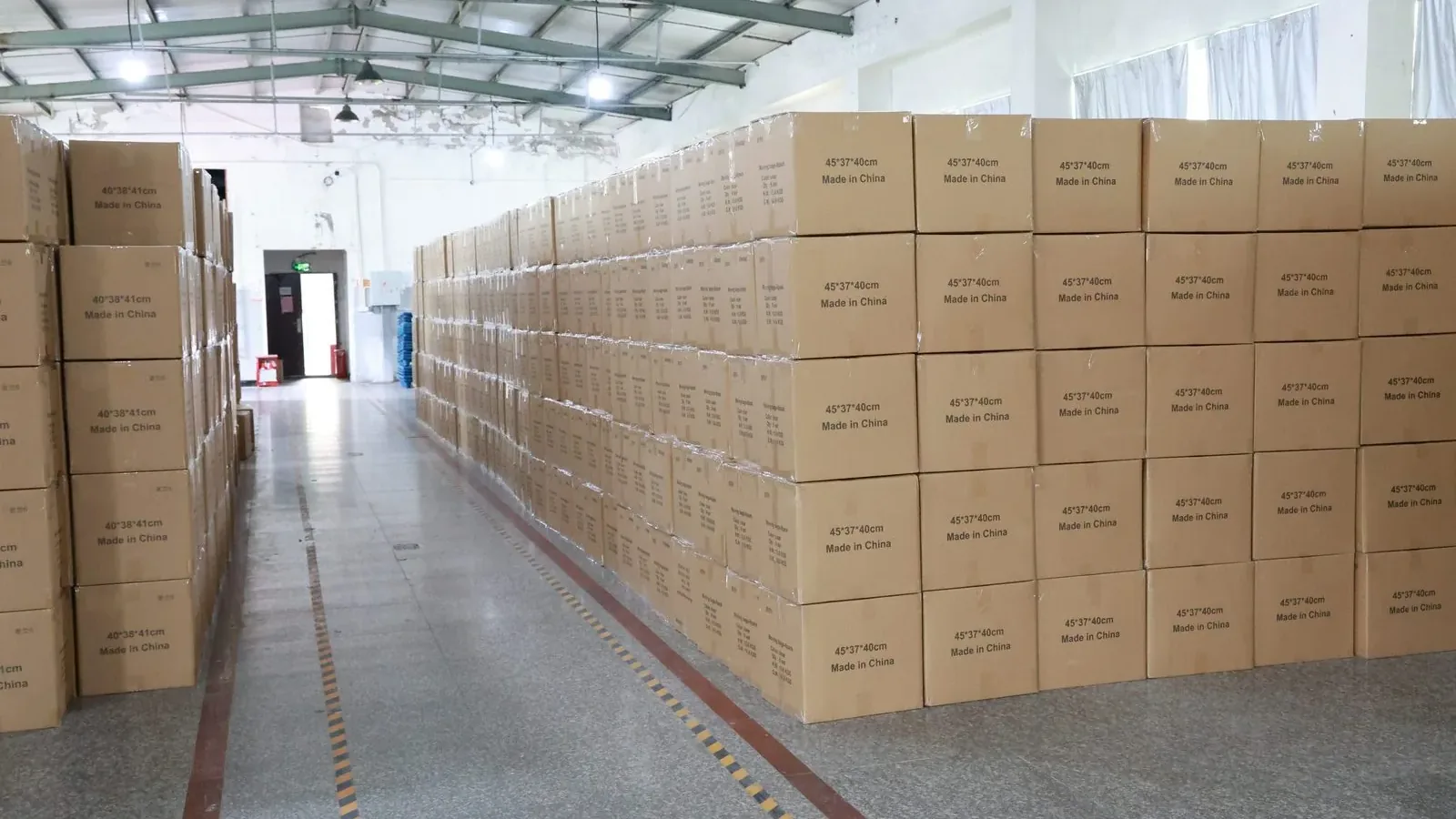
Reconstructed from a legacy post on Amazon FBA prep for moving bags, plus factory packing and QC records.
The pallet sat roped off at the edge of the receiving lane, still wrapped, still square, with a yellow hold tag flapping on the corner carton. A worker walked past it twice before anyone explained why a full load of flat-folded moving bags had never made it off the dock.
The cartons looked clean from three feet away. That was the problem. The failure had started weeks earlier, on a packing table where four separate rules were broken in ways too small to notice until a scanner refused to cooperate.
The Pallet That Never Left the Dock
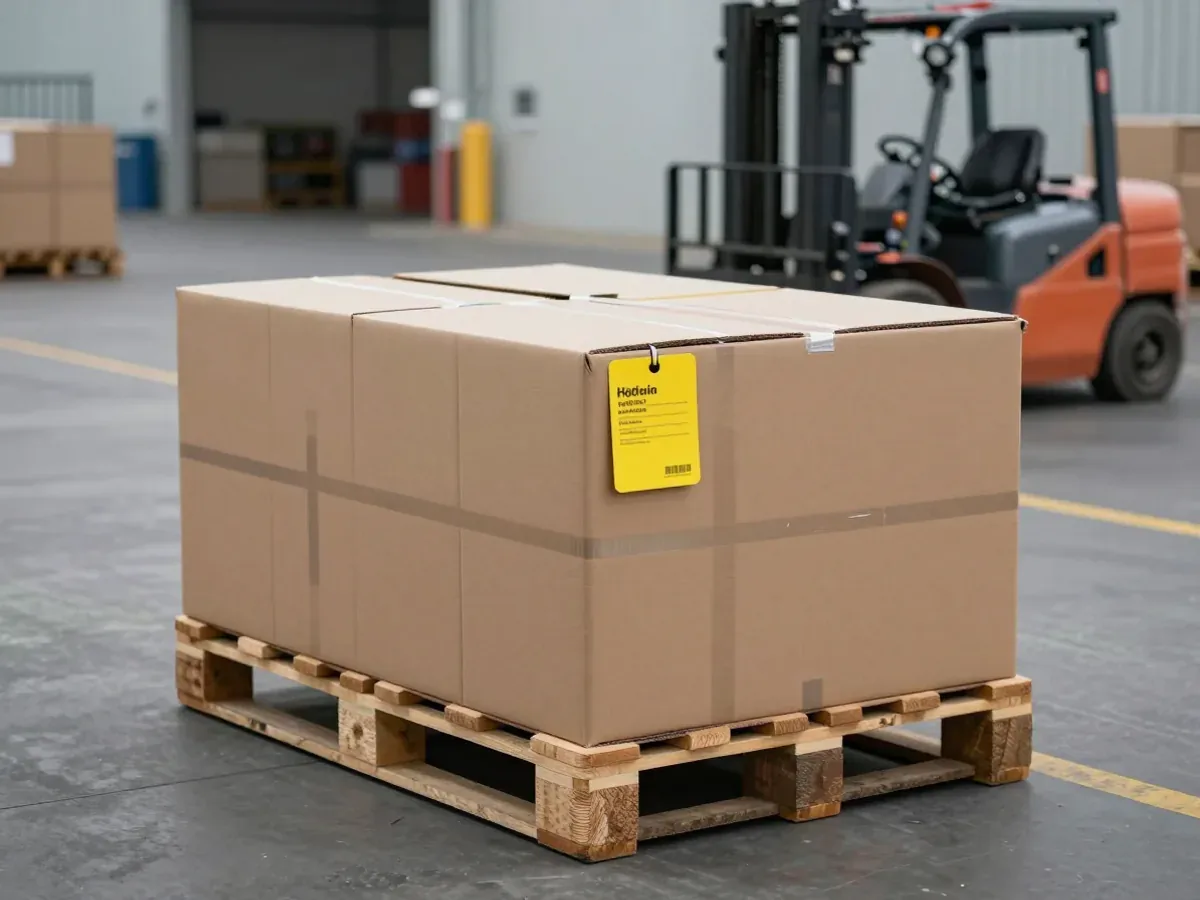
The load arrived on time and passed the first glance: stretch wrap tight, corners straight, no crushed boxes. Then the receiving scan came back with a problem on the units, and the pallet was pulled aside. A second check found a poly bag that had opened in transit. A third found a carton that measured past the limit.
Each finding was minor on its own. Together they turned a routine delivery into a held shipment, and a held shipment into a seller's problem. Amazon states it may refuse, return, or repackage non-compliant units at the seller's expense, and a returned 40-foot container of moving bags costs far more than the prep work ever would.
The dock did not fail the pallet in one moment. It failed it four times, in sequence, at four gates that each had their own inspection point.
Rewind to the Carton That Looked Fine

Trace the pallet back to the factory floor and the first weak link appears at the carton station. Folded woven PP moving bags pack tightly, which is normally an advantage: more units per box, less air in the container. But tight packing invites overfilling, and an overfilled carton bulges past its stated dimensions.
The carton rule has two hard limits. A box holding multiple units may weigh up to 50 pounds. A box holding a single item may exceed that, but only with a Team Lift label on the top and sides, and a Mechanical Lift label once it passes 100 pounds. A carton also has to stay within the dimensional limits Amazon sets for case packing.
Then came the case packing detail. All units in a case must share the same merchant SKU, the same condition, and equal quantities, because Amazon may split cases at the appropriate case-pack level during receiving. A carton that mixed two SKUs to fill space looked efficient on the packing table. At the dock it looked like a sorting problem.
Flat-folded bags make the 25-inch carton rule easy to hold. The failure was not the product. It was a packing line that treated the carton as a shipping container rather than a compliance document.
The Label That Would Not Scan

Every individual moving bag unit needs its own FNSKU label. Amazon's prep guide specifies a label 1 to 2 inches tall and 2 to 3 inches wide, printed in black ink on non-reflective paper with an adhesive backing, and produced at 300 DPI. The original manufacturer barcode must be covered or removed so it cannot be scanned.
On this pallet, the labels had been applied at the factory, which is normally the cheaper route. Labeling before cartons close costs less than relabeling at a prep center, and on a 5,000-bag order the difference multiplies across every unit. But the factory had printed from a low-resolution file and applied the labels to a curved, dusty surface on the folded bag face.
Two labels on the bottom layer of the pallet would not scan. A third had lifted at one corner. Damaged or unreadable labels send units to problem inventory, and problem inventory is where a seller's launch date goes to wait.
The math on label quality is unforgiving. On a 500-bag order, a few bad labels are an annoyance. On a 5,000-bag order, each application step multiplies, and one unreadable batch can stall the whole shipment while the rest of the pallet sits.
Where the Poly Sleeve Broke the Chain

The poly bag is where the chain actually snapped. FBA requires units to arrive sealed and protected, which for a moving bag means a transparent poly bag completely sealed around the folded product. If the poly bag opening is larger than 5 inches, it must carry a suffocation warning label.
Folded woven PP bags sit close to the product, so the 3-inch excess material limit is easy to hold. The common mistake is reaching for a loose jumbo poly bag to save bagging time. That bag leaves excess material at the sealed end, and the extra slack is exactly what catches on a carton edge and tears open in transit.
On this pallet, one sleeve had split along the seam. An open poly bag on a moving bag unit triggers a repackage charge, and repackaging means the unit leaves the fulfillment flow and re-enters it later, at the seller's cost. The sleeve that failed was not the cheapest one available. It was the one applied fastest.
What the Factory Can Fix Before the Tape Goes On
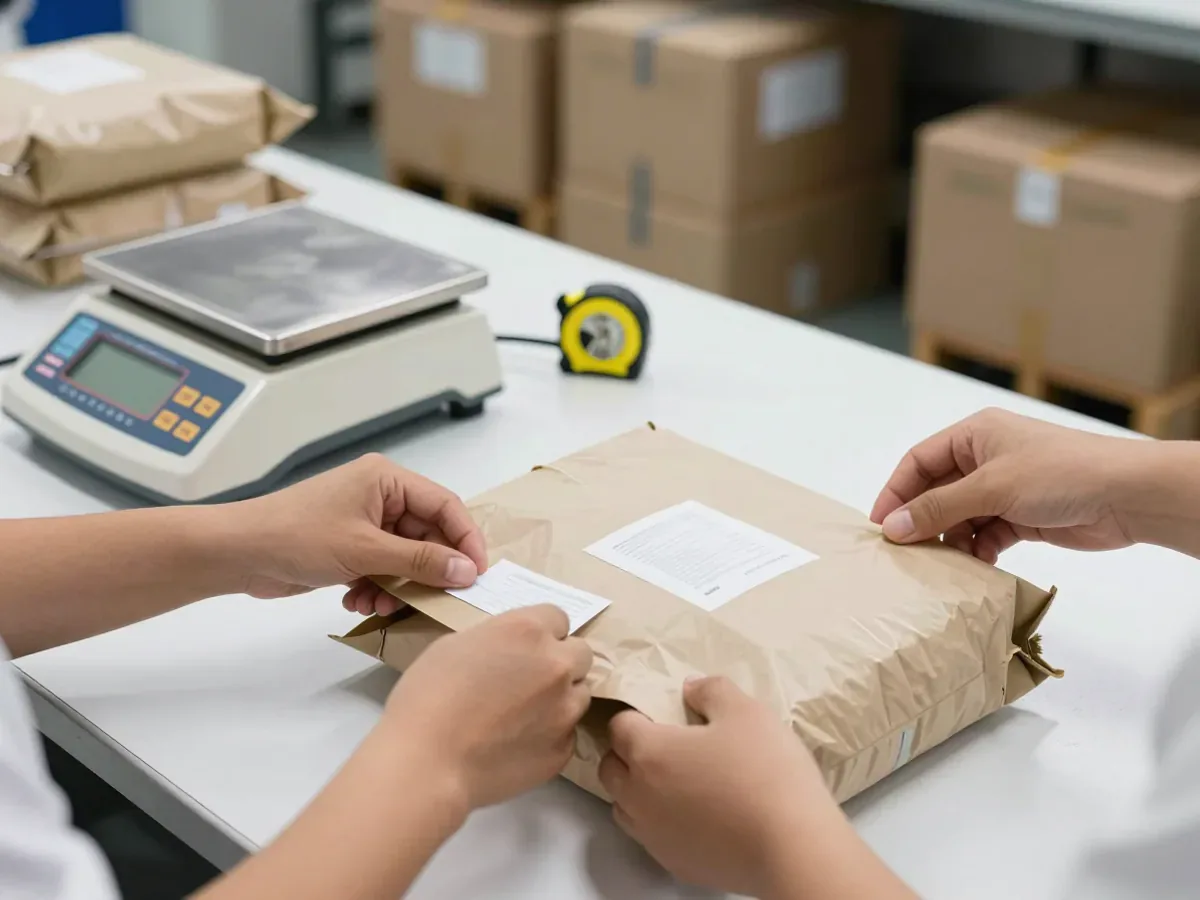
The repair sequence runs in the same order as the gates, starting at the unit. Print FNSKU labels from the seller's Amazon-generated PDF at 300 DPI, apply them to a clean, flat section of the folded bag, and scan a sample from every carton before the box closes. A scanner in the packing area costs less than a held pallet.
Next, standardize the poly sleeve. Size it to the folded bag with no more than 3 inches of excess material, seal it fully, and add the suffocation warning wherever the opening exceeds 5 inches. Ban the jumbo bag from the line, because the time it saves at packing is time the dock spends repackaging.
Then fix the carton. Weigh every box, keep multi-unit cartons at or under 50 pounds, and hold the dimensional limit. Keep one SKU per case with equal quantities inside. A factory that folds bags by hand before packaging already has the station; adding a scale and a tape measure to it changes the outcome.
The pallet itself follows a fixed spec. Pallets must be 40 by 48 inches with 4-way forklift entry, built to GMA standard Grade B or higher, and wrapped in clear stretch wrap. Total height including the pallet may not exceed 72 inches, weight may not exceed 1,500 pounds, and contents may not overhang the pallet edge.
Moving bag pallets rarely hit the weight cap because the product is light. Height and overhang are the real risks. A pallet stacked with 50-inch cartons plus a pallet board lands under 72 inches, but a careless second row pushes past it, and an overhanging carton is the first thing a forklift clips.
The Four Numbers a Buyer Should Carry to the Order
A buyer who wants this pallet to clear the dock should put four numbers into the purchase order, not into a conversation after production.
The first is the label spec: 1 by 2 to 2 by 3 inches, 300 DPI, black on non-reflective adhesive paper, applied to every unit with the manufacturer barcode covered. The second is the poly spec: sealed transparent sleeve, no more than 3 inches of excess material, suffocation warning above a 5-inch opening. The third is the carton spec: 50 pounds for multi-unit boxes, the dimensional limit, one SKU per case. The fourth is the pallet spec: 40 by 48 inches, 72 inches tall, 1,500 pounds, no overhang, clear stretch wrap.
Those four lines turn prep from a favor into a specification. They also give the factory something to inspect against, which matters more than any promise made on a call. A pre-shipment checklist that walks the same four gates the fulfillment center will walk catches most of these failures before the tape goes on.
The pallet at the dock was not unlucky. It was unmeasured at four points that all had published numbers attached. The fix is not more caution. It is putting those numbers where the packing line can see them.
FAQ
Do moving bags need FNSKU labels for Amazon FBA?
Yes. Every individual unit shipped to an Amazon fulfillment center must carry a scannable FNSKU label, and the original manufacturer barcode must be covered or removed so it cannot be scanned.
Can a moving bag carton exceed 50 pounds for FBA?
A carton containing multiple units may not exceed 50 pounds. A carton holding a single item may go over that limit, but it must carry a Team Lift label on the top and sides, and a Mechanical Lift label once it passes 100 pounds.
What are the Amazon FBA pallet size and weight limits?
Pallets must be 40 by 48 inches with 4-way forklift entry, built to GMA Grade B or higher, weigh no more than 1,500 pounds, and measure no more than 72 inches tall including the pallet. Contents may not overhang the pallet edge.
Should the factory or the seller apply FNSKU labels?
Either side can apply them, but factory application before shipment avoids double handling. A factory that prints labels from the Amazon-generated PDF and applies them during packing removes one prep step and keeps per-unit cost down.