



Quick answer: Bag handle types set the load rating more than fabric weight does. A 25 mm flat web handle with a four row bar tack carries 8 to 10 kg, a 30 mm rolled canvas handle with a box X stitch carries 12 to 15 kg, and a die cut handle cut from the bag body carries only 3 to 4 kg.
Six Handle Types And Their Load Ratings
Every handle fails at one of two places: the stitch that joins it to the body, or the strap itself. The table below gives the rating for each build when both points are made properly, measured on a tote of 380 by 420 mm with a 100 mm gusset.
| Handle type | Strap width | Fixing | Stitch detail | Load rating | Best use |
|---|---|---|---|---|---|
| Flat web, PP | 25 mm | bar tack 4 rows outside | 9 stitches per inch | 8 to 10 kg | retail and promotion |
| Flat web, cotton | 25 mm | box X inside seam | 8 stitches per inch | 10 to 12 kg | apparel and grocery |
| Rolled canvas | 30 mm | box X plus rivet | 8 stitches per inch | 12 to 15 kg | premium retail tote |
| Canvas, single layer | 35 mm | straight stitch 2 rows | 10 stitches per inch | 9 to 11 kg | light duty promotion |
| Rope through eyelet | 8 mm rope | knotted, brass eyelet | eyelet 12 mm bore | 5 to 7 kg | boutique and gift |
| Die cut from body | none | cut, no separate strap | none | 3 to 4 kg | light retail and event |
| Web with D ring | 20 mm | loop over metal D ring | 4 rows bar tack | 10 to 12 kg | convertible shoulder carry |
Handle Length For Carry Style
Length decides how the bag is carried and therefore how the load reaches the stitch. A handle that is short for the intended carry style pulls at an angle and tears the seam before the strap breaks.
- Hand carry: 400 mm total length, drop of 90 mm to the top edge.
- Shoulder carry: 900 mm total length, drop of 250 mm.
- Cross body: 1300 mm total length with an adjustable slider.
- Backpack pair: two 700 mm handles stitched 150 mm apart on the back face.
Two handles share the load when the bag is carried flat, so a two handle bag at 12 kg per handle is rated at 15 kg in use. A single handle bag keeps its full rating on one stitch line.
Stitching That Decides The Real Rating
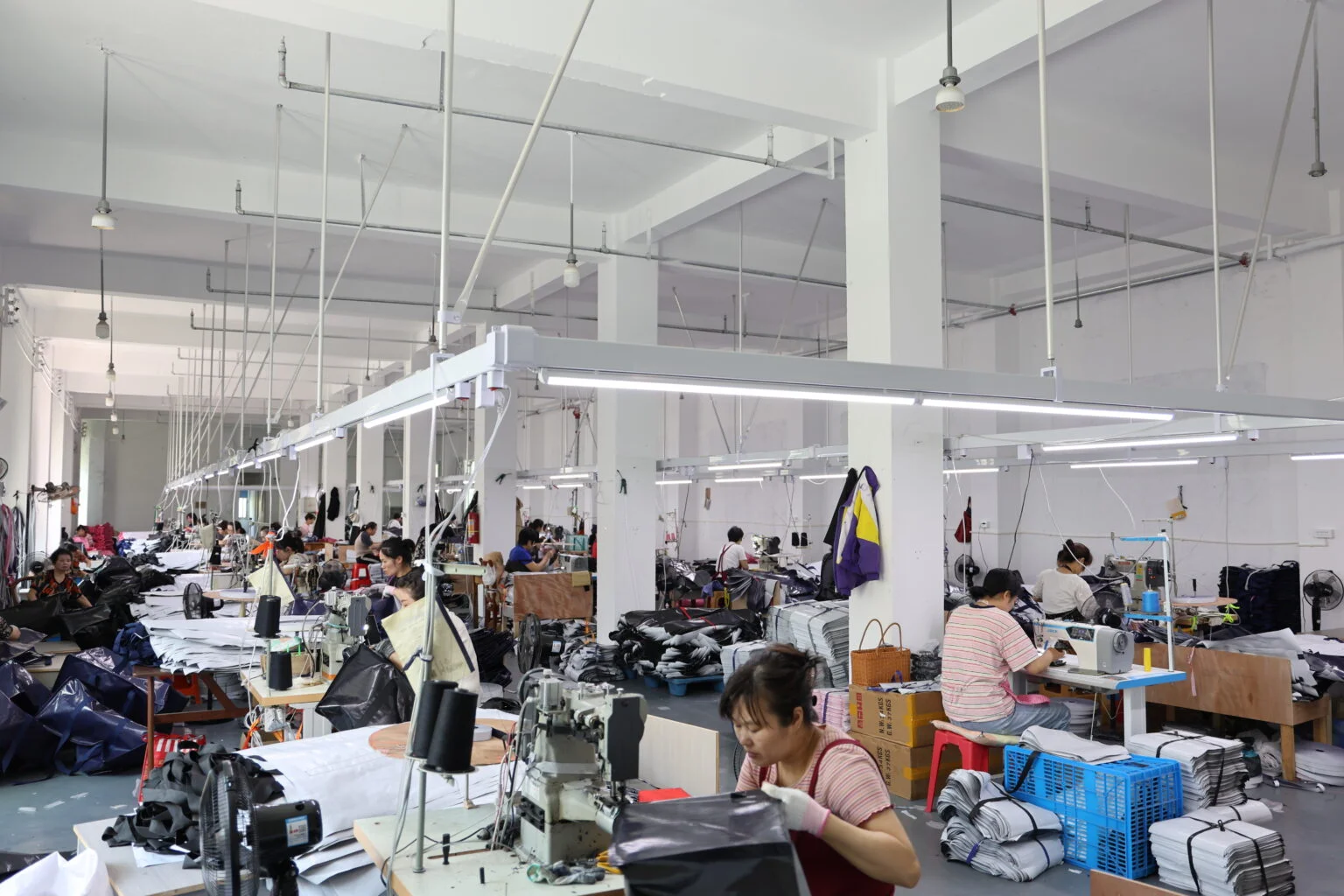
A bar tack is the fastest fixing and the weakest under shock. It places 42 stitches into one 10 mm block, which is enough for a flat carry and not enough for a bag that is swung. A box X spreads the same load across a 40 mm square, and the tested pull on an 8 oz canvas tote rises from 9 kg to 15 kg when only the fixing changes.
Three details separate a handle that lasts a season from one that lasts a year. First, the reinforcement panel behind the stitch, 30 mm wide, which stops the fabric tearing around the stitching. Second, thread at 40 tex bonded nylon against the 30 tex used on the body seam. Third, a 4 mm stitch length on the box X so the thread cannot be cut by the needle holes under load.

Testing A Handle Before Bulk Production
A static load test costs one working day and settles the rating for the whole order. Suspend the bag from both handles, load it to twice the rated weight, and hold for 24 hours at 20 C. Then load to three times the rating and hold for 30 minutes.
A handle that survives both with no stitch elongation over 3 mm and no fabric tear at the panel edge is approved. Photograph the tested unit next to a tape measure, and keep the photo with the purchase order. A buyer who tests 3 units per colour receives a rating they can publish; a buyer who skips the test inherits whichever rating the factory happened to use.
Common Handle Faults On Reorder
Reorders fail on three points. The handle width drops from 30 mm to 25 mm to save fabric, the reinforcement panel is dropped from later lots, and the thread is changed to a cheaper count once the first lot is approved. Each change cuts the rating by 20 to 30 percent while the bag looks the same.
Lock the handle specification into the purchase order with the strap width, the thread count, the stitch length and the fixing type, and re test one unit per lot. Inside the bag, the pocket and liner build adds its own load path, which the liner and pocket options for totes sets out in detail, and the same fixing rules apply to bottle carriers described in custom wine bottle bags.
Часто задаваемые вопросы
Which bag handle type is strongest?
A 30 mm rolled canvas handle fixed with a box X stitch and a rivet, rated 12 to 15 kg on an 8 oz canvas tote with a reinforcement panel.
How much can a die cut handle carry?
Three to four kilograms. The handle is cut from the bag body with no separate strap, so the fabric around the cut edge takes the whole load.
Does handle length change the load rating?
Yes. A short handle forces an angled pull at the stitch and tears the seam earlier. Match length to the carry style, 400 mm for hand and 900 mm for shoulder.
How do I test a tote handle before ordering?
Hang the bag from both handles at twice the rated load for 24 hours, then three times the rating for 30 minutes, and check stitch elongation.
Buyers comparing formats can review the build range on холщовые тотализаторы, and the internal layout that pairs with each handle sits in tote bag liner and pocket options. The same fixing rules apply to narrow format carriers covered in индивидуальные сумки для винных бутылок. Load ratings and textile strength classes follow the standards published by the International Organization for Standardization.


0 комментариев