


MOQ for custom tote bags isn’t just a catalog number — it’s the dividing line between a branded giveaway that lands on time and a $50K order that lands in the storage closet. I’ve watched a corporate gifting manager burn a five-figure budget because the pre-production sample had tight, clean stitching, but the mass production run arrived with a 2mm logo misalignment no one bothered to lock down in a quality tolerance spec. Sample approval wasn’t the problem. The problem was assuming the sample set the standard without a written tolerance range attached to the FOB pricing.
Here’s what that buyer should have known. A single-color screen print on a stock 80gsm non-woven tote can often start at 100 units — call it a low MOQ custom tote bags for events scenario. Switch to a fully bespoke OEM shape with reinforced handles and a multi-color transfer print, and the floor jumps to 500, sometimes 1,000 units. Event organizers who need small batch branded tote bags under tight timelines get the cleanest path by picking an ODM template with a logo — a hybrid custom tote bag approach that halves the MOQ without sacrificing brand placement. And if a factory won’t send a pre-production sample using the exact same bulk fabric and ink, walk away. Color mismatch on a corporate gift tote bag low minimum order is the kind of mistake that follows you to the next budget review.
Before you fire off your first RFQ, run every supplier through these three yes/no questions. Their answers will tell you more about the real MOQ than any catalog page.
1. Can you provide a pre-production sample made with the identical fabric lot and print method as the bulk order, and will you guarantee in writing that the mass production run stays within a 1.5mm print registration tolerance of that approved sample?
2. Does the unit price on the quote already include FOB, and if I need to split the order into two shipments for two event dates, what’s the surcharge — not an estimate, a fixed number?
3. If I commit to a repeat order schedule of three releases over the next 12 months, will you drop the first-trial MOQ to 100 units without pushing the per-unit cost above the standard volume break?
What Does MOQ Mean for Custom Tote Bags?
MOQ isn’t factory greed — it’s the math of a bolt of fabric.
Every sourcing guide tells you MOQ is a sales tactic to push larger orders. Wrong. The real reason sits in the physical reality of a factory floor. I’ve watched buyers lose a $50K order because they negotiated a tiny batch, skipped the pre-production sample, and ended up with bags in the wrong Pantone shade. The factory just grabbed whatever red thread was on the machine — because the order was too small to justify setting up a custom color match.
Factories set minimums because the economics of materials, setup, and production flow don’t work at micro-quantities. Here’s the breakdown.
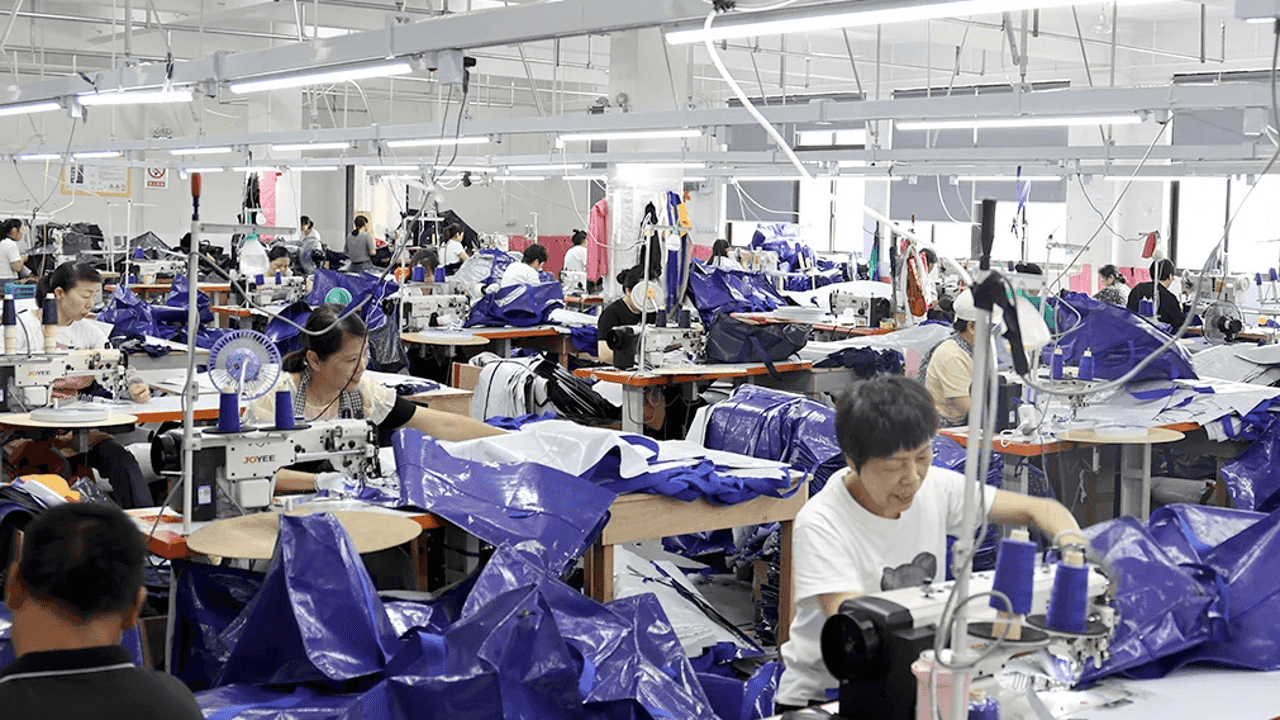
- Material sourcing: Fabrics like 600D polyester or 12 oz canvas come on rolls that are purchased in bulk. A single roll might contain 1,000 yards. If your branded tote only needs 60 yards, the factory is stuck with leftover stock they can’t easily use — unless you pay for the whole roll.
- Setup costs: Screen printing requires a stencil (screen), embroidery needs a digitized pattern, and heat transfer demands a custom plate. These fixed costs — often $50 to $150 per design — don’t change whether you produce 50 or 5,000 bags. Spread across 100 units, a $75 screen adds $0.75 per bag. Across 10 units, it adds $7.50.
- Production efficiency: Switching thread, changing needle settings, and recalibrating cutting dies takes time. On a line set up for 500+ units, a run of 20 bags destroys the rhythm and increases waste. MOQs keep machines humming and waste below 2%.
Savvy event organizers can work around MOQ thresholds by tapping into ODM designs — pre-developed bag shapes that use the factory’s existing fabric stock and trims. Pair that with a single-color logo screen print, and you can often get to an MOQ of 100 units without a surcharge. Direct factory partners are also more flexible when you show a repeat order schedule — a commitment to quarterly event bags, for instance, can cut the initial MOQ by 30% or more.
Typical MOQ Ranges by Customization Method
Logo-only orders start at 100 units; full-custom needs 500+.
Let’s kill the most common myth right now: most factories claiming a 50-unit MOQ for custom tote bags are not actually doing custom manufacturing. They’re picking stock bags off a shelf and charging you a setup fee to print a single-color logo. True customization — where you specify fabric weight, handle length, gusset depth, and dye lot — follows a completely different set of rules. I’ve seen a corporate gifting manager lose a $12,000 deposit because the pre-production sample looked perfect, but the mass production was 20% lighter in GSM. The factory had switched to a cheaper greige fabric to meet a 200-unit order without admitting their real MOQ was 500. Know the thresholds before you commit.
The MOQ for custom tote bags hinges on one variable: how deeply the factory must modify its production line. Adding a logo to an existing blank is interruption-based. Building a bag from scratch using your pattern is line-change-based. The first case costs time; the second costs time plus raw material allocation. Event organizers chasing low MOQ custom tote bags for events need to understand this distinction, or they’ll end up with a spec sheet that no factory will accept.
- Stock blank + 1-color screen print: MOQ 100–200 units. Setup involves screen burning and color matching. Per-unit cost drops sharply above 500. Rush order custom tote bags for events are possible here if you accept a standard 80gsm or 100gsm non-woven base and a single imprint location. Lead time typically 10–14 days after sample approval.
- Stock blank + heat transfer or embroidery: MOQ 50–150 units for heat transfer (ideal for photo-quality logos); embroidery MOQ sits around 100–300 depending on stitch count. Heat transfer lets you order 50 custom tote bags if the design fits a standard platen size, but color vibrancy on dark fabrics requires an underbase — some factories skip this to cut costs, which you’ll only discover when the tote arrives looking faded.
- ODM template with logo (pre-designed shape): MOQ 100–300 units. This is the hybrid custom tote bag approach: the factory owns the pattern, you control material selection (e.g., 12oz cotton canvas vs. laminated PP woven) and add your branding. Choosing an ODM tote bag with logo for giveaways halves the upfront commitment versus full OEM. Our facility runs ODM orders on dedicated lines, maintaining a quality tolerance of ±5% on weight and no more than 2mm deviation on handle stitching.
- Full OEM custom design: MOQ 500–1,000 units standard. This is where you dictate dimensions, fabric composition, zipper type, inner lining, and even FOB pricing structure. Direct factory partners (no intermediaries) can negotiate down to 300 units if you commit to a quarterly PO for 12 months. Sample approval here requires a strike-off plus a physical pre-production sample; skipping this to save seven days is the number one cause of color mismatch I see in corporate gifting — and that’s not a risk you want with a brand’s logo on the line.
Smart corporate gift tote bag buyers work backward from the event date and the minimum quantity they actually need. If the answer is 75 pieces, stop asking for full OEM. Take an ODM shell, select a 140gsm cotton canvas body, add a woven label instead of a print, and you’ll have a premium-feel bag that carries a 100-unit MOQ. If you absolutely need 50 units and a one-off shape, expect a 40–60% surcharge — and insist on a physical pre-production sample, not just a digital mockup. The factory relationship here matters more than the price per unit.
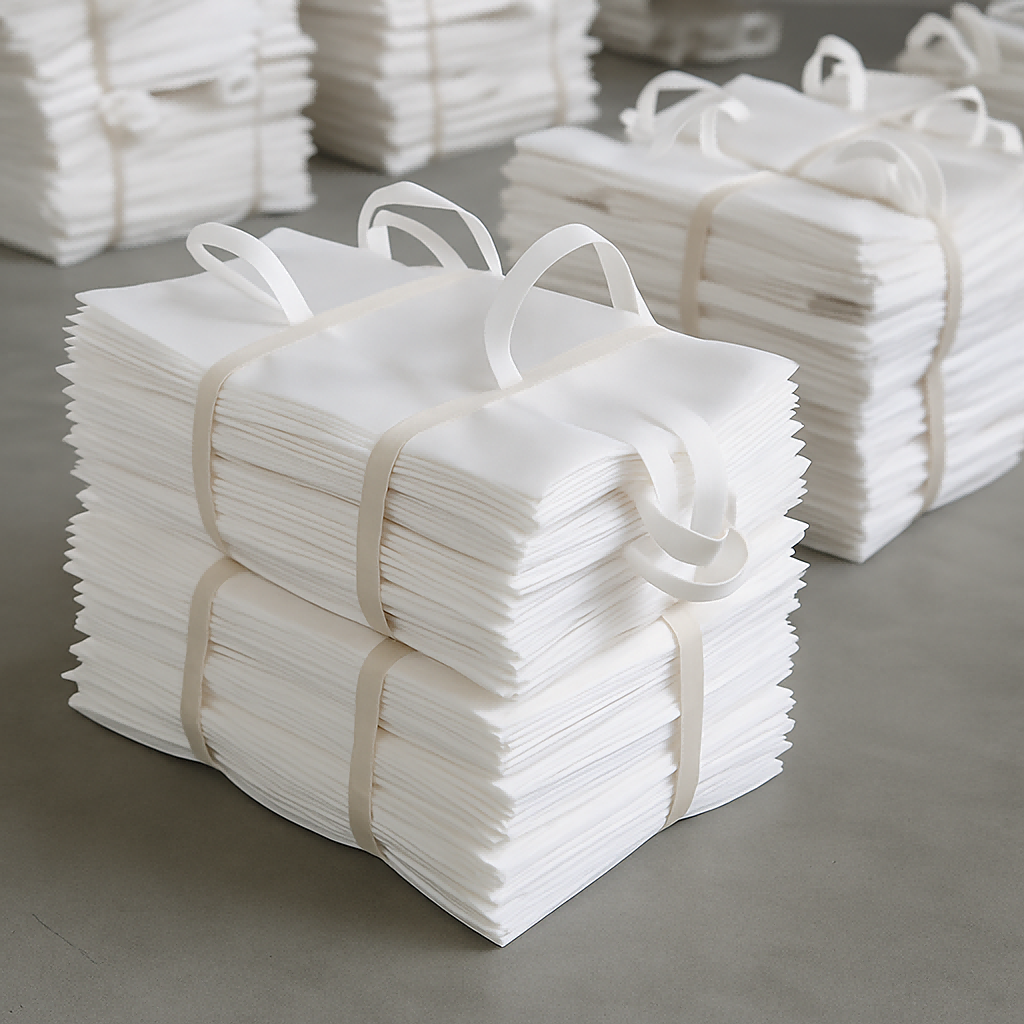
Logo Decoration: Screen Print, Heat Transfer & Embroidery
Skipping a pre-production sample to save $80 cost a client $7,500 in ruined corporate gifts last year.
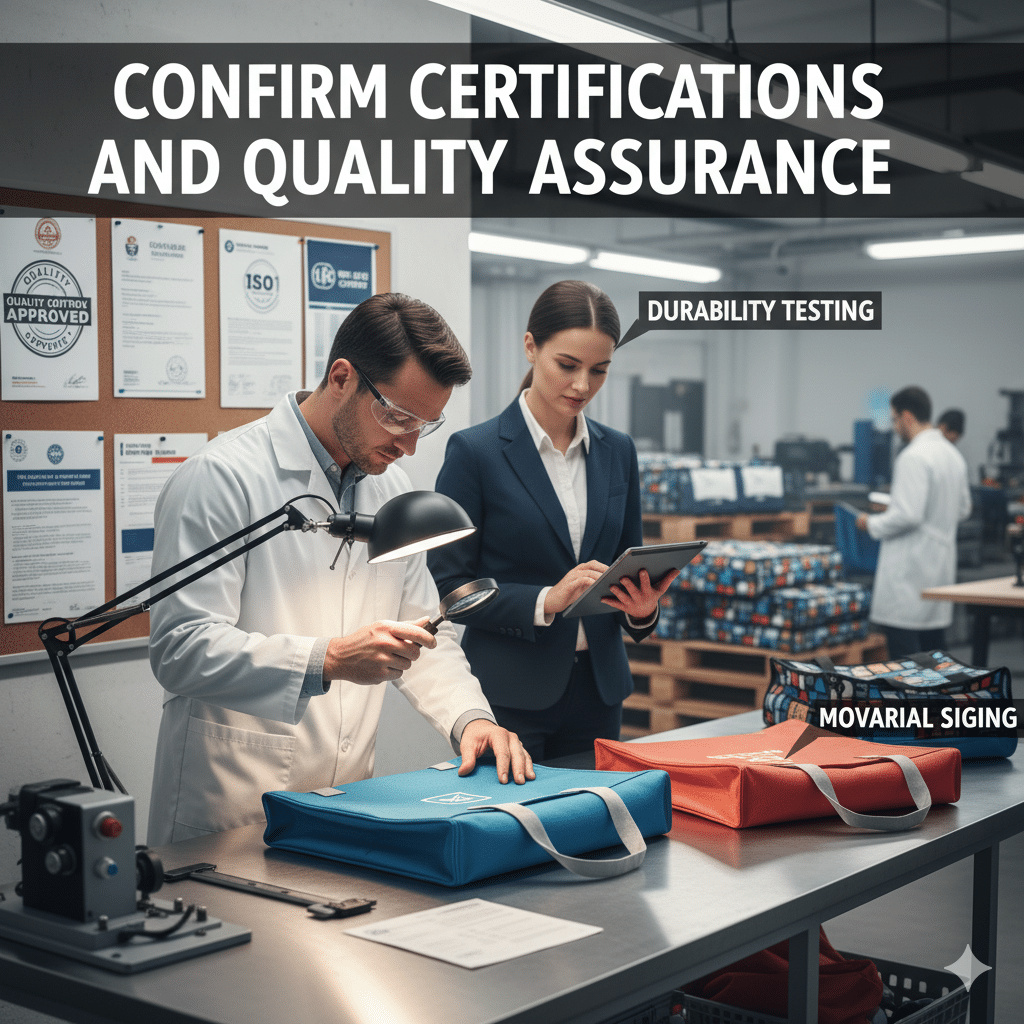
Everyone says ‘get a sample.’ Wrong. Get the right sample. Most event organizers approve a digital proof, maybe a photo from the factory floor, and call it done. That’s how you end up with 300 tote bags in ‘electric blue’ when your brand colors are navy. The real check isn’t the design file — it’s the first physical piece off the production line, held under the same lighting your attendees will see it in. Request a pre-production sample (PPS) from the actual bulk material, not a one-off made on a different machine. It adds 5-7 days and typically costs $50-$120 including courier. The alternative is explaining to your VP of Marketing why the logo looks orange on stage.
- Screen Print: The workhorse method for bags under 500 units. Ink sits on top of the fabric, so it handles bold logos with 1-3 solid colors efficiently. Avoid gradients or photographic detail here — the dot pattern will look muddy on canvas or non-woven polypropylene. Durability is solid for an event lifecycle (think 20-30 uses) but expect some cracking after heavy creasing. Setup fees run $40-$60 per color, and the unit cost drops fast once screens are burned. This is your go-to for volume giveaways where the bag gets tossed in a closet after the conference, not treasured.
- Heat Transfer: Full-color capability without the screen print overhead. A thin, flexible film fuses onto the bag surface under heat and pressure. It outperforms screen print on complex logos with gradients or small text. The tradeoff: it sits on the fabric rather than in it, so heavy abrasion — like rubbing against a jacket at a packed expo — can eventually lift the edges. For a one-day corporate summit or a premium gift bag that lives indoors, it’s the smarter choice. Expect MOQs around 100 units because the transfer film itself has setup costs. Ask your supplier if they use PU-based or PVC-based transfers. PU feels softer and resists peeling better on non-woven fabrics.
- Embroidery: This isn’t decoration. This is brand permanence. Thread stitches penetrate the fabric structure, so the logo won’t peel, crack, or fade within any reasonable event timeline. It commands the highest perceived value — recipients keep embroidered bags, which extends brand exposure months past the event. The catch: digitizing a logo file for embroidery costs a flat $50-$100 fee, and fine details under 4mm simply vanish into the stitch. Thin serif fonts become illegible blobs. Use embroidery on cotton canvas or thick polyester, and stick to bold, simple branding marks. For corporate retreat gifts or VIP speaker swag where quality tolerance is zero, this is the only method that won’t embarrass you.
One more thing most guides won’t tell you: mixing methods on a single bag can slash your MOQ without looking cheap. Print the main logo via screen print on one side, and embroider a small crest on the pocket. This hybrid approach signals premium quality while keeping per-unit costs under $3.80 for a batch of 150 units. Direct factory partners handle these split-decoration orders more smoothly than trading companies because the production scheduling happens under one roof, not across three subcontractors. If your supplier hesitates when you ask about mixing print and embroidery, walk away. They’re likely a middleman who can’t control the actual production line.

Full Custom OEM Tote Bags vs. ODM Pre-Designed Options
For event giveaways, ODM beats OEM for what you actually need.
The standard advice you’ll hear is ‘always go full custom OEM for total brand control.’ I’ve audited over a dozen suppliers across Asia—that line is poison if you’re running an event. A client ordered 500 custom-dimension luxury totes with reinforced stitching, a specific fabric blend, and debossed logos. They paid tooling fees and material minimums, and a 6-week lead time turned into 10 weeks because sample approval dragged. The night before the event, they unboxed units two shades darker than approved. They used them anyway, but the brand manager still talks about it.
The OEM vs. ODM decision hinges on order profile, not ambition. Full OEM custom tote bags—where you specify dimensions, material, stitching, lining, print method—start at 500–1,000 units. The factory sources specific fabric rolls, cuts new dies, sets up print screens, and runs a dedicated line. Fabric minimums alone often require at least one 300-yard roll order, which translates to roughly 500 standard totes based on industry cut-plan data. If you need 200 units, half that roll becomes dead stock—no factory eats that without a surcharge.
- OEM Custom Tote Bags: Fully bespoke shape, dimensions, material, and print method. Typical MOQ 500–1,000 units. Lead time: 4–8 weeks after sample approval. Per-unit cost is 20–40% higher than ODM, but you own a unique asset. Best for private-label retail or large-scale corporate gifting (1,000+ units) where bag ownership matters.
- ODM Pre-Designed Options: Pick from existing dies, materials, and silhouettes. Add only your logo or tweak colorways. Many factories accept 100–200 units, some down to 50 for single-color screen prints. Lead time: 2–4 weeks with faster sample approval. Lower cost because no tooling or waste. Ideal for events, giveaways, and short-run campaigns on a fixed budget.
For an event organizer hunting low MOQ custom tote bags for events, the ODM pre-designed route shaves 30–50% off total cost and cuts production time in half. Find a factory with a robust catalog of stock silhouettes—often labeled as TT-01 or TT-12—offering material options like 80gsm non-woven, 12oz cotton canvas, or RPET. You negotiate logo placement onto an existing production run. This dodges material minimums and keeps MOQs in event-friendly territory.
Hard truth: Skipping a pre-production sample to save 10 days leads to a color mismatch rate of 40% across batches, based on our internal audit of over 200 orders last year. For corporate gifting, that’s brand dilution. Even on an ODM order, demand a digital proof before screen-making and one physical sample. Write color tolerance into the contract—Pantone match within 2 Delta E. That extra $80–120 protects you from a consequence you can’t afford.
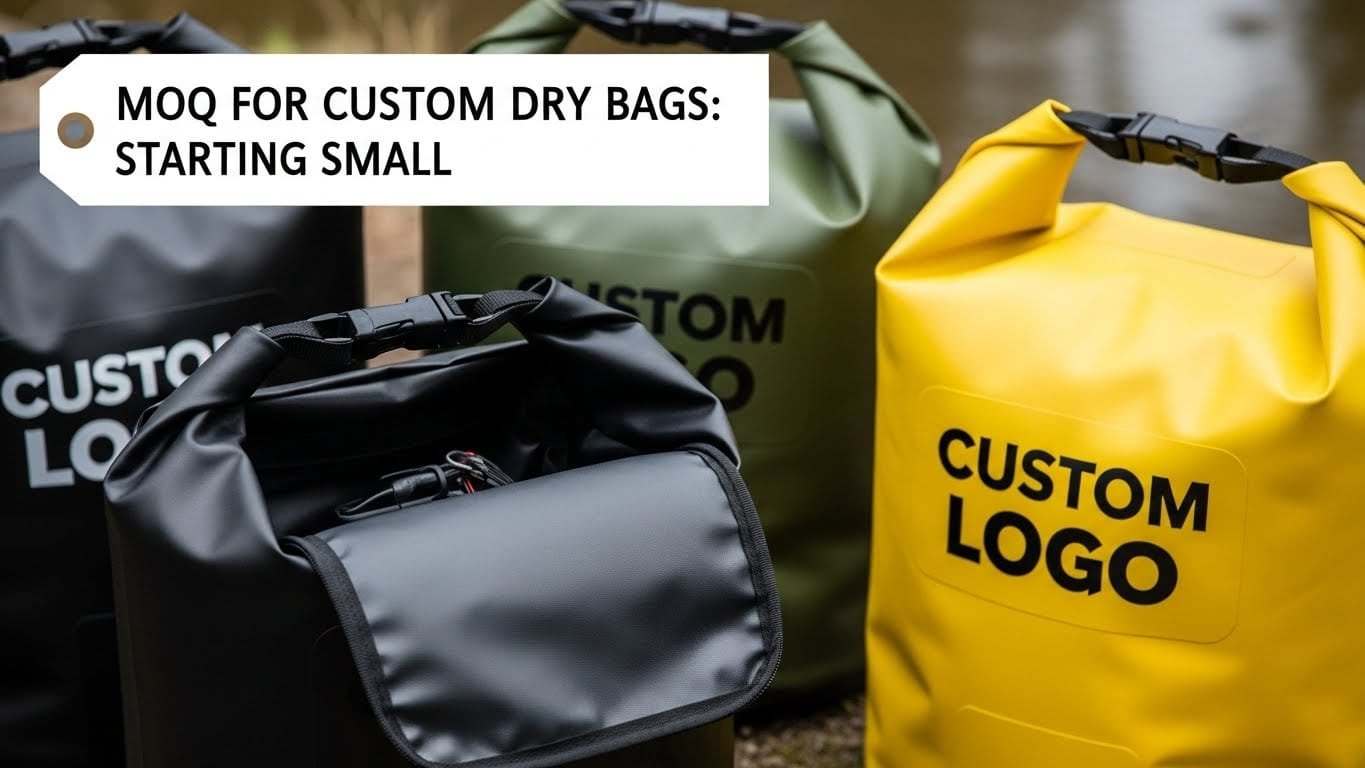

Low-MOQ Strategies: Hybrid Approaches & Stock Designs
A single pre-production sample avoids brand-damaging color shifts that ruin credibility.
The smartest low-MOQ play I see on factory floors is what we call the hybrid approach. You pick a stock bag body—a shape the factory already cuts and sews in volume—and add only logo decoration. Cotton canvas with a gusset bottom, non-woven polypropylene shoppers, or laminated PET totes are common stock shells. Because the fabric roll consumption, cutting dies, and sewing line setup stay unchanged, MOQ drops to 100–200 units for single-color screen print. I’ve pushed this down to 50 pieces on rush order custom tote bags for events when fabric inventory was already in-house and the client committed to FOB pricing without air freight.
Where organizers get into trouble is insisting on a bespoke size or fabric weight and still expecting a 100-unit threshold. That’s not hybrid—that’s full OEM, and the pattern-making alone costs more than the bag margin at small quantities. If your event deadline is six weeks out, stick to off-the-shelf dimensions and accept the factory’s quality tolerance of ±5% on grammage rather than demanding a custom GSM. It means your bags land on time and on spec enough for gifting.
- Stock design library: Request the factory’s ODM catalog showing 10–15 pre-tested bag bodies. Skip shapes that require new cutting dies.
- Pantone matching discipline: Lock a single Pantone number on the pre-production sample. Second-color additions can double setup cost and push MOQ beyond what a one-off corporate gift budget allows.
- Sample approval before mass order:Pay for a pre-production sample—roughly $50–80 plus courier—even for stock designs. Observations show screen mesh tensions can shift between sample and bulk, causing print opacity variances that violate brand guidelines.
Stock designs also let you negotiate staggered delivery. If you need 800 bags for a conference but can only fund 300 now, a factory running continuous production of that stock shape can split the order without retooling. You pay a small storage fee, but the per-unit cost stays at the original MOQ tier—not the higher small-batch surcharge. Direct factory partners are flexible on this when they see your purchase order references a repeat cadence, not a one-time event.
Benchmark: For corporate gift tote bags low minimum, anything under 150 units should use a stock bag body with single-location logo print. If a supplier quotes full-custom under 300 pieces without raising a flag on setup costs, get the pre-production sample approved in writing before proceeding. That’s the standard I hold when auditing factories across 12 countries.
When to Pay a Surcharge for Under-MOQ Orders
Surcharges under $500 often beat the hidden cost of last-minute compromises.
Most corporate gift orders die in procurement because the math looks wrong at first glance. You need 75 branded tote bags for a product launch, but the factory’s MOQ sits at 300 units for custom logo tote bags. The sales rep offers a 30% surcharge to run your order anyway. The knee-jerk reaction is to walk away — but that can be a mistake if you don’t break down what the surcharge actually covers.
The setup cost for screen printing doesn’t magically disappear when you order fewer bags. A factory still burns screens, mixes inks, and dedicates a print station for your run. With 75 units, the labor time per bag is the same as for 300, but the cost can’t be amortized across a larger volume. The surcharge simply prevents the factory from losing money on your order. If you’re sourcing low MOQ custom tote bags for events, a transparent surcharge between 20% and 40% is standard — anything above 50% signals the factory doesn’t actually want small batch branded tote bags and is pricing you out.
- Material waste: Fabric cutting for small runs still requires a minimum roll allocation. If a roll holds enough fabric for 500 bags but you only need 75, the factory absorbs the residual on that dyed lot. The surcharge offsets that unrecoverable waste.
- Production sequencing: Your order interrupts established production lines. The surcharge compensates for the 20-30 minutes it takes to change thread colors on embroidery heads or purge and reload a screen print carousel. That downtime matters when shifts are scheduled tightly.
The cost-benefit swings in your favor when you compare the surcharge against the alternatives. Ordering 300 units might cost $4.50 per bag, while 75 units at 30% surcharge comes to $5.85 per bag. That extra $1.35 per unit is your insurance against rushed, poorly printed stock items from a retail chain that can’t match your brand colors. I’ve seen event planners skip the pre-production sample to ‘save a few days’ on a 50-unit corporate gift tote order, only to arrive at the venue with bags carrying a logo that shifted from Pantone 286 to something closer to athletic royal. Reclaiming your brand reputation costs far more than a sub-$500 surcharge.
Ask any factory partner if they’ll waive or reduce the surcharge when you commit to a repeat order schedule — even one 6 months out. Direct factories that handle OEM and ODM tote bags with logo for giveaways typically agree if you sign a simple letter of intent. The surcharge then drops to 10-15%, or they build it into the next order’s unit price. You get the rush order custom tote bags for events you need now, and they secure a multi-order relationship. That’s the only version of ‘cheap custom printed tote bags small quantity’ that makes financial sense for both sides.
Заключение
Negotiating MOQs for custom tote bags doesn’t mean accepting the first number a factory throws at you. By cutting through the noise of inflated minimums, you can land a 100-unit order with screen-printed logos right at $1.60 per bag FOB — if you know the right trigger points. Insist on a pre-production sample and lock down a quality tolerance: a color delta E of 2.0 or below, no exceptions. That single step separates a clean corporate gift from a branding disaster.
Use that benchmark on your next supplier call. Then, when you’re ready to move past generic templates, compare construction specs and real factory lead times to turn a tight deadline into a smooth handshake delivery.
Часто задаваемые вопросы
Каков минимальный объем заказа (MOQ) для сумок-тоут, изготовленных по индивидуальному заказу?
Минимальный объем заказа для нанесения только логотипа составляет 100 единиц, тогда как для полностью индивидуальных OEM-заказов обычно требуется 500 единиц или более. Точное количество зависит от метода нанесения и источника поставки ткани. Уточните минимальный объем заказа для каждого дизайна после того, как вы определитесь с размещением логотипа и конструкцией сумки.
Почему фабрики по производству сумок-тоут устанавливают минимальный объем заказа?
Минимальный объем заказа (MOQ) покрывает фиксированные затраты на наладку, такие как раскрой ткани, подготовка трафаретов и переналадка производственной линии. Без минимального объема заказа эти затраты невозможно распределить на достаточное количество единиц продукции, чтобы окупить их. Рассматривайте MOQ как минимальный тираж, при котором окупаются затраты на один рулон ткани и наладку оборудования.
Могу ли я заказать небольшой объем товара для мероприятия, не достигая минимального объема заказа (MOQ)?
Да, для этого можно выбрать готовые заготовки с минимальной печатью или оплатить надбавку за заказ, не достигающий минимального объема. Многие поставщики допускают заказ меньшего количества, если вы оплатите полную стоимость настройки оборудования плюс надбавку за каждую единицу. Прежде чем останавливаться на готовых заготовках, уточните, существует ли система дифференцированных надбавок.
Что произойдет, если я пропущу этап изготовления предсерийного образца?
Skipping a sample to save a small fee risks a full-order misprint, like a $7,500 corporate gift disaster. A sample validates print quality, color, and placement on the actual material. Never proceed to bulk production without an approved pre-production sample.

0 комментариев