



Recycled PET fabric costs 10 to 20 percent more than virgin polyester and sells programs on sustainability claims that only hold if the certificate chain holds. A bag labeled rPET without a GRS transaction certificate is polyester with a story. This guide compares the two fibers on measurable specs, then lists the documents that make the recycled claim auditable.
The comparison covers fiber origin and certification, tensile strength and abrasion, dyeing and color consistency, cost structure, and the compliance paperwork, GRS and EPR, that programs in regulated markets now require.
Fiber performance varies by spinning line and recycling line quality; figures below are working ranges from current bag production and third-party test summaries.
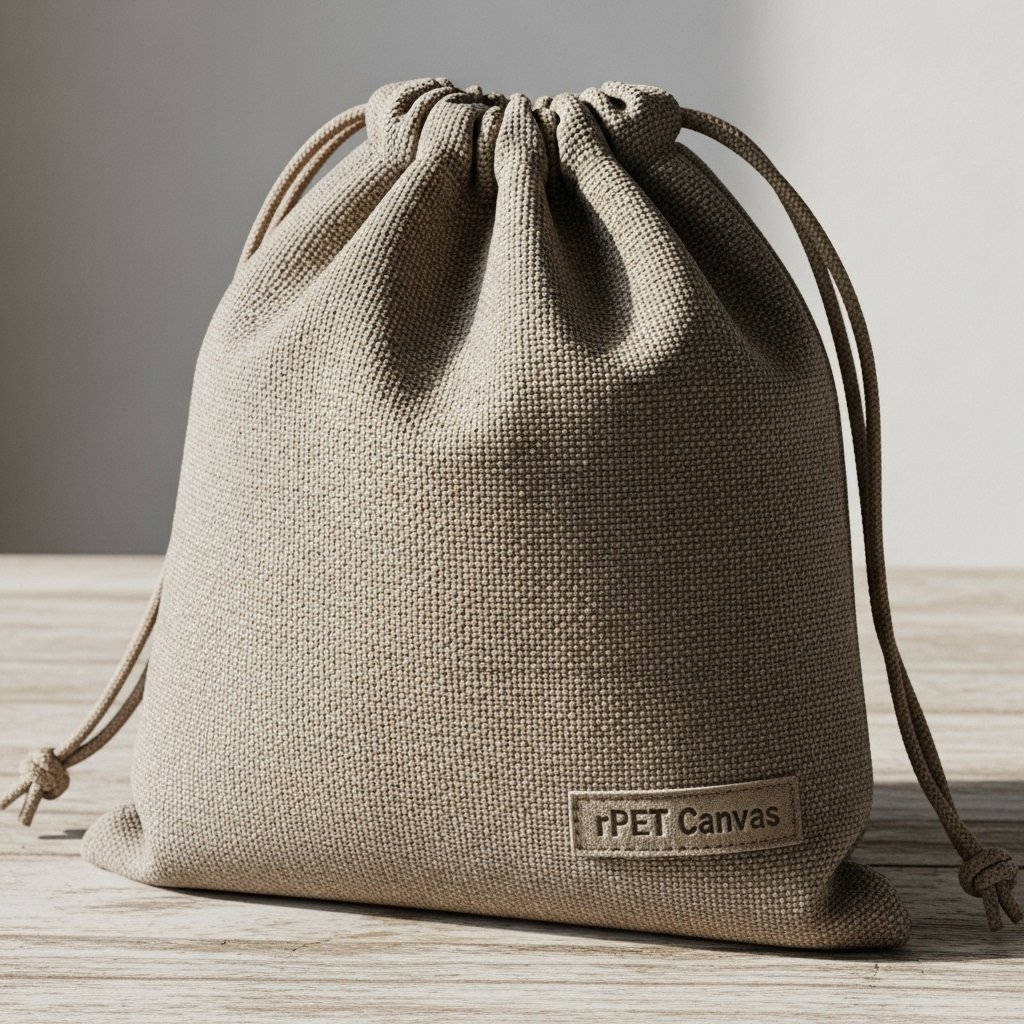
Where the two fibers come from
Virgin polyester starts as petrochemical feedstock, PTA and MEG polymerized into PET chip and melt-spun into yarn. Recycled PET starts as bottles: baled post-consumer flake, washed, decontaminated, re-pelletized or spun directly, and each ton of rPET yarn traces to roughly 25,000 to 40,000 bottles depending on bottle weight. The processing history matters because every melt cycle shortens chain length slightly, which is where the performance gap in the next section comes from. Fiber-to-fiber mechanical recycling also consumes roughly 40 to 60 percent less energy per kilogram of yarn than virgin polymerization, an energy figure that shows up in corporate carbon reporting. The chemistry of the base polymer is maintained on Wikipedia.
Strength: the measurable gap
On test reports, rPET yarn reaches 90 to 95 percent of virgin polyester tensile strength, and modern mechanical recycling lines close most of that gap; the residual difference matters in technical textiles and rarely in bags. Working numbers: 210D to 600D rPET fabrics for drawstring and tote duty carry 8 to 15 kg loads with abrasion resistance within 5 to 10 percent of virgin equivalents, and burst strength that passes the same commercial standards. Reading those numbers on a report is its own skill, the one our lab report guide teaches, because a datasheet that lists strength without test method and sample count is marketing, not measurement. For load-bearing programs the practical rule: specify rPET at one denier step heavier than the virgin equivalent and the gap disappears. The gap also narrows as denier rises: at 300D and above, tested tenacity differences between certified rPET and virgin lots typically fall inside the 5 percent lab tolerance band itself.
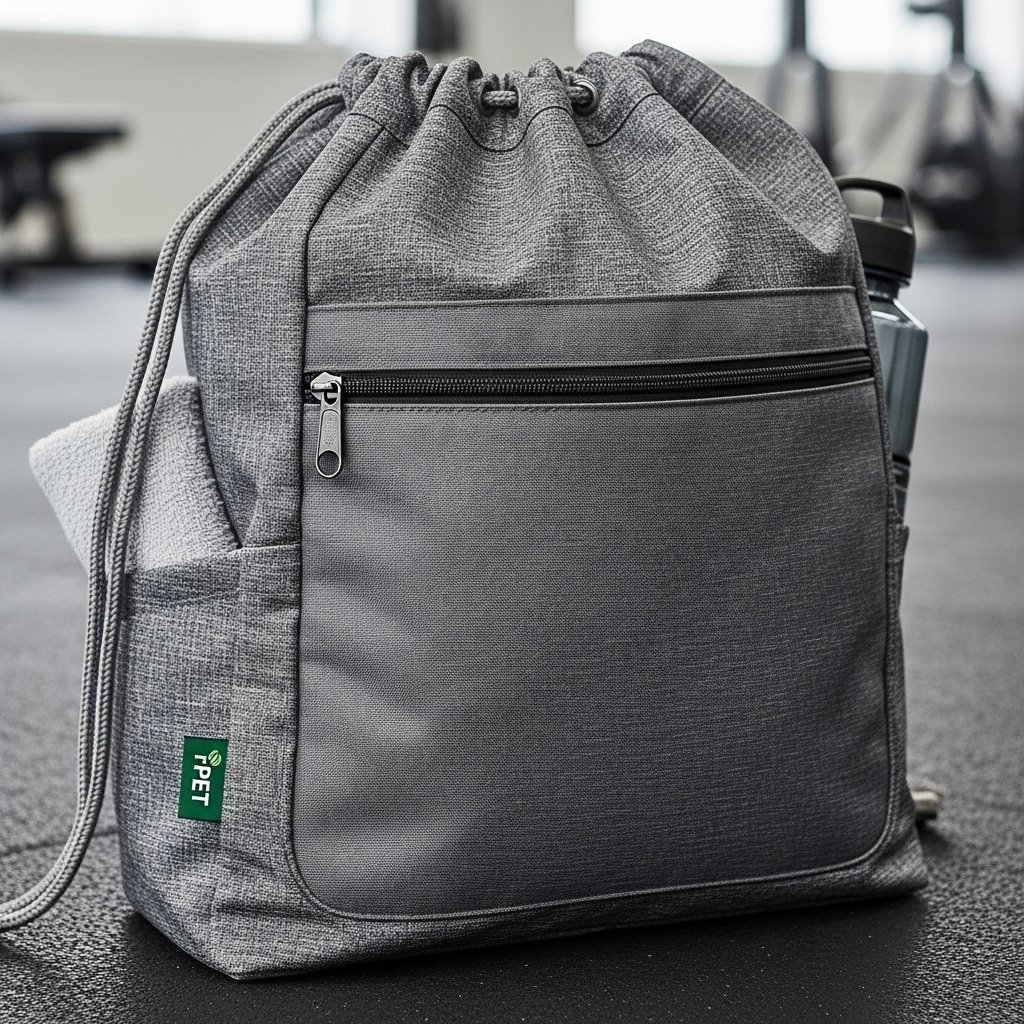
Dyeing and color consistency
Recycled fiber carries its history into the dyehouse. rPET lots show batch-to-batch color difference of 0.8 to 1.5 delta-E against virgin polyester’s 0.5 to 0.8, because residual catalysts and varying intrinsic viscosity take dye at slightly different rates. Deep colors, blacks, navies, forest greens, hide the variance; bright pastels and strict brand palettes expose it. Programs printing on rPET should specify the same tolerance discipline as any fabric, the approach in our color specification guide, and lock a physical color standard per order rather than relying on reference numbers alone.
Cost structure
The honest price stack: rPET yarn runs 10 to 20 percent above virgin at similar denier, GRS-certified production adds certification and audit cost amortized at 0.02 to 0.05 dollars per bag on mid-size orders, and each lot ships with a transaction certificate costing 50 to 150 dollars in testing and administrative fees. Against that, rPET programs win tender scoring in sustainability-weighted procurement, qualify for EPR fee reductions in several European schemes, and increasingly keep corporate accounts that require recycled content minimums. The payback question is program-specific, and the EPR side of it is mapped in our EPR rules guide. Lead time costs nothing extra at certified mills running both lines: 30 to 45 day production windows hold for either fiber at 5,000-piece scale.
The paperwork that makes it auditable
Three documents turn a recycled claim into a verifiable one. Scope certificate: the mill’s GRS 4.0 certification covering its recycling and spinning lines, valid annually, checkable against the certifier’s public database. Transaction certificate, or TC: issued per shipment, matching invoice, weight and article to the scope certificate, the document customs authorities and brand auditors actually ask for. And volume reconciliation: the mill’s annual accounting that recycled input tonnage covers certified output tonnage, with 5 percent tolerance for processing loss. Claims built without this chain fail the audits that matter, and green-claims regulation in the EU and several US states now attaches legal exposure to unfounded recycled content statements. The testing side of claims verification is the territory of our fastness and materials testing guides. Brands already running social-compliance audits collect half this chain; adding the TC to the same file costs an email, not an audit cycle.
Frequently asked questions
Is rPET as strong as virgin polyester?
90-95 percent of virgin tensile strength, within 5-10 percent on abrasion for bag fabrics; specify one denier step heavier and the gap closes.
How much more does rPET fabric cost?
10-20 percent on yarn, plus 0.02-0.05 dollars per bag certification amortization and 50-150 dollars per lot for transaction certificates.
What certificate proves a bag is rPET?
GRS 4.0 scope certificate for the mill plus a transaction certificate per shipment matching invoice, weight and article.
Does rPET dye the same as virgin polyester?
Not exactly: 0.8-1.5 delta-E lot variation against virgin’s 0.5-0.8; deep colors hide it, bright pastels and strict palettes expose it.
Specify the certificate with the fiber
rPET and virgin polyester both make honest bags; only one of them makes an honest sustainability claim, and only with the scope certificate, transaction certificate and volume reconciliation attached. Programs buying the claim should buy the paperwork in the same purchase order, and programs buying only performance should compare denier-adjusted strength and price. Both fibers run through our drawstring bag range and woven PP range, with certificate status listed per SKU at quotation. Certificate copies ship with every quotation, and fiber swatch cards follow in 5 to 7 working days.
Ocean-bound content only means something when it is documented; our ocean bound plastic bag manufacturing claims explains the certificate and content checks.



0 Comments