Drawing on TIIOCTI product specifications for canvas and reusable tote bags, plus the archived article on branded totes.
At the printing station, two totes sit side by side on the bench: a stock natural canvas bag with a one colour logo added, and a dyed canvas body built to a buyer's own measurements. The printer treats them the same way for the first pass, then stops at the second bag because the handle position has moved. Two quotes had arrived on the same desk that morning, and the difference between them was already visible at the mesh.
Both routes produce a custom logo tote bag. The question is which one a given campaign should buy, and the answer changes with four things: how long the bag must last, how much of the brand it has to carry, how likely the artwork or size is to move, and what the material is meant to say before anyone reads the logo.
Two Quotes on the Table, Two Different Bags
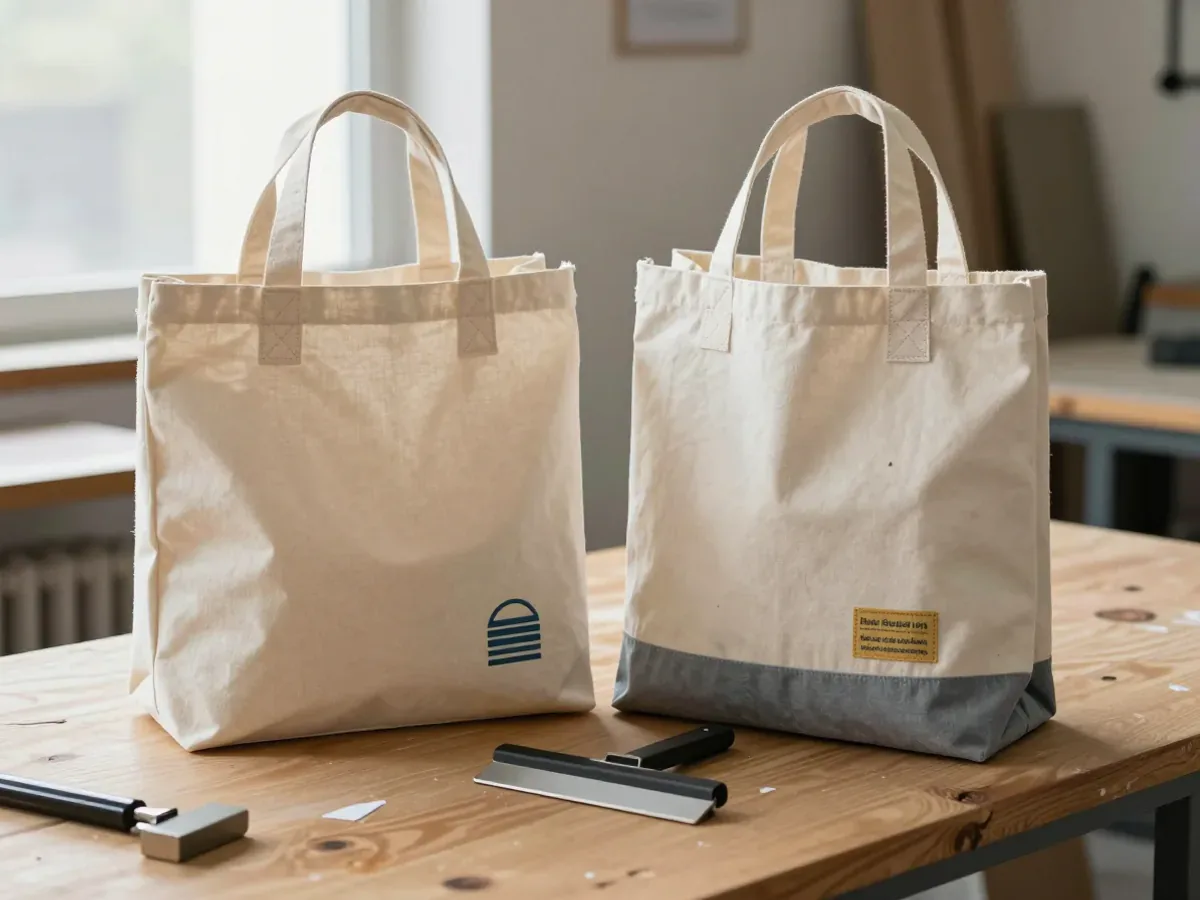
One quote describes a stock tote in a natural or dyed cotton canvas shell, printed with the buyer's logo by screen print or heat transfer. The other describes a body built to the buyer's dimensions, with a reinforced base, a flat folding shape, and a woven label in addition to the print.
The stock route borrows a shape that already exists. The custom route defines the shape first and then decides how the branding sits on it. Neither is automatically better. A stock bag with a clean print can carry a brand for a long time, and a custom bag with a weak spec can fail faster than the stock option it replaced.
The useful comparison is not price per bag. It is what each route commits the buyer to before the first carton ships.
How Long the Bag Has to Survive the Campaign
A single event giveaway and a retail programme put different demands on the same cotton shell. Event bags are handed out, carried for a day, and often kept in a car boot for a month. Retail bags go home with paying customers and get used weekly, which means the seams and handles take repeated loads.
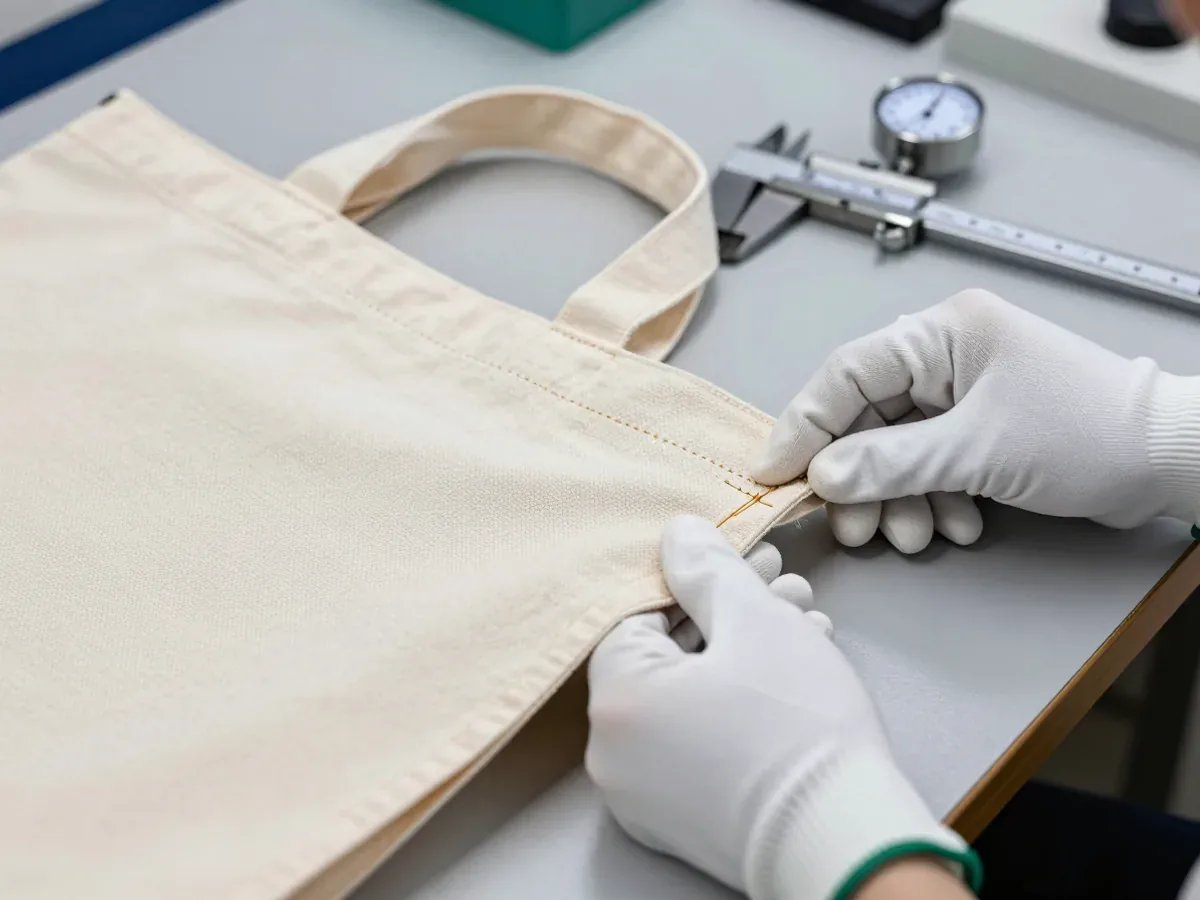
On the reusable route, every batch is tested for pull, seam strength and bar tack. That testing matters most when the bag is expected to survive months of shopping trips rather than one conference weekend. A stock tote can also be built well, but the buyer is accepting whatever construction the stock line already uses.
Ask how many trips the bag needs to survive before the campaign ends. If the answer is a handful, the stock shell is usually enough. If the bag is meant to be the customer's default shopping bag for a season, the reinforced base and tested seams on a built tote earn their place.
How Much of the Brand the Bag Has to Carry
A logo is the minimum. Some campaigns need the bag to do more work: a colour that matches the brand palette, a label inside the top edge, a handle length that suits a specific retail setting.
Stock colours can be swapped for a Pantone match, so colour alone rarely forces a custom build. Where the stock route runs out is in the details around the print. A woven label, a particular handle drop, or a body proportion that matches a product line all push toward a built bag.
The honest test is to list every brand element the bag must show and mark which ones the stock line already supports. If the list is a logo and a colour, the stock route covers it. If the list includes the label, the shape and the finish, the custom route is doing real work.
What Changes Cost You When the Artwork or Size Moves
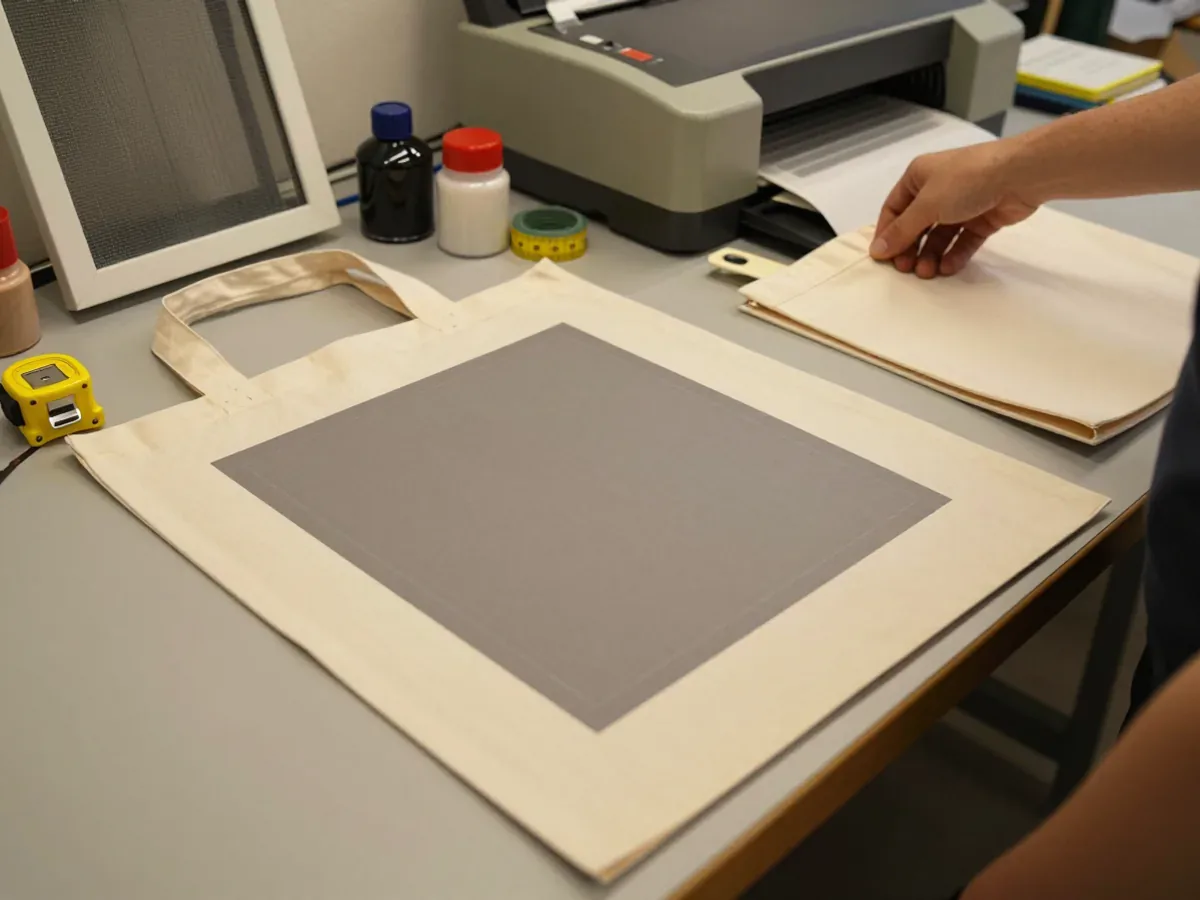
Artwork moves more often than buyers expect. A campaign date shifts, a sub brand appears, a legal line gets added at the last minute. On a stock bag, a print change is a new proof and a new screen or transfer, and the body stays the same.
A size change is heavier. A new size takes one sample round before bulk, which adds calendar time even when the design is settled. That round exists because printing is proofed before the run and the sample is made to the same spec as bulk. Skipping it saves a week and risks a carton of bags with the logo sitting two centimetres off centre.
Buyers should count how many unknowns remain when the order is placed. A fixed campaign with a locked logo suits the stock route. A programme still testing formats should expect the sample round and plan the launch date around it.
What the Material Says Before the Logo Does
Cotton canvas reads as a durable, reusable object. That signal arrives before anyone looks closely at the print, and it shapes how the bag is treated afterward. A flimsy shell gets folded into a drawer; a sturdy one gets used.
This is where the sustainability conversation usually starts, and it is also where buyers overreach. The material can be described honestly: cotton canvas, natural or dyed, with a body that folds flat and a base that carries weight. Claims about certification belong on documents the buyer has actually received, not on a blog page or a product tag written from memory.
A stock tote and a custom tote can use the same shell, so the material message does not decide between them. What changes is how much control the buyer has over the rest of the object that carries that message.
Which Buyer Should Take Which Route
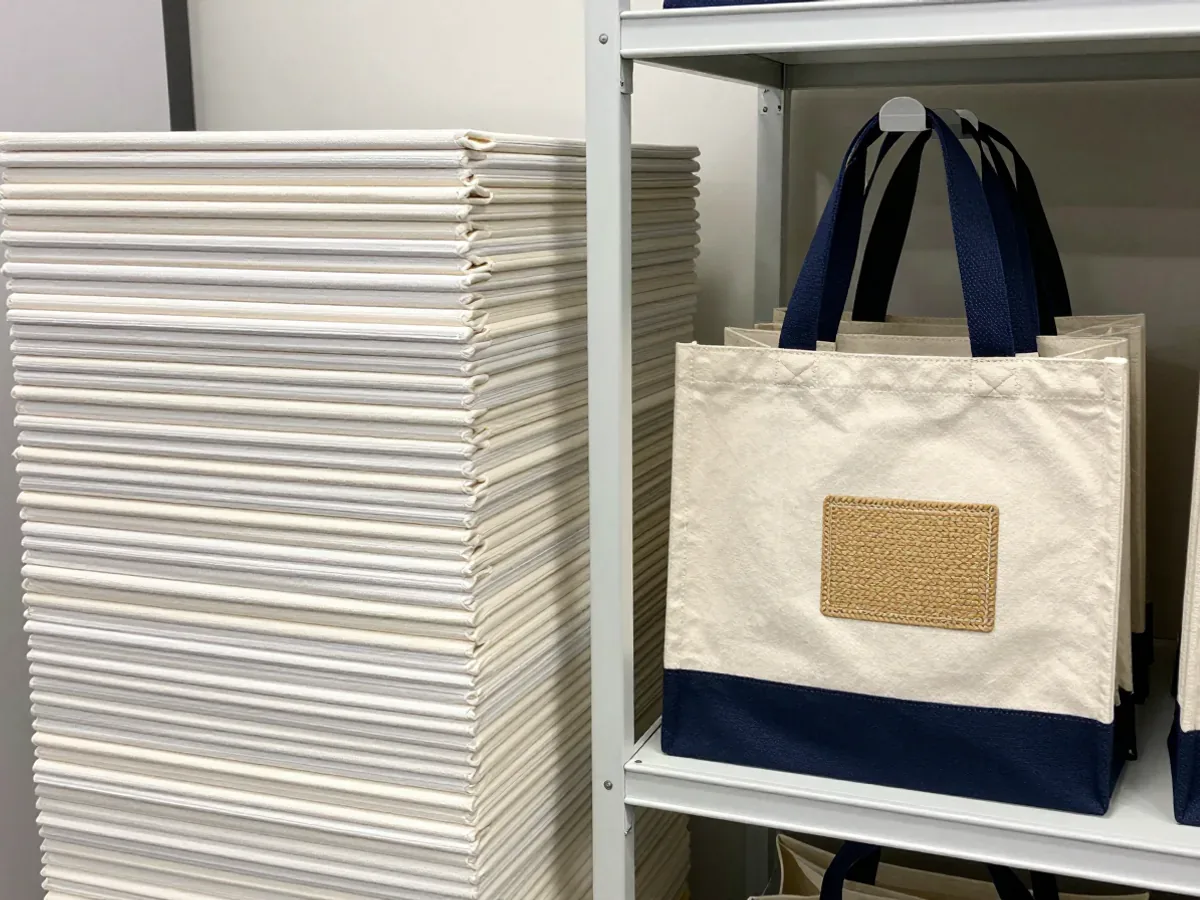
The stock route fits a buyer with a fixed logo, a fixed date, and a quantity that needs to land quickly. Trade show giveaways, conference bags and short promotional pushes sit here. The bag is a vehicle for the logo, and the logo is already final.
The custom route fits a buyer whose bag has to behave like part of the product line. Retail programmes, subscription boxes and corporate gifting with a premium finish belong here. These buyers care about the handle, the label, the base and the fold, not only the print.
A third group sits in between: buyers who want a Pantone match on a stock body and nothing else. That is a stock order with a colour change, and it should be quoted and scheduled as one.
A Decision Table for the Next Order
| Decision point | Stock tote with logo | Built custom tote |
|---|---|---|
| Expected life | One event or a short push | Repeated weekly use |
| Brand elements | Logo and colour | Logo, woven label, handle, shape |
| Artwork certainty | Final before order | May still move |
| Size change | Not applicable | One sample round |
| Colour | Stock, or Pantone match | Open |
| Construction | Whatever the stock line uses | Reinforced base, flat fold, tested seams |
| Best fit | Giveaways, trade shows | Retail, gifting, product line |
The table does not rank the two routes. It shows where each one stops being the cheaper answer. A stock bag that has to be reprinted twice because the artwork moved is no longer cheap, and a custom bag ordered before the design is locked carries the same risk in the other direction.
What to Confirm Before the Print Run Starts
Four checks close the gap between the quote and the carton. First, confirm the print method against the artwork: screen print and heat transfer handle detail differently, and a fine logo may need one over the other. Second, confirm the colour reference in writing, whether that is a stock shade or a Pantone match.
Third, confirm the sample matches the bulk spec, including dimensions and handle placement, because the proof only covers the print. Fourth, confirm what gets checked by hand at the end: dimensions, handles, logo and packed quantity. Every bag passes four QC checkpoints before it is packed, and the buyer should know what those checkpoints cover.
A buyer who can answer all four before the mesh is burned has already chosen the right route. The remaining work is scheduling, not deciding.
FAQ
Can a stock colour tote be matched to our Pantone shade?
Yes. Stock colours can be swapped for a Pantone match, which keeps the stock body and changes the dye target. Confirm the reference in writing before the run.
How many sample rounds does a new tote size need?
A new size takes one sample round. The sample is made to the same spec as bulk, so the round confirms dimensions and handle placement as well as print.
Is screen printing or heat transfer better for a detailed logo?
Both methods are available on cotton canvas. Screen print suits solid shapes and larger runs, while heat transfer handles finer detail. The artwork decides which one to proof.
What gets checked on a finished tote before packing?
Finished bags are checked by hand for dimensions, handles, logo and packed quantity. Pull, seam strength and bar tack are tested on every batch before that final check.