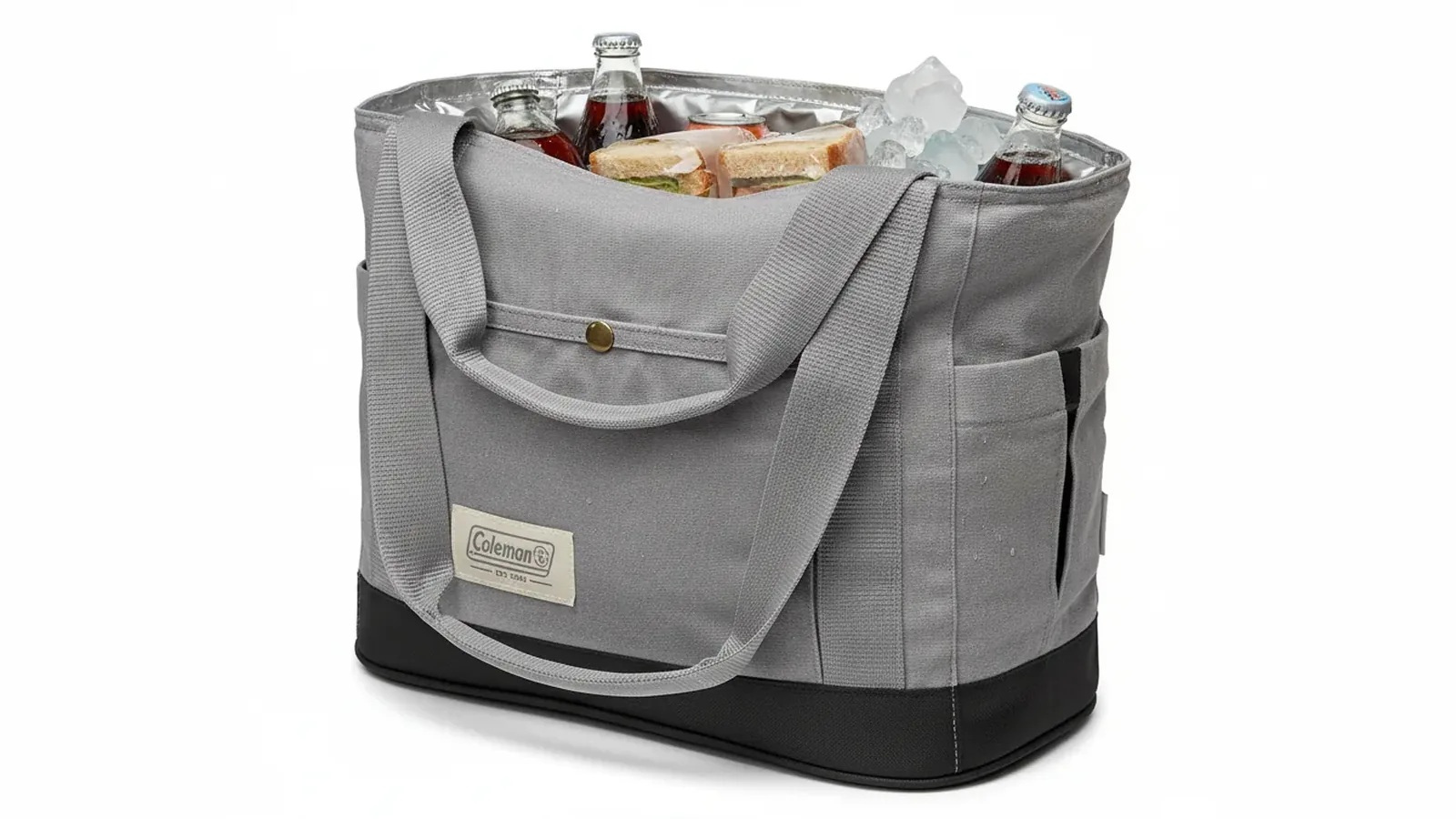
Drawn from product spec lines and QC checkpoints for stock cooler bodies, plus the old post's notes on lining, zip and leak points.
A carton of 6L cooler bags sat on the loading bay with its flaps still open. The buyer had pulled it from a finished order the afternoon before the container was due, and the reason was not a failed test report. It was a seam of water along the bottom of the third bag she opened.
She had ordered the small size as a test run, the kind of compact cooler bag that goes into a lunch tote or a promo giveaway. The order was small, the deposit was paid, and the factory had already packed most of the cartons. Then she unzipped one bag, poured in a little water with an ice pack, and watched it seep through the base within minutes. The question that followed was blunt: how does a bag get this far before anyone notices it leaks?
That question is worth walking backwards through, because the explanation lies in four places that a spec sheet rarely names.
The Carton That Never Left the Loading Bay
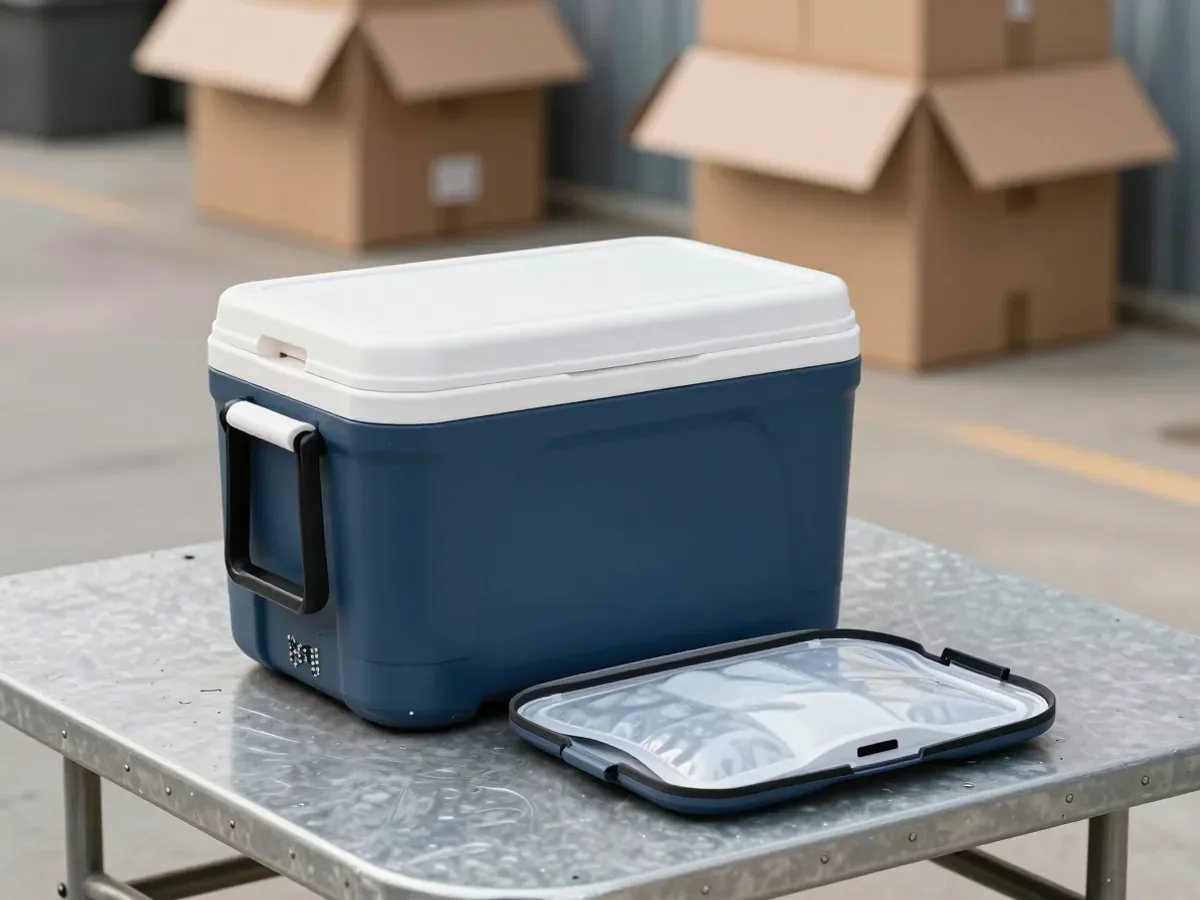
The bags were not defective in the way a buyer expects. The stitching was clean, the print was centred, and the zipper ran smoothly when pulled by hand. What failed was quieter: the lining at the base had been bonded with a narrow overlap, and the seam sat just under the fold where the body meets the bottom panel.
Nobody had filled a bag with water during production. The line checked what it always checks, which is appearance and hardware, and the base passed because it looked flat and tight. Water found the one centimetre the eye could not see.
The buyer's own test was simple, and that is what made the return decision easy. She did not need a lab. She needed one bag, one ice pack, and ten minutes on a table.
Tracing Back to the Lining Thickness Line
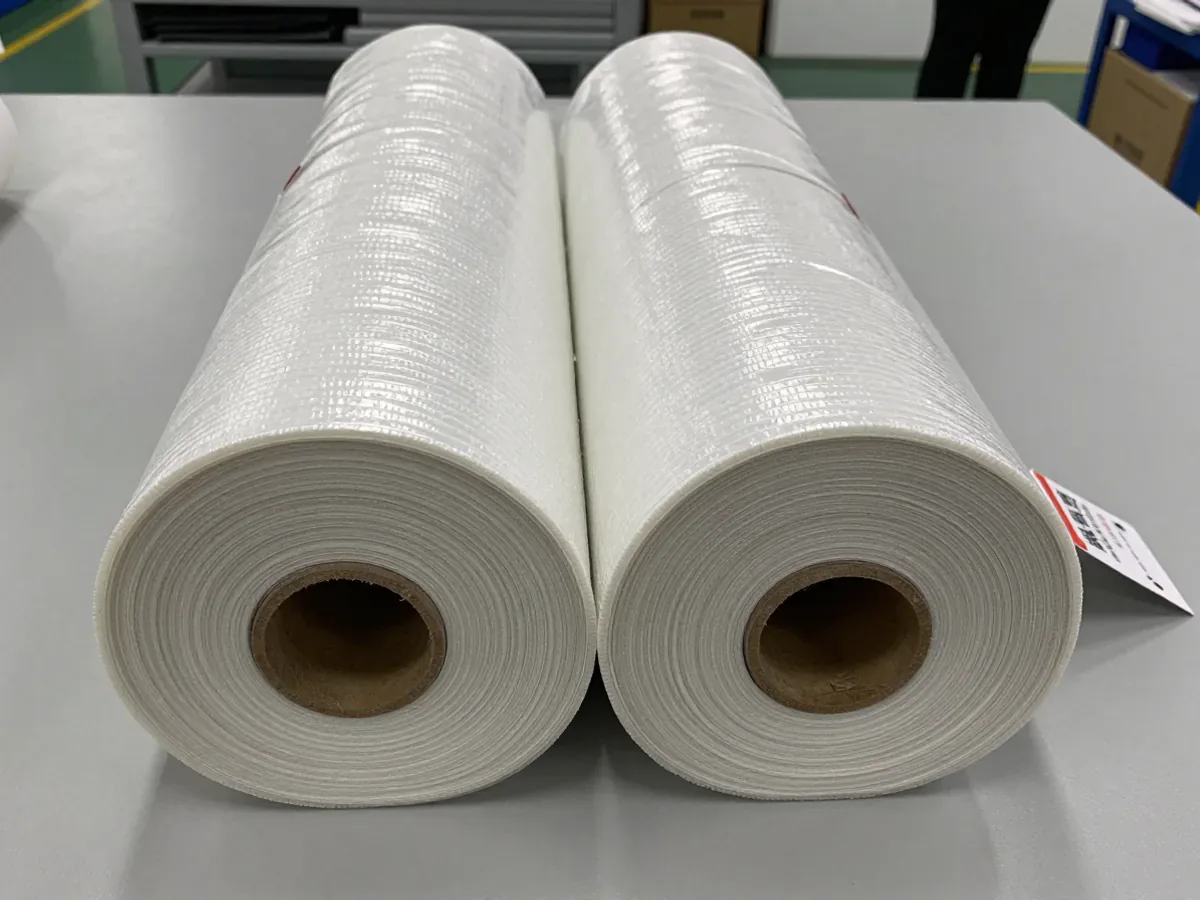
The first thing the factory pulled was the approved sample. It was still in the sample room, tagged with the buyer's sign-off date, and it told a different story from the production run.
The sample had been built with a heavier insulated lining, the kind chosen when a buyer says the bag needs to hold cold through a full working day. The production bags used a lighter lining of the same family, because a substitution had been made when the heavier roll ran short. On paper the two materials carried the same code. In the hand they did not.
Lining thickness is not a cosmetic choice. It is matched to the hours the buyer needs the bag to perform, and a 6L body has less internal volume to absorb that difference than a larger bag. A thin lining in a small bag shows up fast, because there is less cold mass inside to compensate. The buyer had asked for a lunch bag that survived a commute and a morning at a desk. The lighter roll might have managed that on a cool day. It would not manage a warm car park.
The substitution was never written down. That is the second failure, and it is more common than the first.
The Zip, the Base and the Two Places Water Finds
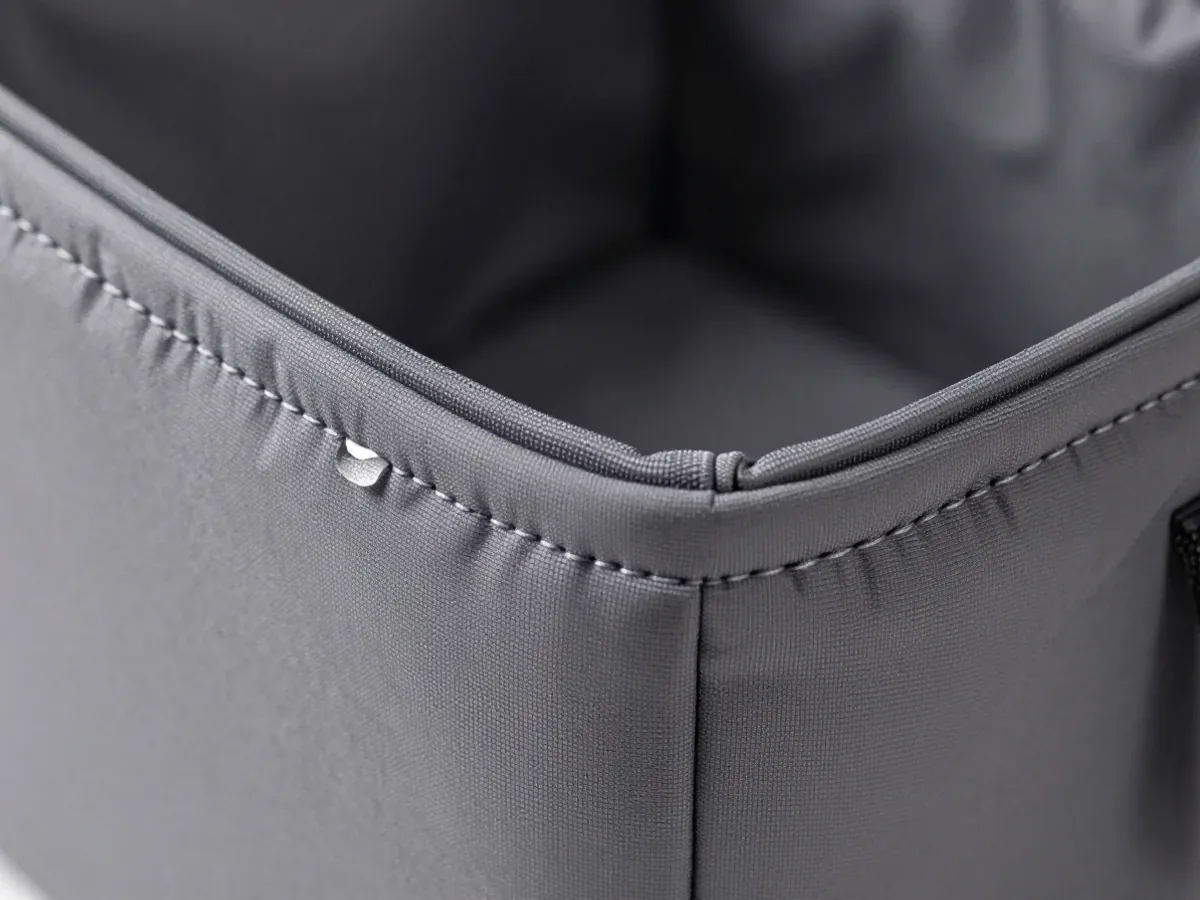
Water in a soft cooler bag almost never enters through the fabric. It enters at the zip line and at the base seam, and each one fails for its own reason.
The zip lid closes the top so cold air stays inside, and a good zipper does that job well. But a zipper is also a channel. Condensation collects on the inside of the lid, runs down to the teeth, and sits in the tape. If the tape is stitched without a fold or a storm flap behind it, that water reaches the lining edge and starts to wick. On the returned bags, the zip tape was sound. The base was not.
A leak proof base handles ice packs and condensation, and it does so through the bond between the lining and the bottom panel, not through the outer shell. The outer fabric can be perfectly waterproof and the bag can still leak, because the water never reaches the outside. It pools inside the lining seam and finds the stitch holes.
The buyer's third bag leaked at the corner where the base curve meets the side wall. That corner is the hardest place to bond and the easiest place to inspect badly, because it is small and it is usually hidden under a fold.
What the Drop Check Actually Catches
The factory's test programme covers seams, handles, zips and loaded drop checks. Those tests are real, and they catch real problems: a handle that pulls out at the anchor, a zip that splits under load, a seam that opens when the bag is full.
A loaded drop check does not catch a slow leak. A bag can be dropped from height with a full load, land flat, hold its shape, and still pass water through a base seam over twenty minutes. The drop test measures structure under impact. It does not measure the bond under standing water.
This is where a buyer's expectation and a factory's test list drift apart. The buyer assumes "tested" means "holds water." The factory means "holds together." Both statements are true, and they answer different questions.
For a leak proof cooler bag, the missing test is the boring one: fill, wait, watch the base. It takes minutes and it catches the failure that a drop rig never will.
Why the 6L and 24L Bodies Fail Differently
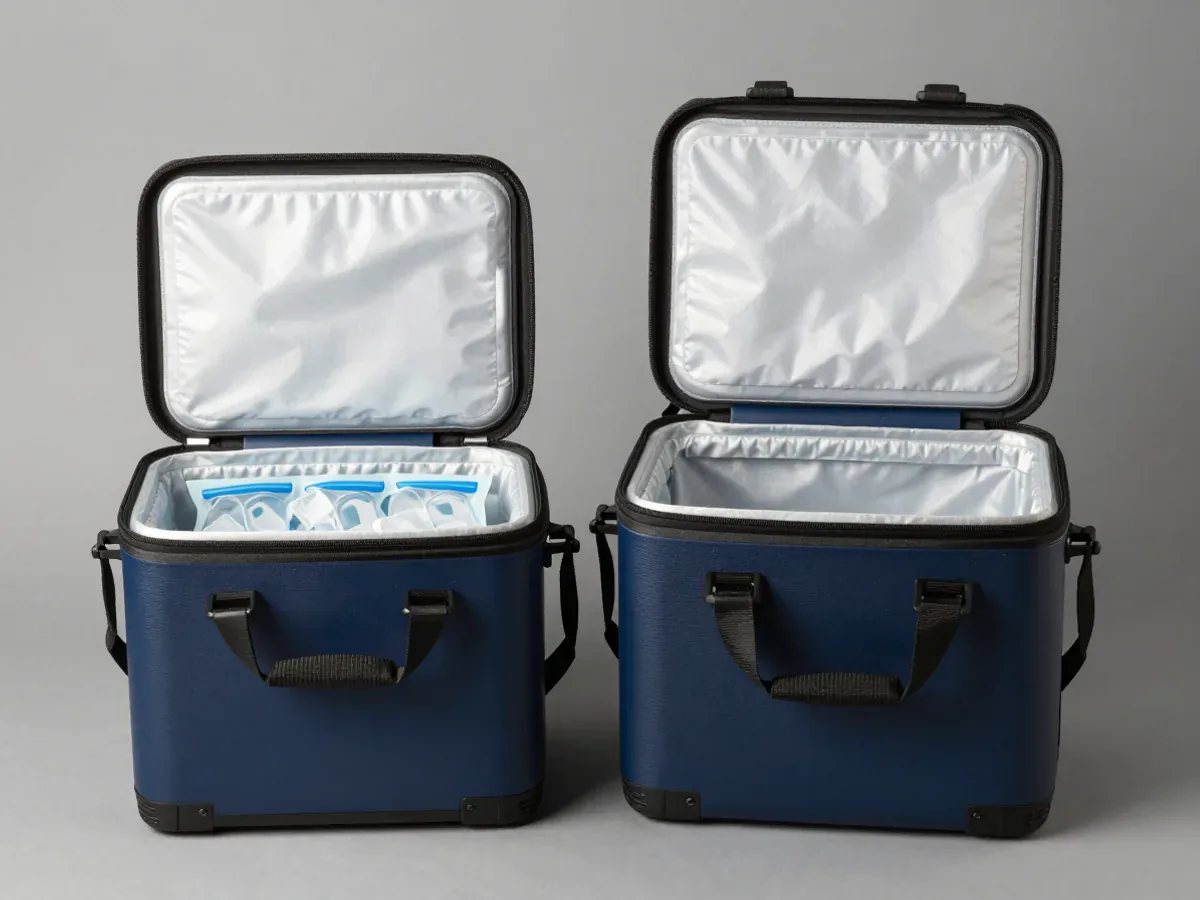
The same lining and the same base construction behave differently at 6 litres and at 24 litres, and that difference shaped the return.
A 6L lunch size is shallow. An ice pack sits close to the base seam, and condensation has a short path to the stitch line. The bag is also carried more often, tipped at angles, and set down on warm surfaces. Small bodies concentrate the problem.
A 24L family size is deeper. The base seam sits further from the cold source, and the larger internal volume buffers temperature swings. The same narrow overlap that leaked at 6L might have held at 24L for a whole season, which is exactly why a factory can run both sizes on one line and only hear complaints about the small one.
The stock range runs from the 6 litre lunch body up to the 24 litre family body, and the construction logic is shared. The failure risk is not shared. A buyer testing a new lining or a new base bond should test it on the smallest body first, because that is where it will show.
The Four Checkpoints That Decided the Reorder
Every bag passes four QC checkpoints, and the returned order had cleared all four. That is not a scandal. It is a sign that the checkpoints were asking the wrong questions for this product.
The four points covered stitching, hardware, print and packing. None of them included a water hold. The buyer and the factory had been checking a cooler bag with the checklist for a tote.
The reorder was decided on four different checkpoints, written into the spec before the next run:
- Lining match. The roll code on the production floor must match the roll code on the approved sample, and any substitution needs the buyer's written approval before cutting.
- Base bond width. The overlap at the base seam is measured on a cut sample, not judged by eye, and the corner curve is checked separately from the straight run.
- Water hold. One bag per batch is filled, sealed and left on a flat surface for a set period, then checked underneath for moisture at the seam.
- Zip tape fold. The tape behind the zipper is checked for the fold that keeps condensation away from the lining edge.
None of these are exotic. Three of them cost nothing but attention. The fourth costs one bag per batch.
A Buyer's Pre-Order Walk Through the Sample
The sample on the table is where a buyer can prevent this whole sequence, and it takes less time than reading a spec sheet.
Start with the base. Turn the bag inside out if the construction allows, and look at the seam where the lining meets the bottom. Run a thumb along the corner curve. If the overlap looks narrow or the bond looks uneven, ask what width was specified and ask to see it measured.
Then look at the zip. Open the lid and find the tape behind the teeth. A fold or a flap there is the difference between a bag that handles condensation and one that wicks it into the lining.
Then ask about the lining roll. Not the material name, the roll. Ask whether the production roll matches the sample roll, and ask what happens if it does not. A factory that has an answer for that question has thought about substitution. A factory that does not has not.
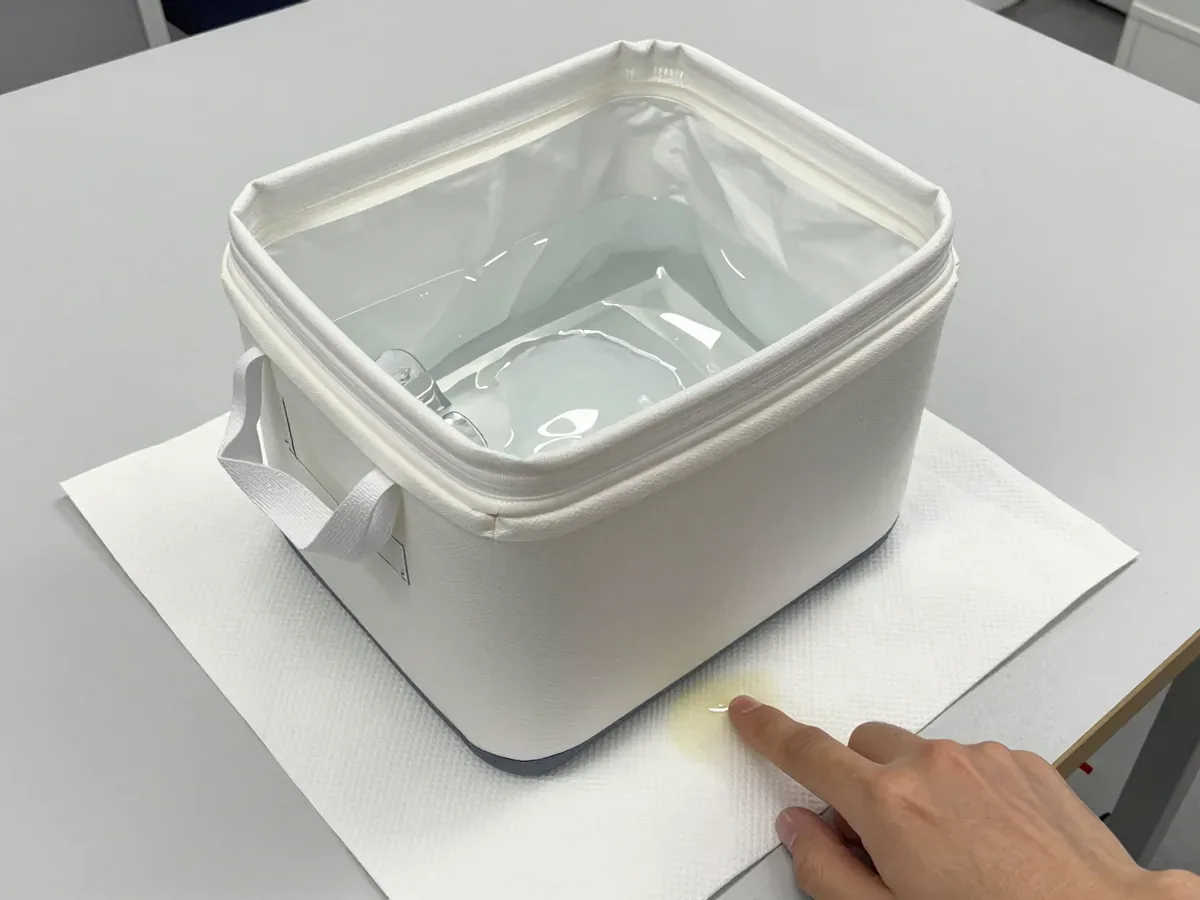
Finally, do the water test yourself, on the sample, before the order is placed. Fill the base with a small amount of water and an ice pack, set it on a paper towel, and wait. If the towel stays dry, the construction is sound. If it darkens at a corner, the sample has told you what the carton would have told you later.
The 6L bag that came back was not a bad design. It was a good design checked against the wrong list, and the list is easy to fix before the next container is loaded.
FAQ
Can ice go straight into a small cooler bag?
It can, but sealed ice packs are the safer choice. Loose ice melts into standing water, and standing water is what finds a base seam. If a buyer expects direct ice use, the lining and base bond need to be specified for it from the start.
Does a small cooler bag keep food warm as well as cold?
A soft cooler bag slows heat transfer in both directions, so it can hold warm food for a short period. It does not heat anything. The same lining that keeps cold in will keep heat in, but the performance window is shorter and depends on how full the bag is.
What size should a buyer start with, 6L or 24L?
Start with the 6L if the bag is a lunch or promo item, because the small body exposes construction faults fastest. A 24L family body can hide a weak base bond for a season. Test new materials on the small size first, then scale.
How is lining thickness chosen for a custom cooler bag?
It is matched to the hours the buyer needs the bag to perform. A commute and a morning at a desk ask for less than a full day outdoors. The thickness decision should be written on the spec with the roll code, so a substitution cannot happen quietly on the floor.