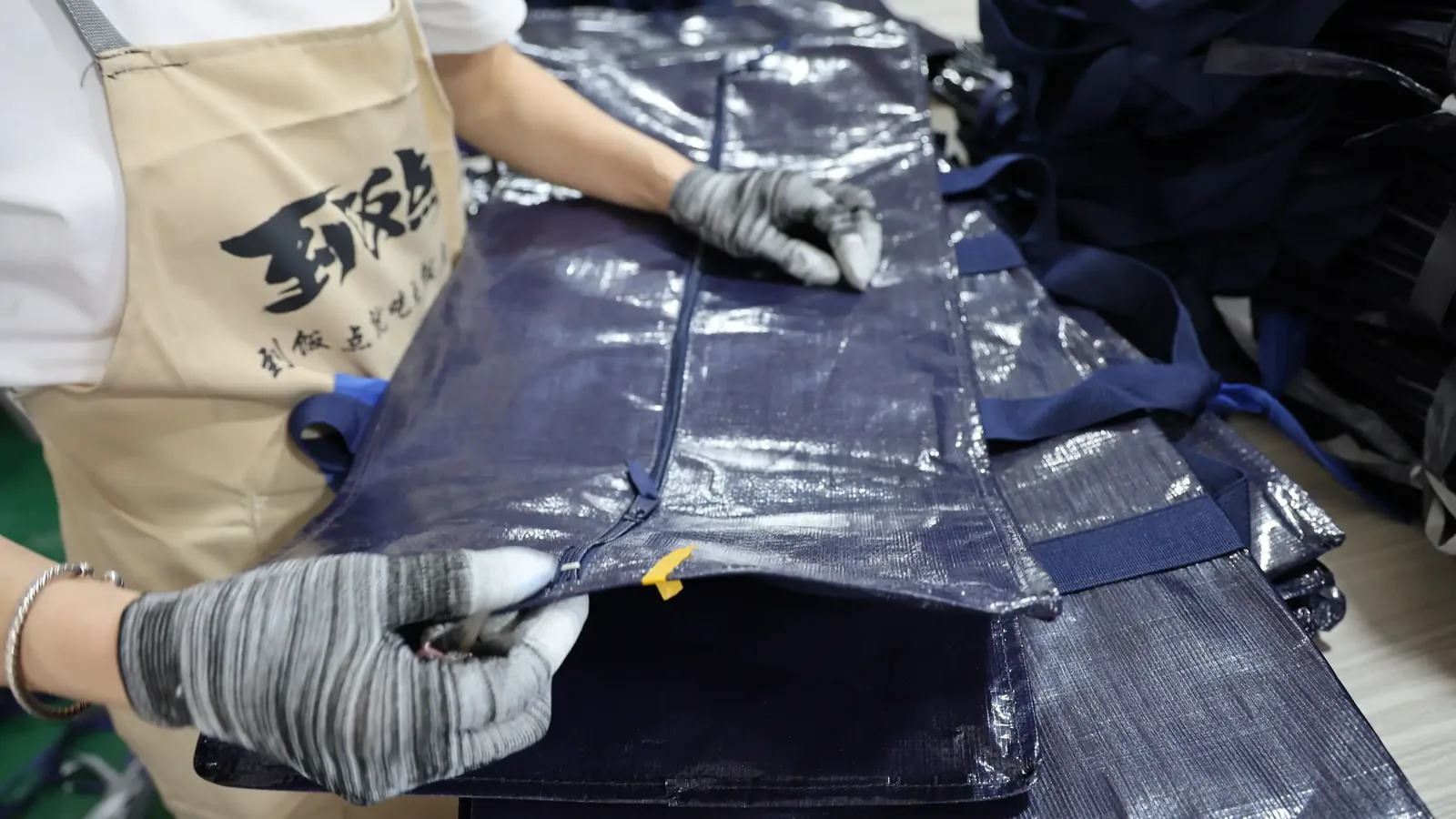
Based on product spec data and archived TIIOCTI notes on moving bag construction.
The inspection failed on a line the buyer had never written: the webbing was stitched only at the handles, and the first bag lifted at the depot tore free at the top corner. The order was for 29.1 in moving bags in royal blue, and the spec sheet listed fabric, colour and quantity. Everything else had been left to the factory's judgement, which is how a bag that looked correct in a photo became a bag a crew could not trust.
That failure is worth walking through line by line, because most moving bag orders are decided by five or six rows on a purchase order. Each row carries a decision about how the bag behaves under load, and each row has a way to check it before the cartons leave. The question in the title is not rhetorical. A moving bag survives because the spec sheet told the factory what to build, and because someone verified those lines at the right moment.
The Order Line That Started the Argument
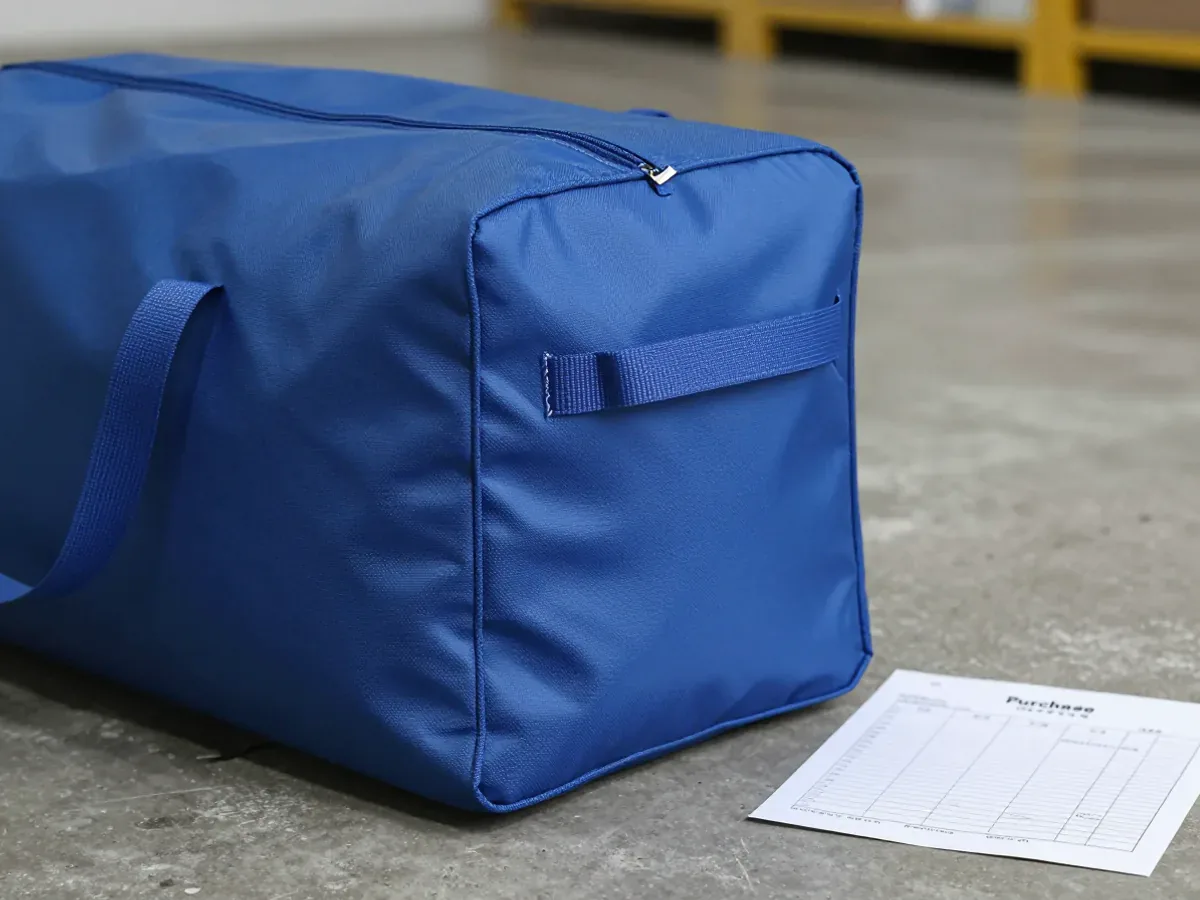
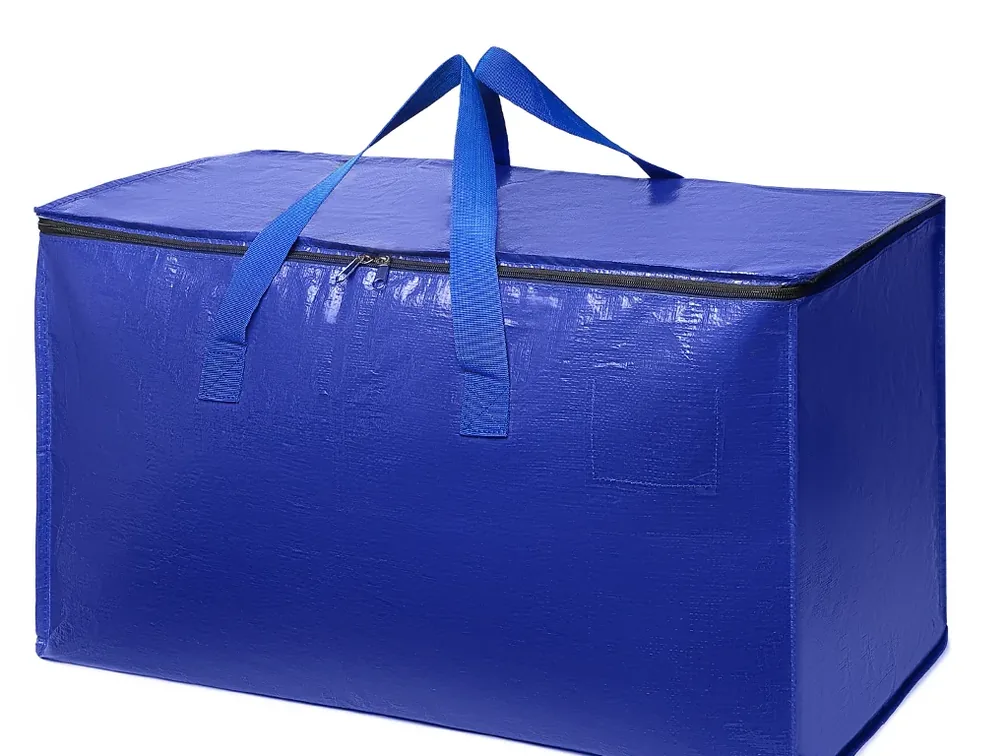
The purchase order read: moving bag, 29.1 in, royal blue, 600D, 500 pcs. The buyer assumed the strap detail was standard. The factory read the same line and built a bag with handles at the top opening only, which is a common and perfectly legal reading of a vague spec.
Two people can sign the same order and expect two different bags. The gap sits in the rows that were never written, not in the rows that were. A moving bag carries soft goods at awkward angles, gets lifted by one corner when a crew is in a hurry, and spends time stacked against other bags in a van. Each of those moments maps to a spec line, and each line needs a value, a reason and a check.
The rest of this walk follows the order as it should have been written, from the length down to the row almost every sheet leaves empty.
Length: The Number Buyers Copy Without Thinking
Length is the first row and the one most often copied from a previous order without a second look. A 29.1 in bag is the length movers ask for most, because it holds a duvet, four pillows or a full wardrobe shelf. That single number decides what the bag is for.
Longer bodies exist for a reason. At 45.3 in, a bag takes a folded tree, a cot or a whole wardrobe rail, which suits a move with bulky items and fewer trips. Shorter bodies around 27.2 × 13.8 × 15 in are the size most home moves are built from, holding a wardrobe shelf, bedding or the contents of a cupboard.
Write the length in centimetres and inches on the same row, and add the intended load beside it. A duvet bag and a wardrobe rail bag can share a fabric and a colour and still be different products. At goods-in, measure the flat body before packing and again with a full bedding load, checking that the base does not sag. A bag that sags at 29.1 in will sag worse at 45.3 in.
Webbing: Where the Strap Actually Runs
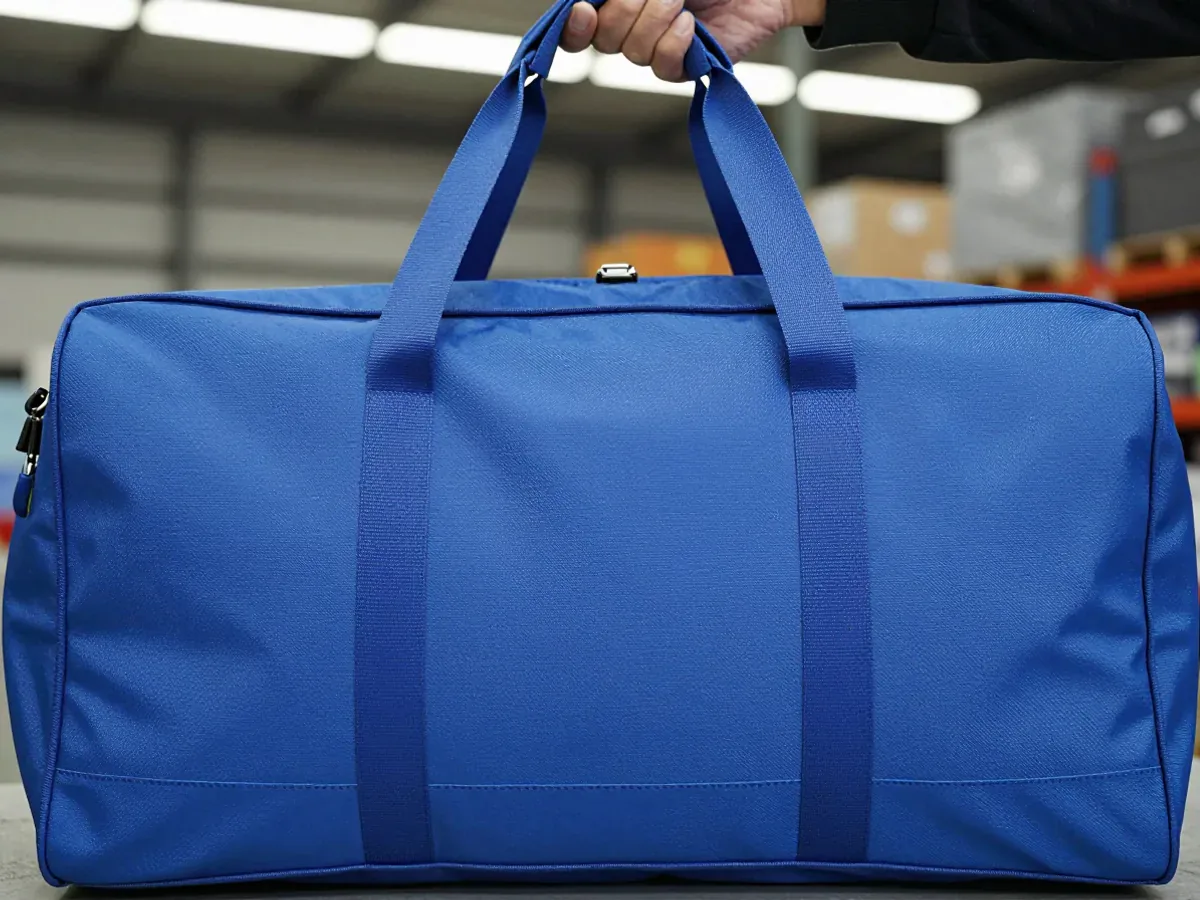
The webbing row is where the failed inspection began, and it is the row that decides whether the bag survives a lift. The spec should say that webbing runs the full length of the bag, not only at the handles. That single sentence changes how load travels from the base to the hand.
A full-length run spreads the weight across the body, so a corner lift does not pull on four stitches. A handle-only build concentrates the same load at two small anchor points, which is fine for a light duvet and risky for a wardrobe shelf.
Two webbing straps also let the bag ride on the back when both hands are full, which matters on stairs and in narrow hallways. A second handle on the end helps a crew lift the bag into a van, especially when the bag is heavy and the tailgate is high.
Verification is physical. Load a production bag to its intended weight and lift it by one end handle, then by one shoulder strap, watching the anchor stitches and the webbing path. Check that the webbing is continuous under the base seam rather than cut and joined. A pull test on a finished bag tells you more than a photo of a sample ever will.
Zip: Two Pulls and a Wide Opening
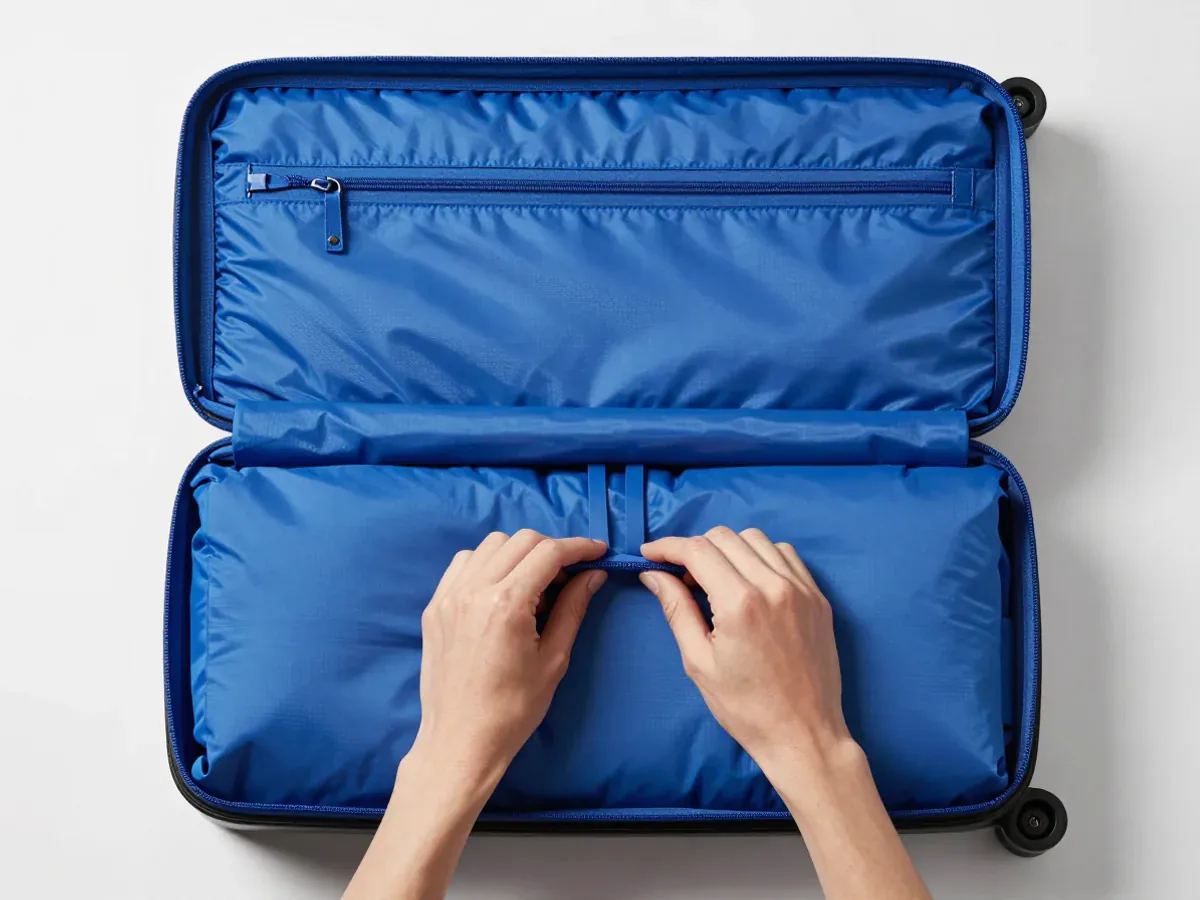
The zip row usually says "top zip" and stops there. A better line specifies two pulls, so the opening closes from either end, and a lid that opens across the whole top rather than a slit.
Two pulls matter when a bag is packed full and the load presses against the teeth. Closing from either end lets a packer work from the nearest side instead of dragging the slider across a bulging top. A wide lid lets bedding and folded clothing go in flat, which keeps the base square and the bag stackable.
The zip is also the first thing a crew touches at the van. A slider that jams under load turns a thirty second lift into a two minute wrestle, and crews remember which bags do that.
On the line, zip alignment is checked by staff at one of four QC checkpoints, and that check belongs in the spec as a named step rather than an assumption. At inspection, open and close each bag twice with a full load inside, then check that the two pulls meet without a gap and that the teeth stay meshed at the curve.
Label Pocket and Interior Colour
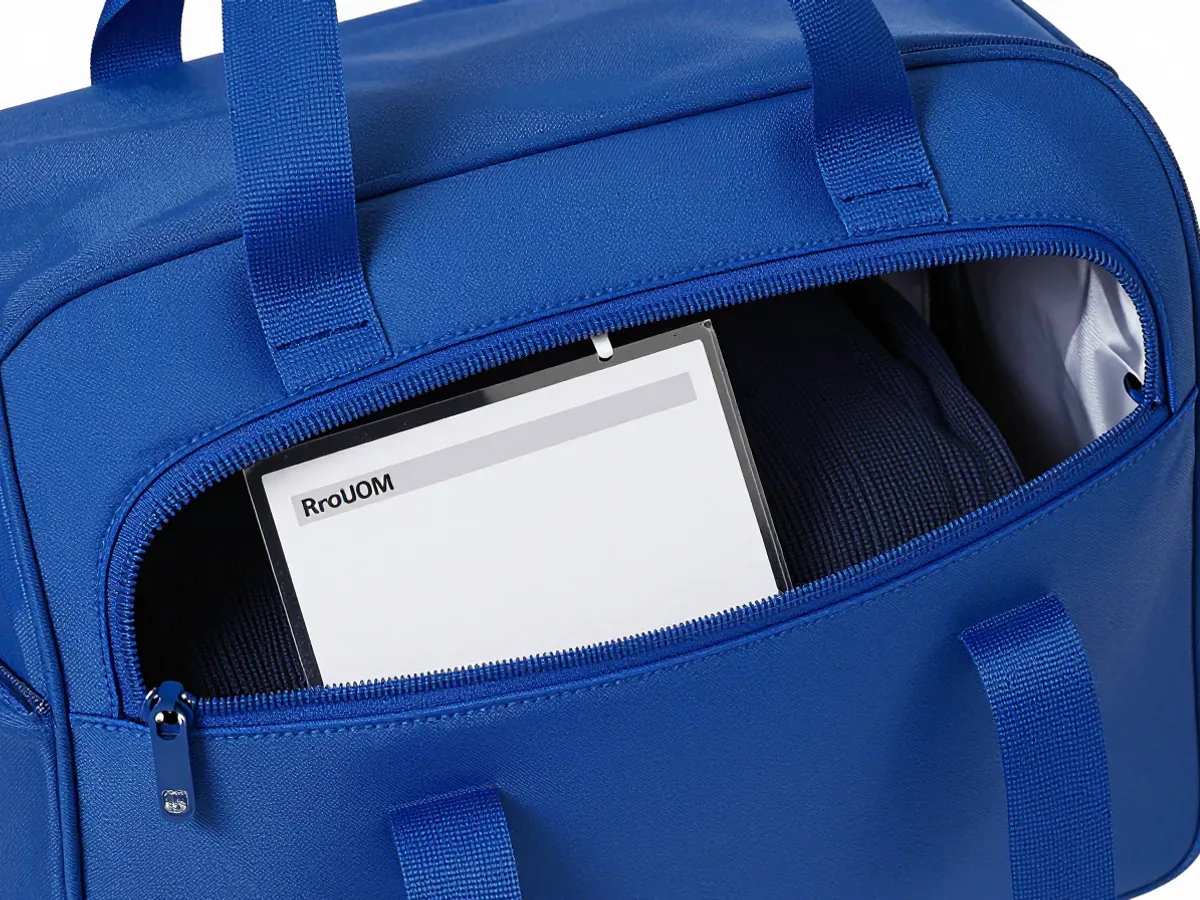
A clear label pocket for a room card or a barcode looks like a small row and earns its place on every order. The pocket lets you check a bag without unzipping it, which is the difference between a fast inventory count and a slow one.
Write the pocket position, the clear film and the card size it must hold. A pocket that fits a business card will not hold a printed room card, and a pocket sewn too low disappears under a stacked bag.
Interior colour is the row buyers skip and packers notice. A bright interior means dark items do not disappear into the bag, so a black cable or a dark jumper is visible against the lining instead of blending into it. On a job with fifty bags, that visibility saves real time at the destination.
Verify the pocket by inserting a card of the stated size and checking that it stays put when the bag is shaken. For the interior, open a finished bag in normal light and confirm the lining reads bright against a dark garment. Both checks take under a minute per bag.
Shell, Seams and the Waterproof Question
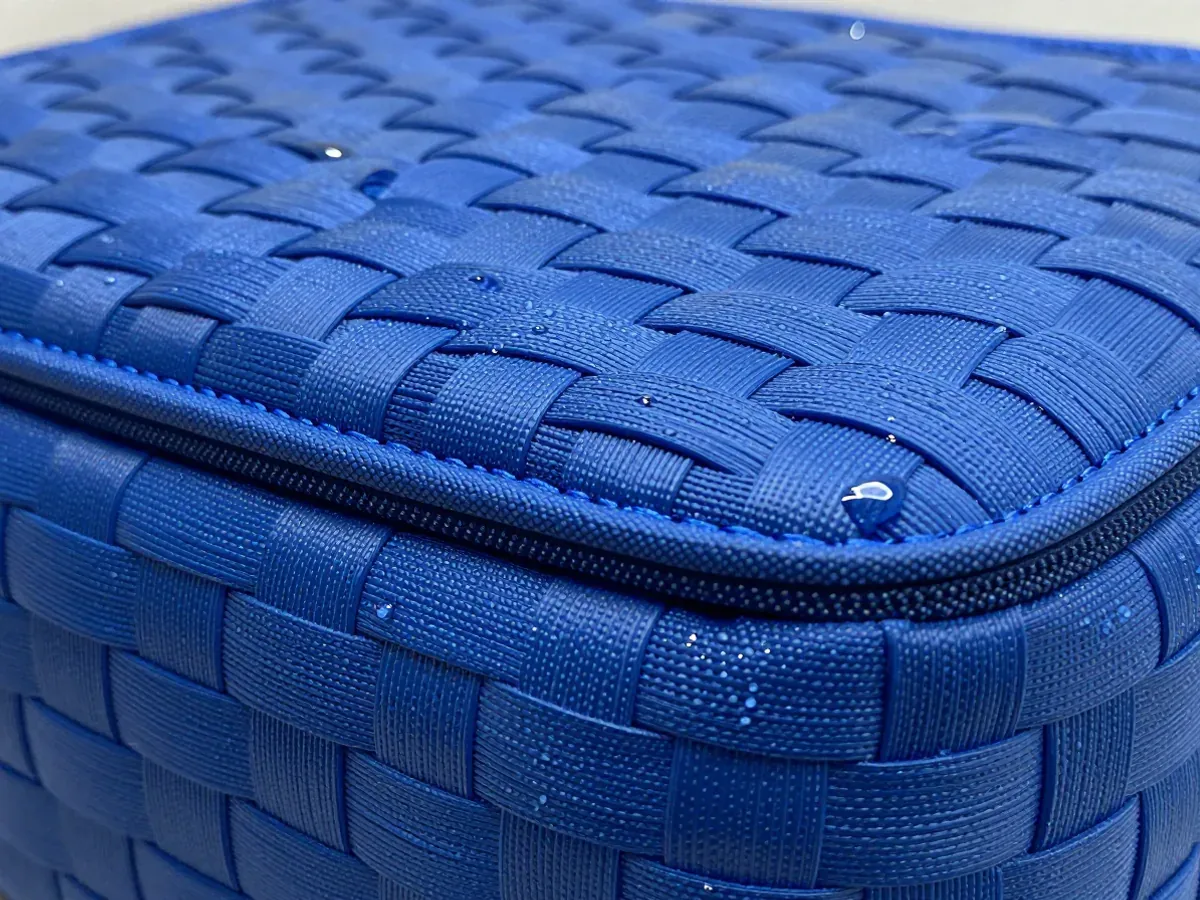
The shell row carries the fabric weight and the weave, and the seam row carries the honest answer about water. Seams are stitched, not sealed, so a moving bag is splash resistant rather than waterproof. Writing that plainly prevents a claim later.
A woven texture hides marks better than a smooth film, which matters for a bag that sits on a shop floor as well as in a van. The same shell should fold flat for storage between seasons, so the bag earns its place in a cupboard after the move.
The waterproof question comes up on almost every order, and the spec sheet should answer it before a buyer asks. Rain on a tailgate and a spill in a hallway are splash events. A bag left in standing water is a different test, and a stitched seam will let water through.
At inspection, pour a small amount of water on the closed lid and watch the seam line for a minute. Then check the stitching density along the base and the corners, where load concentrates. A sealed seam and a stitched seam are different products, and the row should say which one the buyer is paying for.
Colour and the Storage Unit Test
Colour is written as a name and checked as a physical standard. Royal blue is the colour crews ask for, because it is easy to count on a truck and easy to spot in a storage unit. That is an operational reason, not a decorative one.
A colour name alone is not a spec. The row should carry a standard the factory can match, and the check should happen under the light the bags will actually live in. A blue that reads correct in a bright office can go flat under the strip lights of a storage unit.
The storage test is simple. Put one bag in a row of ten and step back. If the bag is easy to pick out, the colour is doing its job. Count a full pallet by colour and confirm the count matches the packing list without opening a single bag.
Colour also interacts with the shell. A woven texture shifts the shade slightly across the surface, so the approved standard should be a physical swatch rather than a screen image. Keep that swatch with the order file and compare production against it, not against memory.
The Line Most Spec Sheets Leave Blank
The empty row is the one that describes how the bag behaves when it is lifted by something other than the handle. Call it the load path: where the weight goes when a crew grabs a corner, drags a bag across a tailgate or stacks it three high in a van.
Most sheets describe the bag at rest. They list the body, the zip and the colour, and they assume the bag will be carried the way the drawing shows. Crews do not carry bags that way.
Writing the load path means naming the webbing run, the anchor points and the second handle in one place, then adding a lift test to the inspection plan. It also means stating the intended load in kilograms beside the length, so the factory knows what the bag must survive.
A moving bag that fails usually fails at a lift, not at a seam in the middle of a panel. The row that predicts that failure is the row almost no purchase order contains. Add it, and the inspection has something concrete to check.
FAQ
Is a moving bag waterproof?
No. The seams are stitched rather than sealed, so the bag is splash resistant. It handles rain on a tailgate and a spill in a hallway, but it is not built for standing water.
What size moving bag fits a duvet and four pillows?
A 29.1 in bag is the length movers ask for most, and it holds a duvet, four pillows or a full wardrobe shelf. Check that the base stays flat under that load before approving the size.
Why do crews ask for royal blue moving bags?
Royal blue is easy to count on a truck and easy to spot in a storage unit. The colour is an operational choice that speeds up counting and locating bags on a job.
Can a moving bag be folded flat between jobs?
Yes. The shell folds flat and compact for transport after a job and for storage between seasons, which is part of why the bag gets reused rather than discarded.