Buyers comparing waterproof moving bags with plastic bins ask about cold, seals, stacking and load. Here are the answers that hold up outdoors.
In early February a buyer sent a photo of a plastic tote split down one corner, its lid still clipped shut. The bin had sat in an unheated shed since November with climbing harnesses and a stove inside, and the crack opened along a line nobody had looked at since purchase. Her question was short: should the next order be bins again, or bags?
That photo set the shape of the conversation. Over the following weeks the same buyer kept returning with follow-up questions, each one narrower than the last. What follows is that sequence, answered in the order it arrived, with the checks that belong to each answer.
Why did the buyer ask about a cracked bin in February?
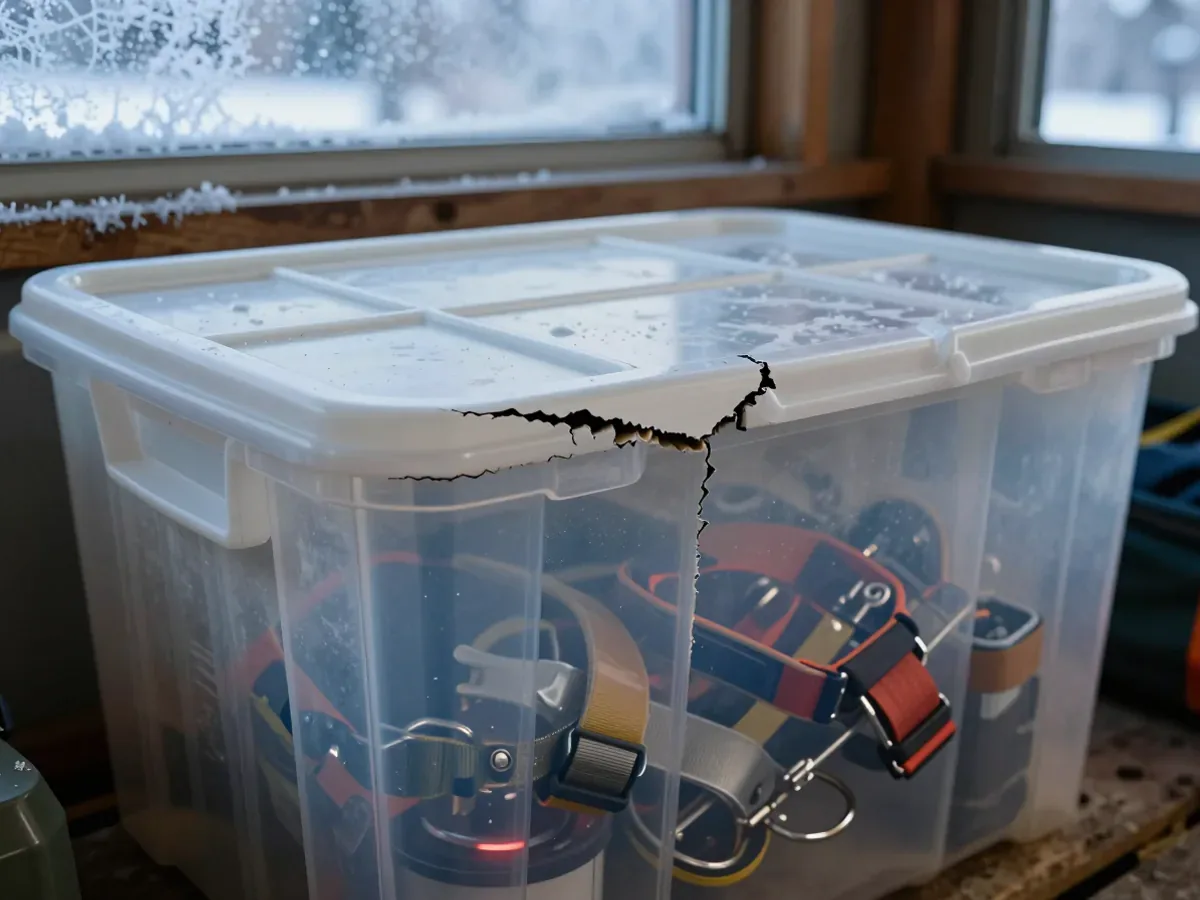
Because the failure showed up months after the purchase, in the coldest week of the year, and nothing in the product listing had warned her. Rigid plastic does not announce that it has lost its flexibility. It holds its shape in the warehouse, passes a visual check on arrival, and then behaves differently once the temperature drops and something heavy lands against a corner.
The buyer's own explanation was that she had overloaded it. That may be part of it, but the more useful reading is that a rigid container stores all of its stress in the walls. A bump, a dropped lid, a stack that leans in the shed, and the energy has nowhere to go except into a crack. A soft bag distributes the same impact across fabric and seam, which is why the failure mode looks so different between the two.
Her practical takeaway was to stop judging containers by how they look on the day they arrive. The question that matters is how they behave in the eighth month, in the cold, under a load.
Does a waterproof bag actually keep gear dry in a wet boot?
The buyer had a specific worry: a bag riding in a wet car boot after a weekend on the hill, with damp groundsheets pressed against it. She wanted to know whether "waterproof" meant the gear inside stays dry or only that the outside sheds a bit of rain.
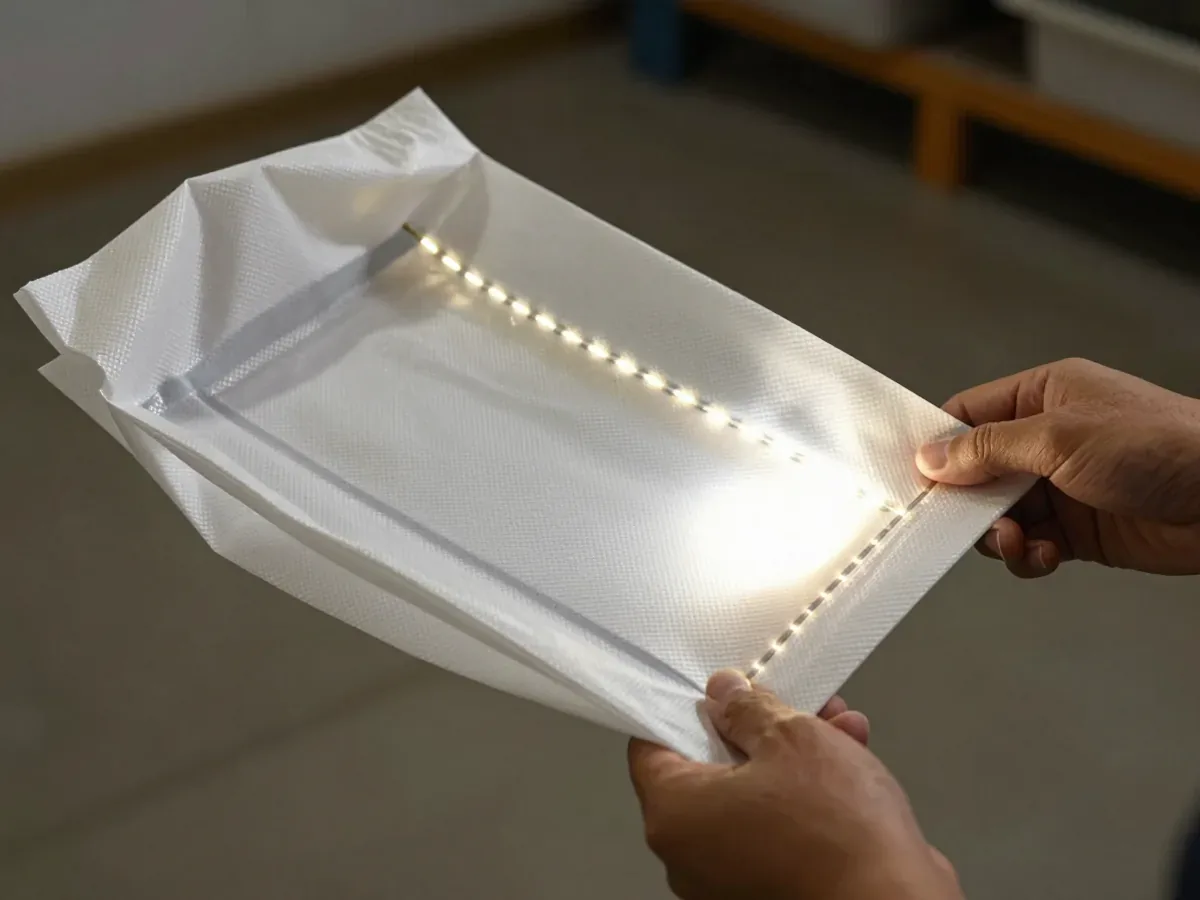
The answer depends on construction, and construction is visible if you know where to look. Bags made from laminated woven polypropylene are fully waterproof and tear resistant, and the sealing method is what carries that claim. Instead of traditional stitching, which punches needle holes through the fabric, these bags use high frequency welded seams. The material is fused rather than pierced, so there is no line of holes for water to follow.
A buyer can check this without a lab. Turn the bag inside out at the seam and hold it to a light. A welded seam shows a continuous bond; a stitched seam shows a row of points where light comes through. The second bag will keep a light shower off and will not keep a wet boot out.
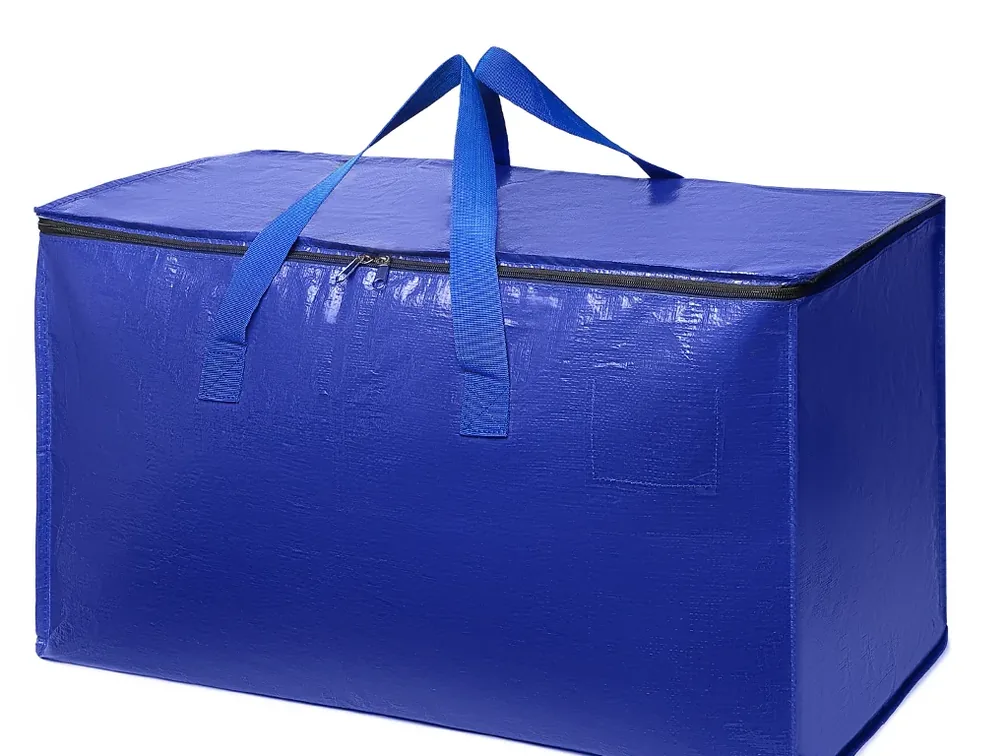
The closure matters as much as the seam. A top zip with a storm flap, or a roll top that folds over itself before fastening, gives water a path that runs away from the opening. A plain zip at the very top of a bag collects water in the channel and holds it there.
Can a soft bag carry the same load as a rigid tote?
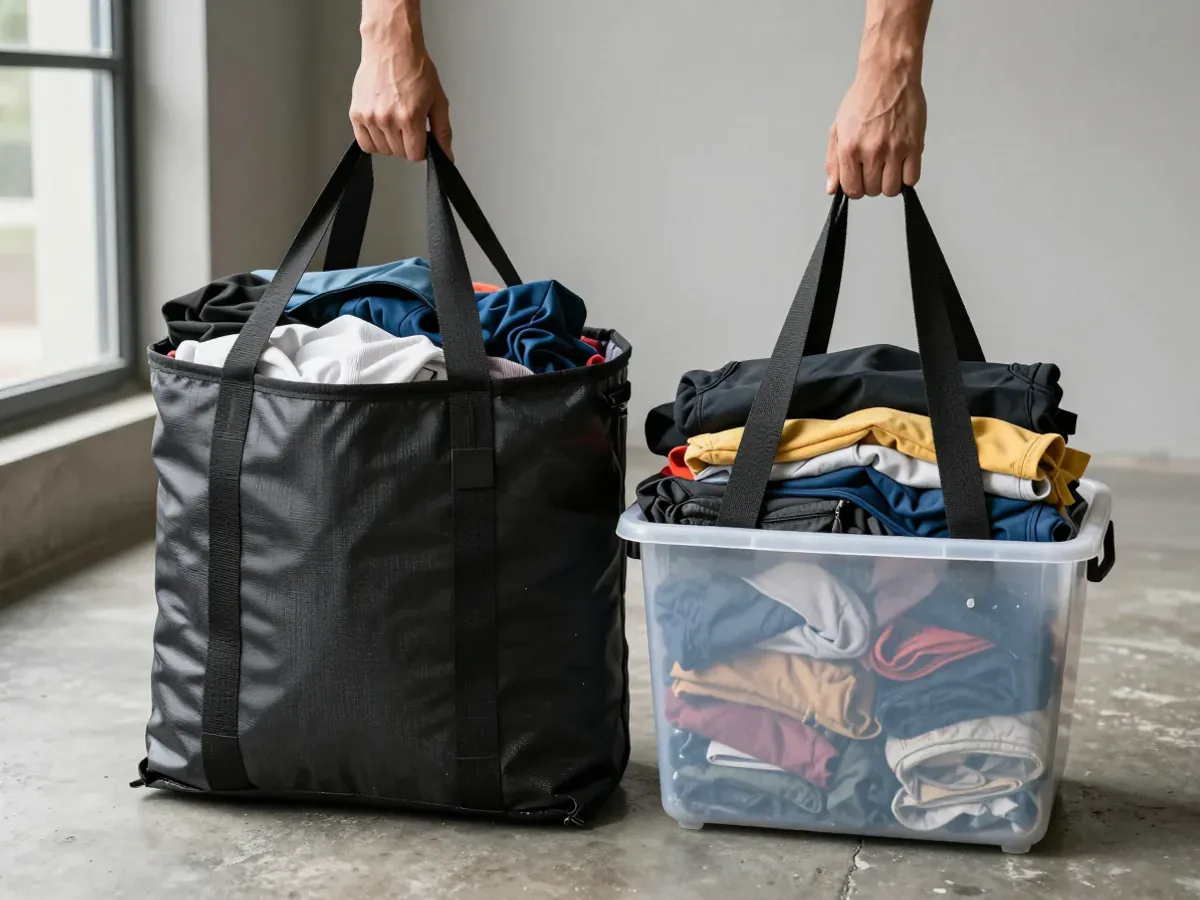
This was the question the buyer asked with the most skepticism, and fairly so. A tote looks like it is doing structural work. A bag looks like it is hoping for the best.
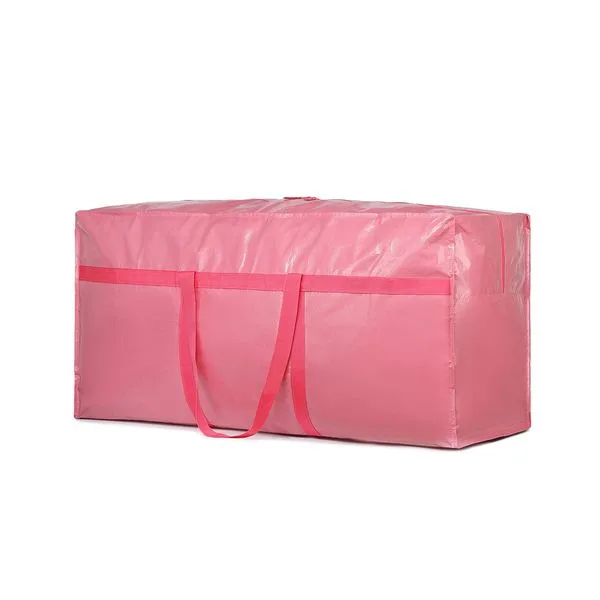
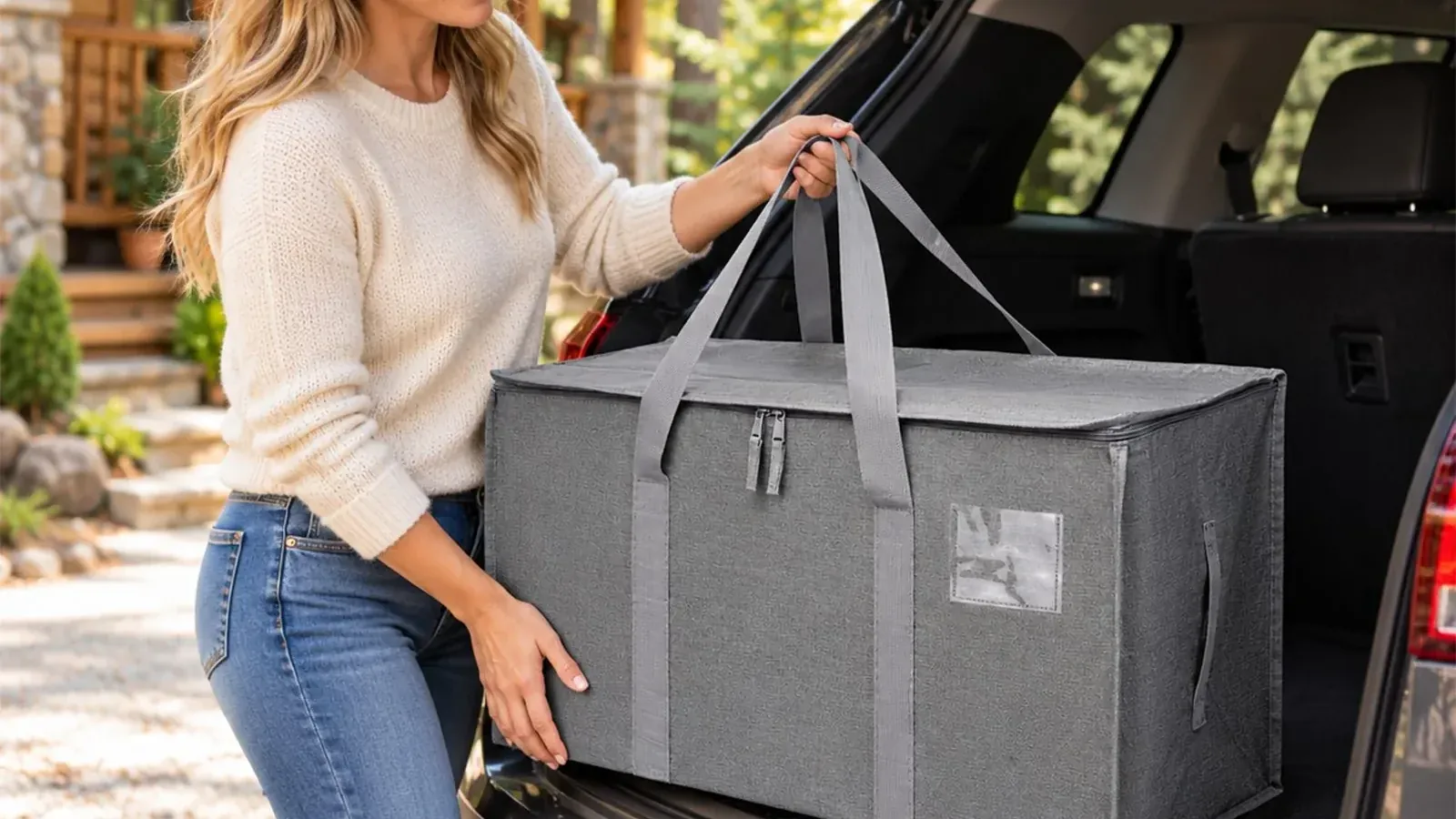
The load question is really a handle question. A moving bag can be built with strong carry straps for a clothing and laundry load, and the same body can carry a double zipper and stitched webbing at once. Handles reinforced with double stitched webbing are tested to support loads in the 20 to 25 kg range without failure. That figure belongs on the spec sheet, not in a conversation, because it is the number a buyer can hold a supplier to.
Weight distribution is where the two types diverge. A rigid tote holds its own shape, so a heavy item sits where it was placed. A soft bag settles around the load, which is an advantage for clothing and awkward shapes and a disadvantage for anything with a sharp corner. Two people can carry a large appliance in one heavy duty moving bag, but that is a two person lift by design, not a one person haul.
The buyer's decision rule after this answer was simple. If the load is soft, bulky, and lifted by hand, the bag wins on weight and on packing efficiency. If the load is rigid, heavy, and stacked for months, the bin still has a role, provided it is rated for the cold.
Which one stacks better when the shed is full?
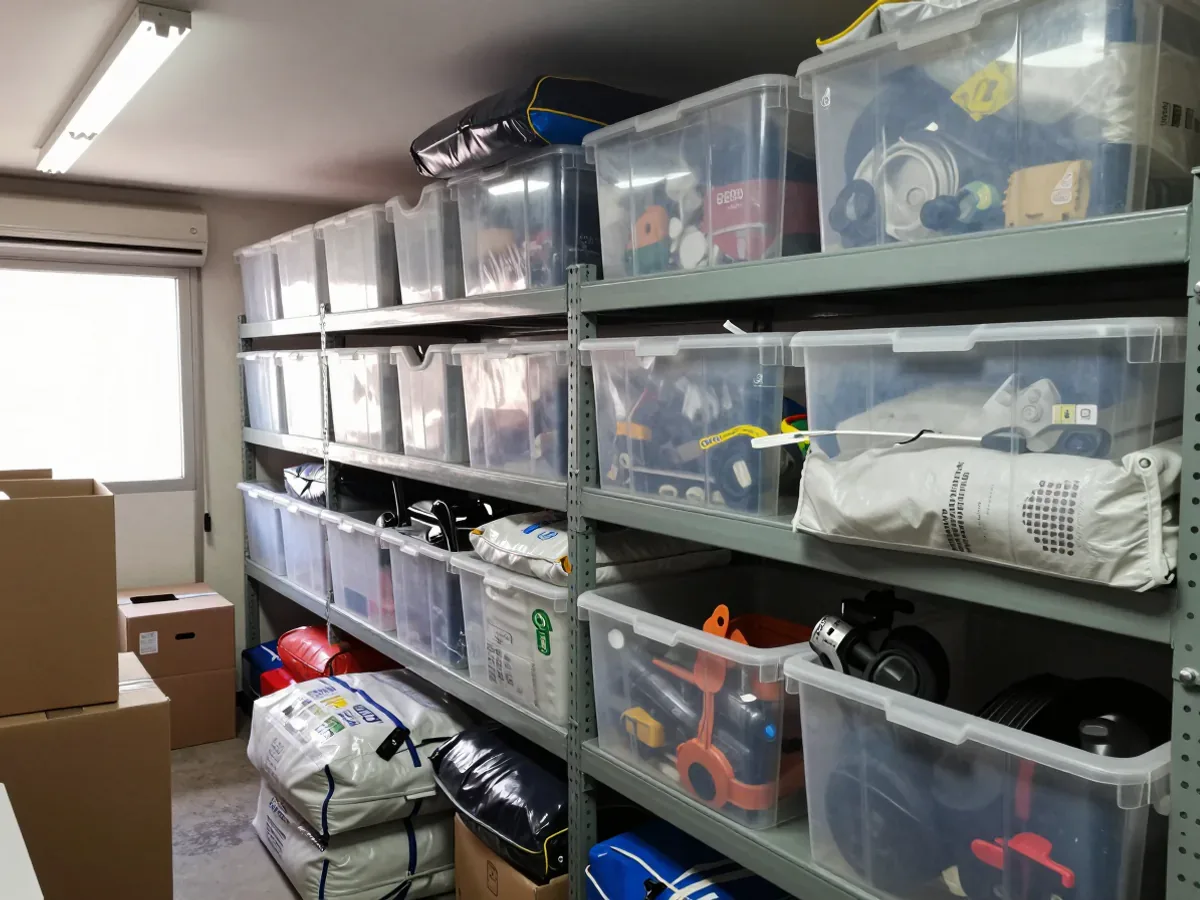
Here the buyer expected bins to win outright, and in a narrow sense they do. A rigid tote with a flat bottom and square walls stacks predictably, and internal dividers keep small items from migrating. That is a real advantage in a shed where the same shelf gets loaded the same way every season.
The surprise came from the bag side. Loaded moving bags stack beside cartons in a boot without a rigid frame, because the fabric conforms to whatever is next to it. In a full shed that conformity is useful: a bag fills the gap between two bins, sits on a shelf edge without tipping, and compresses when the door needs to close. A bin that does not fit the gap stays on the floor.
The trade is predictability for flexibility. Bins give a fixed footprint you can plan shelving around. Bags give a variable footprint that absorbs whatever space is left. A buyer running a storage operation with standard racking should count the rack dimensions before choosing. A buyer packing a mixed load into vehicles should count the gaps.
What does a bag seal that a bin lid does not?
The buyer had started thinking about pests by this point, having found mouse droppings near the shed door. Her question was whether a bag closure does anything a clipped lid does not.
A well made bag closes along a continuous line. A top zip with a flap, or a roll top folded three times and buckled, leaves no open gap along the length of the opening. Heavy duty plastic moving bags offer more protection than cardboard because mice cannot chew through the thick plastic, and the closure is what decides whether that protection holds. Mice can squeeze through gaps as small as a pencil, so a lid that clips at four points and bows between them is not a seal.
The check is the same light test used on the seam, applied to the opening. Close the bag as it would be closed in storage, then look for any point where the two edges separate. A bin lid that lifts under finger pressure at the midpoint will lift for a mouse as well.
This is also where the bag's weakness sits. A zip that is strong but not covered, or a roll top that is folded only once, gives back most of the advantage. The seal is a construction choice, not a category feature.
How do you test either container before the season starts?
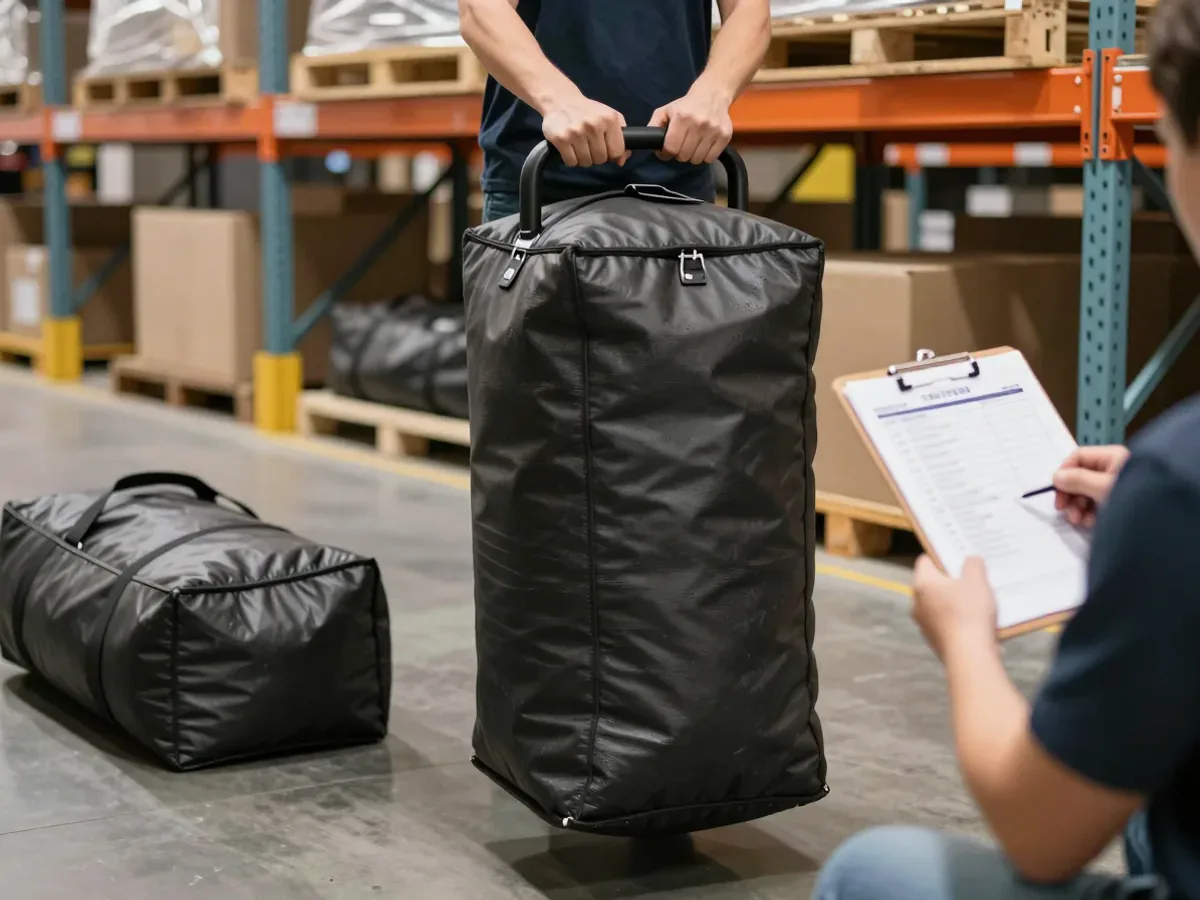
The buyer wanted a routine she could hand to staff, not a one-time verdict. The routine that came out of the conversation has four steps and takes about ten minutes per container type.
First, the light test on every seam and every closure, done on a sample from the actual production run rather than a salesman's sample. Second, a load test at the rated weight, lifted by the handles and held for a count of thirty, which catches webbing that was stitched through the coating. Third, a wipe test on the surface: the waterproof surface of a moving bag takes a wipe with a damp cloth, and a surface that pills or dulls under that wipe will not survive a season of cleaning. Fourth, a cold check, storing one loaded container outdoors overnight in the coldest month the product will see, then dropping it from waist height onto a hard floor.
None of these steps requires equipment. They require that someone actually does them, on the run that will ship, before the season opens.
What the buyer has not asked yet
Across five conversations the buyer asked about cracks, water, load, stacking, and pests. She never asked whether the seal on the bag and the load rating on the label describe the same product.
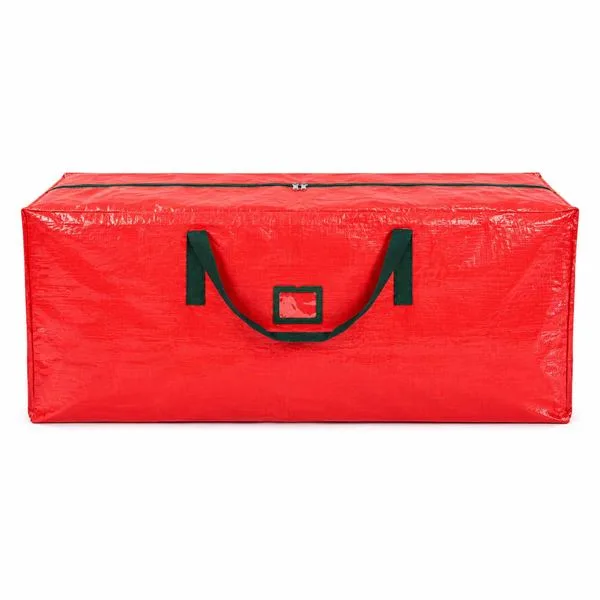
That gap matters because the two claims are tested separately and can drift apart in production. A bag can carry a label pocket and raised handles, and the label inside can state a load the closure was never built to hold. A roll top rated for 20 kg is fine until someone fills it to 25 and the buckle takes the strain instead of the webbing. The seal and the rating have to be verified on the same unit, at the same time, by the same person.
The question to add to the list is blunt. Show me the closure and the load label on one bag from this run, and show me the test that connects them. A supplier who can answer that without leaving the room has thought about the product as a system rather than a list of features.
FAQ
Are waterproof moving bags fully waterproof or only water resistant?
It depends on the seam and the closure. Bags made from laminated woven polypropylene with welded seams and a covered or roll top closure are built as fully waterproof. A bag with stitched seams and an uncovered zip should be treated as water resistant only.
Can plastic bins be left outside all winter?
Many bins are water resistant rather than waterproof, and cold makes rigid plastic more brittle. A bin left outside through freezing weather is at risk at the corners and along the lid line, especially under load. If a bin must stay outdoors, keep it under cover and off the ground.
How much weight can a heavy duty moving bag handle?
Handles reinforced with double stitched webbing are tested to support loads of 20 to 25 kg without failure. Treat that as the working limit for a one person lift, and confirm the figure on the label matches the closure on the bag.
Do moving bags keep mice out of stored gear?
Thick plastic resists chewing far better than cardboard, and a continuous closure leaves fewer entry points than a clipped lid. The result depends on the seal: a gap of pencil width is enough for a mouse, so check the closed opening before trusting it.