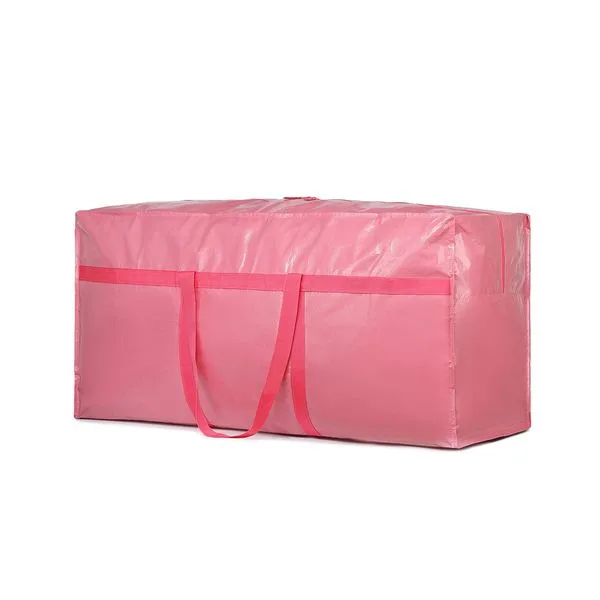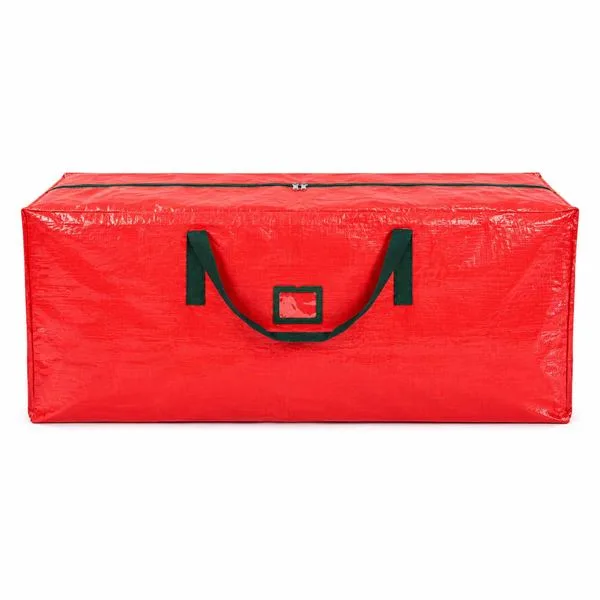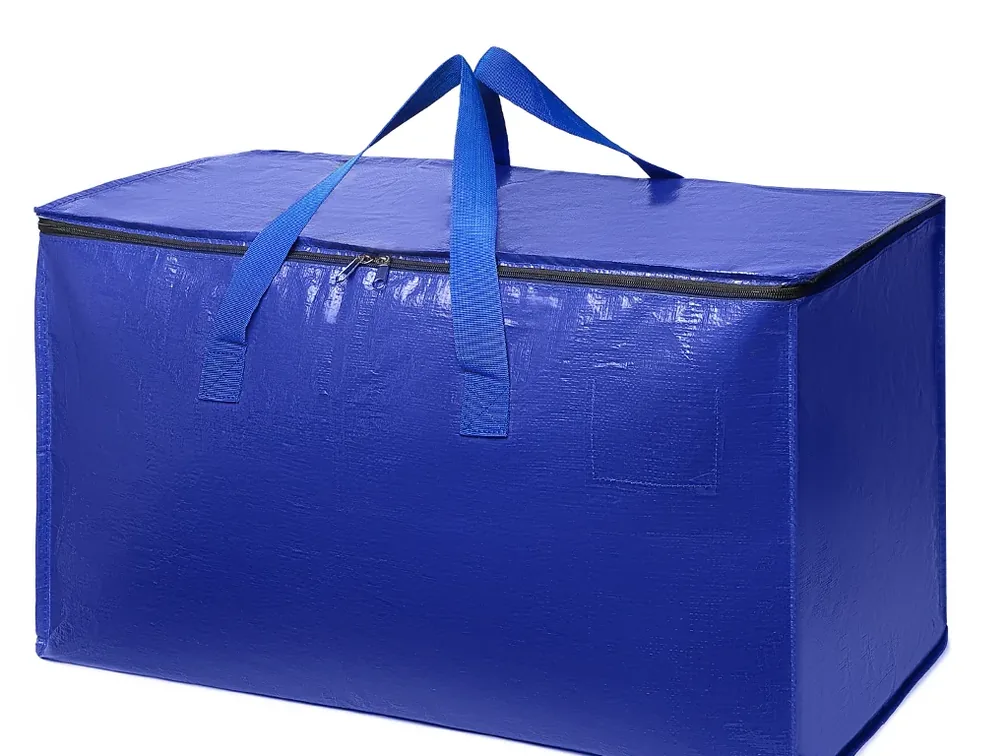
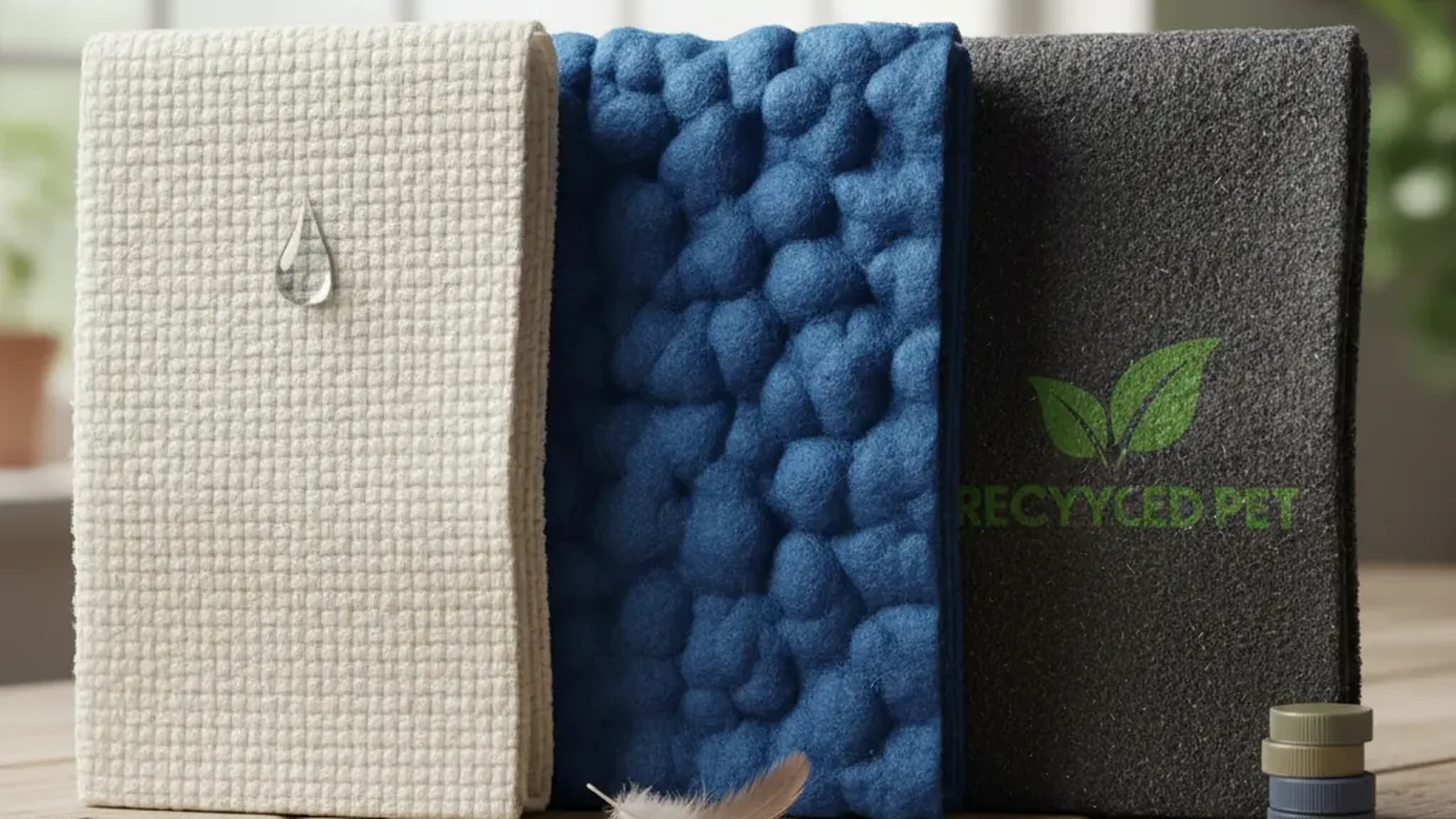
Built from a legacy bulk buying checklist, reorganized as a station-by-station walk through a moving bag order.
The purchase order for a bulk moving bag order usually leaves the buyer's office with three numbers on it: a unit price, a quantity, and a delivery date. Six weeks later, at a loading bay, a carton gets sealed before anyone has checked whether the label matches what is inside it. The distance between those two moments is where most bulk moving bag orders quietly go wrong.
Buyers who source moving bags in bulk tend to review the quote carefully and then stop looking until the container arrives. The stations in between, from fabric intake to the last carton on the trailer, each carry one or two checks that cost minutes and prevent the failures that cost seasons. Walking a single order through those stations shows where the gaps open.
The PO Leaves the Office With Three Numbers Nobody Rechecks
A purchase order is a commercial document, not a production document. It states price, quantity and ship date, and it usually says nothing about fabric weight, handle construction, zip grade or the internal volume the bag must hold. The factory builds to whatever specification sheet accompanies it, and if that sheet is thin, the production team fills the gaps with habit.
The first mistake surfaces here, before any material is cut. A buyer who has not written load capacity into the order has left the bag's strength to the supplier's default. A buyer who has not stated size in volume terms has left packing efficiency to a flat dimension that may not match the goods. The PO needs a companion page with the numbers that decide whether the bag works.
Three figures belong on that page: the load the bag must carry, the internal volume in gallons or cubic measure, and the handle reinforcement method. None of them are price terms, and all of them are harder to change once fabric is on the table.
Fabric Intake: The Roll That Decides Whether the Bag Carries Weight
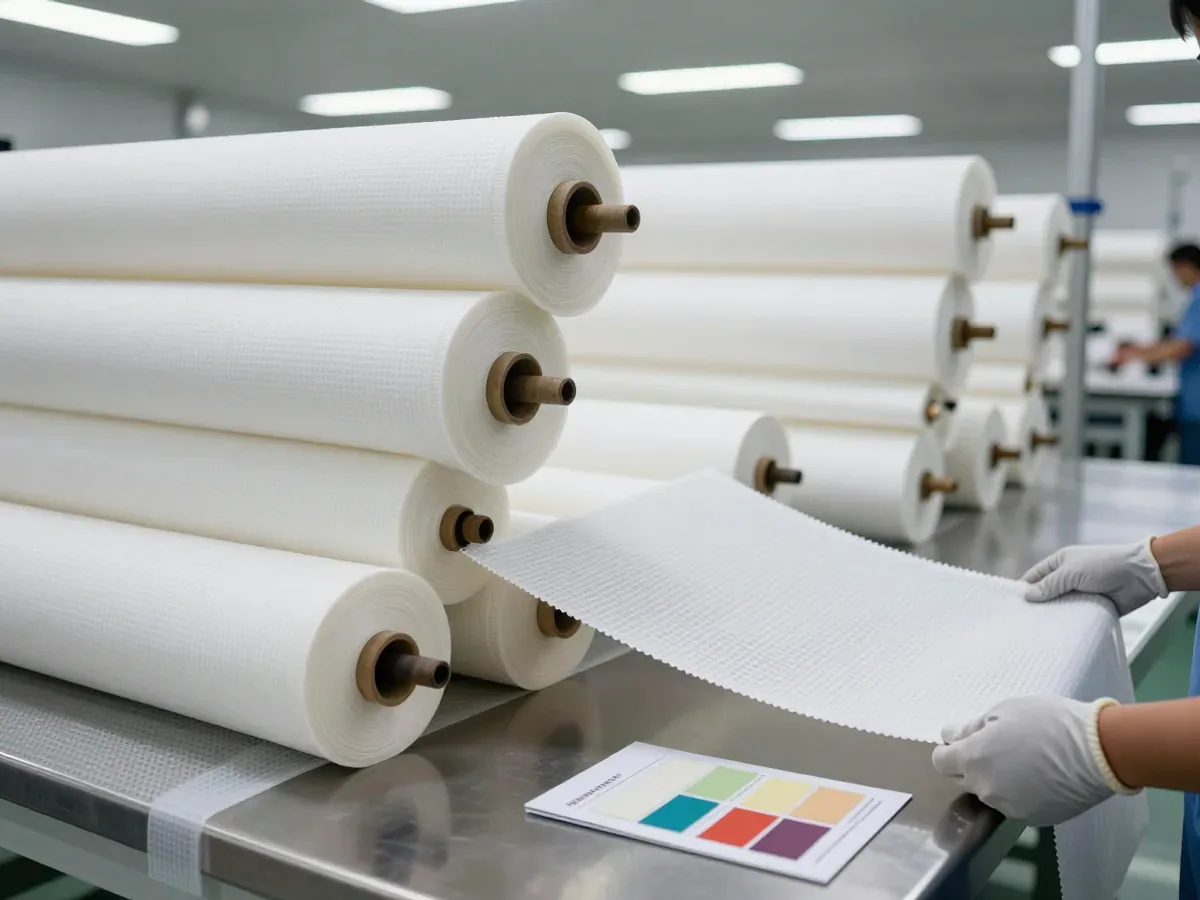
At the fabric intake station, rolls arrive and get checked against the order before they are released to cutting. This is the moment where a cheap substitution becomes invisible forever, because once the roll is cut, nobody can tell from the finished bag whether the weave was the specified one. Buyers who focus on price first often discover the consequence here, in a roll that feels lighter than the sample they approved.
The check is physical. A swatch from the roll should match the approved sample in weight and hand feel, and the roll label should match the specification sheet. High-strength woven material such as RPET or PP-woven is what keeps a heavy duty moving bag from tearing under a loaded carry, and the difference is measurable in the hand before it is measurable in a complaint.
Request swatches before the bulk order is placed, and keep one approved swatch on file at both ends. When the roll and the swatch disagree, the conversation happens at intake rather than after delivery.
Cutting Table: When the Size Line and the Volume Line Disagree
The cutting table works from a size line, and the size line is where flat dimensions and real capacity part company. A bag can measure correctly on the table and still fail to hold what the buyer intended, because a flat width and height say nothing about how the bag behaves when filled. Buyers who confirm size only in inches have confirmed half the specification.
The other half is volume. Confirm the size need in gallons or cubic measurement as well as in flat dimensions, and test the bag with actual contents rather than an estimate. A bag ordered for retail packaging that turns out too small for the product inside has failed before it ever reaches a customer.
Inconsistency across a run is the quieter risk. If the cutting table drifts between lots, an inventory plan built on one bag size starts to break down across a warehouse. Ask how the size line is controlled lot to lot, and check a cut panel against the spec at the start of each run.
Sewing Floor: The Handle Stitch Buyers Rarely Ask to See
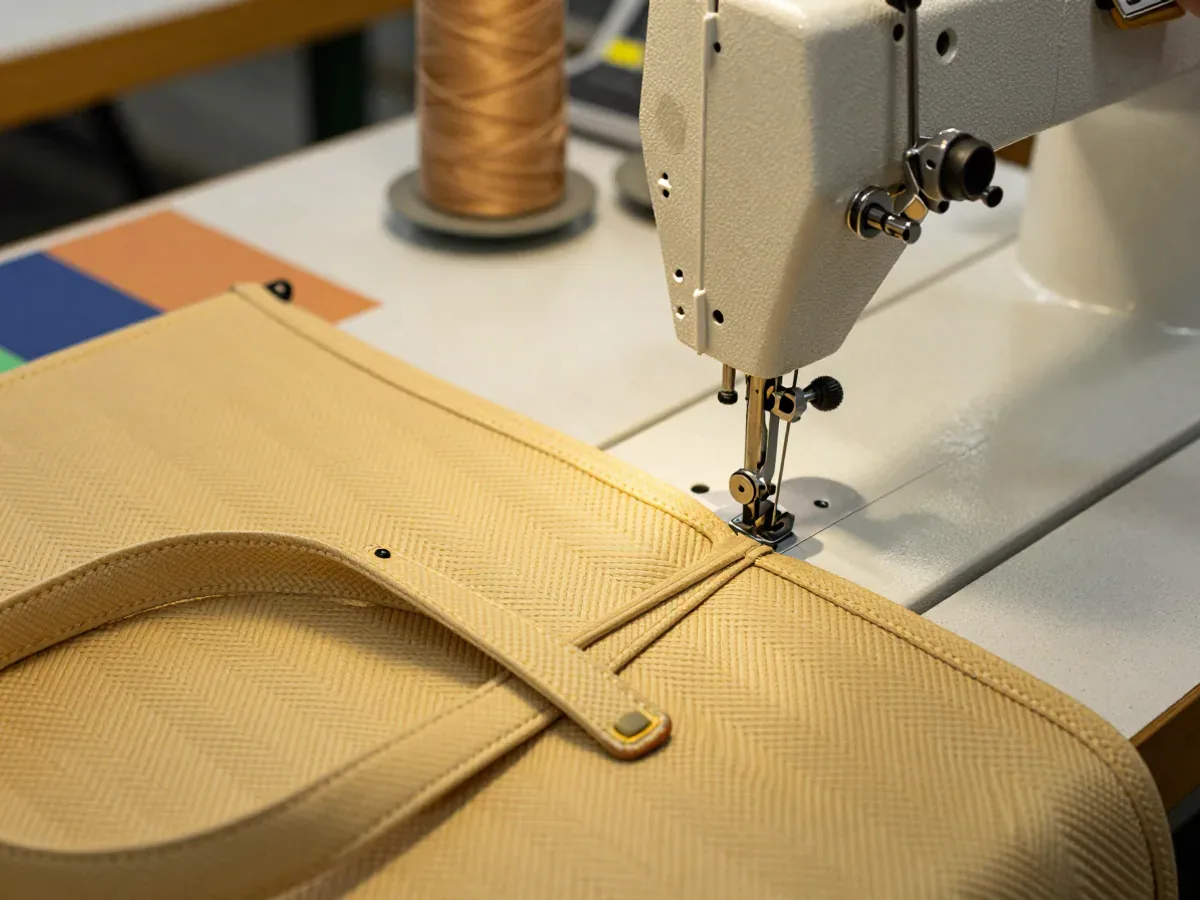
On the sewing floor, the handle attachment is the slowest station and the one buyers ask about least. A bag is only as strong as its weakest stitch, and the weakest stitch is almost always where the handle meets the body. A single row of stitching there will hold a light load and fail a heavy one, and the failure happens in a customer's hands rather than in a factory.
Double stitching is the baseline. Cross-stitching or bar tacks at the handle ends are what distribute load across the attachment instead of concentrating it on a few threads. Ask for construction photos or a short video of the handle station, and compare what comes back with the reinforcement method written on the specification page.
The sewing floor also reveals whether the bag was designed for its load. A handle webbing that is narrow relative to the bag's capacity tells you the construction was chosen for cost rather than for carrying. That signal is visible at the machine, and it is worth a question before the lot is finished.
Zip Station: A Pull Test Mounted in a Fixture
Not every moving bag carries a zip, but the ones that do concentrate their failure risk at the closure. A zip sample mounted in a fixture for a pull test, on the production floor, is the simplest way to see whether the closure survives a loaded bag rather than an empty one. Buyers who never ask about closure type discover the answer when a bag opens mid transport.
Closure choice should follow the bag's purpose. A zip suited to light storage and a zip suited to a loaded move are different components, and the specification should name which one the order requires. Industrial-grade closures exist for high-stress use, and the buyer's job is to state the use case clearly enough that the right grade gets fitted.
Ask how the closure is tested and what the supplier can show from that test. A fixture test on a mounted sample is evidence of a process; a verbal assurance is not. The question costs one email and prevents the inspection failure that triggers an emergency reorder.
Final Inspection: Loading a Finished Bag Before the Lot Ships
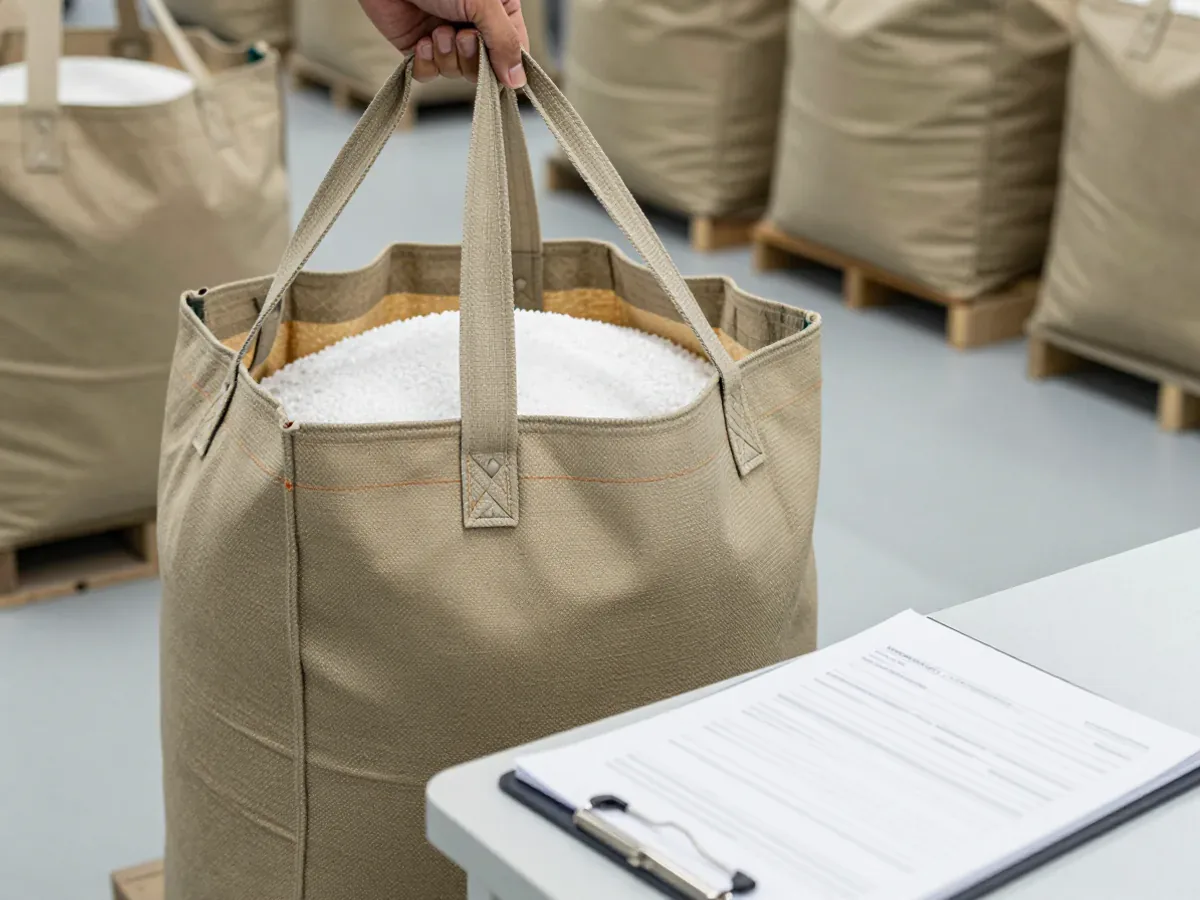
Final inspection is where the bag meets its actual job for the first time. Our QC team loads a finished moving bag under a durability test before a lot ships, and the value of that step is that it tests the assembled product rather than its parts. A bag that passes fabric intake, cutting and sewing can still fail when a load goes in and the handles take the weight.
The inspection should cover the points a buyer will be judged on: handle attachment under load, seam integrity, closure function, and the match between the finished bag and the approved sample. Weight-bearing test data and third-party results belong in the buyer's file before the bulk order is confirmed, not after a problem appears. In some regions, vague load specifications can create compliance exposure as well as quality exposure.
A finished bag loaded in front of an inspector answers a question no document can. If the bag distorts, the handles stretch, or a seam starts to give, the lot is still in the building and still fixable.
Loading Bay: Cartons Sealed Before Anyone Checks the Labels
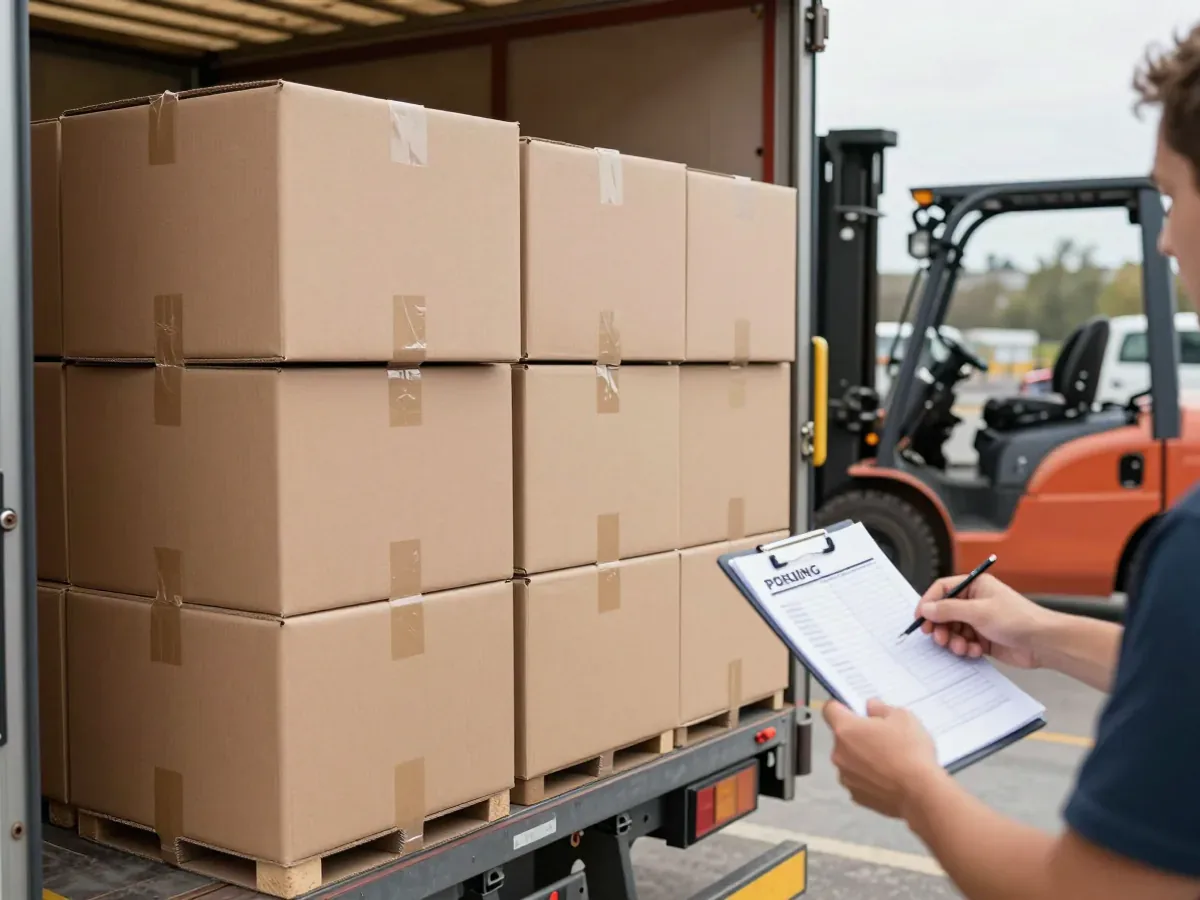
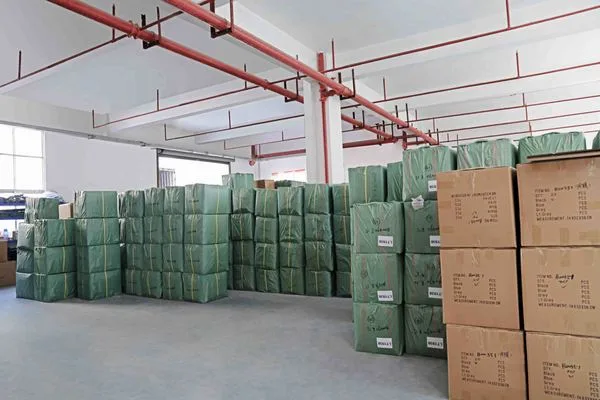
At the loading bay, cartons get sealed and stacked on the freight trailer, and the sealing often happens before anyone reads the labels. A carton label that disagrees with the polybag label inside it is a small error with a large consequence, because the buyer catches it at the warehouse or the retail dock rather than at the factory. Mixed sizes in a sealed carton are effectively a return waiting to be processed.
The check at this station is a label audit against the packing list, done on a sample of cartons before the trailer is closed. Size, quantity, colourway and order reference should match across the carton label, the inner label and the shipping documents. Custom moving bags with Pantone matching and printed artwork add one more line to that audit, because a colourway mix-up is invisible until the cartons are opened.
The loading bay is also the last place to catch a count error. Once the trailer leaves, every discrepancy becomes a claim rather than a correction.
What to Put in Writing Before the Next Lot Is Booked
The stations above share one pattern: each failure was decided by something missing from a document, not by something going wrong on a machine. A specification page attached to the PO, carrying load capacity, internal volume in gallons, handle reinforcement method, closure grade and label requirements, closes most of the gaps before production starts.
A sample approval should cover the same ground. A custom moving bag order needs its own approved sample, signed off on construction as well as appearance, because a sample that only confirms colour confirms very little. Keep the approved sample and the specification page together, and reference both in the inspection criteria.
Buyers who want a short list can hold to five items: fabric matched to an approved swatch at intake, size confirmed in volume as well as flat dimensions, handles double stitched with cross-stitch or bar tacks, closure grade named and tested, and labels audited before the trailer is sealed. Each one is checkable at a named station, and each one is cheaper to check than to fix.
FAQ
Should I specify moving bag size in inches or in gallons?
Both. Flat dimensions in inches tell the factory what to cut, and volume in gallons tells the buyer what the bag will actually hold. Confirm the volume figure and test with real contents before the bulk order is placed.
How do I confirm handle stitching before a bulk order?
Ask for construction photos or a short video of the handle station, and confirm in writing that handles are double stitched and reinforced with cross-stitching or bar tacks. Compare the approved sample's handle attachment with the production method.
What load test data should a moving bag supplier provide?
Ask for weight-bearing test data and any third-party results the supplier holds, and request them before the bulk order is confirmed. Third-party weight, drop and seam strength results are worth having on file, particularly for distribution in the EU or North America.
Do custom moving bags need a separate sample approval?
Yes. A custom order should have its own approved sample covering construction, closure and print position, not just colour. Keep that sample and the specification page together and use both as the reference for final inspection.