
Cost figures below are illustrative ranges drawn from bag decoration practice, not quotes for any specific order.
The sample came back from the buyer with a sticky note attached to the polybag: "logo is too blue." The bag itself was well sewn, the fabric weight matched the approved swatch, and the handle drop was correct. Only the print had drifted, and the note did not say which blue the buyer had expected.
That note set off a chain of costs that never appear on a single invoice. A color specification written across systems, where the buyer approves in one color language and the factory produces in another, pushes money into five places: the sample round, the sewing floor, the retailer's deduction column, the air freight desk, and the reprint queue. None of them are visible when the purchase order is signed.
The Bill Starts With the Sample Round Nobody Budgeted

A color mismatch rarely shows up on the first sample. It shows up on the second or third, after the buyer has looked at the bag under office lighting and the factory has looked at it under a shop floor tube. Each round costs a set of materials, a print setup, and a courier fee both ways.
Stock colors can be swapped for a Pantone match rather than dyeing a new shade, which keeps the first round cheap. A new size takes one sample round, and that round is where the color conversation should end. When the buyer sends an RGB value from a screen mockup, the factory has nothing to match against, so the round repeats.
Three sample rounds on a mid-size tote order can quietly consume the margin the buyer thought was locked in at quotation. The cost is not the fabric. It is the calendar, the courier account, and the hours a merchandiser spends re-explaining a color that was never named in a production system.
Rework on the Sewing Floor: The Cost That Hides in Labor Hours
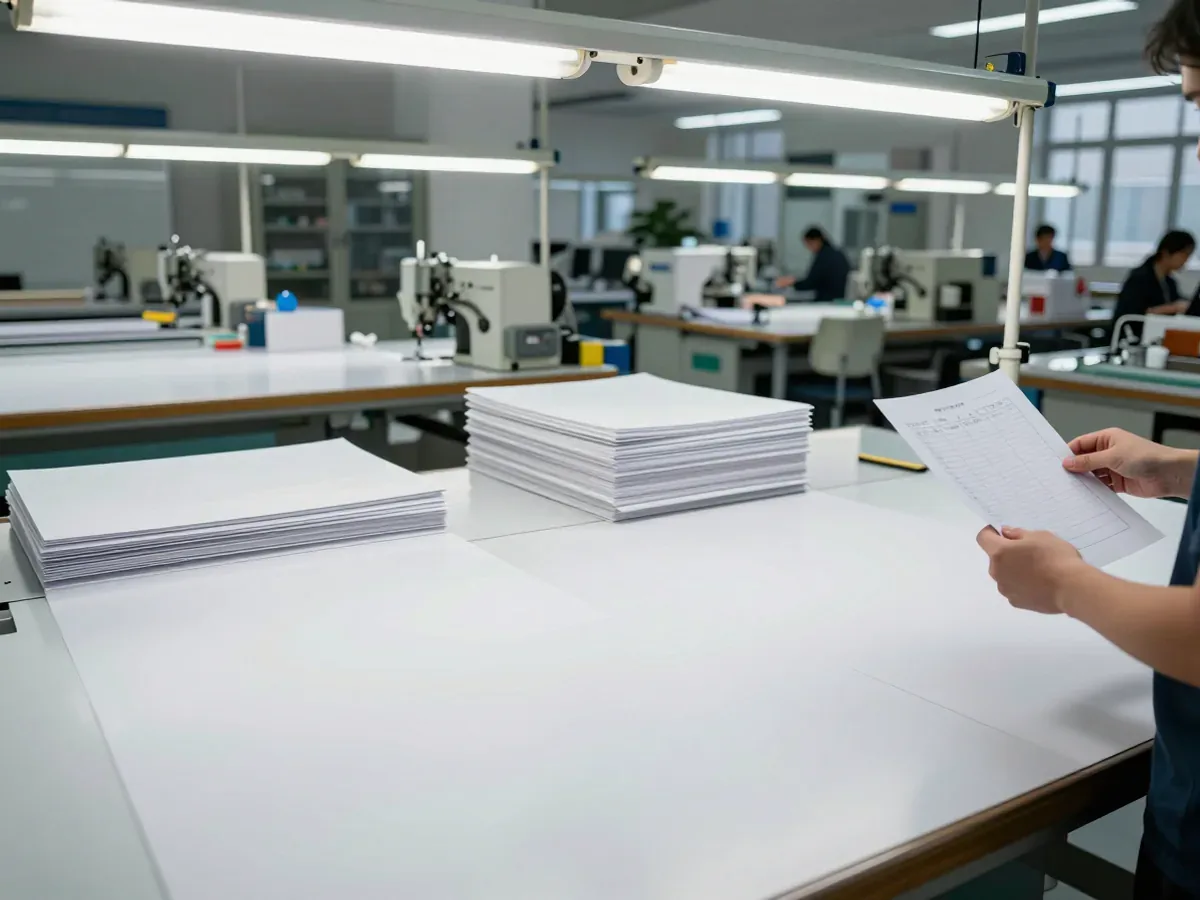
By the time the print reaches the sewing floor, the fabric is already cut. Artwork is checked before cutting, so a print file that was settled late forces the line to work around a decision that should have been made earlier. The visible cost is the reprint. The invisible cost is the line sitting idle while a supervisor hunts for the approved proof.
Screen printing lays spot-color ink onto fabric, and the printer mixes the Pantone formula by hand. If the spec names a CMYK breakdown instead, the printer has to interpret four ink percentages into a single mixed ink, and the result drifts. Rework then means stripping the print or scrapping the panel, both of which burn labor hours that were already booked against the order.
A misaligned logo print is the failure that shows on a printed bag sample, and it is the easiest one to catch. A color that is two shades off passes the alignment check and fails the buyer's eye, which means the rework is discovered after the cartons are packed.
Claims and Chargebacks: What a Retailer Deducts When the Color Misses
Retailers do not argue about color in email threads. They deduct. A chargeback for a color that reads wrong on shelf arrives as a line item against the invoice, often weeks after the goods have sold through or been marked down.
The deduction usually covers more than the bag. It covers the markdown, the labor to re-tag, and sometimes the cost of pulling the item from a display. A buyer who approved a screen mockup in RGB has no contractual ground to stand on, because the signed physical sample is the contract, and the mockup was never a production anchor.
This is where a color specification that crossed systems becomes expensive in a way that is hard to forecast. The factory can prove it matched the Pantone number it was given. The buyer can prove the bag looks wrong next to the marketing image. Both are correct, and the retailer deducts anyway.
Air Freight and the Launch Date: The Cost With No Invoice Line
A reprint that misses the vessel booking turns into air freight, and air freight on a bag order is rarely budgeted. The cost does not appear as a freight line. It appears as a margin reduction spread across the whole program, because the launch date was fixed and the goods had to move.
The launch date is the real constraint. A color correction that takes two extra weeks on the water pushes the arrival past the shelf reset, and the buyer either air-freights a partial order or accepts a late delivery penalty. Neither shows up in the unit cost the sourcing team presented to finance.
There is a second hidden cost here: the reprint itself competes for line time with the next order. A factory that has to re-run a print setup for a color correction delays the following buyer's production, and that delay is paid forward in goodwill rather than invoiced.
Why RGB on a Screen Mockup Is the Most Expensive Line of All

Screens display color in RGB light while fabric printing uses CMYK inks, spot inks, or dyed yarns, all of which have smaller or shifted gamuts. An RGB or hex value is useful only as a reference for on-screen approval, never as the production anchor. The systems do not convert cleanly into each other, and the conversion losses are where reprints are born.
Woven and jacquard methods go further still: the color comes from dyed yarns, so the spec must be matched against a yarn card, not a printed swatch. A buyer who sends a hex code for a woven label is asking the mill to reverse-engineer a yarn from a light value, and the result will be a near miss that costs a full sample round to correct.
The most expensive line on the spec sheet is therefore the one that looks free. A hex code takes ten seconds to copy from a brand guide. It costs a sample round, a rework, a chargeback, or an air freight booking to discover it was never a production instruction.
Reading a Quote: Which Color System the Factory Actually Prices
A quotation that prices a print without naming the color system is pricing an assumption. Screen-printed logos should carry a Pantone number, because screen printing uses spot inks and the Pantone system was built for exactly that. Digital and transfer printing need a CMYK breakdown. A quote that lists neither is a quote that will be renegotiated after the first sample.
Print, woven label and heat transfer are all proofed before production, so the route and the artwork are approved on the same proof. That proof is the moment to confirm which system the factory is pricing against. A buyer who asks for the proof before the PO signs a document that can be enforced later.
The factory's Pantone formula guide edition matters too. Formulas shift between editions, and a printer working from an older guide will mix a slightly different ink than the buyer's brand team expects. Asking which edition the factory holds is a five-minute question that prevents a five-figure correction.
How to Add Up Your Own Color Risk Before the PO
The arithmetic is simple once the five cost lines are named. Add the expected number of sample rounds beyond the first, the labor hours a rework would consume on the line, the retailer's typical deduction for a color chargeback, the air freight premium if the launch date slips, and the cost of a full reprint. Most buyers discover the total is larger than the print cost itself.
A Delta E tolerance of 1.5 to 2.5 between the approved swatch and the production sample is common, with the signed pre-production sample as the contractual reference for the bulk run. Writing that tolerance into the spec turns a subjective argument into a measurable pass or fail, which is the cheapest insurance available.
Incoming fabric, webbing, zips and thread are checked against the approved spec, so the color check should start at goods-in rather than at final inspection. A roll that is off against the yarn card is cheaper to reject before it is cut than after it is sewn.
The Cheapest Color Spec Is the One Signed on Fabric

The signed physical sample remains the contract. Everything upstream of it, the Pantone number, the CMYK breakdown, the Delta E tolerance, is a set of instructions for reaching that sample. When the instructions name the wrong system, the sample becomes a negotiation instead of a reference.
A buyer who wants to avoid the five cost lines should order them by size before signing anything. The sample round is the smallest. The rework and the chargeback are larger. The air freight and the reprint are the ones that reach the program budget. Naming the color in the system the production method actually uses costs nothing at the spec stage and removes most of the risk downstream.
FAQ
Is a Pantone number enough on its own, or does the factory still need a physical swatch?
A Pantone number names the ink, but the signed physical sample is what the bulk run is measured against. The number tells the printer what to mix. The swatch tells everyone what was approved.
What Delta E tolerance should a bag order carry?
A tolerance of 1.5 to 2.5 between the approved swatch and the production sample is common. The tolerance should be written into the spec with the signed pre-production sample named as the contractual reference.
Can a stock fabric color be matched to Pantone instead of dyeing a new shade?
Stock red, green or black can be swapped for a Pantone match rather than dyeing a new shade. That keeps the first sample round short and avoids a dye lot commitment before the color is confirmed.
Why does a CMYK breakdown look different on a woven label than on a screen print?
A woven label takes its color from dyed yarns, so it must be matched against a yarn card rather than a printed swatch. A CMYK breakdown describes ink on fabric, not yarn, and the two do not convert cleanly.