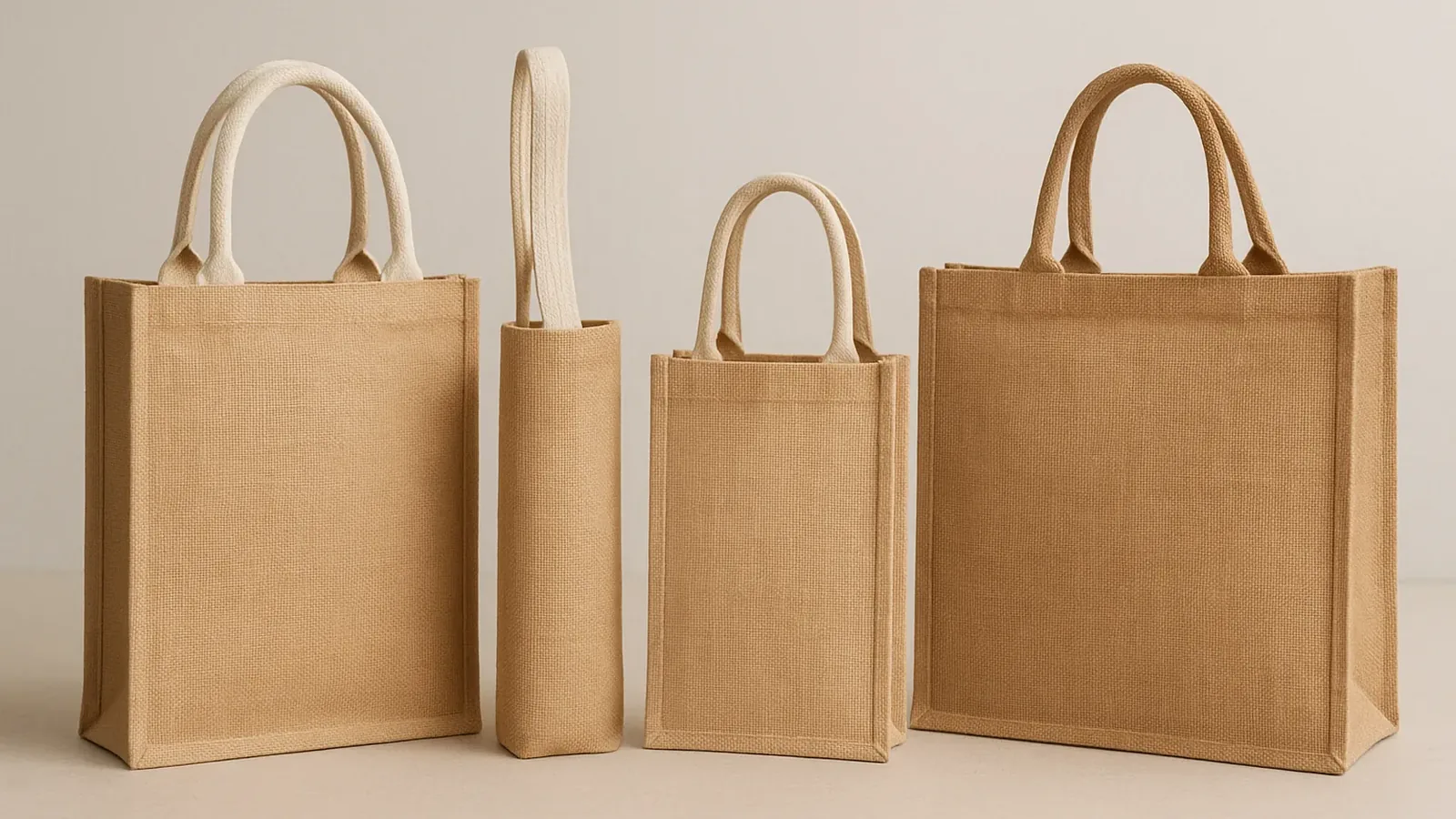
Based on TIIOCTI product spec sheets and the archived Christmas cloth bag article, reorganised around what buyers actually check before a holiday run.
A sample came back from a buyer in late September with a short note clipped to the drawstring: the bag felt heavy and premium in the hand, but the cord had already started to slip when the pouch was filled with a pair of socks and a small jar. The buyer had ordered the heaviest canvas on the swatch card, assuming weight would settle every other question. It did not. The bag looked generous on a table and behaved badly in a hand.
That note is a useful place to start, because the thickest shell is the most common answer buyers give before they have thought about what the bag is for. A Christmas cloth bag is a reusable fabric bag used for gifting, often decorated with festive designs. The purpose is narrow and seasonal, and the right build follows from what goes inside, not from how dense the fabric feels when it arrives in a sample box.
The heavy canvas habit that starts every Christmas brief
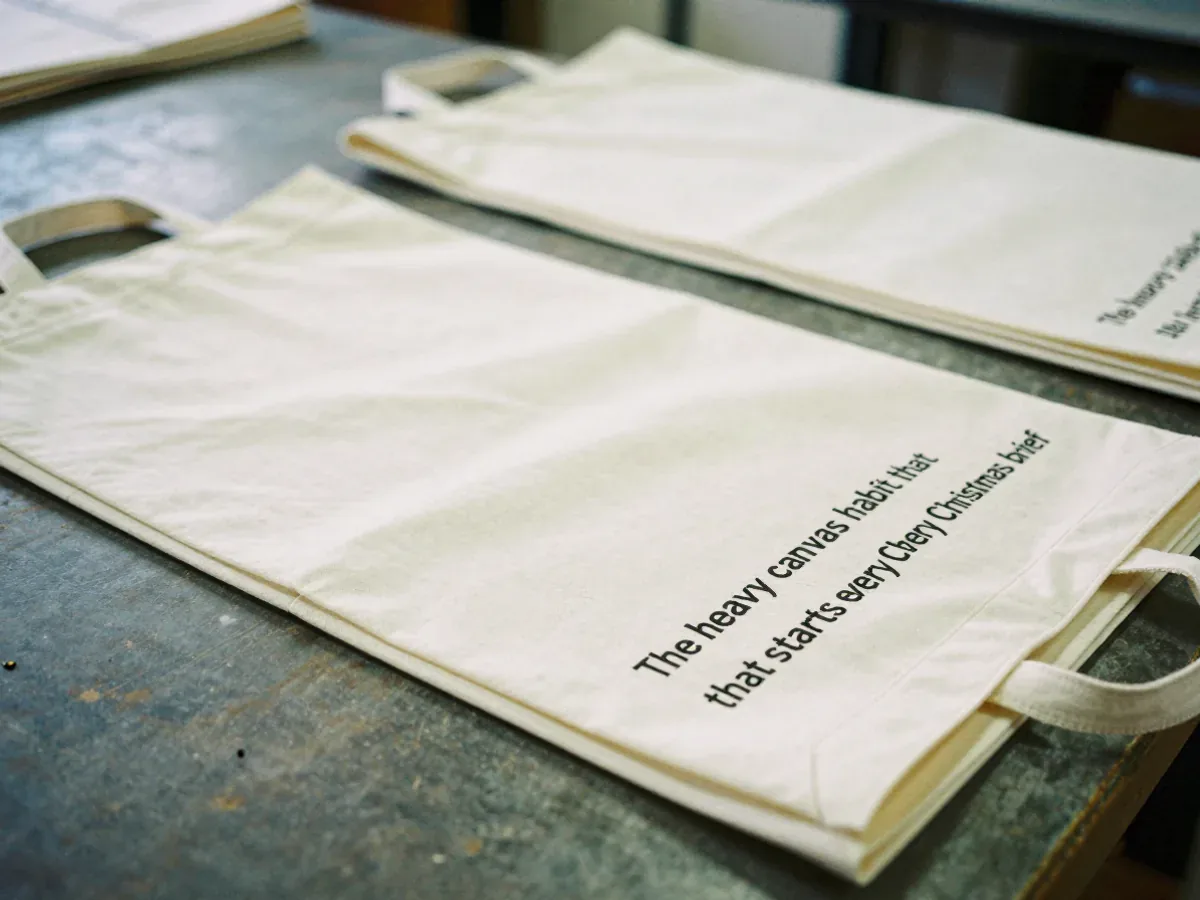
Most Christmas briefs arrive with a weight already attached. A buyer has seen a competitor's bag, or held a promotional tote at a trade fair, and the number 12 oz or 16 oz travels into the enquiry before anyone has listed the contents. The shell is chosen first and the rest of the bag is fitted around it.
The habit looks like diligence. A heavier canvas reads as a serious material, and the sample feels substantial in a way that a lighter shell does not. Buyers who are new to fabric bags often treat the weight as the single quality signal they can judge by hand, since they cannot test a seam or a print in a five minute meeting.
There is also a packaging instinct behind it. A gift bag that feels heavy implies a gift that cost something, and the bag becomes part of the perceived value. That logic holds for a rigid box. It holds less well for a pouch that has to be pulled closed with a cord and carried by a handle.
Why a thicker shell feels like the safer order
Weight is one of the few variables a buyer can compare without a lab. Two swatches on a desk, one clearly denser than the other, produce an immediate judgment, and the denser one usually wins. The decision feels conservative because it errs toward more material rather than less.
Thicker canvas also hides small problems. A print sits on a firm surface, a seam looks flatter, and the bag stands up in a product photo. For a buyer preparing a catalogue image in August, that matters. The bag has to look like a gift before anyone has filled it.
Cost per unit is easier to defend upward, too. A heavier shell carries a higher material cost, and a higher material cost is simple to explain to a manager. The hidden costs of a heavy shell, which show up in cord tension, handle attachment and freight weight, are harder to put on one line of a quote sheet.
Where the weight goes wrong once the bag is filled
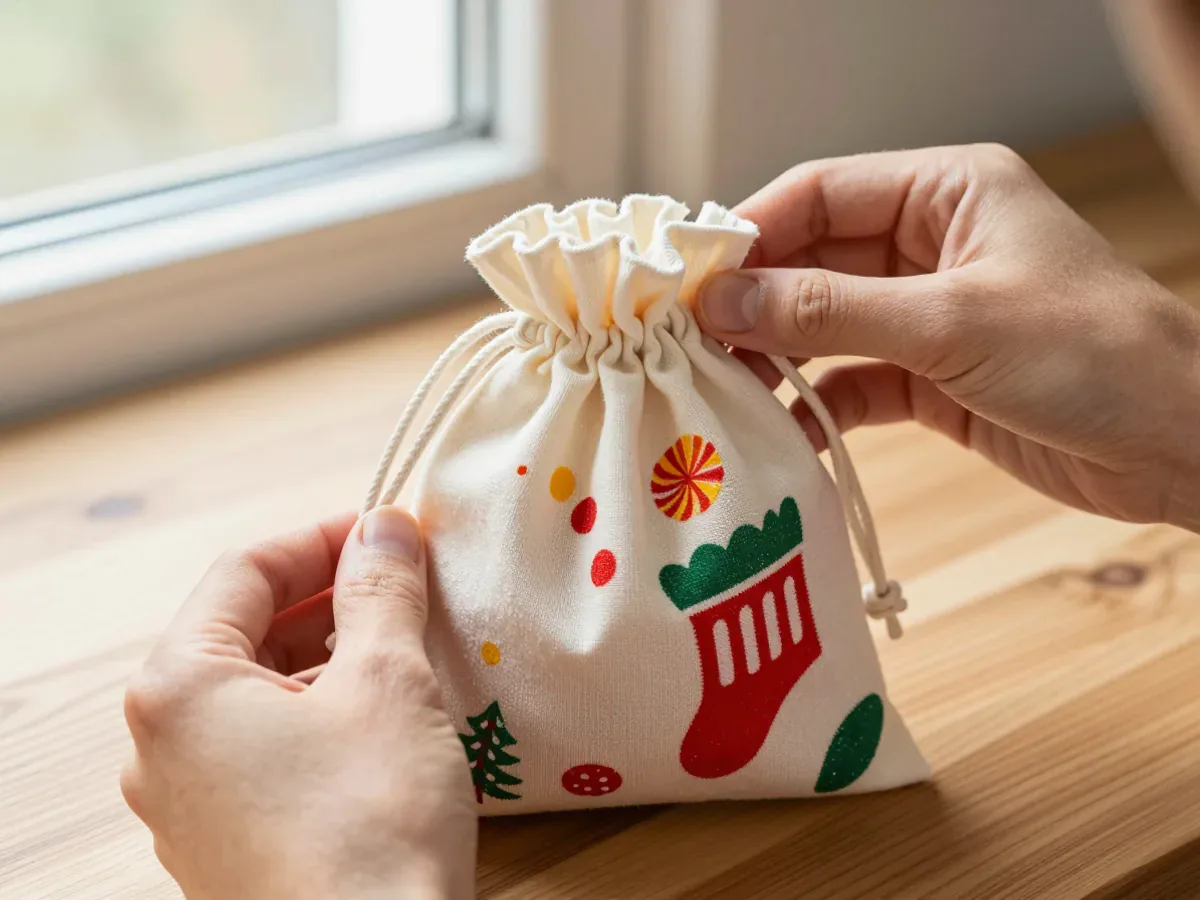
A Christmas cloth bag usually carries a small, light load: candy, socks, a puzzle, an ornament, a gift card, a novelty item. The old gift list runs to exactly these things, and none of them need a heavy shell to stay safe. A dense canvas adds stiffness without adding much protection for a soft fill.
The weight problem appears at the opening. A thick shell resists folding, so the drawstring channel has to gather more fabric into the same closure. The cord pulls against a larger bundle, the channel bunches, and the bag does not close cleanly. A buyer who fills the pouch to the top discovers this on the first try, not in the sample photo.
Freight is the second place the weight lands. Every extra ounce in the shell multiplies across a carton, and a carton of heavy pouches is heavier to move and more expensive to ship. The bag that felt premium in one hand becomes a line item in a freight quote that nobody flagged at the sampling stage.
The drawstring channel that decides whether the bag survives December
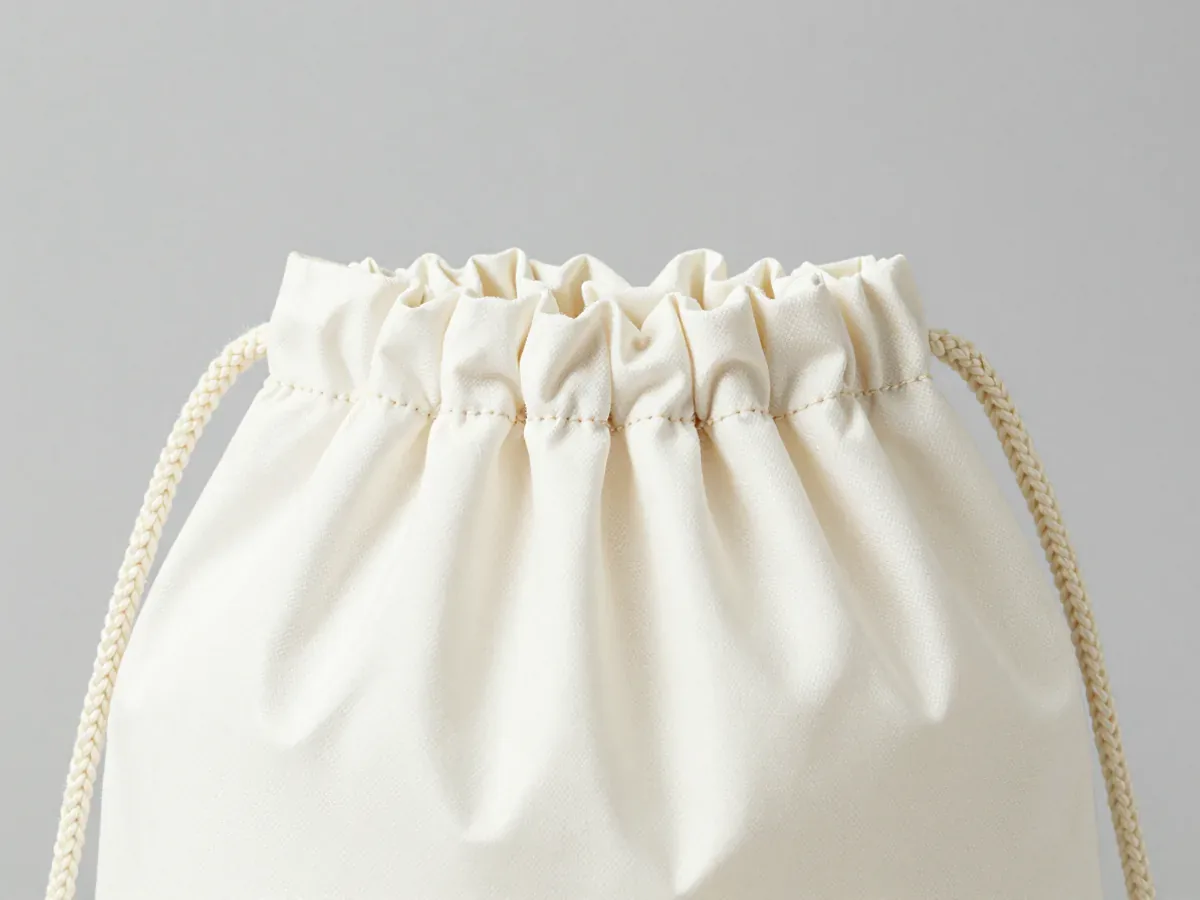
The closure is where a Christmas pouch earns or loses its season. Cloth bags with drawstring closures are sewn as a pouch with a channel at the top, and the channel has to be wide enough for the cord to run freely and narrow enough to hold the gather. A heavy shell makes that balance harder to hit.
Cord choice matters as much as the channel. Woven, webbing and rope handles are all standard options, and a rope cord in a heavy canvas channel can bind when the bag is pulled shut. A softer cord in a lighter shell runs more smoothly, which is why the two decisions belong together rather than in separate lines of a spec.
The attachment points deserve the same attention. Reinforced handle stitching and handles stitched through the body spread the load, and pull, seam strength and bar-tack checks on every batch are what catch a weak join before it reaches a customer. A bag that fails at the channel or the handle fails in the first week of December, which is the worst week to hear about it.
Print and label choices that outlast one season
A Christmas bag is often kept after the gift is opened, and the print is what decides whether it comes back out next year. Screen print and heat transfer behave differently on a heavy canvas. A thick shell takes a screen print well because the surface is stable, but a large solid area on a dense fabric can feel stiff and crack along fold lines.
Heat transfer suits smaller, detailed artwork and works on a range of shells, though the hand feel changes with the base cloth. A buyer choosing between the two should match the method to the design rather than to the weight of the fabric. A woven label is the other branding route, and it sits beside the print rather than replacing it.
The sample should carry the same print method as bulk. Printing is proofed before the run, and the sample is made to the same spec as bulk, which is the only way a buyer can judge colour and placement honestly. A sample printed one way and a production run printed another turns a small artwork decision into a reorder problem.
How to write the spec so bulk matches the sample
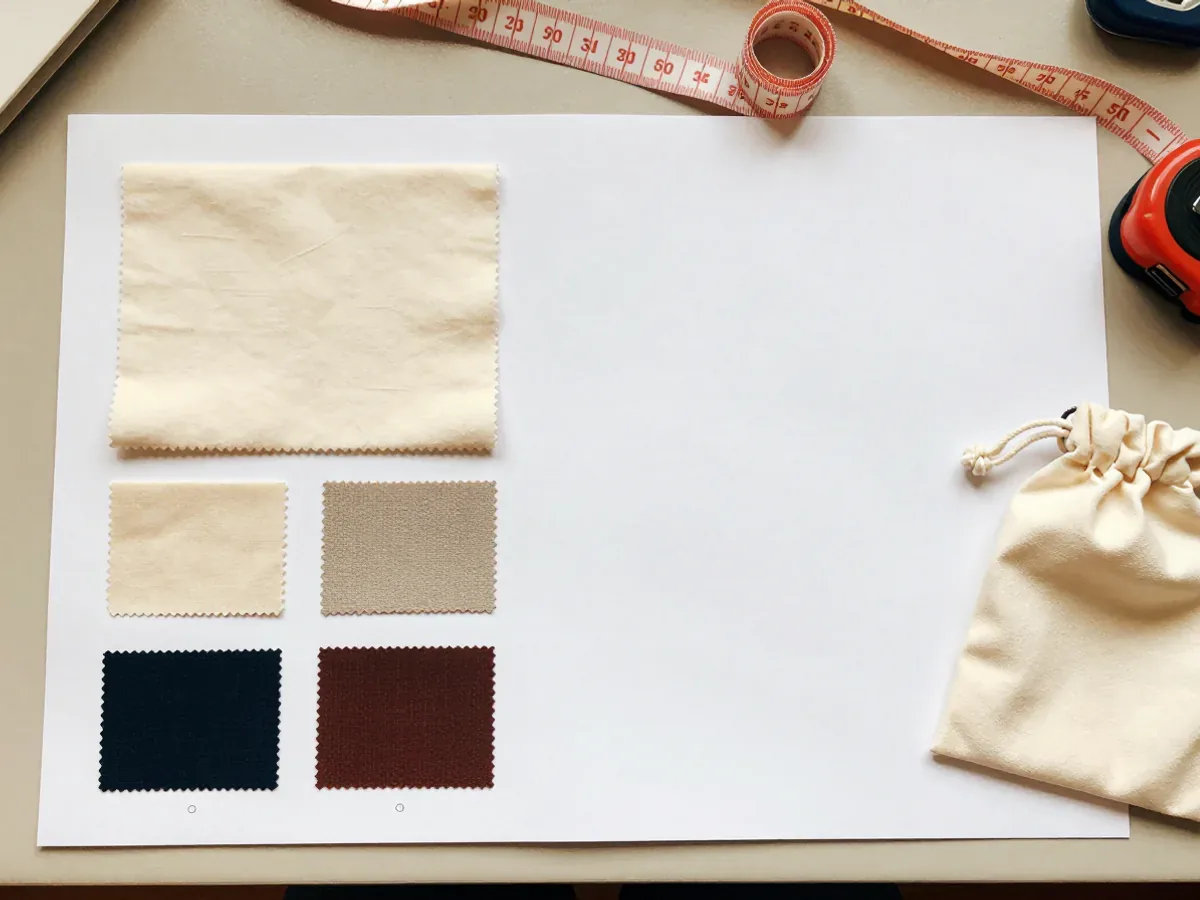
The spec sheet is where the heavy canvas habit either gets corrected or gets locked in. Start with the fill, not the fabric. List the heaviest item the bag will carry, the number of items, and whether the bag will be handed out flat or filled at an event. Those three answers set a sensible shell weight and a size that closes without strain.
Then name the shell, the handle style and the size in that order, followed by natural or a dyed colour for the body. Cotton canvas is the standard shell, and the colour choice affects how the print reads as much as the weight does. A buyer who writes the weight first and the fill last will keep arriving at the same overbuilt bag.
Add the closure and the attachment to the same page. State the cord type, the channel width and the reinforcement at the handle, so the sample room cannot interpret a gap. A spec that leaves the channel blank invites a heavy shell with a thin cord, which is the combination that produced the September note.
A short check before the cartons seal
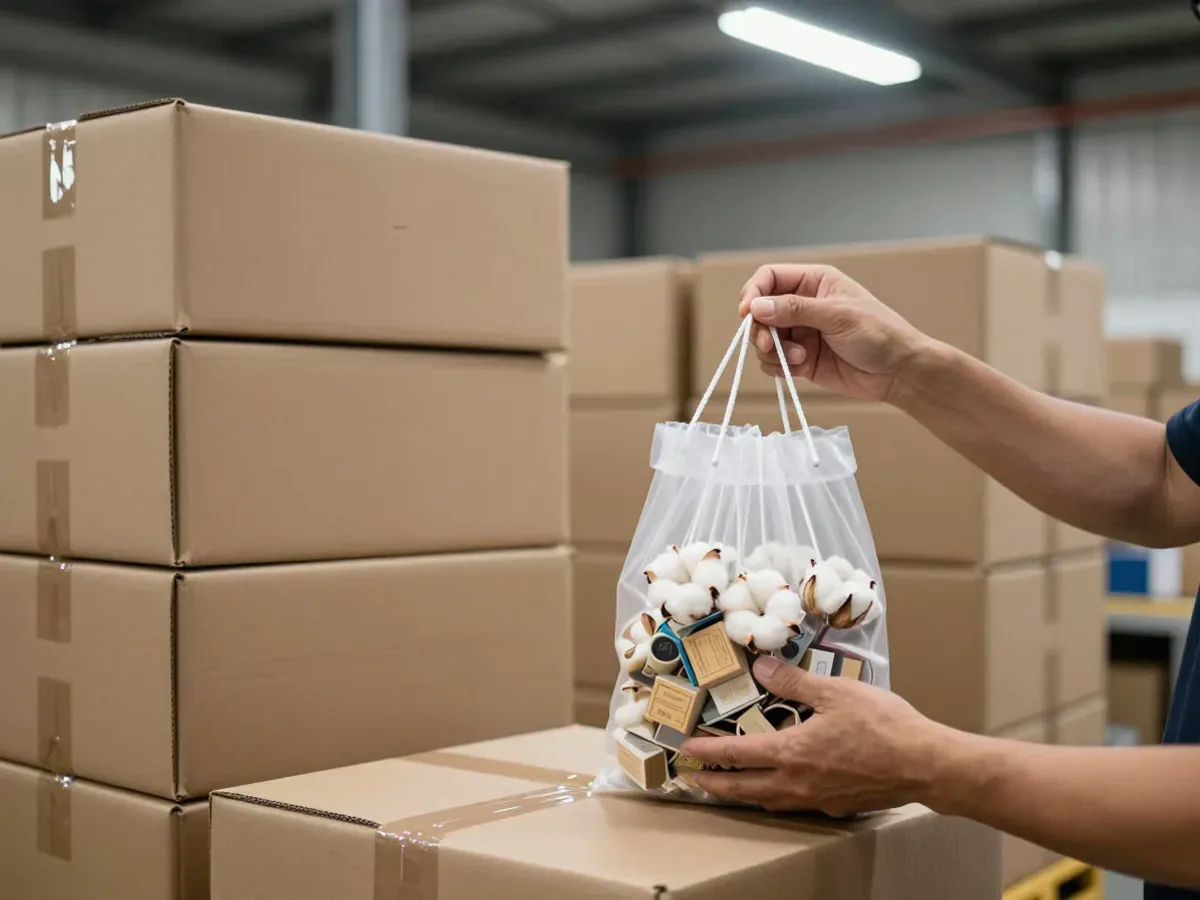
Before a Christmas order ships, a few checks catch most of the weight related problems. Fill one bag with the actual gift mix and pull the cord shut. If the channel bunches or the cord binds, the shell and the closure are mismatched, and no amount of inspection later will fix the feel.
Weigh a packed carton and compare it with the freight estimate. A heavy shell that was never costed into shipping shows up here, and it is cheaper to adjust the shell than to absorb the difference. Check the handle join by pulling it against a filled bag, and confirm the print method on the production bag matches the approved proof.
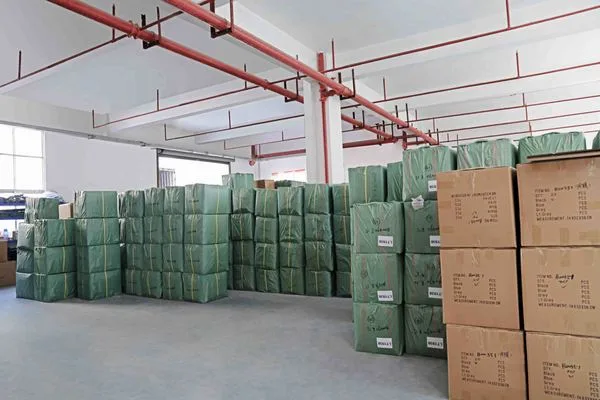
Incoming fabric, webbing, zips and thread are checked against the approved spec, and finished bags are checked by hand for dimensions, handles, logo and packed quantity. Cartons are counted and photographed before the container seals. Those steps are routine, and they only work when the spec they check against was written around the fill rather than around the swatch card.
FAQ
Does a heavier cotton canvas always mean a better Christmas cloth bag?
No. A heavier shell feels more substantial, but it also resists folding, strains the drawstring channel and adds freight weight. The better bag is the one whose shell matches the fill and closes cleanly, which is often a mid weight canvas rather than the densest option on the card.
What handle style holds up best for drawstring gift bags?
Woven, webbing and rope handles are all used, and the right one depends on the load and the shell. Reinforced stitching at the attachment and handles stitched through the body spread the pull. For a light gift fill, a softer cord in a matched channel usually runs more smoothly than a stiff rope in heavy canvas.
Can the same cloth bag be reused after the holiday season?
A cloth bag can serve again as a tote or a storage pouch after the holiday, and how long it lasts depends on the fabric, the stitching and how it is used. A bag with a reinforced base, stitched through handles and a flat folding body is easier to keep and store than a stiff pouch that will not lie flat.
Should the sample use the same fabric and print method as bulk?
Yes. Printing is proofed before the run, and the sample is made to the same spec as bulk. A sample in a different shell or print method tells the buyer nothing reliable about colour, hand feel or closure behaviour, and the gap usually surfaces after the cartons are sealed.