Built from a retail tote purchase order and workshop records covering handle attachment, shell fabric, and print checks.
A merchandiser once assumed the shell fabric line decided everything about a heavy-duty retail tote. She had approved a 12 oz canvas, signed the purchase order, and moved on. Six weeks later the bags arrived flat-packed and creased, and the fold lines never lifted.
The sheet she signed had no crease line on it at all. What it did have was a fabric weight, a handle description, a print size, and a rated load. Four lines out of maybe thirty. The rest of the page was blank space that the factory filled with its own assumptions.
That is how a purchase order for retail tote bags works in practice. The lines a buyer writes become requirements. The lines left empty become whatever the factory ran last week. Walking a heavy-duty tote PO line by line shows which entries carry real weight and which one almost nobody writes down.
The Line Everyone Fills In First: Shell Fabric and Weight
The shell line is usually the first thing typed and the last thing questioned. A buyer writes "12 oz cotton canvas" or "laminated non-woven, 100 gsm" and treats the number as settled. Weight is not the same as strength, though, and the two get confused on nearly every sheet.
Write the fiber, the weight per unit area, and the construction in one line. "10 oz woven cotton canvas, unbleached" tells a factory more than "heavy canvas" ever will. If the bag needs a matte print surface, say so here rather than in the print section, because the coating decision belongs to the fabric.
Why it matters: the shell sets the baseline for tear resistance, print adhesion, and how the bag behaves after folding. A lighter shell with a coating can outperform a heavier uncoated one on print clarity, while a heavier uncoated shell wins on raw tear strength. The sheet has to say which trade-off the buyer chose.
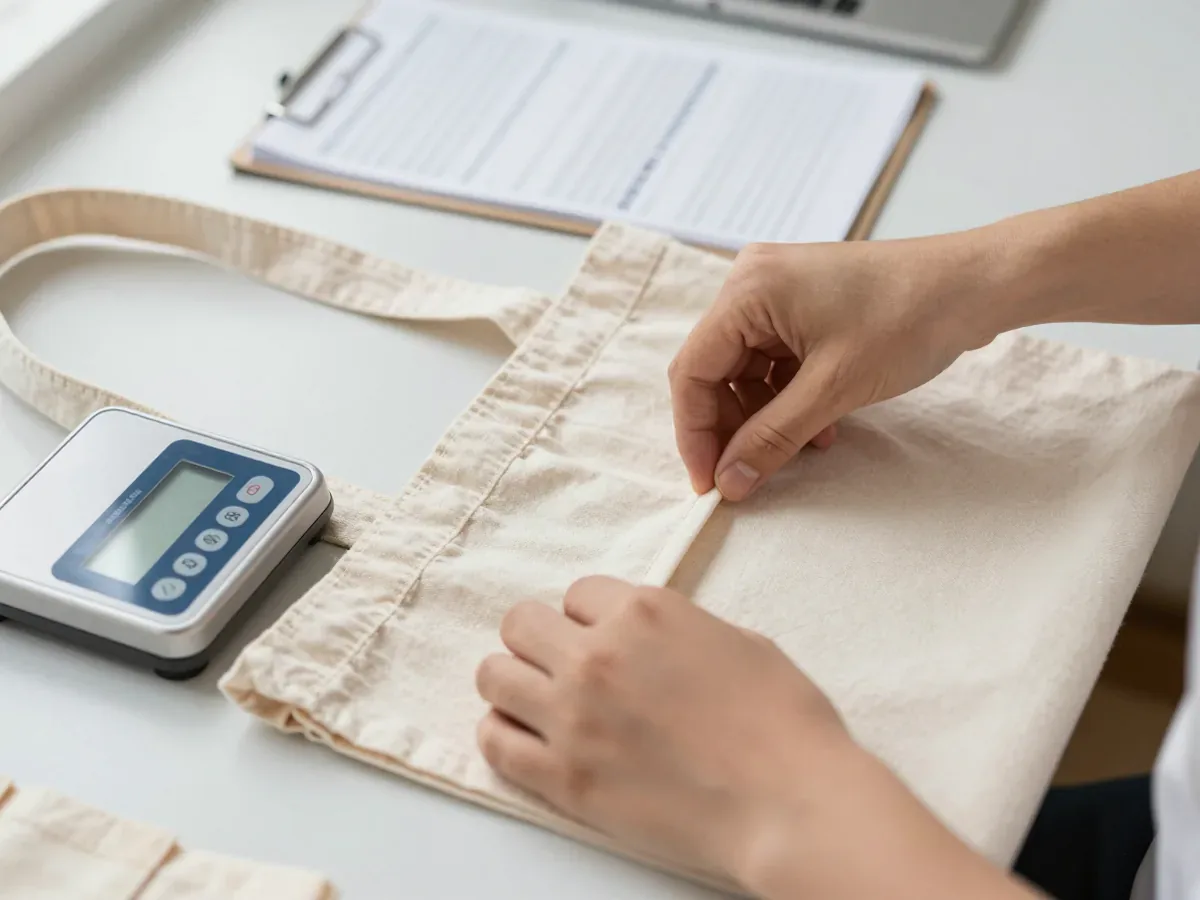
How to verify: ask for the fabric lot report with the pre-production sample. On the sample itself, cut a small square from the seam allowance, measure it, and compare the weight to the line on the PO. A 10 percent gap between the stated weight and the measured weight is worth a conversation before bulk.
The line most often skipped here is the finish. Coated, laminated, washed, or raw changes how the bag creases, prints, and wears. Leaving it off means the factory picks whichever finish its current roll stock already has.
The Handle Line: Stitch Pattern, Rivet, or Grommet
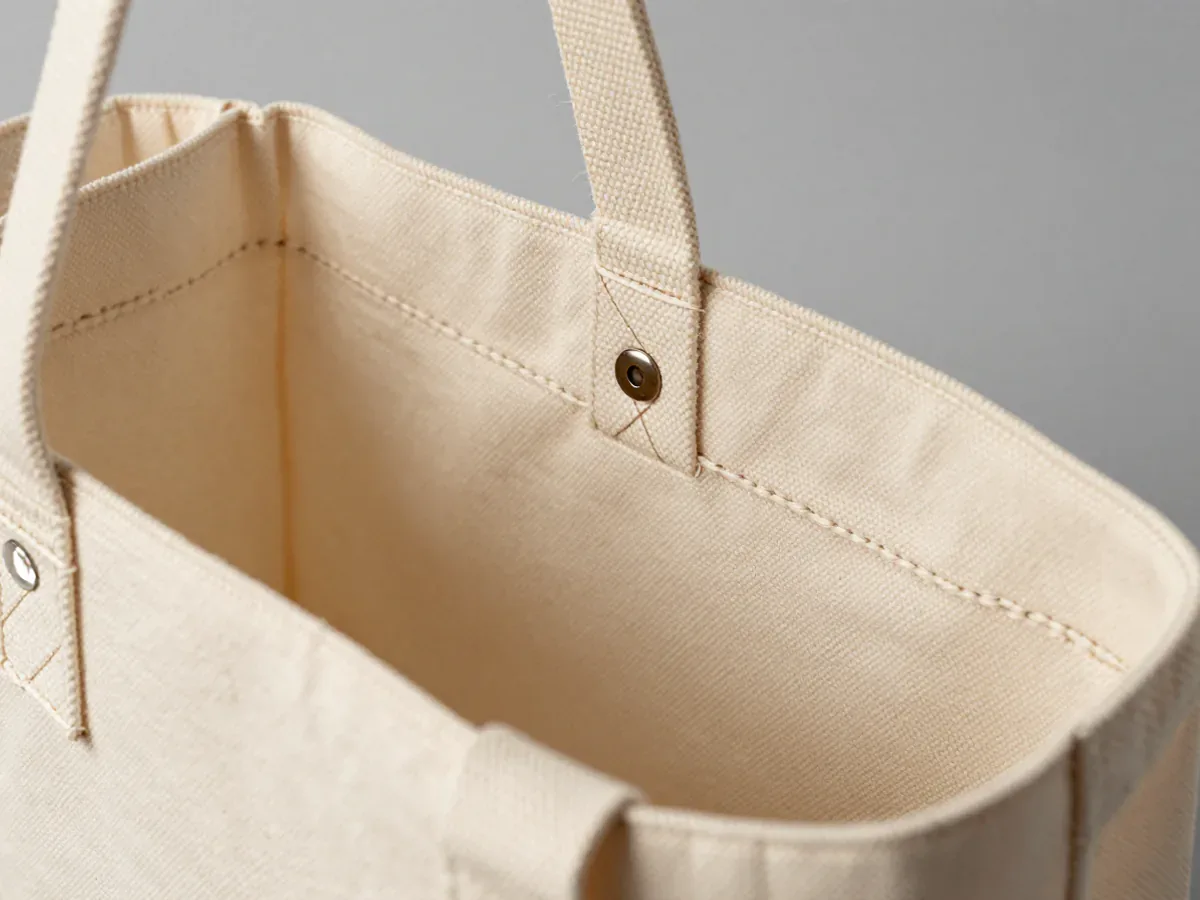
Handle pull failure is the number one field complaint on retail totes, and the handle line on most spec sheets says only "cotton webbing, 1 in." That describes the material and says nothing about how it stays on the bag.
Write the attachment method, not just the handle material. A cross-stitch pattern with a box-X at each end behaves differently from a single row of straight stitching. A reinforced metal rivet set through the webbing and the shell adds a mechanical hold that stitching alone cannot match. A rope handle threaded through a metal grommet solves a different problem entirely, spreading load around a reinforced hole instead of concentrating it at a seam.
Why it matters: the attachment point takes the entire dynamic load every time someone lifts a full bag. A handle that rips away from the body destroys the bag's utility in one motion, and no amount of good printing recovers that.
How to verify: turn the sample inside out and look at the stitch density at each handle end. Count the stitches per inch, then pull firmly on the handle at a shallow angle. Stitch slippage or visible needle holes under stress point to a weak attachment. Ask for a timestamped video of a static load test on the actual handle construction, not a certificate from a different build.
The skipped line here is the stitch specification. "Double stitched" means little without a stitch count and a pattern name. Write both, and the factory has no room to substitute a faster finish.
The Print Line: What the Artwork File Does Not Tell the Factory
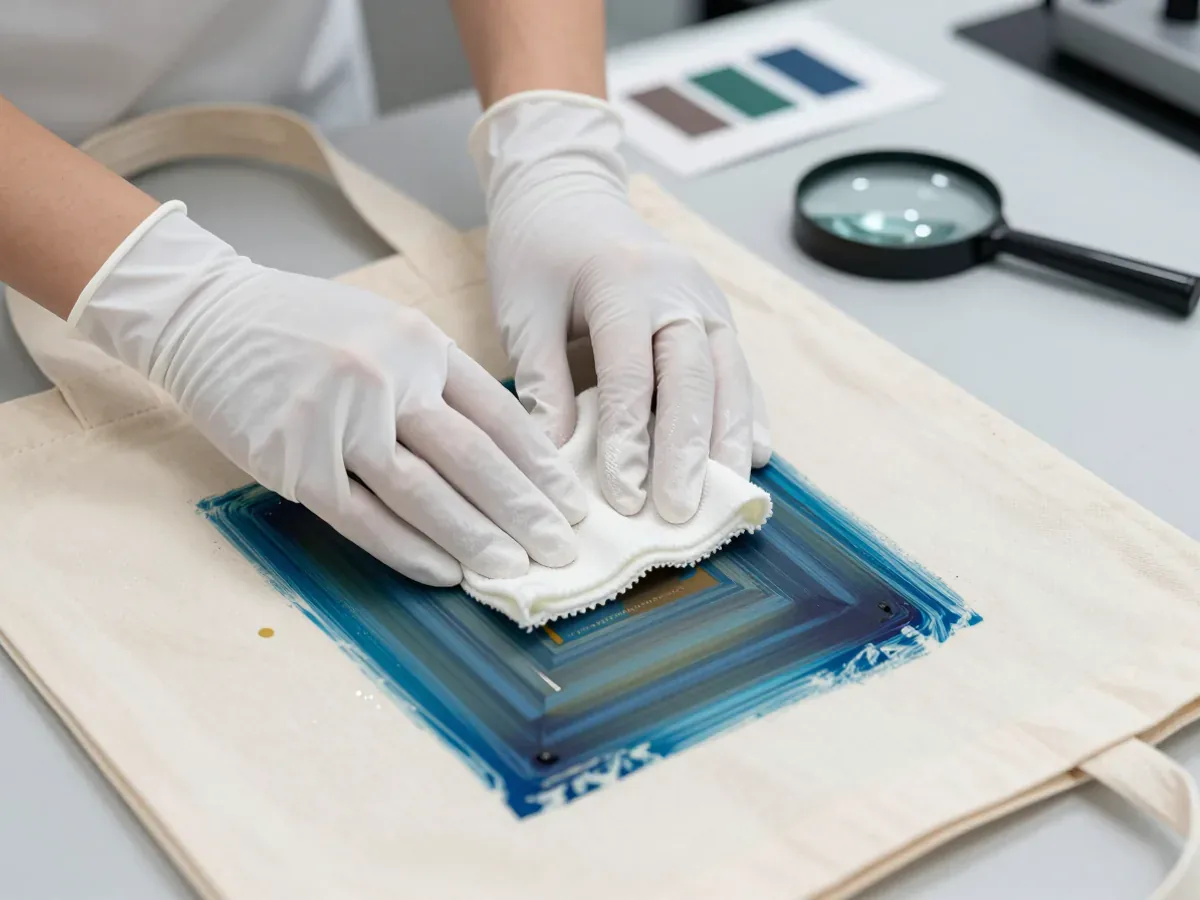
A print line that reads "logo, 2 colors, front center" leaves the factory to decide ink type, coverage, and cure. The artwork file shows shape and color. It does not show how the ink sits on this particular fabric.
Write the print method, the number of colors, the placement with a measurement from a fixed reference point, and the ink system. Screen print on canvas behaves differently from transfer print on coated non-woven, and the two need different cure times to survive a rub test.
Why it matters: print adhesion is judged by the customer within the first few trips. A logo that fades or peels tells the shopper the brand cut corners, and the shell fabric never gets credit for holding up.
How to verify: run a rub check on the printed area of the sample. A white cotton cloth under a modest weight, rubbed back and forth across the print, shows transfer quickly if the ink is under-cured. Do it dry first, then damp. Light-colored designs are the ones to watch, since transferred pigment shows up fastest against a pale garment.
The line buyers leave off here is the print position tolerance. Without a stated allowance, a two-millimeter shift between the sample and bulk is technically compliant and visually obvious on shelf.
The Load Line: Rated Capacity and How It Gets Checked
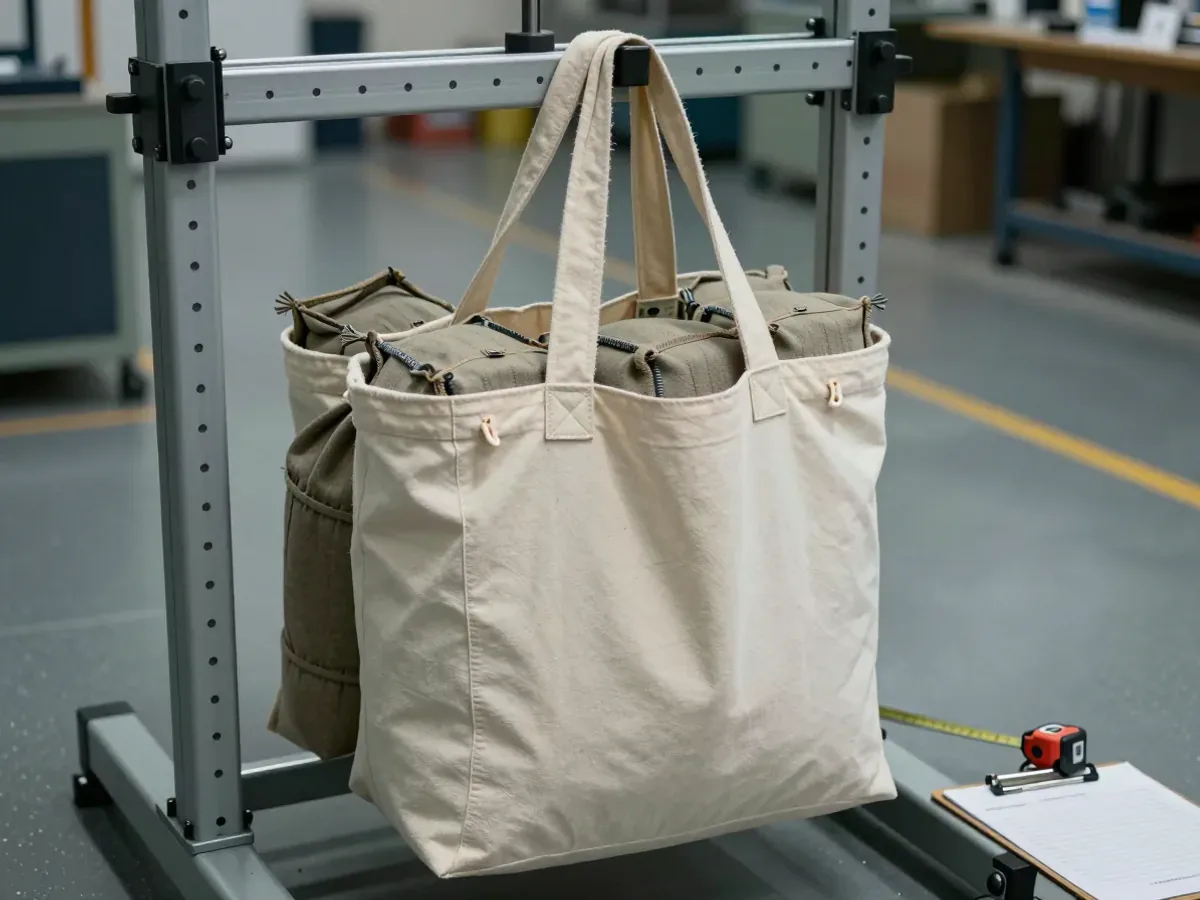
Most sheets carry a load number, often phrased as "holds up to 15 kg." That number is a claim until the sheet says how it was measured. A bag that holds its rated load in a lab can fail below it after being folded, stacked, and stored in a warm car.
Write the rated capacity and the test condition in the same line. State whether the rating applies to a new bag or a bag that has been folded and reopened. State how the weight is distributed during the check.
Why it matters: retail totes get overloaded by shoppers, not by lab technicians. The gap between a static lab number and real field behavior is where returns come from.
How to verify: fill the sample to 125 percent of its rated capacity with evenly distributed weight, then lift and carry it for a set distance. Watch the seams, the handle ends, and the base corners. No tear, no seam rupture, and no permanent handle deformation is the pass condition. A factory that hesitates to run this on the actual fabric weight has probably never tested it.
The skipped line is the distribution method. Weight dumped into one corner tests something different from weight spread across the base, and the sheet should say which one the rating assumes.
The Line Buyers Leave Blank: Crease Recovery After Folding
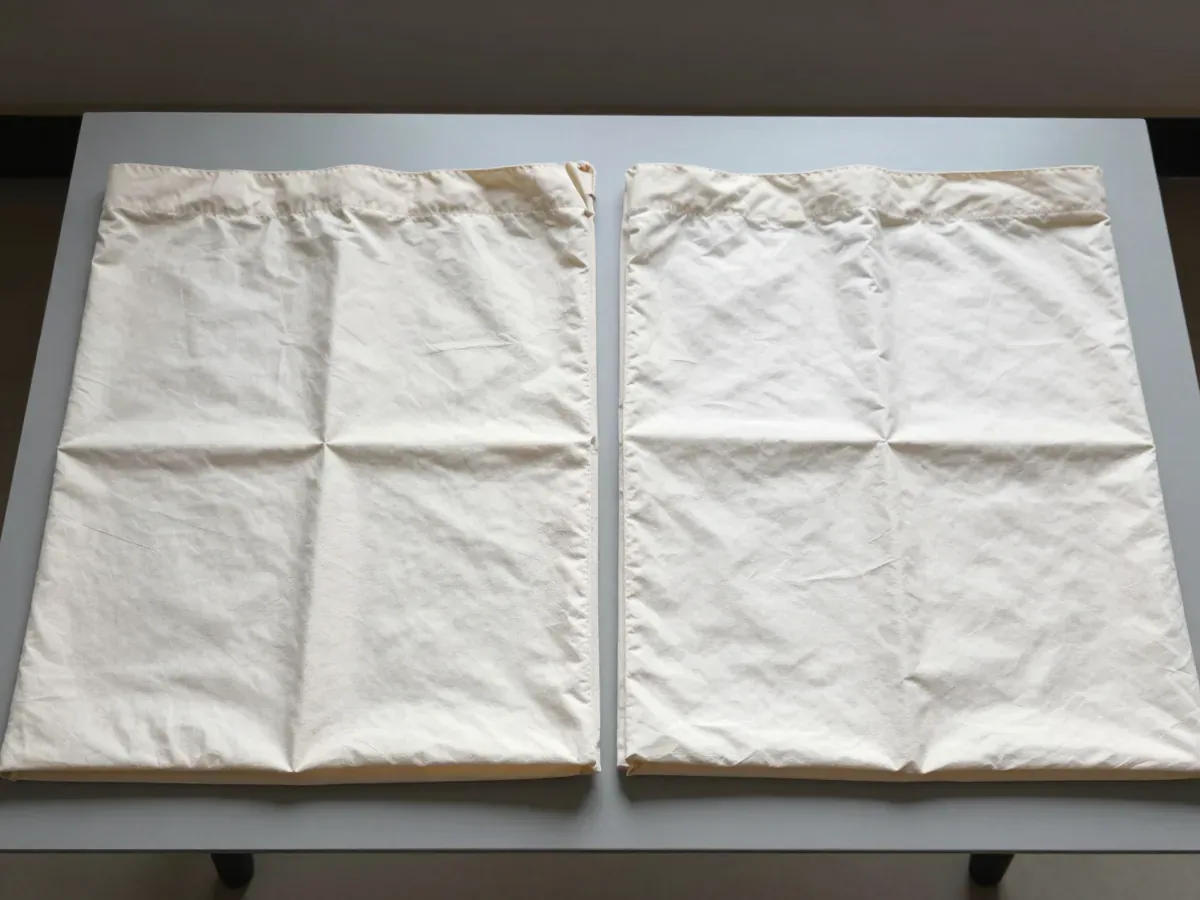
This is the line that was missing from the merchandiser's PO. Bags ship flat, sit in cartons, and get folded again on the shelf. A fabric that creases permanently arrives looking used before anyone carries it.
Write a crease recovery requirement into the sheet. Fold the bag for 24 hours at 50 percent relative humidity, then open it and measure the recovery angle. A recovery angle above 90 degrees means the fold lifts. Below that, low-gauge non-woven materials keep the line, and the bag reads as sloppy on display.
Why it matters: the customer judges the bag before using it. A permanent fold line across the front panel undercuts every other quality decision on the sheet, including a perfect print.
How to verify: fold a production sample, weight it flat, leave it overnight, and open it the next morning. Photograph the fold line at the same angle each time so the comparison between fabrics is honest. If the buyer is choosing between two shells, this single check often settles the decision faster than a tear test.
The blank line costs nothing to fill and is the one most often left for the factory to interpret. A factory with no instruction will ship flat and hope.
Turning the Sheet Into a Pre-Shipment Check
A spec sheet only survives if it becomes a checklist at the loading bay. Every order the factory runs passes four checkpoints, and the sheet lines map onto them directly: fabric and weight at receiving, handle attachment at the sewing station, print rub before packing, and a load and crease check on the finished sample.
The practical move is to convert each line into a yes or no gate. Does the measured fabric weight match the PO within tolerance? Does the handle hold the stated load for the stated time? Does the print pass a dry and wet rub? Does the folded bag recover its angle? A no at any gate holds the carton.
Colorfastness is the check buyers most often want to run themselves before bulk. Rub a damp white cotton cloth firmly over the printed area and look for dye transfer, then repeat dry. Cross-check against lab data if the retail channel requires a fastness grade, since a hand rub shows a problem but does not score it.
On material choice, laminated non-woven polypropylene with a matte top coating usually balances sharp print clarity and tear resistance for retail use. If the bag will carry heavy loads, confirm the laminate and the base fabric separately, because the coating helps the print and the base carries the weight.
Small runs can follow the same testing standards as a full run, usually with a testing surcharge applied per batch or per test. The sheet does not change with order size. The lines a buyer writes stay the same, and the blank ones stay just as expensive.
FAQ
How does a buyer test colorfastness on a sample bag before bulk production?
Rub a damp white cotton cloth firmly across the printed area and check for dye transfer, then repeat with a dry cloth. Light-colored prints show transfer fastest. Use lab fastness data alongside the hand check if the retail channel requires a scored grade.
Which material gives the best balance of print clarity and tear resistance for retail use?
Laminated non-woven polypropylene with a matte top coating usually offers the best balance. If heavy loads are expected, confirm the base fabric and the laminate as separate lines on the sheet, since the coating serves the print and the base serves the load.
Can a buyer request a small batch with the same testing standards as a full run?
Yes. A small batch can follow the same tests, though a testing surcharge usually applies. Confirm whether the surcharge is charged per batch or per test before the PO is signed.