
Two loading plans for the same carton count, compared on records, packaging, air movement and the receiving handoff.
The artwork was approved on schedule and the cartons were ready, but the vessel slipped a week and the booking moved to a later sailing. That single delay pushed a woven PP bag order into a colder, wetter stretch of the calendar, and the buyer had to decide overnight how to protect the load. One option was to hang desiccants in the container and hope. The other was to treat moisture as a system that starts at the packing table and ends at the receiving dock.
Both plans can be written on the same one page loading sheet. They cost different amounts of attention, and they fail in different ways. What follows compares them across the decisions a buyer actually controls before the doors close.
Two Loading Plans for the Same Carton Count
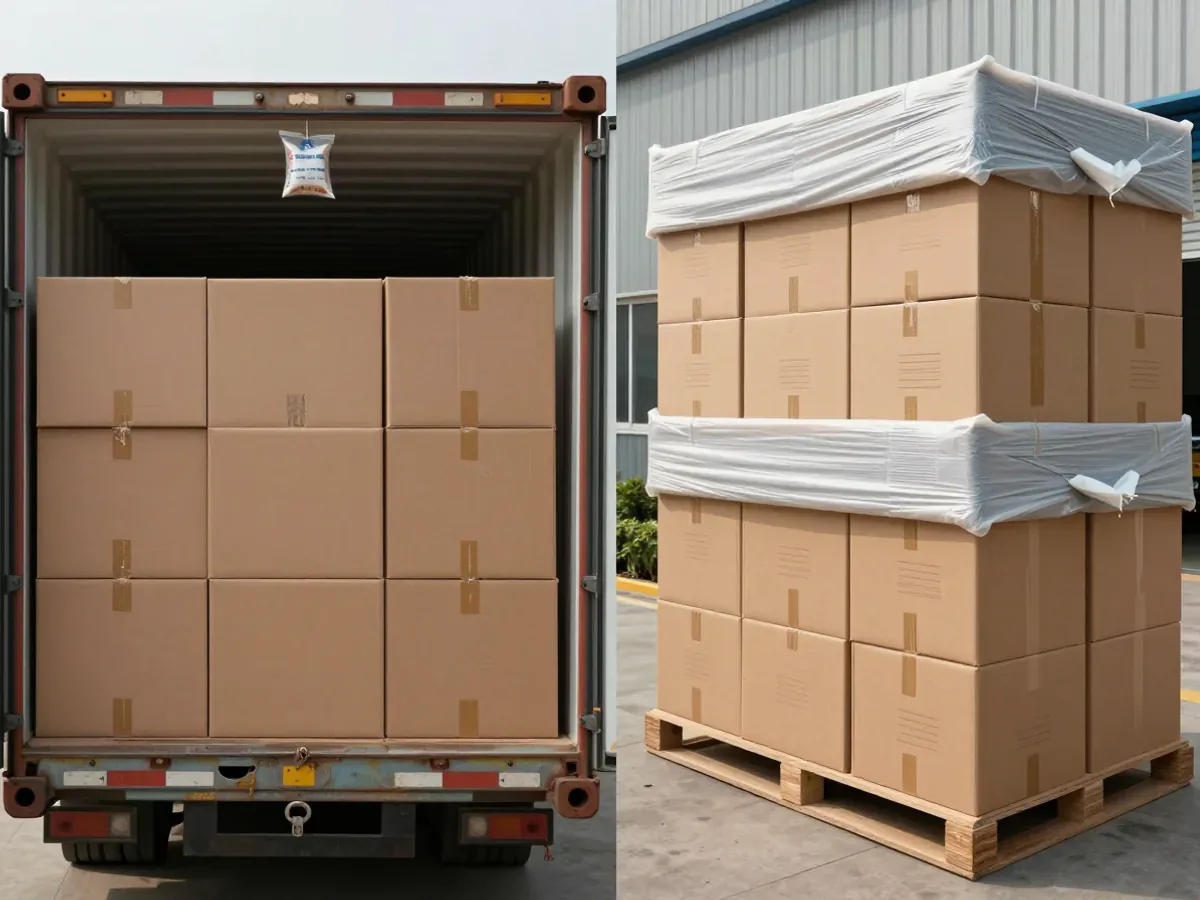
Plan A is the desiccant-only approach. Someone calculates a number of calcium chloride units, hangs them from the container roof or door, and the cartons go in as they are. The loading sheet carries a line for desiccant count and little else.
Plan B treats the container as one closed climate. Desiccants still appear, but so do carton venting, poly liners where the destination is humid, a loading geometry that leaves air space, and a receiving instruction that tells the warehouse when to open the doors. The loading sheet gets longer, and so does the list of people who sign it.
The carton count is identical in both plans. The difference is how many chances the load gets to shed moisture before it becomes a claim.
What Each Plan Puts on the Loading Sheet
Under Plan A, the sheet records the desiccant quantity and maybe the brand. Everything else is assumed. Nobody writes down the moisture state of the cartons at packing, the container floor condition, or the air gap at the top of the stack.
Plan B writes those things down because they decide whether the desiccants have any chance to work. Container rain starts with the moisture that ships with the cargo. Cartons packed in a humid factory carry that humidity into the box, and the container floor and walls carry their own history of rain and washing.
A loading sheet that records only a desiccant count cannot tell you later whether the cargo was loaded wet. A sheet that records packing humidity, liner choice, vent pattern, gap dimensions and desiccant count gives every party a shared record. When a claim arrives, that record decides which conversation happens.
Packaging: Vented Cartons and Poly Liners Against a Bare Load

The bag's own packaging is its raincoat. A bare carton with no venting and no liner gives trapped moisture nowhere to go. It sits against the printed surface and the kraft insert and works its way in.
Vented or breathable outer cartons let the load equalize instead of marinating. Kraft inner boxes that hold individual bag bundles should be paired with poly liners where the destination is humid, so the liner handles the outside climate and the vent handles the inside one. The two are not opposites. They do different jobs at different depths of the stack.
The PP fabric resists water. The damage lands on cartons, print surfaces, kraft inserts and any cotton or paper components. That is why the packaging spec carries the moisture plan rather than the fabric spec.
Plan A usually skips this layer entirely. It assumes the carton is neutral and the desiccant does all the work. Plan B treats the carton as the first line of defense and the desiccant as backup.
Air Movement and Where Condensation Lands
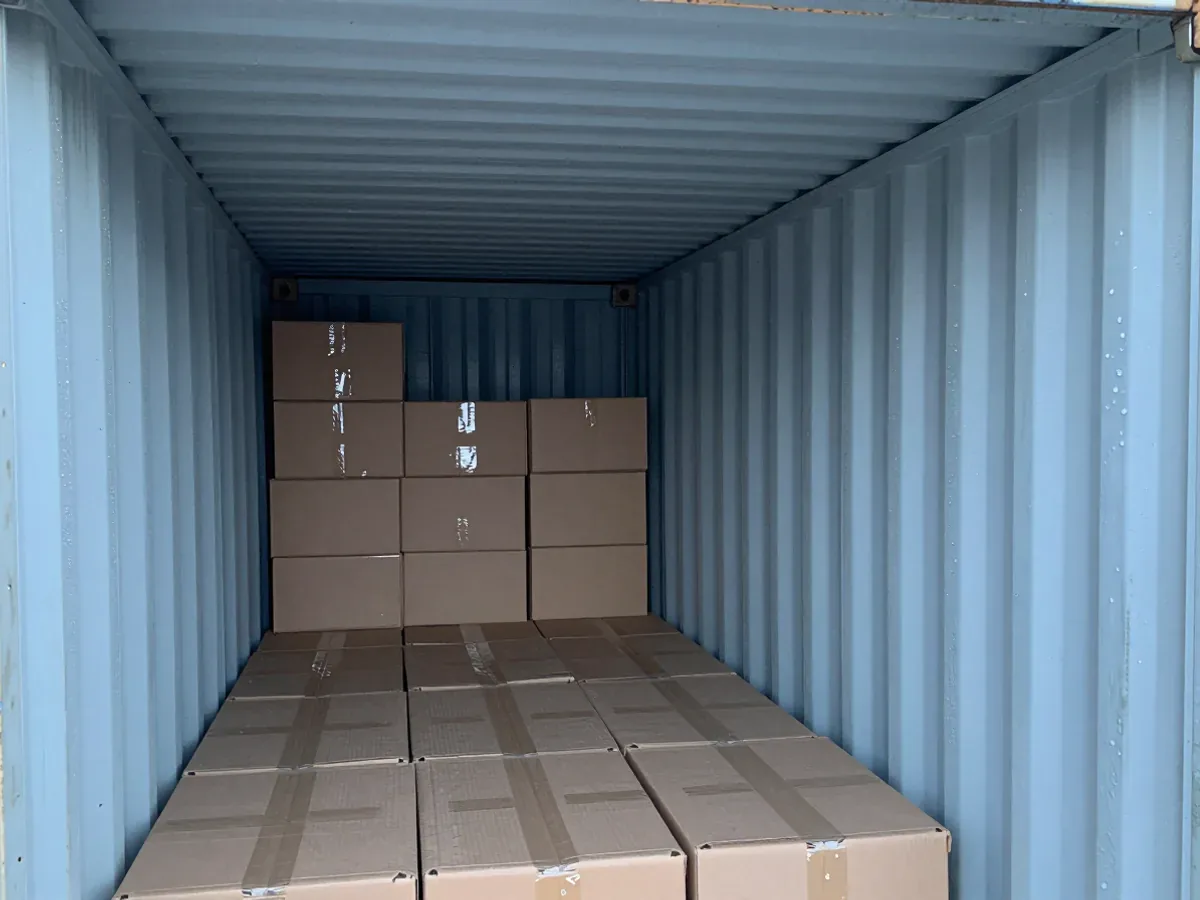
Condensation lands where air stagnates and where cargo touches cold surfaces. A tight, square load with no dunnage lets cartons shift into contact with the container walls. The wall is the coldest surface in the box on a night passage, and the carton pressed against it takes the drip.
Plan B leaves a top gap so the air cycle can breathe and uses dunnage to keep the stack off the walls. Plan A often loads tight to maximize cube, which is a reasonable commercial instinct and a poor moisture instinct.
The physics do not care about the desiccant count. Condensation that forms inside ocean containers as temperature cycles day and night across the voyage will find the cold surface first. If that surface is a carton face, the desiccant upstream of it is working on air that has already passed the damage point.
The Receiving End: Who Opens the Container and When

The last claims happen at destination. Containers opened into cold warehouses let condensation flash onto cold cargo, and cartons left sealed for weeks keep the moisture cycling inside the stack.
Plan B puts a receiving note on the loading sheet. Unload promptly rather than storing the sealed container, open into a space that is not dramatically colder than the cargo, and inspect before signing. Plan A ends at the container seal, and the receiver has no instruction beyond the packing list.
This is the cheapest line on either plan and the one most often missing. A receiver who knows the load carried desiccants and vented cartons will handle it differently from one who assumes a sealed box is a safe box.
Which Plan Fits Short Voyages and Which Fits Long Ones
A short voyage in a mild season with dry packing conditions can survive on Plan A. The temperature swing is small, the cargo does not sit long, and a modest desiccant charge covers the airborne moisture. The risk is low enough that the extra paperwork may not earn its keep.
A long voyage across climate zones is a different problem. Day and night temperature cycles across weeks give condensation many chances to form, and a load packed in a humid factory starts with a moisture debt. That is where Plan B earns its cost. The desiccant count is still calculated from load size, voyage length and season, but it sits inside a system rather than standing alone.
The decision is not about which plan is better in the abstract. It is about which risks the specific booking actually carries. A buyer shipping in a dry season on a short route is overbuying with Plan B. A buyer shipping a humid-packed load through a cold destination is underbuying with Plan A.
A Decision Table for the Next Booking
| Decision point | Desiccant-only plan | Full moisture plan |
|---|---|---|
| Desiccant quantity | Guessed or copied from last order | Calculated from load size, voyage length and season, recorded on the loading sheet |
| Carton spec | Standard carton, no venting decision | Vented or breathable outer carton, poly liner where destination is humid |
| Loading geometry | Tight to maximize cube | Dunnage off the walls, top air gap left open |
| Packing humidity | Not recorded | Recorded at packing and noted on the sheet |
| Container condition | Assumed dry | Floor and walls checked and noted before loading |
| Receiving instruction | None | Unload promptly, open into a temperature-matched space, inspect before signing |
| Claim evidence | Desiccant count only | Loading sheet, photos, packing record and desiccant count together |
The table is not a scorecard. It is a way to see which rows a given booking can afford to leave blank.
What the Line Hands the Loader Before the Doors Close
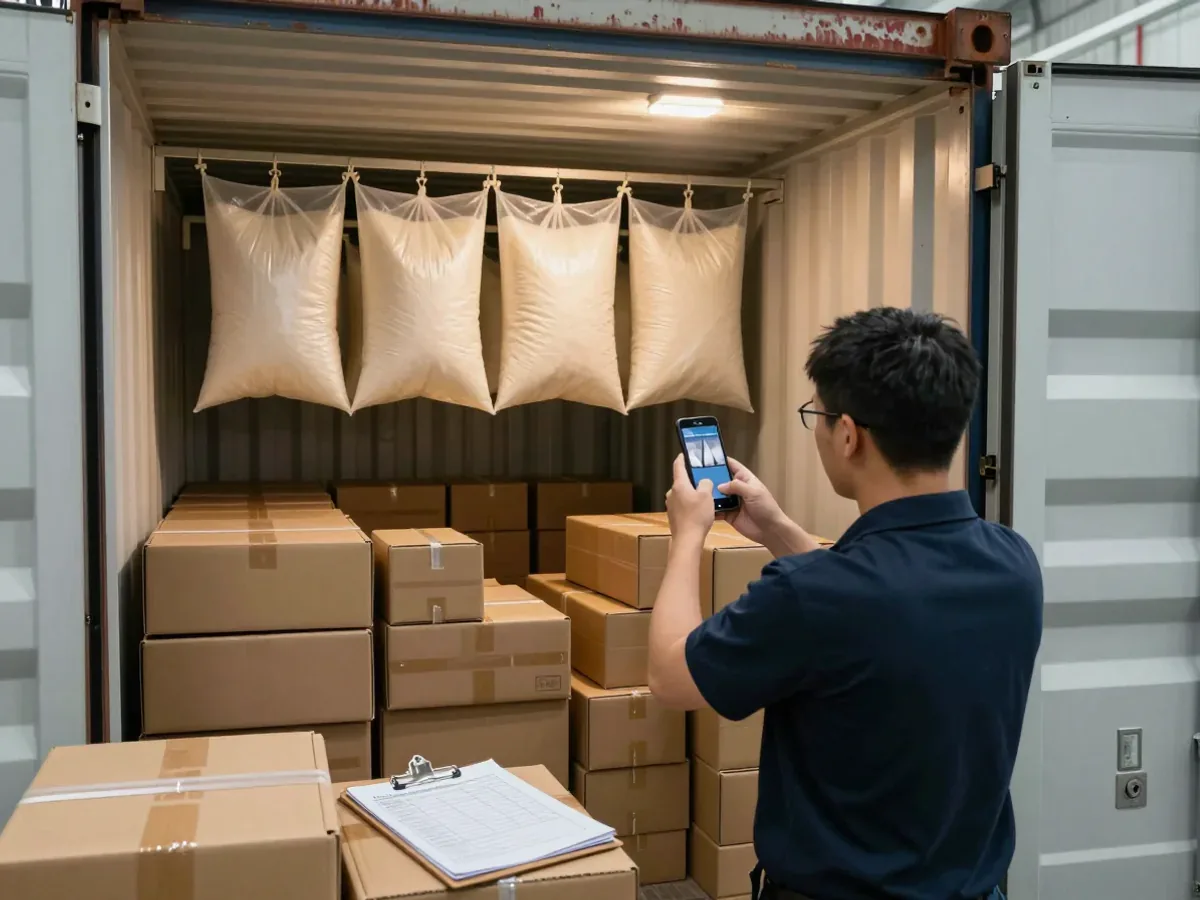
Before the container seals, the cartons are counted and photographed. That step belongs to both plans, and it is the moment the moisture plan either becomes evidence or stays a good intention.
On the line, incoming material, seams and zips, finished dimensions and the final carton count are checked before dispatch. Fabric, webbing, zips and thread are checked against the approved spec, and pull, seam strength and bar tack are tested on every batch. Finished dimensions, handles, logo and packed quantity are checked by hand.
Those checks tell the loader what is in the box. The moisture plan tells the loader how the box should travel. A bag order packed for the buyer's warehouse and labelled the way its customers receive it still needs the second half of that instruction, or the receiving dock is working blind.
The loader's last job is to confirm the desiccant count against the sheet, photograph the hanging units in place, and note the top gap. Those three photos, taken before the doors close, are what a buyer reaches for when a carton arrives with a wavy lamination and a water-stained logo.
FAQ
How many desiccants does a container need?
The count is calculated from load size, voyage length and season. It belongs on the loading sheet so every party knows what was installed, and it should not be copied from a previous booking without recalculating.
Does PP fabric itself absorb water?
The PP fabric resists water. The damage lands on cartons, print surfaces, kraft inserts and any cotton or paper components, which is why the packaging spec carries the moisture plan.
Who pays when cartons arrive wet?
Loaded-wet cargo is the shipper's issue, container defects are the carrier's, and the loading sheet plus photos decide which conversation happens. A sheet that records packing humidity and container condition is what makes that conversation possible.
Should cartons be vented or sealed with poly liners?
Both can appear in the same load. Vented outer cartons let the load equalize, and poly liners protect kraft inner boxes where the destination is humid. The choice depends on the voyage and the receiving climate, not on a single default.