



The bag industry sits at an automation inflection point. Automated sewing and cutting lines have moved from high-volume, low-variety products like woven PP sacks into mid-volume custom bags, while manual sewing still dominates short runs and complex constructions. For buyers, the choice between an automated and a manual factory changes price, lead time, and the defect pattern. This guide maps the real cost curves of both approaches.

Where Automation Pays: The High-Volume Curve
Automated lines win on products with long runs and simple seam structures: drawstring bags, standard totes, and grocery bags with two or three seam paths. An automated line runs 1,500 to 3,000 units per shift against 300 to 500 for a skilled sewer, and the per-unit labour cost falls by 60 to 80% at full utilization. The catch is the fixed cost: a basic automated line with cutting, hemming, and gusset stations runs several hundred thousand dollars, which the factory must amortize over millions of units. The unit economics only work when the order book keeps the line fed.

Where Manual Sewing Still Wins: The Flexibility Curve
Manual sewing dominates short runs, complex constructions, and mixed-material bags. A skilled sewing team switches between SKUs in minutes, handles curved seams, padded straps, and zippered compartments that automated lines cannot manage without retooling, and starts an order of 500 units without a setup cost that must be amortized. Manual factories also absorb design changes mid-production, which is where automated factories charge heavily for line reprogramming. For orders under 2,000 units, manual sewing is almost always the lower-cost and lower-risk route.
The Defect Pattern Difference Buyers Should Expect
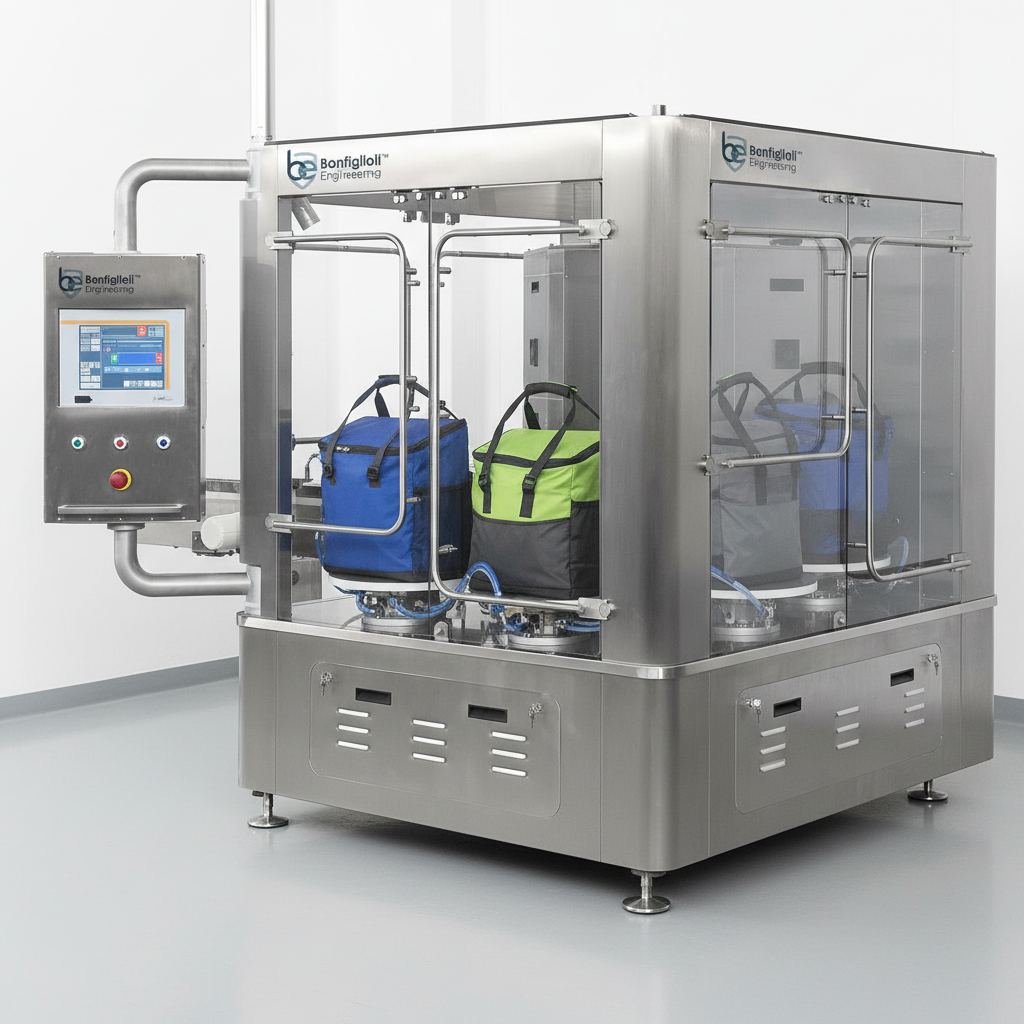
The two production methods produce different defect patterns, and a buyer’s QC plan should reflect it. Automated lines produce highly consistent seams but fail in batches when a station drifts out of calibration: a wrong thread tension or a misaligned gusset folder repeats the same defect across hundreds of units before it is caught. Manual sewing produces variable seams and occasional skipped stitches scattered through the batch, with defect rates that track worker fatigue across a shift. Batch-consistent defects call for first-piece and in-line checks; scattered defects call for AQL end-of-line sampling.
How the Cost Curves Cross
The two cost curves cross somewhere between 2,000 and 10,000 units depending on the product’s seam complexity and the local labour rate. Below the crossing point, manual sewing undercuts automated production because there is no setup cost to amortize. Above it, automation wins on labour cost per unit, and the gap widens with volume. The practical rule for buyers: if your forecast exceeds 10,000 units per SKU per year with a stable design, quote both factory types and compare; below that, a well-managed manual factory is usually the better partner.
Questions fréquemment posées
What order size justifies automated bag production?
Automation typically wins above 2,000 to 10,000 units per SKU depending on seam complexity and local labour rates, with the advantage widening as volume grows.
Do automated bag factories produce fewer defects?
Automated lines produce more consistent seams but fail in batches when a station drifts out of calibration. Manual sewing shows scattered defects that AQL sampling catches.
Why do manual bag factories still handle most custom orders?
Manual sewing switches between SKUs in minutes, handles curved seams and padded straps without retooling, and starts a 500-unit order without a setup cost to amortize.
Vous aimerez peut-être aussi...
- AI and Computer Vision in Bag Factory QC
- Bag Factory Capacity Verification
- Woven PP vs Non-Woven PP: How They Are Made
Request a Landed Cost Quote
Planning a bag program for your market? Contact our team with your specification and volume, and we will return a landed-cost quotation with the documentation your customs authority requires.
À lire également : Private Label vs White Label Bags: What Each Model Covers and Costs.
Dimension anchors and print margins by use case are tabulated in our standard bag sizing guide.
Thread selection for heavy bag seams, from ticket sizes to bonded finishes, is covered in our sewing thread guide for heavy bags.


0 commentaires