Reorganised from the old cotton bag article, with product spec notes on canvas weight, handle style and print.
Three fabric swatches sat on the sample table for most of a week: a light cotton tote shell, a mid-weight canvas, and a heavy canvas with a visible weave. The buyer who requested them had already placed an order elsewhere, and the bags were on their way back from a shop floor where they had been used for a single promotion.
The cartons arrived with the returns. Handles had pulled at the stitch line on eleven bags. Two bases had split under a loaded bottle. The prints on the lightest shells had faded after one wash cycle, and the store had decided not to reorder. Nothing in the spec sheet had been violated. The bags met the stated size, the stated colour, and the stated print position. They still failed the only test that mattered, which was whether anyone would pick them up a second time.
The cartons that came back from the shop floor
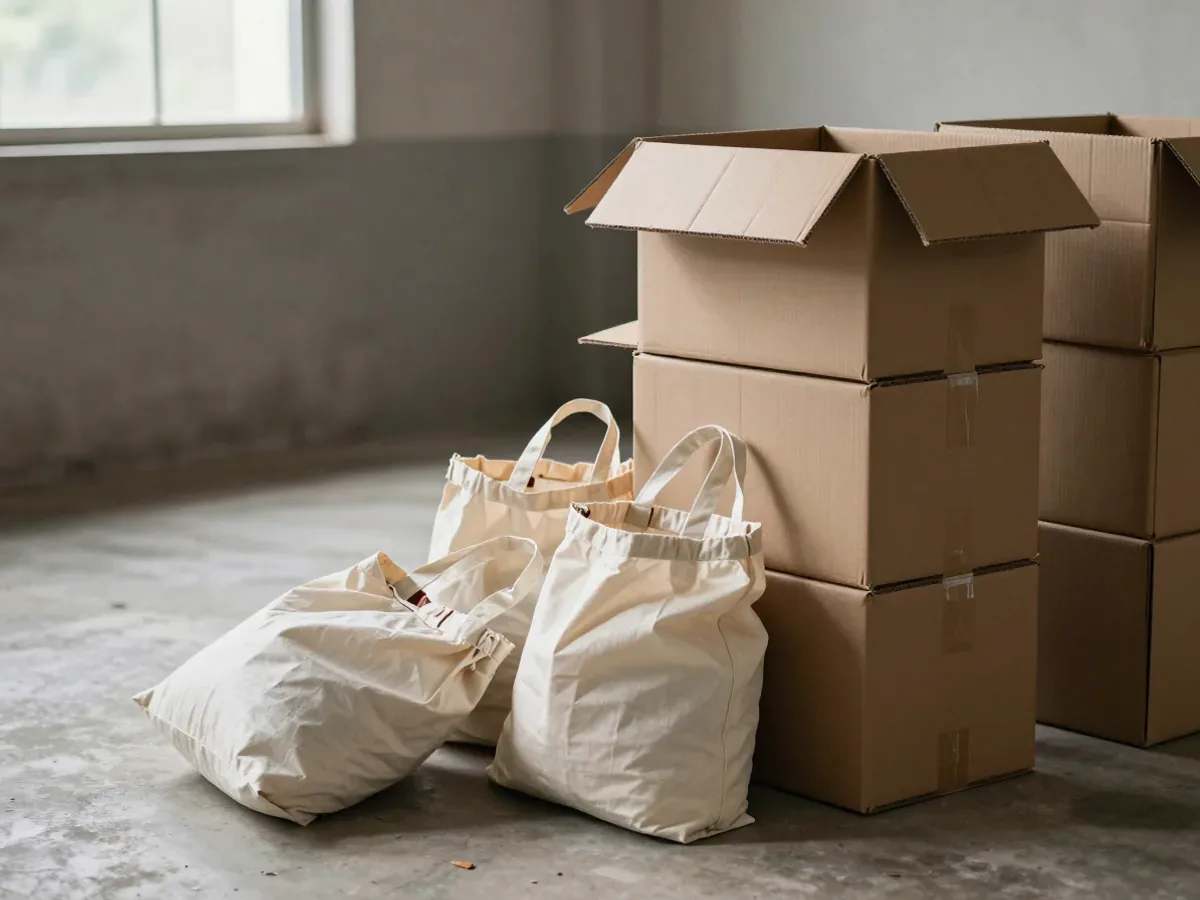
The return note was short. The store manager wrote that the bags "felt disposable" and that customers had started refusing them at the counter. That phrase is worth sitting with, because it describes a physical experience rather than a material category. A cotton bag can feel disposable when the shell is thin enough to collapse around a carton of milk, when the handle cuts into the hand, or when the print looks tired after a week.
The buyer had ordered cotton because cotton reads as the responsible choice. The order was technically correct and commercially useless. What the return actually measured was the gap between a bag that exists and a bag that gets used.
How a bag that passed the spec still failed the second trip
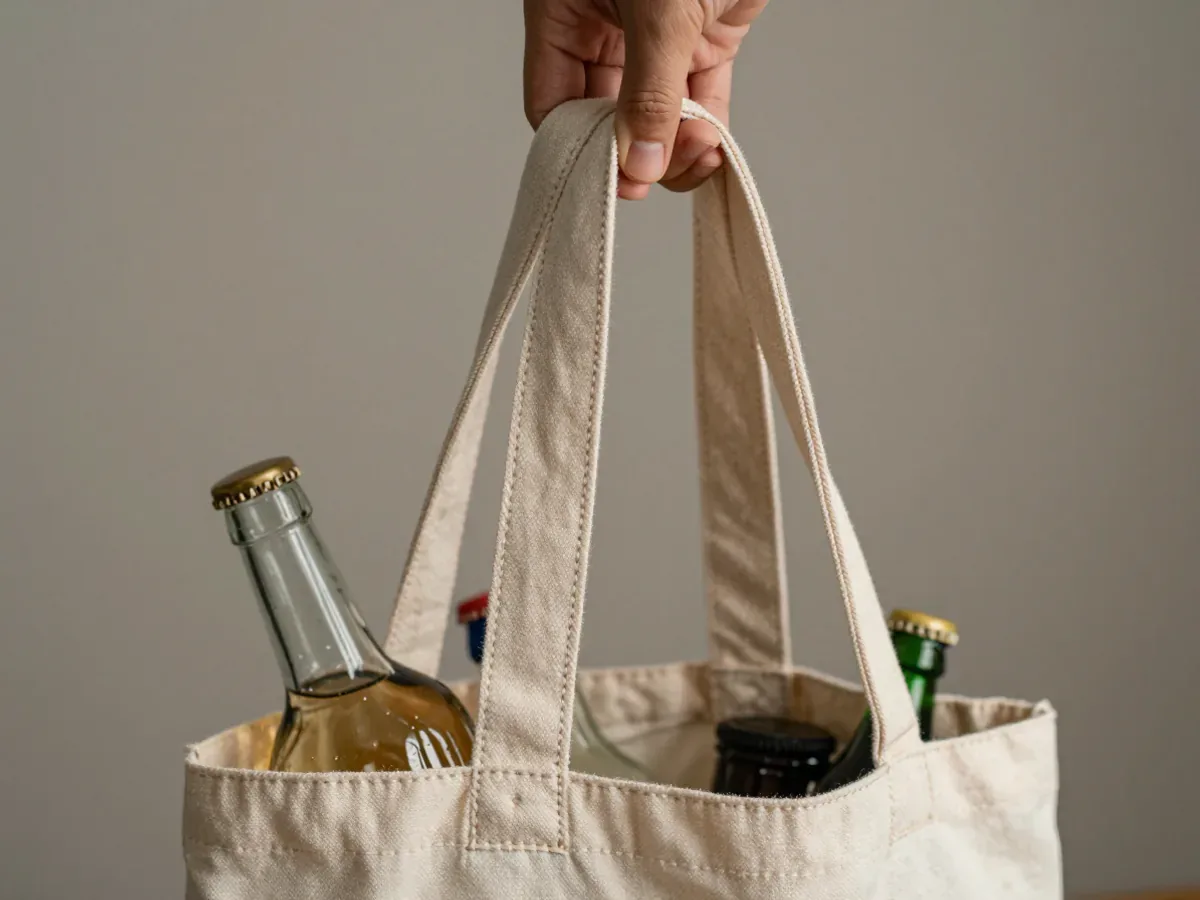
A reusable bag is judged on the second trip. The first trip is a novelty; the second trip is a decision. On that second trip, three things get tested at once: the handle attachment under a full load, the base against something heavy and awkward, and the print against whatever the bag carried and wherever it was stored.
The returned bags failed all three in different ways, and each failure traced back to a choice made before sampling. The light shell was chosen to keep unit cost down. The handle was a simple stitched tape with no reinforcement at the attachment point. The print was placed on a surface that had no tolerance for abrasion.
None of those choices is wrong on its own. Together they produced a bag that could not survive the use it was bought for. The spec sheet described the bag accurately and described its working life not at all.
What the cotton fibre actually promises, and what it does not
Cotton is soft, strong and breathable, and it handles moisture better than most synthetics. Those properties make it a good carrier for groceries, including produce that would sweat inside a sealed plastic bag. Cotton also biodegrades when discarded, which plastic does not do on any human timescale.
The fibre does not promise durability by itself. A thin cotton shell wears through at the corners and along the handle line. Conventional cotton farming uses large amounts of water and may involve pesticides, so the environmental case for cotton depends heavily on how the fibre was grown and how long the finished bag stays in service.
Organic cotton, grown without synthetic fertilizers or pesticides, reduces the input side of that equation. It does not change the output side. An organic cotton bag that gets used twice has a worse environmental profile than a conventional cotton bag that gets used two hundred times. Reuse is the variable that decides the outcome, and reuse is a design question before it is a farming question.
Where cotton sits against jute, polyester and recycled polyester
Jute is biodegradable and reasonably durable, but it is rough against the hand and tends to break down faster than cotton under heavy repeated loads. It suits a structured grocery bag more than a tote that gets folded into a pocket.
Polyester is the durability champion of the group. It resists water, fading and wear, and a well-made polyester bag can last three to ten years depending on use and material quality. It is also petroleum-based and not biodegradable, so its environmental case rests entirely on longevity.
Recycled polyester, made from recycled plastic bottles, keeps most of that durability while reducing the demand for virgin petroleum feedstock. It is a reasonable middle path for bags that will be exposed to weather or heavy loads.
Cotton sits between these options. It is the most biodegradable of the four and the most pleasant to carry against the skin, but it is not the most durable. The honest comparison is not cotton versus plastic. It is a cotton bag designed for many trips versus a cotton bag designed to hit a price.
The weight and handle choices that decide reuse
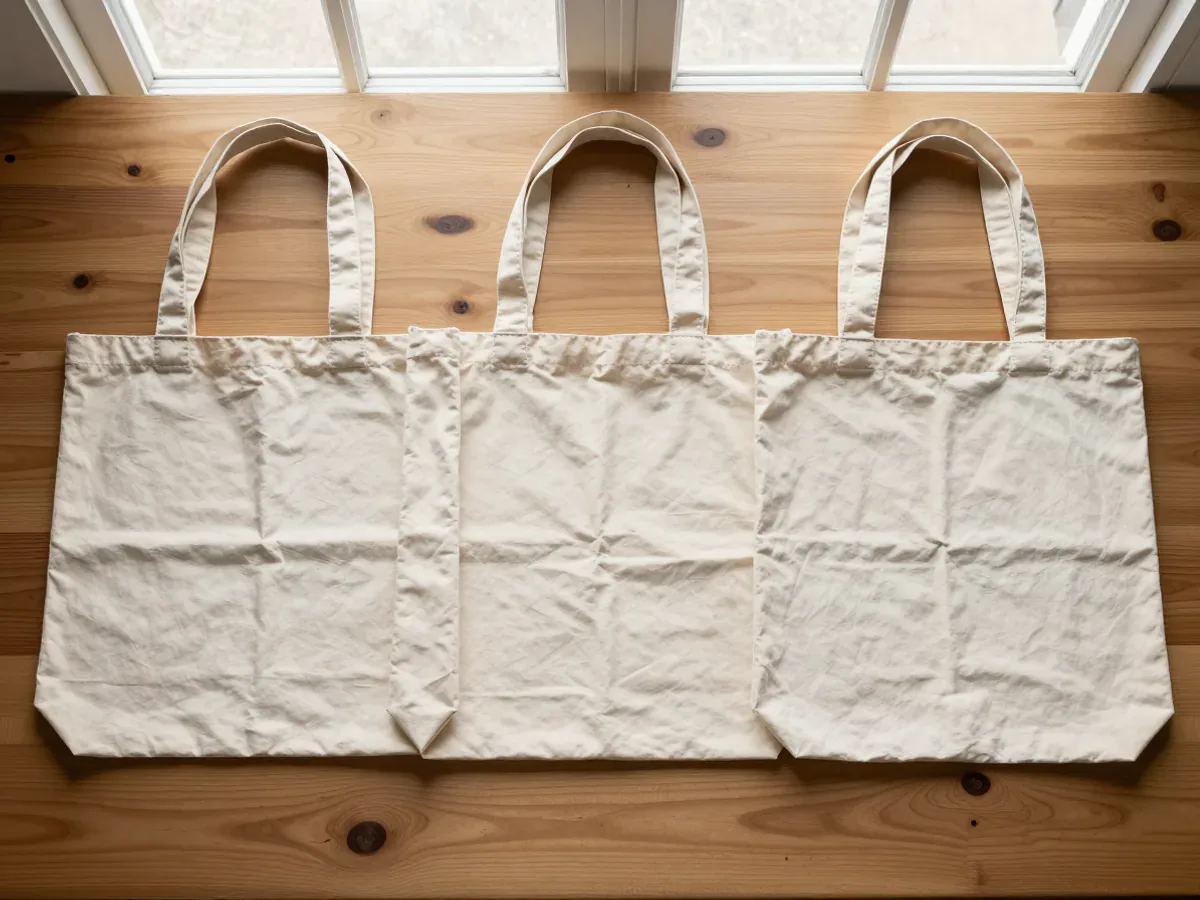
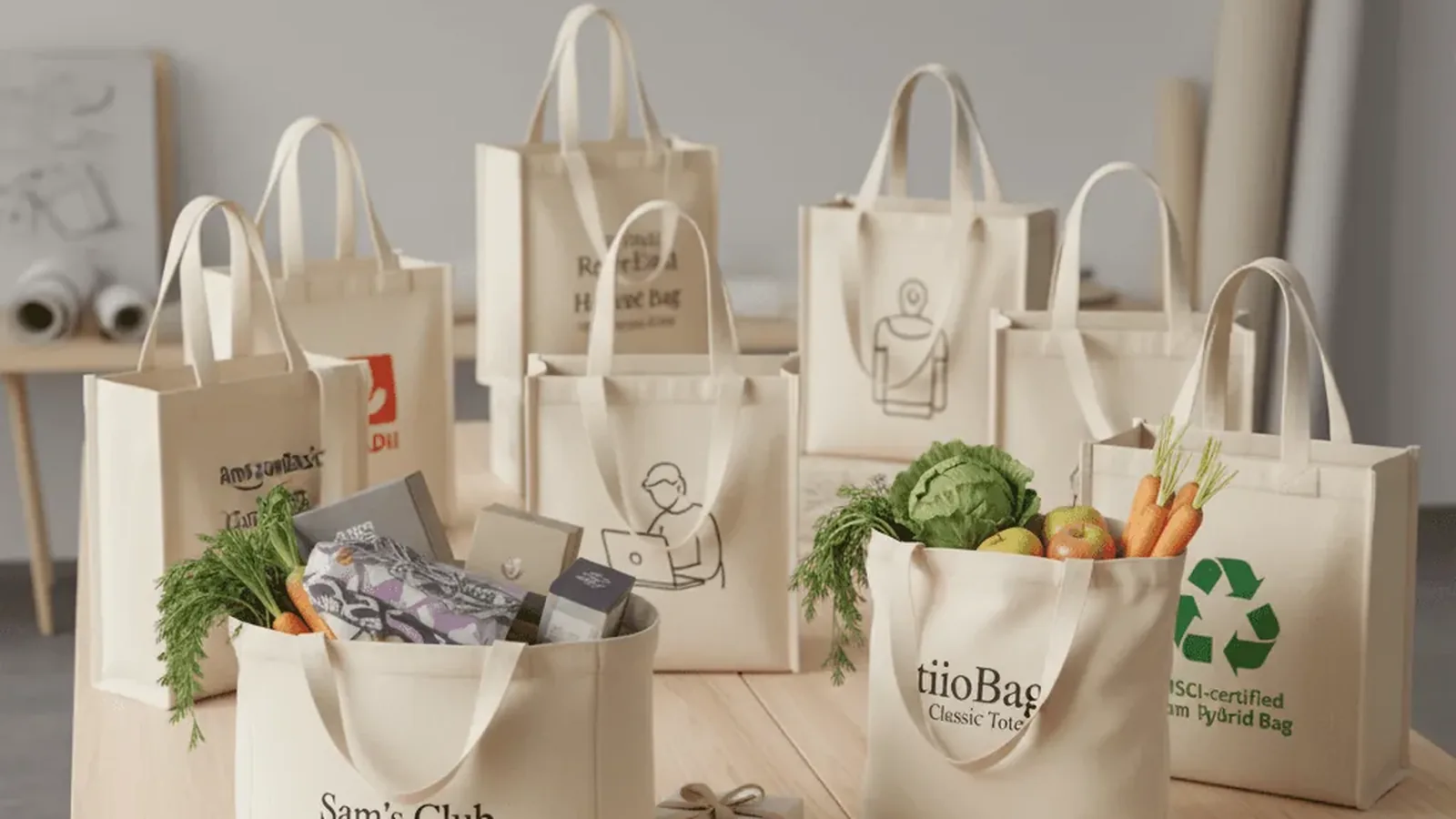
Shell weight is the first lever. A light cotton shell folds small and prints cheaply, and it also collapses under load and abrades quickly. A heavier canvas holds its shape, carries a bottle without sagging, and takes a print that survives handling. The trade is cost per unit and packability.
Handle style is the second lever. Woven tape, webbing and rope each behave differently in the hand and at the attachment point. A rope handle distributes load well but needs a secure anchor. A woven tape handle is comfortable and inexpensive but concentrates stress where it meets the shell.
Reinforced stitching at the handle attachment is the detail that separates a bag that lasts from a bag that returns. A metal rivet at that junction adds another layer of security, and it is visible to the customer, which matters when the bag is meant to signal quality.
Size interacts with all of this. A larger bag carries more, which means every seam and attachment point works harder. The bag that failed on the shop floor was not badly made. It was sized and specified for a load its materials could not support repeatedly.
What a cotton bag brief should pin down before sampling
A brief that produces a reusable bag names the working life first. If the bag needs to survive a year of weekly grocery trips, the shell weight, handle construction and print method all follow from that target rather than from a unit price.
The shell should be specified as cotton canvas in natural or dyed colour, with the weight stated and a physical swatch approved rather than a photo. The handle should be named as woven, webbing or rope, with the attachment method described, including whether reinforcement stitching or a rivet is required.
The print method should match the surface. Screen print, heat transfer and woven label each behave differently under washing and abrasion, and the brief should say which wash cycle the print must survive. A woven label often outlasts a surface print on a bag that will be cleaned regularly.
Finally, the brief should describe the load. A bag specified for a light promotional giveaway and a bag specified for a weekly grocery run are different products, and treating them as one spec is how returns happen.
How to check a cotton tote before the run starts
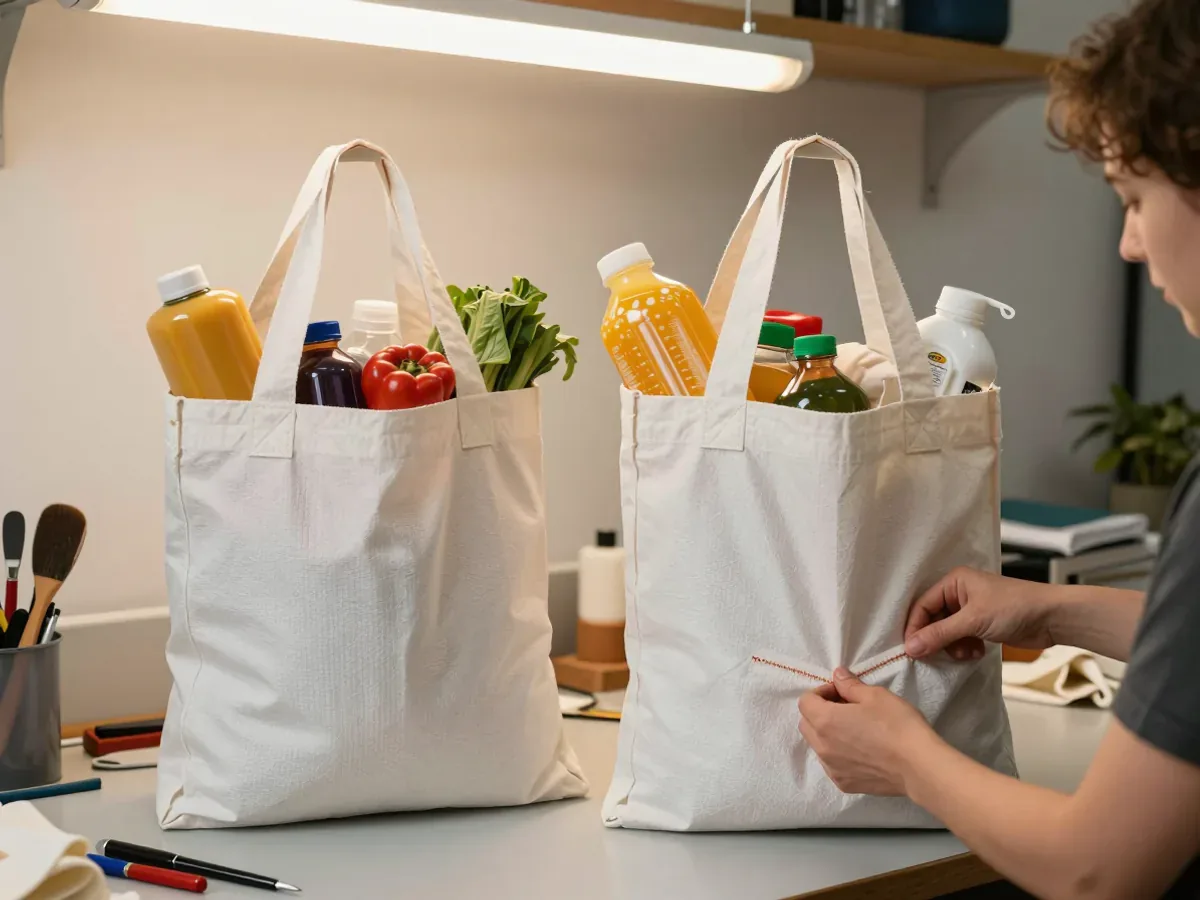
The checks that would have caught the returned order are simple and mostly physical. Fill a sample with the heaviest realistic load and carry it for a few minutes. Watch the handle attachment, the base seam and the shoulder area for distortion.
Wash one sample the way a customer would and compare the print and the shell against an unwashed sample. Look at the handle junction under tension and confirm the stitching density and any reinforcement. Fold the bag and unfold it several times to see how the shell recovers.
Then hand the sample to someone who did not specify it and ask whether they would carry it again. The answer tends to arrive faster than any test report, and it points at the same three places every time: the handle, the base and the print.
FAQ
Is a cotton bag always better than a plastic bag?
No. A cotton bag beats a single-use plastic bag only when it is reused many times. A thin cotton bag that gets used twice carries a worse environmental cost than the plastic bag it replaced, because growing and processing the fibre already happened.
Does organic cotton make a shopping bag more eco friendly?
It improves the growing side by avoiding synthetic fertilizers and pesticides. It does not fix a bag that falls apart after a few trips. Organic fibre in a flimsy shell is still a short-lived product.
How heavy should a cotton canvas shopping bag be?
Heavy enough to hold its shape under a loaded bottle and to keep the handle attachment stable. The right weight follows from the intended load and the number of trips expected, so approve a physical swatch against a filled sample rather than choosing a number in isolation.
Can a cotton tote be washed without losing its print?
It depends on the print method. Screen print, heat transfer and woven label each respond differently to washing and abrasion. State the wash cycle the bag must survive in the brief, then wash a sample before the run starts and compare it against an unwashed control.