




A bag on a shop shelf has been folded at least twice, pressed under other bags, and handled by staff who have more pressing things to do than treat it gently. The fold pattern chosen at the factory decides whether it arrives looking like a product or like something retrieved from a storage box.
Folding is a small engineering problem with a real commercial consequence. Creases that fall badly, surfaces that mark against each other, and packs that will not sit flat on a shelf all reduce sell-through in ways that are hard to trace back to the fold decision.

How Bags Are Folded for Retail
Three patterns cover most retail bags. Flat folding keeps the bag in a single plane with the handles tucked, which suits shelf stacking and hanging. Third folding brings the base up and creates a compact rectangle, which suits open display.
Rolling is used for soft fabrics where creasing is undesirable, and it produces a cylindrical pack that suits boxes and display bins rather than pegs.
The choice follows the retail environment rather than the bag. A bag destined for a peg needs a header and a fold that hangs straight; a bag destined for a shelf bin needs to stack flat and be recognised from above.
Where Creases Should Not Fall
Crease placement matters most on coated, laminated and printed surfaces. A permanent crease along a printed logo will eventually crack the print, and a crease line crossing a coated panel can delaminate it.
The practical rule is to place folds where the bag is least visible in use, typically at the sides and the base rather than across the front panel. Where that is impossible, the fold line should avoid crossing fine print detail.
Samples should be folded and unfolded several times before approval, not inspected flat. A fold that looks acceptable on a fresh sample can leave a mark after five openings, and the customer will open the bag more than five times.

Protecting Surfaces in the Pack
Two mechanisms damage stacked bags: print transfer, where ink or coating moves from one bag to the next under pressure, and surface marking, where texture or a crease edge leaves a visible impression.
Interleaving solves both. A sheet of tissue or a light film between bags stops surfaces touching, and it is cheap relative to the value of the problem it prevents. For very glossy or freshly printed surfaces, interleaving is standard practice rather than an option.
Where bags carry a header card, the card can double as the interleaf if it is sized to cover the printed area. The design of those cards, and what they should carry, is described in our notes on insert cards in bag packs.
Pack Formats for the Shelf
The pack format decides how the product is displayed and counted. A polybag with a header suits pegs. A printed band around a folded bag suits premium placement. A boxed pack suits sets and gifts.
Whatever the format, the pack has to survive transport. Bags that shift inside their cartons during the sea leg arrive with the neat fold disturbed, so the carton should be filled rather than left half empty, and the folded packs should be sized so they cannot tumble.
Shelf presence also depends on print consistency between units. Where a programme uses several bags in one range, colours and finishes must match across the whole set, and the colour specification choices that prevent reprint problems are set out in our notes on Pantone, CMYK and RGB specifications.
Cartons, Labelling and Import
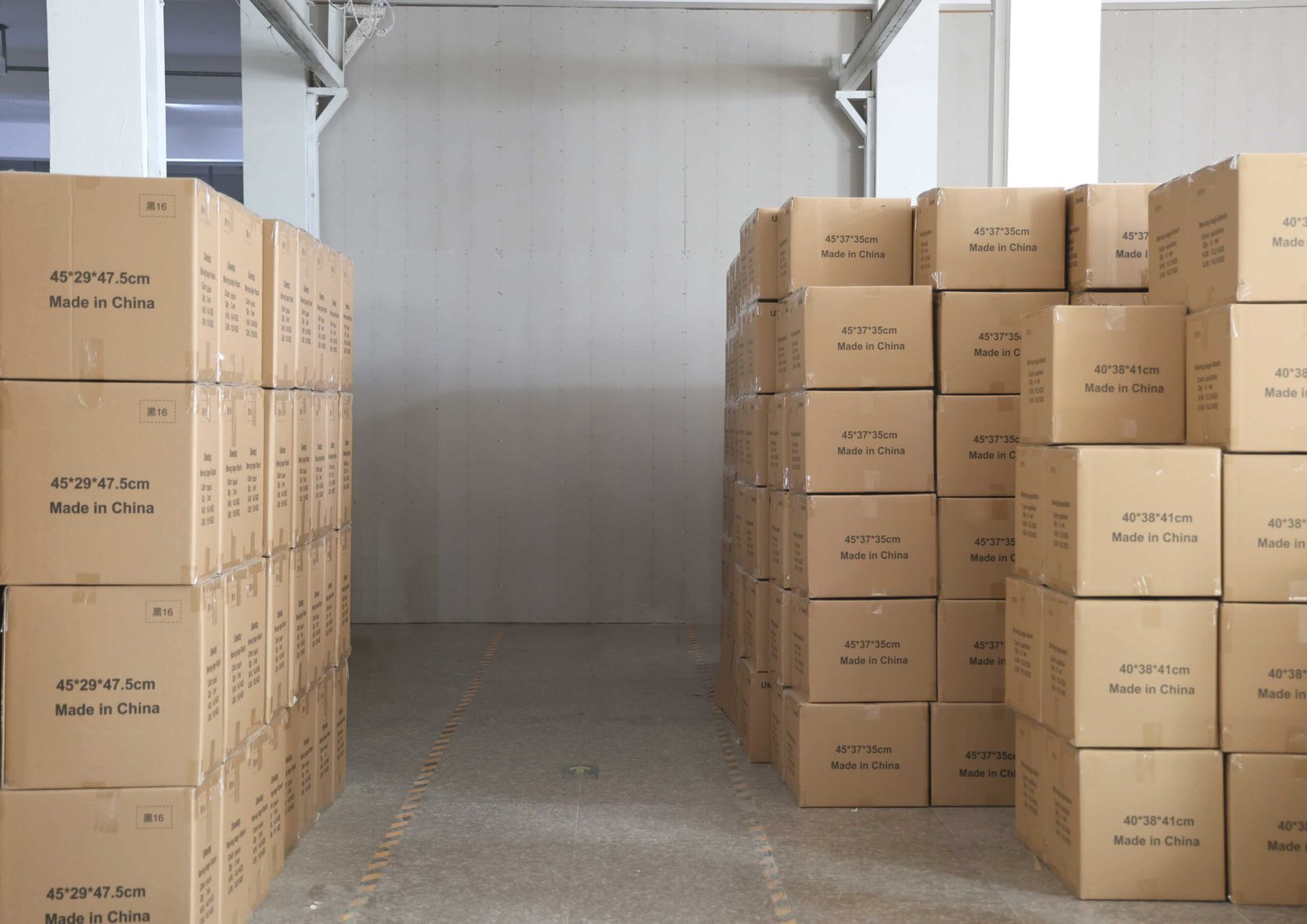
Retail packs travel in cartons that carry their own requirements: case dimensions that suit pallet stacking, barcode labels that suit the retailer’s distribution centre, and markings that identify the contents for customs purposes.
Goods descriptions on the commercial invoice and packing list must match what is inside. CBP’s US CBP guidance on importing goods explain the documentation expected for import, and a description that reads “promotional goods” where the shipment contains retail-packed bags invites questions that a precise description avoids.
Where a retailer specifies carton labels and case quantities, those requirements should be confirmed in writing before production rather than discovered at the distribution centre, because a relabelling exercise at the destination is both slow and chargeable.
What to Approve and What to Record
Five items complete a retail packing approval: fold pattern with the crease positions marked, interleaving specification, pack format with dimensions, carton and pallet configuration, and the label and barcode content.
Keep a folded sample, not just a flat one. The approved pack is what the customer will see, and a flat sample approves the bag rather than the product. Our retail and branding solutions cover the pack formats available for each bag construction so the display format and the product are specified together.
FAQ
Which fold pattern is best for retail bags?
It follows the display. Flat folding suits shelf stacking and pegs, third folding suits open display, and rolling suits soft fabrics where creasing must be avoided.
Where should crease lines fall?
Away from printed and coated panels, typically at sides and base, because repeated creasing can crack print or delaminate coatings.
Why interleave stacked bags?
To prevent print transfer and surface marking under pressure during transport and shelf handling.
Why keep a folded sample for approval?
A flat sample approves the bag, not the retail product. The folded pack is what the customer sees and what shows crease behaviour.
What import documentation matters for retail packs?
A commercial invoice and packing list with a goods description that matches the contents, as set out in CBP guidance.
Video: Custom Packaging at Factory Direct Price with Fast Lead Time
If you are launching a retail-packed bag programme, send the display format and the bag construction. Our retail branding team will come back with fold options, pack formats and a carton label specification.


0 commentaires