



Le sac fini ne représente que la moitié de la présentation en magasin
Votre sac personnalisé est imprimé, cousu et emballé. Il est prêt à être expédié. Mais lorsqu'il arrive en magasin — ou entre les mains du client suite à une commande en ligne —, le sac en lui-même ne suffit pas à offrir une expérience de marque complète. Les étiquettes volantes, les notices d'entretien, le papier de soie à l'effigie de la marque et les cartes de remerciement transforment un simple produit en une véritable présentation.
Pour les marques qui commandent des sacs personnalisés en gros, le fait d'ajouter les étiquettes volantes et les encarts en usine (plutôt que de les apposer soi-même) permet d'économiser de la main-d'œuvre, garantit l'uniformité et rend le produit prêt à être mis en rayon dès son arrivée dans votre entrepôt ou dans l'arrière-boutique de votre détaillant.
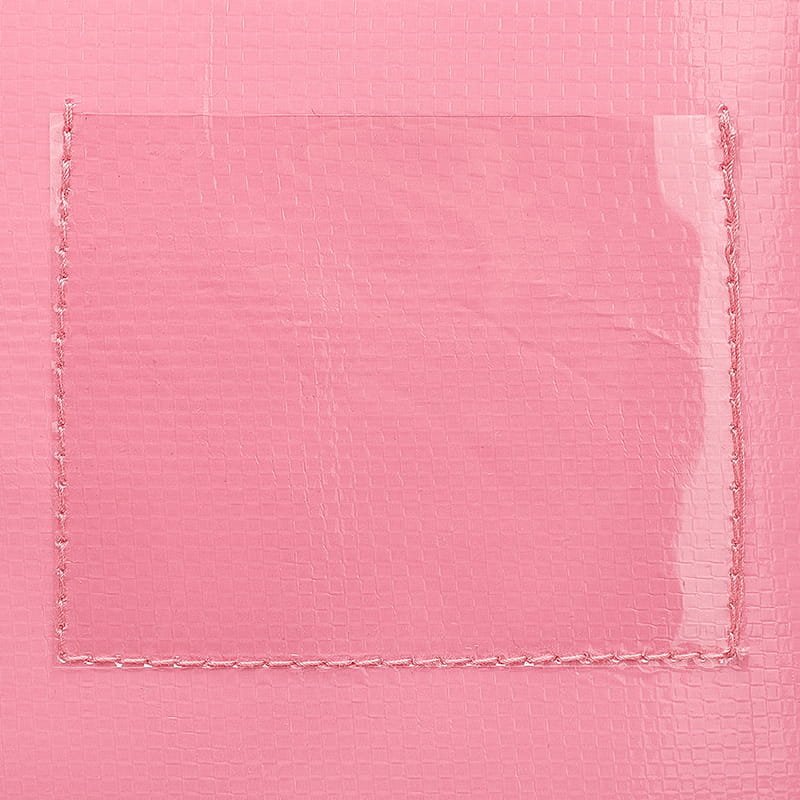
Qu'est-ce qui est considéré comme une “ étiquette volante ou un encart ” ?”
Ces termes désignent plusieurs éléments distincts qui remplissent différentes fonctions dans l'emballage destiné à la vente au détail :
| Article | Fonction | Exemple de placement | Coût (à l'unité, pour des quantités supérieures à 10 000) |
|---|---|---|---|
| Étiquette volante | Identité de marque, prix, informations sur les produits | À fixer à l'aide d'un cordon ou d'un attache-cordon en plastique à la poignée du sac ou à la tirette de la fermeture éclair | $0.03-0.08 |
| Fiche d'entretien et de lavage | Consignes d'entretien des matériaux, informations relatives à la conformité | Glissé à l'intérieur du sac ou fixé à l'étiquette de la couture intérieure | $0.01-0.03 |
| Carte de remerciement | Lien avec la marque, suggestion pour les réseaux sociaux, code de réduction | Placé à l'intérieur du sac (commerce en ligne) ou fixé à l'extérieur (commerce de détail) | $0.02-0.05 |
| Papier de soie à l'effigie de la marque | Une expérience de déballage haut de gamme, une présentation prête à offrir | Emballé dans un sac, lui-même placé dans un sachet en plastique ou dans un coffret cadeau | $0.04-0.10 |
| Autocollant ou sceau | Soudure des sachets en polyéthylène, renforcement de l'image de marque | Fermer le sachet en plastique ou bien attacher le papier de soie | $0.01-0.02 |
Pour un ensemble complet destiné à la vente au détail (étiquette volante + notice d'entretien + carte de remerciement + papier de soie + autocollant), le coût supplémentaire total s'élève à $0,11-0,28 par sac. Pour une commande de 10 000 unités, cela représente $1 100 à 2 800, soit une fraction minime du coût de production des sacs, mais cela transforme complètement l'expérience de déballage.
Conception d'étiquettes volantes : ce qu'il faut y mettre et ce qu'il faut laisser de côté
Une étiquette bien conçue transmet les informations essentielles en moins de 5 secondes, temps pendant lequel le client y prête attention. Voici la hiérarchie des informations :
- Logo de la marque — élément visuel dominant, occupant 40 à 50% de la surface de la balise
- Nom du produit ou de la collection — une ligne, clairement lisible à bout de bras
- Légende des éléments — “ Fabriqué à partir de coton recyclé 100% ” ou “ PP recyclé certifié GRS ” — c’est ici qu’il faut indiquer les allégations en matière de développement durable
- Taille/dimensions — uniquement si cela est pertinent (par exemple, “ Peut contenir un ordinateur portable de 15 pouces ” pour un sac fourre-tout)
- Prix — uniquement si votre canal de distribution l'exige ; de nombreuses marques vendant directement aux consommateurs (DTC) n'indiquent pas le prix sur les étiquettes
- Code-barres/UPC — obligatoire pour les systèmes de point de vente au détail ; à apposer au dos de l'étiquette
À éviter : les longues histoires de marque, les URL de sites web en petits caractères, les consignes d'entretien (celles-ci doivent figurer sur une fiche d'entretien séparée) et tout ce qui nécessite une loupe. Si le client ne peut pas le lire d'un simple coup d'œil, cela n'a pas sa place sur l'étiquette.
Équipements d'usine : pourquoi s'approvisionner directement à la source permet de réaliser des économies
Vous disposez de deux options pour fixer les étiquettes volantes et insérer les fiches d'entretien :
Option A : L'usine s'en charge (recommandé)
L'usine appose des étiquettes volantes et insère des fiches d'entretien au cours du processus d'emballage. Chaque sac sort de la chaîne de production, est étiqueté, reçoit sa fiche d'entretien à l'intérieur, puis est placé dans un sachet en polyéthylène — tout cela dans le cadre du processus d'emballage standard.
- Coût : $ 0,02-0,05 € par unité de main-d'œuvre (l'usine ajoute ce montant à vos frais d'emballage)
- Heure : Aucune démarche supplémentaire de votre part
- Cohérence : Chaque sac est étiqueté de la même manière, l'étiquette étant placée au même endroit.
Option B : Vous le faites après réception
L'usine expédie les sacs sans étiquettes. Vous les recevez dans votre entrepôt, puis vous y fixez manuellement les étiquettes volantes et y insérez les fiches d'entretien avant de les envoyer aux magasins ou de traiter les commandes en ligne.
- Coût : $0.10-0.25/unit in US labor costs (warehouse staff time)
- Heure : 15,000 bags × 30 seconds each = 125 labor hours
- Risque : Inconsistent tag placement, missed inserts, damaged tags during manual handling
The math is clear: factory attachment at $0.03/unit vs. domestic labor at $0.15/unit saves $0.12/bag. On 10,000 bags, that’s $1,200 in labor savings alone — not counting the consistency benefit.
This is the same logic that drives hardware attachment decisions — doing finishing work at the factory where labor costs are lower always beats doing it domestically.
Ready to add hang tags and inserts to your next bag order? Send us your specs and artwork and we’ll include the complete finishing package in your factory quote.
Print Specs: What Your Factory Needs from You
To produce hang tags and inserts, your factory needs print-ready files. Here are the standard specifications:
| Spec | Hang Tag | Care Insert | Thank-You Card |
|---|---|---|---|
| Taille | 3.5″ × 2″ (standard) or custom die-cut | 2″ × 3″ (fits inside bag) | 4″ × 6″ (postcard size) |
| Matériau | 350gsm coated card stock, matte or gloss lamination | 100gsm uncoated paper (easy to read, no glare) | 300gsm coated, matching brand aesthetic |
| Colors | CMYK full color or Pantone spot (1-2 colors) | Black only (keeps cost low) | CMYK full color |
| File format | AI or PDF with 3mm bleed, outlined fonts | PDF, single color | AI or PDF with bleed |
| MOQ | Usually matches bag order quantity + 5% waste | Same as bag quantity | Same as bag quantity |
Pro tip: if you’re working with the factory on logo placement on the bag itself, coordinate the hang tag design to complement — not duplicate — the bag’s branding. The hang tag should add information the bag print can’t carry (price, barcode, material details), not repeat the same logo at a smaller size.
String and Fastener Options
Hang tags need to attach to the bag. The attachment method matters for both aesthetics and cost:
- Cotton string: $0.01/tag, matches natural/organic brand positioning, biodegradable
- Plastic fastener (T-bar): $0.005/tag, fastest to attach at the factory, standard for mass retail
- Ribbon (satin or grosgrain): $0.03-0.05/tag, premium feel, matches luxury brand positioning
- Metal eyelet + cord: $0.08-0.12/tag, highest perceived quality, works for premium leather-adjacent brands
For most bag brands, cotton string or plastic T-bar fasteners are the practical choice. The attachment method should match the bag’s price positioning — a $5 promotional tote with a satin ribbon tag creates a mismatch that confuses the customer about quality.
Ordering Checklist: What to Send Your Factory
When you’re ready to add hang tags and inserts to your bag order, send the factory this package:
- Hang tag artwork (AI/PDF with bleed, CMYK, outlined fonts) — include a physical sample if possible
- Care insert content (PDF, black and white is fine) — include washing symbols, material composition, country of origin
- Thank-you card artwork (if using) — match your brand’s visual identity
- Attachment instructions — specify where on the bag the tag should be attached (e.g., “left handle, 2cm from base”)
- Packing instructions — how bags should be folded, tissue placement, poly bag sealing method
- Quantité — order bag quantity + 5% overage for tags and inserts (accounts for production waste and QC rejects)
Getting this package right before production starts means the factory can source tag stock, print, and die-cut in parallel with bag production — no delays, no separate shipping for tags.
For brands new to factory-direct sourcing, coordinating all these finishing details is part of the RFQ process — include hang tag and insert requirements in your initial factory inquiry so the quote reflects the complete, shelf-ready product cost.
Questions fréquemment posées
Combien coûtent les étiquettes volantes personnalisées à l'unité ?
Custom hang tags cost $0.03-0.08 per unit at quantities of 10,000+, depending on size, material (card stock weight), and printing (CMYK vs spot color). Adding specialty finishes like spot UV, foil stamping, or embossing increases cost to $0.10-0.20 per tag.
Est-ce que l'usine doit apposer les étiquettes volantes ou dois-je le faire moi-même ?
Always have the factory attach hang tags during their packing process. Factory labor costs $0.02-0.05/unit for tagging; US warehouse labor costs $0.10-0.25/unit. Factory attachment also ensures consistency — every tag placed in the same position on every bag.
Quelles informations doivent figurer sur l'étiquette d'un sac ?
Essential hang tag content: brand logo, product name, material callout (especially sustainability claims), and barcode/UPC for retail POS. Optional: price (if required by retail channel), size information. Leave off: lengthy brand stories, care instructions (use separate insert), tiny text that requires magnification.
What’s the difference between a hang tag and a care insert?
A hang tag is attached externally to the bag (via string or fastener) and carries brand/product information for the customer’s purchase decision. A care insert is placed inside the bag and carries washing instructions, material composition, and regulatory compliance information. They serve different purposes and should be designed separately.
À lire également : Private Label vs White Label Bags: What Each Model Covers and Costs.
À lire également : Interior Branding for Bags: Linings, Prints and Hidden Details


0 commentaires