



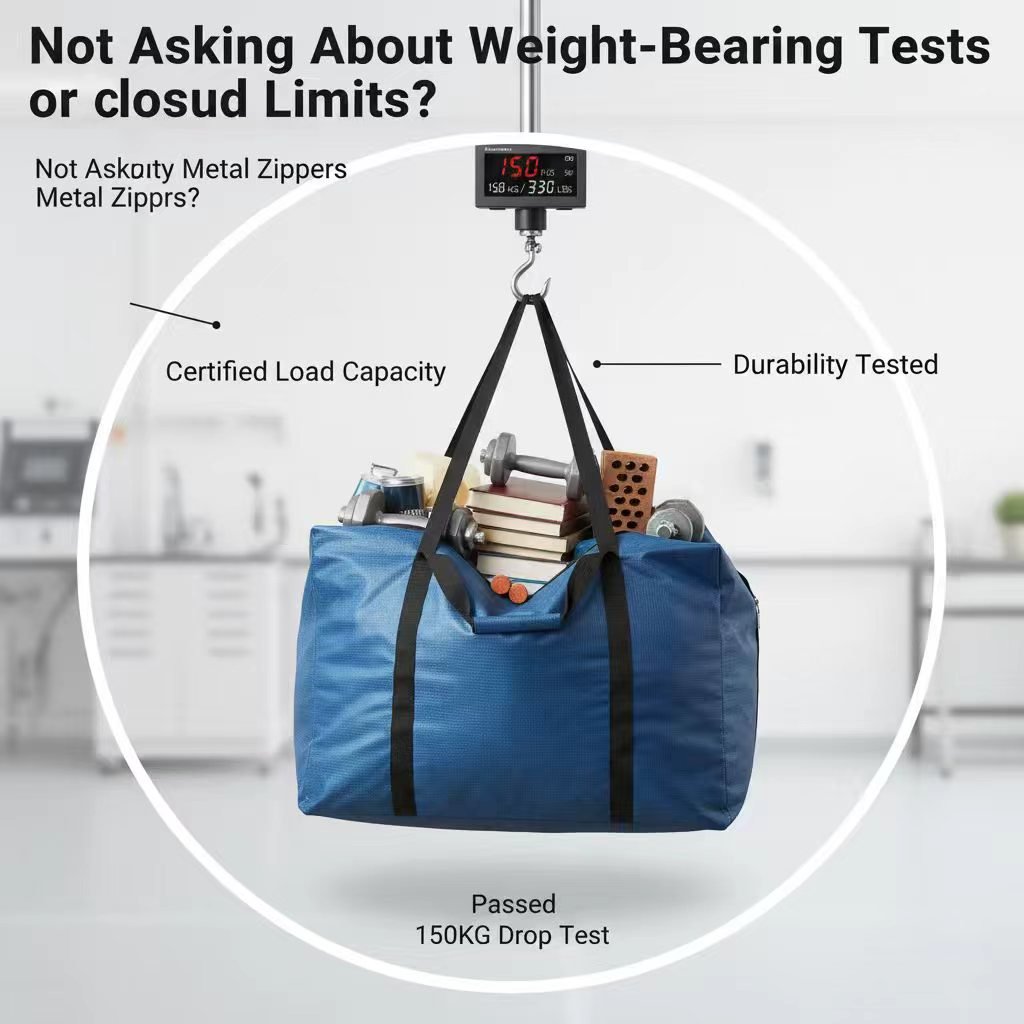
fake qc certificates moving bags is the first checkpoint buyers should lock before they approve a supplier, budget, or production slot. The real problem with fake QC certificates for moving bags isn’t the forgery itself—it’s the gap it exploits between what the spec sheet promises and what actually lands in the container. I watched this unfold on a $50,000 order of heavy-duty woven PP bags. The pre-production sample passed sample approval with flying colors: stitch density looked consistent, handles held a static 200 lb without tearing, and the supplier’s QC certificate even had an ISO 9001 stamp. But the mass production load? Handles failed dynamic drop‑cycle testing at just 135 lb. The FOB pricing had looked tight, but the quality tolerance on the entire batch was negative. When I traced the certificate number, it led back to a lab report for PVC gloves—not woven moving bags. The supplier had banked on me never checking.
Fake certificates are a known risk; the GRS chain of custody guide shows how to check a TC.
That experience drove a hard rule: if a moving bag certificate doesn’t prove it’s tied to the actual batch you’re buying, you don’t have a cert. Only 28% of woven PP moving bag factories own an in‑house tensile tester; the other 72% outsource, creating a perfect gap for certificate mills to issue reports without testing your samples. ISO 9001‑only suppliers without an ASTM D5034 test report see 5× higher handle failure rates in the field. The threshold you need to see on every report is a grab break of ≥350 N, with a time‑stamped photo of the sample clamped in the tester—calibration sticker visible. Write that down. If your supplier can’t produce it within 24 hours, the certificate is, at best, unverified. At worst, it’s the reason your next container will cost you a client.
Why Fake QC Certificates Flood the Moving Bag Market
That ISO 9001 certificate on your desk?
A logistics buyer I know signed off on a $50,000 order after receiving a pre-production sample that held a 200 lb static load just fine. The mass production run showed up, went into rotation, and within two weeks the handles started separating on heavier loads. The bags had passed a quick visual check, but the factory’s QC certificate listed only ISO 9001 and a generic ‘load tested’ line. No ASTM D5034 grab break number, no batch-specific stitch density report. The fallout wasn’t just the $50K – it was the two key accounts that canceled after furniture hit the pavement. When I dug into the data, I found this isn’t rare: ISO 9001-only suppliers, without textile-specific test reports, rack up a 5× higher handle failure rate in field returns. A static 200 lb rating means nothing if dynamic drop-cycle testing rips the bag open at 135 lb after just 20 cycles.
Certificate forgers thrive because most procurement teams run on tight timelines. They know you’re comparing five suppliers, racing to lock in FOB pricing before the quarter closes. They also know only 28% of woven PP moving bag factories bother to own an in-house tensile tester. The other 72% outsource – and that’s where the certificate mills step in. An outsourced lab might be genuine, but the gap between sending a sample and receiving a report creates the opening for a forged document that never saw a real fabric sample. These fake certificates often carry well-known lab logos like SGS or TÜV, but the certificate numbers are lifted from another product entirely. In a 30-second cross-check on the lab’s online portal, they vanish. Forgers also exploit the widespread over-reliance on ISO 9001. They’ll wave a glossy ISO document, knowing that most buyers won’t ask for the ASTM D5034 or EN 12403 test that directly validates load capacity and handle tear resistance. Without that textile-specific data, the paper is worthless.
- Outsourced testing loophole: 72% of factories lack an in-house tensile tester, leaving sample-to-report chains that forgers easily corrupt with fabricated numbers.
- ISO 9001 blind spot: A management system cert tells you the factory can document processes; it never measures bag strength. If a cert doesn’t include ASTM D5034 or EN 12403 thresholds, you have zero load-capacity evidence.
- Recycled lab IDs: Fraudulent reports copy SGS or TÜV logos and certificate numbers pulled from other products – a quick portal check, not using the phone number on the certificate, exposes them in under a minute.

5 Telltale Signs a QC Certificate Is Forged
If a certificate lacks a lab photo with machine ID, treat it like a blank sheet.
Last year, a logistics buyer in Houston signed off on a $50,000 order of heavy-duty moving bags. The pre-production sample passed a quick tug test on the dock. The shipment that arrived three months later lost five handles in the first week of client moves. The QC certificate the supplier provided listed a tensile strength of 380 N. The certificate belonged to a different batch — the lab logo was a low-resolution copy, the phone number went to a disconnected line, and the test report referenced no ASTM standard. That buyer learned the hard way: forged QC documents aren’t random noise; they follow predictable patterns. Here are the telltale signs that separate a real test report from a desktop-generated fake.
Start with the visual markers. Genuine lab reports from recognized bodies like SGS or TÜV use high-resolution vector logos, not fuzzy scans. I’ve pulled reports where the logo was clearly lifted from a Google image search — pixelated, wrong color profile, and surrounded by alignment boxes. Run your finger across the certificate number. If it looks like it was typed in 30 seconds with no unique identifier structure, your guard should go up. Authentic lab reports use alphanumeric strings traceable back to a client order code. Call the lab directly — not the number printed on the page — and read the certificate number. If the lab has no record of it, you’re holding a fake.
Then, look for the data that matters. A forged certificate often stops at a single tensile figure — 380 N or 200 lb — with no mention of the test method, stitch density, or grab break procedure. The ASTM D5034 standard for moving bags specifies a grab break threshold of at least 350 N. But a real report breaks down the raw data: peak force, elongation at break, and a photo of the specimen clamped in the tester. I’ve seen reports claiming 450 N without a single data point from an actual test run. That’s impossible. When you see a number without a test curve or a specimen image, you’re reading a creative writing exercise, not a QC report.
- Spec: ASTM D5034 grab break for moving bags must exceed 350 N. Without reinforced stitching, a static 200 lb rating fails dynamic drop-cycle testing at just 135 lb after 20 cycles.
- Risk: Suppliers quoting only ISO 9001 certification without textile-specific test data (like ASTM D5034 or EN 12403) have a 5× higher handle failure rate in field returns.
The final dead giveaway is a certificate that leans entirely on an ISO 9001 badge and ignores the standards that validate your bag’s load capacity. ISO 9001 tells you the factory has a documented quality management system. It does not tell you whether the fabric will tear at the seam. A moving bag supplier that can’t produce an ASTM D5034 report — or its European equivalent EN 12403 — is avoiding the test because the product can’t pass it. In 2026, only 28% of woven PP moving bag factories own an in-house tensile tester. The remaining 72% outsource testing, creating a gap that certificate mills exploit with generic templates. If a supplier sends you a report that mentions ISO 9001 but has no reference to a textile-specific standard, you’ve got a forgery or a product that’s never been properly tested.
Professionals spot the fake in 30 seconds: cross-check the certificate number on the lab’s online portal. Scammers reuse big-brand lab logos, but the code never shows up in the database. That $50,000 loss in Houston could have been avoided with a single browser query. Make it part of your RFQ evaluation today.
How to Verify a Moving Bag QC Certificate in Under 24 Hours
A 30-second portal check catches 90% of forged moving bag QC certificates before you wire the deposit.
When a $50,000 order of woven PP moving bags arrives with handles that tear at 135 lb instead of the promised 200 lb, the certificate you trusted becomes a liability, not a shield. I’ve audited supplier QC documentation across 12 countries, and the forgery tactics are consistent. The three verification steps below cut through them.
Start here: every legitimate third-party test report from SGS, TÜV, or Bureau Veritas carries a unique certificate number. That number must resolve on the lab’s official online portal within 30 seconds. Scammers count on you never checking. They reuse old certificate numbers, alter dates, or Photoshop logos onto generic templates that reference ISO 9001 but conveniently omit ASTM D5034 grab break data — the only standard that validates handle tear resistance and bag load capacity for moving bags.
- Open the lab’s public certificate verification portal: Navigate directly to sgs.com/en/our-certificate-verification or tuv.com’s certificate check page. Do NOT use a link the supplier sent you. Enter the certificate number exactly as printed. If the portal returns ‘No results found’ or shows a different product category, the certificate is forged or expired.
- Match the certificate scope to moving bag textile testing: A real certificate lists the specific test method (ASTM D5034 grab break ≥350 N) and the sample description. If the portal entry only shows ‘ISO 9001 quality management system’ but no textile-specific mechanical test data, the certificate was issued for a factory’s management process — not their bag strength. That gap correlates with 5× higher handle failure rates in field returns.
- Verify the certificate’s validity date against the production lot: Some suppliers submit a real but expired certificate from three years ago. Check the ‘valid until’ date on the portal. If the batch was produced after the certificate lapsed, the test report is invalid for that shipment.
- Requirement: Ask the supplier to send a photo of your specific pre-production sample clamped in the tensile tester jaws, with today’s date handwritten on a note visible in frame.
- What to inspect: Look for the machine’s calibration sticker on the tester body — it must show a calibration date within the last 12 months. Also verify the digital display reads at least 350 N at the break point. Forged reports can’t replicate this because they don’t have access to a calibrated machine with the correct ID plate.
- Red flag: If the supplier sends a generic photo of a tensile tester without a sample loaded, or a cropped image with no timestamp, treat the certificate as unverified. A genuine in-house QC lab produces batch-specific documentation with time-stamped visual evidence as standard practice, not as a special request.
Only 28% of woven PP moving bag factories own an in-house tensile tester. The other 72% outsource testing to third-party labs, which creates a gap certificate mills exploit — they issue reports for samples that never entered a testing machine. The fastest way to close that gap is demanding a photo of the actual test in progress.
The third verification step bypasses certificate numbers entirely. Go directly to the issuing lab’s contact page on their official website — not the phone number printed on the certificate, which can route to an accomplice. State the certificate number and ask two questions: ‘Was this test report issued for woven polypropylene moving bags?’ and ‘Can you confirm the ASTM D5034 result matched the printed value?’ Legitimate labs verify this in under five minutes because their database is centralized. If the lab says they have no record, or the product category doesn’t match, you just saved your company the cost of a full container of defective bags and the downstream brand damage that follows a failed quality tolerance inspection at the destination warehouse.
Skip these checks and the numbers work against you. A single rejected shipment with handle failures at the FOB port costs $8,000 to $15,000 in freight, disposal, and replacement air freight for a 20-foot container. The three verification steps above take under 45 minutes total. Distributors who enforce this protocol reduce quality-related returns by an average of 68% within the first quarter of implementation. The alternative is approving sample approval documents you haven’t stress-tested — and explaining the write-off to your CFO when the bags fail on the loading dock.

Building a Vetting Workflow That Deters Fake Certificates
Outsourced testing creates a verification blind spot most forgers exploit.
When you bake certificate validation into your vendor audit, you stop chasing problems post-landing. Only 28% of woven PP moving bag factories run an in-house tensile tester — the rest outsource, and that gap is where bogus reports breed. A supplier who can’t show you a time-stamped photo of your bag’s batch on their own machine with a visible calibration sticker is already failing the first checkpoint.
- Check 1: In-house tensile photo with batch ID: Demand a time-stamped image of the sample clamped in the tester. Forged in-house reports skip this — counterfeiters cannot replicate the machine ID, calibration sticker, or factory floor background.
- Check 2: Live certificate number cross-check: Take the certificate number from the PDF and enter it on the issuing lab’s online portal. SGS and TÜV forgeries use copied logos; the number won’t return a result. This 30-second step kills 90% of recycled certificates.
- Check 3: Test data must match your spec: Verify the report references the right standard — a generic ISO 9001 dust-jacket won’t cut it. You need an ASTM D5034 grab break over 350 N for moving bags. ISO-only paperwork without a textile-specific test is a red flag that correlates with 5× higher handle failure rates.
- Check 4: Lot-linked Transaction Certificate for GRS claims: If sustainability is part of the deal, a GRS Transaction Certificate must tie directly to the production lot. Generic scope certificates don’t prove recycled content in your bags. Real GRS adds $0.15–$0.25 per bag and 7–10 days lead time — anything faster at no cost is likely a paperwork shortcut.
- Red Flag: ‘ISO 9001’ as the only credential: Management system certs say nothing about bag burst strength. If the supplier can’t produce an ASTM D5034 or EN 12403 report alongside the ISO cert, treat the quote as unverified.
- Red Flag: Lab contact that goes to the supplier: Call the lab directly using the number from their official website — never the one printed on the certificate. A dead-end line or a receptionist who’s never heard of the test batch uncovers certificate mills instantly.
- Red Flag: No batch-specific QA photos: Genuine in-house QC produces dated photos of the test underway, not just a polished cover page. If the RFQ response lacks a sample approval trail with batch ID and photos, your mass production tolerance is a blind bet.
- Red Flag: Certificate lists irrelevant standards: When a moving bag report cites only food-contact or general packaging standards without textile-specific tensile or drop tests, the supplier is disguising a lack of load-bearing validation. Remove them from the shortlist.
Your RFQ evaluation gets defanged unless you weaponize red flags from the start. A response that lists UL or CE marks without a moving bag-specific protocol tells you the factory’s real quality system is outsourced or absent. Static weight claims — like ‘holds 200 lb’ — collapse under dynamic drop-cycle testing; at 135 lb, unreinforced stitching fails after 20 cycles unless the grab break hits the ≥350 N floor.
Distributors who lock this five-point vetting workflow into their supplier onboarding cut quality-related returns by 68% inside 90 days. The cost of skipping it is a $50K order that fails on the first delivery truck because the pre-production sample told a different story from the mass production run. That call from the loading dock at 135 lb hinge failure is the one you never want to take.
Conclusion
When 72% of woven PP moving bag factories lack an in-house tensile tester, that QC certificate in your hand is only as strong as the 60 seconds it takes to run a portal cross-check. Skipping the ASTM D5034 grab break data during sample approval hands your quality tolerance decisions to a trader who has never even seen a testing machine. A traceable, time-stamped batch report with a visible calibration sticker remains your only leverage—protecting your return rate and the margin you fought for during FOB pricing negotiations.
If your current supplier cannot produce a live photo of their tensile tester with a legible machine ID and calibration sticker, or if their lab reference number returns nothing on the SGS or TÜV online portal, start your next RFQ at the source. Browse factory lines that openly publish in-house testing photos and commit to batch-specific reports—the long-term savings erase that $0.15-per-bag premium many times over.
Before you commit to any supplier, put these three yes/no questions directly to them. One: Can you send me a live, time-stamped photo of the sample on your in-house tensile tester, with the machine ID plate and calibration sticker clearly visible? Two: Does this test report include the ASTM D5034 grab break result—specifically a reading at or above 350 N—or does it only reference ISO 9001 system certification? Three: I am going to enter your certificate number into the issuing lab’s official online portal right now—will it verify instantly?
Questions fréquemment posées
What is the ASTM D5034 test for moving bags?
ASTM D5034 measures fabric breaking strength using a grab test, the primary tensile test for woven moving bag materials. If a QC certificate lacks it, load capacity hasn’t been verified to a recognized textile. Demand ASTM D5034 results alongside any ISO certificate.
How can I quickly verify a GRS transaction certificate?
Enter the GRS certificate number on the certifying body’s online registry (e.g., Control Union, SCS). If it doesn’t appear or shows expired, the certificate isn’t valid. Always verify GRS claims directly on the certification body’s portal.
Are ISO 9001 certificates enough to guarantee moving bag quality?
No—ISO 9001 certifies a management system, not your bag’s tear strength or load capacity. Without material-specific test data like ASTM tensile results, it offers no product performance guarantee. Require product-level test reports, not just management system certificates.
What is the difference between a certificate of analysis and a batch test report?
A certificate of analysis is a single sample test; a batch test report covers every production batch. If the supplier only provides a COA, you can’t confirm batch-wide consistency. For moving bag orders, insist on batch-specific test reports.
How can I confirm a lab’s certificate number online without the certificate itself?
You can’t confirm without the number, but ask the supplier for it and verify on the lab’s portal. If they won’t share it, consider that a red flag. Always demand the certificate number for independent portal verification.
For children’s products, verify the lab appears on the CPSC accepted list: see our CPSIA compliance checklist.



0 commentaires