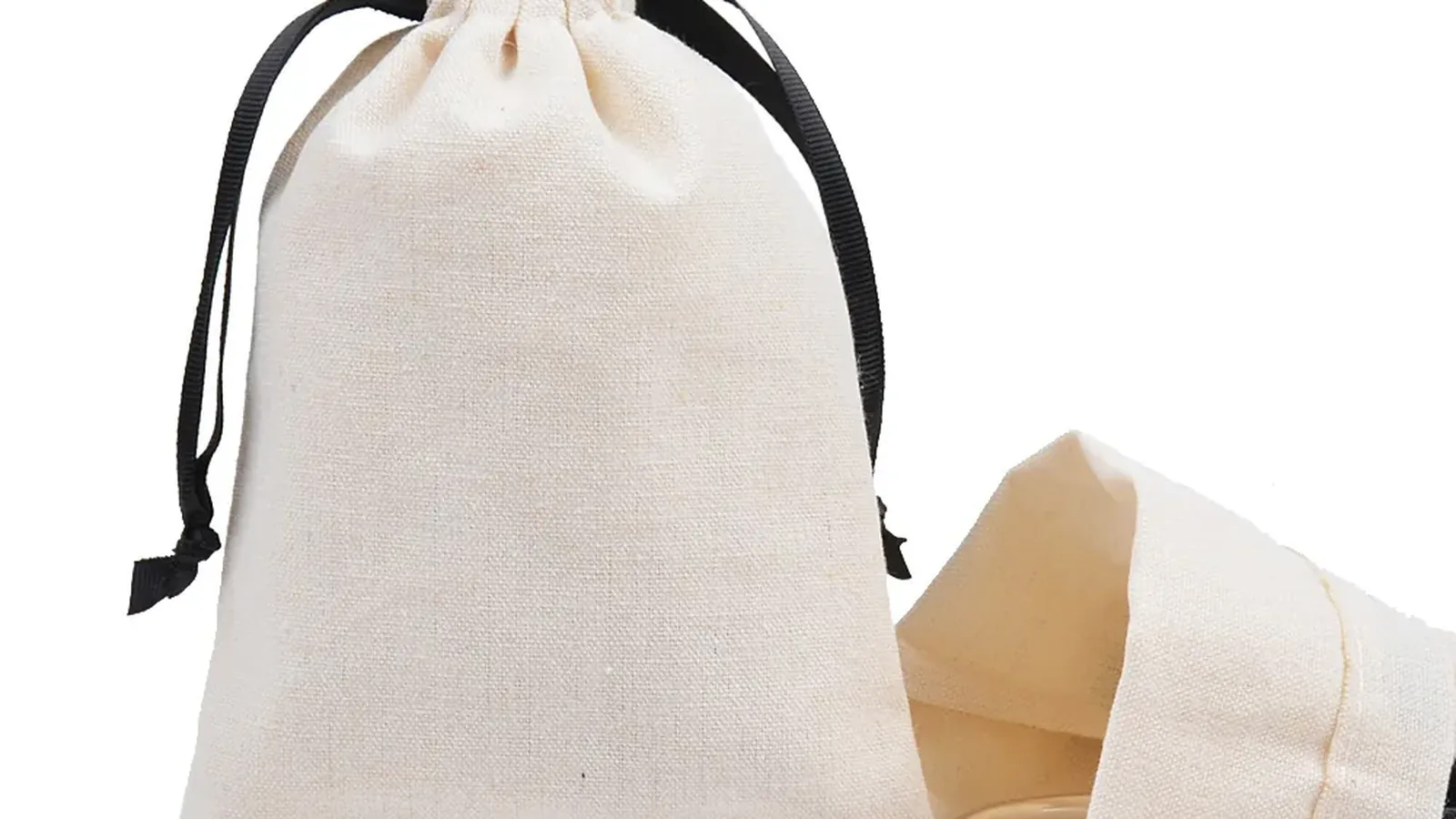
Based on the original what-is-a-drawstring-bag article and the product spec notes behind it.
On a Tuesday morning in the sample room, a cost sheet for a custom drawstring bag sat next to a cut shell, and the two numbers on the page did not match the bag on the table. The quote had been split into four lines: fabric, cord, labour, and packing. Three of those lines described things a buyer could see. The fourth described a bag that had already passed through six stations before anyone touched the cord.
That gap is where most drawstring bag orders go wrong. A buyer approves a photo, signs a purchase order, and waits. What arrives in the container is the product of a chain of small decisions made on a factory floor, and each decision leaves a mark on the closure, the shell, or the cord. Following one bulk order from the PO desk to the loading bay shows where those decisions happen and what a buyer should be checking at each stop.
At the PO desk, the cord channel is the first line to read
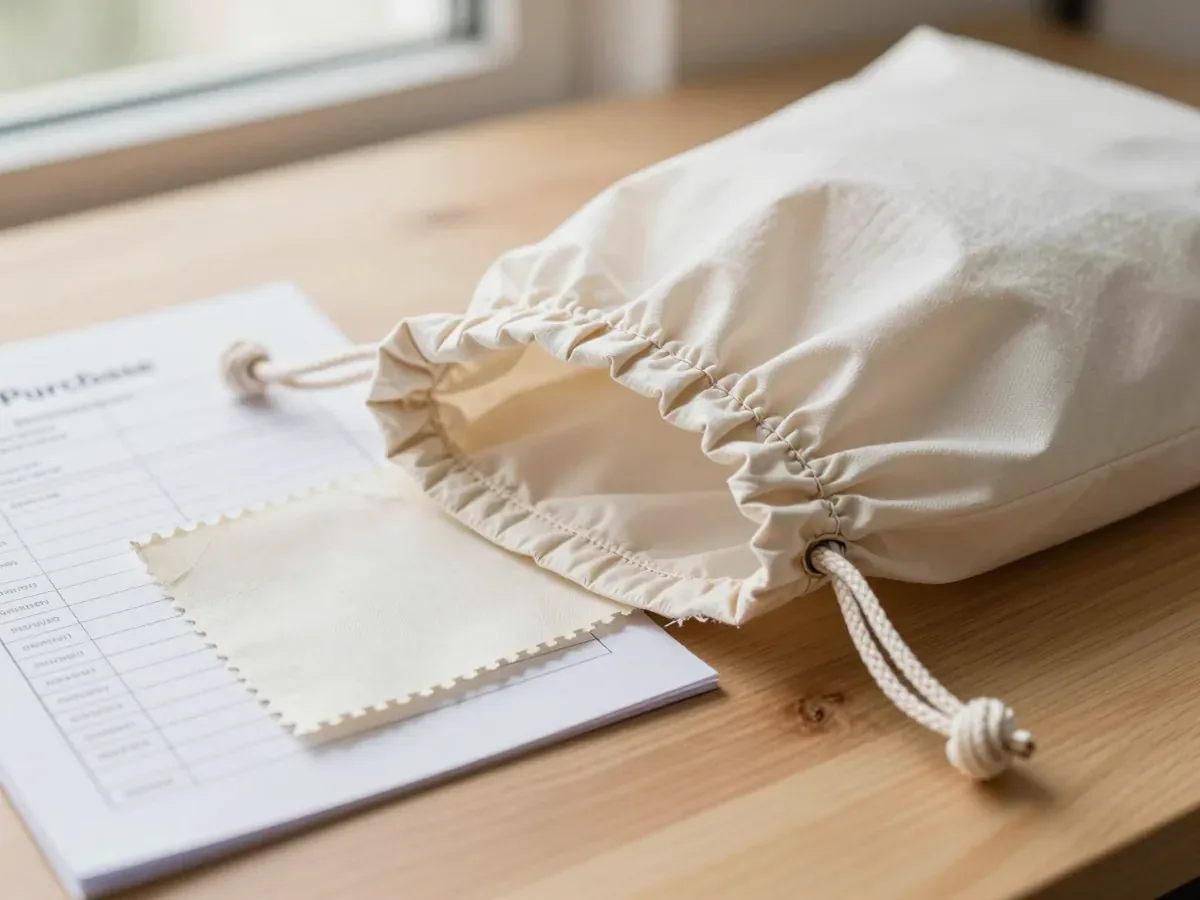
The purchase order for a drawstring bag rarely describes the bag. It describes a fabric, a size, a print, and a cord colour. The channel that holds the cord is usually implied, and that is the first place a spec sheet loses contact with the product.
A drawstring bag closes because a cord runs through a sewn path around the opening. Pull both ends and the fabric gathers. The channel is not a detail added after the bag is designed; it is the mechanism. If the channel is too narrow, the cord drags and the bag will not cinch smoothly. If it is too wide, the fabric bunches and the opening never sits flat.
At the PO desk, the line to read is the one that names the channel, not the one that names the print. A buyer who asks for a braided cord through a precision-stitched channel is specifying a closure, not a decoration. The same order should state whether the bag is a single shell with no lining, because that choice changes how the channel is folded and stitched.
Incoming fabric: what the shell tells you before cutting
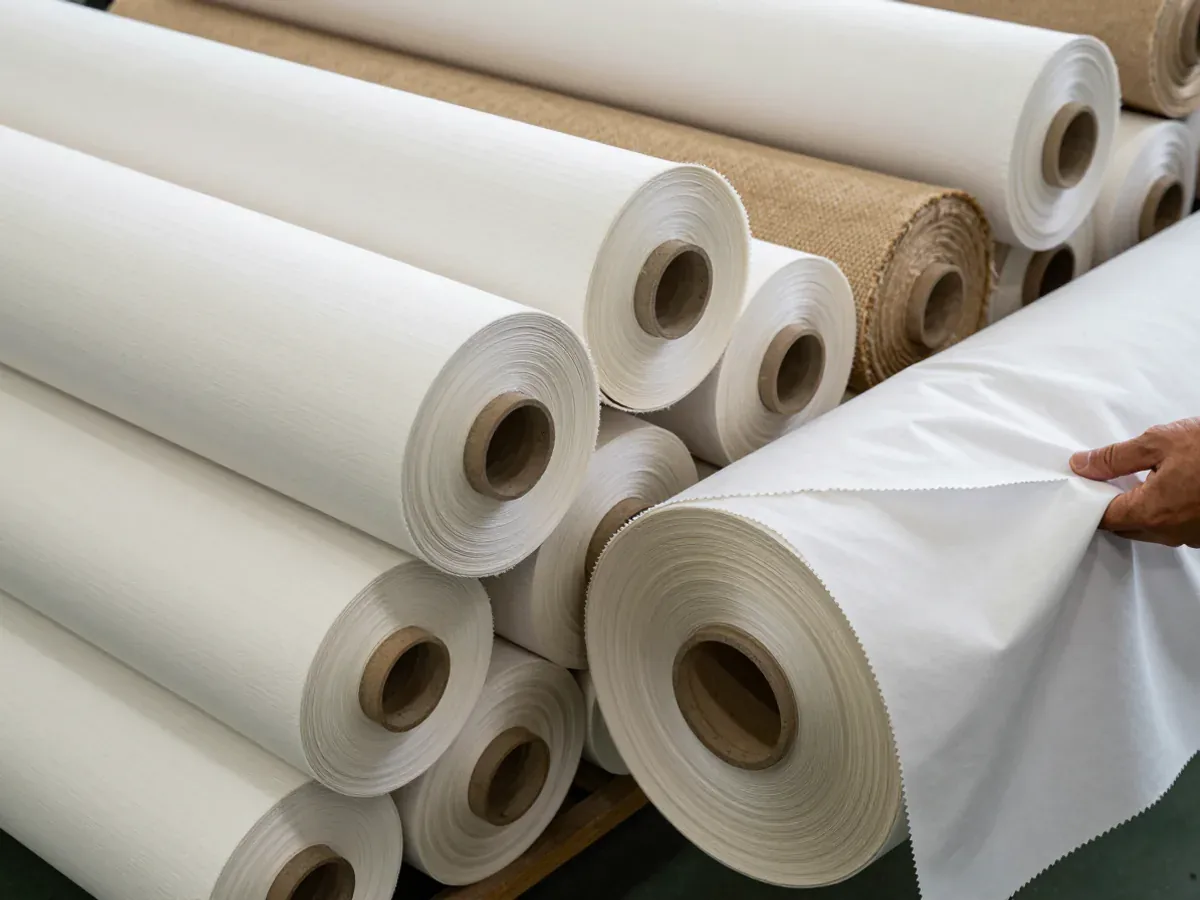
The fabric arrives in rolls, and the first inspection happens before any blade touches it. Canvas, cotton, jute, and rPET canvas all behave differently once they are cut and sewn, and the closure is where those differences show up first.
A jute shell has a visible weave and a stiff hand. A cotton canvas is softer and takes embroidery well, which is why a beige canvas bag with an embroidered logo is a common promotional build. An rPET canvas pouch uses a recycled feedstock and still needs the same channel structure. None of these fabrics is better in the abstract. Each one changes how much the opening will gather.
The check at this station is simple. Unroll a length, look for shade variation across the roll, and feel the weight against the approved swatch. A shell that is lighter than the approved sample will cinch differently even if the channel is cut to the same width. Fabric weight and channel width are a pair, and they are approved together or not at all.
At the cutting table, the channel width decides the cinch
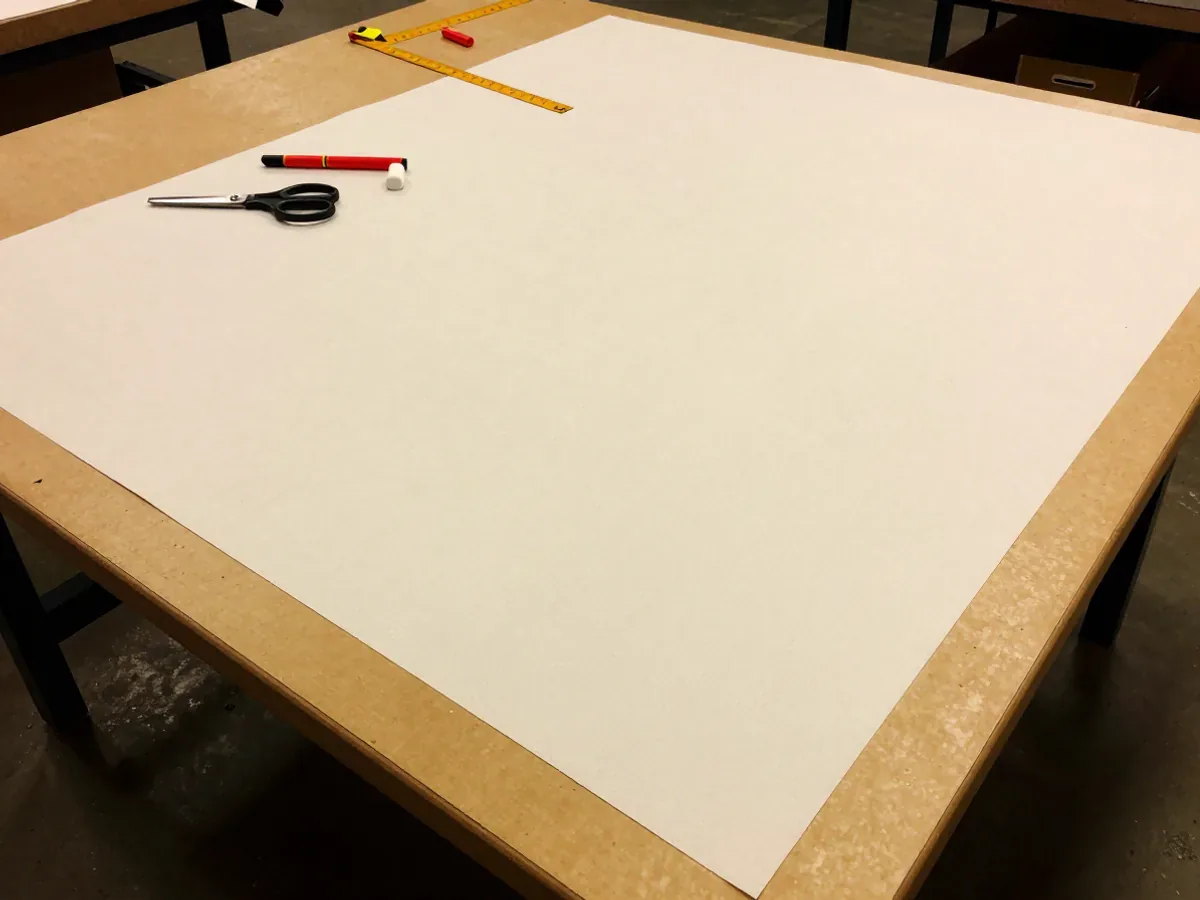
The cutting table is where the bag stops being a fabric and becomes a set of panels. For a drawstring bag, the critical cut is the top hem that will become the channel. A few millimetres of difference here decides whether the finished bag closes with one pull or needs two hands.
Cutters work from a marker, and the marker is only as good as the spec behind it. If the PO says 30 by 15.7 in and the marker is drawn in inches, the channel allowance can drift. A buyer who converts dimensions should convert the channel allowance too, not just the body size.
This is also where the cord length is fixed. The cord has to run the full circumference of the opening, exit at two points, and leave enough tail to tie or to hold a stopper. A cord cut short cannot be fixed at the sewing floor. It becomes a new cord, a new run, and a new delivery date.
On the sewing floor, the cord path is stitched and threaded
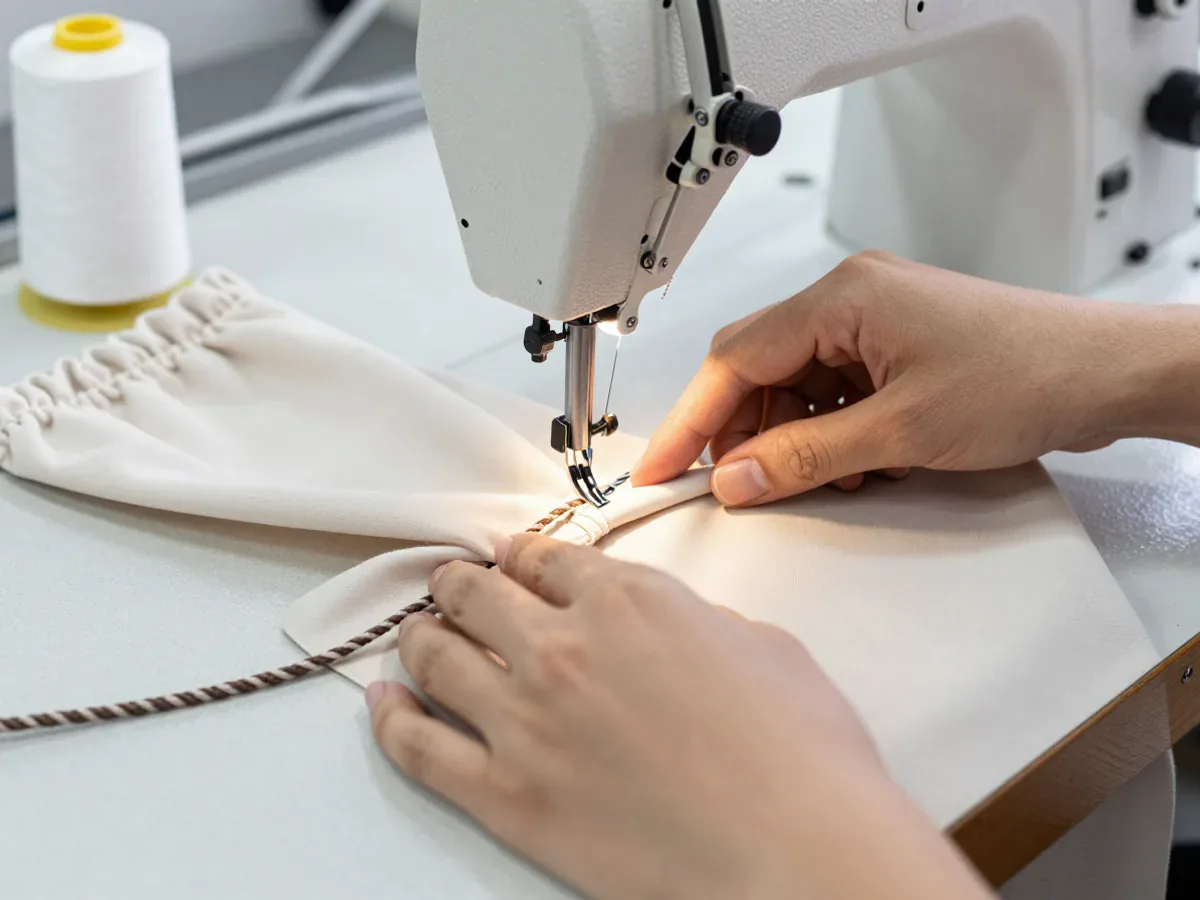
The sewing floor is the slowest station for a drawstring bag, and the reason is the channel. A plain seam runs fast. A channel has to be folded, stitched at a consistent distance from the fold, and left open at two points for the cord to exit. Every one of those steps is a chance for the opening to gather unevenly.
The cord is threaded after the channel is closed. On a braided cord through a precision-stitched channel, the threading is done by hand or with a guide, and the two ends have to come out at the same height. If one end sits higher, the bag will hang crooked when it is carried.
This is the station to watch if the order includes a printed or embroidered logo. A canvas bag with an embroidered logo is stitched before the channel is closed, and the embroidery frame can stretch the shell. A stretched shell changes the channel width, and the closure tightens or loosens as a result.
At the grommet and stopper bench, hardware meets cord
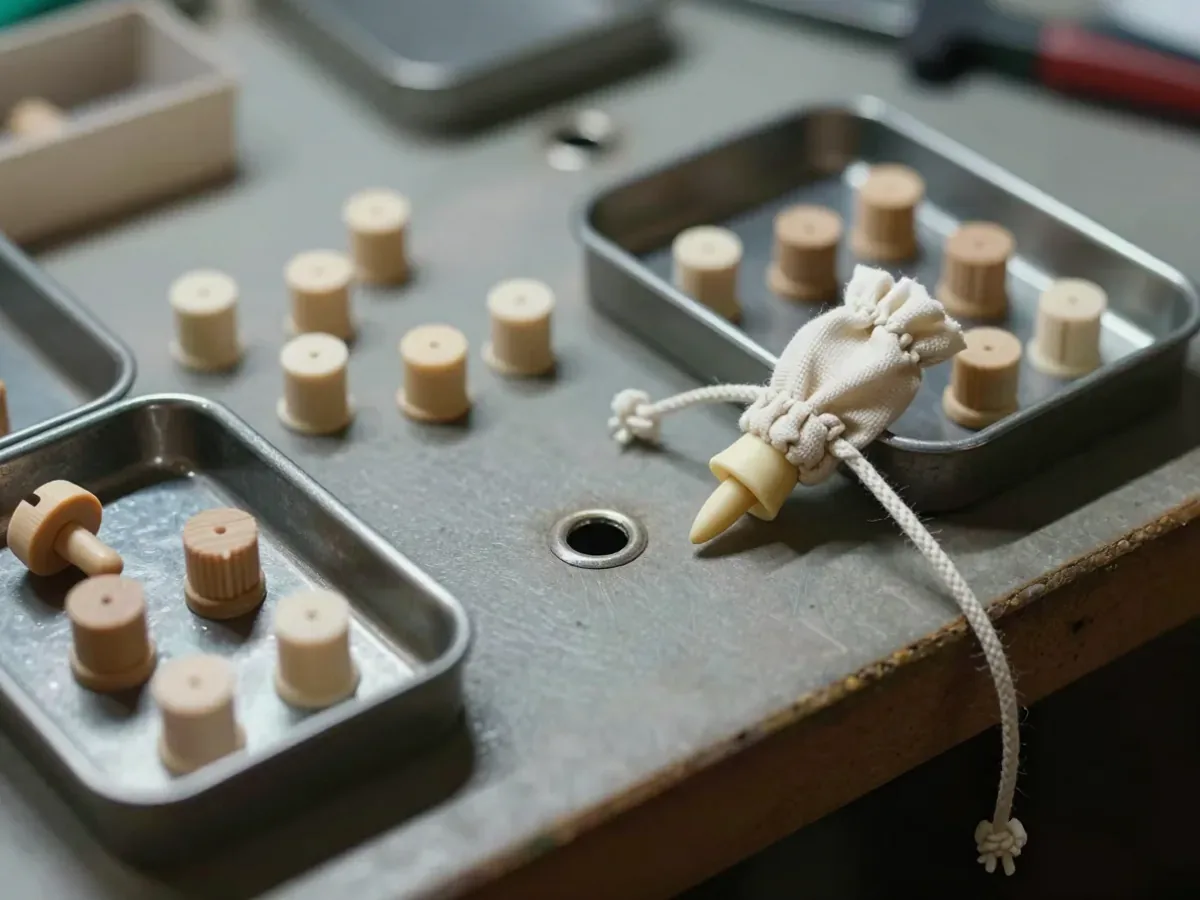
Not every drawstring bag uses hardware. A simple pouch relies on the cord alone. A backpack-style bag runs the cord through metal grommets set into the shell, which spreads the load and keeps the cord from tearing the fabric at the exit point.
The hardware bench is where the closure options get chosen. Plastic cord stoppers hold the cinch in place. Wooden toggles give a different look and a different feel in the hand. Both are stocked options, and both change the cord end finish. A stopper needs a cleanly cut cord end. A toggle needs a knot or a fold that will not slip.
Colour matching happens here too. Cords and handles can be matched to a brand colour through Pantone references. A buyer who specifies a Pantone for the cord but not for the stopper can end up with two slightly different tones at the same exit point. The bench is small, but it is where the bag's hardware identity is set.
Final inspection: four checkpoints and a pull test
Every bag passes four QC checkpoints, and the last one is the one that matters most for a drawstring product. The bag is inspected and packed by hand, which means the inspector is also the last person to pull the cord before the bag is folded.
The four checkpoints cover the shell, the stitching, the hardware, and the closure. At the closure checkpoint, the inspector pulls both cord ends and watches the opening gather. A bag that closes with a smooth pull and opens without snagging passes. A bag that catches, or whose cord ends sit at different heights, does not.
A pull test is not a laboratory test. It is a hand test repeated on a sample from the run, and it catches the failures that a photo cannot show. A channel stitched too tight, a cord threaded through a raw edge, a stopper that slips under load: all of these appear in the hand before they appear in a complaint.
At the packing table, the bag is folded and counted
Packing is where the bag becomes a unit. The cord is coiled or tied, the bag is folded flat, and the count goes onto a sheet. For a drawstring bag, the fold matters because the cord can tangle in the polybag and arrive kinked.
The packing table is also where the size and colour labels are applied. A mislabelled carton is a small error that becomes a large one at the retail end. A bag labelled with the wrong size will be counted wrong, and a bag labelled with the wrong colour will be opened wrong.
The check here is a sample pull from each carton. Open one bag, confirm the cord is coiled cleanly, confirm the label matches the bag inside, and confirm the count on the sheet matches the count in the carton. This is the last station where a single bag can be corrected without unpacking a container.
On the loading bay, the carton label closes the loop
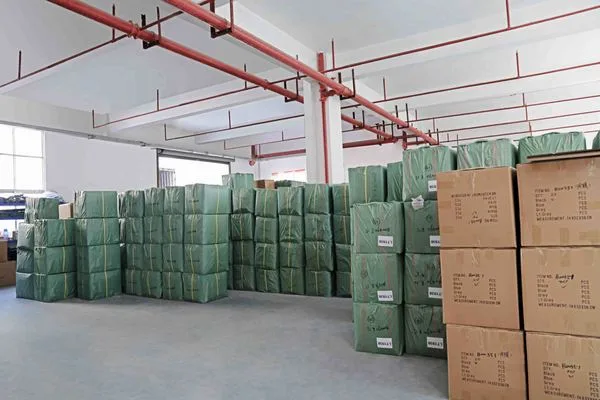
The loading bay is where the order stops being a production run and becomes a shipment. Cartons are stacked, weighed, and labelled. The label carries the PO number, the size, the colour, and the quantity. If any of those four is wrong, the container arrives with a problem that was created weeks earlier.
A buyer following an order from the PO desk to this point has seen the bag at every station where its closure was decided. The channel width was set at the cutting table. The cord path was stitched on the sewing floor. The hardware was matched at the bench. The pull test happened at inspection. The label is the last chance to confirm that all of those decisions describe the same bag.
A drawstring bag is a simple product, and that simplicity is exactly why it is easy to under-specify. The closure is one cord through one channel, and every station on the route either protects that mechanism or quietly changes it.
FAQ
Does a drawstring bag need a lining to close properly?
No. The standard pouch is a single shell with no lining, and it closes because the channel is stitched at a consistent width. A lining adds structure and can hide the inside of the channel, but it is not required for the cinch to work.
Can the cord and stopper be matched to a brand colour?
Cords and handles can be Pantone matched. Stopper options include plastic and wooden toggles, and the colour of the cord and the colour of the stopper should be specified together so the two do not read as different tones at the same exit point.
What is the difference between a drawstring bag and a backpack?
A drawstring bag closes with a cord through a channel and carries light loads. A backpack uses zipped compartments and structured straps for heavier loads and more organisation. A backpack-style drawstring bag sits between the two, with a front zip pocket and adjustable cord straps.
How many QC checkpoints does a bulk drawstring order pass?
Every bag passes four QC checkpoints, covering the shell, the stitching, the hardware, and the closure. The closure checkpoint includes a hand pull test on a sample from the run.