
Reorganised from an archived pet food packaging programme model and the product spec data behind reusable and insulated tote construction.
The polybag label on the returned tote read 10 kg. The carton label beside it read 22 lb. Both were correct, and that was the problem. A subscription customer had carried a split seam and a torn print panel back to the brand's support inbox, and the note taped to the bag said the order had arrived "open at the corner."
That bag had passed every check the factory ran. It had been weighed, printed, stitched and packed. What it had not survived was a specification sheet that described the same product in two units and never named the load the seam had to hold. The brand had switched from corrugated cartons to branded totes to cut void fill and put its name in a customer's hallway. The switch worked for eight months. Then a frozen lane, a heavier kibble format and a label mismatch met on the same order.
The Bag That Came Back With a Note

The return arrived in week six of the frozen lane pilot, not month six of the program. A customer in a cold climate had ordered a 10 kg kibble bag and two frozen raw portions in one delivery. The tote held. The seam at the base gusset did not, and the print panel along the front creased where the load pulled against the bottom stitch line.
What made the note worth keeping was the second sentence. The customer said she had reused the tote twice for groceries before it failed, and she had liked it enough to photograph it. A carton that collapses gets thrown out without a second look. A branded tote that fails gets photographed, captioned and posted. The packaging had become the complaint.
The brand's operations lead pulled the order record and found three fields that did not agree. The picking screen showed kilograms. The carrier label showed pounds. The tote specification sheet showed a load rating in neither, because the sheet had been written for a dry kibble program and copied forward when frozen portions joined the mix.
Rewinding to the Line Nobody Wrote

Six months earlier, the same brand had run a clean pilot on a dry lane. Ten thousand orders, three months, one product family, one climate. Damage came in below the carton baseline, freight weight dropped once void fill came out, and the print held through the sortation belt. The program scaled to a full year of subscription volume on the strength of that pilot.
The gap opened at the point where the pilot stopped describing the business. The dry lane pilot shipped 5 kg kibble in a temperate zone. The full program added 10 kg kibble, canned wet food and frozen raw portions, and it shipped into winter. None of those changes touched the tote design directly. Each one changed the load, the moisture exposure or the temperature the bag had to survive.
A 15 kg rated laminated woven tote had been specified for the program, and on paper it covered every format. What the sheet never separated was static load from dynamic load. A 10 kg kibble bag sitting in a tote is a different stress from the same tote being lifted by one handle, set down on a wet step and dragged across a porch. The seam that failed had been tested for pull strength, not for the repeated lift and set down of a subscription route.
What the Frozen Lane Exposed in Week Six

Frozen portions brought condensation into the tote on every order. The moisture resistant liner handled the surface water. What it did not handle was the way a cold bag stiffens the woven shell and concentrates stress at the base seam when the tote is folded or stacked.
The frozen lane also changed the packing sequence. Dry orders were packed, sealed and staged in one motion. Frozen orders moved through a cold leg, which meant the tote was opened, loaded, closed and reopened at the door. Every reopen put a fresh load on the same stitch line. The carton had absorbed that motion because corrugated flexes and recovers. The woven tote flexed less and fatigued faster at the gusset.
The label mismatch made the failure visible sooner. A picker reading kilograms and a carrier reading pounds produced orders that were correctly packed and incorrectly described. Customers who expected a lighter box lifted the tote by one handle. That single handle lift, repeated across a route, is what turned a marginal seam into a returned bag.
Insulated construction had been chosen to handle the temperature sensitive leg of delivery without secondary packaging. That decision was sound. What the program had not written down was how the insulated layer, the liner and the woven shell behave together when the load is cold, wet and lifted by one hand.
The Evidence That Changed the Spec Sheet
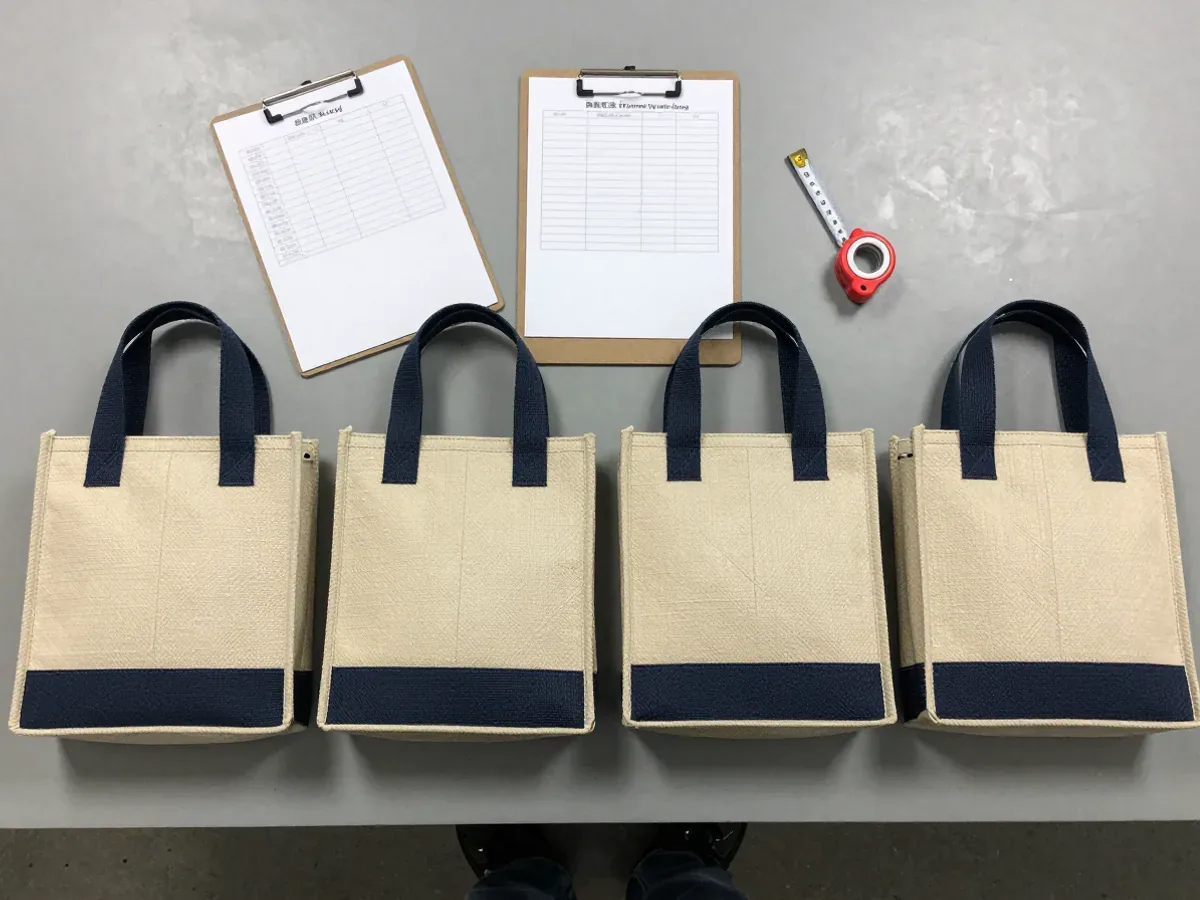
The brand collected four weeks of returns and laid them beside the pilot data. Three patterns held across every returned tote. Failures clustered at the base gusset, not at the handles. Failures concentrated on orders above 8 kg total load. Failures appeared on frozen lane orders at roughly three times the dry lane rate.
The print panel told a second story. Creasing appeared where the front panel met the bottom seam, which meant the artwork had been placed over the highest stress zone in the bag. A print that looks clean on a flat sample can sit exactly where the bag folds under load.
The spec sheet was rewritten around load cases rather than product names. Each order format got a stated total load in one unit, a stated lift pattern and a stated moisture exposure. The base gusset got its own seam specification with a stitch density and a reinforcement requirement. The print panel moved up the face, clear of the fold line.
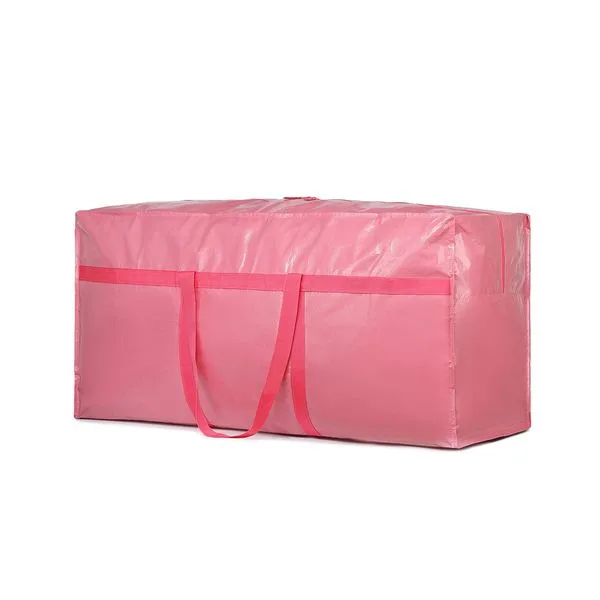
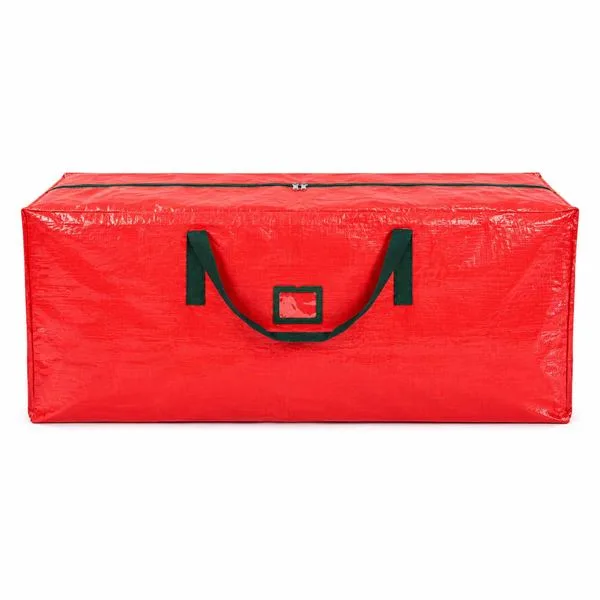
The clear card pocket on the face became part of the fix rather than a decoration. A card that says what is inside lets a picker confirm the load without opening the tote, which cut the reopen cycle on frozen orders. Wrap around webbing running the full length of the bag replaced handle only stitching, so the load path no longer ended at the seam that had been failing.
Fixing the Gate, Not the Bag
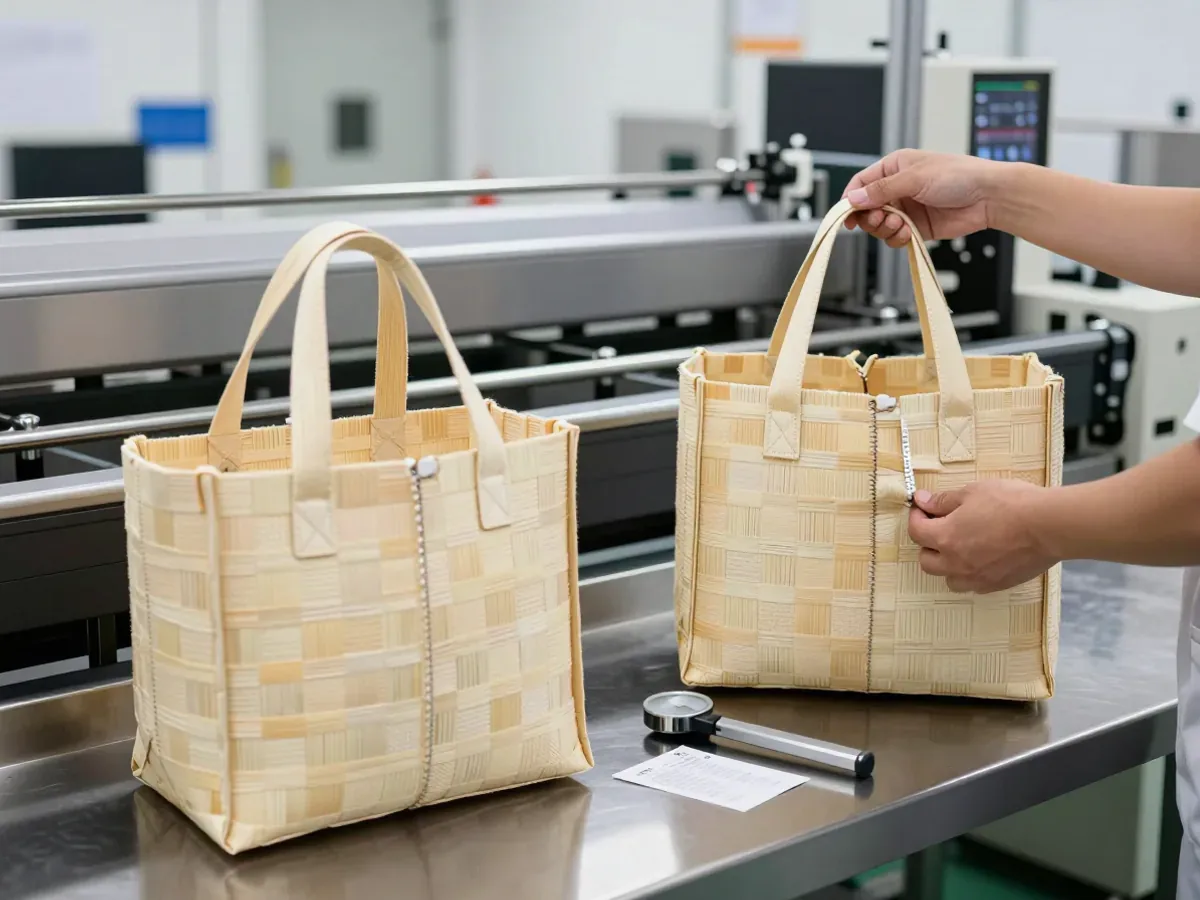
The brand did not change tote suppliers. It changed what the tote had to prove before a lot shipped. Four QC checkpoints already existed on the line. The program added a load case check at the first gate, where a packed tote is lifted by one handle, set down and lifted again before it moves to print inspection.
Seam verification moved from a sample per style to a sample per batch, with the base gusset checked separately from the handle attachment. A batch that passes the handle pull and fails the gusset fold is a batch that will fail in a hallway, not in a warehouse.
The frozen lane got its own staging rule. Cold orders are packed last, sealed once and not reopened at the dock. The card pocket carries the load confirmation so the tote stays closed through the cold leg. That single change removed most of the reopen cycles that had been fatiguing the base seam.
None of this made the tote stronger in isolation. It made the specification match the route the bag actually travels. A tote that fails in the field is worse than a carton that fails, because the tote carries the brand into a customer's home and stays there. The fix had to protect the brand surface, not just the contents.
What a Buyer Should Put on Paper First
A pet food brand moving from cartons to branded totes can avoid most of this with five lines on a specification sheet. Each line exists because a real failure traced back to its absence.
- State total load in one unit, per order format, and state it on the picking screen and the carrier label in the same unit.
- Separate static load from dynamic load. Name the lift pattern the tote will see: one handle, two handles, drag, stack.
- Give the base gusset its own seam specification, with stitch density and reinforcement, checked per batch rather than per style.
- Place print clear of fold lines and stress zones, and confirm placement on a packed tote rather than a flat sample.
- Define the cold leg. State whether the tote is reopened at the door, and if not, how the load is confirmed without opening it.
The pilot question follows from the same logic. A defensible pilot runs 10,000 orders across three months and two lanes, one dry and one frozen, tracking damage rate against the carton baseline, packaging cost, shipment weight and renewal rate. A pilot that covers only the dry lane will clear a tote that fails in winter.
FAQ
Are branded totes more expensive than cartons for pet food orders?
At comparable print quality a laminated woven tote sits in a similar cost band to a printed corrugated carton with inserts. The gap closes further when reuse credits, damage reduction and freight weight savings from removed void fill are counted. The cost comparison only holds when the tote specification matches the load it will carry.
What tote specification suits kibble, wet food and frozen portions?
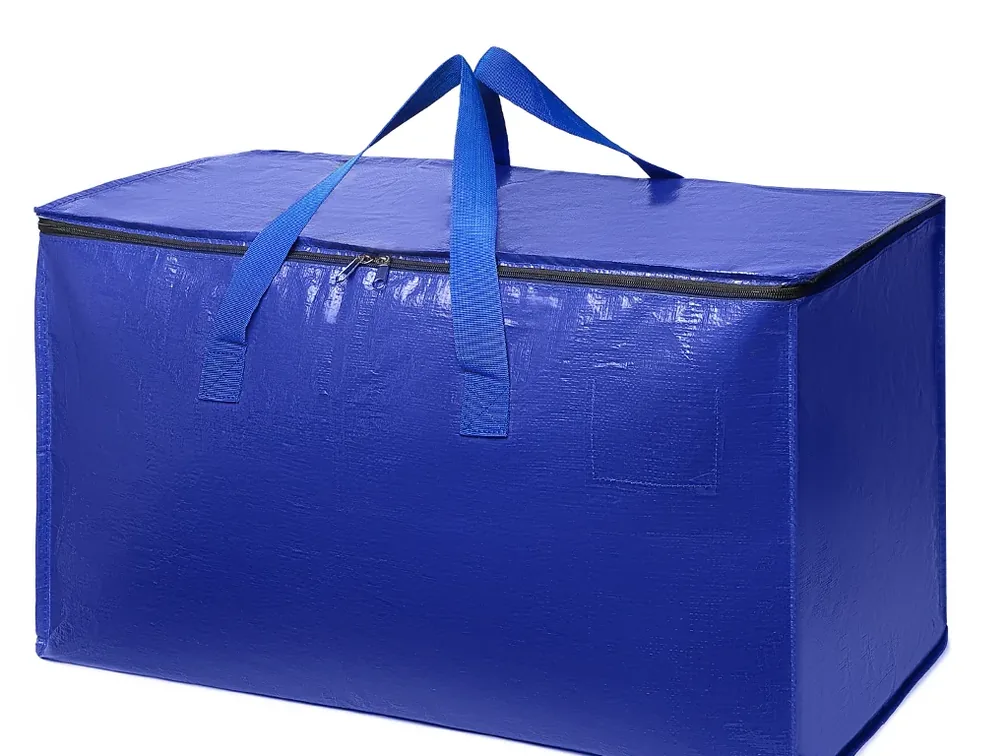
A laminated woven polypropylene tote rated for 15 kg with a moisture resistant liner covers wet and frozen lines, tested for seam strength per batch. The base gusset needs its own seam specification, and the print should sit clear of the fold line where the load concentrates.
How large should a pilot be before scaling to full volume?
Run 10,000 orders across a dry lane and a frozen lane for three months. Track damage rate against the carton baseline, packaging cost, shipment weight and renewal rate before scaling. A dry lane pilot alone will not surface the cold leg failures that appear once frozen portions join the order mix.
Why do totes fail in the field more visibly than cartons?
A carton that collapses is thrown out and forgotten. A branded tote that splits gets photographed, reused, and reported, because the customer keeps it in the house. The same failure that would end a carton's life quietly ends a tote's life publicly, which is why the specification has to be written for the route rather than the warehouse.