The order of work matters more than the paperwork, and 5 steps carry a market program from one design to 30.
A co-op board asked me in June to put reusable produce bags in the hands of 30 vendors by the first Saturday of the season.
The question keeps coming up because a cooperative is the one buyer that has to hand the same bag to 30 businesses at once, and the shape that suits the flower stall has to suit the tomato stall too.
Six months on, the co-op's own count is the part worth reading, and it turns out to be a distribution story before it is a shopping story.
The stall problem the board started with
Thirty stalls bought their produce bags separately before the program, so the board expected a purchasing decision when it opened the question. What it got instead was a distribution problem: the bag has to be in a vendor's hands on a Saturday morning, in one size and with one mark, at every stall at the same time.
A market of that kind is a direct to consumer channel and it behaves like one. The USDA local food survey counts food sold straight from producers to consumers alongside the sales that pass through retailers and intermediaries, which is the structure a co-op sits inside. Thirty vendors are 30 small buyers behind one gatekeeper, and the program only holds together if the gatekeeper owns the bag. A shopper that folds shut in the hand gets left at home, and a shopper that stands on the counter gets used twice a day. The fragmenting failure is the one the board avoided.
Thirty vendors ordering their own bags produce 30 colour matches, 30 print files and a shopper who cannot tell which bag belongs to the market.

The program, one order to every stall
The order of work matters more than the paperwork, and 5 steps carry a market program from one design to 30 stalls.
- Settle one design and one print, ordered by the co-op rather than by each vendor, so the bag at stall 1 matches the bag at stall 30.
- Fix the build before the colour: a flat base so the bag stands in a cart, a gusseted side for greens, and handles stitched through the body rather than tacked on.
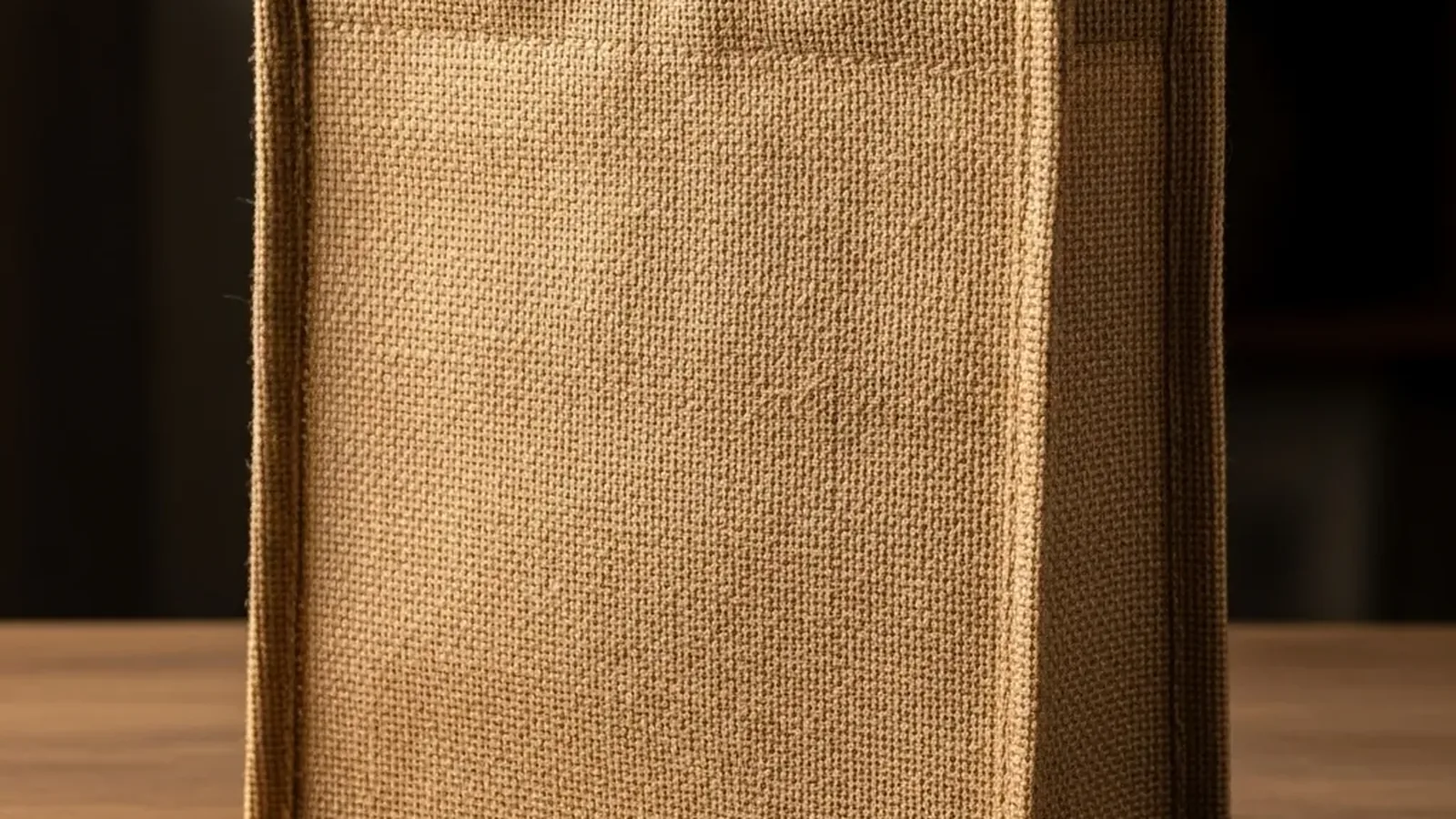
- Choose the shell from the 4 fabrics we run on the reusable shopper, which are cotton canvas, PP woven, non-woven and rPET.
- Agree the packing before the run, because polybag, retail or per-store packing has to be settled before production rather than after it.
- Measure adoption and single use decline from month one instead of at the end of the season, since those 2 numbers decide the second order.
The co-op carried the stock between the order and the stalls, and that step is what makes 30 vendors behave like one buyer. A market manager who tries to run the same program through vendor orders ends up with 30 delivery dates and no single bag.
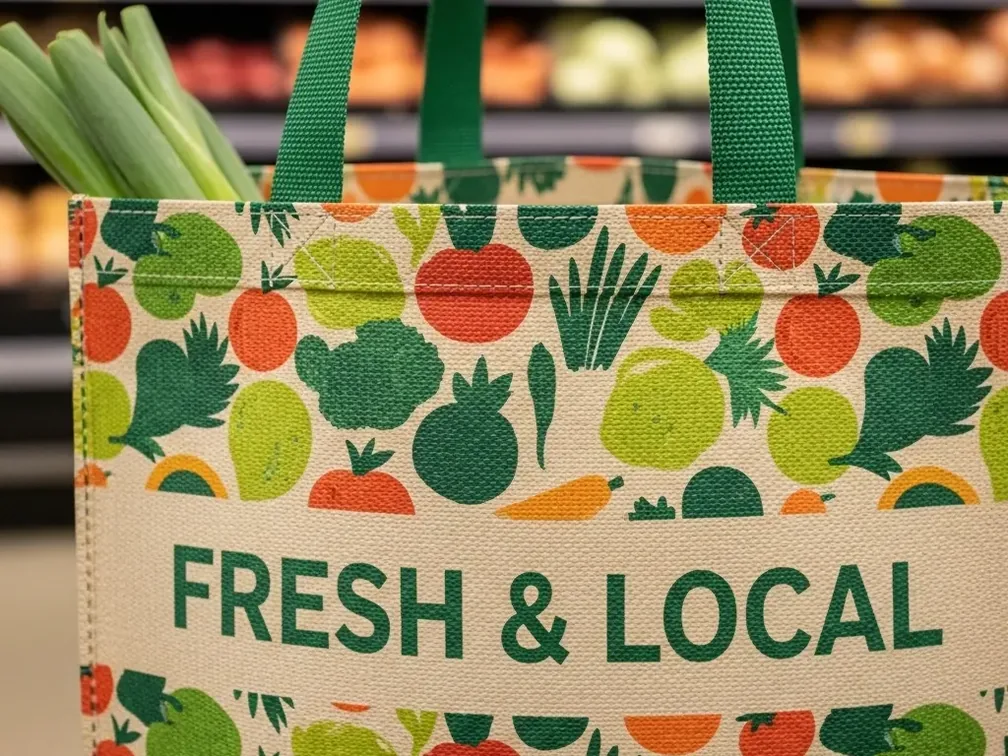
What the six month count showed
The cooperative tracked 3 measures, plus a fourth effect it could see but not invoice.
| Measure | What the co-op saw | What it decides for the next market |
|---|---|---|
| Adoption | bag sales ran ahead of the reorder forecast from month two | whether shoppers carry the bag back |
| Single use decline | vendor estimates put plastic produce bag use down by roughly two thirds | whether the program replaces a bag or adds one |
| Program finance | the first order funded the second | whether the co-op can hold stock again |
| Marketing spillover | the logo bag walking through town | whether the mark is worth printing |
The adoption row is the one that predicts the rest. Shoppers arriving with last month's market bag is the behaviour the program exists to create, and it is a better signal than the first week of sales.
The single use row is harder to count honestly. The co-op's figure came from vendor estimates, and the remainder sits in the small bag jobs a tote cannot do, which is why a program should report what it replaced rather than what it sold.
Finance is where a volunteer board gets nervous, so the useful row is the one about stock: inventory that turned fast enough for the second order to be paid by the first is a program that can repeat next season.
The spillover is the row nobody costs. A printed bag on a shoulder in town is the cheapest advertisement a market has, and it only works when the print is legible at 20 feet.
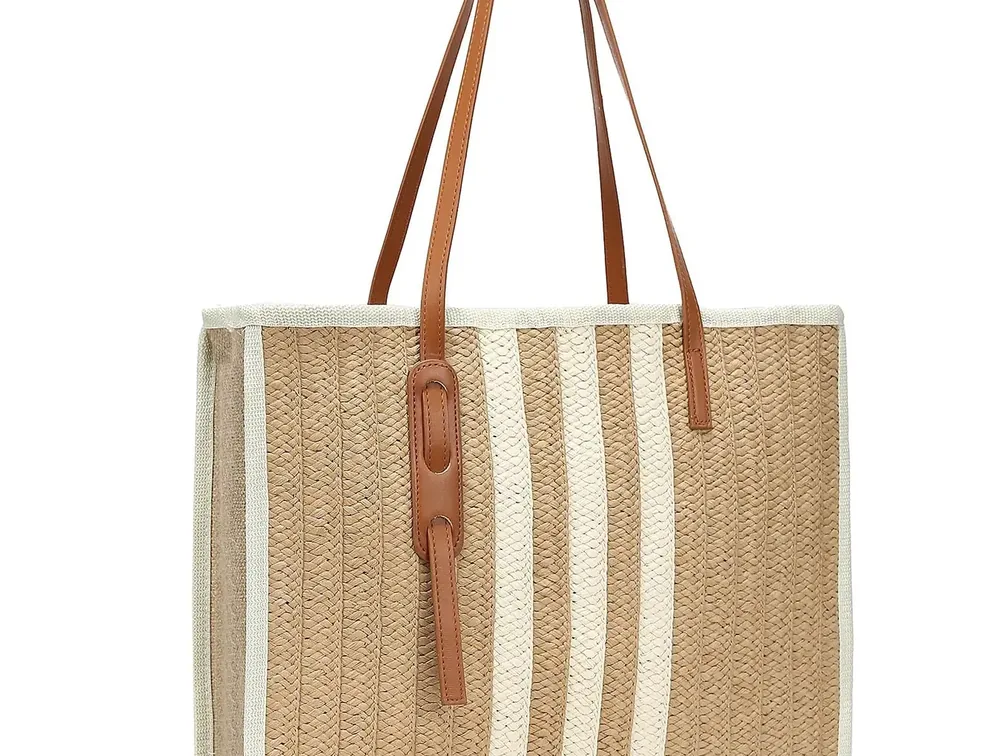
What the bag itself has to be
Four build decisions decide whether a market bag survives a season, and none of them is the colour.
The case for the program is the bag that never gets made. The EPA puts it plainly when it says the most effective way to reduce waste is not to create it, and a reused produce bag is that argument in a shopper's hand:
The most effective way to reduce waste is to not create it in the first place, so focus on reducing your waste as much as possible.
A produce bag also has to meet food, not only a trolley. The base carries a reinforcement where a bottle sits, the handles are stitched to the body rather than tacked on, and the body folds flat when the bag is empty. A wet bottle and a bunch of greens are the 2 loads that find a weak seam first.
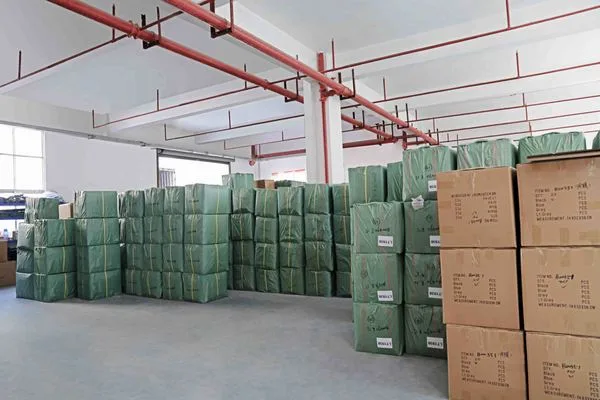
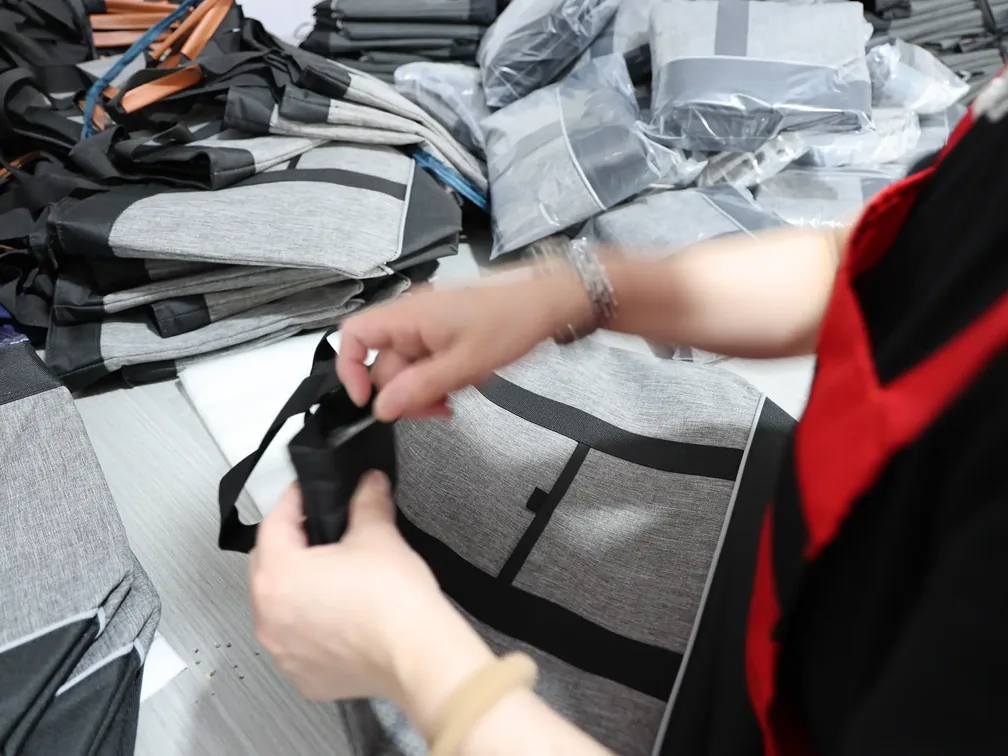
Every batch is checked before it is packed: incoming fabric, webbing, zips and thread against the approved spec, then pull, seam strength and bar tack on the batch, then dimensions, handles and logo by hand. Cartons are counted and photographed before the container seals, so a co-op can match a delivery to the count it was promised. That is a 5 minute check at the sample table and a season of arguing avoided.
Questions a market manager asks before a program
How many bags does a market program need?
Start from a counted Saturday rather than a guess: the vendor count, the bags each stall replaces on that day and the weeks the market runs. The program described above began with 30 stalls and one size, and the second size only came after a season of watching what shoppers bought. A count taken on a wet Saturday is the honest number, because that is the day a shopper forgets the bag at home.
Which shell suits a produce bag?
Woven PP is the shell the original program ran, because a woven cloth holds a crease at the base and a film does not. A produce load is heavy for its size, so the base is where that choice shows up first. A co-op that starts with the lighter shell usually comes back for the woven one after the first wet Saturday.
Should a market print one colour or a full image?
One colour is the version that survives a market, because it is easier to hold consistent across reorders and it reads at a distance on a shoulder. A full image is a design decision that arrives with its own proof round, and a co-op with 30 vendors should spend that round on the base and the handle instead.
What would the co-op change in round two?
Three things: a second smaller bag for herbs and berries, the natural base over the dyed one, and an earlier reorder after a summer sell out. None of the 3 is a design failure. They are the adjustments a first season produces when the bags are actually used.
What a co-op program can and cannot prove
The limit of a program like this is the record, not the idea. The cooperative's numbers are its own tracking, and a second co-op that copies the design still has to count its own stalls and its own basket sizes.
What transfers is the build and the batch trail. 8 bag series run on the same lines in our workshop, stock and custom together, so a market program sits beside a retail order rather than waiting in a separate queue.
4 checkpoints are photographed per order, which is the part a board can hold a supplier to after the bags are already in shoppers' hands. A photograph of the packed carton is worth more than a promise about the next delivery.
The judgement on the mix is the one the co-op reached: a natural base sells across a market, and a second smaller size costs less than losing the small basket shopper.
How to test a produce bag before a stall order
Five checks settle a stall bag before a co-op buys a season of them, and all 5 run on one sample.
- Fill it the way a Saturday fills it: a bottle in the base, greens in the gusset and a thumb on the handle join.
- Wash it once before approving the print, because a mark that shifts in the first wash dates the whole order.
- Ask for the batch record rather than the sample, since pull, seam strength and bar tack on every batch is the line that matters.
- Match the carton count to the vendor count before the first Saturday, because a per-store pack that arrives short is a stall with no bags.
- Write the 2 numbers to watch, adoption and single use decline, before the program starts rather than after it ends.
A program tested that way reaches the market with a bag a vendor keeps using, and the count that follows is the co-op's own evidence rather than ours.
For the same woven build on a heavier bag, the heavy duty moving bags guide covers the load path and the handle root, and Factory Capacity Checks: Counting Lines, Not show how a co-op reads a line before it books a season.