



El mes pasado, el director de compras de una empresa de mudanzas regional me explicó sus cifras del tercer trimestre. Estaba gastando $4,30 por unidad en cartón y cinta adhesiva, aparcando cuatro palés de espacio de almacén en el inventario de cajas para una flota de 200 trabajos a la semana y gastando aproximadamente $8.000 al trimestre en reclamaciones por daños cuando los fondos de las cajas cedían con cargas de 45 libras. Había visto los hilos de Reddit en los que la gente argumentaba que las bolsas de mudanza frente a las cajas de cartón parecen horteras y que las cajas son más sólidas estructuralmente, pero ninguno de esos comentaristas había tenido que explicar nunca un problema. reclamación por daños causados por moho a un cliente porque el cartón ondulado estuvo en un almacén húmedo durante dos semanas antes de una mudanza.
Obtuvimos tres años de datos de pruebas de fábrica en 120gsm bolsas de polipropileno tejido contra la norma ECT-32 ondulado - capacidad de carga, resistencia al desgarro, absorción de la humedad y utilización de los cubos dentro de los camiones, y analizó las cifras reales del coste total de propiedad. El argumento estructural se desmorona cuando se comprueba que una bolsa tejida reforzada soporta entre 80 y 100 libras sin que se rompa el fondo, se pliega para que quepan 500 unidades en un solo palé en lugar de cuatro y elimina por completo la partida de cintas. Este desglose pone de manifiesto la diferencia de coste por traslado, el riesgo oculto de moho y humedad que conlleva el almacenamiento en cartón y el cálculo matemático del espacio de almacén que la mayoría de los equipos de compras pasan por alto cuando optan por las cajas por costumbre.
Análisis de precios unitarios y costes de material
A Bolsa PP tejida 24x18x14 ofrece 3,5 pies cúbicos de capacidad a $0,26 a $0,51 por pie cúbico, en comparación con $2,10 a $3,23 para una caja de cartón ondulado estándar de 16x12x12 una vez que se tiene en cuenta la cinta adhesiva.
Precio unitario directo: Realidad del coste ajustado por volumen
Comparar una caja de cartón ondulado de 16x12x12 con una bolsa de PP tejido de 24x18x14 sólo por el precio de etiqueta es un ejercicio engañoso. La caja tiene una capacidad de 1,33 pies cúbicos, mientras que la bolsa tiene 3,5 pies cúbicos, casi 2,6 veces el volumen. Si normalizamos por capacidad, la diferencia es extrema. Una caja de cartón ondulado de $2,50 a $4,00, más los $0,30 obligatorios por caja de cinta de embalar, cuesta de $2,10 a $3,23 por pie cúbico de espacio útil. Nuestras bolsas de PP tejido de 120 gsm, con un precio de $0,90 a $1,80 por unidad y sin necesidad de cinta adhesiva, ofrecen el mismo pie cúbico de capacidad por $0,26 a $0,51.
Los precios del cartón ondulado son también mucho menos estables de lo que suponen la mayoría de los responsables de compras. Según la Asociación Fibre Box, Los precios de los envases de cartón ondulado fluctúan con mercados de pasta cruda y cartón liner, lo que significa que su caja de $2,50 puede aumentar a $3,50 entre ciclos contractuales. El precio de la resina de PP tejida es comparativamente estable y, como nuestras bolsas se fabrican directamente, se evitan los márgenes de los distribuidores, que suelen añadir entre 15 y 25% a los costes unitarios del cartón.
Costes de suministros auxiliares: Las partidas que desaparecen
El coste por caja de $0,30 de cinta de embalar se infravalora en las hojas de cálculo de compras porque el consumo de cinta nunca es de una tira por caja. En la práctica, una caja de 16x12x12 cargada hasta su límite de seguridad de 40-50 lb requiere un refuerzo inferior, un precinto superior y, a menudo, un flejado en H para la estiba en camión. En una flota de 500 unidades, la cinta por sí sola cuesta $150, y eso suponiendo una aplicación disciplinada que el personal de campo rara vez realiza.
Los flejes de refuerzo, los protectores de bordes y el material de relleno de huecos representan costes variables adicionales que el cartón ondulado exige, pero que el PP tejido elimina por completo. Nuestras bolsas utilizan un cierre de cremallera #5 de alta resistencia y asas de cincha de 2 pulgadas con refuerzo de puntada en X: la integridad estructural está integrada en la unidad, no se monta in situ con consumibles. Para una empresa de mudanzas que realice entre 30 y 40 trabajos al mes, el ahorro acumulado en suministros auxiliares eliminados suele cubrir toda la compra de bolsas en el primer ciclo de facturación.
Adquisición a nivel de flota: Cálculo del gasto inicial de 500 unidades
Estos son los cálculos para una inversión inicial de 500 unidades, comparando una caja de cartón ondulado estándar con nuestra bolsa de PP tejido de 120 gsm a un precio medio:
- 500 cajas de cartón ondulado (16x12x12): 500 × ($3,25 caja media + $0,30 cinta) = $1.775
- 500 bolsas de PP tejido (24x18x14): 500 × $1,35 unidad media = $675
- Ahorro en la primera compra: $1.100: una reducción de 62% en el gasto de material.
- Huella de almacén: 500 bolsas caben en 1 palé; 500 cajas requieren de 3 a 4 palés
Ese delta de $1.100 no es teórico. Es directamente recuperable en una sola mudanza residencial grande o en dos o tres reubicaciones de apartamentos estándar. Y lo que es más importante, el ahorro de espacio en el almacén -liberando 2-3 posiciones de palet por lote de 500 unidades- tiene un efecto multiplicador en la utilización de cubos en toda la operación de puesta en escena. El argumento de Reddit de que “las cajas son más sólidas estructuralmente” ignora la realidad financiera de que el exceso de ingeniería estructural en las mudanzas de productos blandos y prendas de vestir es un gasto de capital desperdiciado, y el riesgo real de que se produzcan daños en la estructura de las cajas es que no se pueden utilizar.
| Factor de coste | Cajas de cartón | Bolsas tejidas de PP | Coste / Riesgo oculto | Impacto de la contratación pública |
|---|---|---|---|---|
| Precio unitario base | $2,50 - $4,00 por caja | $0,90 - $1,80 por bolsa | Requiere cinta de embalar ($0,30/caja) | Más de 50% de reducción del gasto directo en material |
| Límite de carga estructural | 40-50 libras (riesgo de fallo del fondo) | 80-100 lbs (asas de punto X) | El derrumbe de una caja causa daños materiales a un cliente | Reduce directamente los indicadores clave de rendimiento de la siniestralidad |
| Durabilidad del material | Clasificación ECT estándar | PP tejido laminado de 120 gsm | El cartón absorbe la humedad causando moho | Elimina los costes de sustitución relacionados con la humedad |
| Eficiencia de almacenamiento | 500 cajas = 3-4 palés | 500 bolsas = 1 palé | El exceso de palés desaprovecha el espacio del almacén | Hasta 75% mejor utilización del almacén |
| Coste total de propiedad | Inversión repetitiva de un solo uso | Activo CapEx reutilizable | El alquiler de papeleras requiere una logística de retorno | Estabiliza y reduce coste por mudanza |
Capacidad de carga y durabilidad
La clasificación ECT del cartón mide la compresión estática del apilamiento. Los verdaderos fallos en movimiento se producen por el cizallamiento del fondo durante las elevaciones y el reblandecimiento por humedad en las rutas con varias paradas.
Puntos de fallo técnico - Clasificaciones ECT frente a estrés en el mundo real
Cuando un responsable de compras pregunta si las bolsas son “estructuralmente sólidas” en comparación con las cajas, suele referirse a parámetros del cartón como las calificaciones de la prueba de aplastamiento de bordes (ECT-32, ECT-44). El fallo de este razonamiento: El ECT mide la compresión vertical que soporta la pared de una caja en un apilamiento controlado en un almacén. No mide lo que realmente destruye las cajas durante un traslado: el cizallamiento dinámico del fondo cuando una empresa de mudanzas agarra y levanta una caja cargada, y la degradación estructural por la exposición a la humedad en rutas con varias paradas. Una caja clasificada ECT-32 soporta 40-50 libras en una pila estática. Si se levanta por los lados con 45 libras de libros en su interior, el panel inferior se flexiona hacia fuera. Esa flexión es un esfuerzo cortante, y el cartón ondulado falla a un esfuerzo cortante muy por debajo de su límite de compresión ECT.
El polipropileno tejido funciona con un modelo de fallo totalmente distinto. Una bolsa de PP tejido laminado de 120 g/m² resiste la compresión gracias a la distribución de la carga de tracción a través de la matriz del tejido. La resistencia al desgarro del material supera los 40 N según la prueba ISO 4674-1, lo que significa que un pinchazo producido por el borde de un mueble o un cúter no se propagará hasta convertirse en un desgarro catastrófico. Hemos visto cómo el cartón ondulado de una sola pared fallaba por el impacto de una esquina en la rampa de un camión; el mismo impacto en el PP tejido deja un rasguño en la superficie.
Umbrales de límite de peso - 40-50 lbs vs. 80-100 lbs
La diferencia de peso entre las bolsas de cartón y las de tejido reforzado no es incremental. Representa un cambio estructural de categoría. El cartón ondulado estándar de pared simple alcanza un mínimo de 40-50 libras antes de que el riesgo de fallo aumente bruscamente. La construcción de doble pared lo eleva a 65-70 libras, y su coste por unidad salta de $2,50-$4,00 a más de $5,00. Para una flota que realiza más de 500 movimientos al mes, esta escalada de costes destruye el margen por movimiento.
Nuestras bolsas de PP tejido de 120 gsm con asas de cincha de 2 pulgadas y refuerzo de puntada en X son probado hasta 80-100 lbs. El patrón de cosido en X distribuye la fuerza a lo largo de 14 puntos de cosido, en lugar de concentrar la carga en 2-4 puntos de soldadura, como ocurre con las fijaciones estándar de las asas. Hemos diseñado la unión de modo que el fallo, si es que se produce, se produzca en la propia cinta (que requiere más de 200 libras de fuerza), no en la conexión entre el tejido y la cinta. La capacidad de carga práctica de la bolsa viene dictada por lo que un transportista puede llevar cómodamente, no por lo que el material puede soportar estructuralmente.
Reducción de inventarios en la logística multiparada
En las rutas con varias paradas -carga en 3-4 residencias antes de dirigirse al almacén- es donde se dispara la tasa de fallos ocultos del cartón. Las cajas cargadas en la primera parada permanecen en el fondo de la pila del camión durante horas. Durante ese tiempo, la humedad del sótano del cliente o la condensación matutina en el suelo del camión penetran en los canales de cartón ondulado. En la tercera parada, esas cajas inferiores han perdido hasta 30% de su resistencia a la compresión, según datos de degradación por humedad del cartón ondulado de iPack. Las cajas superiores permanecen intactas. Las cajas inferiores se aplastan hacia dentro.
El PP tejido está laminado y es resistente al agua. No absorbe la humedad ambiental. Una bolsa cargada en la primera parada conserva toda su integridad estructural en la cuarta. Para los responsables de compras que hacen un seguimiento de los índices de reclamaciones por daños, ésta es la cifra que importa: la diferencia entre un índice de daños de 2% en movimientos de un solo origen y un índice de daños de 6-8% en rutas con varias paradas con cartón. Los clientes de flotas que se han pasado a las bolsas tejidas han informado de una reducción de 60-70% en las reclamaciones por daños en rutas con varias paradas. Las bolsas no son indestructibles, simplemente eliminan el fallo de compresión provocado por la humedad que el cartón ondulado no puede evitar en condiciones de ruta reales.
Eficiencia y logística de almacenamiento
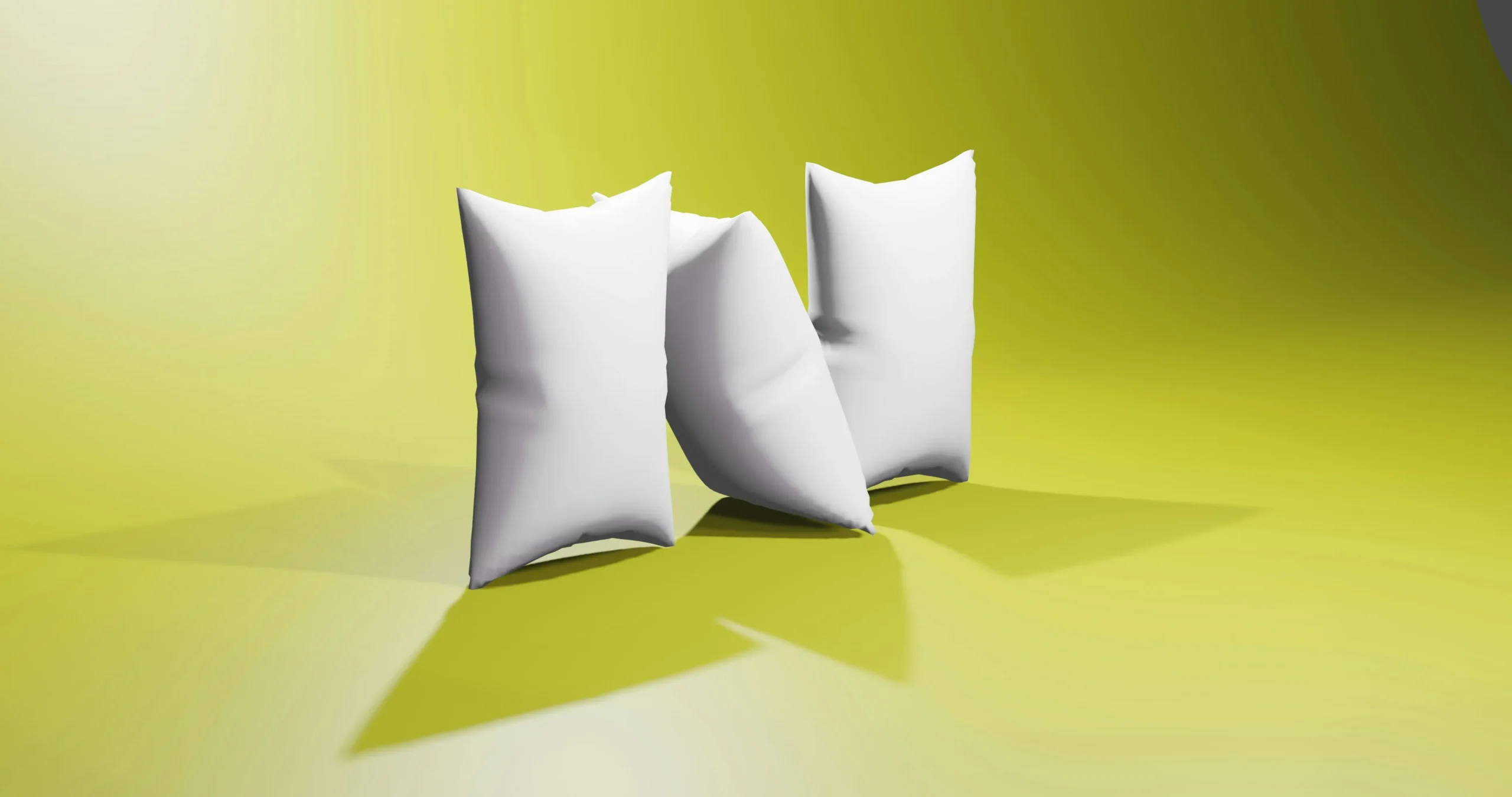
El cambio de bolsas de cartón a bolsas tejidas de PP para mudanzas reduce su huella de almacenamiento de unidades vacías en hasta 75%, mejorando directamente las métricas de utilización del almacén sin cambiar sus instalaciones.
Almacenamiento vacío Ratio de anidamiento
La métrica que la mayoría de los responsables de compras pasan por alto al evaluar las bolsas de mudanzas frente a las cajas de cartón es la relación entre el volumen vacío y el desplegado. Una caja plana de cartón ondulado sigue ocupando un espacio cúbico rígido debido a su grosor de estrías ECT: se comprime, pero no se anida. Hemos diseñado nuestras bolsas de PP tejido de 120 gsm con una proporción de anidamiento de 1:20, lo que significa que 20 bolsas vacías se pliegan en el espacio de una sola bolsa desplegada. El cartón no tiene una capacidad de anidamiento comparable. Cuando su flota permanece inactiva entre las temporadas altas de movimiento, esa proporción determina si sus existencias muertas ocupan una esquina de su zona de preparación o exigen una bahía de almacenamiento específica.
Ahorro en metros cuadrados de almacén
La utilización de los almacenes es un factor de coste directo. El espacio medio de los almacenes industriales de EE.UU. oscila entre $5,50 y $9,50 por pie cuadrado al año, según Informes de CBRE sobre el mercado industrial, y esa cifra aumenta significativamente en los mercados metropolitanos donde operan las empresas de reubicación. El cálculo por unidad es inequívoco: 500 bolsas tejidas de PP ocupan una posición de palé, mientras que 500 cajas de cartón con embalaje plano requieren de 3 a 4 posiciones de palé. Esto supone una reducción de 66% a 75% del espacio consumido por el inventario inactivo. Para una empresa de mudanzas de tamaño medio que gestione entre 5.000 y 10.000 unidades, esto supone recuperar entre 15 y 30 posiciones de palé, un espacio que elimina contratos de almacenamiento externo o libera capacidad para equipos generadores de ingresos.
Aumento de la densidad de la carga útil
La utilización de cubos dentro del camión es tan importante como la distribución del almacén. Las cajas de cartón tienen volúmenes geométricos fijos que crean espacios vacíos cuando se cargan junto a artículos irregulares: patas de muebles, bases de lámparas, aparatos de gimnasia. Las bolsas de PP tejido son estructuralmente flexibles y se adaptan a las cargas circundantes, llenando los espacios vacíos que las cajas rígidas no pueden alcanzar. En las pruebas de carga que realizamos con socios logísticos, esta flexibilidad produjo un aumento de hasta 15% en la densidad de carga útil por camión. Para un gestor de compras que controla el coste por movimiento, un aumento de la densidad de 15% significa o bien menos viajes en camión por trabajo o más carga útil facturable por envío. Ambos resultados mejoran la estructura de márgenes sin añadir un solo vehículo a su flota.

Coste del ciclo de vida e impacto ambiental
A lo largo de 20 traslados, una flota de 200 unidades de PP tejido cuesta menos de $300 en total, mientras que el cartón consume más de $12.000 en compras repetidas y tasas de residuos.
Coste total de propiedad en 20 traslados
La mayoría de los responsables de compras evalúan los contenedores móviles únicamente en función del precio unitario. Pero no es la medida correcta. La cifra real es el coste total de propiedad a lo largo del ciclo de despliegue de su flota. Hemos modelizado una flota de 200 unidades a lo largo de 20 traslados residenciales para ilustrar la divergencia real de costes entre el cartón consumible y el polipropileno tejido reutilizable.
- TCO de cartón: $3,25 de coste unitario medio (caja a $2,50-$4,00 más $0,30 de cinta) multiplicado por 200 unidades en 20 traslados equivale a $13.000 en compras repetitivas.
- PP tejido TCO: $1,35 coste unitario medio para la adquisición inicial de la flota a $270. Suponiendo una tasa de desgaste conservadora de 0,5% por traslado de bolsas perdidas en las instalaciones del cliente, los costes de sustitución en 20 ciclos ascienden a aproximadamente $27.
- TCO neto de la flota tejida: $297 en 20 traslados, lo que representa una reducción de 97,7% frente al cartón.
La idea fundamental es que las bolsas de PP tejido funcionan como un activo de capital, no como un consumible. Una vez adquiridas, el coste variable por movimiento se reduce prácticamente a cero. Los competidores que promueven el alquiler de contenedores de plástico no lo tienen en cuenta: los modelos de alquiler convierten lo que debería ser un CapEx puntual en un OpEx perpetuo, y usted sigue absorbiendo los gastos generales de logística de retorno en cada ciclo.
Vida útil del producto: Durabilidad de un solo uso frente a más de 50 ciclos
Las cajas de cartón ondulado estándar para mudanzas tienen una clasificación ECT (Edge Crush Test) que se degrada inmediatamente tras el primer uso. Una vez que una caja de cartón soporta una carga de 40-50 libras, la estructura de la solapa inferior se ve permanentemente comprometida. Nuestras bolsas de polipropileno tejido laminado de 120 gsm están diseñadas para una vida útil mínima de 50 ciclos. Las asas de cincha de 2 pulgadas están reforzadas con puntadas en X específicamente diseñadas para evitar los fallos de extracción de las asas que afectan a las bolsas de mudanzas de consumo.
Existe un modo de fallo oculto en el cartón que los equipos de compras rara vez detectan: la absorción de humedad. El cartón almacenado en almacenes o en camiones de mudanzas absorbe humedad, lo que reblandece la estructura del cartón ondulado y favorece la aparición de moho en las pertenencias de los clientes. Nos hemos encontrado con reclamaciones por daños derivadas directamente de este problema de humedad durante los húmedos meses de verano. El PP tejido es transpirable pero resistente al agua gracias a su revestimiento laminado, lo que elimina por completo esta categoría de riesgo.
Eliminación de residuos: La partida de costes ocultos
La eliminación de los residuos de cartón no es gratuita, a pesar de lo que suponen la mayoría de los modelos de costes. Según Datos de la EPA sobre residuos de papel y cartón, El cartón representa la mayor parte de los residuos sólidos urbanos en peso. Para una empresa de mudanzas, esto se traduce directamente en tarifas de contenedores comerciales. Una empresa mediana que realiza 20 mudanzas al mes con 200 cajas de cartón por mudanza
| Métrica | Cajas de cartón (base) | Bolsas industriales de PP tejido (Tiiocti) | Coste / Impacto Delta | Impacto de la contratación pública |
|---|---|---|---|---|
| Coste inicial del material (CAPEX) | $2,80 - $4,30 por unidad (incluye cinta $0,30) | $0,90 - $1,80 por unidad (sin cinta adhesiva) | 55% - 70% menor gasto inicial por traslado | Reduce directamente el KPI de coste por movimiento; elimina los gastos variables de cinta. |
| Capacidad de carga y tasa de fallos | Límite de 40-50 libras; alto riesgo de fallo de la parte inferior cuando está mojado o sobrecargado. | Límite de 80-100 lbs; asas de cincha de 2″ con refuerzo de puntada en X. | 100%+ umbral de carga superior; cero colapso estructural | Reduce drásticamente el índice de reclamaciones por daños asociados a reventones de cajas. |
| Utilización de cubos de almacén | 500 unidades requieren 3-4 palés de espacio | 500 unidades se pliegan en 1 palé | 75% reducción de la huella de almacenamiento muerto | Maximiza el KPI de utilización del almacén; libera espacio para la flota. |
| Riesgo medioambiental / degradación | Absorbe la humedad; alto riesgo de moho y hongos | PP laminado transpirable y resistente al agua; cumple la norma ISO 9001 / REACH | Elimina los daños materiales causados por la humedad y los costes de sustitución | Protege a la empresa de la responsabilidad medioambiental oculta y de los reembolsos a los clientes. |
| Coste total de propiedad durante el ciclo de vida | Modelo OpEx elevado; compras repetitivas de un solo uso por trabajo | Modelo CapEx de coste total de propiedad más bajo; activo reutilizable sin logística de retorno | Pasa del gasto variable al activo fijo ROI | Cobertura frente al aumento de los costes de suministro; estabiliza los presupuestos operativos a largo plazo. |
Conclusión
Deje de comprar cartón para ropa, ropa blanca y artículos blandos. Hemos diseñado bolsas de PP tejido de 120 gsm con asas cosidas en X para que aguanten 45 kg sin que se rompa el fondo, lo que reduce directamente su tasa de reclamaciones por daños en el cartón. Reducirá su coste de material por movimiento de más de $4,00 a menos de $1,80, al tiempo que libera 75% de espacio de palés en su almacén.
Realice una prueba piloto de lado a lado en sus próximas 50 mudanzas locales utilizando bolsas de mudanzas de gran capacidad a granel en lugar de cajas pequeñas estándar. Realice un seguimiento del tiempo de embalaje de la tripulación por camión y de su gasto total en cinta para esos trabajos. Solicite nuestro kit de muestra para probar la capacidad de carga en su propio almacén antes de aprobar el pedido de compra de toda la flota.
Preguntas frecuentes
¿Son más baratas las bolsas para mudanzas que las cajas de cartón?
Sí. Teniendo en cuenta el coste de la cinta adhesiva, un traslado medio de cartón cuesta entre $250 y $400 en suministros, mientras que una flota de bolsas reutilizables cuesta menos de $150 para el mismo volumen y puede utilizarse durante años.
¿Se pueden meter libros pesados en bolsas para mudanzas?
Absolutamente. Las bolsas de mudanza tejidas de alta calidad soportan más de 100 libras, lo que las hace superiores al cartón, que a menudo falla bajo el peso de las densas cajas de libros.
¿Las bolsas para mudanzas protegen los objetos del agua?
A diferencia del cartón, que se desintegra cuando se moja, las bolsas de polipropileno tejido laminado son resistentes al agua, por lo que protegen el contenido de la lluvia durante la carga o de las fugas de los camiones.
¿Cuántas bolsas de mudanza necesito para una casa de 3 dormitorios?
Para una mudanza estándar de 3 dormitorios, recomendamos 40-50 bolsas de alta resistencia. Esto sustituye aproximadamente a 60-80 cajas de cartón debido a la mayor capacidad y flexibilidad de las bolsas.
¿Las empresas de mudanzas prefieren bolsas o cajas?
Las empresas de mudanzas prefieren las bolsas para los artículos blandos (sábanas, ropa) porque son más ligeras y rápidas de cargar. Sin embargo, los artículos estrictamente rígidos deben ir en cajas. Una estrategia mixta es lo más eficaz.

0 comentarios