




Freight forwarders present themselves with the same vocabulary: global network, end-to-end solutions, competitive rates. The differences appear later, at the point where a shipment is delayed, a customs query arrives, or a claim is filed.
Bag cargo has its own character. It is light and bulky, so it fills by volume; it is often consolidated with other goods; and it frequently ships to markets where documentation problems cost more time than they do in established lanes. The right forwarder for a bag programme is the one that knows those conditions.

Start With the Delivery Term
What you need the forwarder to do depends on the delivery term on your purchase order. ICC Incoterms 2020 rules set out which party arranges carriage and insurance under each rule, and the difference between FOB, CIF and DDP changes the forwarder’s role significantly.
On FOB terms the buyer controls the freight and the forwarder works for the buyer from the port of loading. On DDP, the seller arranges everything and the buyer’s forwarder may have almost nothing to do. Confirming the term first prevents a conversation about services that neither party actually needs.
It also determines who owns the routing decision. A buyer arranging freight can choose a forwarder on consolidation capability and destination handling; a buyer on DDP terms can only judge the outcome after the fact.
Consolidation and Load Planning
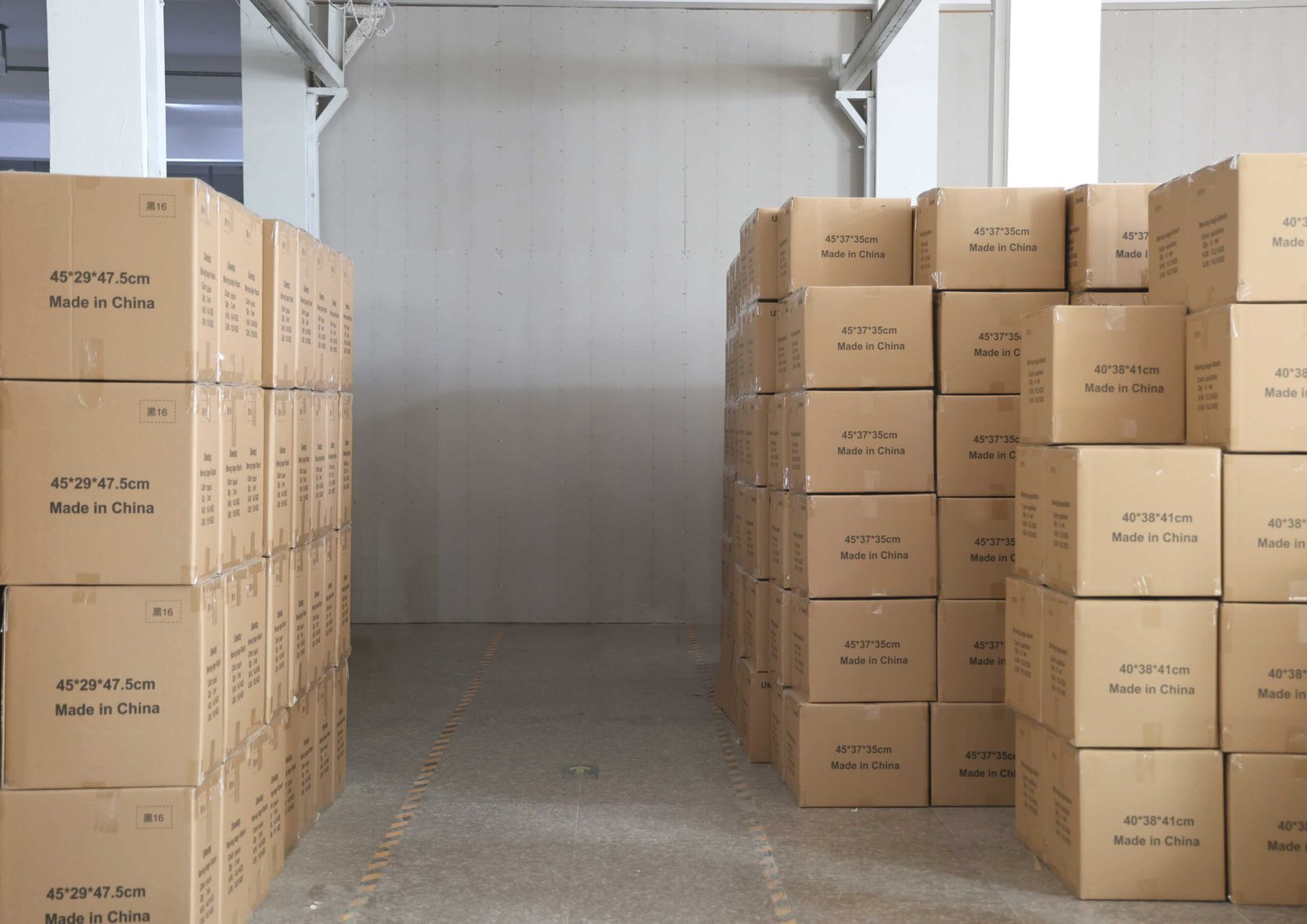
Bags fill containers by volume, which means a part-load can be expensive if it is shipped as a partial container and efficient if it is consolidated with other cargo. A forwarder’s consolidation capability is therefore directly relevant to your freight cost.
Ask how consolidation is planned: whether loads are built by destination, by sailing, or by whatever arrives. And ask what happens to a shipment that misses its consolidation because a factory ran late, because that answer describes the working relationship better than the sales presentation.
The break-even between consolidating and taking a full container depends on volumes across a programme rather than on a single order, and the calculation is set out in our notes on LCL and FCL break-even for bag orders.
Documentation and Destination Handling
Documentation is where forwarders earn their fee. A forwarder that prepares documents correctly and describes the goods precisely saves days at destination; one that treats paperwork as an afterthought creates delays that no rate saving can offset.
Ask for the document set the forwarder will produce and who checks it. Bills of lading, packing lists and certificates of origin all have to match the commercial invoice, and mismatches between them are the most common cause of a held shipment.
Destination capability matters as much as origin capability. Where a programme ships to markets with different customs practice, a forwarder with a real partner at destination is worth more than a lower rate, and regional differences in documentation and clearance practice are described in our notes on shipping bag orders to Latin America.
Claims and Problem Handling
Claims handling reveals the true quality of a forwarder. Ask what happens when cargo is damaged or delayed: who inspects, who files, who follows up, and what the typical timeline is.
A forwarder that handles claims internally and can describe its own process is a different organisation from one that passes the matter to a carrier and waits. The difference shows in claim recovery rates and in how quickly a resolution lands.
Insurance is related but separate. Cargo cover may be arranged by the forwarder or by the buyer, and the cover should match the journey. Where the forwarder arranges it, ask for the policy terms rather than only the premium.
Rates, Surcharges and Transparency
Freight pricing is volatile, and a forwarder that quotes an all-in figure without a breakdown leaves the buyer unable to judge what changed when the invoice arrives. Ask for the rate structure: base ocean freight, terminal charges, documentation, and the surcharges that apply to the route.
Surcharge transparency matters particularly in peak seasons, when general rate increases and peak surcharges can move the total substantially. A forwarder that explains surcharges in advance is easier to budget with, even when its base rate is not the cheapest.
The honest comparison is total landed cost including charges at destination, not the headline ocean rate. A cheap rate with heavy destination charges is a more expensive shipment than it appears.
Deciding and Reviewing
Five questions settle most of the assessment: which delivery terms the forwarder will work under, how consolidation is planned, what documents it produces and checks, how claims are handled, and how surcharges are communicated.
Review the relationship on evidence rather than on feeling. Transit time variance, documentation error rate and claim resolution time are all measurable, and a programme that tracks them makes better decisions at renewal than one that starts from the rate sheet. Our logistics and moving solutions work with a shortlist of forwarders matched to the destination markets and cargo profile, because the right partner differs by route.
Preguntas frecuentes
How do delivery terms affect forwarder selection?
They determine who arranges carriage and insurance. On FOB the buyer controls freight; on DDP the seller arranges everything, which changes what the forwarder does for the buyer.
Why does consolidation matter for bags?
Bag cargo fills by volume rather than weight, so consolidating part loads with other cargo can materially reduce freight cost per unit.
What documentation should a forwarder produce?
Bills of lading, packing lists and certificates of origin that match the commercial invoice, with a defined checking step before sailing.
How should claims handling be assessed?
By asking who inspects, who files, who follows up and the typical resolution timeline. An in-house process indicates a different level of capability.
What is the most useful performance metric?
Documentation error rate and transit time variance, because both predict the delays that actually cost money.
Video: Packaging Machine Export Packing: Wooden Case Packing
If you are selecting a forwarder for a bag programme, tell us the routes and the volumes. Our logistics team will set out the questions to ask and the terms that fit your purchase structure.



0 comentarios