
Cost figures and CBM thresholds are drawn from the archived freight comparison for woven PP and drawstring bag orders.
The complaint landed on a Tuesday: a retail buyer in Ohio opened a carton of printed totes and found the hang tags bent, two bags scuffed, and a corner of the box soft from damp. The freight invoice had quoted $35 per CBM. The final landed cost per bag was nearly double what the order sheet assumed. Somewhere between the forwarder's email and the loading dock, the cheap LCL number had quietly dissolved.
That gap is not a mystery. It is arithmetic spread across four cost lines, and most buyers only ever see the first one. This is how the quote breaks apart, and how to rebuild it before you book.
The Four Lines Behind a $35 Per CBM Quote
A forwarder sends a rate that reads $35 per CBM. That figure covers the ocean leg and nothing else. On a 5 CBM bag order, the all-in cost per CBM typically lands closer to $100 once consolidation, deconsolidation, and surcharges are stacked on top.
The published LCL rate is quoted per W/M, meaning per ton or per CBM, whichever produces the higher charge. Woven PP bags are light for their volume, so the CBM figure almost always governs the billing. That is the first line, and it is the smallest.
The second line is CFS handling at origin. The third is destination deconsolidation and the storage that follows if pickup slips. The fourth is repacking and damage recovery, which never appears on a quote and always appears on an invoice when printed packaging travels through a shared container.
Add them and the $35 becomes a number the buyer never saw. A 5,000-bag order shipped LCL at $100 per CBM all-in costs roughly $3,000 in freight before a single bag reaches a shelf.
CFS Handling: The Charge That Scales With Every Carton Touch
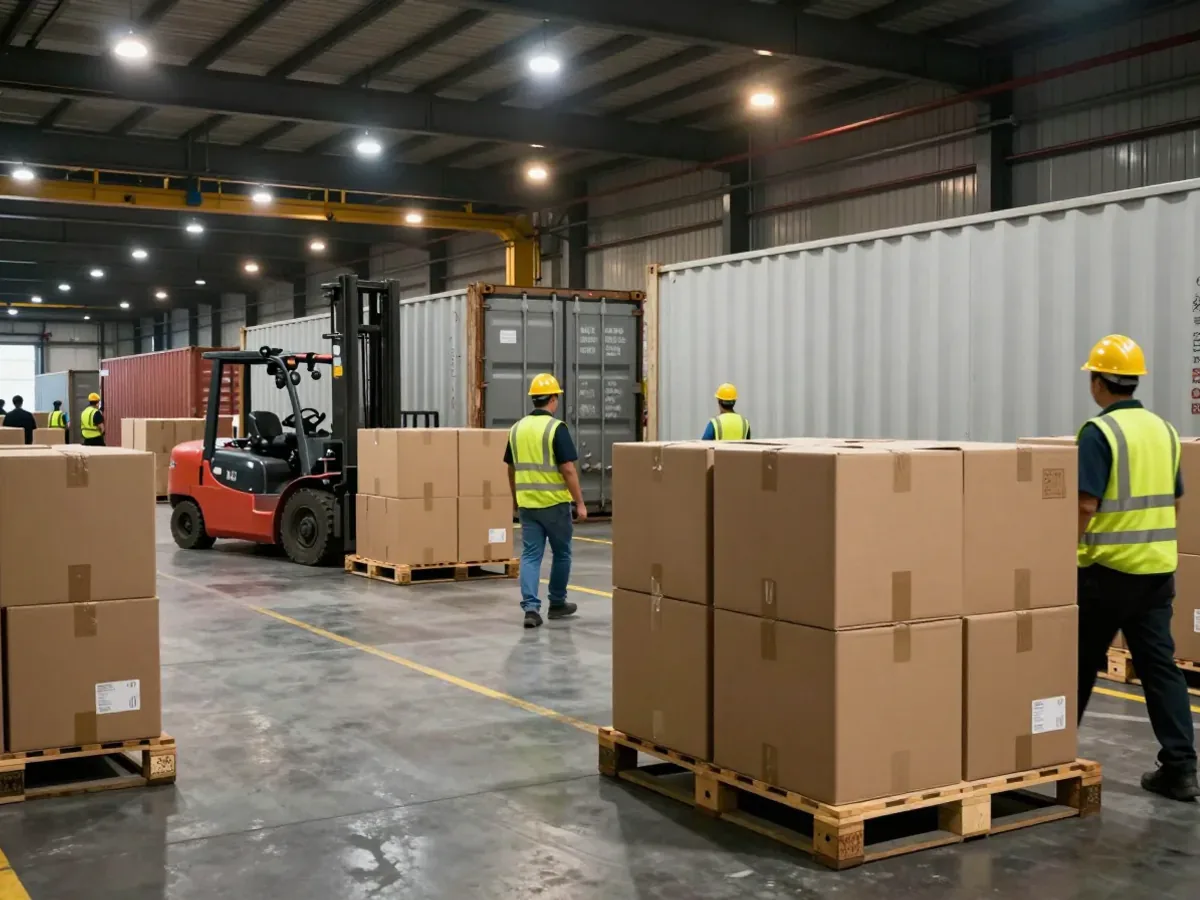
A Container Freight Station must consolidate your cartons with other shippers’ cargo at origin, then deconsolidate at destination. Every one of those steps is a billed event, and every event is a chance for a carton to be dropped, stacked under heavier freight, or left on a weather-exposed dock.
Origin CFS handling typically runs $15 to $40 per CBM. Destination deconsolidation adds another layer on top of that. For a 5 CBM order, that is $75 to $200 before the cargo has moved an inch on the water.
The charge scales with carton count as much as volume. A dense, flat-packed carton of woven PP moving bags measures about 0.06 CBM and holds 50 units. A 5 CBM order is therefore roughly 83 cartons, each one handled at origin, at consolidation, at deconsolidation, and again at sorting. The per-CBM rate hides how many times a worker’s hands meet your box.
For heavy-duty moving bags packed flat, the handling difference matters less because the bags absorb impact. For retail-branded totes with glossy print finishes and attached hang tags, the same handling is where margin goes missing.
Storage and Repacking: Costs That Only Appear After Deconsolidation
LCL cargo carries a higher risk of warehousing charges at destination. If cartons are not picked up within the free time window, typically three to five days after deconsolidation, storage fees accumulate daily. A buyer who assumed the forwarder would call on arrival learns otherwise when the invoice arrives a week later.
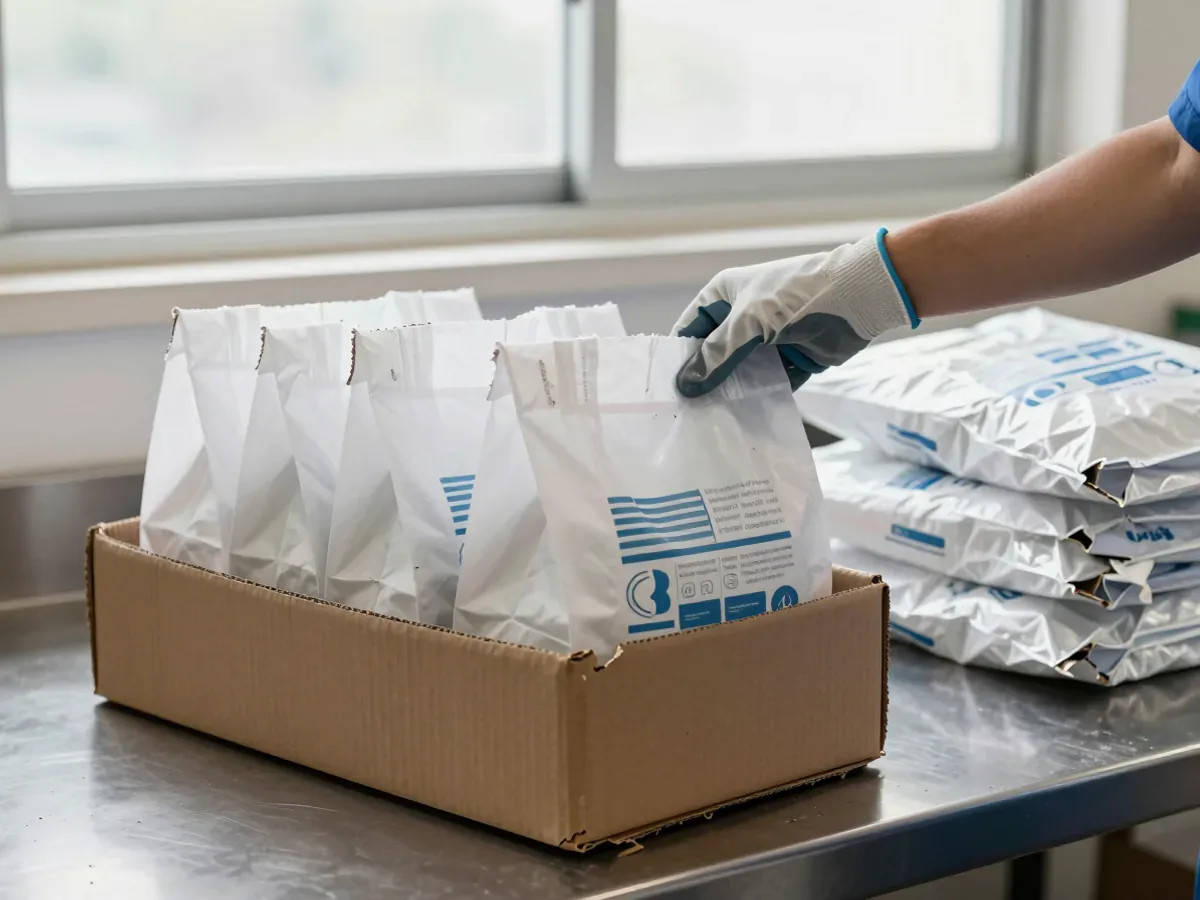
Repacking is the quieter cost. Cartons that arrive crushed or water-damaged from CFS handling may need to be unpacked, inspected, and repacked before delivery to retail customers. That is labor, new polybags, new cartons, and a delay measured in days.
A fuel adjustment factor can add 5 to 15 percent to the ocean leg, and other LCL-specific surcharges stack onto the same invoice. None of these appear in the $35 headline. All of them appear before the cartons reach a warehouse.
Running the Break-Even With Your Real Carton Cube
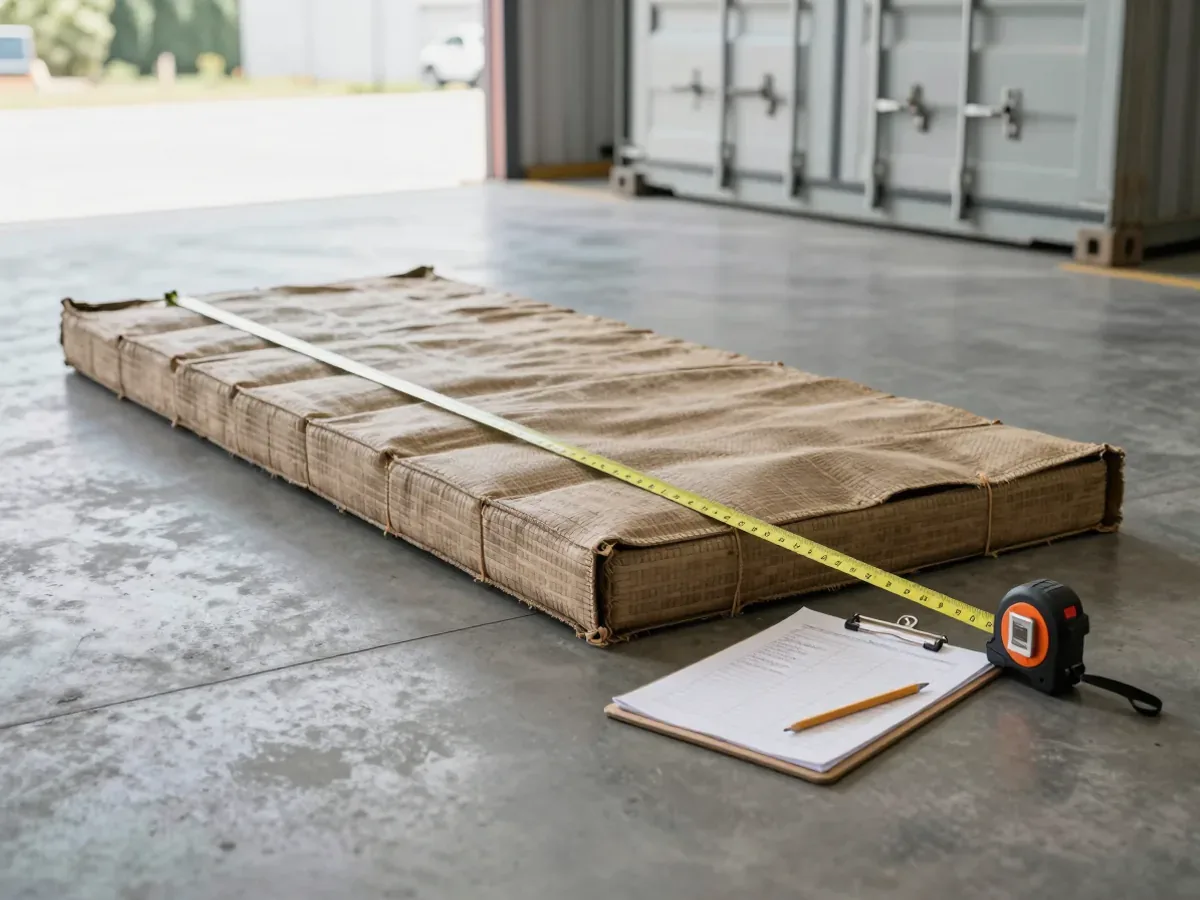
The break-even formula is simple: divide the FCL flat rate by the all-in LCL rate per CBM. If a 20-foot FCL costs $600 and the all-in LCL cost is $100 per CBM, the break-even sits at 6 CBM. Below that, LCL wins. Above it, the per-CBM math starts punishing the buyer.
The mistake is running that formula with the published $35 instead of the all-in figure. Recalculate with $100 per CBM and a 20-foot FCL at $600 flat beats LCL once cargo exceeds 6 CBM. Most bag orders of 1,500 units or more cross that threshold.
The general break-even for a 20-foot container sits at 12 to 15 CBM depending on lane. Below 15 CBM, LCL is usually cheaper. But the all-in number moves that line, and the all-in number is the one that matters.
To run it properly, measure one packed carton’s length, width, and height in meters, multiply for per-carton CBM, then multiply by carton count. A standard 20-foot container holds 33.2 CBM with a maximum payload of 28,000 kilograms. A 40-foot holds 67.7 CBM. Once bag cartons exceed roughly 15 CBM, the math flips.
For orders between 8 and 15 CBM, request both LCL and FCL rates, apply the formula, and factor in the three to seven day transit difference. That window is where the decision actually lives.
When the Flat Container Rate Locks In More Than Freight
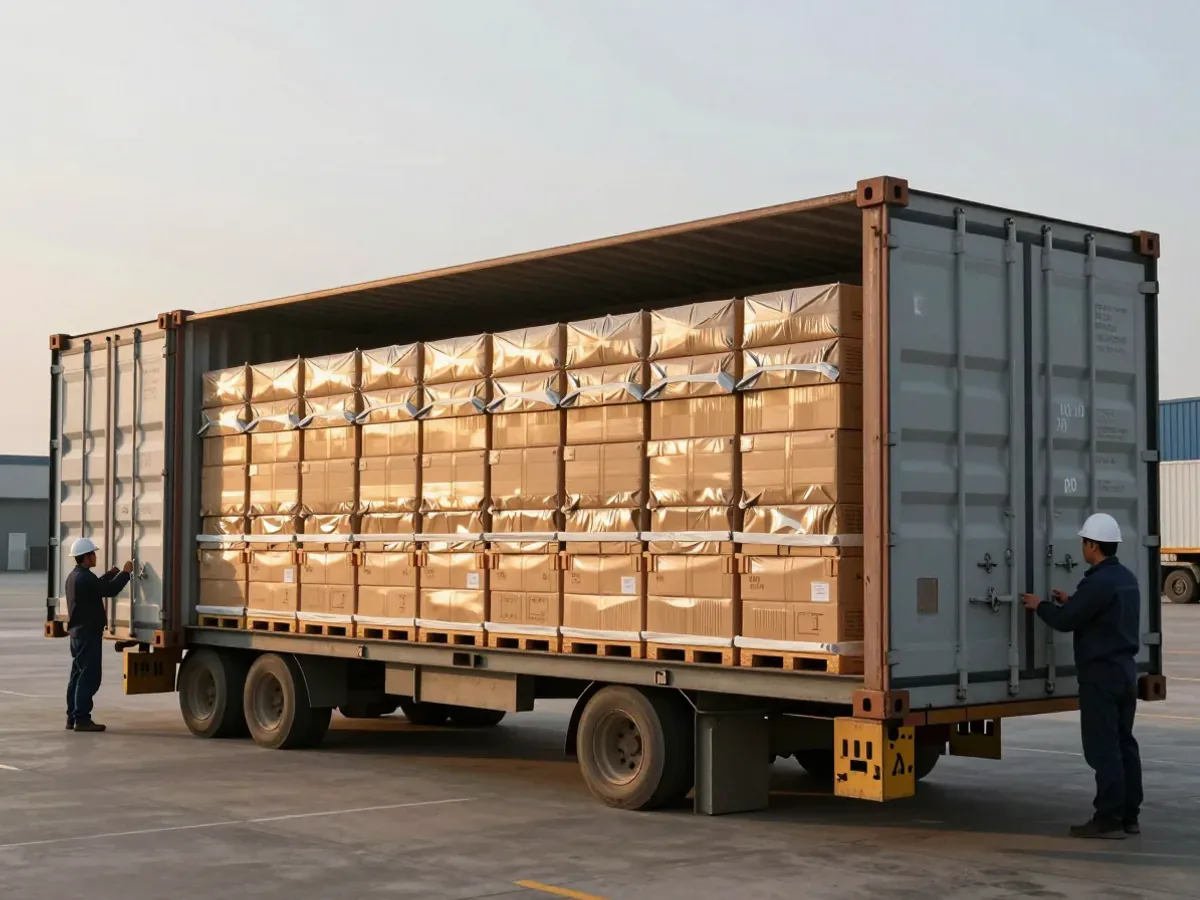
FCL does something LCL cannot: it fixes the cost regardless of how tightly the cartons fill the space. An order that comes in at 18 CBM instead of the planned 20 CBM still pays the same flat rate. That predictability is worth money on its own, especially on reorder cycles where carton counts drift.
FCL also removes four to six handling events between factory and warehouse. Containers are sealed at the factory and loaded directly onto the vessel, while LCL must wait until enough cargo fills the box before sailing. That wait is where the three to seven day gap comes from, and for retail season deadlines or replacement orders, that week matters.
The loading strategy belongs to the factory under FCL. Flat-packed moving bags stack efficiently because their uniform rectangular cartons tile with minimal void space. A carton of 50 folded moving bags measures roughly the same as a carton of 15 rigid totes, because woven PP folds flat and compresses under stacking pressure.
For mixed SKU orders, heavy moving bag cartons go on the bottom layer, lighter retail tote cartons stack on top, and drawstring bag cartons fill the gaps between larger boxes. That sequence is a factory decision, and it is one more thing the buyer controls under FCL and cannot control under LCL.
What to Put on the Order Sheet Before Booking
The order sheet should carry the carton cube before the freight quote is requested. Measure one packed carton, multiply by count, and write the total CBM next to the unit count. Without that number, every quote is a guess dressed as a rate.
Under 6 CBM, ship LCL. The per-CBM premium is small and FCL capacity sits unused. A 500-bag trial shipment at 2 CBM costs $200 to $240 via LCL, while the same shipment in a 20-foot FCL at $700 would cost $460. The trial order is not the place to absorb an empty container.
Between 6 and 15 CBM, request both quotes and apply the formula. Above 15 CBM, book FCL for the lower per-CBM cost, faster transit, and sealed-container handling. Retail totes lean toward FCL even when cost is marginally higher, because CFS handling damages printed packaging.
For reorder cycles, track CBM across recent orders. If the last three each exceeded 12 CBM, negotiate a standing FCL rate with the forwarder. Consistent volume unlocks better pricing and dedicated equipment.
Two factory-side habits make the numbers trustworthy. Cartons are counted and photographed before the container seals, so the CBM on the order sheet matches what actually shipped. Packing is agreed before production, whether polybag, retail, or per-store, so repacking cost at destination is a known quantity rather than a surprise.
FAQ
At what CBM does FCL become cheaper than LCL for bag orders?
The general break-even for a 20-foot container is 12 to 15 CBM, and below 15 CBM LCL is usually cheaper. Run the all-in LCL rate, not the published ocean rate, because a $600 flat FCL beats LCL at $100 per CBM once cargo passes 6 CBM.
How much does CFS handling add per CBM on an LCL shipment?
Origin CFS handling typically costs $15 to $40 per CBM, with destination deconsolidation adding another layer. On a 5 CBM order that is $75 to $200 before the cargo sails.
Can a 500-bag trial order ship LCL without losing money?
Yes. A 500-bag trial occupies roughly 2 CBM and costs $200 to $240 via LCL, against $460 for the same shipment in a 20-foot FCL at $700. Ship LCL and verify carton CBM against the factory’s spec sheet.
Why does an FCL rate stay the same if my cartons fill less space?
FCL rents the entire box, so the rate is fixed once the container is booked. An order that comes in at 18 CBM instead of 20 CBM pays the same flat rate.