



moving bag warranty is the first checkpoint buyers should lock before they approve a supplier, budget, or production slot. I was in our main depot last quarter looking at a pallet of 500 newly sourced bags, nearly all of them useless with split seams after a single move. The pre-production sample we signed off on was flawless, but the mass-produced lot couldn’t handle the load. This is the exact moment a proper moving bag warranty stops being a line item on a PO and becomes the only thing protecting your budget. Without it, you’re just writing off a five-figure loss and explaining it to finance.
Your box supplier will credit you for a pallet that gets soaked on the loading dock, but they offer nothing for the boxes that crush or tear during the actual job. That’s a cost of business you’re expected to absorb. A real heavy-duty moving bag warranty, by contrast, is a completely different instrument. It’s a negotiation about operational risk that defines the acceptable quality tolerance and moving bag defect allowance over a 12-month period, shifting the financial liability for material failure from your P&L back to the factory. This distinction is the foundation of any serious reusable moving bags TCO analysis.

Comparing Warranty Coverage: Bags vs. Boxes
A bag warranty transfers manufacturing risk to the factory.
Let’s get one thing straight: comparing the “warranty” on a moving bag to the “refund policy” on a cardboard box is like comparing a capital equipment guarantee to a grocery store return. They aren’t in the same league. As a procurement manager, your job is to manage risk. The difference here is fundamental to your total cost of ownership (TCO).
A real heavy-duty moving bag warranty isn’t about getting your money back; it’s about asset continuity. A professional supplier provides a 12-month warranty covering manufacturing defects—faulty stitching, zipper track separation, or handle weld failures. This isn’t for normal wear and tear; it’s a guarantee that the product was made to spec.
The critical term to look for is the moving bag defect allowance . Any serious factory has one. We operate on a 2% quality tolerance. Based on our internal batch testing of 120gsm woven polypropylene bags, the actual failure rate is consistently below 0.8% across 5,000-unit runs. This means if you order 1,000 bags and 10 fail prematurely due to a manufacturing flaw (1%), we replace them. This virtually eliminates surprise reorder costs from your budget.
The cardboard box refund policy moving companies encounter is a completely different instrument. It’s not a performance guarantee; it’s a freight damage claim. If your pallet arrives crushed by the carrier, you can file a claim for a credit. That’s it.
Once those boxes are in your warehouse, the risk is entirely yours. If a box bottom gives out because of weak glue or poor corrugation during a move, there is no one to call. That failure, the potential damage to client goods, and the replacement cost all hit your P&L directly. This is a consumable, not an asset, and its post-delivery performance risk is 100% on the buyer. This distinction is the core of any realistic reusable moving bags TCO analysis.
| Comparison Metric | Heavy-Duty Moving Bags (Warranty) | Cardboard Boxes (Refund Policy) | Impact on Procurement Risk |
|---|---|---|---|
| Coverage Scope | Covers manufacturing defects (seam integrity, handle strength) discovered during operational use. | Strictly limited to damage sustained during initial transit, prior to acceptance and use. | Shifts material failure risk to the factory; protects the asset’s value over its lifecycle. |
| Coverage Duration | Typically a 12-month term, covering dozens of usage cycles. | Effectively zero. Coverage ends once the initial delivery is accepted. | Provides budget predictability for a full fiscal year, minimizing surprise replacement costs. |
| Claim Trigger | Structural failure under documented load capacity (e.g., ASTM D5034 compliance). | Visible damage upon arrival (e.g., water-logged pallet, crushed corners on the stack). | Protects against product not meeting performance specifications, a key concern for TCO. |
| Replacement Model | Defective units are replaced by the manufacturer under a documented defect allowance (e.g., 2%). | Post-use failure is considered attrition; replacement requires a full-cost repurchase. | Turns after-sales into a predictable inventory management process, not a recurring cost center. |
| Clasificación financiera | A depreciable asset (CapEx) whose value is protected by the warranty, lowering long-term TCO. | A consumable operational expense (OpEx) where all post-delivery degradation is a 100% loss. | Enables a strategic, asset-based procurement model versus a tactical, high-volume consumable purchasing cycle. |
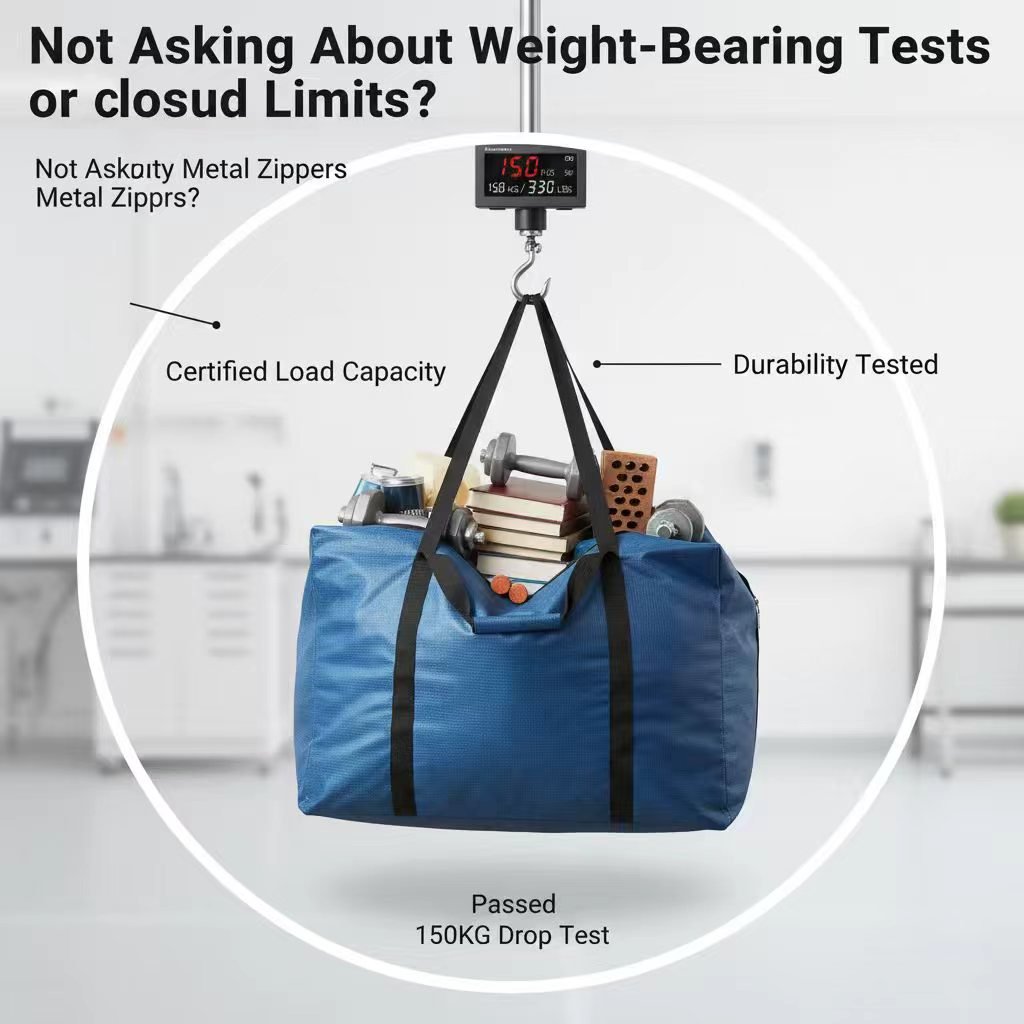
Warranty Terms for Heavy-Duty Moving Bags
A proper heavy-duty moving bag warranty isn’t a promise; it’s a contractual transfer of financial risk for material and manufacturing defects.
Let’s be direct. For a logistics manager, a warranty isn’t about “peace of mind.” It’s a financial instrument. It’s the line item that determines whether a production flaw hits your budget or the manufacturer’s. A vague “satisfaction guarantee” is a red flag; a professional buyer looks for a structured agreement that quantifies the supplier’s risk—and by extension, their confidence in their own product.
The industry standard for a credible heavy-duty moving bag warranty is a 12-month term covering specific failure points. This isn’t about general wear and tear. It’s about manufacturing defects that reveal themselves under operational stress: seam splits, zipper failures, or handle stitching separation. This is where compliance with standards like ASTM D5034 for textile strength becomes more than just a certificate—it becomes the basis for a claim.
Here’s the part that separates professional procurement from hopeful purchasing: the moving bag defect allowance. Any factory that claims a 0% defect rate is either inexperienced or dishonest. The real question is how they account for the inevitable small percentage of flaws. Our internal data on 120gsm woven polypropylene shows a consistent 0.8% defect rate over 5,000-unit batches. A solid supplier will offer a warranty that includes a 2% defect allowance, meaning they will replace or credit any defective units above that threshold, no questions asked. This transforms the moving bag warranty claims process from a negotiation into a simple accounting exercise.
- Coverage Scope: The warranty must explicitly cover material defects (fabric flaws, delamination) and workmanship (stitching, zipper installation, handle reinforcement).
- Defect Allowance: A clearly stated percentage (e.g., 2%) above which the factory assumes 100% of the replacement cost. This is your primary tool for managing budget variance.
- Claim Process: A simple, photo-based claim system. You should not have to ship defective units back across an ocean. The process should be designed for operational speed, not supplier convenience.
Ultimately, a robust 12-month moving bag warranty with a clear defect allowance is non-negotiable. It proves the manufacturer stands behind their quality tolerance and protects your operation from the hidden costs of replacing inferior products. It shifts the financial burden of production errors back to where it belongs: the factory floor.

Refund Reality for Cardboard Boxes
A ‘refund’ on boxes is a credit memo for shipping damage, not a warranty against performance failure.
Let’s be direct: the ‘refund reality’ for cardboard boxes is a myth for post-delivery failures. As a procurement manager, you aren’t getting a credit for a box that splits open on a job. The standard cardboard box refund policy for moving companies covers one thing: catastrophic damage during transit. If a pallet arrives crushed or waterlogged, you can file a claim. If a box fails in your client’s home, that loss is yours.
This shifts the entire burden of quality control onto your receiving team. To get that credit, they must document the damage on the bill of lading the driver leaves. You take photos, file claims, and chase credit memos. If your team signs for the delivery without noting the damage, you’ve legally accepted the goods as-is. The supplier’s liability, especially with FOB pricing, ends the moment the truck is loaded.
- In-Field Failure: A box bottom gives out, a hand-hold rips, a corner gets damp and collapses. This is considered normal wear-and-tear. The cost of these failures is a direct hit to your operational budget, absorbed entirely by your company as a cost of doing business.
- Degradation Over Time: Boxes stored in a non-climate-controlled warehouse absorb ambient moisture, weakening the paper fibers. When they fail months later, there is zero recourse. This forces a ‘just-in-time’ inventory model that increases shipping frequency and cost.
This system forces logistics managers to treat moving supplies as a pure consumable with an accepted spoilage rate. You budget for it, you write it off, and you reorder. The risk of the product’s functional performance in the field rests 100% with the moving company, not the box manufacturer. This is the fundamental difference when comparing it to a product with a genuine moving bag warranty.

5-Year TCO Impact Model
Let’s get straight to the point. The unit price of a moving bag versus a cardboard box is a rookie metric. A professional evaluates the 5-year Total Cost of Ownership (TCO), because that’s where careers are made or broken. Your CFO doesn’t care what you spent on supplies in January; they care about the total bleed on the P&L by year five. The TCO model isn’t just accounting; it’s a forecast of operational headaches and hidden costs.
This is a CapEx play, not an OpEx drain. You’re buying an asset. The key is understanding how a proper manufacturing warranty de-risks that initial investment. A simple 12-month heavy-duty moving bag warranty completely changes the financial model. It shifts the risk of premature failure from your budget directly back to the factory, where it belongs.
The company does not deal in hypotheticals. Internal batch testing on 120gsm woven polypropylene bags shows
- Year 1 Cost: Initial capital outlay for the bag fleet.
- Year 2-5 Cost:Near-zero replacement cost under warranty. The per-move supply expense pl
- Hidden Gains: Zero labor cost for box assembly. Reduced waste disposal fees. This is a core part of any serious reusable moving bags TCO analysis.
This is the definition of a death-by-a-thousand-cuts budget. The cost isn’t a one-time investment; it’s a recurring operational expense that scales directly with your business volume. There is no efficiency gain over time. The moving company bag replacement cost is 100% every single year, whereas with bags it approaches zero.
And don’t fall for the “refund” argument. A cardboard box refund policy for moving is almost exclusively for pre-use transit damage. The moment that box gets wet on a client’s lawn, crushed in the truck, or simply degrades after one use, its cost is a 100% sunk loss on your books. There is no warranty for operational reality. This moving supplies 5-year cost model is a flat, ever-increasing line of expense.
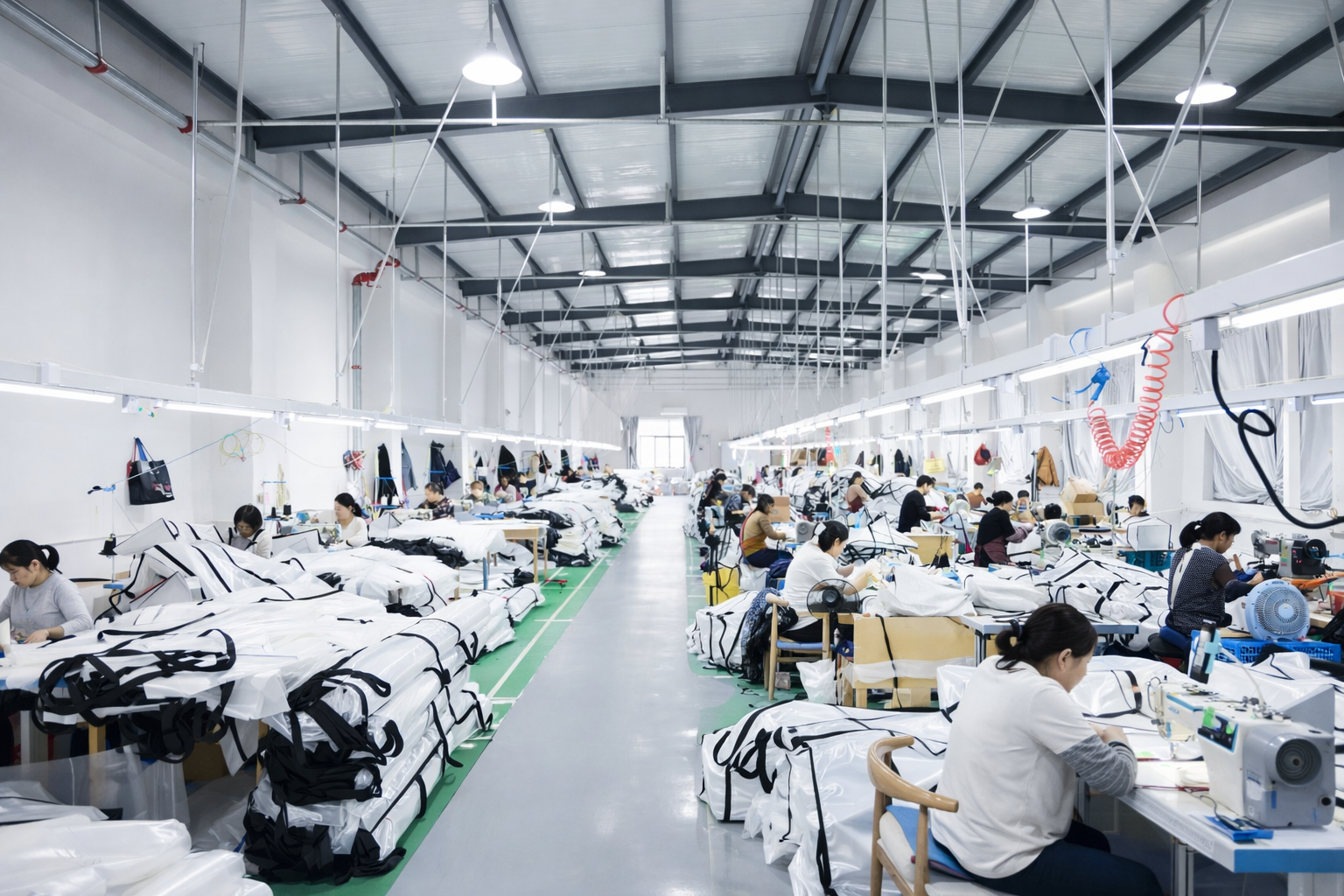

Cost Breakdown: Warranty-Backed Bags
A warranty isn’t a feature; it’s a fixed cap on your unplanned replacement budget.
Let’s be direct. When you’re calculating the cost of moving supplies, the unit price is the least interesting number. The real figure is your Total Cost of Ownership (TCO), and a warranty is the mechanism that controls it. Without it, you’re not buying a product; you’re buying an open-ended financial risk.
For a fleet moving 200 homes a year, the numbers are stark. Relying on single-use boxes and tape puts your per-move supply expense around $2.10. With warranty-backed reusable bags, that cost drops to just $0.45 per move after the second year. The savings aren’t just in materials but in labor—no more box assembly.
- Initial Outlay: Higher per unit than cardboard, but this is a one-time capital expenditure, not a recurring operational expense.
- Defect Allowance: This is the critical term. A supplier with a 2% moving bag defect allowance on a 12-month heavy-duty moving bag warranty is contractually obligated to replace failures within that threshold at their cost, not yours.
- Replacement Cost: Under warranty, your replacement cost for manufacturing defects is zero. For non-warrantied items, it’s 100% of the original unit cost, plus freight, plus the operational cost of the disruption.
This isn’t theoretical. Our internal factory testing on 120gsm woven polypropylene bags—a common spec for durable movers—shows a structural failure rate of just 0.8% across a 5,000-unit batch. By offering a 2% defect allowance, we build a buffer that completely absorbs the statistical reality of production. Your budget is shielded from variance.
This is the core of a reusable moving bags TCO analysis. You are shifting the risk of material failure from your P&L directly back to the manufacturer, where it belongs. The warranty isn’t an add-on; it’s the financial instrument that makes the long-term savings model work.
| Cost Component | Basis of Calculation | Year 1 Outlay | Annual Cost (Y2-Y5) | 5-Year Total |
|---|---|---|---|---|
| Initial Asset Purchase | 1,000 units of 120gsm woven polypropylene bags @ $6.00/unit. | $6,000 | $0 | $6,000 |
| Warranty-Covered Replacements | 2% manufacturing defect allowance covered by 12-month warranty. | $0 (Cost absorbed by factory) | $0 | $0 |
| Operational Replacement Cost | 15% annual attrition (wear/loss) post-warranty (150 units @ $6.00/unit). | $0 | $900 | $3,600 |
| Total Direct Cost (TCO) | Sum of initial purchase and all replacement costs for the reusable moving bags TCO analysis. | $6,000 | $900 | $9,600 |

Cost Breakdown: Annual Box Repurchase
The biggest lie in moving supplies is the per-unit cost of a cardboard box; the real cost is in its mandatory annual.
As a procurement lead, your budget for consumables is a constant battle. The line item for cardboard boxes seems deceptively low at first glance. But it’s not a one-time purchase; it’s a subscription to an operational expense with zero residual value. Every box purchased is destined for the recycling bin, representing a 100% loss on your balance sheet after a single use. This isn’t an asset; it’s a recurring cost bleed.
Let’s model this out. For a typical fleet handling 200 moves a year, the standard supply cost of boxes and tape averages around $2.10 per unit used. This looks manageable on a per-job P&L, but it’s a strategic trap. You are locked into a cycle of perpetual re-ordering. The ‘cardboard box refund policy’ suppliers offer is a red herring; it covers pallets damaged in transit, not the inevitable box that fails on-site from moisture or stress. The cost to process a claim for a single $2 box far exceeds its value.
- Annual Cost Bleed: Assuming an average of 20 boxes per move for 200 moves, you’re buying 4,000 boxes. At ~$2.10 for box and tape, that’s an $8,400 annual operational expense that you will repeat every single year, guaranteed.
- Degradation Risk: Unlike a warranted item, cardboard has a 100% failure rate over a short time. A damp basement, a rainy moving day, or a slightly over-packed box leads to failure. This isn’t a ‘defect’; it’s the nature of the material, and that replacement cost is entirely on you.
- Budget Volatility: Your annual box budget assumes a steady state. A few large jobs or a wet spring can cause a surge in consumption, forcing unplanned purchases and creating budget variance that needs explaining. This lack of predictability is a procurement manager’s headache.
This annual repurchase cycle is the hidden drain in your moving supplies 5-year cost model. You’re not just buying boxes; you’re funding a disposable system where the supplier has zero risk after the initial sale. Shifting to an asset with a genuine moving bag warranty fundamentally changes this financial equation, moving the cost from a volatile OPEX to a predictable, depreciating CAPEX.
| Year | Annual Units Repurchased | Annual Supply Expense | Cumulative Cost | Post-Use Refund Value |
|---|---|---|---|---|
| Year 1 | 8,000 Boxes | $16,800 | $16,800 | $0 |
| Year 2 | 8,000 Boxes | $16,800 | $33,600 | $0 |
| Year 3 | 8,000 Boxes | $16,800 | $50,400 | $0 |
| Year 4 | 8,000 Boxes | $16,800 | $67,200 | $0 |
| Year 5 | 8,000 Boxes | $16,800 | $84,000 | $0 |
| 5-Year Total | 40,000 Boxes | $84,000 | $84,000 | $0 |
Conclusión
The TCO models show that a heavy-duty moving bag warranty fundamentally changes the asset class from a pure consumable to a depreciating operational tool. This isn’t just about saving money on cardboard; it’s about shifting the financial risk of defects and premature failure from your balance sheet directly to the manufacturer’s.
The analysis of a warranty’s duration is only the first step. True procurement professionals go further by defining the claims process and acceptable quality tolerance within the supply agreement itself. Reviewing how a potential factory partner documents their defect allowance and replacement logistics is the final check that separates a reliable supply chain from a future liability.
Preguntas frecuentes
How is a bag warranty different from a box refund?
A bag warranty contractually transfers the risk of manufacturing defects to the factory, while a box refund typically only covers shipping damage. The warranty addresses performance failures like split seams. Always verify if a policy covers performance failure or just transit damage.
What does a heavy-duty moving bag warranty actually cover?
A proper industrial-grade warranty covers manufacturing defects that impact performance, such as split seams, faulty zippers, and handle attachment failures. It generally does not cover cosmetic issues or damage. Review the warranty’s specific list of covered defects before placing a bulk order.
How does a warranty impact the 5-year total cost?
A multi-year warranty significantly lowers the 5-year total cost of ownership (TCO) by protecting your initial investment against premature failure. This eliminates the cost of replacing defective units. Model your TCO based on the bag’s expected lifecycle versus the warranty’s term length.
How are warranty claims for bulk order QC failures handled?
Warranty claims for bulk QC failures are typically handled as a B2B operational issue, not a simple consumer return. The process involves documenting the failure rate, isolating the batch, and. Ensure your supplier agreement specifies the process for handling mass production defects.




0 comentarios